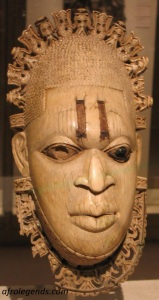
Pendant Ivory mask representing Queen Idia, Iyoba of Benin City (16th Century) – exposed at the MET
France, like so many European countries, is being urged to return looted art to Africa. Below is the article. For the full article, go to the Guardian.
=====
A report commissioned by Emmanuel Macron will call for thousands of African artworks in French museums taken without consent during the colonial period to be returned to the continent.
Unless it could be proven that objects were obtained legitimately, they should be returned to Africa permanently, not on long-term loan, said the authors of the report, the Senegalese writer and economist Felwine Sarr and the French historian Bénédicte Savoy.
They have recommended changing French law to allow the restitution of cultural works to Africa, after Macron announced that he wanted it to begin within five years.
… “I cannot accept that a large part of the cultural heritage of several African countries is in France,” the French president said last year in Ouagadougou, the capital of Burkina Faso. “There are historical explanations for this but there is no valid, lasting and unconditional justification. African heritage cannot be only in private collections and European museums – it must be showcased in Paris but also in Dakar, Lagos and Cotonou. This will be one of my priorities.” [Politicians always make promises, but never deliver. Let’s wait and see if Macron can do anything. In 2015, Francois Hollande, then French President Acknowledged French Genocide in Cameroonwhile in visit in Cameroon, without ever apologizing!]
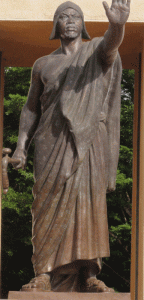
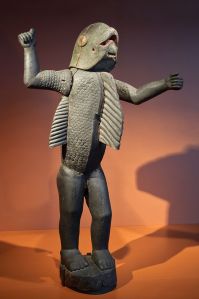
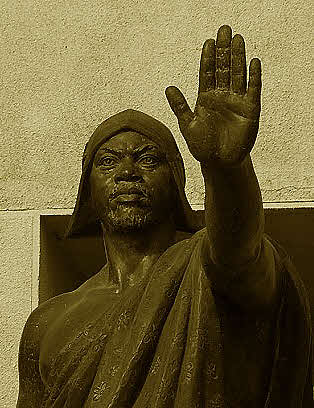
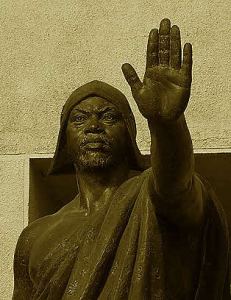
Fon statue symbolizing King Behanzin, the Man-Shark by Sossa Dede (c. 1890) – currently exposed at the Musee du quai Branly in Paris
The extent to which France, Britain and Germany looted Africa of its artefacts during colonialism is not known, but according to the report, which will be released this Friday, about 90% of Africa’s cultural heritage currently lies outside the continent.
… The report’s authors travelled to Mali, Senegal, Cameroon and Benin and looked through the works held by the Musée du quai Branly, a museum focused on non-European cultures in Paris, and found that about 46,000 of its 90,000 African works were “acquired” between 1885 and 1960 and may have to be returned.
Below is the notification by Alfred-Amédée Dodds from the French Republic stating that the Kingdom of Dahomey is now under the Protectorate of the French Republic, with the exception of Whydah and certain other territories, which were declared by a French Notification issued on the 3rd December, 1892, to be annexed to France.
The following is a Translation of that Notification :—
(Translation)
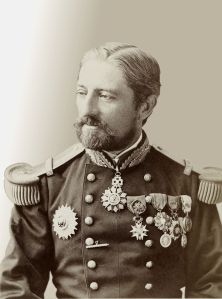
le general Alfred-Amedee Dodds
“In the name of the French Republic:
“We, Brigadier-General, Commander-in-Chief of the French Settlements of Benin, Knight Commander of the Legion of Honour.
“In virtue of the powers conferred upon us,
“We declare :
“That KingBéhanzinAhy-Djerehas been deposed from the throne ofDahomey, and has been banished for ever from this country.
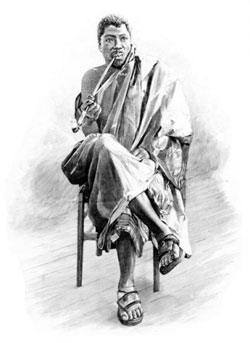
Behanzin, the Last King of independent Dahomey
“That the Kingdom ofDahomeyis, and remains, placed under the exclusive Protectorate of France, with the exception of the Territories of Whydah, Savi, Avlékété, Godomey, and Abomey-Kalavy, which constituted the ancient Kingdoms of Ajuda and Jacquin, which are annexed to the Possessions of the French Republic. The limits of the annexed Territories are: to the west, the River Aheme; to the north and to the east, the River Savi and the north-east frontiers of the Territory of Abomey-Kalavy; to the south, the AtlanticOcean.”
History repeats itself! Over 100 years ago, African Heads of states, Emperors and Kings, were deported by European colonizers for defending their people, lives, independence, land, livelihood, and themselves. Some were killed, and others were exiled. In those days, they were deported to other territories in Africa, far from their lands. Today, 100 years later, they are being deported to the Hague or to some other African lands again. Here are a few, and I am sure you know others.
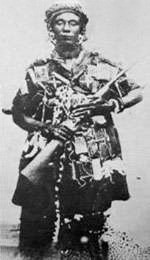
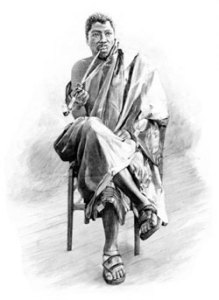
Prempeh I, Asantehene of Ashanti Kingdom deported to Seychelles in 1896 by British forces. His throne is still displayed at the Royal Signals Museum in Blandford, England. He was allowed to return after 24 years in exile.
Yaa Asantewaa of Ashanti Kingdom
Queen Yaa Asantewa of the Ashanti Kingdom was deported to Seychelles in 1902 by the British. She arose her people to fight against the British. She died in exile.
Samori Toure, Founder and leader of the Wassoulou Empire, was deported to Gabon (on an island of the Oogoue) in 1898 by the French. He died in exile.
Samori Touré
Behanzin, King of Dahomey,was deported to Martinique and then later Algeria by the French. He died in exile in Algeria in 1906.
The Oba of Benin Kingdom deported to Calabar by the British in 1897. He died in exile.
Gungunyane, King of Gaza in Mozambique, first sent to Lisbon, and then later to the island of Terceira on the Portuguese Azores. He died in exile in 1906.
Behanzin, the Last King of independent Dahomey
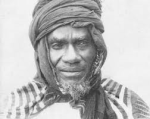
Cheikh Amadou Bamba, of Senegal, deported to Gabon in 1895 by the French. He was brought back 7 years later in 1902, but deported to Mauritania in 1903 for 4 years, before being brought back to Senegal. He died in Senegal.
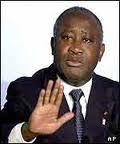
Nowadays, Laurent Gbagbo, President of Côte d’Ivoire, deported to the Hague in the Netherlands 2011 by the French and the Ivorian Ouattara. He is still there.
Laurent Gbagbo
Charles Ble Goude, Youth Minister of Côte d’Ivoire deported to the Hague in Netherlands in 2011 by the French, and the Ivoirian Ouattara. He is still there.
Moussa Dadis Camara,President of Guinea, shot and almost left for dead, deported to Burkina Faso(let’s call the cat by its name). …
And the list goes on… How long will it last? Can we not judge our people ourselves? Is this a choice by the people for the people? Are we really independent?
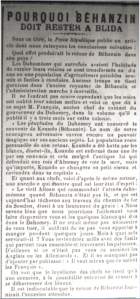
The article below is from 1906 giving reasons why the French government refused to return Béhanzin to his country. The English translation is brought to you by Dr. Y., Afrolegends.com .
===========
Under this title, La Petite République published an article from which we extract the following conclusions:
What will be the effect of Béhanzin’s return in his country?
The Dahomeans, who in the old days, used to raid their neighbors have been transformed under 10 years, into a population of peaceful docile peasants and easy to be led. No troops are stationed in the ancient kingdom of Behanzin and the administration is working amazingly.
Do not for one instant believe that the negroes have forgotten their old master and here is what M. Francois, ancient chief of cabinet of the governor of Dahomey, says about this in the volume he published three months ago on this colony.
The original article from La Petite Republique, in French
“The people of Dahomey have kept the memory of Kondo (Béhanzin). The name of our courageous adversary still exerts a magical power on his old subjects. The population remains certain of his return. They say, Kondo was defeated by the whites, Kondo is imprisoned on an island by his enemies and this despite the ancient law which guards the Kings of Abomey from seeing the sea, but anyhow, Kondo will transform himself into a small bird and will come back to his capital.”
As for the chiefs, here is, from the same author, an anecdote which shows their state of mind:
“The old Alloan who used to command the Dahomean army when Béhanzin was not here, and who today is a worker on the Sudan railroad, was telling one of the engineers, “We know well that we could easily make you disappear, you and the other white people who are in the Dahomey. It would not even be necessary to kill you, it will suffice not to bring you any food for a few days. But what will be the point of this? You will come back, by the thousand, with guns which fire all at once and traverse palm trees. Moreover, if it wasn’t you, it will be the British or the Germans.” And he politely added, “better if it is the French.”
One can see that the loyalty of the chiefs holds onto a fine thread, an occasion, a possibility, to rid their land of the whites.
It is undeniable that the return of Béhanzin will provide this anticipated occasion.
The presidential election last week in Benin stunned all. Most thought that the candidate of the hexagon Lionel Zinsou, the candidate of colonialism, was going to win. We all thought that, France, was going to crush the people’s will and have its man be handed the country. But the people of Benin said NO! The people of Benin resoundly said NO! The country of Béhanzin said NO! The country of the beloved Mathieu Kérékou said NO to France and its puppet and elected Patrice Talon. Vive la Démocratie! In some other African countries (I will not name them), France’s will would have been almighty… but in the land of the fierce Amazons said NO! We, the people has spoken!
I live you here with an excerpt of this victory, and its meaning to all Africans. We have a lot to learn from the people of Benin who have taken a hold of their destiny. Check out these articles by the Brookings Institute, AlJazeera and the BBC on this historic win. And of course, when ‘We the people’ wins, the imperialistic forces are bitter and unhappy, and want to brush it aside in the press.
Here are letters written by King Behanzin to the French president about his kingdom, his land, and French attacks to force him into war. The originals can be found in French archives, and Benin Archives; the translations from French to English are by Dr. Y., afrolegends.com . Enjoy!
==============
“Our desire is that you have the kindness to send us an officer of your house to deal with litigation issues. As for Cotonou, my father never signed it away, and never will we sign it away. It is impossible for us, because if we do, it will be a great prejudice to us, and thunder will crush anyone who would dare dwell on that territory.”
Behanzin, to the President of the French Republic, 30 April 1890, Archives of the Marines, Paris.
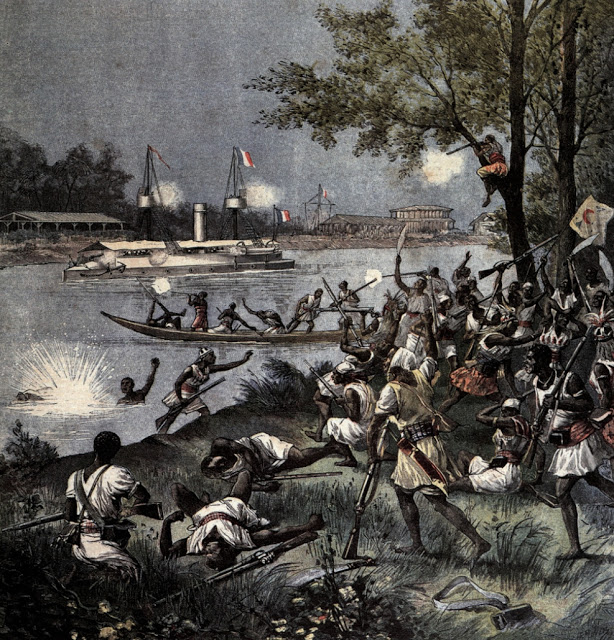
French invasion of the Dahomey along the Oueme River in 1892
“I have just been informed that the French government has declared war on the Dahomey (…). You could start on all the points you want (…) I, too, will do the same. About what happened at the Ouémé River, you caused it (…). If you had not come to start war against me on the Atchoupa way, I would not have done anything to you first (…). Now, I come to tell you that, if you remain calm, I too will remain calm and we will have peace(…).
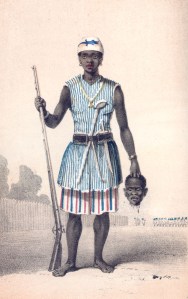
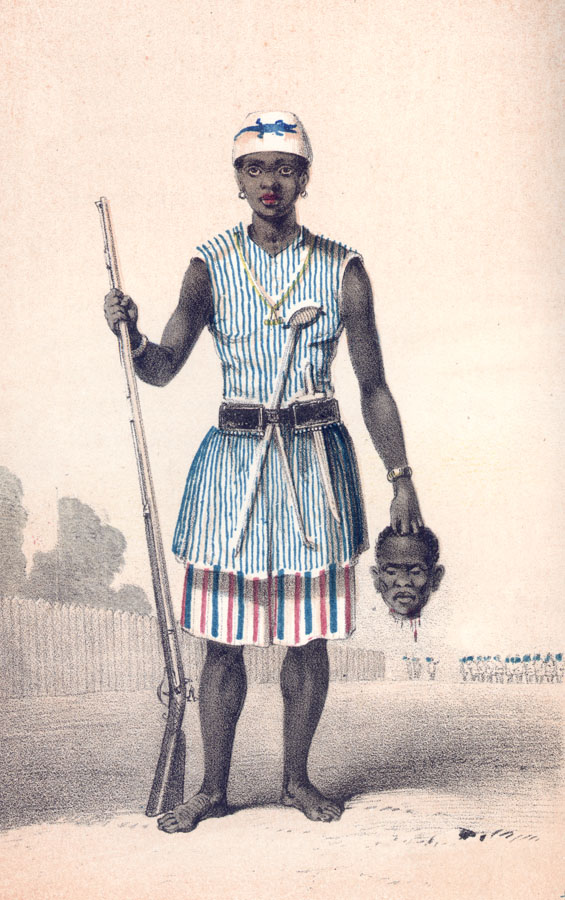
Seh-Dong Hong-Beh, leader of Dahomey Amazons (painted by Frederick Forbes in 1851)
The first time I did not know how to fight a war, now I know. If you start war, I have troops ready. My men are as numerous as works coming out of the earth. I am the king of the Africans and the Europeans have no say in what I do. The villages you are talking about do actually belong to me, they belong to me and wanted to become independent (under your influence), so I gave orders for them to be destroyed (…).
I desire to know how many independent French villages were destroyed by me, King of Dahomey. Remain calm, so your trade in Porto-Novo, this way we will always remain in peace as in the past. If you want war, I am ready. I will not end it even if it lasts a hundred years or kills 20,000 men.”
Behanzin, to Victor Ballot in Porto-Novo, 10 Avril 1892, Archives of the Popular Republic of Benin.
When I was little, I always wondered why the name Cotonou was given to a major city in Benin. I used to think that the name was probably a French transcription of the word ‘coton’ (cotton) for ‘coton – ou’, and that maybe there used to be a lot of cotton there … but nowhere did I find cotton to be the main export or agriculture of Cotonou or Benin.
For starters, Cotonou is the largest city and the economic capital of the Republic of Benin. Cotonou is known in West Africa for its international market Dantokpa, which is hosted over 20-hectares, and is the largest market in the whole of West Africa, generating over 1 billion CFA-Franc per day. Cotonou is also well-known for its Zemidjans (or moto-taxis, similar to the Cameroonian bend-skins), and its pollution arising from its use of bad petrol (essence frelatée) also known as kpayo, which is fraudulously imported from neighboring Nigeria.
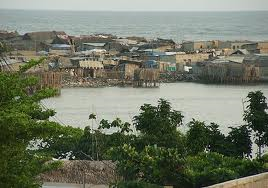
Cotonou, today.
Located on the coastal strip between Lake Nokoué, and the Atlantic ocean, Cotonou’s name comes from the Fon language and means “mouth of the river of death.” At the beginning of the 19th century, Kotonou(as it was then spelled) was a small fishing village. It was originally ruled by the Kingdom of Dahomey until a treaty made with the French by King Ghezo in 1851 allowed the French to establish a trading post at Cotonou. When Glèlè succeeded to his father Ghezo, the territory of Kotonou was ceded to France by a treaty signed on 19 May 1868. After Glèlè’s death in 1889, his son Behanzin tried, unsuccessfully, to challenge the treaty. The town Cotonou then developed itself quickly to become today the largest harbor in the region.
As the economic capital of the republic of Benin, Cotonou hosts 2/3 of the industries of the country, and is the seat of the main enterprises and banks of Benin. It also hosts many of the governmental institutions of the country. It is now the turntable of commerce in the region, especially because of its close proximity with the Nigerian border (and used to be a place for the conversion of the naira), and is the main port for its neighbor land-locked Niger, which is the world’s first producer of uranium. Enjoy this nice video of Cotonou by benin-passion.com.
Je viens de me rendre compte que le site djime.com qui était entièrement dedié au roi Béhanzin, n’est plus actif. J’ai donc decidé de poster ici, la version francaise, l’originale du discours d’adieu du roi Behanzin. J’avais deja traduit dans son intégralité ce discours du roi Behanzin en anglais. The English versionhere.
=============
« Compagnons d’infortune, derniers amis fidèles, vous savez dans quelles circonstances, lorsque les Français voulurent accaparer la terre de nos aïeux, nous avons décidé de lutter.
Nous avions alors la certitude de conduire notre armée à la victoire. Quand mes guerriers se levèrent par millier pour défendre leDanhomèet son roi, j’ai reconnu avec fierté la même bravoure que manifestaient ceux d’Agadja, deTegbessou, deGhézoet deGlélé. Dans toutes les batailles j’étais à leurs côtés.
Malgré la justesse de notre cause, et notre vaillance, nos troupes compactes furent décimées en un instant. Elles n’ont pu défaire les ennemis blancs dont nous louons aussi le courage et la discipline. Et déjà ma voix éplorée n’éveille plus d’écho.
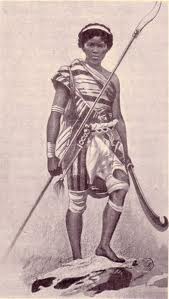
An Amazon warrior ca 1890
Où sont maintenantles ardentes amazones qu’enflammait une sainte colère? Où, leurschefs indomptables : Goudémè, Yéwê, Kétungan? Où, leursrobustes capitaines : Godogbé, Chachabloukou, Godjila? Qui chantera leurssplendides sacrifices? Qui dira leurgénérosité ?
Puisqu’ils ont scellé de leur sang lepacte de la suprême fidélité, comment accepterais-je sans euxune quelconque abdication?Comment oserais-je me présenter devant vous, braves guerriers, si je signais le papier du Général ?
Non !A mon destin je ne tournerai plus le dos. Je ferai face et je marcherai. Car la plus belle victoire ne se remporte pas sur une armée ennemie ou des adversaires condamnés au silence du cachot.Est vraiment victorieux, l’homme resté seul et qui continue de lutter dans son cœur. Je ne veux pas qu’aux portes du pays des morts le douanier trouve des souillures à mes pieds. Quand je vous reverrai, je veux que mon ventre s’ouvre à la joie. Maintenant advienne de moi ce qui plaira à Dieu ! Qui suis-je pour que ma disparition soit une lacune sur la terre ?
Partez vous aussi, derniers compagnons vivants.Rejoignez Abomey où les nouveaux maîtres promettent une douce alliance, la vie sauve et, paraît-il, la liberté. Là-bas, on dit que déjà renaît la joie. Là-bas, il paraît que les Blancs vous seront aussi favorables que la pluie qui drape les flamboyants de velours rouge ou le soleil qui dore la barbe soyeuse des épis. Compagnons disparus, héros inconnus d’une tragique épopée, voici l’offrande du souvenir : un peu d’huile, un peu de farine et du sang de taureau. Voici le pacte renouvelé avant le grand départ. Adieu, soldats, adieu !…
Behanzin, the Last King of independent Dahomey
Guédébé…reste debout, comme moi, comme un homme libre. Puisque le sang des soldats tués garantit la résurrection duDanhomè, il ne faut plus que coule le sang. Les ancêtres n’ont plus que faire de nos sacrifices.Ils goûteront mieux le pur hommage de ces cœurs fidèles unis pour la grandeur de la patrie. C’est pour quoi j’accepte de m’engager dans la longue nuit de la patience où germent des clartés d’aurore. Guédébé, comme le messager de la paix, va àGhohooù campe le général Dodds.Va dire au conquérant qu’il n’a pas harponner le requin. Va lui dire que demain, dès la venue du jour, de mon plein gré, je me rends au village de Yégo. Va lui dire que j’accepte, pour la survie de mon peuple, de rencontrer dans son pays, selon sa promesse, le président des Français. »
extrait de – Kondo le requin – Jean PLYA – Ed. CLE
This famous speech of KingBéhanzinis the last strong message he gave onJanuary 20, 1894, in homage to his army which he always praised the courage, and bravery of the soldiers and amazons. For the original,click here.Since this is such an important piece of African history, I decided to translate his farewell speech into english. Enjoy!
“Fellow sufferers, last faithful friends, you know the circumstances under which, when the French wanted to grab the land of our ancestors, we decided to fight.
We had the certitude to lead our army to victory. When my warriors rose by the thousand to defend theDanhomèand his king, I recognized with pride the same bravery manifested by those ofAgadja, ofTégbessou, ofGhézo, and ofGlèlè. I was by their sides in all the battles.
Despite the legitimacy of our cause, and our courage, our compact troops were decimated in an instant. They could not defeat the white enemies whom I also praise the courage and discipline. And already my weeping voice arouses no more echo.
An Amazon warrior, ca 1890
Where are now myardent amazonswho were inflamed by a mighty anger?
Where are theirindomitable chiefs:Goudémè,Yéwê,Kétungan?
Where are theirrobust captains:Godogbé,Chachabloukou,Godjila?
Who will praise theirsplendid sacrifices? Who will tell about theirgenerosity?
Since they sealed the pact ofsupreme loyaltywith theirblood,how could I accept any sort of abdication without them?
How could I dare presenting myself in front of you, brave warriors, if I signed the general’s paper?
Béhanzin (Gbêhanzin) Hossu Bowelle or the ‘King Shark‘ was one the most powerful kings in West Africa at the turn of the 19th century. He was the eleventh king of Dahomey, and the last independent ruler of Abomey before French colonization. Who was really Béhanzin?
Born in 1844 in Abomey, Béhanzin was the eleventh king of Dahomey from 1889 to 1894. His name, Kondo, was changed to Béhanzin after he succeeded to his father Glèlè. His personal symbols were the shark, the egg, and two coconut palm trees, while those of his father were the lion and the ritual knife of Gu. His name actually meant ‘the egg of the world or the son of the shark‘. His great love for the freedom of his country, culture, and people led him to courageously and fiercely defend the land of his ancestors. He led the resistance and fight for the Dahomey’s freedom.
Seh-Dong Hong-Beh, leader of Dahomey Amazons (by Frederick Forbes in 1851)
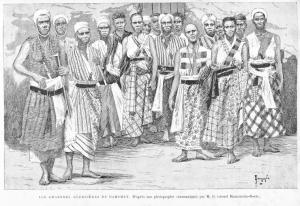
Dahomey was one of most powerful kingdoms of West Africa, deriving its power from trade and its superior army. Dahomey’s army was one of the strongest and best-organized armies in West Africa and was comprised of both men and women, including the Amazons, a superior and dreaded fighting force of female warriors. At the time, Béhanzin masterfully led an army of 15000 men and 5000 amazon women. One of the Amazon leaders was Seh-Dong Hong-Beh (which means “God speaks true“) who led an army of 6000 amazons against the Egba fortress in Abeokuta in 1851.
In 1882, France declared a protectorate over Porto Novo, a vassal state of Abomey, without consulting with the indigenous people, as was (and still is) the practice with Europeans colons. By 1885, the French occupied the entire coastal strip West of Porto Novo. In 1889, King Glèlè and his son Béhanzin, who considered these coastal areas to be part of the kingdom of Dahomey, declared that the Fon people could no longer tolerate France’s actions.
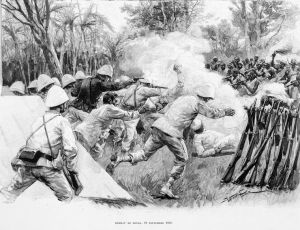
Combat de Dogba au Dahomey, 19 September 1892
In February 1890, the French occupied Cotonou; Béhanzin, now king after Glèlè’s sudden death, prepared for war. Béhanzin’s army, with rifles supplied by the Germans, were getting too strong for neighboring French colonies. Béhanzin’s forces attacked the French simultaneously on two fronts—militarilyat Cotonou and economically by destroying the palm plantations at Porto Novo. The latter precipitated an early end to the hostilities. A treaty was signed, with the French continuing to occupy Cotonou, for which Béhanzin exacted an annuity; he made France pay for the use of Cotonou port. The peace lasted for two years. However, France was determined to annex Dahomey before the British or Germans did. Béhanzin, knowing that he would have to defend his sovereignty, continued upgrading his army in preparation for renewed war.
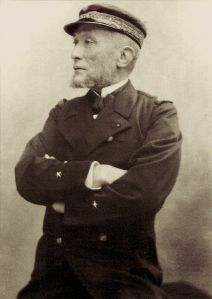
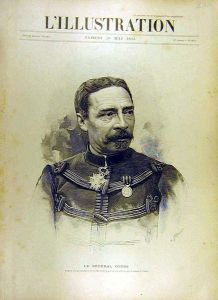
General Alfred-Amedee Dodds on the cover of ‘L’Illustration’ 20 May 1893
He declared a treaty made with France by his father, Glèlè, in 1868 null and void, from this war began. In 1894, Béhanzin was defeated by Colonel Alfred-Amédée Dodds, a Senegalese mulatto, who was sent to fight against him with powerful French armed forces. Béhanzin, not wanting his people to be massacred, surrendered his person to Dodds, without signing any instrument of national surrender or treaty. Béhanzin thought that he will get a chance to talk to the French president and find a way or sign a conciliation agreement for his country, unfortunately, the French tricked him and instead of going to France, Behanzin was exiled to Martinique. With Béhanzin and his immediate family adamantly refusing to sign a treaty making Dahomey a French protectorate, the French installed their choice, Agoli-Agbo, as king; Agoli Agbo, the puppet, did not last more than 6 years (when he asked for more freedom to rule, he was deported to Gabon). Dahomey was then placed under France’s protection and it eventually became a French colony. Béhanzin died in 1906 in Algeria. In 1928, his son, Ouanilo (who was also France’s first African attorney in 1920) had his body moved to Dahomey. Ouanilo’s remains will be restituted to Benin almost 80 years after his death.
King Behanzin in exile in Algeria
Béhanzin once said: «Vous pouvez arracher l’homme de son pays, mais vous ne pouvez arracher son pays du cœur de l’homme, ni arracher un grand homme de l’histoire.» [You can remove a man from his country, but you can never remove his country from a man’s heart, or erase a great man from history]. Béhanzin truly loved his people, and when he saw that his army was being massacred by the French, he cried for his beautiful and strong amazons, and pronounced the most beautiful ode to them [Où sont maintenant les ardentes amazones qu’enflammait une sainte colère? … Qui chantera leurs splendides sacrifices? Qui dira leur générosité? … comment accepterais-je sans eux une quelconque abdication? Comment oserais-je me présenter devant vous, braves guerriers, si je signais le papier du Général?…pour la survie de mon peuple, [j’accepte] de rencontrer dans son pays, selon sa promesse, le président des Français. —
Behanzin, the Last King of independent Dahomey
Where are now the ardent amazons who were inflamed by a mighty anger? … Who will praise their splendid sacrifices? … Who will tell about their generosity? … How could I accept any sort of abdication without them? How could I dare presenting myself to you, brave warriors, if I signed the general’s paper?… for the survival of my people, [I agree] to meet in his country, according to his promise, the president of the French]. Please watch this great documentary about the life of Béhanzin, the last king of the Dahomey (part 1 – 4), and one of the last resistant to French colonization. Why was he defeated? He said himself: «malgré la justesse de notre cause, notre vaillance et notre détermination, ils n’ont pu l’emporter et s’accaparer de la terre de nos aïeux que par la force de leur science» [despite the legitimacy of our cause, our courage, and determination, they could only win and take the land of our forefathers because of the force of their science]. Check out the website djime.com entirely dedicated to Béhanzin and his heritage. To learn more about Dahomey’s Amazons, check out the Smithsonian blog. This facebook page provides details about the organization of the amazons in the army. Don’t forget to offer your support to the Agongointo Musée du passé vivant dedicated to the kingdom of Dahomey.