Mali uses AI to Teach School Children in Bambara

Artificial Intelligence (Source: IBTimes.co.uk)

As AI tools become ubiquitous, many African countries are taking advantage to improve their education, economy, and much more. One such country is Mali where AI tools have been used to teach school children in the local languages. In parenthesis, this is happening while some African countries like Nigeria are moving away from teaching local languages in the curriculum; this is quite sad. Here, we are raising our hats to educators in Mali who are using AI to teach kids how to learn and write in local languages that they already speak at home with friends and family. The Education ministry is using the services of RobotsMali which has produced more than a hundred stories in Bambara, the most widely spoken local language.

Excerpts below are from Africanews. Enjoy!

=====
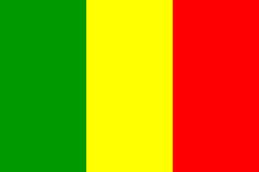
Flag of Mali
Flag of Mali

Since Mali adopted a new constitution in 2023, the country has 13 official languages. Although French is no longer part of that list, the language of the former coloniser is still present everywhere, including in classrooms.

Malian authorities hope artificial intelligence can change that by helping students learn to read and write in local languages they already speak with friends and family.

To achieve this goal, the Education ministry has called on RobotsMali. This AI company has produced more than a hundred stories in Bambara, the most widely spoken language in the country, for students to read in schools.

It helps me speak better with my friends. All of this is good,” said 13-year-old pupil Clarisse Yasségué Togo. At school, we only speak French.”

AI programmes like ChatGPT and Leonardo are used to write, translate and illustrate the stories.

Since the stories are also illustrated, it teaches [students] to make the connections between words and their meaning very quickly,” said RobotsMali Mamadou Dembele.

The organisation hopes to provide a solution to the lack of books in Malian languages.

Bambara is our language. We should prioritise it,” said 17-year-old student Fatoumata Sacko.

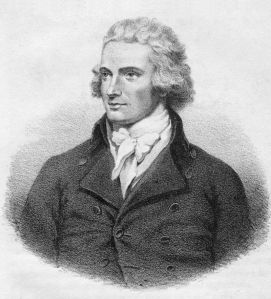
Mungo Park describes Ségou in 1795

Mungo Park
Portrait of the Scottish explorer Mungo Park

Below is a description of the great city of Ségou (pronounce Segu) in Mali by the Scottish explorer Mungo Park in 1795. Here he describes the city’s population density, dynamism, architecture, and even their ways of life. He amply describes the roominess and surprised sturdiness of Ségou’s canoes which could host 4 horses. Mungo Park is simply astounded by the greatness of the civilization he encounters there, and concludes, “the crowded population and the cultivated state of the surrounding country, formed altogether a prospect of civilization and magnificence, which I little expected to find in the bosom of Africa.” Note that the city is surrounded by high mud walls probably similar to the Tata of Sikasso: an African Fortifying Wall.

=====

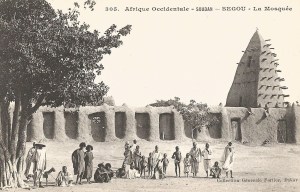
Mali_Ségou_La Mosquée (AOF)
The Mosque in Segou at the beginning of the 20th century

Sego, the capital of Bambarra, at which I had now arrived, consists, properly speaking, of four distinct towns ; two on the northern bank of the Niger, called Sego Korro, and Sego Boo and two on the southern bank, called Sego Soo Korro and Sego See Korro. They are all surrounded with high mud walls ; the houses are built of clay, of a square form, with flat roofs ; some of them have two storeys, and many of them are whitewashed.

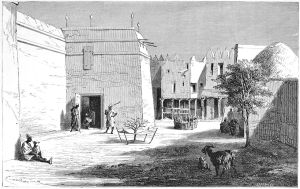
Mali_Segou_Palais d'Ahmadou Tall
Entrance to Ahmadu’s palace in Segou-Sikoro published in the 1868 edition of the book by Eugene Mage Voyage dans le Soudan occidental (Sénégambie-Niger), Paris: Hachette

Besides these buildings, Moorish mosques are seen in every quarter ; and the streets, though narrow, are broad enough for every useful purpose, in a country where wheel-carriages are entirely unknown. From the best enquiries I could make, I have reason to believe that Sego contains altogether about thirty thousand inhabitants. The king of Bambarra constantly resides at Sego See Korro ; he employs a great many slaves in conveying people over the river, and the money they receive (though the fare is only ten cowrie shells for each individual) furnishes a considerable revenue to the king in the course of a year. The canoes are of a singular construction, each of them being formed of the trunks of two large trees, rendered concave, and joined together, not side by side, but end ways ; the junction being exactly across the middle of the canoe ; they are therefore very long and disproportionably narrow, and have neither decks nor masts ; they are, however, very roomy ; for I observed in one of them four horses, and several people crossing over the river. When we arrived at this ferry, with a view to pass over to that part of the town in which the king resides, we found a great number waiting for a passage ; they looked at me with silent wonder, and I distinguished, with concern, many Moors among them. There were three different places of embarkation, and the ferrymen were very diligent and expeditious ; but, from the crowd of people, I could not immediately obtain a passage ; and sat down upon the bank of the river, to wait for a more favourable opportunity The view of this extensive city ; the numerous canoes upon the river ; the crowded population and the cultivated state of the surrounding country, formed altogether a prospect of civilization and magnificence, which I little expected to find in the bosom of Africa.


Mungo Park, Travels in the Interior Districts of Africa: Performed Under the Direction and Patronage of the African Association, in the Years 1795, 1796, and 1797.

Sego = Ségou

Bambarra = Bambara

Sego Boo = Ségou-Bou

Sego Korro = Ségou-Koro

Sego See-Korro = Ségou-Sikoro

*The four cities mentioned here are actually on the southern shore, but there are on the northern shore some neighborhoods to which Mungo Park attributed excessive importance.