Mali Launches a State Gold Refinery

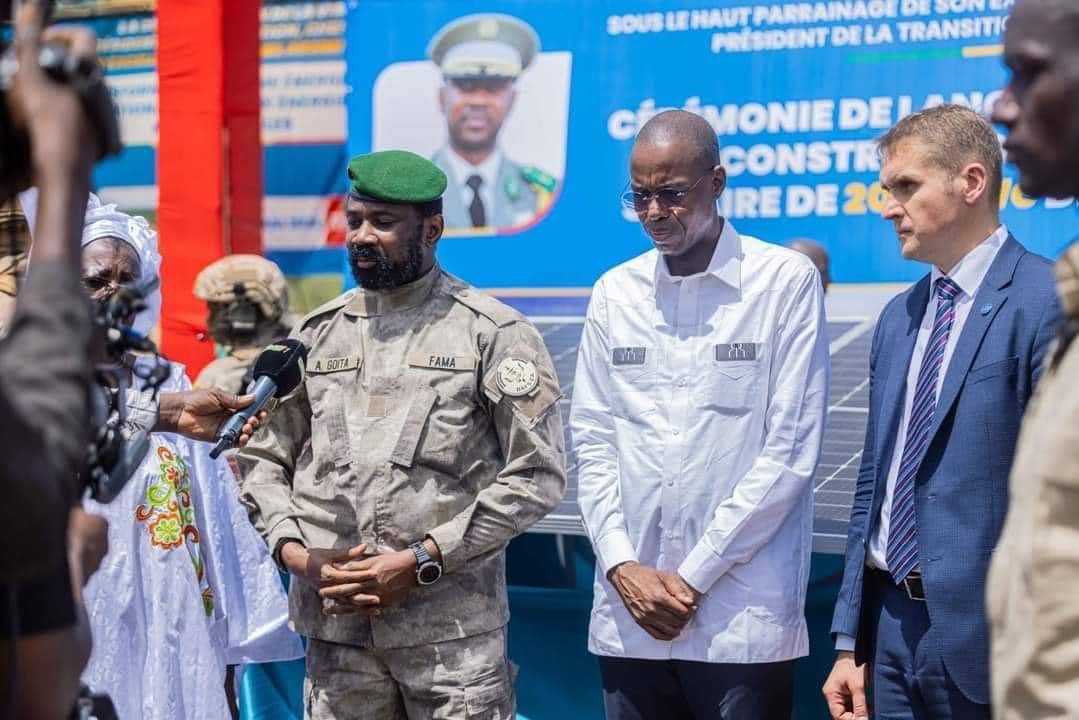
President Assimi Goita of Mali during the launching of a public gold refinery (Source: akondanews.net)

Today, June 17, 2025, Mali has begun the construction of a new state-controlled gold refinery. The facility, built in partnership with Russia’s company Yadran Group, is expected to process up to 200 metric tons of gold annually, significantly increasing Mali’s refining capacity. The refinery is part of the broader mining reforms taken by the government of Assimi Goïta to keep more gold processing within the country rather than exporting raw materials. This should, in principle, help develop the local manpower. The state will hold a 62% stake, with Yadran Group owning the remaining 38%. This refinery is intended to serve as a regional hub, processing gold not only for Mali, but in the long term for neighboring countries like Burkina Faso as well. This project reflects the wider trend in the Sahel, and particularly in the AES, where countries are revising mining laws so as to keep more value-added processing at home.

Flag of Mali
Flag of Mali

It is about time that Mali, and other African countries learn to process their materials at home, instead of exporting the raw materials to later on import the same things, or letting the others reap fruits from our raw materials. Just imagine for a second if the Democratic Republic of Congo had the power to develop its cobalt, tantalum, tin, uranium, etc., at home, wouldn’t it impact its populations for better? Or just imagine if Ivory Coast, the number one world producer of cocoa was processing its cocoa at home, instead of exporting the raw beans to Europe for Europeans to process, how would this fundamentally change the Ivorian economy?

Djenné
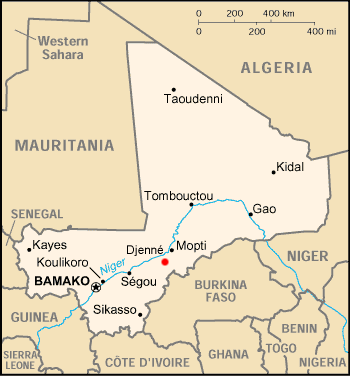
Map of Mali

Of course, when you read the MSM magazines, they will title Junta-led Mali begins construction of gold refinery in partnership with Russia; instead of the Malian government begins the construction of a gold refinery! They are upset that Mali, and all the other countries of the AES, Burkina Faso and Niger, are taking steps to nationalize, to improve, and to build factories to refine their God-given resources in their own lands, thus taking a step towards lifting their nations out of poverty! This, of course, would not help the West which would rather have a weak African government or puppet governments.

Moreover, yesterday 06/16, the Malian courts ordered that the Loulo-Gounkoto gold mine be placed under provisional administration for six months. The deposit has been the subject of a tug-of-war between the Malian government and the Canadian mining group Barrick Gold for the past two years, over tax dispute (Mali wins $160m in Gold Mining Dispute). The Malian authorities hope to resume production operations halted in January at this strategic gold site, while gold prices are at their highest.

Why is Ibrahim Traoré so Loved ?

General Assimi Goita

I love this message of our general and president Assimi Goïta: “if I die before reaching our ideal, continue the project without me and lay the groundwork for change with my blood and my fleshNo sacrifice is huge for this country“[Assimi Goïta Speaks to the Malian People: No Sacrifice is too Big for this Country]. This is indeed the motto that all the leaders of the AES, Assimi Goïta of Mali, Abdourahamane Tchiani of Niger, and Ibrahim Traoré of Burkina Faso lead with and live by. They all created the Alliance of the Sahel (AES) so as to be strong together, uniting their forces, people, and resources to fight together against the forces of imperialism. Now the west is trying hard to break apart the union by singling out Traoré (Coup against Ibrahim Traoré and Worldwide Support for Him). Traoré is brilliant, no doubt. He has been doing an awesome job, no doubt. And he has been the true communicator in the AES plan. He is young, and appeals to the youths of the entire continent. He speaks with great charisma, and confidence, which scares many. He is a true son of Burkina Faso inspired by the great Thomas Sankara. 

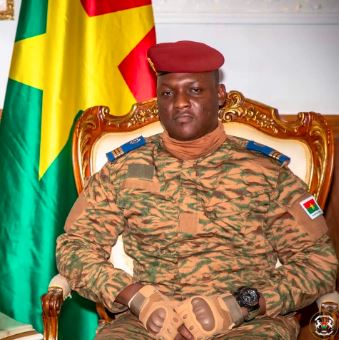
Capitaine President Ibrahim Traore (Source: sig.gov.bf)

A mother does not love one child over the other. She loves each one, albeit differently and uniquely, given the uniqueness of each child. Mama Africa loves all her leaders of the AES equally and together we will free the whole. Thus, it is important to know that we, Africans, cannot afford to have just one Traoré, for we are all Traoré, and we should all endeavor to have thousands of Traoré, Tchiani, and Goïta throughout the continent, for history not to repeat itself. We have to be careful… and take care of our leaders, and make sure we keep working towards total freedom. Just a few years back (not even 5 years), John Magufuli of Tanzania was here, Pierre Nkurunziza of Burundi was here and we, Africans, applauded them. Both went down… and we all cried… we need to make sure history does not repeat itself! Let’s have Millions of African Leaders: Be the Leader You Want to Have!

Below are excerpts from an article from the BBC explaining why Ibrahim Traoré is loved… yet claiming that it is a “skillfully built persona af a pan-africanist”… pure nonsense… they really have not known him when he was younger. Had they known him, they would have known that there is nothing ‘built’ about him, and it is not a persona… when an African stands up proudly and with confidence without the complex of inferiority, they call it a persona. Our duty is to all be Ibrahim Traoré!

=====

Ibrahim Traore lays the foundation for the Thomas Sankara Mausoleum (Source: LeFaso.net)

A charismatic 37-year-old, Burkina Faso‘s military ruler Capt Ibrahim Traoré has skilfully built the persona of a pan-Africanist leader determined to free his nation from what he regards as the clutches of Western imperialism and neo-colonialism.

His message has resonated across Africa and beyond, with his admirers seeing him as following in the footsteps of African heroes like Burkina Faso’s very own Thomas Sankara – a Marxist revolutionary who is sometimes referred to as “Africa’s Che Guevara“.

Traoré’s impact is huge. I have even heard politicians and authors in countries like Kenya [in East Africa] say: ‘This is it. He is the man’,” Beverly Ochieng, a senior researcher at global consultancy firm Control Risks, told the BBC.

His messages reflect the age we are living in, when many Africans are questioning the relationship with the West, and why there is still so much poverty in such a resource-rich continent,” she said.

Flag of Burkina Faso

After seizing power in a coup in 2022, Traoré’s regime ditched former colonial power France in favour of a strong alliance with Russia, that has included the deployment of a Russian paramilitary brigade, and adopted left-wing economic policies.

This included setting up a state-owned mining company, requiring foreign firms to give it a 15% stake in their local operations and to transfer skills to Burkinabé people.

The rule also applied to Russian miner Nordgold, which was given a licence in late April for its latest investment in Burkina Faso’s gold industry.

As part of what Traoré calls a “revolution” to ensure Burkina Faso benefits from its mineral wealth, the junta is also building a gold refinery and establishing national gold reserves for the first time in the nation’s history.

… The junta [they still call it a junta, even though, he has received a full vote of confidence for 5 years by the entire Faso nation – like said before: Gabon and the Double Standards of the International Community] has also nationalised two gold mines previously owned by a London-listed firm, and said last month that it planned to take control of more foreign-owned mines.

Enoch Randy Aikins, a researcher at South Africa’s Institute for Security Studies, told the BBC that Traoré’s radical reforms had increased his popularity in Africa. “He is now arguably Africa’s most popular, if not favourite, president,” [No, Traore does not want to be the most popular or the favorite, he just wants to do right by his people! – Thus African, let us follow his footsteps and make our countries and continent proud!] Mr Aikins said.

Burkina Faso
Burkina Faso

… Ms Ochieng said that Traoré first caught the attention of Africans when he spoke at the Russia-Africa summit in 2023 [that is not true… we already knew him before 2023], telling African leaders to “stop behaving like puppets who dance every time the imperialists pull the strings“.

… Traoré’s popularity comes despite the fact that he has to fulfil his pledge to quell a 10-year Islamist insurgency failed [has he failed? What did the French, and Operations Barkhane via the Takuba Task Force and Serval… – that compendium of all western nations- do in over 10 years in the region? And who was funding these terrorist groups?] that has fuelled ethnic divisions and has now spread to once-peaceful neighbours like Benin. [yeah right… we know who is in Benin – France!].

… “Traoré is stylish and confident, with a very open face and a small smile. He is also a powerful orator, and presents himself as a man of the people.”

Mali – Burkina Faso – Guinea Agree to form a Tri-Country Axis

Map of Mali with its capital Bamako

It is no secret that 14 African countries today are still under the French colonial tax (The 11 Components of the French Colonial Tax in Africa), and that every year, France takes home upwards of 500 billion dollars (Africa is funding Europe!) from its currency imposed upon those countries. After all, France has no gold mines on its soil but yet is the 4th world producer of gold, gold coming from Mali, while Mali is among the world’s poorest countries on the planet. It is also no secret that Mali has been trying to free itself from this colonial tax (The French Colonial Tax at the Heart of Mali-France Tensions), and has been working tirelessly to revoke at least 8 of the 11 rules. With the unrest in Burkina Faso brought by the Jihadists from the north who were well protected by the French army brought in to protect Burkinabe interests, but who instead have created further unrest in the area, it is no surprise that Burkina Faso has joined forces with Mali, and now Guinea, to create a strategic axis which will focus on military and trade agreements between the 3 countries. Although we do not particularly trust the Guinean leader, we applaud the union between the two brothers Mali and Burkina Faso, faced with sanctions from the puppet organization that is ECOWAS. We also applaud this ‘federation’ which will give Mali and Burkina Faso access to the sea via Guinea, thus opening up these land-locked territories to further trade. Enjoy excerpts below from the People’s Dispatch; check out also the write-up on AfricaNews.

Like Thomas Sankara said, “La patrie ou la mort, nous vaincrons!

====

Burkina Faso
Burkina Faso

The three West African countries, all of whom have recently undergone military takeovers amid rising public anger against France, have agreed to a Bamako-Conakry -Ouagadougou axis, with enhanced cooperation on matters ranging from trade to the fight against insecurity.

As France is getting ready to withdraw its troops from Burkina Faso by the end of the month, signs of a possible realignment in the region are emerging with a tripartite meeting between the foreign ministers of Burkina Faso, Mali, and Guinea—Olivia Ragnaghnewendé, Morissanda Kouyate, and Abdoulaye Diop—held in Burkina Faso’s capital Ouagadougou on February 8 and 9.

The leaders discussed a range of issues, “in particular the success of the transition processes leading to a return to a peaceful and secure constitutional order,” and, importantly, the “revitalization of the Bamako-Conakry-Ouagadougou axis” to make it a “strategic and priority area” on matters including trade and economic exchanges, mining, transport, roads and railway links, and the “fight against insecurity.”

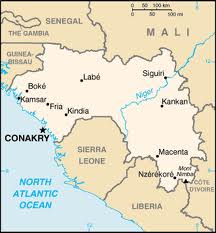
Guinea-Conakry
Guinea-Conakry

The communique issued following last week’s tripartite meeting condemned the “mechanical imposition of sanctions which often fail to take into account the deep and complex causes of political change,” adding that these measures “affected populations already battered by insecurity and political instability,” “undermine sub-regional and African solidarity,” and “deprive ECOWAS and the AU of the contribution of the three countries needed to meet their major challenges.”

While calling for “technical, financial, concrete, and consistent support” for security efforts and the return to a normal constitutional order, the three countries have agreed to “pool their efforts and undertake joint initiatives for the lifting of the suspension measures and other restrictions.”

Nowadays We will Respond in Kind

Colonel Abdoulaye Maiga speaking at the UN General Assembly (Source: DW – South Africa)

I have listened to the Malian Prime Minister’s speech at the UN again and again. Colonel Abdoulaye Maïga stated quite a few things which are not only worth restating, but also mark the beginning of a new era for relationships with Africa. For me the clear message was that, faced with the West’s insults, defamations, and aggressions, we will no longer respond with fear, we will stand up and respond in kind; we deserve respect and will be treated as such! France, the west, uses Africa to become 4th world gold producer (without a single mine), yet France walks on Africans, and insult us… the era when our backs were broken, and we held back how we felt by fear of retaliations, or by fear of the master, that era is long gone! We will respond in kind. We are human beings too, we are proud sons and descendants of long generations of great kings, we deserve respect, and we will fight to be treated respectfully. Abdoulaye Maïga honored Malians, and Africans as whole; he said openly what we have all been feeling in the depth of our bellies.

In his speech, Maïga called France’s government, a junta, which by the way is how the French government has been referring to the Malian government… but I ask you, is it not what France’s troops and allies have been doing in Mali? in the DRC? in Libya? That is nothing new for France’s behavior (and the West) in Africa. Isn’t neighboring Ivory Coast a recent example? He added, “The French junta has damaged universal values and betrayed its long tradition of humanistic thought,” … [Paris has acted] “in service of obscurantism” and engaged in “neocolonial, condescending, paternalistic and revanchist” politics.

Move on from the colonial past and hear the anger, the frustration, the rejection that is coming up from the African cities and countryside, and understand that this movement is inexorable,” Maïga said, addressing France.

Your intimidations and subversive actions have only swelled the ranks of Africans concerned with preserving their dignity,” he said. Why, because Africans have all had enough! How can anybody understand that Africa is funding Europe! up to 500 billion Euros per year goes to France through the  FCFA, and yet France leaves abject poverty in its wake? and then France (and the West) treats Africa with the greatest condescension? We are not looking for love in these relationships… we just want what is owed us, respect and dignity!

At the United Nations, Outstanding Speech by Mali PM who Slams France, Praises Russia Ties

Flag of Mali
Flag of Mali

Last week, Mali new interim Prime minister Abdoulaye Maïga gave a speech at the United Nations’ Tribune. It was an amazing speech detailing Mali’s battle for its freedom and its struggle against France and its commies. Excerpts below are from Al-Jazeera.

=====

Abdoulaye Maiga lashes out at the former colonial ruler, the UN as he praised the ‘exemplary’ cooperation with Russia.

Mali’s military-appointed prime minister has lashed out at France and the United Nations in a grievance-filled address over his nation’s deteriorating security situation while praising the “exemplary” cooperation with Russia.

Map of Mali with its capital Bamako

Addressing the 77th session of the UN General Assembly on Saturday, Abdoulaye Maiga slammed what he called France’s “unilateral decision” to relocate its remaining troops to neighbouring Niger amid deteriorating relations with Mali’s two-time coup leader Assimi Goita.

… “Move on from the colonial past and hear the anger, the frustration, the rejection that is coming up from the African cities and countryside, and understand that this movement is inexorable,” Maiga, who was appointed prime minister last month, said.

Your intimidations and subversive actions have only swelled the ranks of Africans concerned with preserving their dignity,” he added.

The Malian prime minister also offered a grim assessment of the UN peacekeeping mission, known as MINUSMA, while openly praising the “exemplary and fruitful cooperation between Mali and Russia” and the influence of mercenaries from the Wagner Group.

… “We must recognise that nearly 10 years after its establishment, the objectives for which MINUSMA was deployed in Mali have not been achieved,” Maiga said. “This is despite numerous Security Council resolutions.”

Assimi Goïta Speaks to the Malian People: No Sacrifice is too Big for this Country

Mali_Assimi Goita_3
Colonel Assimi Goita

Colonel Assimi Goïta, the president of Mali, recently addressed his people, the Malian people. I was moved by his humility, and depth. We should all aspire to do our part, and support our leaders, and more importantly remember that change starts with each one of us. If we want change, we each have to lend a hand, because it starts with us. We don’t have to wish for martyrs, but start one brick at a time. We are grateful for Assimi Goïta who is trying to bring back dignity to the Malian people, and pray that he can reach his goal, this goal which is ours, and blesses the entire African continent. We pray for him, and countless Malians, and citizens who are standing up. This is a fight for our freedom, our humanity, our dignity… Enjoy! The original is on Afrik-plus. Translated to English by Dr. Y., Afrolegends.com

=====

Flag of Mali
Flag of Mali

“I am a mortal, I am not perfect. I am aware of that. History will judge me one day, but in the meantime I just ask for your support. I did not choose this destiny. It imposed itself to me. God knows what He is doing.

I will go all the way but if I die before reaching our ideal, continue the project without me and lay the groundwork for change with my blood and my flesh.

No sacrifice is huge for this country.

Thomas Sankara
Thomas Sankara a Ouagadougou

I am not Thomas Sankara, or Jerry Rawlings, I am Assimi Goïta. Remember me as a reformer not a revolutionary.

Remember me as the bringer of hope to the people, the one who came when your blood was shed because of your desire for change.

I will go to the end of my mission. I will never betray it, I will not betray your trust.

Death does not scare me, I saw it every day on the battlefield, it is failure that scares me.

Black power fist_1If death marries me on the way to this ideal, do not mourn me.

Do not make my grave a sanctuary.

I did what I thought right for my country. I did it for me but I did it for you too.

I am Assimi, the man who smiles every day with death, his fist closed.

Assimi Goïta

Tensions Escalating in Mali

Flag of Mali
Flag of Mali

Tensions are escalating between France and Mali as the French ambassador was expelled from Mali and given 72 hours on Monday to leave the country. How did we get here? In reality, Mali has been in disarray since Libya fell in 2011… and has never recovered since then (“Le Mali en miettes. A qui le tour?” de Chems Eddine Chitour – “Mali in pieces. Who is next?” by Chems Eddine Chitour). France came in to “offer” her support to fight the djihadists in the north of the country. Today, as a result, the country is split into pieces, countless Malians have died, and France is now world producer of gold… mind you that France does not have an ounce of gold on her territory, but rather has been pillaging the mines of Mali, disrupting the peace in the region, and getting the “International community” to support her efforts in the plundering of the golden Mali (Africa is funding Europe!). Remember that Emperor Kankan Musa of the Empire of Mali, which encompassed part of modern-day Mali, distributed so much gold during his pilgrimage to Mecca in 1324 that it took a decade for the Egyptian economy to recover.

Map of Mali with its capital Bamako

Mali has been in pieces… after the coup that got rid of France’s puppet IBK (Bye Bye IBK: Mali Coup), and the military coup that brought the Colonel Assimi Goita to power. Faced with 80% of its territory occupied by foreign forces and terrorists, and in order to regain the sovereignty of its lands, Mali has sought the partnership of Russia, which France has screamed against – remember The 11 Components of the French Colonial Tax in Africa which denies Africans the right to other military or economic partners without France’s approval? Well, France is angry that Mali has turned to Russia for help in regaining its territory… The time for us being doormats is over France… We have the right to our dignity! We have the right to choose the partners that can help us in our visions, a vision which seeks the well-being of our communities.

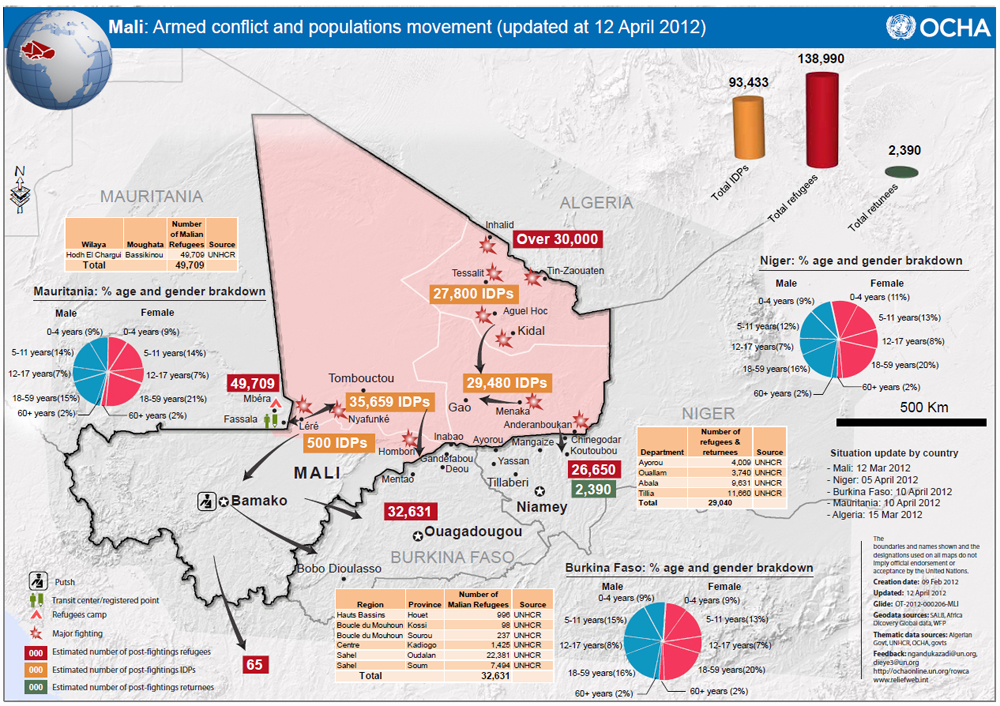
Mali conflict map

Just last week, France’s puppet organization that is ECOWAS (CEDEAO) placed unbelievable sanctions on Mali, closing borders, banking, etc… How can an African organization act in such a way against a sister country, if it is not serving the interest of the enemy?  

I live you here with a more recent timeline published on Al-Jazeera. Bear in mind that it is not told from the eyes of a Malian or an African, so it is biased. For the full timeline, please go to Al-Jazeera

====

Colonel Assimi Goita

On August 18, 2020, a group of Malian soldiers led by Colonel Assimi Goïta overthrew elected President Ibrahim Boubacar Keïta, who was facing angry protests over the government’s failure to stem the violence. The coup is seen as a blow to French President Emmanuel Macron, who had supported Keïta and sought to improve relations with former colonies in Africa.

On March 30, 2021, in a rare criticism of French forces in Mali, United Nations investigators accused the French military of being responsible for the killing of at least 19 civilians at a wedding party in central Mali in an air raid three months before. France denied the findings, saying its forces targeted an “armed terrorist group” and that it had “numerous reservations about the methodology used” in the UN investigation.

On May 25, Goïta pushed out a civilian-led government appointed to oversee a transition period, plunging the country into further uncertainty. He was named interim president on May 28.

In reaction to the power grab, France suspended its joint military operations with Malian forces on June 3 “awaiting guarantees” that civilians return to positions of power.

Conflict map of Mali with internally displaced populations (blog.amnestyusa.org)

On June 10, French President Emmanuel Macron announced a major “transformation” and drawdown of France’s military presence in the Sahel where about 5,100 soldiers – across Burkina Faso, Chad, Mali, Mauritania and Niger – operate under its Barkhane operation [no wonder France can afford to have 35-hour week for its workers, or even confine them forever… their riches come from Africa].

France decided on July 3 to resume its military operation in Mali, as well as its advisory missions.

On September 14, France warned Mali against a deal with Wagner as reports emerged the country’s military government was close to hiring 1,000 mercenaries.

A spokesperson for the Malian defence ministry said his country wanted to “diversify its relationships” on security grounds.

French flag

On October 5, Macron called on Mali’s military to restore state authority in large areas of the country. “It’s not the role of the French army to fill in for the ‘non-work’, if I may describe it, of the Malian state,” he told French media. …

Mali’s Prime Minister Choguel Kokalla Maiga said on October 8 that he had evidence that France was training “terrorist” groups operating in the country. Maiga said French troops had created an enclave in Kidal, a town in the desert region of northern Mali, and handed it over to a “terrorist group” known as Ansar al-Din, allegedly linked to al-Qaeda.

On December 15, French forces left the city of Timbuktu, marking the scaling down of France’s intervention in northern Mali which had started in 2013 when it helped beat back groups advancing towards Bamako.

France and more than a dozen countries condemned on December 24 the deployment of Wagner mercenaries [i.e. the international community = gang of thieves] – one of the first official acknowledgements by Western capitals of the stationing of fighters from the Russian firm. Mali’s government has denied this, saying the Russian troops are in the country as part of a bilateral agreement.

… On January 7, Russian soldiers were deployed to Timbuktu to train Malian forces at the base vacated earlier by French troops.

On January 9, the Economic Community of West African States (ECOWAS) imposed a trade embargo on Mali after the military government postponed elections for up to five years, despite promising to hold a vote by February [ECOWAS = puppet arm of France in Africa].

Two days later, on January 11, France, the United States and the European Union backed the West African bloc’s sanctions [of course… the United Nations of thieves]. With borders closed, the military government branded the sanctions an “extreme … and illegal embargo against our people” and organises mass protests. …

Denmark sent 105 military personnel to Mali on January 18 to join a European special forces mission, known as Takuba, that was set up to help Mali tackle armed groups [see… International Gang of Thieves]. It said its troops had deployed after a “clear invitation” from Mali.

On January 24, the Malian government called on Denmark to “immediately” withdraw its contingent of special forces deployed alongside French and international troops. Denmark’s withdrawal was a headache for France, which had staked much on “Europeanising” its Sahel intervention.

On January 27, French Foreign Minister Jean-Yves Le Drian lashed the [Mali] military transitional cabinet’s “irresponsible” decision, calling it “illegitimate”. And in remarks published on January 30 in the Journal du Dimanche newspaper, the French foreign minister accused the Wagner group of plundering Mali’s resources in exchange for protecting the military government [the pot calling the kettle black]. “Wagner uses the weakness of certain states to implant itself … to reinforce Russia’s influence in Africa,” Le Drian added.

But Mali’s Foreign Minister Abdoulaye Diop hit back saying France was not defending democracy and was angry only because “we have hurt their interests” [we have dared go against The 11 Components of the French Colonial Tax in Africa].

On January 31, Mali said it was expelling the French ambassador because of “hostile statements” by French officials.