Niger to Nationalize Uranium Mining

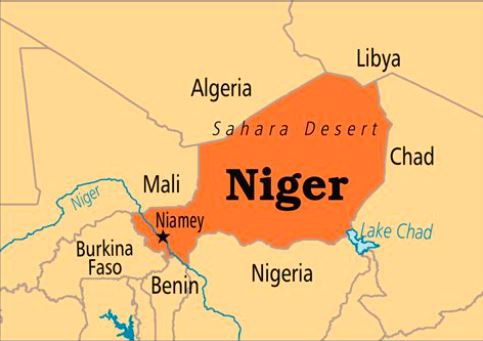
Map of Niger

Last week, on June 19th, Niger announced plans to nationalize its uranium venture which until now had been operated by the French company Orano. By this, the Niger government has decided to gain control over its resources from France. For many years, the French state owned company Orano, which was previously Areva, has been extracting uranium in Niger, enjoying a full monopoly, paying barely anything to the country including no taxes (Mali and Niger end Long-Standing Tax Treaties with France). This quest for freedom or rather fairness by Niger is not something new which started with the government of President Abdourahamane Tchiani, but rather the culmination of years of an unfair treatment based on an unbalanced relationship with the French company and government. In the 2000s, then President Mamadou Tandja had sought to re-negotiate the partnership with then Areva (now Orano) which until then had enjoyed a de facto 4 decade monopoly in the country paying almost nothing to the locals; he tried to curb the French influence by striking a deal with the China Nuclear International Uranium Corporation in 2007 to develop a uranium mine. As expected, Tandja was deposed in a coup in 2010, coup financed by the metropolis. Niger Takes Control of its Uranium, and Niger and Orano: Disagreement.

Below are excerpts from People’s Dispatch

=====
Uranium

In yet another assertion of sovereignty, the government of Niger announced on Thursday, June 19, that it would nationalize the Somaïr uranium venture, wresting control from the multinational nuclear fuel cycle corporation Orano.

Orano is owned by the French state, which, the government noted, has been “openly hostile toward Niger since July 26, 2023”, when the then president Mohamed Bazoum, domestically perceived as a French puppet, was ousted in a popularly supported coup.

Without yielding to French threats of war, the military government replacing Bazoum’s regime consolidated widespread support by expelling French troops, fulfilling the demand for which mass protests had been underway in the lead-up to his removal.

Flag of Niger

France has long exerted a monopoly over Niger’s uranium, which is among the highest grade in Africa. It has been fueling French nuclear power plants, lighting up a third of its light bulbs, while over 85% of Nigeriens lacked connection to the electricity grid.

… The nationalization changing this neo-colonial arrangement “will allow for healthier and more sustainable management of the company and, consequently, optimal enjoyment of the wealth from mining resources by Nigeriens,” its statement added.

Threatening Niger with “legal actions, including criminal proceedings if necessary”, Orano said it “intends to seek full compensation for the damages suffered and will assert its rights to the stock corresponding to Somaïr’s production to date.”

Niger and Orano: Disagreement

Flag of Niger

Orano has been suspended by the Niger government. However, Orano states that they have suspended the Niger government. What is the truth?

France is the biggest electricity seller in the world, and this because of Niger who contributes up to 15% (probably more – they don’t want to tell us). Niger is the third uranium provider of the European Union. At one point, France was paying Niger 0.80 Euro/kg of uranium, while paying Canada 200 Euro/kg for the exact same quality; and this has been going on for decades! Is this not pillaging a country?

Map of Niger

Orano, previously known as Areva, has been in Niger for over 70 years. Yet in 70 years, they have not built a single school, roads, or even hospital for the locals (Mali and Niger end Long-Standing Tax Treaties with France). These French companies have similar behaviors in all of their previous colonies, in Cameroon for example, Safacam has been there 130 years, but the road there is impracticable – they can grab everything, without even giving simple things like roads to the locals! Moreover, many do not pay taxes in the local countries, but back to their home countries. Such contempt! How are the locals supposed to develop themselves? And then if one adds the FCFA scheme (The 11 Components of the French Colonial Tax in Africa) and it is game over!

Well, good riddance to bad rubbish… goodbye to Orano. The French thought that by having the Benin-Niger border closed via ECOWAS sanctions, that Niger, a landlocked country, will suffocate. When Benin realized that their sanction was affecting their own economy via the Benin port, given that Niger’s exports were no longer going through Benin, they back-pedaled trying to bring Niger in. However, it has been proven via intelligence, that there are French military bases in Benin and so Niger has refused to reopen their border with Benin. They have reopened all other borders with neighboring countries but Benin. Recall that Benin also tried to stop Niger oil going through the Niger-Benin Oil pipeline (at 1950 km, it is the longest oil pipeline in Africa) on Benin territory, until the Chinese government gave Talon a small tap on the back questioning his poor judgement to stop crude oil, forcing Talon to reopen the tap for oil.

To learn more, please check out RFI, and VOA. Excerpts below are from the VOA.

=====

Niger’s military junta is disputing a decision by French nuclear fuel firm Orano to halt uranium production, according to a document from a state partner in the venture seen Friday by Agence France-Presse.

Orano announced last month that it was stopping production as of Thursday, owing to what it termed increasingly difficult operating conditions in the country and financial issues.

… The French lamented the withdrawal by the junta in June of a permit for one of the largest uranium deposits in the world, Imouraren, and the impossibility of exporting the raw material with Niger’s border with Benin closed for what Niamey says are security reasons.

Despite its status as a co-shareholder, Sopamin was not consulted on this serious decision” to halt production, the company, which has operated for half a century in the country’s north, said in a document dated Thursday.

The Nigerien firm complained that the decision “lacks transparency” and “violates a number of principles and practices essential to governance and commitments between stakeholders.”

… The ruling [government], which took power last year in a July coup, says it will revamp rules regulating the mining of raw materials by foreign companies in what is the world’s seventh-largest uranium producer.

… In September, Niger’s Council of Ministers adopted a draft decree creating a state entity, “Timersoi National Uranium Company,” abbreviated to TNUC