Cameroonian Musical Genius : Ekambi Brillant

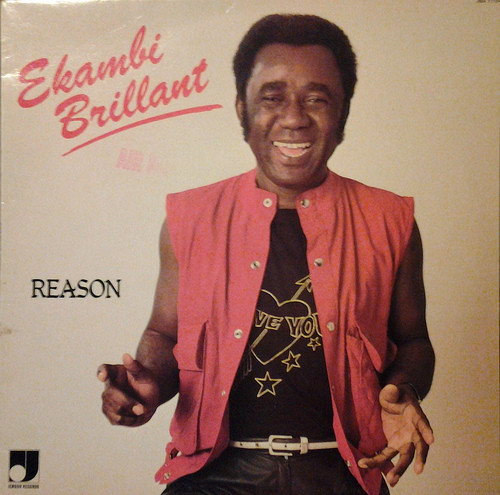
Ekambi Brillant on the cover of his 1987 album Reason (Source: RhythmConnection.Blogspot.com)

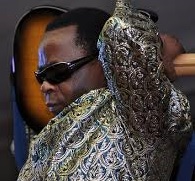
Ekambi Brillant was without doubt one of Cameroon’s greatest artists and one of the great African musicians. Originally from Dibombari, a village close to Douala, Brillant spent his youth with his maternal grandparents in Jebale, a suburban island of Douala. Per the words of Cameroonian author Elolongue Epanya Yondo, Jebale is known as the “emerald island, flamboyant jewel” on the Wouri estuary; no wonder, it served as the inspiration to a young Ekambi!  His passion for music was born from ancestral roots and from watching and listening to fishermen singing on their way back home from the sea.

Wouri river and the Djebale island seen on the other side

In 1962, Brillant was admitted to the 6th grade in the prestigious Lycée Général Leclerc (General-Leclerc High School) of Yaoundé. It was there, under the careful attention of Mr. Daniel Zane, his French music teacher, that he learned to play music, particularly the guitar. In 1971, at the age of 23, he stopped his studies and moved to Douala, where he joined the band The Crack’s as a guitarist. He applied for and won the music contest launched by the Office of French Broadcasting Television (ORTF), judged by some of the continent’s great musical personalities such as Manu Dibango and Francis Bebey. Thanks to this prize, he was able to release his first 45 rpm record, Jonguèlè la Ndolo, which sold 20,000 copies.
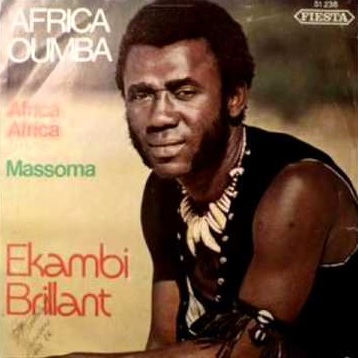
Ekambi Brillant’s album ‘Africa Oumba’

In 1972, he flew to France, where, with the support of Jean Dikoto Mandengue, a Cameroonian bassist, he produced and released his second 45 rpm record with Phonogram. The album was a major success and sold 25,000 copies. As stated before, Ekambi Brillant’s love for his country, his people, and music can be felt in every single note!

In 1975, he ended his deal with Phonogram and began a collaboration with Slim Pezin, with whom he released the album Africa Oumba, which included the major hit song “Elongui.” The song became an incredible source of inspiration for several other artists, both African and European, including the Greek singer Demis Roussos, who sang it as “L.O.V.E. Got a Hold of Me.” Roussos’ version used the exact melody of Ekambi Brillant’s original makossa hit, but he never acknowledged Ekambi Brillant—not even with a tribute. It was only later that African fans (including yours truly) loudly affirmed that this was Brillant’s original work. In the past, African compositions have often been adapted/plagiarized without formal credit, especially when entering European or American markets. Roussos earned millions from Ekambi’s song, without giving him a penny. This is reminiscent of Andre Marie Tala, Cameroon’s Blind Musical Virtuoso, and his song Hot Koki which was plagiarized by  James Brown, or more recently Shakira with “Waka Waka (This Time for Africa)” “adapting” the “Zamina mina (Zangaléwa)” song and claiming in an interview to have gotten inspiration while walking on a beach. The album Africa Oumba reached a record of about 4 million sales (diamond disk). Further collaborations with Slim Pezin as producer yielded titles such as Soul Castel and Musunguédi. In 1976, Ekambi Brillant formed his band known as The Ebis (Ekambi Brillant Show).
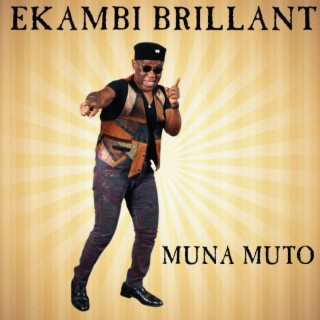
Ekambi Brillant ‘Muna Muto’

Over the course of his career, Brillant released nearly 20 albums. Brillant passed away on 12 December 2022 in Douala at the age of 74, after a battle with a long-term illness. Unfortunately, like many in Cameroon, he was a brilliant soul who barely received the recognition his genius deserved. He was from a generation of outstanding Cameroonian artists.

Ekambi Brillant remained an inspiration to generations of artists, propelling several careers and guiding many musicians—both Cameroonian, such as Marthe Zambo, Valery Lobe, and Alhaji Touré, and African, such as Cella Stella and Angelique Kidjo. He was so advanced, brilliant, and inspired … going through his music portfolio is filled with great sounds and a great source of inspiration. Cameroonians should get inspired from his work and celebrate his genius. 

.

Andre Marie Tala: Cameroon’s Blind Musical Virtuoso

André Marie Tala
André Marie Tala

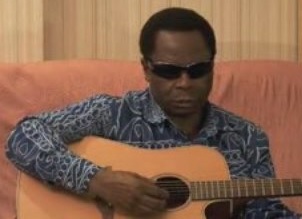
Most people have heard of Stevie Wonder, the American blind R&B virtuoso, who was discovered at the tender age of 11. Most people versed in classical music have probably heard of the Italian classical tenor Andrea Bocelli, who was born with poor eyesight, and turned blind by the age of 12. But how many of you have heard of the Cameroonian blind singer André Marie Tala who influenced an entire generation of Cameroonian and African artists? the singer who was even plagiarized by the mighty James Brown

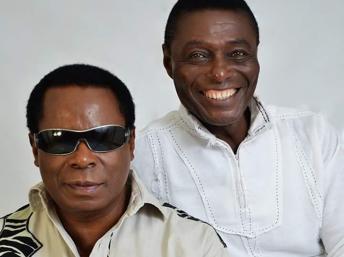
Andre Marie Tala and Sam Fan Thomas (Source: RfI)
Andre Marie Tala and Sam Fan Thomas (Source: Rfi)

To those who visit my blog, you have probably listened to two of his classic songs, which are odes to some of Africa’s beautiful capitals: Yaoundé, and N’Djamena, the capitals of Cameroon and Chad respectively. Only after I wrote about N’Djamena did I realize that André Marie Tala had performed at the Olympia (with Sam Fan Thomas, another giant of Cameroonian music) on May 17th to celebrate his 45 year anniversary in the music industry.

André Marie Tala
André Marie Tala

Unlike all the singers cited earlier, Tala plays the guitar. Born in the mountains of the Western province of Cameroon in 1950, Tala loses his mother at the tender age of 4, and then his father at 16. He totally loses sight at the age of 15, and will be taken in by his grandmother. He builds his very first guitar with threads made out of nylon, and bamboo, and works on reproducing sounds from his favorite musicians. He starts his first group, the Rock Boys, with which he goes on to have immediate success. The Rock Boys later morphed into the Black Tigers in 1967 with his friend, guitar player, Sam Fan Thomas. At the age of 20, he moves to Paris and collaborates with the great Cameroonian saxophone player Manu Dibango; he lands his first big musical contract. Thus were born the titles Sikati, Po tak Si nan (laissez Dieu tranquille ! – leave God in peace), and Namala Ébolo. Big success! Po tak Si nan is a mixture of soul, jazz, and rhythm n’ blues, blend in with a mix of Cameroonian musical styles such as Makossa and Bikutsi. Tala calls his style “Tchamassi”.

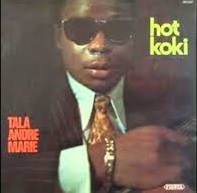
The album "Hot Koki" by André Marie Tala
The album “Hot Koki” by André Marie Tala

In 1973, his album “Hot Koki” knows international success, and his single “Hot Koki” is even plagiarized by the great James Brown under the new title “The Hustle”. In 1978, after 4 years of judiciary struggles, Tala is awarded justice, and James Brown is condemned to pay him back all his rights.

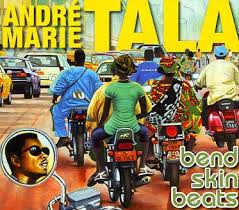
The big themes of Tala’s music are peace, love, and harmony. In the 90s, he brings Bend Skin to the forefront of Cameroonian music, a folkloric fusion of styles from the grasslands of Cameroon. It is often associated with the moto-taxis which are called by the same name Bend-Skin.

Album of André Marie Tala

By choosing the Olympia (the quintessential stage for music in France), for his musical jubilee, André Marie Tala wants to launch a new beginning for the Cameroonian music which has always been rich and influenced millions, but for the past decade has stagnated. Happy 45th-anniversary to Andre Marie Tala, and to many more albums of great music. I live you here with one of my favorite Tala’s song, Nomtema. Do not forget to check out “HOT KOKI” and check out the similitude with James Brown’s “THE HUSTLE“; it is the same, just in English!

Why the Name: N’Djamena?

Map of Chad (Source: Lonely Planet)
Map of Chad

N’Djamena … Oh Oh Oh Oh N’Djamena… N’Djamena … J’irai un jour à N’Djamena en passant par le Lac Tchad” (I will one day go to N’Djamena, via Lake Chad) says Cameroonian singer Andre Marie Tala with his great song “N’Djamena”. Have you ever wondered what the name of the capital of Chad might mean? Is it a Ngambaye’s name? Daza? Hausa? Arab? Sara? or Kotoko? or does it come from the ancient Kanem-Bornu, or Bornu Empires that flourished in the region centuries ago? or is it simply a mix of Arabic with some local language?

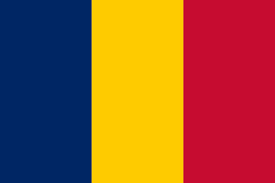
Flag of Chad
Flag of Chad

In reality, N’Djamena means “the city where one rests” (la ville où l’on se repose), or “the city where one finds rest.” Thinking about it, it is somewhat similar in meaning to that of Tunis, the capital of Tunisia, whose name means “to spend the night,” or “to lie down,” or “the area where one spends the night.”

Place de la Nation, N'Djamena
Place de la Nation, N’Djamena

The city was not always called N’Djamena. In fact before 1973, it was called Fort Lamy, after a French army officer who had been killed in the Battle of Kousséri on May 29, 1900,  Amédée-François Lamy. It was a major trading city and became the capital of the region and nation. It is located on the Chari River, near the confluence with the Logone River, and directly faces the Cameroonian city of Kousséri, to which it is connected by a bridge, just like Brazzaville and Kinshasa, the capital cities of the two Congos. N’Djamena is a regional market for livestock, salt, dates, and grains. Meat, fish, and cotton processing are the main industries, and the city is the economic capital of the country as well as its political capital. It is Chad’s largest and most populous city.

On April 6, 1973, President François Tombalbaye changed the name of the city from Fort Lamy to N’Djamena. The name N’Djamena was taken from the Arab name of a nearby village, Nijamina or Am Djamena, meaning “place of rest“. Enjoy the great song by André Marie Tala, and like he says “I will one day go to N’Djamena… to discover its beautiful landscape.” Enjoy this great place of rest!


Why the name: Yaoundé?

Yaoundé around the May 20th Boulevard

Yaoundé, the capital of Cameroon and its second largest city after Douala, is often known as “the city with the seven hills” because of the hills surrounding it… but what does it really mean?  Does its name refer to its hills?

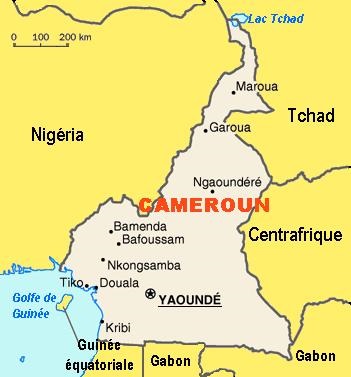
Map of Cameroon, with the capital Yaoundé

In Béti, Yaoundé is often called, Ongolo-Ewondo, or the Ewondos’ enclosure (la clôture des Ewondos).  The city was born around 1889, when the German traders implanted a camp in the Ewondo region and called it Sono station after a local Ewondo chief Essono Ela who had offered them hospitality (the Germans had encountered a strong resistance in the Vouté and Eton regions).  Hearing locals from the coast refer to it as Ya-Ewondo or Among the Ewondo (chez les Ewondos), the Germans called it ‘Jaunde’ and it later turned into ‘Yaunde’, and in French Yaoundé.  The station later turned into an administrative region under the leadership of the botanist Zenker who established a detailed map of the area in 1890.  Upon its creation, it was first a scientific post (probably because of the botanist), and later in 1895 became a military and trading post for ivory and rubber.

Yaoundé at night
Yaoundé at night

Yaoundé was not always the country’s capital.  After the 1909 volcanic eruption of Mt Cameroon in Buéa (Gbéa) which was then the capital, and the humid climate of Douala, the Germans decided to move the capital to Yaoundé because of its central location and its milder climate (and of course, no volcano).  After Germany’s defeat in World War I, Cameroon was placed under French (the eastern regions) and British protectorate (the western regions).  Yaoundé consequently became the capital of French Cameroon, and continued as the capital of the Republic of Cameroon after independence (it was first the Federal Republic of Cameroon in 1961, then The United Republic of Cameroon in 1972, which then officially became the Republic of Cameroon in 1984).  From 100 inhabitants on 2 acres on land at the end of the 19th century, Yaoundé is today a vibrant city home to almost 2 million inhabitants.

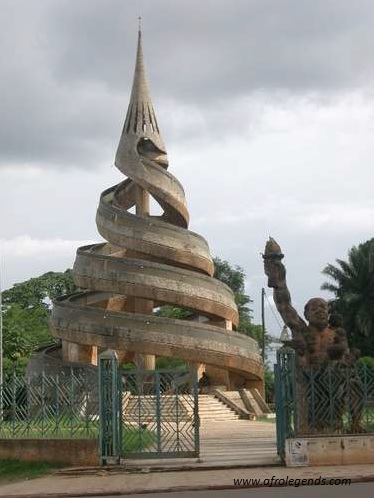
The Reunification Monument in Yaoundé

Yaoundé lies at the center of the nation, at about 600 – 1000 m above sea level.  The city first grew around the Mfoundi river.  A network of hills make up its landscape such as Mts Mbam Minkom (1295 m), Nkolodom (1221 m), Messa, Fébé, Akokdoué in the North and West, and Mt Eloumden (1159 m) in the south.  The rivers are the Mfoundi, Ekozoa, Biyeme, and Mefou.  Today, Yaoundé is the siege of power, the presidential palace, the house of parliament, all ministries and embassies. Please enjoy this song of one of Cameroon’s great singers: André-Marie Tala about Yaoundé, and its beauty.  What I have always liked about Yaoundé are its hills (and the red soil):  from the top of one them, other parts of the city can be seen; it gives a feeling of “breathing in” or “taking in” the beauty of the entire city.  Feel the joy of visiting this city which, like Rome has 7 hillsEnjoy the Rome of Africa!