This story is from a book called “The Secret of the Crocodile“, a Namibia Oral Tradition Project, published by New Namibia Books. (Paraphrased) =========
The crocodile originally had a beautiful smooth golden skin, and it stayed that way because the crocodile would spend all day in the muddy waters and only come out at night.
During the day all the other animals would come and admire it’s beautiful golden skin.
The crocodile became very proud of its skin and started coming out of the water to bask in the other animals’ admiration, even while the sun was shining. He began thinking he was better than the other animals and started bossing them around.
The other African animals became bored with his change in attitude and fewer and fewer started showing up to look at his skin.
But each day that the crocodile exposed his skin to the hot African sun, it would get uglier and bumpier and thicker, and was soon transformed into what looked like bulging armor.
Crocodile never recovered from the humiliating shame and even today will disappear from view when others approach, with only his eyes and nostrils above the surface of the water.
ONCE upon a time there were two men who were such great friends that they were almost always together. If one was seen the other was sure to be near. They had given one another special names, which were to be used only by themselves. One name, Maku Mawu, meant, “I will die God’s death,” and the other, Maku Fia, “I will die the King’s death.”
By and by, however, the other villagers heard these names and gradually everyone got into the habit of calling the two friends by the nicknames in preference to the real ones. Finally, the King of the country heard of them and wished to see the men who had chosen such strange titles. He sent for them to Court, and they came together. He was much pleased with the one who had chosen the name of “Maku Fia,” but he was annoyed at the other man’s choice and sought a chance of punishing him.
When he had talked to them a little while, he invited both to a great feast which he was to give in three days’ time. As they went away he gave a fine large yam to Maku Mawu and only a small round stone to his own favourite. The latter felt somewhat aggrieved at getting only a stone, while his friend got such a fine yam. Very soon he said, “Oh, dear! I do not think it is any use carrying this stone home. How I wish it were a yam! Then I could cook it for dinner.” Maku Mawu being very generous— immediately replied, “Then change with me, for I am quite tired of carrying my great yam.” They exchanged, and each went off to his own home. Maku Fia cut up his yam and cooked it. Maku Mawu broke his stone in half and found inside some beautiful ornaments which the King had hidden there. He thought that he would play a trick on the King, so told nobody what had been in the stone.
mmmhhhhhh tasty!!!
On the third day they dressed to go to the King’s feast. Maku Mawu put on all the beautiful ornaments out of the stone. Maku Fia dressed himself just as usual.
When they reached the palace the King was amazed to see the wrong man wearing his ornaments, and determined to punish him more effectually next time. He asked Maku Fia what he had done with the stone, and the man told him he had exchanged it for his friend’s yam.
At first the King could not think of any way to punish Maku Mawu, as, of course, the latter had not done anything wrong. He soon had an idea, however. He pretended to be very pleased with the poor man and presented him with a beautiful ring from his own finger. He then made him promise to come back in seven days and show the ring to the King again, to let the latter see that it was not lost. If by any chance he could not produce the ring—he would lose his head. This the King did, meaning to get hold of the ring in some way and, so get the young man killed.
Maku Mawu saw what the King’s design was, so determined to hide the ring. He made a small hole in the wall of his room, put the ring in it, and carefully plastered over the place again. No one could see that the wall had been touched.
After two days the King sent for the wife of Maku Mawu and asked her to find the ring. He promised her a large sum of money for it not telling her, of course, what would happen to her husband if the ring were lost. The woman went home and searched diligently but found nothing. Next day she tried again with no better success. Then she asked her husband what he had done with it. He innocently told her it was in the wall. Next day, when he was absent, she searched so carefully that at last she found it.
Delighted, she ran off to the King’s palace and gave the ring to him. She got the promised money and returned home, never dreaming that she had really sold her husband’s life.
On the sixth day the King sent a message to Maku Mawu, telling him to prepare for the next day. The poor man bethought himself of the ring and went to look if it were still safe. To his despair the hole was empty. He asked his wife and his neighbours. All denied having seen it. He made up his mind that he must die.
In the meantime the King had laid the ring in one of the dishes in his palace and promptly forgot about it. When the seventh morning had arrived he sent messengers far and wide, to summon the people to come and see a man punished for disobeying the King’s orders. Then he commanded his servants to set the palace in order, and to take the dishes out of his room and wash them.
The careless servants—never looking-to see if the dishes were empty or not took them all to a pool near by. Among them was the dish containing the ring. Of course, when the dish was being washed, out fell the ring into the water—without being noticed by the servants.
The palace being all in readiness, the King went to fetch the ring. It was nowhere to be found and he was obliged to go to the Assembly without it.
When every one was ready the poor man, Maku Mawu, was called to come forward and show the ring. He walked boldly up to the King and knelt down before him, saying. “The ring is lost and I am prepared to die. Only grant me a few hours to put my house in order.” At first the king was unwilling to grant even that small favour, but finally he said, “Very well, you may have four hours. Then you must return here and be beheaded before the people.” The innocent man returned to his home and put everything in order. Then, feeling hungry, he thought, “I may as well have some food before I die. I will go and catch a fish in the pool.”
He accordingly took his fish-net and bait, and started off to the very pool where the King’s dishes had been washed. Very soon he caught a fine large fish. Cutting it open, to clean it, his delight may be imagined at finding the lost ring inside it.
At once he ran off to the palace crying: “I have found the ring! I have found the ring!” When the people heard him, they all shouted in joy: “He named himself rightly ‘Maku Mawu,’ for see—the death God has chosen for him, that only will he die.” So the King had no excuse to harm him, and he went free.
Source:Barker, W. H. and Sinclair, C. West African Folk-tales. Lagos, Africa: Bookshop, 1917.
Omanhene of Akropong, Oseadeayo Addo Dankwa III (Tripdownmemorylane.blogspot.com)
THE Omanhene is the chief of a village. A certain Omanhene had three sons, who were very anxious to see the world. They went to their father and asked permission to travel. This permission he readily gave.
It was the turn of the eldest to go first. He was provided with a servant and with all he could possibly require for the journey.
After traveling for some time he came to a town where lived an Omanhene who loved riddles. Being a stranger the traveler was, according to custom, brought by the people before the chief.
The latter explained to him that they had certain laws in their village. One law was that every stranger must best the Omanhene in answering riddles or he would be beheaded. He must be prepared to begin the contest the following morning.
Next day he came to the Assembly Place, and found the Omanhene there with all his attendants. The Omanhene asked many riddles. As the young man was unable to answer any of them, he was judged to have failed and was beheaded.
After some time the second son of the Omanhene started on his travels. By a strange chance he arrived at the same town where his brother had died. He also was asked many riddles, and failed to answer them. Accordingly he too was put to death.
By and by the third brother announced his intention of traveling. His mother did all in her power to persuade him to stay at home. It was quite in vain.
Kenkey (Foodiciary.com)
She was sure that if he also reached the town where his brothers had died, the same thing would happen to him. Rather than allow this, she thought she would prefer him to die on the way.
She prepared for him a food called kenkey—which she filled with poison. Having packed it away in his bag, he set off. Very soon he began to feel hungry. Knowing, however, that his mother had not wished him to leave home, and therefore might have put some poison in the food, he thought he would test it before eating it himself. Seeing a vulture nearby, he threw it half the cake.
The bird ate the kenkey, and immediately fell dead by the roadside. Three panthers came along and began to eat the vulture. They also fell dead.
The young man cut off some of the flesh of the panthers and roasted it. He then packed it carefully away in his bundle.
A little farther on he was attacked by seven highway robbers. They wanted to kill him at once. He told them that he had some good roast meat in his bundle and invited them to eat with him first. They agreed and divided up the food into eight parts.
While they were eating the young man carefully hid his portion. Soon all the seven robbers fell ill and died. The young man then went on his way.
At last he reached the town where his brothers had died. Like them, he was summoned to the Assembly Place to answer the riddles of the Omanhene. For two days the contest proved equal. At the end of that time, the young man said, “I have only one riddle left. If you are able to answer that, you may put me to death.” He then gave this riddle to the Omanhene:
Half kills one— One kills three— Three kills seven.
The ruler failed to answer it that evening, so it was postponed till the next day.
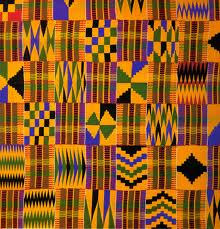
Kente cloth
During the night the Omanhene disguised himself and went to the house where the stranger was staying. There he found the young man asleep in the hall.
Imagining that the man before him was the stranger’s servant, and never dreaming-that it was the stranger himself, he roused the sleeper and promised him a large reward if he would give him the solution to the riddle.
The young man replied that he would tell the answer if the Omanhene would bring him the costume which he always wore at the Assembly.
The ruler was only too pleased to go and fetch it for him. When the young man had the garments quite safely, he explained the riddle fully to the crafty, Omanhene. He said that as they were leaving home, the mother of his master made him kenkey. In order to find out if the kenkey were good, they gave half to a vulture. The latter died. Three panthers which tasted the vulture also died. A little of the panther’s roasted flesh killed seven robbers.
The Omanhene was delighted to have found out the answer. He warned the supposed servant not to tell his master what had happened.
In the morning all the villagers assembled together again. The Omanhene proudly gave the answer to the riddle as if he himself had found it out. But the young man asked him to produce his ceremonial dress, which he ought to be wearing in Assembly. This, of course, he was unable to do, as the young man had hidden it carefully away.
The stranger then told what had happened in the night, and how the ruler had got the answer to the riddle by cheating.
The Assembly declared that the Omanhene had failed to find out the riddle and must die. Accordingly he was beheaded—and the young man was appointed Omanhene in his place.
This tale comes from: West African Folk-tales by W. H. Barker and C. Sinclair. Lagos, Africa: Bookshop, 1917
There once was a man who was walking alone in the forest. He walked for so long that he got hungry. He stopped in a village. There, he was given food, ate so well that he renounced to continue on his trip. He took a wife among the young women of the village, started a home, and no longer thought of leaving.
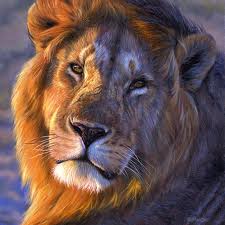
Lion
One day, after a good meal, the man decided to go to the forest which, unfortunately, was full of beasts, especially lions. The man knew not this. As soon as he walked in, the king of the jungle came out with a long roar. Scared, the trembling old man peed on himself. The lion got close, and the old man rushed into a thorny bush. The lion searched in vain; it could not find the man. However, it remained on the lookout for a week, then left disgusted. Then the old man stayed in his bush, completely stunned by his fate. A hunter came around. The man heard his footsteps and called out:
Who goes there?
It’s me
Who are you?
I am a hunter looking for game.
Hunter friend, could you please get me out of here?
But how did you manage to get in there?
It is big fear that drove me in here.
Then! It is a big fear that will get you out soon!
So what will you do?
You will know shortly.
Fire
Then the hunter started collecting firewood under the bush. All of a sudden, he put a fire in several places around the bush. Frightened, the old man rushed out, and with a violent head kick in the thorns, got himself out of danger.
The hunter welcomed him with a large smile. They hugged and became friends.
Told by Amsata Dieye, Contes Wolof du Baol, J. Copans and P. Couty, Ed. Karthala, 1988, p. 81. Translated to English by Dr. Y., Afrolegends.com
There once was a man who loved eggs above all. He bought several chickens and went to pay a visit to his fiancée. She was invited to cook rice. He gave her the chickens and a great quantity of rice. Once she was done cooking, all the young girls from the village showed up, responding to her invitation; it was a true feast. After the feast, the young girls all left. From a corner in the bedroom, near a drinking pot, a hen came out, capturing the visitor’s attention. He then thought to himself:
“If there is a hen, then there are eggs!”
It was then impossible for him to stand still in the room, given that he wanted to take the eggs. He thus decided to leave, and told his beloved, who tried to stop him from leaving. His horse was readied, but before mounting, he told the young girl:
“Hold my horse, I will go drink a little before leaving.”
La poule / The hen
He advanced toward the pot, grabbed all the eggs, and put them in his pants. He then went out with his fragile cargo. But just as he climbed on his horse, one egg fell from his pants, then a second one, then a third, and so on.
“Oh! What is it? What is coming out of your pants, my honorable host?” says the girl.
“It is nothing,” replies the man, “in my country, this is the time of the day when men lay eggs.”
Told by Tamsir Dieye, Contes Wolof du Baol, J. Copans and P. Couty, Ed. Karthala, 1988, p. 64. Translated to English by Dr. Y., Afrolegends.com
A strong-willed girl became so angry when her mother would not give her any of a delicious roasted root, that, she grabbed the roasting roots from the fire and threw the roots and ashes into the sky, where the red and white roots now glow as red and white stars, and the ashes are the Milky Way. And there the road is to this day. Some people call it the Milky Way; some call it the Stars’ Road, but no matter what you call it, it is the path made by a young girl many, many years ago, who threw the bright sparks of her fire high up into the sky to make a road in the darkness.
This is a South African tale about the origin of the Milky Way, from the Road Travel Africa.
In the old days, when the animals could talk, Crocodile was king of the water creatures. One year, there was a drought, and the water in the river ran dry. Crocodile sent Otter to scout for a new home, and two days later, he returned to say there was a deeper river on the far side of the farmer’s fields.
When he heard this, Crocodile called upon Tortoise and Alligator, and he explained they must go see Lion, king of the land creatures. “The veldt is dry,” he said, “and it will be a difficult journey, but we must make peace with the Lion and all his subjects, or we will die. They must help us cross the land to reach the other river.”
Tortoise and Alligator set off at once to see Lion. They carried along a peace treaty Crocodile had composed. When they arrived, they handed Lion the treaty.
Lion
Lion read it and decided he must consult with his associates, and then all the animals would hold a meeting. “Let us meet this evening at the willow tree at the far end of your river, where Crocodile has his headquarters,” Lion said. “There we can discuss the plan.”
So Tortoise and Alligator gave the news to Crocodile, who was very pleased to hear about this turn of events. “We must prepare some treats to woo our friends,” he said, so he and the others prepared many fish delicacies.
That night, with Otter and Beaver and Tortoise and Alligator, Crocodile traveled to the willow tree. There they met Lion and Wolf and Jackal and Baboon.
Crocodile was so pleased to see this gathering, a tear of joy dropped down his face and landed in the sand. “We have brought you some treats!” he announced, and Wolf and Jackal pounced with delight on the bounty. Continue reading “Crocodile’s tears”→
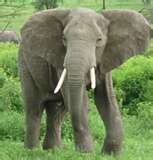
TWO powers, Elephant and Rain, had a dispute. Elephant said, “If you say that you nourish me, in what way is it that you do so?” Rain answered, “If you say that I do not nourish you, when I go away, will you not die?” And Rain then departed.
Elephant said, “Vulture! cast lots to make rain for me.”
Vulture said, “I will not cast lots.”
Then Elephant said to Crow, “Cast lots!” who answered, “Give the things with which I may cast lots.” Crow cast lots and rain fell. It rained at the lagoons, but they dried up, and only one lagoon remained.
Tortoise
Elephant went a-hunting. There was, however, Tortoise, to whom Elephant said, “Tortoise, remain at the water!” Thus Tortoise was left behind when Elephant went a-hunting.
There came Giraffe, and said to Tortoise, “Give me water!” Tortoise answered, “The water belongs to Elephant.”
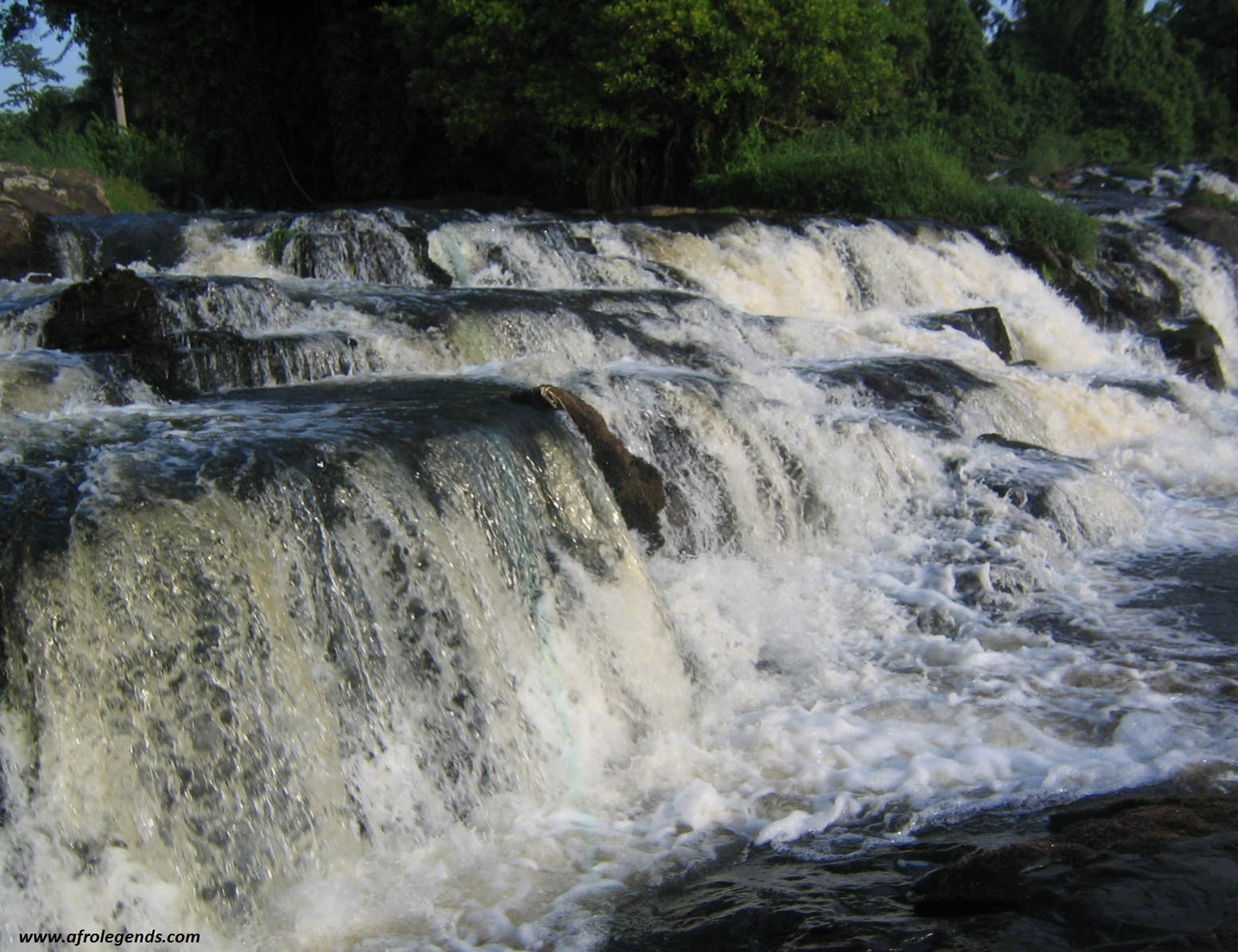
Chutes de la Lobe (Cameroun) / Lobe Falls (Cameroon) – afrolegends.com
THERE was a frightful drought. The rivers after a while dried tip and even the springs gave no water. The animals wandered around seeking drink, but to no avail. Nowhere was water to be found. A great gathering of animals was held: Lion, Tiger, Wolf, Jackal, Elephant, all of them came together. What was to be done? That was the question. One had this plan, and another had that; but no plan seemed of value.
Finally one of them suggested: “Come, let all of us go to the dry river bed and dance; in that way we can tread out the water.”
Good! Everyone was satisfied and ready to begin instantly, excepting Rabbit, who said, “I will not go and dance. All of you are mad to attempt to get water from the ground by dancing.”
Rabbit
The other animals danced and danced, and ultimately danced the water to the surface. How glad they were. Everyone drank as much as he could, but Rabbit did not dance with them. So it was decided that Rabbit should have no water.
He laughed at them: “I will nevertheless drink some of your water.”
That evening he proceeded leisurely to the river bed where the dance had been, and drank as much as he wanted. The following morning the animals saw the footprints of Rabbit in the ground, and Rabbit shouted to them: “Aha! I did have some of the water, and it was most refreshing and tasted fine.” Continue reading “The Dance for Water or Rabbit’s Triumph”→
ONCE there was a man who had an old dog, so old that the man desired to put him aside. The dog had served him very faithfully when he was still young, but ingratitude is the world’s reward, and the man now wanted to dispose of him. The old dumb creature, however, ferreted out the plan of his master, and so at once resolved to go away of his own accord. After he had walked quite a way he met an old bull in the veldt.
“Don’t you want to go with me?” asked the dog.
“Where?” was the reply.
“To the land of the aged,” said the dog, “where troubles don’t disturb you and thanklessness does not deface the deeds of man.”
Bull
“Good,” said the bull, “I am your companion.”
The two now walked on and found a ram. The dog laid the plan before him, and all moved off together, until they afterwards came successively upon a donkey, a cat, a cock, and a goose. These joined their company, and the seven set out on their journey.
Ram
Late one night they came to a house and through the open door they saw a table spread with all kinds of nice food, of which some robbers were having their fill. It would help nothing to ask for admittance, and seeing that they were hungry, they must think of something else. Therefore the donkey climbed up on the bull, the ram. On the donkey, the dog on the ram, the cat on the dog, the goose on the cat, and the cock on the goose, and with one accord they all let out terrible (threatening) noises (crying). Continue reading “The World’s Reward”→


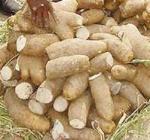
 When he had talked to them a little while, he invited both to a great feast which he was to give in three days’ time. As they went away he gave a fine large yam to
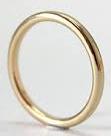 Maku Mawu
 The palace being all in readiness, the King went to fetch the ring. It was nowhere to be found and he was obliged to go to the Assembly without it.





 A strong-willed girl became so angry when her mother would not give her any of a delicious roasted root, that, she grabbed the roasting roots from the fire and threw the roots and ashes into the sky, where the red and white roots now glow as red and white stars, and the ashes are the Milky Way. And there the road is to this day. Some people call it the Milky Way; some call it the Stars’ Road, but no matter what you call it, it is the path made by a young girl many, many years ago, who threw the bright sparks of her fire high up into the sky to make a road in the darkness.









 African Heritage