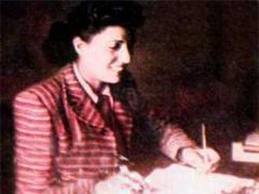
Professor Hulda Swai of Tanzania Wins Distinguished Science Award: ‘Women are as good as men’

Professor Hulda Swai (Source: nm-aist.ac.tz)

Congratulations to Professor Hulda Swai of Tanzania for winning the 2020 prize of the African Union Kwame Nkrumah Continental Awards for Scientific Excellence. This is a prestigious scientific award in Africa. Her work with nanotechnology has helped to study more effective anti-malarial medicines, and through the World Bank, she has helped to secure millions of dollars to fund African researchers. She is an outstanding scientist, and Oliver Tambo Chair for Nanotechnology as well as the director of the African Center of Excellence at the Nelson Mandela Institute of Science and Technology (NM-AIST) in Tanzania. The award comes with the sum of $20,000. She told the BBC’s Focus on Africa radio programme, “I’m using nanotechnology, which is my training and expertise, to improve the availability of existing herbal extracts which are very potent but are lacking for example solubility.” Excerpts below are from the The Citizen. Please also take the time to listen to her interview to the BBC at the BBC’s Focus on Africa radio programme.

=====

Flag of Tanzania

Arusha. Tanzanian scholar Hulda Swai has won a prestigious scientific award in Africa. The award has been given since 2008 by the African Union (AU) Commission as part of its drive to promote science, technology and innovation. The professor of life sciences and bioengineering was declared the 2020 winner of AU Kwame Nkrumah Continental Awards for Scientific Excellence.

It is sweet news but I’m not entirely surprised. Science has been part of my life since childhood.”

… The award goes with a $20,000 (about Sh 47 million) cash prize for the 66 year old female scholar specializing in nanotechnology.

Prof Swai is the current leader of the African Centre for Research, Agricultural Advancement, Teaching Excellence, and Sustainability at NM-AIST. …

Last year, Prof Swai was appointed as one of the chair holders of the prestigious O.R Tambo Africa Research Chairs Initiative. … The objective, she noted, is to give out scientific awards to top African scientists “for their scientific achievements and valuable discoveries and findings.”

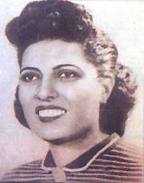
Sameera Moussa: World-renowned Egyptian Nuclear Scientist

Sameera Moussa
Sameera Moussa

There are so few female scientists in the world, and particularly in Africa, that I had to talk about Sameera Moussa, the world-renowned Egyptian nuclear scientist.  Sameera Moussa held a doctorate in atomic radiation, specializing on making the medical use of nuclear technology affordable to all.  She organized the Atomic Energy for Peace Conference and sponsored a call for setting an international conference under the banner “Atom for Peace,” where many prominent scientists were invited.  The conference made a number of recommendations for setting up a committee to protect against nuclear hazards, for which she strongly advocated.

Sameera was born in the Gharbia Governorate in Egypt in 1917.  After she lost her mother to cancer, she vowed to study how to better medicine through science.  She went on the join the faculty of Sciences at the University of Cairo, where she earned a BSc in Radiology in 1939, with first class honors.  She became a remarkable faculty, and the first woman to hold a university post.  Being the first to obtain a Ph.D. degree in atomic radiation, she earnestly sought to make nuclear treatment to everyone. She used to say: “I’ll make nuclear treatment as available and as cheap as aspirin.” She worked hard for this purpose and throughout her intensive research, she came up with a historic equation that would help break the atoms of cheap metals such as copper, ultimately paving the way for a cheap nuclear bomb.  Sameera also volunteered to help treat cancer patients at various hospitals especially since her mother went through a fierce battle against this disease.

Sameera Moussa at the University of Cairo

Later on, Sameera received a Fullbright scholarship to study at modern research facilities at the California University.  In recognition for her pioneering nuclear research, she was given permission to visit the secret US atomic facilities.  The visit raised vehement debate in the United States Academic and Scientific circles since Sameera was the first “alien” to have access to such facilities.

She turned down several offers that required her to live in the United States and be granted American citizenship, saying “Egypt, my dear homeland, is waiting for me.”  On August 5th, 1952 after her first visit to America she intended to return home, but was invited on another trip.  On the way, the car rushed down from a height of 40 feet, which killed her immediately.  The mystery surrounding her accident, since the invitation to California, made people suspicious and many believe that it was a planned assassination.

Today, Sameera has been awarded several prizes (the 1953 honor by the Egyptian Army, and the 1981 Order of Science and Arts by , but most importantly she has paved the way for Egyptian and African women scientists.  It feels so great to know that back in the 1930s, and 1950s, when there were people like Enrico Fermi, Albert Einstein, Maria Goeppert-Mayer, there was also Sameera Moussa, an outstanding Egyptian Female scientist who thought of ‘Atoms for Peace’ and wanted cheap treatments for all.