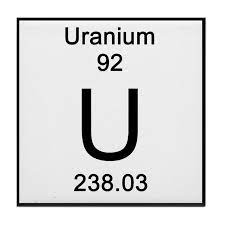
Last week, on June 19th, Niger announced plans to nationalize its uranium venture which until now had been operated by the French company Orano. By this, the Niger government has decided to gain control over its resources from France. For many years, the French state owned company Orano, which was previously Areva, has been extracting uranium in Niger, enjoying a full monopoly, paying barely anything to the country including no taxes (Mali and Niger end Long-Standing Tax Treaties with France). This quest for freedom or rather fairness by Niger is not something new which started with the government of President Abdourahamane Tchiani, but rather the culmination of years of an unfair treatment based on an unbalanced relationship with the French company and government. In the 2000s, then President Mamadou Tandja had sought to re-negotiate the partnership with then Areva (now Orano) which until then had enjoyed a de facto4 decade monopoly in the country paying almost nothing to the locals; he tried to curb the French influence by striking a deal with the China Nuclear International Uranium Corporation in 2007 to develop a uranium mine. As expected, Tandja was deposed in a coup in 2010, coup financed by the metropolis. Niger Takes Control of its Uranium, and Niger and Orano: Disagreement.
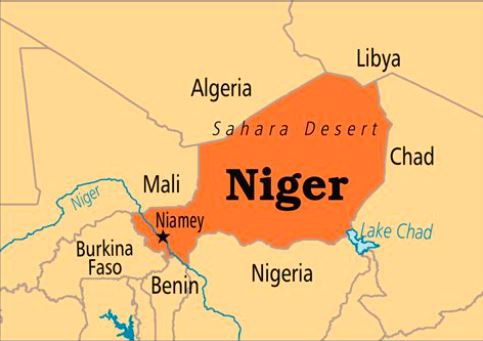
In yet another assertion of sovereignty, the government of Niger announced on Thursday, June 19, that it would nationalize the Somaïr uranium venture, wresting control from the multinational nuclear fuel cycle corporation Orano.
Orano is owned by the French state, which, the government noted, has been “openly hostile toward Niger since July 26, 2023”, when the then president Mohamed Bazoum, domestically perceived as a French puppet, was ousted in a popularly supported coup.
Without yielding to French threats of war, the military government replacing Bazoum’s regime consolidated widespread support by expelling French troops, fulfilling the demand for which mass protests had been underway in the lead-up to his removal.
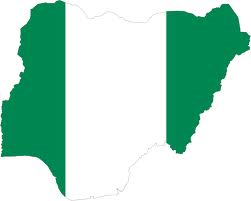
Flag of Niger
… France has long exerted a monopoly over Niger’s uranium, which is among the highest grade in Africa. It has been fueling French nuclear power plants, lighting up a third of its light bulbs, while over 85% of Nigeriens lacked connection to the electricity grid.
… The nationalization changing this neo-colonial arrangement “will allow for healthier and more sustainable management of the company and, consequently, optimal enjoyment of the wealth from mining resources by Nigeriens,” its statement added.
Threatening Niger with “legal actions, including criminal proceedings if necessary”, Orano said it “intends to seek full compensation for the damages suffered and will assert its rights to the stock corresponding to Somaïr’s production to date.”
I love this message of our general and president Assimi Goïta: “if I die before reaching our ideal, continue the project without me and lay the groundwork for change with my blood and my flesh. No sacrifice is huge for this country“[Assimi Goïta Speaks to the Malian People: No Sacrifice is too Big for this Country]. This is indeed the motto that all the leaders of the AES, Assimi Goïta of Mali, Abdourahamane Tchiani of Niger, and Ibrahim Traoré of Burkina Faso lead with and live by. They all created the Alliance of the Sahel (AES) so as to be strong together, uniting their forces, people, and resources to fight together against the forces of imperialism. Now the west is trying hard to break apart the union by singling out Traoré (Coup against Ibrahim Traoré and Worldwide Support for Him). Traoré is brilliant, no doubt. He has been doing an awesome job, no doubt. And he has been the true communicator in the AES plan. He is young, and appeals to the youths of the entire continent. He speaks with great charisma, and confidence, which scares many. He is a true son of Burkina Faso inspired by the great Thomas Sankara.
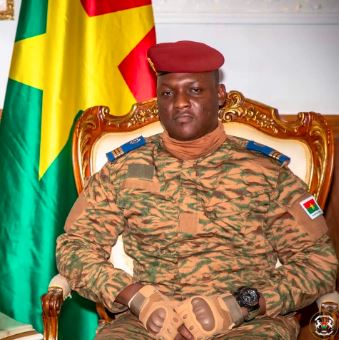
Capitaine President Ibrahim Traore (Source: sig.gov.bf)
A mother does not love one child over the other. She loves each one, albeit differently and uniquely, given the uniqueness of each child. Mama Africa loves all her leaders of the AES equally and together we will free the whole. Thus, it is important to know that we, Africans, cannot afford to have just oneTraoré, for we are all Traoré, and we should all endeavor to have thousands of Traoré, Tchiani, and Goïta throughout the continent, for history not to repeat itself. We have to be careful… and take care of our leaders, and make sure we keep working towards total freedom. Just a few years back (not even 5 years), John Magufuli of Tanzania was here, Pierre Nkurunziza of Burundi was here and we, Africans, applauded them. Both went down… and we all cried… we need to make sure history does not repeat itself! Let’s have Millions of African Leaders: Be the Leader You Want to Have!
Below are excerpts from an article from the BBC explaining why Ibrahim Traoré is loved… yet claiming that it is a “skillfully built persona af a pan-africanist”… pure nonsense… they really have not known him when he was younger. Had they known him, they would have known that there is nothing ‘built’ about him, and it is not a persona… when an African stands up proudly and with confidence without the complex of inferiority, they call it a persona. Our duty is to all be Ibrahim Traoré!
=====
Ibrahim Traore lays the foundation for the Thomas Sankara Mausoleum (Source: LeFaso.net)
A charismatic 37-year-old, Burkina Faso‘s military ruler Capt Ibrahim Traoré has skilfully built the persona of a pan-Africanist leader determined to free his nation from what he regards as the clutches of Western imperialism and neo-colonialism.
His message has resonated across Africa and beyond, with his admirers seeing him as following in the footsteps of African heroes like Burkina Faso’s very own Thomas Sankara – a Marxist revolutionary who is sometimes referred to as “Africa’s Che Guevara“.
“Traoré’s impact is huge. I have even heard politicians and authors in countries like Kenya [in East Africa] say: ‘This is it. He is the man’,” Beverly Ochieng, a senior researcher at global consultancy firm Control Risks, told the BBC.
“His messages reflect the age we are living in, when many Africans are questioning the relationship with the West, and why there is still so much poverty in such a resource-rich continent,” she said.
Flag of Burkina Faso
After seizing power in a coup in 2022, Traoré’s regime ditched former colonial power France in favour of a strong alliance with Russia, that has included the deployment of a Russian paramilitary brigade, and adopted left-wing economic policies.
This included setting up a state-owned mining company, requiring foreign firms to give it a 15% stake in their local operations and to transfer skills to Burkinabé people.
As part of what Traoré calls a “revolution” to ensure Burkina Faso benefits from its mineral wealth, the junta is also building a gold refinery and establishing national gold reserves for the first time in the nation’s history.
… The junta [they still call it a junta, even though, he has received a full vote of confidence for 5 years by the entire Faso nation – like said before: Gabon and the Double Standards of the International Community] has also nationalised two gold mines previously owned by a London-listed firm, and said last month that it planned to take control of more foreign-owned mines.
Enoch Randy Aikins, a researcher at South Africa’s Institute for Security Studies, told the BBC that Traoré’s radical reforms had increased his popularity in Africa. “He is now arguably Africa’s most popular, if not favourite, president,” [No, Traore does not want to be the most popular or the favorite, he just wants to do right by his people! – Thus African, let us follow his footsteps and make our countries and continent proud!] Mr Aikins said.
Burkina Faso
… Ms Ochieng said that Traoré first caught the attention of Africans when he spoke at the Russia-Africa summit in 2023 [that is not true… we already knew him before 2023], telling African leaders to “stop behaving like puppets who dance every time the imperialists pull the strings“.
… Traoré’s popularity comes despite the fact that he has to fulfil his pledge to quell a 10-year Islamist insurgency failed [has he failed? What did the French, and Operations Barkhane via the TakubaTask Force and Serval… – that compendium of all western nations- do in over 10 years in the region? And who was funding these terrorist groups?] that has fuelled ethnic divisions and has now spread to once-peaceful neighbours like Benin. [yeah right… we know who is in Benin – France!].
… “Traoré is stylish and confident, with a very open face and a small smile. He is also a powerful orator, and presents himself as a man of the people.”
Yesterday saw new turns in the situation in Niger with the airspace closure, and the rebuffing of the west’s puppet organizations that are the AU, ECOWAS, and the UN by Niger. One thing is for sure, everyone is watching carefully, and no one wants a regional spillover; after all, there are a lot of presidents installed to serve foreign interests in many bordering African countries, and many are starting to sweat. As a side note, the U.S., along with France has about 1,500 troops in Niger and Germany with about 100 (and even Italy) use facilities in that country to “combat jihadi groups” (that the West created to destabilize the entire region). The US with Secretary of State Antony Blinken said that Wagner (and thus Russia) is misleading the people of Niger… he told the BBC’s Focus on Africa programme, “I think what happened, and what continues to happen in Niger was not instigated by Russia or by Wagner, but… they tried to take advantage of it. … Every single place that this Wagner group has gone, death, destruction and exploitation have followed,” said Mr Blinken. “Insecurity has gone up, not down“. And where the US has gone there has not been insecurity, death, or destruction? It is like the pot calling the kettle black! US Acting Deputy Secretary of State Victoria Nuland flew to Niamey on Monday but was denied permission to meet with current president Abdourahamane Tchiani, coup leader, or with former president Bazoum, who is in detention. Instead, she spoke for two hours with other army officers. “These conversations were extremely frank and at times quite difficult because, again, we’re pushing for a negotiated solution. … They are quite firm in their view of how they want to proceed, and it does not comport with the Constitution of Niger,” Nuland told reporters. So when it serves the West’s interests, the constitution of a country is a valid piece of paper, but when it does not like in Ivory Coast in 2010, it is just toilet paper?
… Despite the international pressure, [Niger] coup leaders have seemed unwilling to back down, and on Sunday night, they closed Niger’s airspace until further notice, citing the threat of military intervention.
“In the face of the threat of intervention that is becoming more apparent … Nigerien airspace is closed effective from today,” a junta representative said in a statement on national television on Sunday evening [when Africans fight for their freedoms, they are called junta; but when in other countries people fight for their people’s freedoms, they are called patriots] .
He said there had been a pre-deployment of forces in two central African countries in preparation for an intervention, but did not give details. “Niger’s armed forces and all our defence and security forces, backed by the unfailing support of our people, are ready to defend the integrity of our territory,” the representative said.
The coup leaders warned any attempt to violate Niger’s airspace would face “an energetic and instant response”.
Ecowas defence officials agreed a possible military action plan, including when and where to strike, if Bazoum was not released and reinstated by the Sunday deadline.
On Monday, an Ecowas spokesperson, Emos Lungu, said the bloc would hold an extraordinary summit to discuss Niger on Thursday at the organisation’s headquarters in Abuja.
However, the bloc’s unity has been shattered by support for the coup leaders from the ruling juntas in Mali and Burkina Faso, both [sanctioned] members of Ecowas, and a pledge to come to Niger’s defence if necessary.
Flag of Burkina Faso
The Malian army said it would send a delegation to Niamey to show solidarity and a military plane from Burkina Faso was reported to have landed in the Niger capital at about 11.20am GMT.
The coup, the seventh in west and central Africa in three years, has rocked the Sahel region, one of the poorest in the world. Given its uranium and oil riches and its pivotal role in a war with Islamist militants, Niger holds great importance for the US, Europe, China and Russia.
… Gen Dominique Trinquand, a former French military representative at the UN, said the junta was “totally isolated” [yeah right! so why is the West afraid of this seemingly “isolated” force?].
He added: “Nigeria, which supplies 70% of Niger’s electricity, has cut the supply. All aid has been cut while Niger is one of the poorest countries in the world.”
On Sunday, Paris announced it was suspending its €482m (£416m) development aid programme to neighbouring Burkina Faso, which – along with Mali – has expressed its support for the junta. [And Burkina Faso told Paris to shove it!]
Last week Niger revoked military cooperation agreements with France, which has between 1,000 and 1,500 troops in the country.