The world we live in today is so different, there seems to be mountains upon mountains of presumably insurmountable issues! The planet seems to be in turmoil, fear and anger appear to be leading the way in people’s lives. After almost 2 years of a pandemic, economic stress, and so much more, I thought that given that this week is appropriately Thanksgiving week in the United states, why not make it about gratitude for anyone anywhere in the world?What are we grateful for?The sun which never stops coming out, the birds which never stop singing even in the quiet, the plants which are growing, some in tough environments, the sky which is always there, the people around us, and even if there is no one around, there is life! Smile for the day is bright, smile for today will bring on new challenges which no matter how big, we can take on, take a moment to smile and enjoy whatever brings joy in your life, … and smile! I live you here with Michael Jackson‘s song ‘Smile‘.
When I was a child, there was a circus which used to perform in our town, but which later closed down. The first time I visited the circus, I was amazed at the performances of the acrobats, trapezists, magicians, cyclists, puppeteers, jugglers, dancers, and of course clowns. I loved it… For the longest time, our national public television used to show circus performances on the weekends, and I must admit that I was glued to the TV, amazed by the flexibility of these acrobats, and wondering if I could reproduce some of their acts. One can only imagine the amazing training they had to go to, to give us such outstanding performances day in and day out. I just wish that we could have kept the circus going in our city, or country for that matter. Thus, it is a no-brainer that I have been happily surprised to learn about Sencirk: a Senegalese circus based in Dakar, which focuses on giving a second chance to street kids, or kids who have been stuck begging in the streets. Not only is Sencirk the first circus company of Senegal, but it also uses its platform to help with the reinsertion of these youths back to society by teaching them, training them, and helping them discover new passions, and unleash new capacities. Sencirk is a diverse troop made up of professional artists, coaches, and volunteers from around the globe, and much more. It has been in existence since 2006, but only obtained the status of association in 2010. It has trained countless acrobats aged 14 to 28, and artists across Senegal, and definitely brought smiles to many lovers of circus.
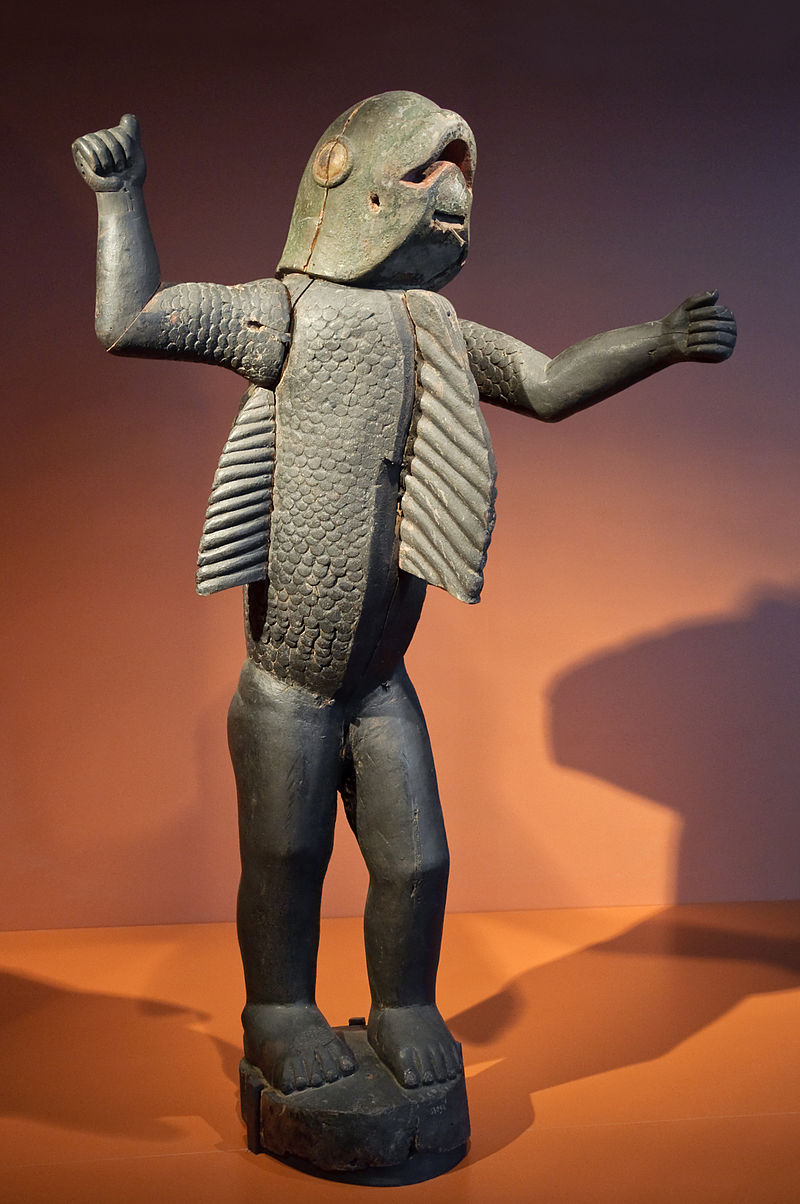
Last Wednesday, on November 11, 2021, artefacts that had been looted by France 130 years ago were finally returned to Benin. As you recall, on November 17, 1892, the colonel Alfred-Amédée Dodds led a French expedition into the Kingdom of Dahomey. The colonizing troops broke into the palace of King Behanzin at Abomey, and looted a huge number of royal objects, ancient statues, royal thrones, sacred altars, and much more. Upon the troops’ return home, Colonel Dodds donated the stolen objects to the Musée d’Ethnographie du Trocadero in Paris; they have been housed at the Musée du quai Branly – Jacques Chirac since the 2000s. It took 130 years for them to be returned to the homeland. So you can imagine the joy of the people and celebrations that followed. The collection – known as the Abomey Treasures – will remain in a room at the Benin presidency while the museum is in construction. As a slight note, only 26 colonial-era artefacts have been returned at this point, as you can imagine these represent only a fraction of the 90,000 artefacts from Sub-Saharan Africa still held in French museums.
Benin Fon statue symbolizing Behanzin man shark (Musee du quai Branly – Jacques Chirac)
This is nonetheless a step forward, albeit small, and Benin President, Patrice Talon, said, “The stars have been aligning for Benin for some time now. The symbolism of the return to Benin is about our soul, our identity – to use a word that is easier to put on it to understand. This return is testimony of what we’ve been. The testimony of how we existed before.”
For more information, check out the articles on Euronews, and ABC. Enjoy!
First page of the Treaty of Bardo, signed on 12 May 1881
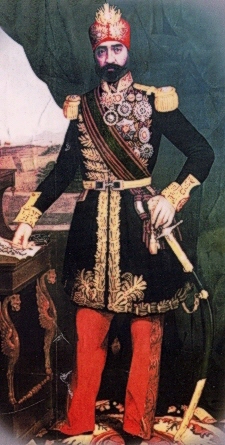
Today, we will talk about the Treaty of Bardo or Treaty of Ksar Said which established a French protectorate over Tunisia. It was signed on 12 May 1881 between representatives of the French Republic and the Tunisian bey Muhammad III as-Sadiq, thus placing Tunisia under the control of France from 1881 until World War II.
As always, the treaty, like so many signed by the French on African soil, allowed France to extend its control over a large area of North Africa, and also to “protect” the Bey from internal opposition. Right… remember how they placed most African countries under “protectorates” to protect them? from who? Often, it was always claimed that it was protection from internal opposition or external invaders, etc, when in reality, it was to protect from them, the French, because face it, they were usually the ones arming the invaders and opposition.
Portrait of the bey of Tunis, Muhammad as-Sadiq
The name of the treaty originated from the site of the residence of the Tunis court, Le Bardo, where the Husainid beys had established themselves in the early 18th century. What is a bey you may ask? Well the bey of Tunis was the monarch of Tunis who reigned from 1705, when the Husainid dynasty acceded to the throne until 1957 when the monarchy was abolished.
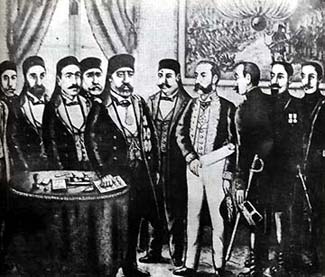
Signature of the Treaty of Bardo – Reproduction of a drawing showing the signing of the treaty of Bardo, from left to right: Mohamed Larbi Zarrouk, Mohammed Aziz Bouattour, Mustapha Ben Ismaïl, Mohammed Khaznadar, Sadok Bey (Muhammed as-Sadiq), the general Élias Mussali, Théodore Roustan, general Bréart, general Pierre Léon Maurand and the translator Amard Tirage
How did the treaty come to be? As always France used a pretext: a raid on Algeria by the Tunisian Khroumir tribe served as a pretext for France to invade Tunisia in April of 1881. Remember the French pretext of an argument on the river Oueme to attack the King of Dahomey, Béhanzin? Well, for the occasion, the French foreign minister, Jules Ferry, deployed an expeditionary force of approximately 36,000 troops to defeat the Khroumir tribe (as you can see, 36,000 troops sounds quite a lot for a tribe, it looks more like an invasion of the territory beyond the Khroumir’s, which was the rest of Tunisia). As you can imagine, the French troops were met with very little resistance, and they kept going until they reached Bardo (a suburb of Tunis). On May 12th, 1881, the French army arrived in proximity of Bardo, where the palace of the bey was located, and handed him a treaty of 10 articles for which he had less than 2 h to examine and sign. The bey, Muhammad III as-Sadiq had no choice but to sign the treaty in his palace of Ksar Said, where he handed over the foreign affairs, the defense of his territory, and the reform of his administration to France. His country was thus placed under the “protection” of France, even though it was only until 8 June 1883 that it officially became a protectorate of France after the signing of yet another treaty, known as the Conventions of La Marsa.
View of Sfax from Ksar Ben Romadhane (Source: Wikipedia)
I have always loved the name of the second city of Tunisia, Sfax… think about it for a second: S-FAX… the name does not seem to sound one bit Arabic… it would seem so reminiscent of Rome…
Well, it is said that a Cucurbitaceaegourd plant (such as a cucumber) gave its name to the city of Sfax, or rather that fakouswhich means cucumber in a local Tunisian language (most likely Berber) gave rise to the name Sfax.
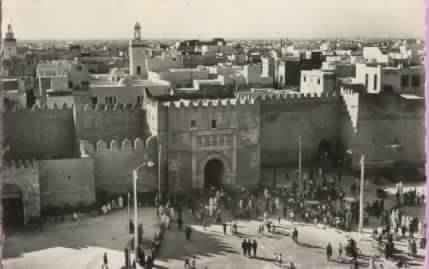
Bab Diwan and Old view of Sfax in 1954
Thomas Shaw who visited Tunis in 1732 claimed in his book Observations geographiques sur le royaume de Tunis, Voyages de M. Shaw dans plusieurs provinces de la Barbarie et du Levant, ed Jean Neaume, La Haye 1743, P. 249, that, “Sfakès is the city of cucumbers.”
However, in his book Fastes chronologiques de la ville de Sfaks, Antoine du Paty de Clam, mentioned that Sfaks could be decomposed into s fa ekez, meaning in Berber, « the one who extends the surveillance » and whose Greek translation is equivalent to Taphrouria(look-out post or monitoring station or surveillance post) transcribed to Taphrura by historians such as Ptolemee.
View of the Medina in Sfax
Other historians have assumed that the name of Sfax must have originated from the name of the governor of the city, Sfâ. According to them, the governor of the city went to visit the Sultan of Mahrès (Mahares) to solicit his help in building the city’s ramparts to protect it from invasion; he exposed his plan on a cow hide that was drying under th sun. In response, the sultan gave him a pair of scissors while saying, “Sfâ qoçç” or “Sfâ cut!”
So which meaning do you think it is?
The city was founded in AD 849 on the ruins of the Roman city of Taparura. It is located on the Mediterranean, and is a major port. The main industries are phosphate, olive, nut (almond) processing, leather, wool, fishing, and international trade. After the capital Tunis, it is the second most populous city of Tunisia. Rich of its prehistoric, Roman, and Islamic heritage, Sfax is a vibrant port city full of life. If you ever visit Sfax, do not forget to visit its museums, enjoy the history, and the city, and maybe look for a fakous?
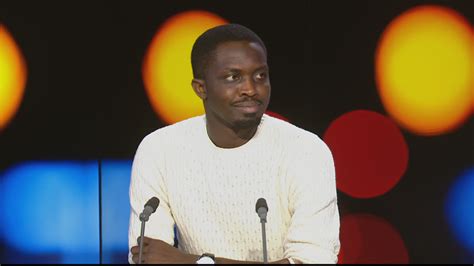
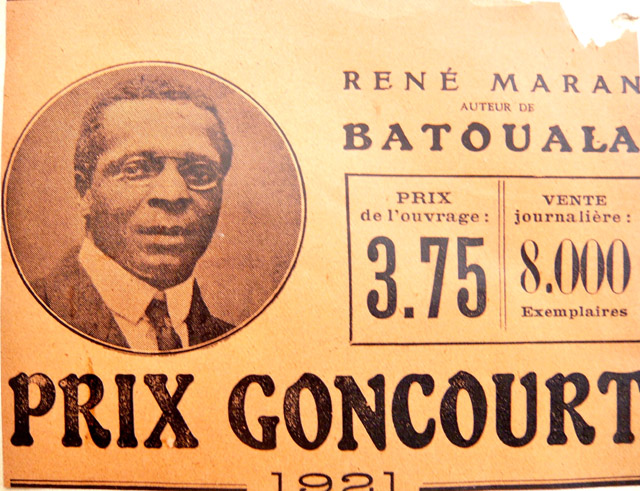
Meet Mohamed Mbougar Sarr, the Senegalese writer who has just won the Prix Goncourt, France’s oldest and most prestigious literary prize. This makes him the first writer from sub-Saharan Africa, a Black African, to win the prize. Isn’t it funny that I was recently reading about René Maran, the first person of African descent (from French Guyana) to win the prestigious Goncourt prize in 1921 for his novel Batouala? This was the first French novel to openly criticize European colonialism in Africa, which caused violent reactions and was banned in all French colonies. So 100 years later, we have the first African to win the prize.
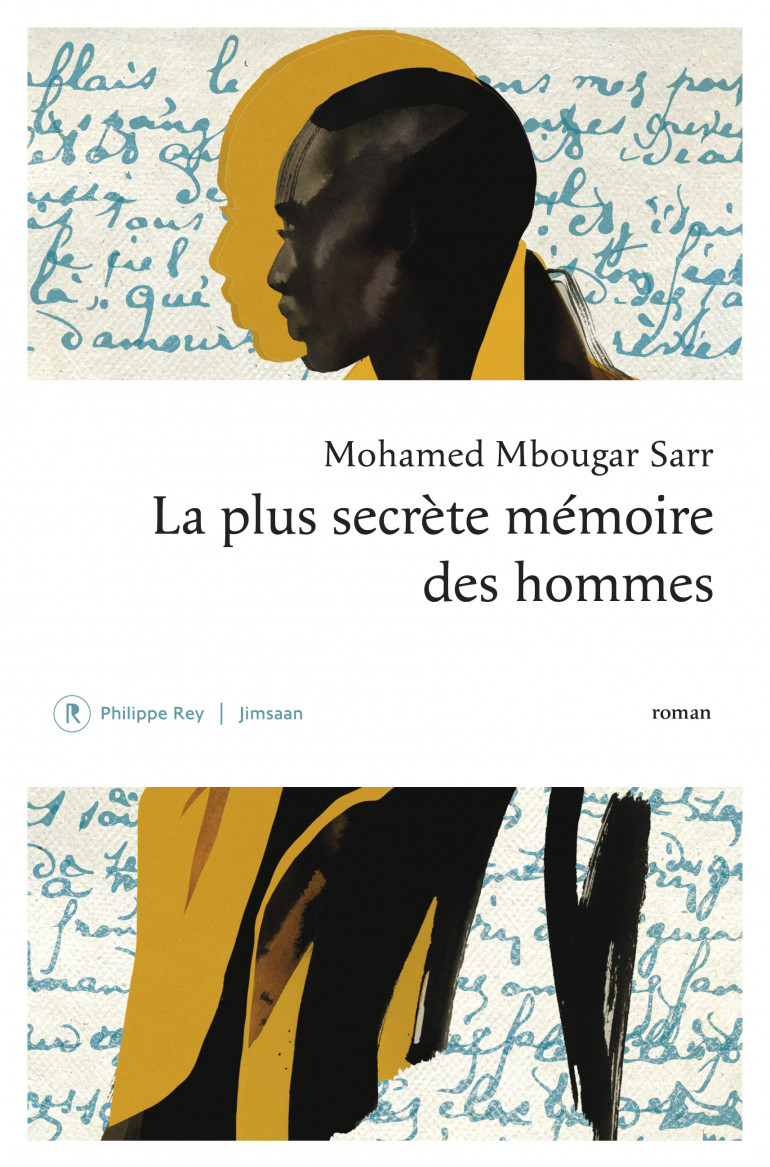
“La plus secrète mémoire des hommes” de Mohamed Mbougar Sarr
Mbougar Sarr is the youngest winner of the Goncourt since 1976. He hails from Senegal, where he grew up in the city of Diourbel, a small city located about 100 miles from the capital Dakar, before moving to France to study literature. His winning novel, La plus secrète mémoire des hommes(The Most Secret Memory of Men), tells the story of a young Senegalese writer living in Paris who stumbles by chance across a novel published in 1938 by a fictional African author named TC Elimane, nicknamed “the Black Rimbaud” by an ecstatic Paris media. The story, described as a reflection on the links between fiction and reality, follows the life of a cursed African writer echoing the real-life experience of the Malian writer Yambo Ouologuem who in 1968 was the first African winner of the prix Renaudot, but was later accused of plagiarism, and had to flee France and vanish from public
life.
Posting of René Maran as he won the Prix Goncourt for Batouala
Previous works by Mbougar Sarr, Terre Ceinte (his first novel published in 2015) and Silence du choeur (2017) have won several prizes including the Prix Ahmadou-Kourouma, and the Grand prix du roman métis. Congratulations to Mohamed Mbougar Sarr for winning the 2021 Prix Goncourt. It took 100 years after René Maran for Sub-Saharan Africa to have a winner of the Goncourt !!!
At the beginning of the world, the cat was the friend of the antelope in the bush. But once the lion came to the bush and fought and killed the antelope. So the cat thought the lion was better, and became a friend of the lion. But then a group of elephants fought the lion and the lion was killed, so it became the friend of the elephants. Then it saw a man kill an elephant.
“Oh, this is better than the elephant,” and the cat became the friend of man.
African Venus, a sculpture by Charles-Henri Joseph Cordier 1851 (Source: Walters Art Museum)
As soon as the man went into his house there was a quarrel with his wife, and his wife ran at him with a stick, shouting, “Where have you been?”
And she shouted many bad things to him. So the man ran away.
“Oh,” said the cat, “the woman is stronger than the man.”
So the cat became the friend of the woman.
This tale was narrated by Abdul Hakim Abdulahi Jibril on Ethiopian Folktales.
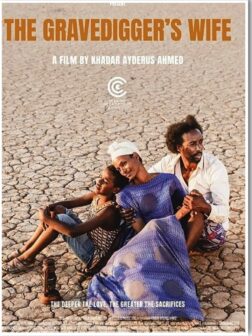
This year’s winner of the Golden Stallion of Yennenga at FESPACO 2021 is the Somali movie The Gravedigger’s Wife by Somali-Finnish director Khadar Ahmed. It defeated 16 other movies to win the Golden Stallion of Yennenga. The movie tells the story of a man, whose job is to wait outside hospitals to bury the dead, and what he has to do to save his sick wife. It is a beautiful movie, which tells the simple story of humanity and love, what we have to do for our loved ones. Set in Djibouti, the movie follows the struggles of Guled (Omar Abdi) as he tries to raise funds for his wife’s treatment who is dying of kidney failure. The movie took a long time in the making, as director Khadar Ahmed wrote the story 10 years ago, but wanted to direct it himself and so took time to learn how to direct movies. Aren’t we glad he was determined to tell the story himself? Well, the Golden Stallion of Yennenga is a tribute to his hard work, and tells us to keep being engaged with our passion.
The Golden Stallion of Yennenga
The second prize went to Haitian director Gessica Geneus for her film Freda, while the third prize went to Tunisian director Leyla Bouzid for A Tale of Love and Desire.
This year’s edition of the FESPACO did not disappoint, we loved it… and wish all the runners up the very best, and are proud for Khadar Ahmed with The Gravedigger’s Wife. I leave you here with the trailer. Enjoy!
















 African Heritage
