Why the Name: Sfax ?

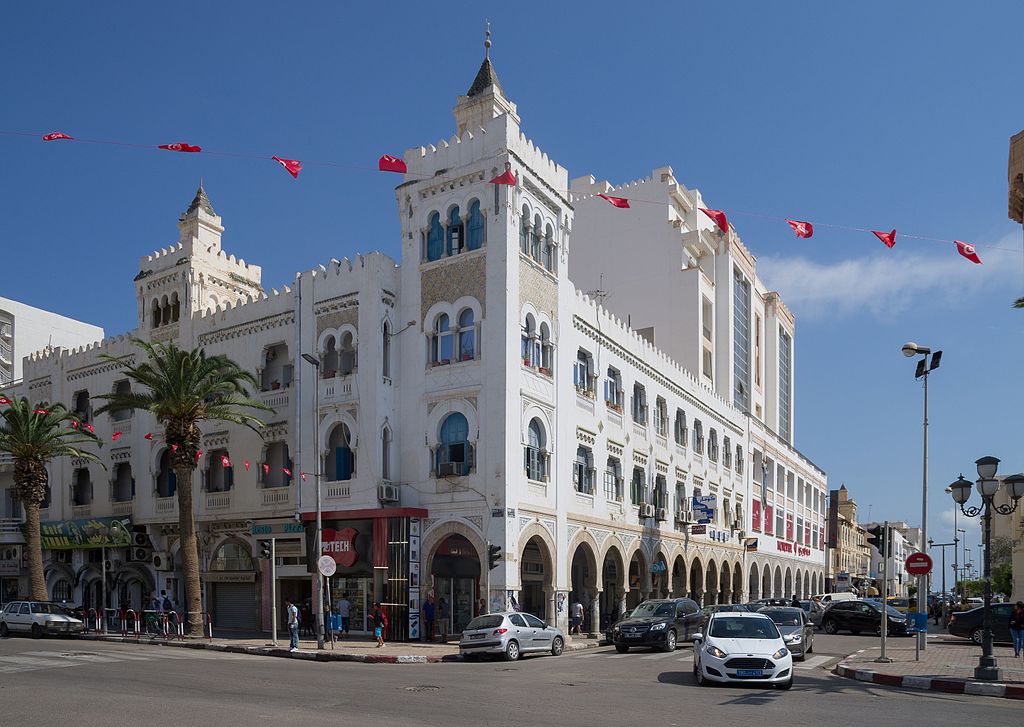
View of Sfax from Ksar Ben Romadhane (Source: Wikipedia)

I have always loved the name of the second city of Tunisia, Sfax… think about it for a second: S-FAX… the name does not seem to sound one bit Arabic… it would seem so reminiscent of Rome…


Well, it is said that a  Cucurbitaceae gourd plant (such as a cucumber) gave its name to the city of Sfax, or rather that fakous which means cucumber in a local Tunisian language (most likely Berber) gave rise to the name Sfax.
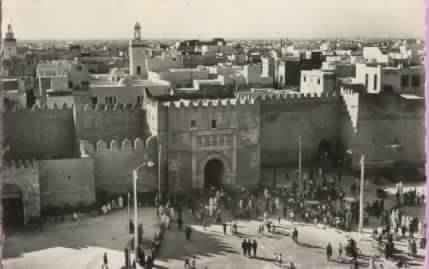
Bab Diwan and Old view of Sfax in 1954

Thomas Shaw who visited Tunis in 1732 claimed in his book Observations geographiques sur le royaume de Tunis, Voyages de M. Shaw dans plusieurs provinces de la Barbarie et du Levant, ed Jean Neaume, La Haye 1743, P. 249, that, “Sfakès is the city of cucumbers.”

However, in his book Fastes chronologiques de la ville de Sfaks, Antoine du Paty de Clam, mentioned that Sfaks could be decomposed into s fa ekez, meaning in Berber, « the one who extends the surveillance » and whose Greek translation is equivalent to Taphrouria (look-out post or monitoring station or surveillance post) transcribed to Taphrura by historians such as Ptolemee.
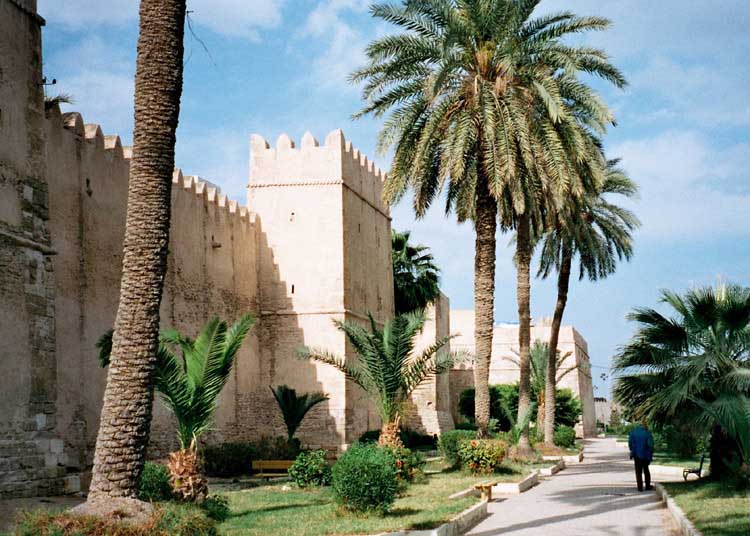
View of the Medina in Sfax

Other historians have assumed that the name of Sfax must have originated from the name of the governor of the city, Sfâ. According to them, the governor of the city went to visit the Sultan of Mahrès (Mahares) to solicit his help in building the city’s ramparts to protect it from invasion; he exposed his plan on a cow hide that was drying under th sun. In response, the sultan gave him a pair of scissors while saying, “Sfâ qoçç” or “Sfâ cut!”

So which meaning do you think it is?

The city was founded in AD 849 on the ruins of the Roman city of Taparura. It is located on the Mediterranean, and is a major port. The main industries are phosphate, olive, nut (almond) processing, leather, wool, fishing, and international trade. After the capital Tunis, it is the second most populous city of Tunisia. Rich of its prehistoric, Roman, and Islamic heritage, Sfax is a vibrant port city full of life. If you ever visit Sfax, do not forget to visit its museums, enjoy the history, and the city, and maybe look for a fakous?

100 years after René Maran, An African wins the Prestigious Prix Goncourt

Mbougar Sarr
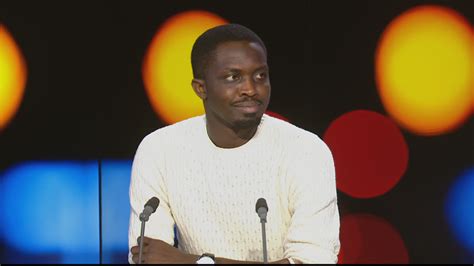
Mohamed Mbougar Sarr (Source: France 24)

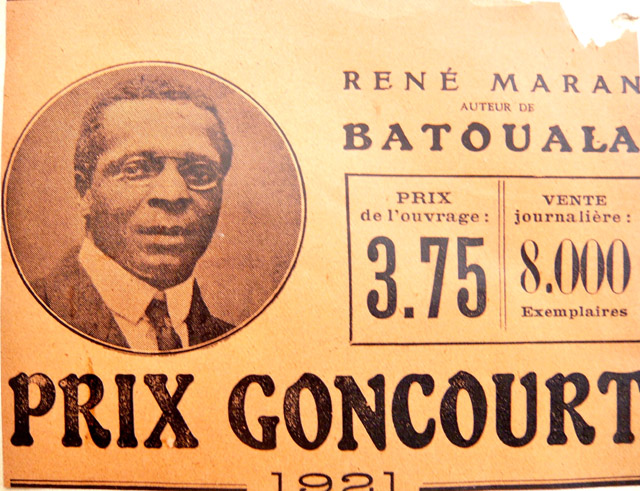
Meet Mohamed Mbougar Sarr, the Senegalese writer who has just won the Prix Goncourt, France’s oldest and most prestigious literary prize. This makes him the first writer from sub-Saharan Africa, a Black African, to win the prize. Isn’t it funny that I was recently reading about René Maran, the first person of African descent (from French Guyana) to win the prestigious Goncourt prize in 1921 for his novel Batouala? This was the first French novel to openly criticize European colonialism in Africa, which caused violent reactions and was banned in all French colonies. So 100 years later, we have the first African to win the prize.

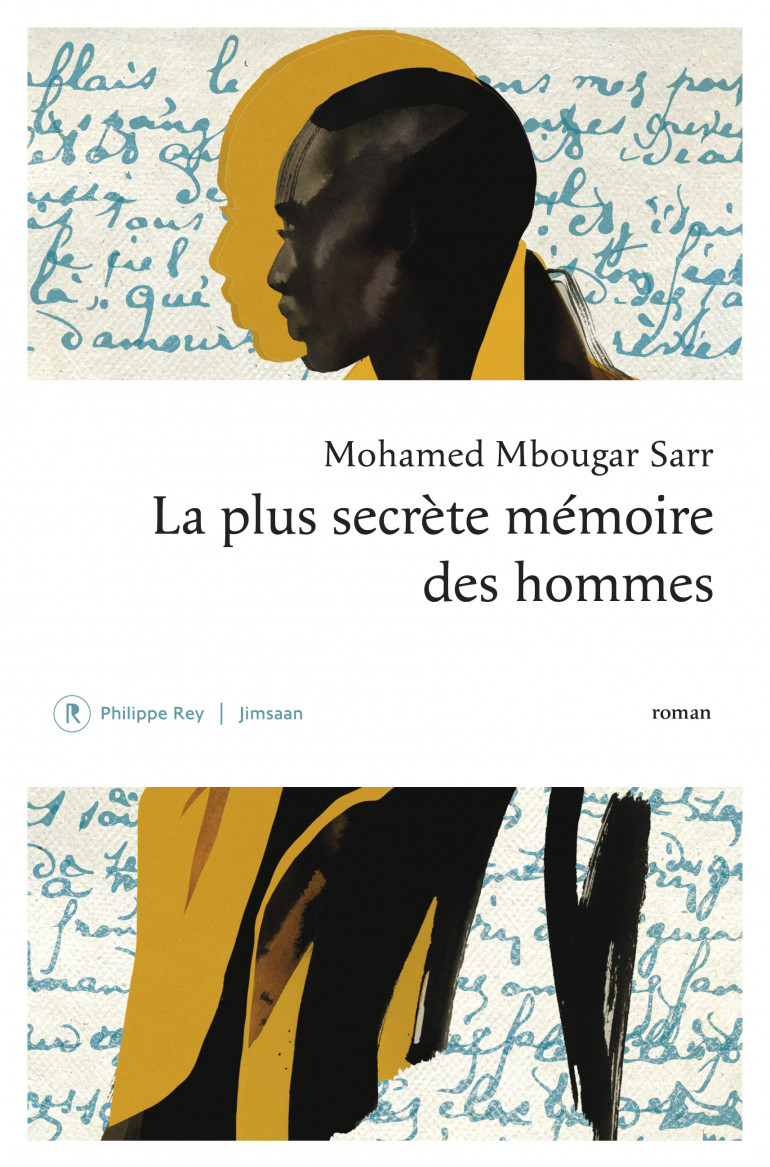
Mbougar Sarr-la plus secrete memoire des hommes
“La plus secrète mémoire des hommes” de Mohamed Mbougar Sarr

Mbougar Sarr is the youngest winner of the Goncourt since 1976. He hails from Senegal, where he grew up in the city of Diourbel, a small city located about 100 miles from the capital Dakar, before moving to France to study literature. His winning novel, La plus secrète mémoire des hommes (The Most Secret Memory of Men), tells the story of a young Senegalese writer living in Paris who stumbles by chance across a novel published in 1938 by a fictional African author named TC Elimane, nicknamed “the Black Rimbaud” by an ecstatic Paris media. The story, described as a reflection on the links between fiction and reality, follows the life of a cursed African writer echoing the real-life experience of the Malian writer Yambo Ouologuem who in 1968 was the first African winner of the prix Renaudot, but was later accused of plagiarism, and had to flee France and vanish from public

life.

Rene Maran_1
Posting of René Maran as he won the Prix Goncourt for Batouala

Previous works by Mbougar Sarr, Terre Ceinte (his first novel published in 2015) and Silence du choeur (2017) have won several prizes including the Prix Ahmadou-Kourouma, and the Grand prix du roman métis. Congratulations to Mohamed Mbougar Sarr for winning the 2021 Prix Goncourt. It took 100 years after René Maran for Sub-Saharan Africa to have a winner of the Goncourt !!! 

Somali Tale: How the Cat became the Woman’s Friend

Cat

At the beginning of the world, the cat was the friend of the antelope in the bush. But once the lion came to the bush and fought and killed the antelope. So the cat thought the lion was better, and became a friend of the lion. But then a group of elephants fought the lion and the lion was killed, so it became the friend of the elephants. Then it saw a man kill an elephant.

Oh, this is better than the elephant,” and the cat became the friend of man.

African Venus, a sculpture by Charles-Henri Joseph Cordier 1851 (Source: Walters Art Museum)

As soon as the man went into his house there was a quarrel with his wife, and his wife ran at him with a stick, shouting, “Where have you been?”

And she shouted many bad things to him. So the man ran away.

Oh,” said the cat,the woman is stronger than the man.”

So the cat became the friend of the woman.

This tale was narrated by Abdul Hakim Abdulahi Jibril on Ethiopian Folktales.

Somali Proverb on Love

L’amour / Love

Idho jaceyl isma eegaan – (Somali proverb, Somalie)

Eyes in love do not dare to stare at each other – (Somali proverb, Somalia) Lovers’ eyes are bashful

Somali Love Story, The Gravedigger’s Wife, is this year’s FESPACO winner

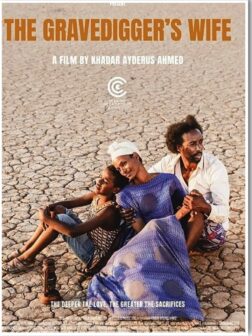
“The Gravedigger’s Wife” by Khadar Ahmed

This year’s winner of the Golden Stallion of Yennenga at FESPACO 2021 is the Somali movie The Gravedigger’s Wife by Somali-Finnish director Khadar Ahmed. It defeated 16 other movies to win the Golden Stallion of Yennenga. The movie tells the story of a man, whose job is to wait outside hospitals to bury the dead, and what he has to do to save his sick wife. It is a beautiful movie, which tells the simple story of humanity and love, what we have to do for our loved ones. Set in Djibouti, the movie follows the struggles of Guled (Omar Abdi) as he tries to raise funds for his wife’s treatment who is dying of kidney failure. The movie took a long time in the making, as director Khadar Ahmed  wrote the story 10 years ago, but wanted to direct it himself and so took time to learn how to direct movies. Aren’t we glad he was determined to tell the story himself? Well, the Golden Stallion of Yennenga is a tribute to his hard work, and tells us to keep being engaged with our passion.

Golden Stallion of Yennenga
The Golden Stallion of Yennenga

The second prize went to Haitian director Gessica Geneus for her film Freda, while the third prize went to Tunisian director Leyla Bouzid for A Tale of Love and Desire.

This year’s edition of the FESPACO did not disappoint, we loved it… and wish all the runners up the very best, and are proud for Khadar Ahmed with The Gravedigger’s Wife. I leave you here with the trailer. Enjoy!

The 5th Edition of the El Gouna Film Festival

El Gouna Film Festival Logo

This week has been the week of film festivals on the continent. Few thousands of kilometers from Ouagadougou, Burkina Faso, at El Gouna in Egypt on a resort on the shores of the Red Sea, another film festival is taking place. It is the El Gouna Film Festival which started in 2017. It is an annual event, which has been running since October 14th, and will end today, October 22nd. Just like the FESPACO, it has seen some adjustments due to the pandemic. The focus of the El Gouna Film Festival is more on movies from North Africa, and the Middle East like Costa Brava, the Sea Ahead, and the Blue Inmates from Lebanon, Feathers, Amira, Captains of Za’atari, Full Moon from Egypt, and countless others. The festival also offers movies from Europe: Norway, Sweden, France, and many others. The only commonality with the FESPACO this year is the presence of the movie Feathers by the Egyptian director Omar El Zohairy. Enjoy!

Below is the introduction found on the website El Gouna Film Festival

Known for being the cultural hub of the Middle East and Africa, Egypt has long been considered a pioneer within the realm of cinema and filmmaking. Serving as an intersection for civilizations from East to West, Egypt’s position has fueled its leadership in filmmaking, and has opened doors for some of the best international films to enter the region. This makes Egypt a prime choice to host the top creative minds and provide them with a platform for cultural exchange.

FESPACO 2021: One of Africa’s Biggest Film Festival is back!

FESPACO official logo for 2021

The African film festival, FESPACO, is back this year after the pandemic, the lockdowns of the past year and half, and an 8-months delay (the biennial event was originally scheduled for February 27 – March 6, but had to be postponed because of the Coronavirus pandemic). It is back in Ouagadougou amidst the health situation and also the security issues that have surfaced in the Sahel region, and particularly in Burkina Faso, in the past few years.

The Festival Panafricain du cinema et de la television de Ouagadougou (FESPACO) is the Panafrican Film and Television Festival of Ouagadougou, which happens to be the largest African film festival. It is held biennially in Ouagadougou, the capital of Burkina Faso. First established in 1969, and boasting some of Africa’s greatest writers and filmmakers (like Ousmane Sembene), the FESPACO offers a chance for African filmmakers and professionals to showcase their work, exchange ideas, and meet other filmmakers, and sponsors.

This year’s FESPACO started on October 16th and will end on October 23rd. It promises to be great with filmmakers from around the continent coming to Ouagadougou to celebrate African cinema. After over a year of confinement, with life and particularly travel almost coming to a grinding stop, the festival promises to bring some much needed entertainment and joy.

Golden Stallion of Yennenga
The Golden Stallion of Yennenga

Over 200 films made by Africans and mainly produced in Africa have been selected for the week-long event. The official selection will see 17 feature-length films compete for the festival’s top prize, the Golden Stallion of Yennenga.

Among them is Burkinabe Boubacar Diallo’s comedy Les Trois Lascars (The Three Lascars), Chadian Mahamat Saleh Haroun with Lingui, les liens sacrés (Lingui, the sacred links), Congolese Dieudo Hamadi with documentary En route pour le milliard (On the road for the billion), Ivorian Philippe Lacôte with his much appreciated La nuit des rois (The night of the kings), Senegalese Aissa Maiga with Marcher sur l’eau (Walking on water), Algerian Hassane Mezine with Fanon hier, aujourd’hui (Fanon yesterday, today), Tunisian Leyla Bouziz with Une histoire d’amour et de desir (a story of love and desire), Cameroonian Narcisse Wandji with Bendskins (Moto-taxis), Namibian  Desiree Kahikopo-Meiffret with The White Line, Tanzanian Ekwa Msangi with Farewell Amor, …  It will be impossible to list here all that the festival has to offer, but know that it is quite extensive and everybody will have its fill. Enjoy FESPACO 2021!!!

Who killed Thomas Sankara? The Trial starts in Burkina Faso

We all know who killed Thomas Sankara… and we all know that it was an international affair with Blaise Compaoré at the center, France, Felix Houphouet-Boigny of Cote d’Ivoire and even Liberians… we all know… but with all the cover-ups, and the powerful owing the justice, will we, citizens of Burkina Faso and Africa ever get justice for Thomas Sankara and his family? Well, the trial started this past Monday in Ouagadougou, without the main actor Blaise Compaoré, the coward previous president of Burkina Faso who got Ivorian citizenship to avoid getting extradited to face his crimes against the people of Burkina Faso… really a coward… how could someone like that have ever governed people? Excerpts below are from the BBC. Enjoy!

====

Thirty-four years, almost to the day, since the shocking killing of Burkina Faso‘s then President, Thomas Sankara, 14 men are going on trial, accused of complicity in the murder of the man known as “Africa’s Che Guevara”.

The charismatic Pan-Africanist was shot dead aged 37 by soldiers during a coup on 15 October 1987, which saw his close friend, Blaise Compaoré, come to power.

Four years previously, the pair had staged the takeover which saw Sankara become president.

Mr Compaoré is among the 14 accused but he is currently in exile in neighbouring Ivory Coast, where he fled after being forced to resign during mass protests in 2014. He has repeatedly denied involvement in Sankara’s death and is boycotting the trial.

I’ve been waiting for this for a long time,” the former president’s widow Mariam Sankara told the BBC. “I want to know the truth, and who did what.”

Sankara remains something of an icon across Africa – … across the continent in South Africa, radical opposition leader Julius Malema cites him as one of his inspirations.

Amilcar Cabral on the Colonizer installing Puppets

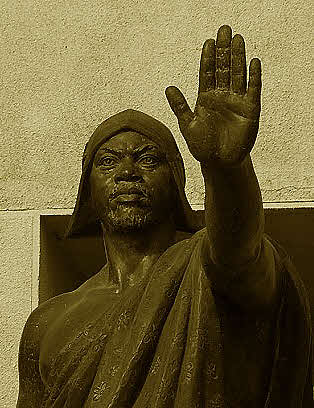
Statue of Behanzin in Abomey, Benin

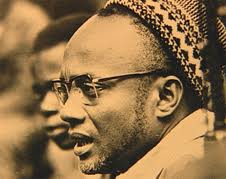
As you all know, we have seen in recent coups and throughout history, that the colonizers/oppressors in Africa tend to install fake chiefs, or rather puppets to serve their interests. Remember when Agoli-Agbo (French puppet) was installed after King Behanzin was deposed in 1894? or Patrice Lumumba with Joseph Mobutu in 1961, or more recently Thomas Sankara by Blaise Compaoré in Burkina Faso in 1987, and countless others … history repeats itself. This behavior is not just observed at the top of the country, but even at the levels of the local traditional chiefs… where the successions are contested thus breaking the will of the people, and the passing on of a culture, effectively destroying the oppressed. I could not have said it better than  Amilcar Cabral, himself during his February 20, 1970 speech, as part of the Eduardo Mondlane Memorial Lecture Series at Syracuse University, Syracuse, New York, under the auspices of The Program of Eastern African Studies. Enjoy!

Amilcar Cabral
Amilcar Cabral

====

the colonizer who represses or inhibits significant cultural activity on the part of the masses at the base of the social pyramid, strengthens and protects the prestige and the cultural influence of the ruling class at the summit. The colonizer installs chiefs who support him and who are to some degree accepted by the masses; he gives these chiefs material privileges such as education for their eldest children, creates chiefdoms where they did not exist before, develops cordial relations with religious leaders, builds mosques, organizes journeys to Mecca, etc. And above all, by means of the repressive organs of colonial administration, he guarantees economic and social privileges to the ruling class in their relations with the masses. All this does not make it impossible that, among these ruling classes, there may be individuals or groups of individuals who join the liberation movement, although less frequently than in the case of the assimilated “petite bourgeoisie.” Several traditional and religious leaders join the struggle at the very beginning or during its development, making an enthusiastic contribution to the cause of liberation.

But here again vigilance is indispensable: preserving deep down the cultural prejudices of their class, individuals in this category generally see in the liberation movement the only valid means, using the sacrifices of the masses, to eliminate colonial oppression of their own class and to re-establish in this way their complete political and cultural domination of the people.

… among the oppressor’s most loyal allies are found some high officials and intellectuals of the liberal professions, assimilated people, and also a significant number of representatives of the ruling class from rural areas.

… Without minimizing the positive contribution which privileged classes may bring to the struggle, the liberation movement must, on the cultural level just as on the political level, base its action in popular culture, whatever may be the diversity of levels of cultures in the country. The cultural combat against colonial domination–the first phase of the liberation movement–can be planned efficiently only on the basis of the culture of the rural and urban working masses, including the nationalist (revolutionary) “petite bourgeoisie” who have been re-Africanized  or who are ready for cultural reconversion. Whatever may be the complexity of this basic cultural panorama, the liberation movement must be capable of distinguishing within it the essential from the secondary, the positive from the negative, the progressive from the reactionary in order to characterize the master line which defines progressively a national culture.

Confronted with such a necessity, the liberation struggle is, above all, a struggle both for the preservation and survival of the cultural values of the people and for the harmonization and development of these values within a national framework.

Tanzanian Abdulrazak Gurnah awarded Nobel Prize of Literature

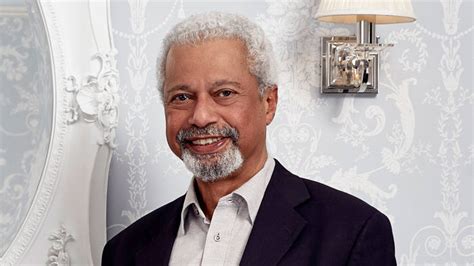
Abdulrazak Gurnah, 2021 Nobel Prize in Literature winner (Source: FT.com)

Today, we will celebrate the fifth African to join the illustrious lists of Nobel literature prize winners. Yes… you heard me right, the 2021 Nobel prize for literature has been awarded to the Tanzanian author Abdulrazak Gurnah, he is only the fifth African recipient behind Wole Soyinka of Nigeria (1986), Naguib Mahfouz of Egypt (1988), Nadine Gordimer (1991) and J.M. Coetzee (2003) both of South Africa. He is in good company.

To be honest, I had never heard of Abdulrazak Gurnah before the Nobel prize announcement, even though I try to keep up with African authors. Now, I will make sure to check out his most famous book Paradise which had been shortlisted for the Booker Prize in 1994.

Flag of Tanzania

Gurnah was born on the island of Zanzibar in 1948, before it was joined with Tanganyika to become Tanzania upon independence from Great Britain. He fled his country at the age of 18 and settled in England where he has lived since then. He is the author of numerous short stories and essays, and of as many as 10 novels. Some of his books have been shortlisted (Paradise) or longlisted (By the Sea) for the Booker Prize. He also writes in Swahili. The main focus of his work has been on the effects of colonialism and the fate of refugees as they reach new countries, continents, and cultures.

Cheers to another proud winner of the very prestigious prize, and this proud son of Mama Africa. For more on him, please check out the announcement on the Nobel Prize page, the Guardian, and NPR articles.