South Africa wins championship (Source: pmnewsnigeria.com)
The Women’s Africa Cup of Nations took place over 3 weeks in Morocco. During these 3 weeks, the best female teams on the continent competed for the top title of champion of Africa. Compared to the men’s tournament, the Africa Cup of Nations which has been in existence for almost 7 decades, the Women’s tournament is relatively young at 28 years of age, and also usually is not vividly followed. This year brought in record following with a full stadium at 50,000 occupancy for the final, which is an amazing feat for a Women’s competition on the continent. The most titled nation in WAFCON history is Nigeria with 11 titles, followed by Equatorial Guinea with 2 titles, and now South Africa with 1 title.
South Africa had been coming 2nd for 4 tournaments taking home the silver medal in 2000, 2008, 2012, and 2018, and this year it finally took home the gold medal. Striker Hildah Magaia scored twice to lead her country to victory 2-1 against Morocco.
The Atlas Lionesses (Source: football256.com)
There were top performances and goals from the different countries participating. Some players stood out including the Moroccan captain Ghizlane Chebbak, Nigeria Rasheedat Ajibade, and South African Hildah Magaia who have been the tournament’s top scorers. Cameroon’s Ajara Nchout and Nigeria’s Sumayah Komuntale also shined by their performances.
Congratulations to the champions the Banyana Banyana of South Africa, and to all the women who proudly represented their countries at the tournament and made us happy.
Let’s end the week with the poem “Blind” by Kenyan writer Joseph Kariuki. Trained like many of the older East African generation at the prestigious Makerere University in Uganda, Kariuki is renowned for his poem celebrating the first president of Kenya, Jomo Kenyatta, “Ode to Mzee.” Today, we will explore the poem “Blind” which in essence describes a heartbreak and the regret of having made the mistake of loving an ‘ingrate’ or more generally the wrong person. One could call it an awakening: the lover is blinded by the fires of love, and after the romance fails, realizes the deception, and that there were no reason to cry over the loss of the other, for whom one were infatuated. Although short, the poem is quite deep, as it clearly describes a failed romance and heartbreak, the ensuing sadness, and the eventual realization that one was poorly matched, and loved someone who was an ingrate, or a lousy choice for a lover. The title “Blind” fits so well with the proverb ‘love is blind.’ Enjoy! It was published in Poems from East Africa, ed. David Cook and David Rubadiri (Nairobi: East African Educational Publishers, 1971), P. 69.
BLINDby Joseph Kariuki
When you left Without a word, My heart wept–
Not so much For lost love (And a touch),
But the more For the blinkers Which I wore
For so long. For so late Did I worship Such an ingrate?
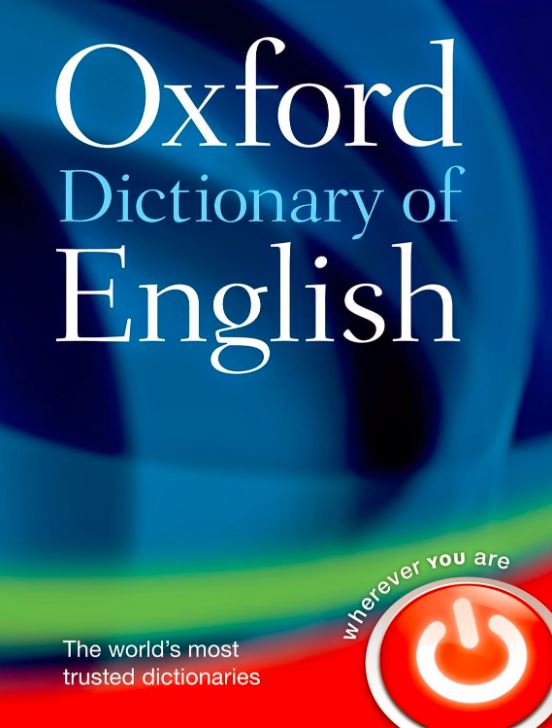
Drum rolls… the Oxford English Dictionary has just selected 200 new words from East Africa to be part of its new edition. We all remember the 2020 Oxford English Dictionary which had introduced 29 Nigerian words to its lexicon. This year’s edition features the addition of almost 200 words from East African countries such as Kenya, Tanzania, and Uganda. Given that Swahili is the lingua franca in all three of these countries (to a smaller extent in Uganda), it is no surprise that the words added have a strong Swahili origin. The words added include: Asante Sana (thank you very much), pole sana (sorry), Kanga (cottonfabric from East Africa), Chapo (thin pancake eaten for breakfast), Nyama Choma (roasted/grilled meat), collabo (collaborate), tarmac (towork the streets in search of a job; job huntic), jembe (not to be confused with djembe drums – hand tool shaped like a hoe used for digging), sambaza (to send mobile phone credit to someone), duka (small neighborhood store sharing all sorts of goods)… Isn’t it marvelous how each culture adds to another? With the growth of the Swahili language and its inclusion in schools across the continent, it is no doubt a forward strategy of OED to include these, even though a bit late in my opinion. Since the introduction of Nigerian words into the Queen’s English Dictionary, I have been wondering if these new words actually get used in England, Australia, or other places where English is spoken, or does their use remain just local, and the addition is more of a ‘political’ play on diversity? Enjoy from the OED website.
=====
Region in East Africa where Swahili is spoken (linguisitics.illinois.edu)
Recent OED updates have included a significant number of new entries from South Africa and Nigeria. In this quarterly update, the OED continues to broaden its coverage of words from English-speaking Africa, with the publication of close to 200 new and revised entries for East African English. These additions and revisions are for words used chiefly or exclusively in Kenya, Tanzania, and Uganda, three countries which share a common Anglophone background despite their differing colonial histories.
Something else that Kenya, Tanzania, and Uganda have in common is their lingua franca, Swahili, and indeed several of the new and revised entries in the East African update are borrowings into English from this language. This includes the oldest of the new entries in this batch,jembe, referring to a hoe-shaped hand tool used for digging, which is first attested in an article by British explorer Sir Richard Francis Burton published in the Journal of the Royal Geographical Society in 1860. Over a hundred years later, renowned Kenyan writer and academic Ngũgĩ wa Thiong’o used the same word in his historical novel A Grain of Wheat, first published in 1967.
One of the newest words in this batch is also a Swahili loan word: sambaza, a verb originally used to mean ‘to send mobile phone credit to someone’, but now used more generally to mean ‘to share or send something’. …
Flag of Kenya
Other borrowings in this batch include Swahili forms of address such as mwalimu ‘teacher’ (first attested 1884), as well as Bwana(1860) and its abbreviation, Bw (1973), a title of courtesy or respect prefixed to the surname or first name of a man. There are also expressions and discourse markers of Swahili origin such as asante sana(1911) ‘thank you’, pole sana (1966) ‘sorry’, and ati(2010) ‘as someone said; reportedly, allegedly’.
… The vocabulary of East African English is characterized not just by loan words, but also by lexical innovations based on English elements, several of which have now made their way into the OED. They include words formed through suffixation, such as unprocedural(1929) ‘irregular, illegal’; through clipping, like the verb collabo(2008) ‘especially of musicians: to collaborate’; and through compounding, such as deskmate(1850) ‘a person who sits next to another at school’. Some English words also have meanings specific to the region. In East African English, the noun tarmac (1982) is also used as a verb meaning ‘to walk the streets looking for work; to job hunt’. A person who is pressed (1958) needs to go to the bathroom, while a stage (1965) is a bus stop or a taxi rank.
In addition to words used throughout East Africa, the OED’s latest update also features words unique to the varieties of English spoken in Kenya, Tanzania, and Uganda. The lexicon of Kenyan English is represented by borrowings from a few of its many languages: for example, kiondo(1902) from Kikuyu andIsukuti (1972) from Luhya. A kiondo is a handwoven bag made from cord or string, now usually of sisal, with long handles or straps that can be slung over the shoulder, typical of the traditional handicraft of the Kikuyu and Kamba peoples of Kenya. An isukuti is a wooden drum, traditionally made from a hollowed log, which is usually hung over the shoulder and played by striking with the fingers and palms. Isukuti is also the name of a rhythmic, energetic traditional celebratory dance accompanied by drumming and singing, performed typically at festivals and weddings by the Luhya peoples of Western Kenya, such as the Isukha and Idakho.
Flag of Tanzania
… In Kenyan English, a biting (1997) is a bite-sized piece of food, a small snack, appetizer, or canapé; while a merry-go-round (1989) is an informal cooperative savings scheme, typically run by and for women, in which each participant regularly contributes an amount, and the whole sum is distributed to the members in turn. To shrub is to pronounce or write words in another language in a manner that is influenced by one’s mother tongue, and a shrub(2008) is a word pronounced or written in this manner. To shrub and shrub are colloquialisms chiefly used with reference to English or Swahili words pronounced in a manner characteristic of another Kenyan language.
… As for Tanzanian English, one of the most widely known words from this variety is daladala, the name of a van or minibus that carries passengers for a fare as part of a local informal transport system. Dating back to 1983, the English word comes from Swahili, with daladala being a reduplication of dala ‘dollar’, perhaps originally as a bus driver’s call. Dala is also the nickname of the Tanzanian 5-shilling coin, which used to be the typical fare for daladala minibuses.
Flag of Uganda
… The vocabulary of Ugandan English draws primarily from Luganda, one of the country’s major languages. Examples of Lugandan borrowings in this batch are kaveera(1994)‘a plastic bag, plastic packaging’; kwanjula(1973)‘an engagement ceremony where the families of the bride and groom formally meet’; and nkuba kyeyo(1991) ‘a Ugandan person working overseas, especially one doing a low-paid or unskilled job’—the Lugandan phrase literally means ‘someone who sweeps’.Katogo(1940) is another loan word from Luganda—it is the name of a typical Ugandan breakfast dish consisting of matoke (banana or plantain) boiled in a pot with various other ingredients. The word later developed a figurative sense, as it began to be used to mean ‘a mixture or fusion of disparate elements; a mess, a muddle’.
Ugandan English also has its share of distinctive uses of existing English words. In Uganda, to cowardize (2003) is to act like a coward or to lose one’s nerve, while to extend(2000) is to move from one’s position so as to make room for someone else. Well done(1971) is used as a friendly greeting or salutation, especially when encountering a person at work or in a state of activity.You are lost! (2013) is also used as a greeting, or in response to a greeting, in a manner similar to ‘long time no see’.
It is no secret that prices are high everywhere: at the gas pump, at the food store, rent, prices are going up and up, affecting everyone and making those who are poor even poorer. Many African countries are trying to find ways to alleviate inflation. Zimbabwe is one such country.
Robert Mugabe, president of Zimbabwe
It is no secret that Zimbabwe has been going through an economic embargo for many years. Many thought, the traitors who toppled Robert Mugabe, that by getting rid of him, the economy would be better and all the embargo restrictions placed by the UK, US, and EU would be lifted… Lesson to traitors: it never works as planned! Five years on, and Zimbabwe is no better, even though Mnangagwa has signed all sorts of deals with the westerners [Is Zimbabwe the New Haiti?]and returned land [Zimbabwe to Return Seized Land to Foreigners]. Well, as I was saying, it is no secret that inflation is particularly high in Zimbabwe and has been for many years. This week, the government of Zimbabwe has announced that it will issue gold coins as legal tenders, thus trying to alleviate inflation. Not sure that I trust Mnangagwa’s government to do anything right… particularly given that the price of gold is particularly high and exacerbated by the problems in Mali [France had become 4th world producer of gold from Mali’s gold mines; Mali Rescinds France Defense Agreements, France confirms it will withdraw from Mali … moving to neighboring countries and beyond, Tensions Escalating in Mali]. Excerpts below are from the AfricaNews; for more, read also this Guardian article.
=====
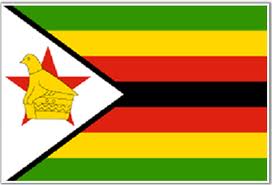
Zimbabwe’s central bank says it will start issuing gold coins as legal tender in late July, as the country battles to control soaring inflation that has considerably weakened the local currency.
The gold coin is named ‘Mosi-oa-Tunya‘, after Victoria Falls, and can be converted into cash according to the apex bank.
The latest measure comes as the country’s inflation rate more than doubled last month to 191%, bringing back memories of the hyperinflation of the 2000s that saw the Zimbabwean dollar redenominated three times. The local currency would later be abandoned in 2009.
Governor of the central bank, John Mangudya in a statement released Monday, said that “the gold coins will be available for sale to the public in both local currency and US dollars and other foreign currencies at a price based on the prevailing international price of gold and the cost production”.
The coins are expected to act as a ‘store of value and to reduce the demand for US dollars’ – something that has been blamed for the weakening value of the local currency.
There have been mixed feelings over the news as Zimbabweans experience with the central bank’s policies is often of concern and uncertainty. Many Zimbabweans are known to have lost their savings including pensions when the Zimbabwean dollar crashed in 2009.
La rosée ne vous mouille pas si vous marchez derrière un élèphant (Proverbe Ga – Ghana, Togo, Benin; Proverbe Bantandu – République Démocratique du Congo (DRC); Proverbe Mandingue – Mali, Guinée, Gambie, Sénégal). – La route tracée par les parents est facile.
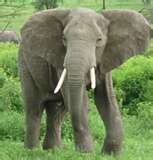
Elephant
Dew does not get you wet if you walk behind an elephant (Ga proverb – Ghana, Togo, Benin; Bantandu proverb – Democratic Republic of Congo (DRC); Mandinka proverb – Mali, Guinea, The Gambia, Senegal). – The road traced by parents is easy.
Yesterday, the West African bloc ECOWAS has lifted the economic and financial sanctions against Mali’s military government after the promise that Mali will hold elections in February 2024. The move has been celebrated by many Malians who have been struggling under the restrictions and the global rise in fuel and food costs. As many applaud the lifting of sanctions, it is important to analyze why ECOWAS might have changed its mind: a) the countries in the West African block were not aware of how much weight Mali had in the region and the impact to their economies, and were all suffering from the Mali embargo, and thus are scramming to have Mali rejoin its ranks; b) With sanctions lifted, it will be easier for terrorists groups (armed by foreign forces) to travel back into the country easily, as there will be less control; c) a few days ago, the Spanish minister threatened Mali with a NATO intervention to protect European interests in Mali, which he later denied; d) France just moved its troops to neighboring Niger (another puppet). How convenient that the sanctions are lifted a few days after this minister’s outburst, and right before France’s troops move to Niger. Thus, knowing that ECOWAS is France’s puppet in the region, the lifting of sanctions is rather something to be skeptical of, and distrust entirely. No one should fall for this ECOWAS turncoat tactic… Mali should keep its guard high, and we should all pray and fight for the freedom of Mali and Africa as a whole!
As the economy everywhere appears to be in free-fall, with high inflation all over the world, many African countries are taking measures that will help their citizens deal with and hopefully solve some of their internal issues.
President Faustin-Archange Touadera of the Central African Republic (CAR) (Source: ConnecterLeMonde.com)
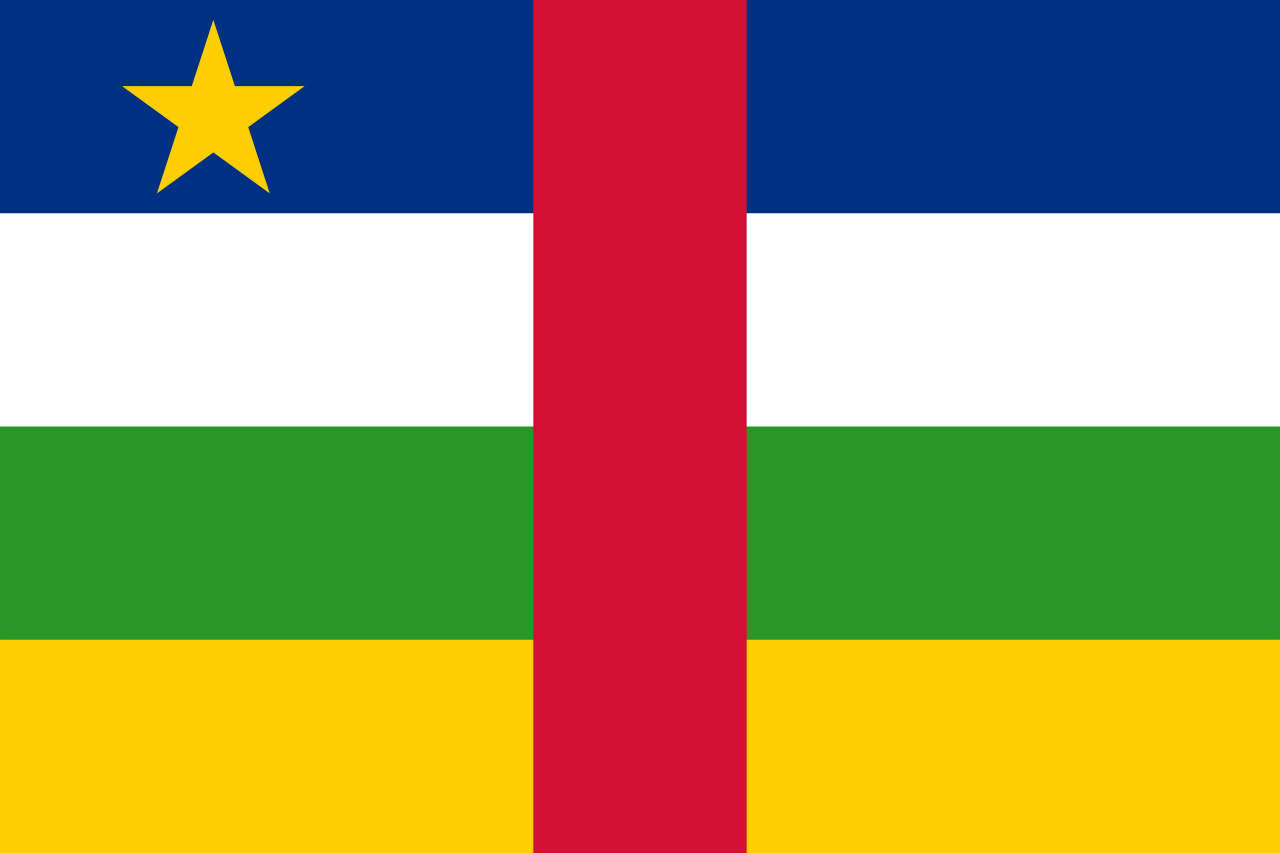
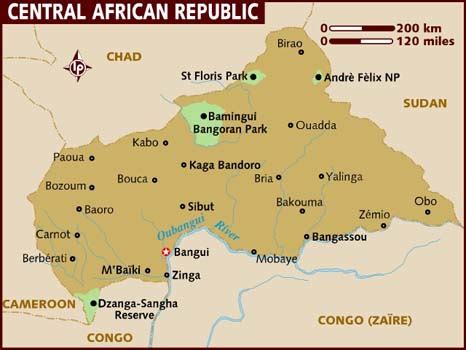
One such example is that of the Central African Republic (CAR) which adopted Bitcoin as a National Currency last April. This past Sunday, CAR President, Faustin-Archange Touadéra, announced in an online event the creation of the Sango Coin and a zero-taxation “crypto-hub“, the first in Africa. The currency is named Sango after the main African language spoken in the country. This currency will, via the a platform called Crypto Island, allow the country to trade in its vast natural resources (diamonds, uranium, gold, and other minerals). Until now, CAR has been, like 14 other African countries, enslaved by the French colonial tax that is the FCFA which served at one point to ‘siphon’ up to 75% of the countries’ resources directly back to France [Africa is funding Europe!]. It is clear that those African nations need new currencies, and we salute CAR for having the courage to start, even though crypto seems to be unsteady at the moment (like everything else at the moment); it is always scary to be a pioneer, but it is rewarding as well! As a side note, the west tends to overlook, or vilify some of our leaders who try to stand up or do things right for their people. President Touadéra is one of those African leaders who has been demonized for his want to free his country from the French chains, turning to Russia for help in stopping a war in his country which benefited France and its croonies. Rarely do the Western media highlight the fact that President Touadera is also a trained mathematician, and in his free time still teaches students at the University of Bangui in his country.
Undeterred by the turmoil hitting crypto, the Central African Republic (CAR) — one of the poorest and most troubled countries in the world — has unveiled plans to launch its own digital currency.
President Faustin Archange Touadera, in an “online event” on Sunday, announced CAR would create the Sango Coin and a zero-taxation “crypto-hub“, the first in Africa.
The currency is named after Sango, which with French is one of the two official languages in the landlocked country, rated the world’s second poorest nation under the UN’s Human Development Index.
Through a platform called Crypto Island, the Sango will become “the catalyst for tokenising (CAR’s) vast natural resources,” Touadera declared, providing no timeline or other details.
He hailed Sango and Crypto Island as “a new digital system fed by blockchain,” the internet-based ledger that underpins crypto currencies.
“Sango Coin will give the whole world direct access to our resources,” attracting investors and “getting the engines of the economy going,” he enthused.
On April 27, Touadera’s office abruptly announced that the CAR had adopted Bitcoin as legal tender alongside the CFA franc, a currency the country shares with five other central African economies.
It became the first country in Africa to embrace Bitcoin as a national currency, and the second in the world after El Salvador last September.
…
Touadera on Sunday said 57 percent of Africa’s population does not have access to a bank.
“The solution,” he said, was “the smartphone, the alternative to the traditional bank, cash and financial red tape“.
On Twitter, he said, “gold served as the engine of our civilisation for ages! In this new age, digital gold will serve the same for the future.”
Germany has agreed to return a sacred statue stolen in Cameroon in 1902 by a German soldier in the Nso kingdom in the Northwest region of Cameroon. The statue is the only depiction of the queen mother of the Nso people. For the story, Ngonnso founded Banso which marks the beginning of the Nso kingdom in the 14th century when she separated from her two brothers Nchare Yen, the founder of Foumban the capital and the Bamun Kingdom, and Mbe who founded Bankim. From Nso oral history, it is said that Ngonnso was able to conquer, defeat, and ensure that all Nso people stay together. She was a strong woman, who embodied the history and identity of the Nso people. When the German colonial commander in visit in Banso “took” the statue via unknown means in 1902, 120 years ago, it is as if the soul of the Nso people was gone. Special note of gratitude to all activists who demanded the return of Ngonnso for years, and to Sylvie Njobati who launched the @BringBackNgonnso Twitter account in March 2020, tweeting demands for Ngonnso’s restitution and tagging the German museum and its leaders. As always, unity is strength!
To learn more about the return of Ngonnso, check out the article on CNN, and NewsCentralAfrica. The excerpt below is from the BBC.
=====
Germany has agreed to return a sacred statue stolen from Cameroon at the beginning of the last century.
The Prussian Cultural Heritage Foundation, which manages the museums in the capital, Berlin, said it would return the female figure, known as Ngonnso, to the Nso community in north-west Cameroon.
The statue was taken by a colonial officer and donated to Berlin’s Ethnological Museum in 1903.
A prince from the Nso kingdom told the Reuters news agency that the announcement was warmly received in Cameroon.
“After more than 120 years, we can only remain happy for it is a moment to commemorate and come closer to our ancestral links with love and togetherness,” Mbinglo Gilles Yumo Nyuydzewira is quoted as saying.
The foundation also said that it will return 23 pieces to Namibia and is planning an agreement to repatriate objects to Tanzania.

















 African Heritage