Zambia and its Colorful Contribution to the World

Twin Rivers, Zambia

Have you ever heard of Twin Rivers in Zambia? Do you know that humanity came in contact with pigments, color, 300,000 years ago in the area of Twin Rivers? In this area of Zambia, located southwest of the capital Lusaka, is where the most extensive prehistoric mineral pigment collection in the world is found.

Language is not the only way of communicating, color is also part of it. Humanity communicated using pigments and color hundreds of thousands of years ago. Africa has some of the earliest evidence of the use of earth pigments. Evidence includes engraved ochre nodules and ochre processing areas and tools at sites such as the Blombos Cave in South Africa or Porc Epic in Ethiopia; the extensive processing of ochre at sites such as Sibudu in South Africa or Twin Rivers in Zambia, and the extensive mining of shiny bright red ochre in Eswatini (subject for another day). In 2006, in Twin Rivers, Zambia, archaeologists found that early humans used paint for aesthetic purposes much earlier than previously thought. The team found pigments dated between 350,000 and 400,000 years back. As a comparison, the oldest pigments previously found were 120,000 years old (still in Africa) and the oldest known painting is about 35,000 years old.  Huge quantities, about 70 kg or more, were found in a cave, thus implying a systematic use of pigments indicating a purposeful and repeated activity, perhaps linked to a material expression of self-awareness, displayed in the form of body paint/body decoration. Throughout the years, different rocks were excavated, ranging from limonite, hematite, specularite, and different kinds of pigments. The work done by Pr. Barham and his team, shows that even though a variety of colors of ochre were used at Twin Rivers (such as yellow, brown, red, a dark sparkly purple shade of red (specularite), pink, and blue-black) the most predominant color at the site is red.

Enjoy the article below from Colorful beginning for humanity on the BBC, Newsbriefs Archaeology, and check out the extensive work of the Liverpool team.

Zambia Sovereign Debt Crisis

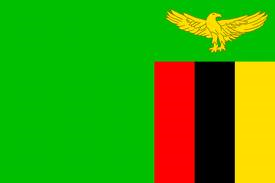
Zambian flag
Zambian flag

When we talk about Zambia these days, there is no way to avoid the elephant in the room: its debt. In 2020, Zambia became the first African country to declare bankruptcy (possibly worldwide) as the pandemic had brought it to its knees: the coffers were empty, and the country owed China, its main creditor, over $3 billion with no clear way to pay it back. This past Tuesday, the IMF announced that Zambia was seeking as much as $8.4 billion in debt relief in preparation for discussion on restructuring foreign liabilities. African debt as Thomas Sankara pointed a while back is a tricky subject… so there is already that fundamental question of debts owed to European countries (like France) which milk Africa via fake currencies such as the FCFA, and treacherous partnerships signed decades ago which benefited only the West. For today though, how did Zambia get here in the first place?

President Edgar Lungu (Source: AllInZimbabwe.com)

The country’s debts quadrupled between 2014 and 2019 amid a surge in infrastructure borrowing under Edgar Lungu, the former president, who lost elections last year to Hichilema. Needless to say that right before Lungu came into power, there had been a collaboration between Norway and Zambia to help the country get better hold of its revenues, via a mineral mining monitoring project aimed at boosting tax revenues. As we learned at the beginning of the week, Zambia is rich in minerals, particularly copper. However, upon arrival in power, president Lungu stopped the program (aimed at helping its country negotiate better deals for its mines), and went into an infrastructure shopping spree with no real regards for what was in his treasury’s coffers; no wonder he got the boots at the end of his first term. This, added to all previous debts, and the pandemic which hit just as the new president was getting into office, made for the perfect storm.

Excerpts below are from the Times talking about Zambia’s discussions this week, and hopefully the start of a better way to close on the debt. Let’s not veil ourselves though, since its creation has the IMF ever helped a single African country come out of problems? Hard to believe that it will – maybe the case of Zambia will be different? You can also read articles from Bloomberg, Atlantic Council, and Financial Times.

====

Map of Zambia
Map of Zambia

Not that long ago Chinese credit was easy to get in Zambia. A government department could contact a Beijing lender directly without needing to get it signed off by finance ministers.

Millions of dollars were squandered or used to line pockets. Ministers campaigned in helicopters and the president had a Gulfstream jet. All the while the debts were racking up. It could not last.

We have lost an obscene amount of money on corruption — money that could have been used to feed, house, clothe and educate our children,” said Hakainde Hichilema, a man once mocked as “calculator boy” for his head for dry numbers.

President Hakainde Hichilema (Source: FaceofMalawi.com)

A year after securing the presidency — at his sixth attempt — in a landslide, Hichilema is unpicking the ruinous rule of his predecessor, Edgar Lungu, who threatened to turn Zambia into the new Zimbabwe.

Under Lungu’s administration, international debt quadrupled to more than 120 per cent of Zambia’s GDP. He failed to negotiate a lifeline from the International Monetary Fund (IMF) after it became the first African state to default since the 2005 agreement to wipe clean the debts of 30 of the continent’s poorest states.

The $1.3 billion IMF bailout secured by Hichilema’s government last week was seen as a huge vote of confidence in his commitment to restraint and reform. A successful exit from default could make Zambia a model for other states in Africa, where China is the biggest lender and the threat of debt distress is high. China has overtaken the World Bank as the biggest foreign creditor to developing countries.

… Zambia’s debt of $6 billion to 18 different lenders was twice previous estimates.

… New laws on transparency and a cap on future borrowing will keep things honest, [Hichilema] said. “The only change we can probably say is that we have just raised the bar in terms of engagement.

Why the Name: Zambia?

Zambian flag
Zambian flag

Have you ever wondered about the name of the country Zambia? Think about it: ZAMBIA… so much power in the name. It is the second to last country in the alphabetical list of countries, before Zimbabwe. Just like Zimbabwe which was Southern Rhodesia, Zambia was formerly known as Northern Rhodesia; both countries shared the Rhodesia name.  Why bother changing names you might ask?

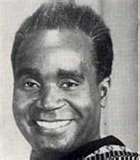
Kenneth Kaunda
Kenneth Kaunda, first president of Zambia

Well, Rhodesia was named after the infamous British Cecil Rhodes who committed atrocities in Southern Africa, while establishing British rule over the different countries. It only made sense that, when Zambia got its independence from the British on 24 October 1964, that the African rulers would want a name that represented them and their values, and not some man who killed them; moreover, being called ‘Northern something’ is like not having a real identity. Thus, in 1964, the country’s first president, Kenneth Kaunda changed the name from Northern Rhodesia to Zambia. ZAMBIA‘s name comes from the Zambezi River, where Zambezi means “grand river“, as it is the 4th largest river in Africa after the Nile, Congo, and Niger rivers.

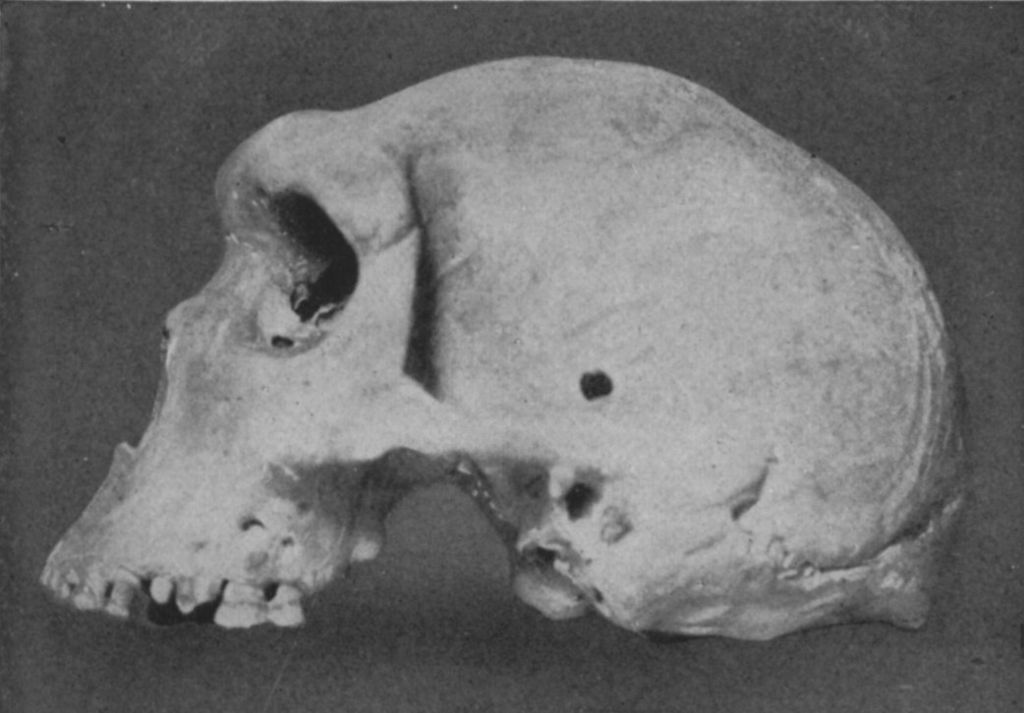
Skull of the homo Rhodesiensis or Kabwe skull found in Zambia

The capital of the country of Zambia is Lusaka. Zambia is rich in prehistoric vestiges including the skull of the homo rhodesiensis also known as the Broken Hill Man which is dated 100,000 to 300,000 years and found in a zinc mine in the city of Kabwe in 1921. The first inhabitants of the area, in more modern times, were the San and Batwa people until around AD 300. Later on, it has been the site of early Bantu settlements. These early Bantu settlers participated in trade at the site of Ingombe Ilede (which translates to sleeping cow in the Tonga language because the fallen baobab tree resembles a cow) in Southern Zambia. Ingombe Ilede was one of the most important trading posts for rulers of Great Zimbabwe. Zambia has been at the crossroads of populations in Southern Africa, seeing the rise of several large kingdoms over the centuries.

Zambia's national team, the Chipolopolo
Zambia’s national team, the Chipolopolo

Zambia is a landlocked country in southern Africa, with a tropical climate, consisting mostly of high plateaus with some hills and mountains, dissected by the great Zambezi river. Copper represents almost 70% of the country’s exports. It is the home of the Chipolopolos, rightfully named the copper bullets once led by the great Kalusha Bwalya. If you visit Zambia, do not forget to bask in the welcome of its inhabitants, try and find your way near the Zambezi River, visit the capital Lusaka, learn a few words in one of the local languages, and at least one find out why the country is so well-known for its copper. Enjoy the 10 best places to visit in Zambia (There are much more, of course)!

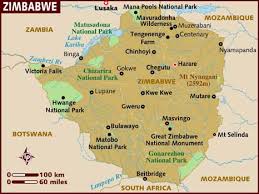
Africa’s Oldest Dinosaur found in Zimbabwe

Artistic reconstruction of Mbiresaurus raathi, which has been discovered in Zimbabwe (by Andrey Atuchin)

Scientists have unearthed in Zimbabwe, the oldest dinosaur ever found on African soil which lived 230 million years ago. As a parenthesis, dinosaur fossil hunting research is not big in Africa, so it is no surprise that on the cradle of humanity, people are still unearthing fossils. I am sure that if African scientists got vested in fossil hunting, the world will most likely awake to the era of the dinosaur, i.e. Africa being also the cradle of dinosaurs. Excerpts below are from the BBC; for more, also read the New Scientist. Enjoy!

=====

Scientists have unearthed in Zimbabwe the remains of Africa’s oldest dinosaur, which lived than 230 million years ago.

The Mbiresaurus raathi [love the name, named after Mbire in the Zambezi valley where the discovery was made, very African] was one metre tall, ran on two legs and had a long neck and jagged teeth. Scientists said it was a species of sauropodomorph, a relative of the sauropod, which walked on four legs. 

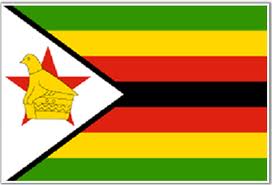
Flag of Zimbabwe
Flag of Zimbabwe

The skeleton was discovered during two expeditions, in 2017 and 2019, to the Zambezi Valley. When we talk of the evolution of early dinosaurs, fossils from the Triassic age are rare,” Darlington Munyikwa, deputy director of National Museums and Monuments of Zimbabwe, and who was part of the expeditions, told the BBC. He said that fossils from that era – which ended more than 200 million years ago – had been unearthed in South America, India and now Zimbabwe.

The find is expected to shed more light on evolution and migration of early dinosaurs, back when the world was one huge continent and Zimbabwe was at the same latitude as those countries, he said. Zimbabwe has been aware of other fossils in the area for decades and Mr Munyikwa said there were more sites that needed further exploration in the area, subject to funding availability [exactly, more African researchers need to delve into the field, and $$$]. It shows that dinosaurs didn’t start out worldwide, ruling the world from the very beginning,” Christopher Griffin, another scientist involved in the expedition, told the BBC. They, and the animals they lived with, seem to have been constrained to a particular environment in the far south – what is today South America, southern Africa and India.” He added that the find was the “oldest definitive dinosaur ever found in Africa“.

Prof Anusuya Chinsamy-Turan, a palaeontologist at the University of Cape Town, told the BBC that the discovery was important because it was part of the lineage that gave rise to the sauropod dinosaurs, which includes the diplodocus and the brontosaurus. … [Last July, she and her colleagues described a new iguanodontian dinosaur (Iyuku raathi) found in South Africa’s Eastern Cape Province. Thus, this is the second dinosaur find in less than a month].

… The near-complete skeleton of the Mbiresaurus raathi is stored in a room in a museum in Zimbabwe‘s southern city of Bulawayo. It is thought to date to the Carnian stage of the Triassic period, when today’s Zimbabwe was part of the massive supercontinent Pangaea.

“The Killing of the She-Camel” by Mohamed Ibrahim Warsame

Flag of Somalia

Last week, Somalia lost one of its greatest poets, Mohamed Ibrahim Warsame. Affectionately called Hadraawi, which means the “master, or father of speech”, Warsame was regarded as a pillar of modern Somali literature and a strong advocate for peace and democracy. In 1973, he spent 5 years in jail because he spoke against the revolution led by then president Siad Barre; this resulted in his work getting banned. Despite censure, Warsame remained undeterred and continued his work, composing poetry upon his release, songs, and verses. The poem, “The Killing of the She-Camel” led to his imprisonment without trial. In the 1990s, he called for an end of the civil war which has destroyed the country, and displaced countless people. Last week, Somali president, Hassan Sheikh Mohamud, said “Poet Mohamed Ibrahim Warsame (Hadraawi) was a symbol of unity and peace,”… “He was one of key pillars of Somalia’s art and literature who took a leading role in preserving the Somali culture and promoting the Somali language. His death is felt in every Somali household.

Is there a better way to celebrate the life of Hadraawi than to share this poem? Against corruption, disrespect of the human condition, and nepotism,  Warsame says, “Never will I ever accept a single insulting slide from those grasping commissars…” For his everlasting fight for justice, he says “Until the grave’s prepared… I’ll keep rallying and calling until the Day of Judgment.” Enjoy The Killing of the She-Camel (Hal La Qalay) by Mohamed Ibrahim Warsame, translated to English by Said Jama Hussein and Maxamed Xasan ‘Alto’.

Hal la qalay raqdeedaa

    Hal la qalay raqdeedaa

     Lagu soo qamaamoo

     Qalalaasihii baa

     Nin ba qurub haleeloo

     laba waliba qaybteed

     Qorraxday ku dubatoo

     Qoloftiyo laftiibaa

     Lagu liqay qallaylkee

     Qosol wuxuu ka joogaa

     Qubannaa danbeeyee

     Weli qaba hamuuntee

     Buuraha qotada dheer

     Ka arkaaya qiiqee

     Qarka soo jafaayee


     Qalwadii masbaa galay

     Qodax baase hoos taal

     Fule quudhsigii diid

     Geesi qoorta soo dhigey

     Faras qaayihiisii

     Qurux buu ku doorsaday

     Qabqab dhaafay baa yimi

     Qosol qoonsimaad noqoy

     Qabyo waa halkeedii


     Qarandidu libaaxbay

     Ku qadhaabataayoo

     Soo qabo tidhaahdaa

     Qaankiyo biciidkoo

     Qaybtana shanlaabay

     Qoondeysataayoo

     Isagnaa qorshaha guud

     Qanjidhkiyo xumaystay

     Ha qawedin tidhaahdaa

     Aarkuna ma quustoo

     Ma qarsado xanuunkee

     Hadba qaran jabkiisiyo

     Qiirada xasuustuu

     Kolba dibin qaniinaa


     Qalwadii masbaa galay

     Qodax baase hoos taal

     Fule quudhsigii diid

     Geesi qoorta soo dhigey

     Faras qaayihiisii

     Qurux buu ku doorsaday

     Qabqab dhaafay baa yimi

     Qosol qoonsimaad noqoy

     Qabyo waa halkeedii


     Weligay cad quudheed

     Anna qaadan maayoo

     Qalanjadan faraa dheer

     Wax la qaybsan maayee

     Bal inay qabuuruhu

     Saddex-qayd ka maarmaan

     Ama qoor-tal jeexaan

     Labadaas mid quudhaan

     Xilka qaawan saaraan

     Hadba qaylo-doon baan

     Ka horow qiyaamaha

     Ku qulaamin maydkee

     Aan qoofallaadee

     Qarqarsiga ha iga furin.


     Qalwadii masbaa galay

     Qodax baase hoos taal

     Fule quudhsigii diid

     Geesi qoorta soo dhigey

     Faras qaayihiisii

     Qurux buu ku doorsaday

     Qabqab dhaafay baa yimi

     Qosol qoonsimaad noqoy

     Qabyo waa halkeedii


The Killing of the She-Camel (Hal La Qalay) 


How they came rushing to that place

   Where the carcass of the she-camel lay,

    and what a commotion there was

as each caught at her flesh

    pair by pair clawed off their share

    frying it in the glare of the sun

    and cramming down dry

    its crisp skin, crunching the bones.

    You’d bare your teeth too to see

    their scattered followers come

    still cramped with greed, ravenous

    at seeing the smoke ascend

    from the colossal mountain’s top,

    scrambling up cliffs and ravines.


    The snake sneaks in the castle:  

    Although it’s carpeted with thorns

     still the coward casts off his curses

     so the courageous must stretch out his neck;

     the cob stallion sells his values

     in order to cut a fine figure.

    When such cockiness struts forth

     and even laughter becomes a crime

     our country has unfinished business.


    When the aardvark tells the lion

    how it’s supposed to hunt

    and orders it, ‘Go catch

    the young camel and the oryx’;

    then carves five times its share

    setting this aside

    while granting for the lion’s role

    glands and offal,

    commanding it, ‘Don’t quibble,’

    the lion can’t cave in

    and doesn’t hide its hurt

    but now and then remembering

    the loss of its prestige

    it bites its lip in bitterness.


    The snake sneaks in the castle:

     although it’s carpeted with thorns

     still the coward casts off his curses

     so the courageous must stretch out his neck;

     the cob stallion sells his values

     in order to cut a fine figure.

     When such cockiness struts forth

     and even laughter becomes a crime

     our country has unfinished business.


     Never will I ever accept

     a single insulting slice

     from those grasping commissars –

     I won’t share a thing with them.

     Until the grave’s prepared

     to forego its three yard shroud 

     or a collar round the neck,

     since one at least is needed

     to cover the naked dead,

     I’ll keep rallying and calling

     until the Day of Judgement,

     pray my cries can comfort the dead:

     tie me to this task, and don’t 

     release me from its harness.


     The snake sneaks in the castle:

     although it’s carpeted with thorns

     still the coward casts off his curses

     so the courageous must stretch out his neck;

     the cob stallion sells his values

     in order to cut a fine figure.

     When such cockiness struts forth

     and even laughter becomes a crime

     our country has unfinished business.


Traditional Coronation of a New Zulu King

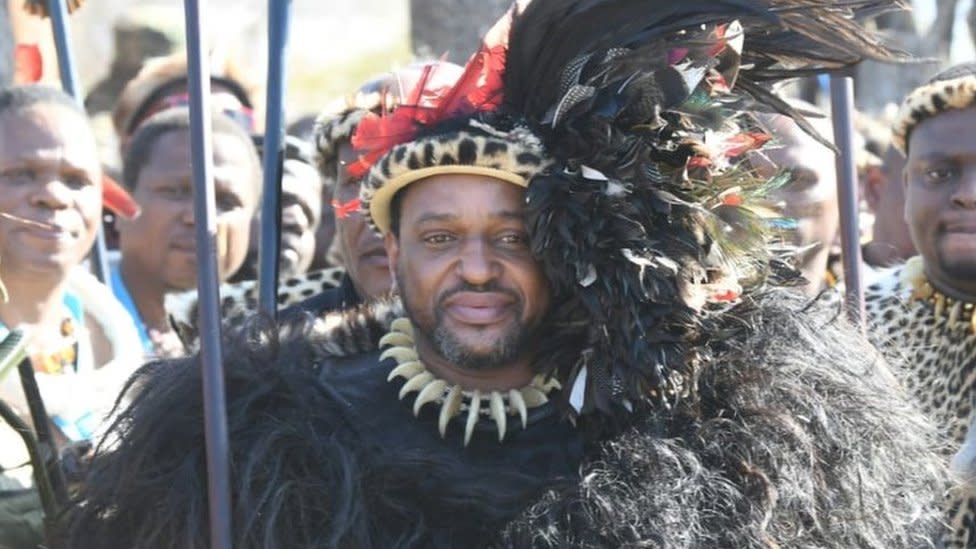
King Misuzulu ka Zwelithini (Source: yahoo news)

The Zulu people of South Africa now have a new king, Misuzulu Siqonbile ka Zwelithini who was crowned king in a traditional ceremony last Saturday. The coronation comes after 50 years of his father’s reign, King Goodwill Zwelithini ka Bhekuzulu, and a year-long family feud to determine the rightful heir. For many Zulu people, it is a rare event, the first in 51 years, and totally worthy of celebrations as it welcomes the dawn of a new king of the Zulu Kingdom.

Zulu King Goodwill Zwelithini and Queen Mantfombi Dlamini (Source: Sundayworld.co.za)

The new king, Misuzulu ka Zwelithini, is 48 years old, and although he is the son of the previous king, some royals had argued he was not the rightful heir and that the late king’s will was in fact forged. Many believed that the feud stemmed from the fact that King Misuzulu’s mother was the late Queen Mantfombi Dlamini Zulu of royal blood given that her father was the late King Sobhuza II of Swaziland and her brother is King Mswati III of Eswatini; her marriage to the Zulu King Goodwill Zwelithini came with the condition that her first-born son would be first in line for the throne in the event of his father’s death. However, for some Zulus, even though Queen Mantfombi Dlamini held the highest status among the king’s wives as a royal descendant, she was still considered an ‘outsider’ or ‘foreigner’, not a Zulu. In her husband’s will, she had been named as Queen regent – caretaker until a successor was found; however she also passed one month after becoming regent, and left a will in which her son Misuzulu ka Zwelithini was named successor. Since then, there have been a lot of contests in the family.

Celebrations at the new Zulu King’s traditional coronation (Source: Yahoo News)

None of that could dampen the joyous spirit of the thousands that descended upon the KwaKhangelamankengane Palace on Saturday for the traditional coronation of the new Zulu monarch. It was a beautiful celebration. The new king will be officially installed at a public coronation on 24 September – a public holiday in South Africa previously known as Shaka‘s Day – a time when thousands of Zulus would visit his grave to honor him for uniting the Zulu nation.

Please check out images of the celebration on the BBC.

Pas de decision brusque / No Rash Decisions!

Intaadan fallin ka fiirso (Somali proverb – Somalia)

Réfléchir avant d’agir (proverbe Somali – Somalie). – Considérez tous les aspects d’une situation avant d’agir.

Look before you leap (Somali proverb – Somalia). – Consider all aspects of a situation before you take any action.

Somali Tale : The Black Crow

A crow snacking on some bread (pied crow)

The crow was once a sheikh or priest, and at that time he was white. But all the other birds made an accusation against him.

They said, “On the one hand he eats meat, and on the other hand he eats fruits.

So all the birds came together and said, “You are a sheikh or a priest! But what you do is wrong. The smallest birds should eat meat. And the biggest ones eat fruit. But you eat from both sides.”

In not only Somali but Cushitic culture in general, it was said that the crow was the representative of the Sun God called Wak. Oromos believed in the Sun God also. People believed that the crow interpreted what Wak, the Sun God, said to the people and people would send their messages to the Sun God through him.

The crow, when he speaks, says “Wak! Wak!

But the crow became dishonest and ate from both things – fruit and meat, and so he was punished. They cursed him and he became black.

This tale was narrated by Pr. Ahmed Mohammed Ali on Ethiopian Folktales.

Proverbe sur le rire / Proverb on Laughter

Le rire d’un enfant / A child’s laughter

Le rire d’un enfant est la lumière de la maison (proverbe Buganda – Uganda)

The laughter of a child is the light of a house. (Buganda proverb – Uganda)

Eyeglasses to fit African Facial Features?

Glasses

Do you think that difference races have different bone structure? Could one look at a skeleton and tell the race of the owner? Well, remember Cheddar man [Ancient Britons were Black, confirming Cheikh Anta Diop’s Work], and how he was identified thousands of years later via DNA and the facial reconstruction to be a Black man based on his bone structure as well? So the big question then is, if each race has a particular bone structure, doesn’t it mean that things like glasses (eyewear) cannot be one-size-fits-all? 

Flag of Uganda

A Ugandan eyewear company thinks so. Wazi Vision is making glass frames affordable for Africans, and to fit African features. Truly, the founder points out true differences that often get ignored: the currently manufactured eyewear out there fits either European or Asian features; leaving marks on our (very African) nose bridges (and the good Lord knows that that’s one feature that is distinctly different from others’), or tightening near the ears, or even sagging down. I love that we have a new generation of ophtamologists, optometrists, and opticians out there who address problems specific to us. Wazi Vision started out to conduct free eye tests, and fit people with affordable eyewear. Wazi Vision now makes frames out of plastic, recyclable materials, cow horns, and much more. I call on others to think outside the box to address our needs. 

Excerpts below are from the article on AfricaNews, and check out the website of Wazi Vision.

=====

Ophthalmologist glasses (Source: Merriam-Webster.com)

Wazi Vision conducts many eye test camps in hard-to-reach areas around Uganda. The free services cater to those who ordinarily wouldn’t afford to see an ophthalmologist, yet vision problems are common in the country.

And with a cross-subsidization model, those who are diagnosed with refractive errors get eyewear they manufacture, at affordable prices.

… At the workshop in Kampala, the eye clinic is ever open since the needs are huge: “We know that as we grow there is a reading tendency and most people have been cut off from reading because of presbyopia in most cases and we have encountered a lot of those cases“, ophthalmologist Frank Bogere explains.

When a team of innovators started Wazi in 2016, they wanted to create accessibility to eyewear for marginalized communities.

… Using recycled plastic, it is the first company in East Africa to design and manufacture eyewear. They also use other locally available materials like cow horns, bamboo, and offcuts from clothes like jeans. And, they produce custom-made frames.

It is a source of pride for Geogette Ochieng Ndabukiye, the co-founder of CMO: “Eyewear frames that people wear are not for their facial features. They are mostly made for the European and Asian facial features so you find that when Africans, when Ugandans wear their glasses, over time they begin to squeeze them, they begin to get marks here, the glasses fall, but Wazi here in Uganda is the first company to design and manufacture eyeglasses that are fit for African facial features“.