Who/What did We Say Goodbye to in Africa, in 2023?

Map of Mali

We said goodbye to a lot of people and things in Africa in 2023. Below are 11 of them:

1. We said goodbye to MINUSMA, a UN peacekeeping mission in Mali, which was found to be complicit to the destabilization of the country. The organization had been in Mali for a decade, with no results except a clear collusion with the terrorists (funded by external forces) who have divided the country. On their way out, weeks before they were set to leave at the request of the Malian government, MINUSMA breached their agreements with the government for a safe handout, and left abruptly leaving all sorts of heavy artillery for the rebel groups to take over the city, but the Mali governmental forces were able to defeat the terrorists and free the city of Kidal, a rebel stronghold. Mali Forces Succeed in Kidal where France and Allies could not!

Flag of Burkina Faso

2. In February, France agreed to withdraw its troops from agreed to a request from Burkina Faso’s military leaders to withdraw all its troops from the country within a month. France to Withdraw Troops from Burkina Faso. There were other defense agreements signed in 2018; this is a rescinding on the 2018 agreements. It is the third African country from which France is forced to move out its troops: Central African Republic, Mali, and now Burkina Faso.
Map of Niger

3. On July 26, 2023, President Mohamed Bazoum of Niger was ousted by a military coup d’etat that saw the arrival of president Abdourahamane Tchiani at the helm of the country. France and the international community have been totally against the new government. This has let to a successive rupture of French relations in Niger, starting with a Niger – France Diplomatic Arm Wrestling, where the French ambassador refused to leave the country after the country told him to, which came to an end a few days ago with French troops leaving the country. Since the coup, Niger has been one of the fastest growing economies of the continent, now that the uranium revenues are actually entering the country’s coffers vs. France. All Eyes on NigerWhy is Niger so Poor and Why the Anti-French Sentiment?Bye Bye to French Troops in Niger.

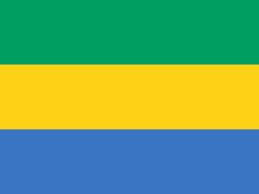
Flag of Gabon

4. On August 30, 2023, we all woke up to a military coup d’etat in Gabon by the army which ended 56 years of the Bongo dynasty by putting out Ali Bongo. We all thought we were getting someone new, but we got  General Brice Clotaire Oligui Nguema, who is a cousin of Bongo and used to be the bodyguard of Bongo’s father, the late President Omar Bongo. He was also head of the secret service in 2019 before becoming head of the republican guard. Unlike the coup in Niger, the coup in Gabon was applauded by France and the rest of the international community. Is the Wind of Change blowing in Gabon too?

Map of Morocco

5. In September, Never Before Seen Catastrophes hit Morocco and Libya Few Days apart: Morocco was hit by a magnitude 6.8 earthquake, the deadliest in the country in over a century, said to have claimed over 3,000 lives. Libya was hit by unbelievable floods a few days later on September 10; these floods, the deadliest ever on the continent, and said to have claimed between 5,000 – 10,000 lives, and displaced at least 30,000 people. Our hearts go out to our Moroccan and Libyan brothers and sisters. Africa stands with you. 

Ruben Um Nyobé
Ruben Um Nyobé

6. Marie Um Nyobe (born Marie Ngo Ndjock Yebga), the widow of one of Cameroon’s greatest opposition fighters and freedom fighters, the real Father of Cameroonian independence, Ruben Um Nyobé, passed away on the exact same day that her husband was murdered 65 years ago, on 13 September 1958on the 65th Commemoration of Ruben Um Nyobe’s Murder. This came just as Cameroon and the Union des Populations du Cameroon (UPC) was commemorating the 65th year of his murder by the French forces in Cameroon.
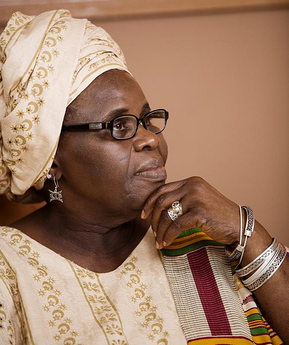
Ama Ata Aidoo (Source: W4.org)

7. This year, we said goodbye to Ama Ata Aidoo, the first published female African dramatist with her play The Dilemma of a Ghost published in 1965. She was a Ghanaian author, poet, playwright, who served in the government of Jerry Rawlings as Secretary for Education from 1982 to 1983So Long to Ghanaian Writer Trailblazer Ama Ata Aidoo. She belongs to the generation of African women writers who dared to speak up loud and clear about African women issues at a time when it was not common. In a 2014 interview with Zeinab Badawi of BBC, she said “People sometimes question me, for instance, why are your women so strong? And I say, that is the only woman I know.”
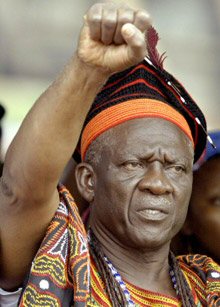
Ni John Fru Ndi (Source: Bonaberi.com)

8. Ni John Fru Ndi, the major political opponent to the current president of Cameroon for almost 3 decades passed away this year. Affectionately called “The Chairman,” John Fru Ndi came up at the twilight of the National Conference in Cameroon with the creation of the Social Democratic Front (SDF) in 1990. Over the years, his party came to symbolize hope in a place where there had been no ‘real’ leadership change in over 30 years. His party was seen as the main opposition party to the government for over 2 decadesGoodBye to a Courageous Leader : Ni John Fru Ndi and Ushering the Multi-Party Era in Cameroon. He has left a major imprint in Cameroon’s politics.

9. At the beginning of this month, Mali and Niger ended Long-Standing Tax Treaties with France, putting an end to a 50 years old tax treaty that mostly benefited French companies in these African countries. This will help Mali and Niger to finally be able to tax these companies that make billions in their countries, to get the funds necessary to fund their own economies.
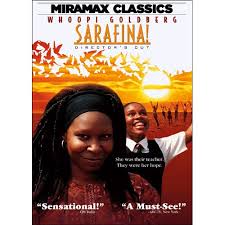
Poster of Sarafina

10. In mid-December, we were stunned by the passing of the South African singer Bulelwa Mkutukana, also known by her stage name as Zahara, a self-taught guitarist who gained recognition with her debut album, Loliwe, in 2011. She enchanted us all with Loliwe. The album was a commercial hit and won the Album of the Year at the South African Music Awards, and loved throughout Africa. Her style fell in the Afro-Soul register with her strong beautiful voice. So long blooming flower, we will keep singing to honor you.

11. Lastly, we said goodbye to Mbongeni Ngema, the South African composer and choreographer who gave us the musical Sarafina!, the movie which focused on the event of Soweto in 1976 and which became a world sensation. 16 June 1976: Soweto Uprising from Sarafina!The Lord’s Prayer from SarafinaVisiting the Hector Pieterson Memorial and MuseumRemembrance: 16 June 1976 Soweto Massacre. He passed away on December 27, 2023. President Cyril Ramaphosa wrote, “[Mbongeni Ngema]’s masterfully creative narration of our liberation struggle honoured the humanity of oppressed South Africans and exposed …”

Mali and Niger end Long-Standing Tax Treaties with France

Map of Mali with its capital Bamako

At the beginning of the month, Mali and Niger jointly put an end to two long-standing tax treaties with France. We know that French companies in Mali or Niger (and in other of the zone Franc countries) do not pay taxes in the African countries, but rather back in France, even though the generated revenues come 100% from the host African country. Imagine the economic losses for these countries? In most of these countries, the French companies will extract, say in the case of mining, the resources, without as much as building a single road or hospital for the local populations. One can thus understand the logic behind Mali and Niger governments’ actions. Some news media (mostly western ones) claim that now Malians or Nigeriens leaving in France will be subject to double taxation… but how many billion-euros generating Malian or Nigerien companies are there in France? The answer is ZERO! There goes that pointless argument about a few (granted there are a few) Malian citizens in France having to pay taxes, while Orano (old Areva) makes billions in Niger without paying taxes to the Niger government! Such an unfair treaty really needed to go!!!

Excerpts below are from BNN.

====

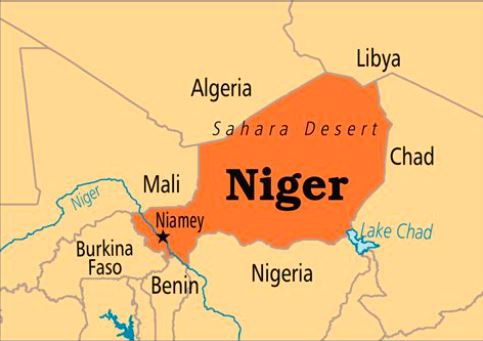
Map of Niger

In a significant shift in fiscal and diplomatic relations, Mali and Niger have taken a stand against France by revoking two long-standing tax cooperation treaties. Dating back to 1972, these agreements were initially crafted to circumvent double taxation, fostering mutual assistance in tax matters.

The decision, outlined in a joint statement from the governments of Mali and Niger, hinged on France’s ‘persistent hostile attitude’ towards both nations and the ‘unbalanced character’ of the agreements. These treaties, according to the statement, have led to substantial financial deficits for both West African countries.

This move signals a potential reconfiguration of the international tax landscape and geopolitical alignments in the region, particularly between these nations and France. The revocation of these treaties also depicts a wider discontent with France’s influence in West African affairs.

Niger’s junta has also scrapped two key military agreements with the European Union aimed at combating violence in Africa’s Sahel region. Moreover, Mali, Burkina Faso, and Niger have withdrawn from the G5 anti-jihadist force, further intensifying the region’s security concerns.

Reinstating an African Writer: The Case of Yambo Ouologuem

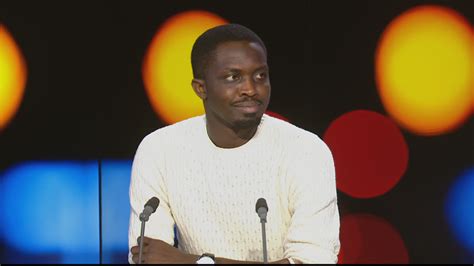
Mohamed Mbougar Sarr (Source: France 24)

At the end of 2021, we celebrated the win of Senegalese author Mohamed Mbougar Sarr, the first man from sub-Saharan Africa to win the prestigious literary Prix Goncourt, 100 years after René Maran who was the first person of African descent to win the prize for his controversial novel Batouala. Mbougar Sarr’s winning novel, La plus secrète mémoire des hommes (The Most Secret Memory of Men), tells the story of a young Senegalese writer living in Paris who stumbles by chance across a novel published in 1938 by a fictional African author named TC Elimane, nicknamed “the Black Rimbaud” by an ecstatic Paris media. The story, described as a reflection on the links between fiction and reality, follows the life of a cursed African writer echoing the real-life experience of the Malian writer Yambo Ouologuem who in 1968 was the first African winner of the prix Renaudot, but was later accused of plagiarism, and had to flee France back to his natal Mali, to live a reclusive life, and die in utter misery.

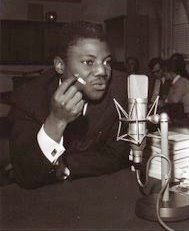
Malian writer Yambo Ouologuem in France in November 1968. Photograph: Yves Le Roux/Gamma-Rapho/Getty Images/The Guardian

Now thanks to Mbougar Sarr’s work, the publishing house Penguin Modern Classics is re-publishing the Yambo Ouologuem’s book over 50 years after his work was pulled out and banned. Le devoir de violence (published in English as Bound to Violence) was first published in 1968 by Editions du Seuil. After winning the Prix Renaudot that very year, Ouologuem became a celebrity equated to the likes of Leopold Sedar Senghor. “Ouologuem’s novel is harshly critical of African nationalism, and in fact reserves its greatest hostility for the violence Africans committed against other Africans” (Richard Posner on Plagiarism, the case of Yambo Ouologuem). For many critics, Africans in particular, Ouologuem’s book is a validation of the twisted views of the West on Africa who exonerate themselves of the violence they committed on Africans throughout centuries.

Excerpts below are from the Guardian. You can also check out the blog created by Ouologuem’s daughter or Richard Posner on Plagiarism, the case of Yambo Ouologuem at Amardeep Singh, or The Tortured Legacy of Yambo Ouologuem.

=====

In 1968 the books pages of the French newspaper Le Monde excitedly praised an uncompromising new novel, Bound to Violence, going on to salute its author as one of “the rare intellectuals of international stature presented to the world by Black Africa”.

The newspaper’s words, written in tribute to the young Malian writer Yambo Ouologuem, sound condescending today. Back then, however, the intended compliment was genuine and many European critics soon agreed: the publication of Ouologuem’s strange novel really did mark the arrival of a major new talent.

But the literary world can be brutal, and particularly so for a young African novelist living in Paris who was attempting a fresh twist on conventional storytelling.

Fellow African writers began to express shock at Ouologuem’s harsh parody of his own culture. Three years later damaging accusations of plagiarism had also emerged, including a public skirmish with Graham Greene, which ended Ouologuem’s short career. He retreated into the life of a recluse, returned to Mali and died in 2017, having never published again.

Now, 50 years after this scandal, Penguin Classics is to bring out a new English edition of Bound to Violence in a bid to rehabilitate the gifted author and introduce him to new readers.

Impossible de changer la nature des gens / Impossible to change people’s nature

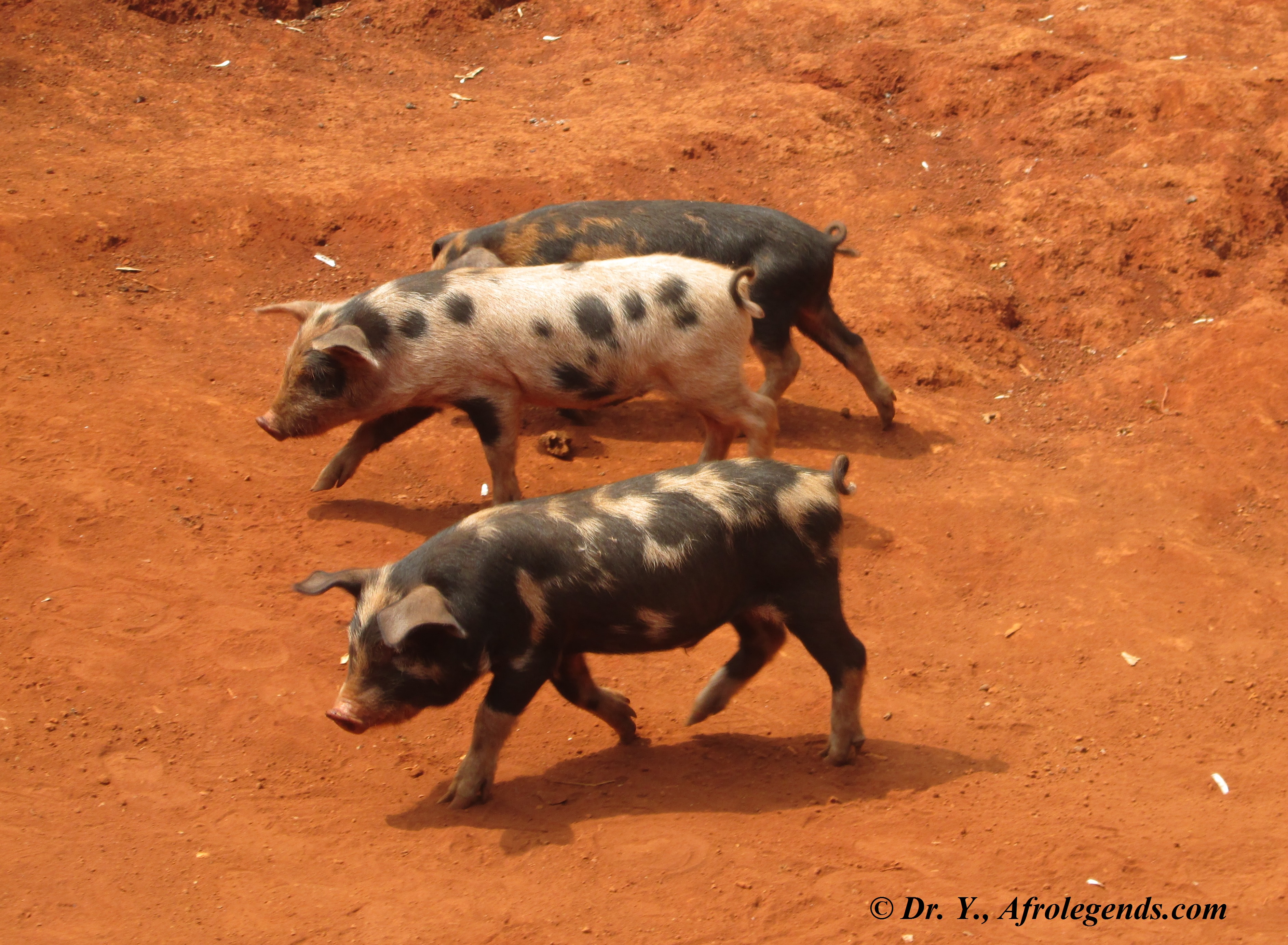
Des cochons / Pigs

Vous ne pouvez pas empêcher le cochon de se vautrer dans la boue (proverbe Yoruba – Nigeria).

You can’t stop a pig from wallowing in the mud (Yoruba proverb – Nigeria).

Two Cameroonian Women win the L’Oreal-UNESCO Award for Women in Science

Winners of the L’Oréal-UNESCO Young Talent Prize for Women in Science Hadidjatou Daïrou (L) and Sabine Adeline Fanta Yadang (R), pose for a photograph at the Institute of Medical Research and Medicinal Plant Studies in Yaounde on November 23, 2023 (Source: AFP / VOA)

Two Cameroonian women, Sabine Adeline Fanta Yadang, a doctor of neuroscience, and Hadidjatou Daïrou, a doctor of cellular physiology, have won the prestigious L’Oréal-Unesco Young Talent Award for Women in Science for their work on the power of medicinal plants. They were chosen among 30 scientists in sub-Saharan Africa to win the award on November 8 at a ceremony held in Botswana.

Their work focuses on the use of traditional medicinal plants in Cameroon for treating cardiovascular disease and alzheimer. Daïrou’s work centers around the use of kola nut (Garcinia Kola) to improve cardiovascular health, while Yadang’s focuses on tigernut milk which is extracted from a plant with centuries-old medicinal virtues to slow alzheimer. Both scientists work together in the laboratory of the Institute for Medical Research and the Study of Medicinal Plants (IMPM) in Yaoundé, the capital. They also hail from the rural north of Cameroon where education for women, and particularly a career in science is rare.

Excerpts below are from VOA.

=====

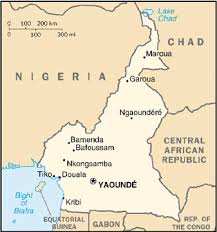
Map of Cameroon, with the capital Yaoundé

In Cameroon’s rural north, very few girls go on to enjoy careers in science. But Sabine Adeline Fanta Yadang, a neuroscience doctor, and Hadidjatou Dairou, PhD student of cellular physiology, have smashed through the glass ceiling.

They have been recognized for the quality of their research, along with 28 others from sub-Saharan Africa, by the L’Oreal-UNESCO for Women in Science Young Talents program.

UNESCO says the program supports “young women researchers around the world to pursue scientific careers at home or abroad.”

Both women were distinguished for their research into the potential of Cameroon’s traditional herbal medicines in the treatment of heart disease and Alzheimer’s.

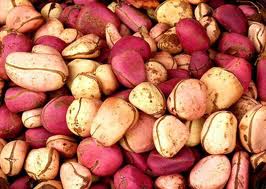
Kola nut
Kola nut

They work in a laboratory at Yaounde’s Institute for Medical Research and Medicinal Plant Studies, IMPM.

… Dairou’s interest in herbal medicine goes back to her years as a pharmacology student at the public University of Ngaoundere, in the country’s north. “I’ve seen what a plant extract does to the human body and how that can help people I know,” she says. The UNESCO program picked out her research into the “potential of the indigenous Garcinia Kola plant for treatment of cardiovascular disease.”

Fanta Yadang … likes to be known as a Moundang, a community from Cameroon’s Far North region, where her grand-parents took herbal cures. I wanted to become a doctor, but I didn’t get good enough marks. I wanted to help my fellow people so I became interested in medicinal plants,” she says.

For Dairou, the bark of the bitter Garcinia Kola — a grain that looks like a nut eaten across Africa to ease all kinds of problems — may improve cardiovascular health.

In particular atherosclerosis, one of the major causes of heart attacks,” she explained.

.

Proverbe Lari sur les secrets / Lari Proverb on Secrets

Il n’y a pas de cachette sur la surface de l’eau (Proverbe Lari – Republique du Congo).

There is no hiding place on the surface of water (Lari proverb – Congo Republic).

“Hopes for a Better World” by Dennis Brutus

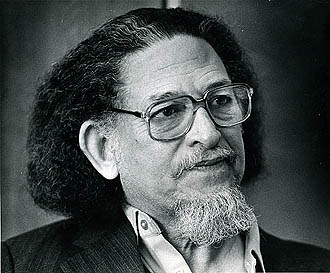
Dennis Brutus (Source: Sahistory.org.za)

I found this poem by the great South African writer, activist, educator, journalist, and poet, Dennis Brutus, “Hopes for a better world.” I found it quite appropriate in these times. Dennis Brutus is known as one of the most prolific South African writers. Born in then Southern Rhodesia (now Zimbabwe), Brutus grew up in Port Elizabeth (Gqeberha) where he was classified as “coloured” under South African apartheid codes. He was an activist against the apartheid government of South Africa in the 1950s and 1960s, best known for his campaign to have South Africa banned from the Olympic Games due to its institutionalized segregation system of apartheid. He is among Africa’s greatest and most influential modern poets.

This poem, “Hopes for a better world” was written on a trip from Caracas, Venezuela, to Durban, South Africa. At the beginning of the poem, Brutus stated, “There are lively political struggles in our time, particularly in Venezuela, Ecuador and Bolivia.” The poem is really about the outlook one has on life, the wish for simple joys, and the hope that something good will come. It highlights simple needs: the joys that come from a smile, the appreciation of frankness, openness, and friendliness.

=====

Hope

Hopes for a better world” by Dennis Brutus

Walking those ragged, pitted sidewalks

where walkers, shoppers surged

one had a sense of buoyant hope

surges of confidence, unleashed desire:

the broad-grinned ice cream vendor

frank gazed waitress swabbing spills:

all had a friendliness and trust:

it was good to walk those cordial streets

companioned by one striving to serve

Caracas to Durban, 2008-09, for p.b.

Proverbe Bamoun sur les faits tangibles / Bamun Proverb on Common Sense

Leopard

Le léopard est tâcheté, sa queue doit aussi l’être (Proverbe Bamoun – Cameroun).

The leopard’s is spotted, its tail must also be spotted (Bamun proverb – Cameroon).

Maji-Maji Uprising: A German Genocide in East Africa

German troops commanded by Wilhelm Kuhnert during the Battle of Mahenge in 1905

At the beginning of the month, on November 1, 2023, the German president Frank-Walter Steinmeier apologized for the first time for the Maji Maji massacre and other colonial crimes committed by Germany in eastern Africa in what was then German East Africa, a colony comprised of BurundiRwanda (Ruanda-Urundi), mainland Tanzania (Tanganyika), and a small region in modern-day Mozambique known as the Kionga Triangle. The Maji Maji rebellion led to the death of over 300,000 Africans in 1905, in Tanganyika.

As we uncover this somber chapter of the history of Tanzania (then part of German East Africa), it is important to note that the events related mark yet again another part of German history that has been erased from history books: genocides in Africa.

Map of German East Africa with the areas affected by the rebellion highlighted in red

After the Berlin conference of 1884, Germany had several colonies in Africa, German South-West Africa (Namibia), German East Africa (Ruanda-Urundi, Tanganyika, and the Kionga Triangle), Kamerun, and Togoland. Germany tried to reinforce their presence in the different regions by using repressive methods. They built roads, bridges, and more, through forced labor. In 1902, in Tanganyika, they forced the populations to plant cotton as a cash-crop for export, levying harsh taxes upon whoever would not bring a particular quota of cotton. This caused an uproar among the populations who had to leave their own cultures of edible plants to cultivate cotton that nobody ate and which brought nothing to them but tough sanctions from the German occupants. In 1905, when a drought hit, the populations had reached breaking point. It is at that time that a prophet by the name of Kinjikitile Ngwale emerged, claiming to have made a war medicine, a potion that could repel German bullets called “Maji Maji,” which means “sacred water,” maji being water in Kiswahili. Armed with arrows, spears, and doused with Maji Maji water, the first warriors of the rebellion began to move against the Germans, attacking German outposts, and destroying cotton crops. Thus started the Maji Maji rebellion which spread throughout the colony, involving over 20 different ethnic groups, leading to a war which lasted from 1905 to 1907 where 75,000 to 300,000 Africans died.

Gustav Adolf von Götzen Governor of German East Africa from 1901 to 1905

As we saw earlier, there had been the Abushiri revolt of 1888 to 1889, the Chagga revolt with Mangi Meli in the North east of Tanganyika earlier, the Wahehe (Hehe) revolt of 1891 to 1898 which culminated with the decapitation of King Mkwawa, all served as precursors to the Maji Maji uprising. The height of the Maji Maji rebellion came at Mahenge on August 1905 where several thousand warriors attacked but failed to overrun a German stronghold defended by Lieutenant von Hassel. On October 21, 1905 the Germans retaliated with an attack on the camp of the unsuspecting Ngoni people who had recently joined the rebellion. The Germans killed hundreds of men, women, and children. This attack marked the beginning of a brutal counteroffensive that left an estimated 75,000 Maji Maji warriors dead by 1907. The Germans also adopted famine as a weapon, with their scorched-earth technique which destroyed the crops of the populations creating mass starvation; Captain Wangenheim, one of German troops’ leaders in the colony, wrote to the Governor of German East Africa Gustav Adolf von Götzen, “Only hunger and want can bring about a final submission. Military actions alone will remain more or less a drop in the ocean.”

Flag of Tanzania

During his visit to Tanzania at the beginning of the month, the German president stopped at the museum in Songea which was built in homage of Chief Songea Mbano, one of the leaders of the Maji Maji rebellion, executed in 1906 by German forces. Songea Mbano was a great Ngoni warrior, hanged in 1906 during the time of German repression of the Maji Maji rebellion. Songea had been spared the death sentence because he had surrendered. However he demanded to be hanged along with the other Ngoni leaders. The Germans happily complied.

This marked a dark chapter in the history of the country, and the entire region. Today, it is also seen by Tanzanians as the beginning of true nationalism triggered by the unity of several large groups in Tanzania to fight the foreign invaders. To learn more, check out Violence in Twentieth Century – The Maji Maji Rebellion, 300,000 Tanzanians were killed by Germany during the Maji-Maji uprising – it was genocide and it should be called that, and Was Quashing the Maji-Maji Uprising Genocide? An Evaluation of Germany’s Conduct through the Lens of International Criminal Law by K. Bachmann.

African Joke: The Prayer

One day, at church, a man is praying on the pew loudly, “Lord, please send me 4,000 Naira, that is all I need! … Lord! if you send me ₦4,000, I will do anything!… O Lord, answer my prayers… all I need is ₦4,000 … JESUS!!! ₦4,000 is all I need! Lord of Hosts, let ₦4,000 rain on me.” The man goes on in his prayers screaming and shouting in the church.

Suddenly, there is a tap on his shoulder… he stops, opens his eyes, thinking to himself “Who in this world is interrupting my prayers?” The man seated next to him, hands him 4,000, and continues praying. The other man is so happy, and says, “Wait, God really answers prayers so fast!

At the end of the church service, he asks his pew neighbor, “neighbor, you don’t know what you have done for me… but why did you give me ₦4,000 ?

The man replies, “with your loud screams, you were blocking my prayers for 50 millions.”

Everybody has his level of problems. Dr. Y. Afrolegends.com