
Il ne faut pas s’effrayer d’un python à cause de sa longueur (Proverbe Bété – Côte d’Ivoire).
You should not be frightened by a python because of its length (Bété proverb – Ivory Coast).

Il ne faut pas s’effrayer d’un python à cause de sa longueur (Proverbe Bété – Côte d’Ivoire).
You should not be frightened by a python because of its length (Bété proverb – Ivory Coast).
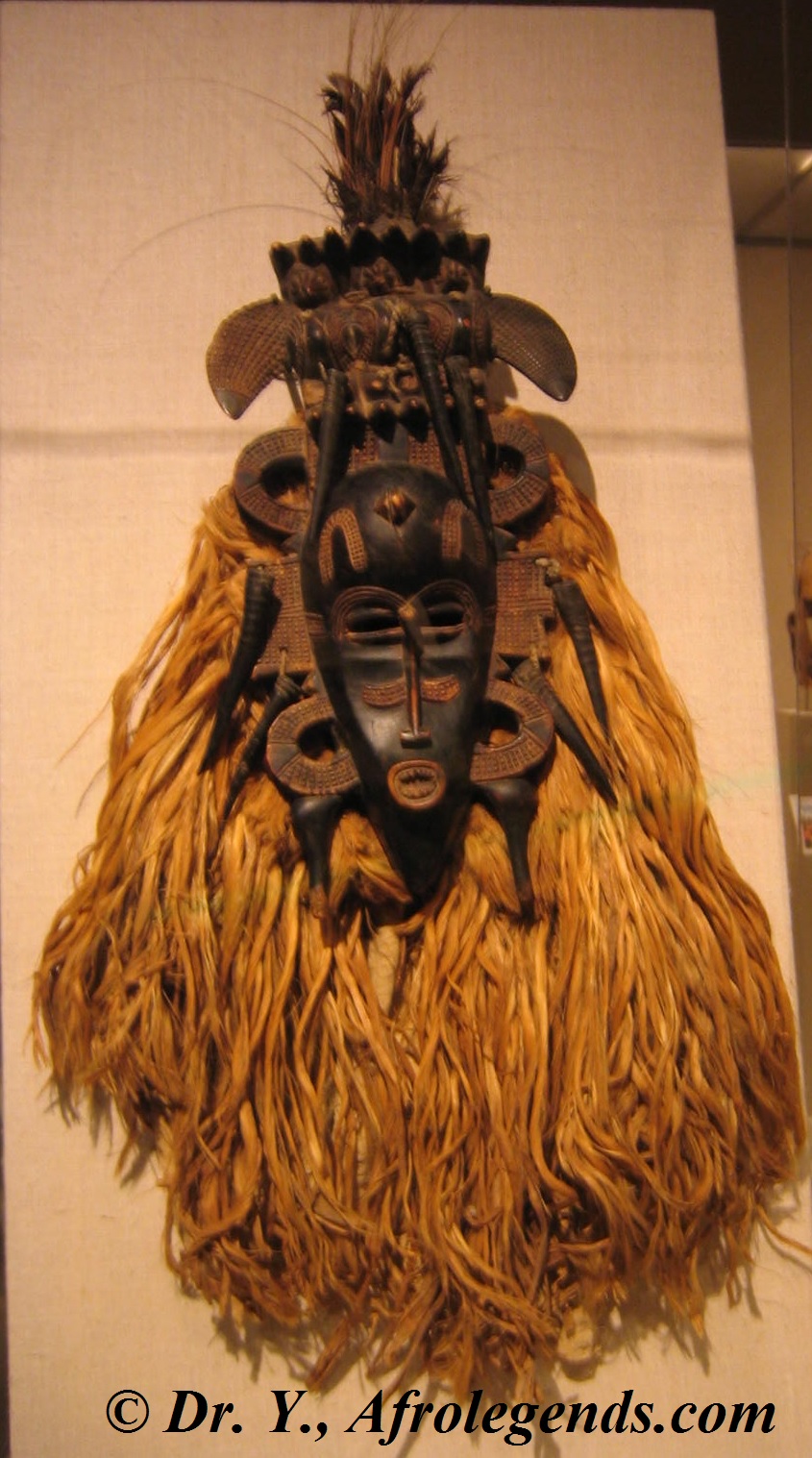
Slavery dealt a big blow to Africa. It dealt a big blow to her strength (imagine losing millions upon millions of some of your strongest children), to her self-confidence (imagine her children fearing for their lives chased into the depths of forests and savannahs), and to her soul. Then came colonization with forced labor, depersonnalization, confiscation of History, disregard for local cultures, cultural alienation, and colonial oppression. Slowly, the awakening is upon us; and slowly Africans are linking back to that glorious past of African civilizations, science, and cultures. The poem below by Ivorian author Véronique Tadjo is anchored upon that re-discovery of the African self in all its splendor, and connection to its roots in order to continue the legacy.
The poem “Raconte-moi” was published in Latérite / Red Earth, written in homage to Senufo culture, which won a literary prize from the Agence de Coopération Culturelle et Technique. The poem below was re-published re-published in Anthologie Africaine: Poésie Vol2, Jacques Chevrier, Collection Monde Noir Poche, 1988, and translated to English by Dr. Y. Afrolegends.com .
“Raconte-moi” de Véronique Tadjo / “Tell me” from Véronique Tadjo
| Raconte-moi
La parole du Griot Qui chante l’Afrique Des temps immémoriaux Il dit Ces rois patients Sur les cimes du silence Et la beauté des vieux Aux sourires fanés Mon passé revenu Du fond de ma mémoire Comme un serpent totem A mes chevilles lié Ma solitude Et mes espoirs brisés Qu’apporterais-je A mes enfants Si j’ai perdu leur âme ? |
Tell me
The word of the Griot Who sings Africa From times immemorial He says These patient kings On the peaks of silence And the beauty of the old ones With faded smiles My past returned From the depths of my memory Like a totem snake To my ankles linked My loneliness And my hopes shattered What will I brink To my children If I lost their soul? |
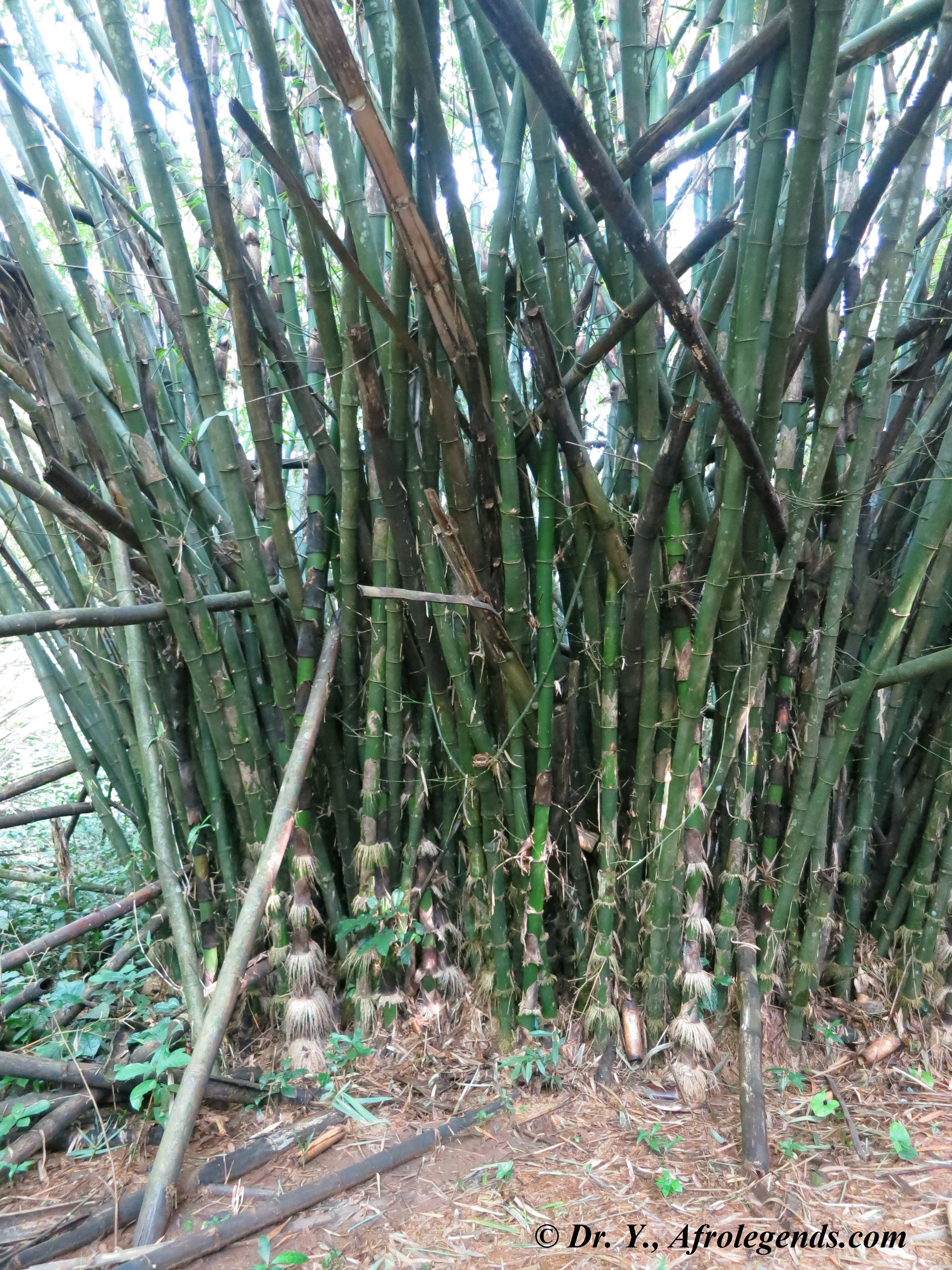
Un bambou tendre ne peut pas être ardemment désiré (pour la construction). – Un homme qui essaie de bâtir un mariage solide tout en courant après d’autres femmes est comme celui qui utilise des pousses de bambou pour construire une hutte. (Proverbe Chewa – Malawi, Mozambique, Zambie.)
A tender bamboo cannot be eagerly desired (for building). – A man trying to build up a strong marriage while going after other women is like one who uses bamboo shoots to make a hut. (Chewa proverb – Malawi, Mozambique, Zambia.)

We have seen that there were quite a few African kings who forbade the sale of liquor by Europeans on their territories: Gungunyane of the kingdom of Gaza in Mozambique, Mirambo: the Black Napoleon, king of the Nyamwezi people in Tanzania, and now the Almanny (which means leader) cited during Wadstrom report to the British Committee in 1790s (Royal Resistance to Slavery: the Case of an Almany of West Africa in 1780s). Just like Gungunyane, Mirambo thought that alcohol weakened societies. There are quite a few other African leaders throughout history. Why would they prohibit the sale of alcohol on their territories? In history, we have seen this tactic used by the Europeans in the Americas where they gave cheap liquor to the Native Americans turning them drunkards, violent, in order to dispossess them of their lands. Below is an account by the abbey Gregoire who clearly saw alcohol as a tool used to destabilize African societies during slavery times. It is good to note that history repeats itself: today in many African countries, the main breweries are owned by European companies, and particularly in countries with a lot of resources, the people have been slowly turned into drunkards (this will be a story for another day) while their resources get siphoned out.
Abbe Gregoire, for his part, emphasizes that Barrow attributes: “…the current barbarity of some parts of Africa to the slave trade. To obtain it, the Europeans created it, and they perpetuate the usual state of war; they poisoned these regions with their strong liquors, by the accumulation of all kinds of debauchery, seduction, rapacity, cruelty. Is there a single vice whose example they do not daily reproduce before the eyes of the Negroes brought to Europe, or transported to our colonies? I am not surprised to read in Beaver, certainly a friend of the Negroes, and who in his African memoranda is full of praise for their native virtues and their talents: “I would rather carry thither a rattlesnake than a Negro who would have lived in London “.
Bwemba Bong, Quand l’Africain etait l’or noir de l’Europe. L’Afrique: actrice ou victime de la traite des noirs? MedouNeter (2022), p. 165; Barrow, African memoranda, relative to an attempt to establish a British settlement in the Island of Boulam, by Phylips Beaver, in 4, London 1805. I would rather carry thither a rattle snake, etc., p. 397, cited by abbey Gregoire, p. 43-44.

The Swede abolitionist and explorer Carl Bernhard Wadström (Charles Berns Wadström) once described his travels in West Africa from October 1787-1788 with fellow Swede Anders Sparrman and Carl Axel Arrhenius. They were sent by King Gustav III of Sweden, with the official goal of making new discoveries in natural sciences, history, and of course the non-official goal to help with the king’s colonial ambitions. The scientific expedition was quickly aborted when they were in Senegal, where they then witnessed diverse aspects of the transatlantic slave trade. As we saw earlier, Wadström was later called in 1790, to testify in front of the British Government Select Committee; published in a report entitled “Minutes of the evidence taken before a Committee of the House of Commons, being a Select Committee, appointed to take the Examination of Witnesses respecting the African Slave Trade.” Wadström described the advanced industries found in that part of Africa, ranging from textile, indigo, soap, leather, and gold… he even noted that he had never seen such advanced work in Europe! Accompanied by his doctor friend Sparrman and chemist Arrhenius, they were dumbfounded to realize that Africans had a large materia medica which listed over 3000 plants.
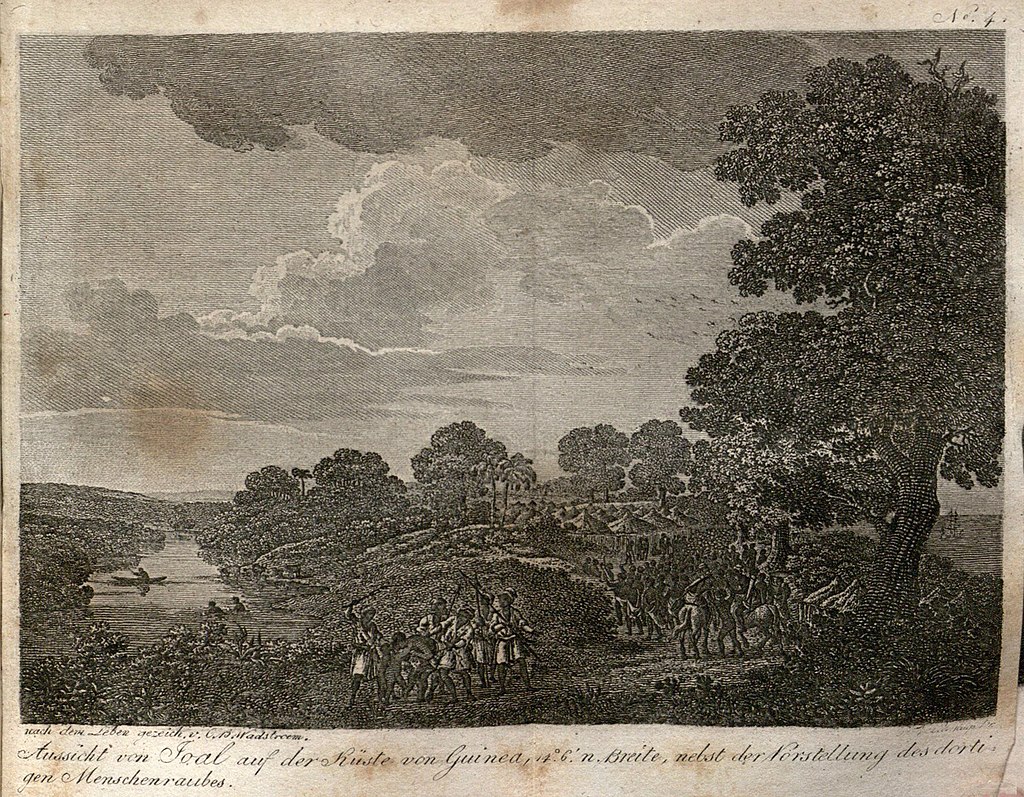
The Select Committee on the Slave Trade was keen to know about the quality of culture in that part of Africa. They asked Wadström: “Have they any manufactures amongst them?”
Mr Wadström’s reply was most edifying: “I have been surprised to see with what industry they manufacture their cottons, their indigo, and other dying articles, as well as several sorts of manufacture in wood; they make soap; they tan leather, and work it exceedingly well, and even with good taste … they work bar iron … into several articles, as for instance, lances, instruments for tillage, poniards, &c.; they work in gold very ingeniously, and so well, that I never have seen better made articles of that kind in Europe; a great number of articles for ornaments of gold, silver, brass, leather, &c.”
Wadström further stated that: “Their cloth and their leather they manufacture with uncommon neatness; and I have samples with me to shew [sic] in case it should be desired.”
As we saw earlier, the king who was called Dalmanny was a well educated man; he had held the position of Grand Marabout before becoming King. His subjects were very honest and hospitable and showed Wadström “all civility and kindness.” In addition, they had “an extraordinary genius for commerce.” Interestingly, they also had a “Materia Medica” of “about 2,000 or nearer 3,000” plants.
The Swede abolitionist and explorer Carl Bernhard Wadström (Charles Berns Wadstrom) once described his travel in Africa from 1787-1788 with fellow Swede Anders Sparrman. He wrote of an African king’s resistance to slavery and the kindness he observed. In 1790, he was called to testify in front of the British Government Select Committee; his testimony was published on 11 May 1790 in a report entitled “Minutes of the evidence taken before a Committee of the House of Commons, being a Select Committee, appointed to take the Examination of Witnesses respecting the African Slave Trade.”
An African King who was called King of Almamany [Dalmanny] “had entirely prohibited the Slave trade throughout his whole Kingdom, so that they could no longer contact the French slave traders anchored in the mouth of the Senegal [river].” He also banned the sale of alcohol. However, the Senegal Company [Compagnie du Sénégal], a French company which administered the territories of Saint-Louis and Gorée island as part of French Senegal, initially attempted to bribe the King to change his policy on the trade in people, but he refused their presents. Consequently, the Senegal Company resorted to bribing the lighter-skinned Moors to attack and kidnap Dalmanny’s subjects. The Company supplied the Moors with the necessary arms, gunpowder and ammunition to carry out the raids [does it not remind of something today in West Africa with all these jihadists? History repeats itself]. Many of his subjects were made prisoners and taken into slavery. Wadstrom himself had seen a few in the enclosures. They were chained two by two by the ankles; wounded in combat, they did not receive any kind of care. There were also individual kidnappings. Wardstrom said that “Negroes never venture to go out into the fields unless very well armed.”
From Bwemba Bong, Quand l’Africain etait l’or noir de l’Europe. L’Afrique: actrice ou victime de la traite des noirs? MedouNeter (2022), p. 165; George Kay, La Traite des Noirs, Robert Laffont (1968) p.129
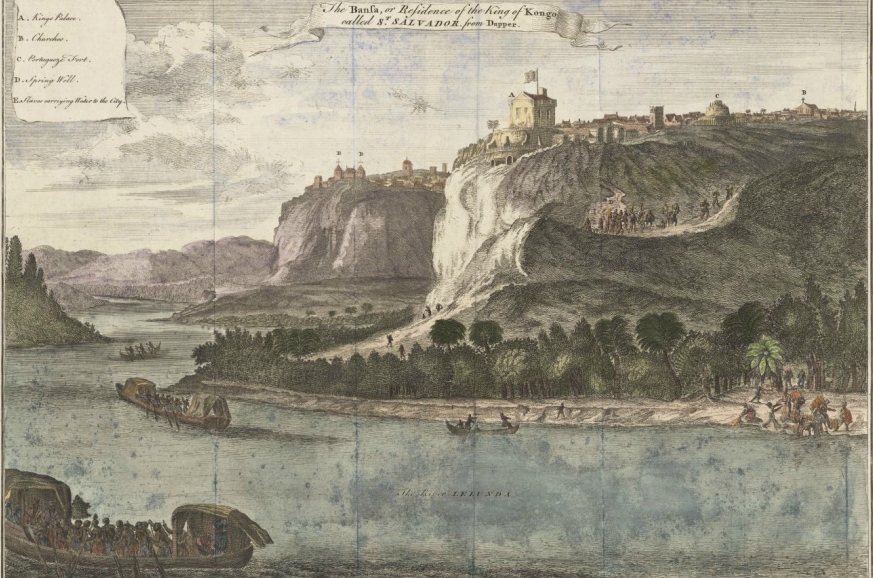
History repeats itself! It is extremely important to know our history. We have already shown that the narrative that states that African kings sold “their” own into slavery was very flawed and was made up to shift the blame of slavery from the European merchants and their powers (kings and queens, the Catholic church with the papal bull, and much more) to the Africans themselves (the victims). How many times in modern day have we seen how the blame is placed on the victim rather than the aggressor? As we read here another account of an African king who hated slavery, it is important to note the similitude with modern days: the king did not want slavery, therefore attempts were made on his life; does it not remind you of Patrice Lumumba, Sylvanus Olympio, Amilcar Cabral, Ruben Um Nyobé, and so many… when African leaders opposed the narrative being played, they were eliminated! And this behavior spans centuries! Below is the account of an attempt made on King Afonso I [King Nzinga Mbemba] on his life; this is the same Kongo king who wrote to the King of Portugal against Slavery.
“The hatred devoted by Affonso I [King Nzinga Mbemba] to the overseas slave trade and the vigilance he maintained so as not to see his authority erode earned him the animosity of some of the Portuguese merchants living in the capital. On Easter Sunday 1540, eight of them tried to make an attempt on his life while he was attending mass. He escaped, a bullet having simply passed through the fringe of his royal tunic, but one of the nobles of his court was killed and two others wounded.“
Adam Hochschild, King Leopold’s Ghost: A Story of Greed, Terror, and Heroism in Colonial Africa p. 228
 Quem faz muitas perguntas nunca compra nada (provérbio ovimbundu – Angola)
Celui qui pose trop de questions, n’achète jamais rien (proverbe Ovimbundu – Angola)
The one who asks too many questions never buys anything (Ovimbundu proverb – Angola)
For the past few days, I have received several messages about Iwájú, the first pan-African series to premiere on Disney+. I congratulate the authors, and send them encouraging messages to keep up the great work.
Excerpts below are from AfricaNews.
=====
Video on demand service Disney+ has collaborated with pan–African studio Kugali Media for a innovative animated series set in futuristic Lagos – Nigeria.
…
The series which is expected to premiere globally on February 28 explores themes of class and defiance. …
Iwájú’s casted Nigerian vocal talents Simisola Gbadamosi as Tola, a young girl from the wealthy island, and Siji Soetan as her best friend Kole, a self-taught tech expert.
The duo explore the dangerous tapestry of a neo-futuristic Lagos filled with greed and corruption alongside voice actors Femi Branch, Dayo Okeniyi, and Weruche Opia.
The soundtrack, out March 1st, will feature African-influenced music by renowned Nigerian composer Ré Olunuga. “I rarely bring my own emotions into writing a score. In this case, it couldn’t be avoided,” Olunuga said in a press release.
“In addition to Tola’s adventurous spirit, Kole’s ingenuity, and the many other fun and beautiful emotional threads explored in Iwájú – the score is steeped in my own very deep love for Lagos and its multiplicitous layers.”
 Below is ‘Ma vie est une chanson‘ or ‘My Life is a Song‘, a love poem by Cameroonian author Francis Bebey, a poem celebrating his love for the African woman, in this case for his lover. As we remember that Francis Bebey was multi-talented as a journalist, writer, sculptor and musician, it is no surprise that the title of his poem is “My Life is a Song”. He even headed the UNESCO music department researching and documenting traditional African music. In the poem, he highlights that he was born from the love of the earth with the sun, thus a birth that was very celebrated and a life full of love. As we read the poem, Bebey’s love for his country is abundantly clear as he dreams of taking his lover there, and not only that, but lets her know that his country is where to find the love between the earth and the sun; it is almost as if he was telling all that he was born on the equator. Moreover, let’s face it, the link between the earth and the sun is undeniable, unbreakable, unavoidable, constant, and forever omnipresent. He is so taken by the love so much so that his life is a song that he will sing everyday to his precious one. Wouldn’t you all like to be loved like that? Enjoy!
The poem ‘Ma vie est une chanson‘ by Francis Bebey, was published in Anthologie africaine: poésie, Jacques Chevrier, Collection Monde Noir Poche, Hatier 1988. Translated to English by Dr. Y. Afrolegends.com.
| Ma vie est une chansonOn me demande parfois d’où je viens
Et je reponds “je n’en sais rien Depuis longtemps je suis sur le chemin Qui me conduit jusqu’ici Mais je sais que je suis né de l’amour De la terre avec le soleil” Toute ma vie est une chanson Que je chante pour dire combien je t’aime Toute ma vie est une chanson Que je fredonne auprès de toi Ce soir il a plu, la route est mouillée Mais je veux rester près de toi Et t’emmener au pays d’où je viens Ou j’ai caché mon secret Et toi aussi tu naîtras de l’amour de la terre avec le soleil Toute ma vie est une chanson Que je chante pour dire combien je t’aime Toute ma vie est une chanson Que je fredonne auprès de toi. |
My Life is a SongI am sometimes asked where I come from
And I answer “I don’t know For a long time I have been on the way That leads me here But I know that I was born from the love between the land and the sun” My whole life is a song That I sing to tell you how much I love you My whole life is a song That I hum next to you Tonight it has rained, the road is wet But I want to stay close to you And take you to the land where I come from Where I hid my secret And you too will be born from the love of the earth with the sun My whole life is a song That I sing to tell you how much I love you My whole life is a song That I hum next to you. |


 African Heritage