Kouroukan Fouga, la Constitution de l’Empire du Mali – la plus vieille constitution republicaine au monde?

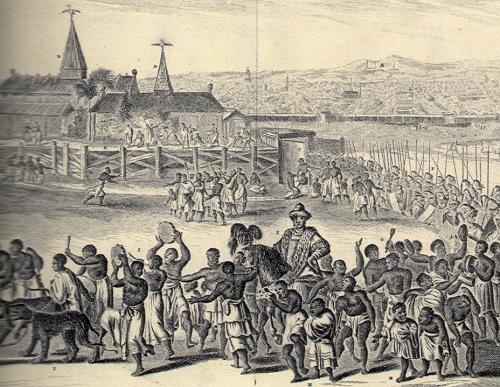
Soundiata Keita a l'Assemblée constitutive de l'empire du Mandé avec les chefs de guerre (Source: Wikipedia.fr)
Soundiata Keita a l’Assemblée constitutive de l’empire du Mandé avec les chefs de guerre (Source: Wikipedia.fr)

Le Kouroukan Fouga fut la constitution de l’Empire du Mali (1235 – 1645), et officiellement la plus vieille constitution républicaine en Afrique, et au monde.  Le Kouroukan Fouga réuni officiellement la fédération des clans Mandingues sous un seul et unique gouvernement.  Cette constitution régit la vie de l’empire à travers des lois auxquelles tout le monde doit obéir.  Mansa (Empereur) Soundiata Keïta présenta ce document en 1236 après la célèbre bataille de Kirina, dans l’actuel cercle de Kangaba, et dès lors cette constitution a été léguée de générations en générations par les griots ou djeli. Les griots ont conservé une grande partie de l’histoire de l’empire du Mali, y compris ses rois, les batailles, et le système gouvernemental.  Decouvrez avec moi la première constitution républicaine mondiale, et appréciez le génie de nos ancêtres. Si seulement nous, africains, pouvions tous adaptés celle-ci, et non perdre le temps avec ces constitutions importées de l’occident. (For English, click here).

Article 1er : La Société du grand Mandé est divisée en seize (16) porteurs de carquois, cinq (5) classes de marabouts, quatre (4) classes de Nyamakalas (1) une classe de serfs (esclaves) (Mofé molu)

Chacun de ces groupes a une activité et un rôle spécifiques

Article 2 : Les Nyamakalas se doivent de dire la vérité aux chefs, d’être leurs conseillers et de défendre par le verbe les règles établies et l’ordre sur l’ensemble du royaume.

Article 3 : Les Morikandas lolu (les cinq classes de marabouts) sont nos maîtres et nos éducateurs en islam. Tout le monde leur doit respect et considération.

Article 4 : La société est divisée en classe d’âge. A la tête de chacune d’elles est élu un chef. Font de la classe d’âge les personnes (Hommes ou Femmes) nées au cours d’une période de trois années consécutives.

Les Kangbès (Classe internationale entre les jeunes et les vieux) doivent être conviés pour participer à la prise des grandes décisions concernant la société.

Assemblée constitutive de l'empire du Mandé (Source: Wikipedia.fr)
Assemblée constitutive de l’empire du Mandé lors de la charte du Kouroukan Fouga (Source: Wikipedia.fr)

Article 5 : Chacun a le droit à la vie et à la préservation de son intégrité physique. En conséquence, tout tentation d’enlever la vie à son prochain est punie de la peine de mort.

Article 6 : Pour gagner la bataille de la prospérité, il est institué le Kongbèn Wölö (un mode de surveillance) pour lutter contre la paresse et l’oisiveté.

Article 7 : Il est institué entre les Mandenkas, le Sanankuya (cousinage à plaisanterie) et le tanamanyoya (forme de totémisme. En conséquence, aucun différent né entre ces groupes ne doit dégénérer, le respect de l’autre étant la règle.

Entre Beaux-frères et Belle-sœur, entre grands parents et petits, tolérance et le Chahut doivent être le principe.

Article 8 : La Famille est désigné famille régnante sur l’empire

Article 9 : L’éducation des enfants incombe à l’ensemble de la société. Continue reading “Kouroukan Fouga, la Constitution de l’Empire du Mali – la plus vieille constitution republicaine au monde?”

Nkosi Sikelel’ iAfrika – God Bless Africa, the Original/ Classic Version

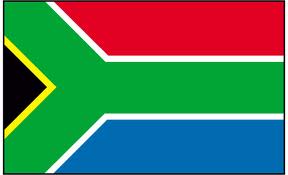
Flag of South Africa

Here is the classic version as written by Enoch Sontonga, with added verses by Samuel Mqhayi. Enjoy the good old version, or the classic version, and compare it to the more modern version which I posted earlier.

Nkosi, sikelel’ iAfrika;
Malupakam’upondo lwayo;
Yiva imitandazo yetu
Usisikelele.

Chorus

Yihla Moya, Yihla Moya,
Yihla Moya Oyingcwele

Sikelela iNkosi zetu;
Zimkumbule umDali wazo;
Zimoyike zezimhlouele,
Azisikelele.

Sikelel’ amadol’ esizwe,
Sikelela kwa nomlisela
Ulitwal’ilizwe ngomonde,
Uwusikilele.

Sikelel’amakosikazi;
Nawo onk’amanenekazi;
Pakamisa wonk’umtinjana
Uwusikilele.

Sikelela abafundisi
Bemvaba zonke zelilizwe;
Ubatwese ngoMoya Wako
Ubasikelele.

Sikelel’ulimo nemfuyo;
Gxota zonk’indlala nezifo;
Zalisa ilizwe ngempilo
Ulisikelele

Sikelel’amalinga etu
Awomanyana nokuzaka,
Awemfundo nemvisiswano
Uwasikelele.

Nkosi Sikelel’ iAfrika;
Cima bonk’ ubugwenxa bayo
Nezigqito, nezono zayo
Uyisikelele.


Lord, bless Africa;
May her horn rise high up;
Hear Thou our prayers
And bless us.

Chorus

Descend, O Spirit,
Descend, O Holy Spirit.

Bless our chiefs
May they remember their Creator.
Fear Him and revere Him,
That He may bless them.

Bless the public men,
Bless also the youth
That they may carry the land with patience and that Thou mayst bless them.

Bless the wives
And also all young women;
Lift up all the young girls
And bless them.

Bless the ministers
of all the churches of this land;
Endue them with Thy Spirit
And bless them.

Bless agriculture and stock raising
Banish all famine and diseases;
Fill the land with good health
And bless it.

Bless our efforts
of union and self-uplift,
Of education and mutual understanding
And bless them.

Lord, bless Africa
Blot out all its wickedness
And its transgressions and sins,
And bless it.


5000 years old Artefacts uncovered in Senegal

Artefacts found in Dakar, Senegal (Source: AFP)

The current floods in Senegal, particularly in Dakar, have unearthed 5000 years old artefacts: pieces of jewelry, pottery, iron tools dating back thousands of years.  The discovery was made at a construction site in the capital Dakar.  The objects could date back between 2000 to 5000 BC.  Proper carbon dating will probably give us more accurate information, and would certainly yield information about the rich history of Dakar, of Senegal, and that part of Africa.  Could this new discovery be related to the Senegambian Stone Circles (3rd century BC to 16th century AD)?  or be from ancestors of these structures?  Could these be related to the lost Atlantis the island which sank into the ocean in a single day?  or could it be simply coming from a different civilization which flourished by its work of iron and pottery?  Time will tell… in the meantime, enjoy this article on BBC.

‘No More’ by Kelvin Karani

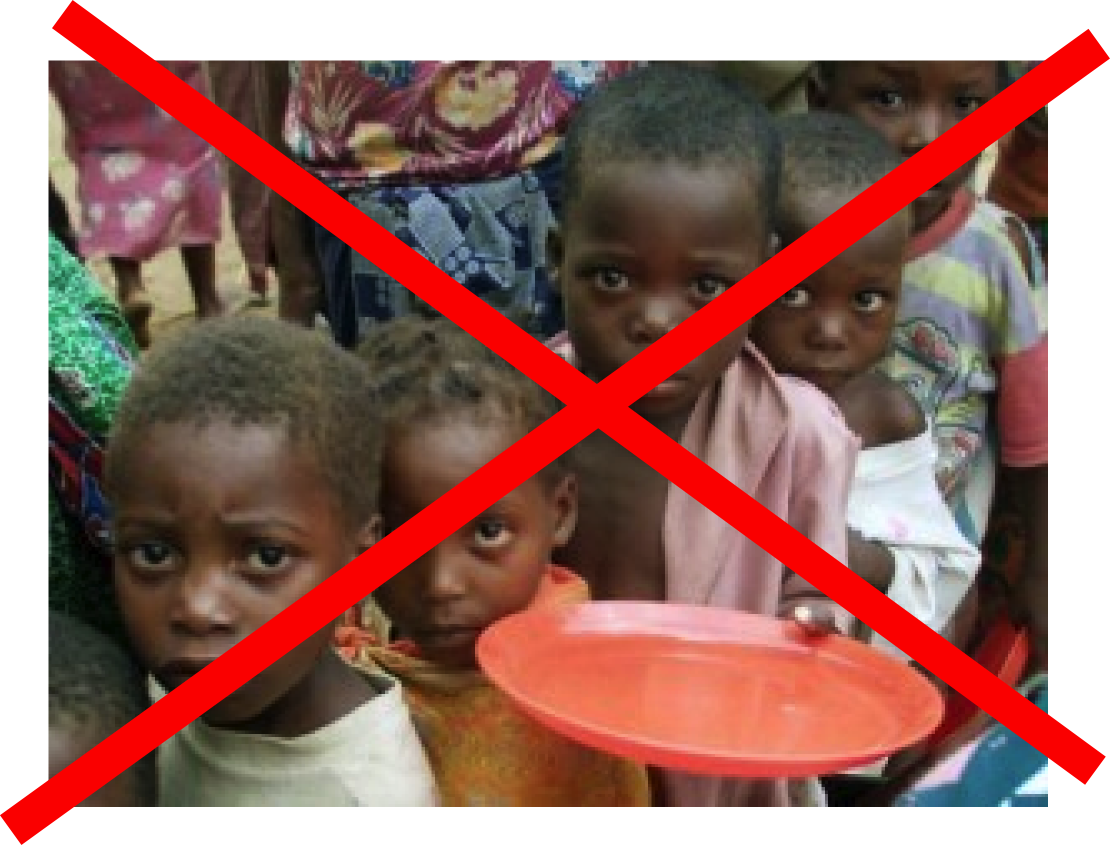
Children begging
Children begging

I was talking to a friend the other day about the suffering in Cote d’Ivoire and Libya, and my friend said “hush, we should be grateful that this is not happening in our country.”  I was dumbfounded, as I was thinking, how could somebody just rejoice for their lot, instead of helping the others? instead of doing something?  the least we can do is talk about it, cry, do something, not just watch and rejoice about our silly existence which could go down in flames in a day as in Cote d’Ivoire or Libya which were under fire from France and NATO (the mighty armies of the world) for their oil, cocoa, and gold. Then I found this really good poem by Kelvin Karani, talking about the things we all see in Africa, the things that hurt, and the things that tire. Enjoy “No More.”

=======

No more
Taking of silly slogans
Of change from the corrupt politicians
We need statesmen and stateswomen
People who see beyond elections

No more
Sitting back as others suffer
Saying that we are blessed
Happy that we are not in pain
In common bond united
We’ll rise or fall as a people

No more
Taking the aid of Aids
Which makes sick and
In perpetual need.

No more
Class divisions in Africa
Imperialism of whatever nature
White evils or black ones either
For time has come
For Africa, my Africa-our Africa
To dust herself and move on
Undeterred, unhindered
To show the rest of the world
What humanity truly is.

 Kelvin Karani

La SAPE: Societe des Ambianceurs et Personnes Elegantes

A Sapeur in Brazzaville, Congo

La sape” (pronounced sap) is La Societe des Ambianceurs et Personnes Elegantes, or the Society of Atmosphere Setters and Elegant People.  The ‘Sapeurs’ adhere to a culture of high fashion at all costs.  Most are very well-dressed men who strut in Versace, Gucci, Prada, or Ralph Lauren’s attires.  They pay extreme attention to the quality or their clothing, and are extremely refined.  The word sapeur comes from two Lari words “Lunkété” and “tsi Muntu” or ‘beauty’ and ‘human.’  A true sapeur is one who symbolizes beauty and humanity through the clothes he wears, in his outlook, his words, and his actions.  In other words, he is someone who embodies and expresses the beauty of the mind and soul in harmony with the colors of his wardrobe, expresses love for his neighbor (luzolo), and is an apostle of peace.

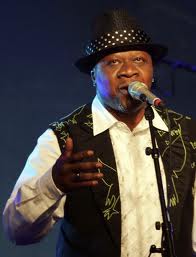
Papa Wemba
Papa Wemba

The roots of the movement can be traced as far back as in the 1920s and 1930s when the first privileged Congolese returned from France with wardrobes of expensive suits. However the culture, and its name ‘la societe des ambianceurs et personnes elegantes’ took off thanks to the great musician and singer Papa Wemba who developed a flamboyant and sometimes exaggerated style.  His style was in direct opposition to Mobutu-approved uniform, the dreaded style-less ‘abacost’ (from the French “a bas le costume” or “down with the suit”) a dull Zairean version of the three-piece suit.  Papa Wemba called his new style Ungaru, and it was a throwback to the elegance of the 1930s—complete with tapered trousers, brogues, neatly trimmed hair and tweed hats worn at a rakish angle.  For Congolese all over the world, the look was irresistible:  SAPE was born.  Sape became almost like a religion: fashion at all cost, elegance, and setting the atmosphere, creating the spectacle.  Elegance at all costs is its motto. In the old days, sapeurs would often spend months or years saving up for outfits; they would start out by renting or borrowing suits from their more established peers.  Like in any movement, there are rivalries and affiliations within the SAPE movement: Paris vs Brussels, Brazzaville vs Kinshasa, Bacongo vs Moungali. It is a total fashion warfare. Sapeurs from Brazzaville follow the three colors rule, while the Kinshasa crowd is all about going overboard.

A flamboyant sapeur
Hector Mediavilla, a flamboyant sapeur

One important trait of the ‘sapeur’ is uniqueness: one cannot look like the common man, and so there is a constant urge to look different, unique, and elegant.  And the cost of the ‘sape’ is quite high… but very important.  Isn’t a person unique anyways? then why not exert that uniqueness in fashion?  There used to be weekly defilés (shows/catwalks) of sapeurs in the streets of Kinshasa or Brazzaville, to find and elect the most ‘sapé‘ man.  These were known as “Fight days”, weekly events, and the combat arenas were the local outdoor bars on Avenue Matsoua, the most famous place of Brazzaville, Congo.  Today, the sape culture has extended throughout Africa, and particularly French Africa.  In the video below, you will see how sape is redefined in Cameroon, a neighbor to Congo… and how there is a difference between being ‘hip‘ and being ‘sapé‘.  ‘Hip‘ is just having the latest trends: the pants down on the floor, the pierced jeans, etc… while ‘sapé‘ means having elegance, class, and uniqueness…. Enjoy!

To learn more about the history of SAPE, check out starducongo.comharlemworldmag.com, LaSape.comLes sapeurs: gentlemen of Congo and this really good article on africafeed.com.

Le Bœuf, le Cochon et l’Araignée

Cochon
Cochon

Il y avait une fois un village bien malheureux car, malgré tous les efforts des villageois, les cultures n’avaient pas poussé.  La nourriture manquait et tout le monde était devenu maigre et bien affamé.  Cochon, Bœuf et Araignée, trois habitants de cette infortunée région, erraient chaque jour dans la brousse en quête de quelque chose à se mettre sous la dent.

Un beau matin, Cochon, tout affaibli par la disette, se lamente sur le chemin à l’entrée du village lorsque, compère bœuf vient à passer.  Surpris de la mine florissante de celui-ci, cochon l’interpelle :« Holà, mon compère, d’où te vient ta belle mine alors que, tous ici, nous mourons de faim et tombons en faiblesse? »

Bœuf accélère son allure et passe devant le cochon sans répondre, comme s’il n’avait pas entendu la question.  Cochon comprend qu’il y a là quelque chose de louche et se met à observer attentivement son ami.  Plusieurs jours de suite, il se cache dans des arbustes au bord du chemin, et voit passer chaque matin Bœuf qui va toujours dans la même direction.  Chaque soir, Bœuf revient tranquillement au village et tandis que la faim ronge son malheureux compère, il semble lui au contraire, prendre un embonpoint de plus en plus dodu.  Alors n’y  tenant plus et sentant sa fin prochaine, cochon s’écrie en lui barrant la route.  « Compère!  Compère!  Tu grossis à vue d’œil alors que je me meurs.  Par pitié, dis-moi ou tu trouves tant de nourriture, ou j’appelle tous les habitants du village pour leur signaler ta conduite.  A nous tous, nous  saurons bien t’obliger à nous révéler ton secret. »

Bœuf
Bœuf

Bœuf s’arrête, réfléchit et déclare enfin: « Frère, tu me fais pitié. Jure-moi de ne rien révéler à personne et je viendrai à ton secours.

Je le jure

Demain matin, accompagne-moi dans la forêt et tu sauras tout. »

Le lendemain, tous deux s’en vont ensemble à travers la foret.  Parvenus à une clairière, ils trouvent une grosse meule. Alors Bœuf s’approche et dit haute voix : « Meule, prépare-moi a manger! »  En un instant, la meule prépare un bon repas et Les deux compagnons le dévorent.  Quand il a fini, cochon ordonne à la meule : « Meule prépare-moi encore à manger!»  La meule obéit aussitôt.  Bien repus les deux amis reviennent au village.  Et, tous les matins désormais, ils vont dans la clairière et la meule magique les nourrit.  Bientôt, cochon à son tour devient très gros.  Ce phénomène attire l’attention d’Araignée.  Il attend que ses compagnons soient revenus chez eux et va rendre visite à cochon.  « Cochon, mon bon ami, aide-moi.  Je vois que tu sais trouver assez de nourriture pour devenir gros et gras.  Si tu ne viens pas à mon secours, je vais appeler tous les habitants du village et on saura bien te contraindre à nous dire ou tu trouves à manger! » Continue reading “Le Bœuf, le Cochon et l’Araignée”

London 2012 Olympics: the African Contribution

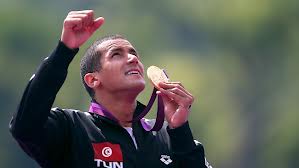
Oussama Mellouli
Oussama Mellouli

Oussama Mellouli of Tunisia won Gold in the 10 km marathon open water, to become the first swimmer to ever win olympic medals in both the pool and open water.  He had also won bronze in the 1500m freestyle in London, and was the Beijing Gold winner for 1500m freestyle.

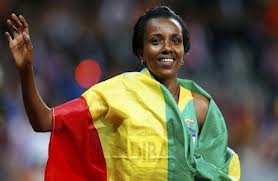
Tirunesh Dibaba, the baby-face destroyer, took Gold in 10,000 m run to retain her title, and bronze in the 5000 m. I will take this opportunity to salute her for running in the 5000m even after suffering a harmstring the day before the 5000m run.  Kenyans  Sally Kipyego and Vivian Cheruiyot won silver and bronze respectively in the 10,000mMeseret Defar took the gold in the 5000m, reclaiming back the gold medal she had won in 2004 during the Athens Olympics, but had lost in 2008 to Tirunesh Dibaba.  Kenyan Vivian Cheruiyot took the silver home in the 5000m, followed by Tirunesh Dibaba.

Tariku Bekele, Kenenisa Bekele‘s little brother took the bronze medal in the men’s 10,000m.

David Rudisha (followed by Nijel Amos)

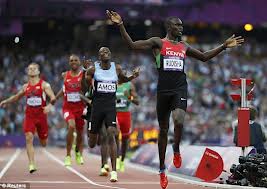
David Rudisha of Kenya, became the first man to break a record at the London Olympics, in the 800m.  He ran the 800 m with such majesty and speed, he almost looked like an impala, very graceful.  Nijel Amos won a silver medal to offer Botswana its very first Olympic medal; while Timothy Kitum of Kenya took home the bronze medal.

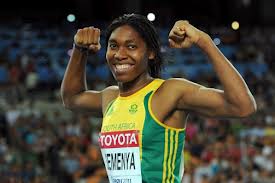
Caster Semenya of South Africa won a silver medal in the women’s 800m run.  Watching her run, one could already see the potential, and had she not started far in the back, I believe she would have won the gold medal.

Taoufik Makhloufi of Algeria stunned us by getting disqualified from the olympics because of ‘not trying hard enough’ (whatever that means) in the men’s 800m, getting reinstated, and then going on to win the gold medal by a huge margin, in the 1500m.  He definitely made us proud… telling us that one can always beat all the odds.  Moroccan Abdalaati Iguider took home the bronze medal.

Caster Semenya
Caster Semenya

Ezekiel Kemboi won gold in the 3000 m steeplechase, while his Kenyan compatriot Abel Kiprop Mutai took the bronze.

South Africa is the African country who won the most medals at the London Olympics, with three gold, two silver, and one bronze medals.  Swimmers Chad le Clos and Cameron van der Burgh both won gold in 200m butterfly and 100m breaststroke respectively.  Chad also took home the silver medal for the 100m butterflySizwe Ndlovu, John Smith, Matthew Brittain, and James Thompson of South Africa won gold in the men’s lightweight four.

Ethiopian Tiki Gelana won gold in the women’s marathon, followed by Kenya’s Priscah Jeptoo.

Anthony Obame wins Silver

Ugandan Stephen Kiprotich claimed the gold medal in the men’s marathon, making it Uganda’s first gold medal since 1972.  He was followed by two Kenyans who won silver and bronzeAbel Kirui and Wilson Kipsang.

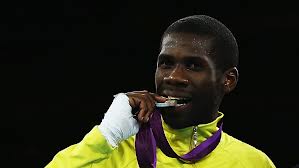
Anthony Obame won Gabon’s first ever medal, by claiming the silver medal in taekwondo.

Alaeeldin Abouelkassem of Egypt won silver in fencing, becoming Africa’s first medal in fencing.

Overall, although I was quite disappointed by the performance of the Kenyan and Ethiopian athletes, particularly that of Kenenisa Bekele, I salute those who raised our flags high and made us proud of being Africans.  I am sure children in Botswana would now take to running like Nijel Amos, and I am sure children in Gabon will join taekwondo’s clubs like Obame, while Tunisians will learn to swim as well as Oussama Mellouli who made them all extremely proud.

Benin City: the Majestic City the British burnt to the ground

Pendant Ivory mask representing Queen Idia, Iyoba of Benin City (16th Century)
Ivory mask representing Queen Idia, Iyoba of Benin City (16th Century)

Today, I would like to tell you about Benin City, the great city at the heart of the Benin Kingdom.  The city, not at all related to the present-day country of Benin, was burnt to the ground by the British who were amazed by its beauty and wealth (just like many ancient kingdoms in the Americas were burnt to the ground by Europeans).   I would like to tell you about this ancient beautiful city whose art still marvels millions of people everyday in worldwide museums: Benin City.

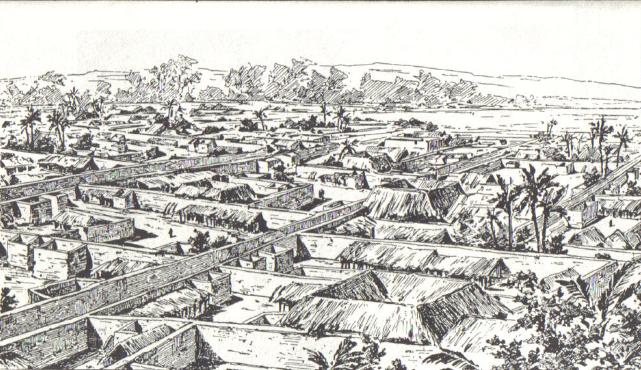
Benin City around 1600

Benin city was the capital of the kingdom of Benin (in present day Nigeria) which was founded in the 13th century by the Edo people, and flourished between the 14th and 17th centuries.  Its early name was Ubinu, which later was turned into Bini, and then Portuguese called it Benin.  The kingdom was ruled by an Oba or king, in a very well-structured hierarchy.  Starting in the late 15thcentury, Benin traded with Europeans items such as ivory, pepper, palm oil, and cloth.  From history books, it is said that the city was laid out in a sophisticated system of huge straight streets, very wide, long, and well-maintained.  Houses were built in rows along the streets.  These houses had covered porches to protect people from the sun or rain, as they sat outside.

Benin City in 1897
Benin City in 1897

The Oba governed over the entire region.  Oba Ewuare, the first gold age Oba, is credited with turning Benin City into a military fortress protected by moats and walls known as the Walls of Benin.  It was from this bastion that he launched his military campaigns and began the expansion of the kingdom from the Edo-speaking heartlands.  At its peak, the empire extended from Onitsha in the east, through the forested southwestern region of Nigeria and into the present-day nation of Ghana.

The state developed an advanced artistic culture especially in its famous artifacts of bronze, iron and ivory.  The Benin artists mastered the art of bronze, iron, and sculpture. The most well-known artifact based on Queen Idia, popularly called the FESTAC mask, currently resides at the Metropolitan Museum of Art (MET) in New York City.

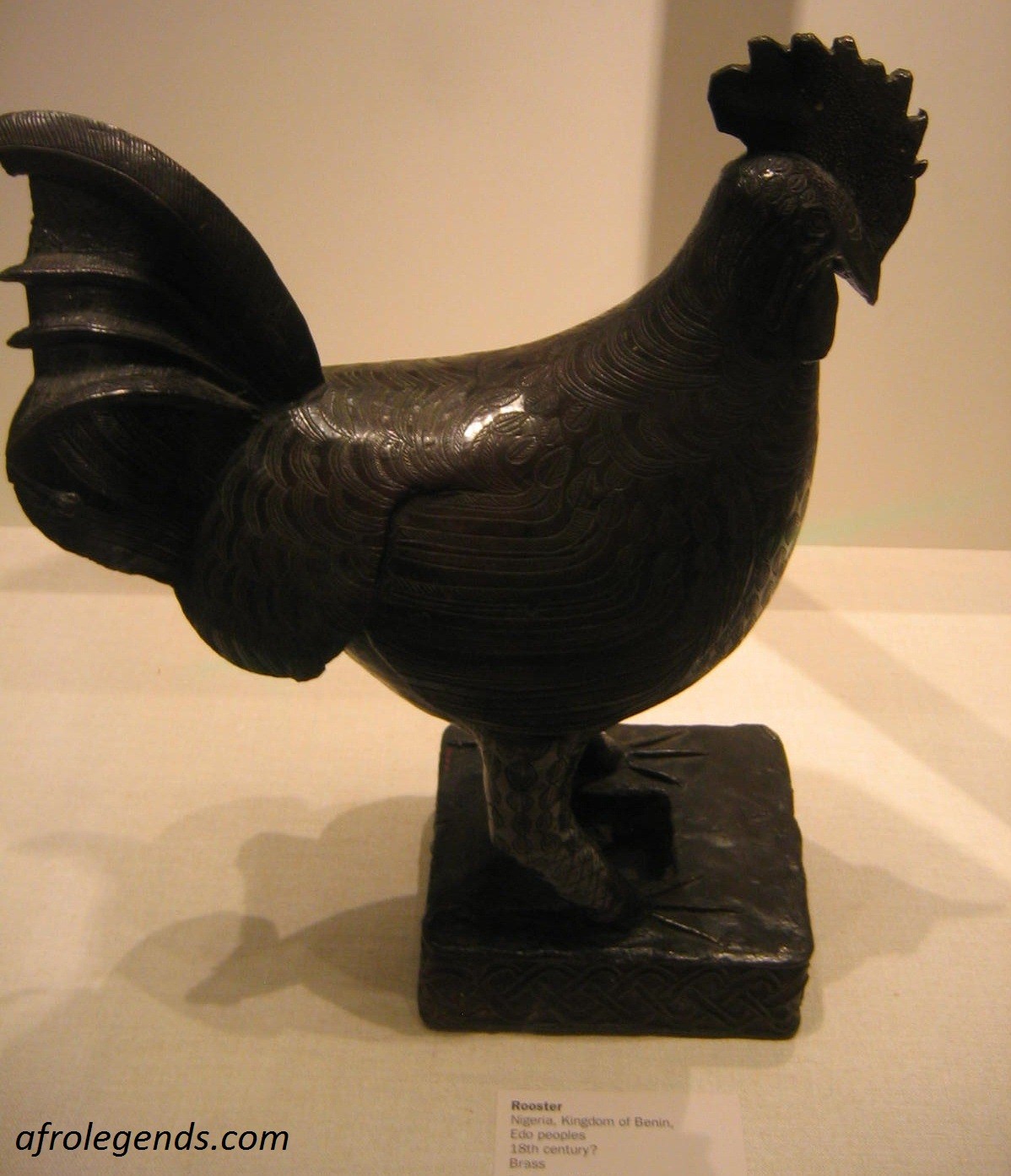
Rooster from Benin Kingdom (18th century)
Brass rooster from Benin Kingdom (18th century)

The Punitive expedition of 1897 was a military excursion by a British force of 1,200 under Admiral Sir Harry Rawson that captured, burned, and looted the city of Benin, bringing to an end the West African Kingdom of Benin.  During the conquering and burning of the city, most of the country’s treasured art, over 3,000 pieces of art work, including the Benin Bronzes, was either destroyed, looted or dispersed.  The British used one of their favorite tactics to burn the city to the ground: deception – they claimed that the Omo n’Oba Ovonramwen had breached a treaty (they wanted to annex Benin Kingdom as a British protectorate, and the Oba refused to sign).  When the Oba realized that the treaty presented to him was a deceptive ploy to conquer his people, he issued an edict barring all British officials and traders from entering Benin territories.  Since the consul general of the Oil River Protectorate authorities considered the ‘treaty’ legal and binding, he deemed this a violation of the treaty and a hostile act.  Repeated attempts by the British to invade the Benin Kingdom followed, but without success.  In 1896, the major Phillip tried to attack and seize the city of Benin without approval from his superiors.

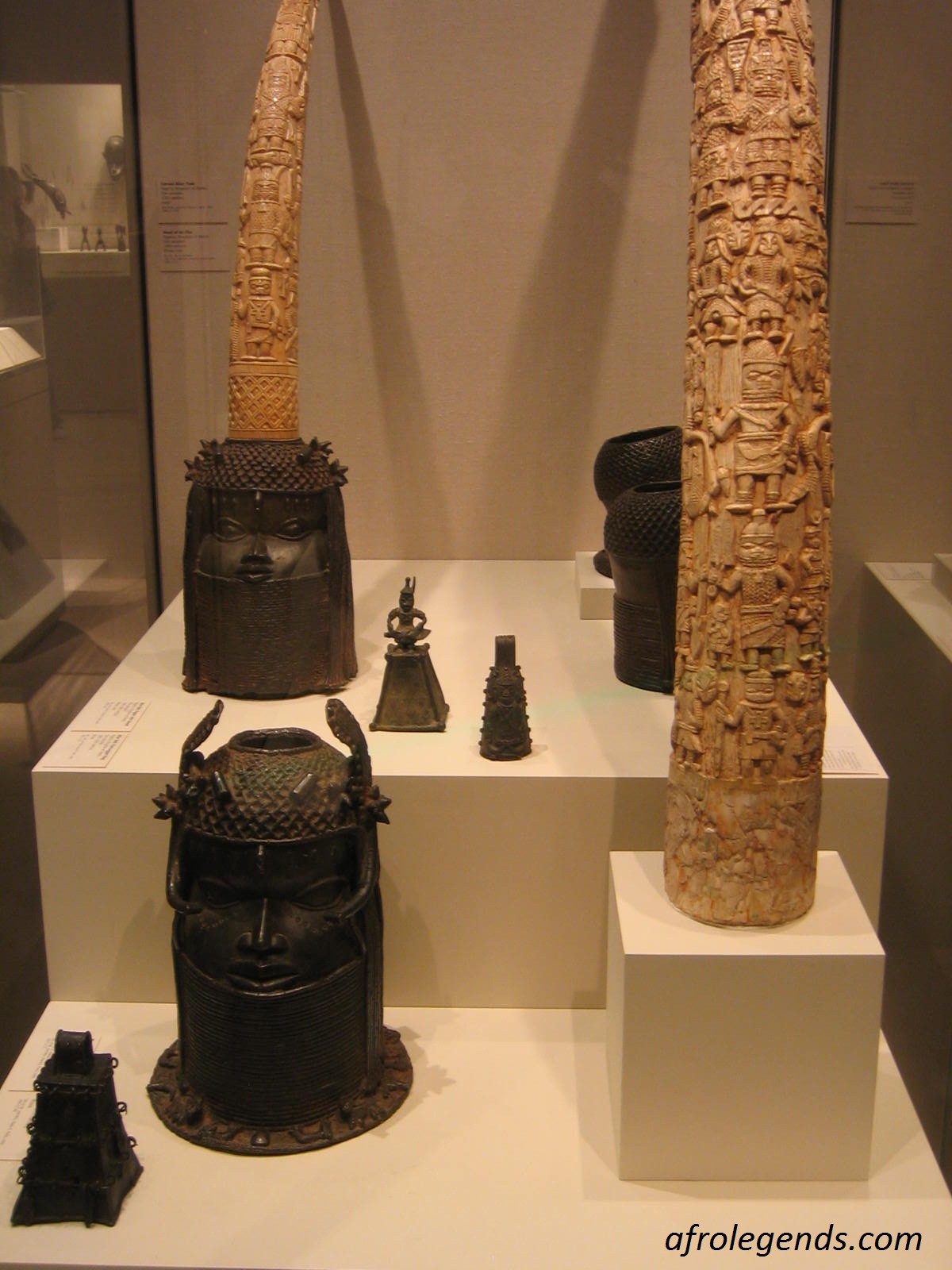
Art from Benin kingdom (18th century)

However, the Benin noblesmen decided to send a strike force to destroy the invaders (just normal, if an invader comes to burn and loot your place, you strike to defend yourself).  Only two British soldiers survived.  This came to be known as the ‘Benin massacre’ in the British press (In the eyes of the British crown, this was the perfect excuse to attack the Benin kingdom).  On January 12, 1897, Rear-Admiral Harry Rawson, commanding the squadron at the Cape of Good Hope was sent by his high commandment to capture the Oba of Benin and destroy Benin City.  The operation was named ‘Benin Punitive Expedition.’  The invasion of Benin kingdom was launched on February 9, 1897.  The field commanders were instructed by their commander-in-chief to burn down all Benin kingdom’s towns and villages, and hang the king once captured.

Queen from Benin kingdom

On February 17, 1897, Benin City fell to the British.  On that fateful day in history, the city of Benin lost its independence, its sovereignty, its Oba (king), its beauty, and its control of trade.  The city was looted and burnt to the groundThe ivory at the palace was seized.  Nearly 3000 of the famous Benin Bronzes and other valuable works of art, including the magnificently carved palace doors, were carried back to Europe.  The Oba was exiled to Calabar with his two wives, and subsequently died there.  Today, every museum in Europe possesses art treasures from Benin.

To read a detailed account of the destruction of Benin city, check out the Benin Massacre page. Edoworld.net tells about the Benin Kingdom and its magnificence, as well as its destruction. The art pieces shown on this page are all exposed at the MET, and pictures were taken during my visit to the MET. Watch and enjoy a quick history of Benin City.

12 Days into the Games: African Olympians thus far….

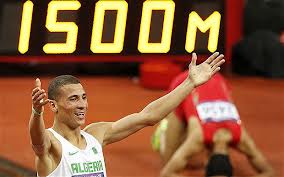
Taoufik Makhloufi after winning the 1500 m
Taoufik Makhloufi after winning the 1500 m (source: telegraph.co.uk)

I just wanted to give you an update on all our African medalists at the 2012 London Olympics.

Taoufik Makhloufi, of Algeria, won Gold in the 1500m Men yesterday, after a display of courage and determination. He was disqualified on Monday for not putting enough effort in the Men’s 800m qualifiers, and then later on reinstated, and went on to winning Gold in the 1500m. Such drama! Abdalaati Iguider of Morocco won the bronze in the 1500m Men, after Taoufik.

Tirunesh Dibaba, the baby face destroyer, destroyed her competitors on the 10,000m women’s race. It was lovely to watch her sprint to the finish. We long for a repeat on the 5,000m women’s race which will take place this Friday. The Kenyans Sally Kipyego and Vivian Cheruiyot won silver and bronze respectively.

On the men’s 10,000mKenenisa Bekele disappointed us. Frankly all Africans top runners disappointed us. It was mostly a show of African top runners elbowing each other to stop the other from winning (Kenyans, Ethiopians, and Erythreans) and cornering Kenenisa… and that’s how the British-Somalian Mo Farah won.  Basically, our brothers just went for the ‘crab’ politics.  Disappointing!  Tariku Bekele, Kenenisa’s brother, saved the day by winning the bronze medal.

Tirunesh Dibaba, after winning the 10,000 m race in London 2012

The Men’s 3000m Steeplechase was won by Ezekiel Kemboi of Kenya who took gold, while another compatriot, Abel Kiprop Mutai took the bronze. In the women’s 3000 m SteeplechaseSofia Assefa of Ethiopia won the bronze medal.

The Women’s marathon was won by Tiki Gelana of Ethiopia who set a new olympic record, and was followed by Priscah Jeptoo of Kenya with silver.

As said earlier, Alaaeldin Abouelkassem of Egypt won Silver in Men’s Foil Fencing.

In swimming, Tunisian Oussama Mellouli took Bronze in the Men’s 1500m freestyle.  South African Chad le Clos took Silver in the Men’s 100m butterfly, and gold in the Men’s 200m butterflyCameron van der Burgh, another South African, won the gold medal in the Men’s 100m breaststroke.

In rowing, the South Africans James Thompson, Matthew Brittain, Sizwe Ndlovu, and John Smith, captured gold in the Men’s Lightweight Four, thus winning South Africa’s first rowing medal.

Sameera Moussa: World-renowned Egyptian Nuclear Scientist

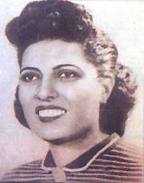
Sameera Moussa
Sameera Moussa

There are so few female scientists in the world, and particularly in Africa, that I had to talk about Sameera Moussa, the world-renowned Egyptian nuclear scientist.  Sameera Moussa held a doctorate in atomic radiation, specializing on making the medical use of nuclear technology affordable to all.  She organized the Atomic Energy for Peace Conference and sponsored a call for setting an international conference under the banner “Atom for Peace,” where many prominent scientists were invited.  The conference made a number of recommendations for setting up a committee to protect against nuclear hazards, for which she strongly advocated.

Sameera was born in the Gharbia Governorate in Egypt in 1917.  After she lost her mother to cancer, she vowed to study how to better medicine through science.  She went on the join the faculty of Sciences at the University of Cairo, where she earned a BSc in Radiology in 1939, with first class honors.  She became a remarkable faculty, and the first woman to hold a university post.  Being the first to obtain a Ph.D. degree in atomic radiation, she earnestly sought to make nuclear treatment to everyone. She used to say: “I’ll make nuclear treatment as available and as cheap as aspirin.” She worked hard for this purpose and throughout her intensive research, she came up with a historic equation that would help break the atoms of cheap metals such as copper, ultimately paving the way for a cheap nuclear bomb.  Sameera also volunteered to help treat cancer patients at various hospitals especially since her mother went through a fierce battle against this disease.

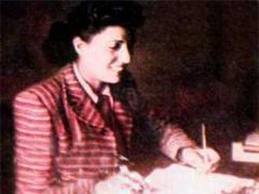
Sameera Moussa at the University of Cairo

Later on, Sameera received a Fullbright scholarship to study at modern research facilities at the California University.  In recognition for her pioneering nuclear research, she was given permission to visit the secret US atomic facilities.  The visit raised vehement debate in the United States Academic and Scientific circles since Sameera was the first “alien” to have access to such facilities.

She turned down several offers that required her to live in the United States and be granted American citizenship, saying “Egypt, my dear homeland, is waiting for me.”  On August 5th, 1952 after her first visit to America she intended to return home, but was invited on another trip.  On the way, the car rushed down from a height of 40 feet, which killed her immediately.  The mystery surrounding her accident, since the invitation to California, made people suspicious and many believe that it was a planned assassination.

Today, Sameera has been awarded several prizes (the 1953 honor by the Egyptian Army, and the 1981 Order of Science and Arts by , but most importantly she has paved the way for Egyptian and African women scientists.  It feels so great to know that back in the 1930s, and 1950s, when there were people like Enrico Fermi, Albert Einstein, Maria Goeppert-Mayer, there was also Sameera Moussa, an outstanding Egyptian Female scientist who thought of ‘Atoms for Peace’ and wanted cheap treatments for all.