Comment la Carapace de la Tortue devint Rugueuse et Bosselée

Tortue avec sa carapace rugueuse et bosselee

Autrefois, il y a bien longtemps, les tortues avaient une belle carapace toute lisse.  Ce conte va vous dire comment cette carapace est devenue rugueuse et pleine de bosses.

C’était une époque de famine.  Dans tout le pays, les habitants cherchaient vainement un peu de nourriture pour apaiser leur faim.  Or, un jour, lézard, affamé, est en train d’errer dans un champ quand il voit arriver le propriétaire de celui-ci, un chat bien gras.  Lézard est étonné de cet embonpoint dans une période de disette.  Il se cache pour observer.  Chat se dirige vers une lourde roche et s’écrie : Rocher, soulève-toi.  Et le rocher se soulève, découvrant une caverne pleine d’ignames.  Puis chat entre dans la caverne pleine d’ignames. Puis chat entre dans la caverne et mange. Quand il a fini, il ressort et dit : Rocher, ferme-toi.  Et le rocher se referme.

Lézard a tout vu et tout entendu ; il s’en retourne chez lui en réfléchissant.  Au point du jour, le lendemain, il va dans le champ et fait comme le chat. Le rocher se soulève, lézard entre dans la caverne, prend quelques ignames et mange copieusement. A partir de ce moment, tous les matins, il renouvelle son sol.

Bientôt, il grossit et retrouve bonne mine.  Or, un soir, il rencontre tortue qui s’étonne de lui voir si belle apparence.

Où trouves-tu de la nourriture, pendant cette famine ? Lui demande-t-elle

je ne peux pas te le dire, répond lézard.

Si on le savait, met à le supplier :

Par pitié, mon compère, emmène-moi avec toi quand tu iras te nourrir. Je jure que je n’en parlerai à personne.

Lezard
Lezard

–  bon ! dit le lézard, viens m’éveiller au premier chant du cop.  Je te montrerai mon secret.  Pendant toute la nuit, la tortue ne peut fermer l’œil tant il lui tarde d’être au lendemain. Dans son impatience, elle se rend chez lézard avant le chant du cop.  Pour éveiller celui-ci, elle se met à pousser un grand cri : cocorico !cocorico ! Et elle appelle lézard : Compère, Compère le coq a chanté, lève-toi vite.

Mais lézard voit que le ciel est encore tout noir et lui crie : Laisse-moi dormir ma commère.  Ce n’est pas l’heure ! Le coq n’a pas encore chanté.  Déçue, la tortue revient chez elle et se recouche.  Le coq chante enfin. Tortue et lézard se mettent aussitôt en route.  Une fois parvenus au champ, ils vont auprès du gros rocher.  Lézard ordonne : Rocher, soulève-toi .  Le rocher se soulève. Lézard entre dans la caverne, prend des ignames et ressort.

Maintenant, il faut partir !dit-il.

pas encore, répond tortue, je veux entrer moi aussi pour prendre des ignames Fais le guet pendant ce temps !

D’accord ! fait lézard.  Mais dès qu’elle a tourné le dos, il s’en va. Tortue est très vorace. Elle veut emporter une grosse quantité d’ignames et en suspend à sa tête, à ses bras, à ses bras, à ses pieds, en accroche même à ses cheveux.

Quand à lézard, à peine revenu chez lui, il allume un grand feu, puis s’étend sur le sol, le ventre en faisant le mort.

Tortue ressort enfin de la caverne, couverte de provisions.  Mais elle ne connaissait pas le moyen d’abaisser le rocher.  Elle pousse, tire, crie.  En vain ! Et tout à coup, chat le propriétaire, survient.  Il se jette sur la tortue en le traitant de voleuse.  Il la frappe violemment et l’attache avec une corde. Tortue, terrorisée, crie :  Ce n’est pas moi, c’est lézard ! Grace ! Grâce ! Ce n’est pas moi, c’est lézard le voleur !
Chat
Chat

C’est ce que nous allons voir!  grommelle le chat.  Et il l’entraîne jusqu’à la maison de lézard.  Ils trouvent lézard, sur le sol, le ventre en l’air, comme s’il était mort.

Cette tortue affirme que c’est toi qui l’a emmenée dans mon champ voler mes ignames déclare chat.

Comment cela serait-il possible, seigneur chat ? Fait lézard d’une voix plaintive.  Je suis ici couché, presque mort depuis trois mois.  Il y a bien longtemps que je ne suis allé dans le champ de qui que ce soit.

Alors le chat déchire tortue avec ses griffes pointues pour lui donner une leçon.  Puis il part, la laissant en bien mauvais état.  Elle gémissait et regardait autour d’elle pour voir si quelqu’un viendrait à son secours.  Enfin elle aperçoit un cancrelat et une fourmi.

Cancrelat, et fourni viennent auprès d’elle et la raccommodent. Mais ils ne pouvaient pas bien faire ce travail, avec tous les morceaux d’ignames qui étaient collés partout.

Et c’est ainsi que la carapace de tortue est devenue toute bosselée, toute écailleuse et rugueuse maintenant.

Conte tiré de “Contes des Lagunes et Savanes,” Collection ‘Fleuve et Flamme,’ édition Edicef, 1975

Kwame Nkrumah’s Independence Speech on 6 March 1957

Map and Flag of Ghana

Please enjoy this pure jewel of history… President Kwame Nkrumah‘s speech proclaiming the independence of Ghana at 12:00AM on 6 March 1957. So much to praise, the joy and hope that this new state’s birth brought. Find below the written part of the speech, and watch to hear Kwame Nkrumah deliver this great speech.

=================

At long last, the battle has ended!  And thus, Ghana, your beloved country is free forever!

 And yet again, I want to take the opportunity to thank the people of this country; the youth, the farmers, the women who have so nobly fought and won the battle.

 Also, I want to thank the valiant ex-service men who have so cooperated with me in this mighty task of freeing our country from foreign rule and imperialism.

 And, as I pointed out… from now on, today, we must change our attitudes and our minds.  We must realize that from now on we are no longer a colonial but free and independent people.

 But also, as I pointed out, that also entails hard work.  That new Africa is ready to fight its own battles and show that after all the black man is capable of managing his own affairs.

 We are going to demonstrate to the world, to the other nations, that we are prepared to lay our foundation – our own African personality.

 As I said to the Assembly a few minutes ago, I made a point that we are going to create our own African personality and identity.  It is the only way we can show the world that we are ready for our own battles.


Kwame Nkrumah
Kwame Nkrumah

But today, may I call upon you all, that on this great day let us all remember that nothing can be done unless it has the purport and support of God.

 We have won the battle and again rededicate ourselves … OUR INDEPENDENCE IS MEANINGLESS UNLESS IT IS LINKED UP WITH THE TOTAL LIBERATION OF AFRICA.

 Let us now, fellow Ghanaians, let us now ask for God’s blessing for only two seconds, and in your thousands and millions.

 I want to ask you to pause for only one minute and give thanks to Almighty God for having led us through our difficulties, imprisonments, hardships and sufferings, to have brought us to our end of troubles today. One minute silence.

 Ghana is free forever!  And here I will ask the band to play the Ghana National Anthem.

 Reshaping Ghana’s destiny, I am depending on the millions of the country, and the chiefs and the people, to help me to reshape the destiny of this country.  We are prepared to pick it up and make it a nation that will be respected by every nation in the world.

 We know we are going to have difficult beginnings, but again, I am relying on your support….  I am relying upon your hard work.

 Seeing you in this…  It doesn’t matter how far my eyes go, I can see that you are here in your millions.  And my last warning to you is that you are to stand firm behind us so that we can prove to the world that when the African is given a chance, he can show the world that he is somebody!

 We have awakened.  We will not sleep anymore. Today, from now on, there is a new African in the world!

Kwame Nkrumah: African Visionary and Ghana’s First President

Kwame Nkrumah
Kwame Nkrumah

Few men on the continent have had the aura of President Kwame Nkrumah, one of the greatest pan-africanist of the continent and the first president of Ghana.   Kwame Nkrumah was born on 21 September 1909 in NkrofulGold Coast (the pre-independence name of Ghana) the world’s largest cocoa producer.  Hailing from a modest traditional family, He trained to be a teacher at the Achimota School in Accra from 1927 to 1930.  For the following five years, he then taught in elementary schools across the Gold Coast.  He later on attended Lincoln University in Pennsylvania, where he graduated with a BA in theology in 1942.  He went on to attend the University of Pennsylvania, where he earned a Master of Science in education, and a master of arts in philosophy in 1943.   During his time in the US, he preached at black Presbyterian churches in Philadephia, and New York city.  Moving to London after World War II, Nkrumah helped organize Pan-African congresses, linking the emergent educated groups of the African colonies with activists, writers, artists, and well-wishers from the industrial countries.  It was a time of great intellectual ferment, excitement, and optimism.  Gandhi and India‘s achievement of independence in 1947 stirred dreams of freedom for the other colonies.  “If we get self-government,” Nkrumah proclaimed, “we’ll transform the Gold Coast into a paradise in 10 years.

Flag of the Gold Coast

In 1947, Nkrumah was invited to serve as the general secretary of the United Gold Coast Convention (UGCC), exploring paths to independence of the Gold Coast from British rule.  After the riots of February 1948, and arrests of UGCC leaders by British rule, Nkrumah emerged as the party leader upon release.  He proclaimed that the Gold Coast needed “self-government now,” and built a large power base including cocoa farmers, women (at a time when women were not invited in the political process) and trade unions.  On 12 June 1949, he organized a new political party based on these groups: the Convention People’s Party (CPP).  Within two years the CPP had won limited self-rule elections, and Nkrumah became “Leader of Government Business” in 1951 after a landslide CPP win in the first general election– a de facto prime minister, responsible for internal government and policy.  He set his sights firmly on independence.  No amount of autonomy or self-rule, he argued, could match the energy, commitment, and focus of a government and people in a truly independent country.  It was a precondition for growth.  He summarized his philosophy in a slogan that became famous and influential across Africa: “Seek ye first the political kingdom, and all else shall be added unto you….

Map and Flag of Ghana

As a leader of this government, Nkrumah faced many challenges: first, to learn to govern; second, to unify the four territories of the Gold Coast; third, to win his nation’s complete independence from the United Kingdom.  Nkrumah was successful at all three goals.  Within six years of his release from prison, he was the leader of an independent nation.  At 12 a.m. on 6 March 1957, Nkrumah declared Ghana independent.  The country became independent as a Commonwealth realm. He was hailed as the Osagyefo – which means “redeemer” in the Twi language.

On 6 March 1960, Nkrumah announced plans for a new constitution, which would make Ghana a republic.  On 19, 23, and 27 April 1960 a presidential election and plebiscite on the constitution were held.  The constitution was ratified and Nkrumah was elected president over J. B. Danquah, the UP candidate, 1,016,076 to 124,623.  In 1961, Nkrumah laid the first stones in the foundation of the Kwame Nkrumah Ideological Institute created to train Ghanaian civil servants as well as promote Pan-Africanism.  In 1964, all students entering college in Ghana were required to attend a two-week “ideological orientation” at the Institute.  In 1963, Nkrumah was awarded the Lenin Peace Prize by the Soviet Union.  Ghana became a charter member of the Organization of African Unity in 1963.

Kwame Nkrumah on Cedi notes

The Gold Coast had been among the wealthiest and most socially advanced areas in Africa, with schools, railways, hospitals, social security and an advanced economy.  Under Nkrumah’s leadership, Ghana adopted some socialist policies and practices.  Nkrumah created a welfare system, started various community programs, and established schools.  Nkrumah’s time in office was successful and ambitious (could you blame him? With a newly independent country, there was so much to build), with forestry, fishing, and cattle-breeding expanded, production of cocoa (Ghana’s main export) doubled, and modest deposits of bauxite and gold exploited more effectively.  The construction of a dam on the Volta River (launched in 1961) provided water for irrigation and hydro-electric power, which produced enough electricity for the towns as well as for a new aluminum plant.  Government funds were also provided for village projects in which local people built schools and roads, while free health care and education were introduced.  Ghana adopted the Ghana Cedi (GHC) as a currency in 1965; the word “cedi” being the Akan word for cowry shells, which were used as currency in the old days.

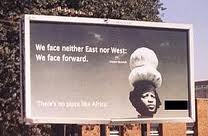
Billboard in Lusaka, Zambia, with Kwame Nkrumah's famous quote for non-alignment
Billboard in Lusaka, Zambia, with Kwame Nkrumah’s famous quote for non-alignment

He generally took a non-aligned Marxist perspective on economics, and believed capitalism had malignant effects that were going to stay with Africa for a long time (and rightly so, we can all see the effects of IMF, and World Bank policies in Africa today: poverty to the grave).  Nkrumah argued that socialism was the system that would best accommodate the changes that capitalism had brought, while still respecting African values.  At a time when there were East & West blocks from the cold war, and where Africa was stuck in the middle, with no way out but to bend to some of the East-West politics (which could not work for us), Nkrumah believed in non-alignment.  He made a famous quote on non-alignment which said: “We face neither East nor West; We face forward.”  To show that we, as Africans, could not be forced to adhere to politics or economics which had no respect for us as human beings and for our cultures.

Celebrating the birth of the OAU

In Africa Must Unite (1963) Nkrumah called for the immediate formation of a pan-African government.  Later he sat on a unification movement that emanates from the base, while anti-imperialist governments and between the Western-backed “puppet regime” could be no common ground.  He was a true visionary to have seen that Africa needed to unite in order to survive, because as it stood divided in 50-something states it was an easy prey to Western imperialists.  Nkrumah’s biggest success in this area was his significant influence in the founding of the Organization of African Unity (OAU).

Nkrumah's sculpture at the Kwame Nkrumah Mausoleum in Accra
Nkrumah’s sculpture at the Kwame Nkrumah Mausoleum in Accra

Truth be told, Nkrumah was too big for his own good.  He wanted Ghana and Africa to be truly independent: politically, and economically.  He was a strong advocate for pan-Africanism, and the true instigator and founder of the Organization of African Unity (now African Union) whose goals were to raise Africa, and promote unity and strength across the continent.  He also helped several independent movements in Africa, such as those from Rhodesia (Zimbabwe).  He was ousted in February 1966 by a military coup, while on state visit to Vietnam.
After the coup, Nkrumah lived in exile in Conakry, Guinea, as the guest of President Ahmed Sekou Toure who made him honorary co-president.  He read, wrote, corresponded, gardened, entertained guests, and continued to push for his vision of African unity.  50 years later, Kadhafi who was trying to revive, and reinvigorate the African Union, and almost succeeded, was also brought down by Western Imperialism; and his country, the beautiful Libya (one of the few countries in the world without debt) bombed and brought down in flames.

Centenary of Kwame Nkrumah

Nkrumah died in 27 April 1972 of skin cancer in Romania.  One can tell the greatness of the man by the number of universities who carry his name during his lifetime.  If you are ever in Accra, visit the Kwame Nkrumah Mausoleum which is a true piece of art, as well as the Kwame Nkrumah University of Science and Technology in Kumasi.  Check out Nkrumah.net to learn more about this great African leader, and read some of his speeches.  Check out this great video which talks about Kwame Nkrumah’s fight for Ghana’s independence, as well as his struggle to maintain his vision for an independent Ghana (check out all parts 1-4).  Don’t forget to read some of his books: Africa Must Unite (1963), Neo-colonialism: the Last Stage of Imperialism (1965), African Socialism Revisited (1967), Dark Days in Ghana (1968), Handbook of Revolutionary Warfare (1968), I Speak of Freedom (1973), and many more.

Celebrating Angola’s National Heroes Day

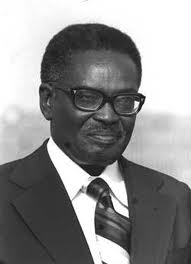
Agostinho Neto
Agostinho Neto
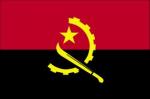
Flag of Angola
Flag of Angola

Angolans are marking this  Monday the National Heroes’ Day, in homage to the country’s first president, the late Dr. Agostinho Neto, who was born on 17 September 1922 in Kaxicane locality.  Celebrate with me Angola’s National Heroes’ Day by enjoying a poem by Angola’s greatest poet, and its first president.

Criar

Criar criar
criar no espírito criar no músculo

criar no nervo
criar no homem criar na massa
criar
criar com os olhos secos
Criar criar
sobre a profanação da floresta
sobre a floresta impúdica do chicote
criar sobre o perfume dos troncos serrados
criar
criar com os olhos secos
Criar criar
gargalhadas sobre o escárneo da palmatória
coragem nas pontas das botas do roceiro
força no esfrangalhado das portas violentadas
firmeza no vermelho sangue da insegurança
criar
criar com os olhos secos

Criar criar
estrelas sobre o camartelo guerreiro
paz sobre o choro das crianças
paz sobre o suor sobre a lágrima do contrato
paz sobre o ódio
criar
criar paz com os olhos secos
Criar criar
criar liberdade nas estradas escravas
algemas de amor nos caminhos paganizados do amor
sons festivos sobre o balanceio dos corpos em forcas simuladas
criar
criar amor com os olhos secos.


Create

Create create
create in mind create in muscle

create in nerve create in man create in the masses
create
create with dry eyes
Create create
over the profanation of the forest
over the shameless fortress of the whip create over the scent of sawn trunks

create
create with dry eyes
Create create
laughter over the scorn of the palmatoria courage in the tips of the planter’s boots strength in the splintering of battered-in doors firmness in the red blood of insecurity
create
create with dry eyes
Create create
stars over the warrior’s sledge-hammer peace over children’s weeping peace over the sweat the tears of forced labour peace over hatred
create
create peace with dry eyes

Create create
create freedom on slave highways
manacles of love on the paganised

paths of love
festive sounds over bodies swinging on simulated gallows create
create love with dry eyes.


Kouroukan Fouga, la Constitution de l’Empire du Mali – la plus vieille constitution republicaine au monde?

Soundiata Keita a l'Assemblée constitutive de l'empire du Mandé avec les chefs de guerre (Source: Wikipedia.fr)
Soundiata Keita a l’Assemblée constitutive de l’empire du Mandé avec les chefs de guerre (Source: Wikipedia.fr)

Le Kouroukan Fouga fut la constitution de l’Empire du Mali (1235 – 1645), et officiellement la plus vieille constitution républicaine en Afrique, et au monde.  Le Kouroukan Fouga réuni officiellement la fédération des clans Mandingues sous un seul et unique gouvernement.  Cette constitution régit la vie de l’empire à travers des lois auxquelles tout le monde doit obéir.  Mansa (Empereur) Soundiata Keïta présenta ce document en 1236 après la célèbre bataille de Kirina, dans l’actuel cercle de Kangaba, et dès lors cette constitution a été léguée de générations en générations par les griots ou djeli. Les griots ont conservé une grande partie de l’histoire de l’empire du Mali, y compris ses rois, les batailles, et le système gouvernemental.  Decouvrez avec moi la première constitution républicaine mondiale, et appréciez le génie de nos ancêtres. Si seulement nous, africains, pouvions tous adaptés celle-ci, et non perdre le temps avec ces constitutions importées de l’occident. (For English, click here).

Article 1er : La Société du grand Mandé est divisée en seize (16) porteurs de carquois, cinq (5) classes de marabouts, quatre (4) classes de Nyamakalas (1) une classe de serfs (esclaves) (Mofé molu)

Chacun de ces groupes a une activité et un rôle spécifiques

Article 2 : Les Nyamakalas se doivent de dire la vérité aux chefs, d’être leurs conseillers et de défendre par le verbe les règles établies et l’ordre sur l’ensemble du royaume.

Article 3 : Les Morikandas lolu (les cinq classes de marabouts) sont nos maîtres et nos éducateurs en islam. Tout le monde leur doit respect et considération.

Article 4 : La société est divisée en classe d’âge. A la tête de chacune d’elles est élu un chef. Font de la classe d’âge les personnes (Hommes ou Femmes) nées au cours d’une période de trois années consécutives.

Les Kangbès (Classe internationale entre les jeunes et les vieux) doivent être conviés pour participer à la prise des grandes décisions concernant la société.

Assemblée constitutive de l'empire du Mandé (Source: Wikipedia.fr)
Assemblée constitutive de l’empire du Mandé lors de la charte du Kouroukan Fouga (Source: Wikipedia.fr)

Article 5 : Chacun a le droit à la vie et à la préservation de son intégrité physique. En conséquence, tout tentation d’enlever la vie à son prochain est punie de la peine de mort.

Article 6 : Pour gagner la bataille de la prospérité, il est institué le Kongbèn Wölö (un mode de surveillance) pour lutter contre la paresse et l’oisiveté.

Article 7 : Il est institué entre les Mandenkas, le Sanankuya (cousinage à plaisanterie) et le tanamanyoya (forme de totémisme. En conséquence, aucun différent né entre ces groupes ne doit dégénérer, le respect de l’autre étant la règle.

Entre Beaux-frères et Belle-sœur, entre grands parents et petits, tolérance et le Chahut doivent être le principe.

Article 8 : La Famille est désigné famille régnante sur l’empire

Article 9 : L’éducation des enfants incombe à l’ensemble de la société. Continue reading “Kouroukan Fouga, la Constitution de l’Empire du Mali – la plus vieille constitution republicaine au monde?”

Nkosi Sikelel’ iAfrika – God Bless Africa, the Original/ Classic Version

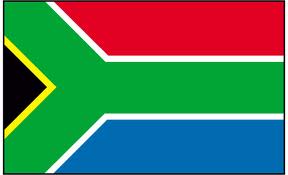
Flag of South Africa

Here is the classic version as written by Enoch Sontonga, with added verses by Samuel Mqhayi. Enjoy the good old version, or the classic version, and compare it to the more modern version which I posted earlier.

Nkosi, sikelel’ iAfrika;
Malupakam’upondo lwayo;
Yiva imitandazo yetu
Usisikelele.

Chorus

Yihla Moya, Yihla Moya,
Yihla Moya Oyingcwele

Sikelela iNkosi zetu;
Zimkumbule umDali wazo;
Zimoyike zezimhlouele,
Azisikelele.

Sikelel’ amadol’ esizwe,
Sikelela kwa nomlisela
Ulitwal’ilizwe ngomonde,
Uwusikilele.

Sikelel’amakosikazi;
Nawo onk’amanenekazi;
Pakamisa wonk’umtinjana
Uwusikilele.

Sikelela abafundisi
Bemvaba zonke zelilizwe;
Ubatwese ngoMoya Wako
Ubasikelele.

Sikelel’ulimo nemfuyo;
Gxota zonk’indlala nezifo;
Zalisa ilizwe ngempilo
Ulisikelele

Sikelel’amalinga etu
Awomanyana nokuzaka,
Awemfundo nemvisiswano
Uwasikelele.

Nkosi Sikelel’ iAfrika;
Cima bonk’ ubugwenxa bayo
Nezigqito, nezono zayo
Uyisikelele.


Lord, bless Africa;
May her horn rise high up;
Hear Thou our prayers
And bless us.

Chorus

Descend, O Spirit,
Descend, O Holy Spirit.

Bless our chiefs
May they remember their Creator.
Fear Him and revere Him,
That He may bless them.

Bless the public men,
Bless also the youth
That they may carry the land with patience and that Thou mayst bless them.

Bless the wives
And also all young women;
Lift up all the young girls
And bless them.

Bless the ministers
of all the churches of this land;
Endue them with Thy Spirit
And bless them.

Bless agriculture and stock raising
Banish all famine and diseases;
Fill the land with good health
And bless it.

Bless our efforts
of union and self-uplift,
Of education and mutual understanding
And bless them.

Lord, bless Africa
Blot out all its wickedness
And its transgressions and sins,
And bless it.


5000 years old Artefacts uncovered in Senegal

Artefacts found in Dakar, Senegal (Source: AFP)

The current floods in Senegal, particularly in Dakar, have unearthed 5000 years old artefacts: pieces of jewelry, pottery, iron tools dating back thousands of years.  The discovery was made at a construction site in the capital Dakar.  The objects could date back between 2000 to 5000 BC.  Proper carbon dating will probably give us more accurate information, and would certainly yield information about the rich history of Dakar, of Senegal, and that part of Africa.  Could this new discovery be related to the Senegambian Stone Circles (3rd century BC to 16th century AD)?  or be from ancestors of these structures?  Could these be related to the lost Atlantis the island which sank into the ocean in a single day?  or could it be simply coming from a different civilization which flourished by its work of iron and pottery?  Time will tell… in the meantime, enjoy this article on BBC.

‘No More’ by Kelvin Karani

Children begging
Children begging

I was talking to a friend the other day about the suffering in Cote d’Ivoire and Libya, and my friend said “hush, we should be grateful that this is not happening in our country.”  I was dumbfounded, as I was thinking, how could somebody just rejoice for their lot, instead of helping the others? instead of doing something?  the least we can do is talk about it, cry, do something, not just watch and rejoice about our silly existence which could go down in flames in a day as in Cote d’Ivoire or Libya which were under fire from France and NATO (the mighty armies of the world) for their oil, cocoa, and gold. Then I found this really good poem by Kelvin Karani, talking about the things we all see in Africa, the things that hurt, and the things that tire. Enjoy “No More.”

=======

No more
Taking of silly slogans
Of change from the corrupt politicians
We need statesmen and stateswomen
People who see beyond elections

No more
Sitting back as others suffer
Saying that we are blessed
Happy that we are not in pain
In common bond united
We’ll rise or fall as a people

No more
Taking the aid of Aids
Which makes sick and
In perpetual need.

No more
Class divisions in Africa
Imperialism of whatever nature
White evils or black ones either
For time has come
For Africa, my Africa-our Africa
To dust herself and move on
Undeterred, unhindered
To show the rest of the world
What humanity truly is.

 Kelvin Karani

La SAPE: Societe des Ambianceurs et Personnes Elegantes

A Sapeur in Brazzaville, Congo

La sape” (pronounced sap) is La Societe des Ambianceurs et Personnes Elegantes, or the Society of Atmosphere Setters and Elegant People.  The ‘Sapeurs’ adhere to a culture of high fashion at all costs.  Most are very well-dressed men who strut in Versace, Gucci, Prada, or Ralph Lauren’s attires.  They pay extreme attention to the quality or their clothing, and are extremely refined.  The word sapeur comes from two Lari words “Lunkété” and “tsi Muntu” or ‘beauty’ and ‘human.’  A true sapeur is one who symbolizes beauty and humanity through the clothes he wears, in his outlook, his words, and his actions.  In other words, he is someone who embodies and expresses the beauty of the mind and soul in harmony with the colors of his wardrobe, expresses love for his neighbor (luzolo), and is an apostle of peace.

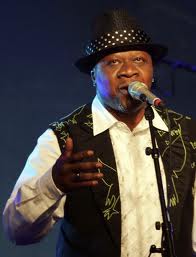
Papa Wemba
Papa Wemba

The roots of the movement can be traced as far back as in the 1920s and 1930s when the first privileged Congolese returned from France with wardrobes of expensive suits. However the culture, and its name ‘la societe des ambianceurs et personnes elegantes’ took off thanks to the great musician and singer Papa Wemba who developed a flamboyant and sometimes exaggerated style.  His style was in direct opposition to Mobutu-approved uniform, the dreaded style-less ‘abacost’ (from the French “a bas le costume” or “down with the suit”) a dull Zairean version of the three-piece suit.  Papa Wemba called his new style Ungaru, and it was a throwback to the elegance of the 1930s—complete with tapered trousers, brogues, neatly trimmed hair and tweed hats worn at a rakish angle.  For Congolese all over the world, the look was irresistible:  SAPE was born.  Sape became almost like a religion: fashion at all cost, elegance, and setting the atmosphere, creating the spectacle.  Elegance at all costs is its motto. In the old days, sapeurs would often spend months or years saving up for outfits; they would start out by renting or borrowing suits from their more established peers.  Like in any movement, there are rivalries and affiliations within the SAPE movement: Paris vs Brussels, Brazzaville vs Kinshasa, Bacongo vs Moungali. It is a total fashion warfare. Sapeurs from Brazzaville follow the three colors rule, while the Kinshasa crowd is all about going overboard.

A flamboyant sapeur
Hector Mediavilla, a flamboyant sapeur

One important trait of the ‘sapeur’ is uniqueness: one cannot look like the common man, and so there is a constant urge to look different, unique, and elegant.  And the cost of the ‘sape’ is quite high… but very important.  Isn’t a person unique anyways? then why not exert that uniqueness in fashion?  There used to be weekly defilés (shows/catwalks) of sapeurs in the streets of Kinshasa or Brazzaville, to find and elect the most ‘sapé‘ man.  These were known as “Fight days”, weekly events, and the combat arenas were the local outdoor bars on Avenue Matsoua, the most famous place of Brazzaville, Congo.  Today, the sape culture has extended throughout Africa, and particularly French Africa.  In the video below, you will see how sape is redefined in Cameroon, a neighbor to Congo… and how there is a difference between being ‘hip‘ and being ‘sapé‘.  ‘Hip‘ is just having the latest trends: the pants down on the floor, the pierced jeans, etc… while ‘sapé‘ means having elegance, class, and uniqueness…. Enjoy!

To learn more about the history of SAPE, check out starducongo.comharlemworldmag.com, LaSape.comLes sapeurs: gentlemen of Congo and this really good article on africafeed.com.

Le Bœuf, le Cochon et l’Araignée

Cochon
Cochon

Il y avait une fois un village bien malheureux car, malgré tous les efforts des villageois, les cultures n’avaient pas poussé.  La nourriture manquait et tout le monde était devenu maigre et bien affamé.  Cochon, Bœuf et Araignée, trois habitants de cette infortunée région, erraient chaque jour dans la brousse en quête de quelque chose à se mettre sous la dent.

Un beau matin, Cochon, tout affaibli par la disette, se lamente sur le chemin à l’entrée du village lorsque, compère bœuf vient à passer.  Surpris de la mine florissante de celui-ci, cochon l’interpelle :« Holà, mon compère, d’où te vient ta belle mine alors que, tous ici, nous mourons de faim et tombons en faiblesse? »

Bœuf accélère son allure et passe devant le cochon sans répondre, comme s’il n’avait pas entendu la question.  Cochon comprend qu’il y a là quelque chose de louche et se met à observer attentivement son ami.  Plusieurs jours de suite, il se cache dans des arbustes au bord du chemin, et voit passer chaque matin Bœuf qui va toujours dans la même direction.  Chaque soir, Bœuf revient tranquillement au village et tandis que la faim ronge son malheureux compère, il semble lui au contraire, prendre un embonpoint de plus en plus dodu.  Alors n’y  tenant plus et sentant sa fin prochaine, cochon s’écrie en lui barrant la route.  « Compère!  Compère!  Tu grossis à vue d’œil alors que je me meurs.  Par pitié, dis-moi ou tu trouves tant de nourriture, ou j’appelle tous les habitants du village pour leur signaler ta conduite.  A nous tous, nous  saurons bien t’obliger à nous révéler ton secret. »

Bœuf
Bœuf

Bœuf s’arrête, réfléchit et déclare enfin: « Frère, tu me fais pitié. Jure-moi de ne rien révéler à personne et je viendrai à ton secours.

Je le jure

Demain matin, accompagne-moi dans la forêt et tu sauras tout. »

Le lendemain, tous deux s’en vont ensemble à travers la foret.  Parvenus à une clairière, ils trouvent une grosse meule. Alors Bœuf s’approche et dit haute voix : « Meule, prépare-moi a manger! »  En un instant, la meule prépare un bon repas et Les deux compagnons le dévorent.  Quand il a fini, cochon ordonne à la meule : « Meule prépare-moi encore à manger!»  La meule obéit aussitôt.  Bien repus les deux amis reviennent au village.  Et, tous les matins désormais, ils vont dans la clairière et la meule magique les nourrit.  Bientôt, cochon à son tour devient très gros.  Ce phénomène attire l’attention d’Araignée.  Il attend que ses compagnons soient revenus chez eux et va rendre visite à cochon.  « Cochon, mon bon ami, aide-moi.  Je vois que tu sais trouver assez de nourriture pour devenir gros et gras.  Si tu ne viens pas à mon secours, je vais appeler tous les habitants du village et on saura bien te contraindre à nous dire ou tu trouves à manger! » Continue reading “Le Bœuf, le Cochon et l’Araignée”