As the battle to end the FCFA, the Slave Currency, intensifies, I have decided to share with you this video about it. It tells it all, the mathematics of it in a short time. This has to stop. We, Africans, deserve to be independent, and independence starts with the ability to define how to use our money.
To summarize, the FCFA is the colonial tax paid by African countries to France since their independence. As Mawuna R. Koutonin says it, “African leaders who refuse are killed or victim of a coup. Those who obey are supported and rewarded by France with lavish lifestyle while their people endure extreme poverty, and desperation. It’s such an evil system even denounced by the European Union, but France is not ready to move from that colonial system which puts about 500 billions dollars from Africa to its treasury year in year out.” No wonder the French people are always on strike, requesting shorter times of work (32 h vs 35 h vs 37h per week): because Africans are slaving for them, and every year they get 500 billion dollars without even having raised a finger!
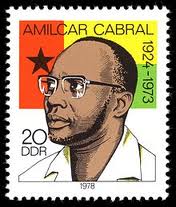
Amilcar Cabral on a stamp with the flag of Guinea Bissau
“A people who free themselves from foreign domination will be free culturally only if, without complexes and without underestimating the importance of positive accretions from the oppressor and other cultures, they return to the upward paths of their own culture, which is nourished by the living reality of its environment, and which negates both harmful influences and any kind of subjection to foreign culture. Thus, it may be seen that if imperialist domination has the vital need to practice cultural oppression, national liberation is necessarily an act of culture.”
The value of culture as an element of resistanceto foreign domination lies in the fact that culture is the vigorous manifestation on the ideological or idealist plane of the physical and historical reality of the society that is dominated or to be dominated.Culture is simultaneously the fruit of a people’s history and a determinant of history, by the positive or negative influence which it exerts on the evolution of relationships between man and his environment, among men or groups of men within a society, as well as among different societies.
To celebrate Amilcar Cabral, the Father of Cape-Verdean and Bissau-Guinean independence, birthday (12 September), I decided to share this beautiful video of Amilcar Cabral with El Commandante, Fidel Castro. Enjoy!
A man sold his land for 15 millions. Since it was the weekend, he did not deposit the money at the bank. Not trusting his wife and kids, he decided to go to church with his 15 millions in his bag.
He stood up to go take the communion and when he returned to his seat to pray, his bag had disappeared in the midst of church.
All of a sudden he spits the communion and start screaming …
Angry
“Thieves!! Murderers!! My mother is a witch!! You will all die!! My Fetish will kill you all!! Sakpata voodoo on you, heviesso voodoo on you, you will never see tomorrow !!! You will all go to hell, including your priest !!! Kanga bah.”
Everyone is stupefied! Suddenly a little boy calls him, saying:
“Papa, you are not at the right seat. Your bag is just here, two rows behind.”
The BBC recently published an article about Lalibela and its churches in Ethiopia, and I thought about reblogging the article I wrote about it many years ago. The article I wrote, “Lalibela, Ethiopian churches carved in the stone,” was one of the first posts on my blog. It talked about the bees being a central part of Lalibela’s churches; this article also helps to see the evolution of the blog, from the very beginning to now. It is sweet to realize that some of the stories on this blog caught our eyes before they caught those of the BBC: Ethiopia’s miraculous underground churches. Cheers!
When I was younger, there was a cartoon on television in which they always mentioned the churches of Lalibela, and somehow I used to think that it was not actually real,… you know like these made-up places in cartoons! Isn’t it interesting that the name Lalibela always made me think of honey bees (abeille in french)… Imagine my surprise when I found out that it is said that at birth a swarm of bees descended on the baby king’s head, and his Mother named him Lalibela, meaning “the bees have recognized him as king!”
Carved straight from red volcanic stone, and actually from a single stone, Lalibela is the place of pilgrimage of thousands of christians every year, and is one of Ethiopia’s holiest places. It was intended to be the New Jerusalem, in response to the capture of Jerusalem by Muslims. The architecture of Lalibela was revealed…
Yes… I think most of Egypt is truly a treasure for archaeology, and for humanity as a whole. I would love to have the chance to work on one of those excavations!
The excerpt below is from the BBC. For the full article, please go to the BBC article.
=======
Archaeologists have discovered three tombs that date back around 2,000 years in southern Egypt.
They were found in burial grounds in the Al-Kamin al-Sahrawi area in Minya [Governorate ]/ province, south of Cairo.
The tombs contained a collection of different sarcophagi, or stone coffins, as well as clay fragments.
Egypt’s antiquities ministry said the discovery “suggests that the area was a great cemetery for a long span of time“.
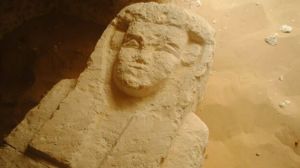
One of the tombs, which was reached through a shaft carved in rock, contained four sarcophagi that had been sculpted to depict a human face.
In another, excavators found six burial holes, including one for the burial of a small child. …
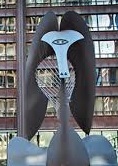
I already knew that the great Pablo Picasso had been inspired by African art (just a look at his sculpture on the Chicago plaza reminds you vividly of a Fang mask of Cameroon, Gabon, or Equatorial Guinea), but this is the first time I read it clearly in the BBC, an international magazine. It is about time that the world knew how much Africa has inspired the world, and this throughout the ages from ancient Egypt to modern-day Congo as in the case of Picasso, Matisse, and others. See… and then we are told that our ancestors were not savvy: have you ever looked at an African mask? The geometry, symmetry, symbolism, and emotions are amazing! Enjoy! This is just an excerpt of the article by Fisun Güner of the BBC. For the full article go to the BBC.
=========
A small seated figurine from the Vili people of what is now the Democratic Republic of the Congo was instrumental in the lives of two of the greatest artists of the 20th Century. The carved figure in wood, with its large upturned face, long torso, disproportionately short legs and tiny feet and hands, was purchased in a curio shop in Paris by Henri Matisse in 1906. The French artist, who liked to fill his studio with exotic trinkets and objets d’art, objects that would then appear in his paintings, paid a pittance for it.
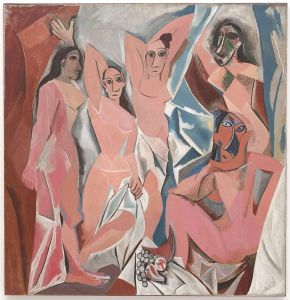
‘Les Demoiselles d’Avignon’ by Pablo Picasso (Source: Wikipedia)
Yet when he showed it to Pablo Picassoat the home of the art patron and avant-garde writer Gertrude Stein, its impact on the young Spaniard was profound, just as it was, though to an arguably lesser extent, on Matisse when the compact but powerful figure had fortuitously caught his eye.
For Picasso, his appetite whetted, visits to the African section of the ethnographic museum at the Palais du Trocadéro inevitably followed. And so precocious was the 24-year-old artist that it seemed that he had already absorbed all that European art had to offer. Hungry for something radically different, something almost entirely new to the Western gaze that might provide fresh and dynamic impetus to his feverish creative energies, Picasso became captivated by the dramatic masks, totems, fetishes and carved figures on display, just as he had with the Iberian stone sculptures of ancient Spain which he also sourced as material. Here, however, was something altogether different, altogether more dynamic and visceral.
….
… artists were struck by a directness, a pared-down simplicity and a non-naturalism that they discovered in these objects. But no thought was given to what these artefacts might actually mean, nor to any understanding of the unique cultures from which they derived. The politics of colonialism was not even in its infancy.
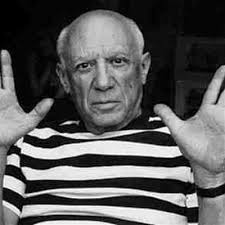
Pablo Picasso (Source: WikiArt.org)
The Trocadéro museum, which had so impressed Picasso, had opened in 1878, with artefacts plundered from the French colonies. Today’s curators, including those of the Royal Academy’s Matisse exhibition in which African masks and figures from the artist’s collection appear, at least seek to acknowledge and redress this to a small extent. A similar effort was made earlier this year for Picasso Primitif at the Musée du Quai Branly, Paris, an exhibition exploring Picasso’s life-long relationship to African art. The sculptures, from West and Central Africa, were given as much space and importance as Picasso’s own work and one could appreciate at first hand the close correspondence between the works.
Paul Gauguin, perhaps the quintessential European artist to ‘go native’, …, had long felt a disgust at Western civilisation, its perceived inauthenticity and spiritual emptiness.

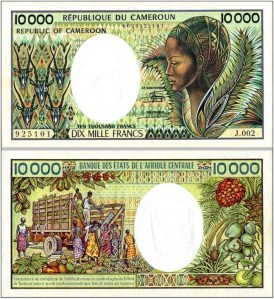









 On ne compte jamais l’argent dans la poche d’autrui
  Never count money in another’s pocket

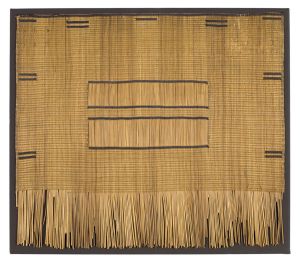


 African Heritage