Nigeria to sell its Fuel in Naira – More Countries are Moving away from the Dollar

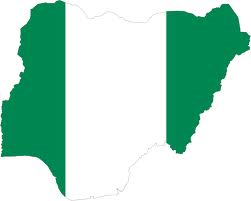
Flag and map of Nigeria

This is a new turn in the move away from the dollar. Yes! you heard it right… more countries are moving away from the dollar, and more transactions are being done in local currencies. The dollar’s dominance is slowly going away. When the war in Ukraine started in February 2022, and the West leveled a lot of sanctions against Russia, blocking its funds, I bet the end of dollar was not what they foresaw. Now Russia deals with China in Rubles or Yuan, India with China in Rupees, … not dollars! Now Nigeria, Africa’s largest country, is going to sell its oil in Naira!!! Are more countries going to deal in local currencies? Is this the end of the petrodollar?

Excerpts from the article below is from Business Insider Africa. Enjoy!

=====

The federal government of Nigeria has commenced the sale of its crude oil to Dangote Refinery and other refineries in its local currency, naira, effective October 1, 2024.

The naira-for-crude initiative, which has already commenced, would mean that crude would now be sold to the Dangote refinery and others in naira. In return, the Dangote refinery would supply PMS (petrol) and diesel of equivalent value to the domestic market, also in naira.

The Minister of Finance, Wale Edun, confirmed the commencement of this policy in a signed statement on Saturday, October 5, 2024, saying the initiative is a significant step by the government in stabilizing the economy and enhancing Nigeria’s economic growth and development.

… “The strategic initiative and bold step taken by the President Bola Ahmed Tinubu-led Administration is expected to have a lasting impact on Nigeria’s economy, fostering growth, stability, and self-sufficiency, especially as the country continues to navigate the complexities of global markets, this strategic move positions Nigeria for success in the years to come,” the statement read.

… Economic experts explained that the initiative if implemented successfully, will alleviate pressure on the naira, eliminate unnecessary transaction costs, and enhance the availability of petroleum products nationwide.

L’Impartialité / Impartiality

Pluie / Rain

La pluie ne se gêne pas, elle mouille même une belle-mère (Proverbe Ntomba – République Démocratique du Congo (RDC)) . – Le juge doit être impartial.

The rain does not hold back, it wets even the mother-in-law (Ntomba proverb – Democratic Republic of Congo (DRC)). – The judge should be impartial.

Denouncing a Genocide : The Case of Rosa Luxemburg on Namibia

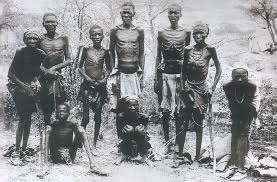
Survivors of the Herero genocide (Wikimedia)

I found this Jacobin article which focuses on Rosa Luxemburg, a Polish Jewish revolutionary activist who exposed Germany’s genocide in what was then German South West Africa. She said, in her essay “Proletarian Women” (1912):

The workshop of the future requires many hands and hearts. A world of female misery is waiting for relief. The wife of the peasant moans as she nearly collapses under life’s burdens. In German Africa, in the Kalahari Desert, the bones of defenseless Herero women are bleaching in the sun, hunted down by a band of German soldiers and subjected to a horrific death of hunger and thirst. …

Three years later, she again recalled the litany of colonial crimes in her famous Junius Pamphlet:

The present world war is a turning point in the course of imperialism . . . The “civilized world” that has stood calmly by when this same imperialism doomed tens of thousands of Hereros to destruction; when the desert of Kalahari shuddered with the insane cry of the thirsty and the rattling breath of the dying . . . when in Tripoli the Arabs were mowed down, with fire and swords, under the yoke of capital while their civilization and their homes were razed to the ground.

Please check out the article on the Jacobin website to read more about this woman activist who at a time when very few could talk, she denounced the genocide perpetrated by German forces in Africa, particularly in Namibia. She pointed out that the “civilized world” stood by when atrocities were committed in Namibia… it seems like history has repeated itself around the globe for the past century with atrocities perpetrated in many places, while the civilized world or international community has stood by doing nothing or sometimes lending a hand to those perpetrating it. Like Rosa Luxemburg, let’s not turn a blind eye… let’s be part of the solution, and not the problem.

Mali Forces Succeed in Kidal where France and Allies could not!

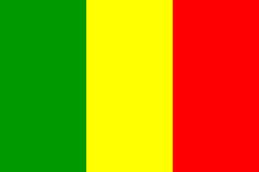
Flag of Mali
Flag of Mali

Mali military forces have succeeded in liberating the city of Kidal from terrorist groups where France and its allies and the MINUSMA could not. They succeeded in a few days, where it took years for France and company. On November 14 2023, president Assimi Goïta of Mali announced the liberation of Kidal, stronghold of terrorist groups for the past few years. The news was so stunning that even the BBC who has been calling the Mali government, ‘the junta’ and all sorts of names, and always showing ugly pictures of Assimi Goïta, had to, begrudgingly write the article and for once showed him in a decent image :). When you listen or read the western media, they say that it is thanks to the help of Wagner that the Malian forces freed the town… Malian forces liberated Kidal, that is all that matters! France was there, how many years, and could not defeat them!

Colonel Assimi Goïta (Source: AllAfrica.com)

This goes without citing the treacherous behavior of the MINUSMA, the UN peacekeeping mission, which weeks before they were set to leave at the request of the Malian government, breached their agreements with the government for a safe handout, and left abruptly leaving all sorts of heavy artillery for the rebel groups to take over the city… I wonder how the MINUSMA must be feeling now?

Joy is overfilling our hearts: it is a first step and we are so proud of our FAMas (Forces Armées Maliennes / Malian Armed Forces)… we are so proud of Mali. We need to stay focused and continue the fight. This shows what we have been saying for years: Africans can govern themselves and are sick and tired of foreign interference and intrusion in our affairs. We all know who the real terrorists are in Mali, they are groups paid by these foreign forces to destabilize the region so as to keep getting free resources. This is a first victory, and there will be many more to come. As Thomas Sankara used to say, “La Patrie ou la mort, nous vaincrons!”

Excerpts below are from AfricaNews.

=====

Mali conflict map

Mali’s military has seized control of the northern town of Kidal, marking the first time the army has held the Tuareg rebel stronghold in nearly a decade, state broadcaster ORTM reported Tuesday.

This is a message from the president of the transition to the Malian people,” journalist Ibrahim Traore said in his introduction to the ORTM news bulletin. “Today, our armed and security forces have seized Kidal. Our mission is not over.”

Separatist Tuareg rebels in the north have long sought an independent state they call Azawad. In 2012, they dislodged the Malian military from the town, setting into motion a series of events that destabilized the country.

Amid the chaos, Islamic extremists soon seized control of the major northern towns including Kidal, imposing their strict interpretation of Islamic law known as Shariah.

In 2013, France led a military intervention to oust the extremists from power, but they later regrouped and spent the next decade launching attacks on the Malian military and U.N. peacekeepers.

Another military coup in 2020, led by transition president Col. Assimi Goïta, resulted in deteriorating relations with Mali’s international partners. Mali’s foreign minister ordered the U.N. peacekeeping mission known as MINUSMA to depart, and forces left Kidal at the beginning of November.

L’Union fait la force/ Unity is Strength

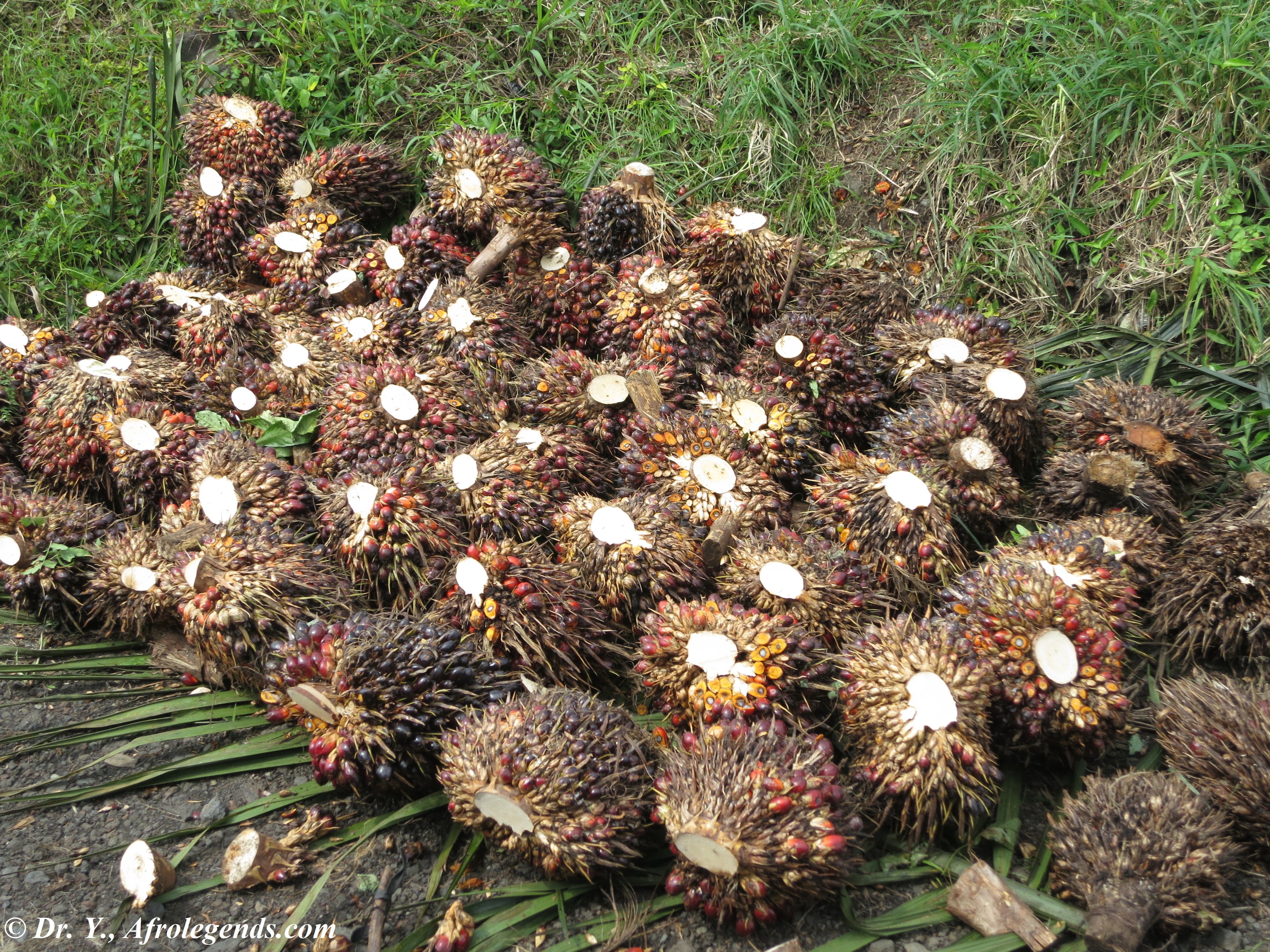
Regimes de noix de palme

Deux écureuils se rendent facilement maîtres d’un régime de noix palmistes (Proverbe Ivili – République du Congo, République Démocratique du Congo (RDC), Angola, Gabon).

Two squirrels quickly master a bunch of palm nuts (Ivili proverb – Republic of Congo, Democratic Republic of Congo (DRC), Angola, Gabon).

Proverbe Yoruba sur Dieu, le seul pouvoir / Yoruba Proverb on God, the Only Power

A millennial tree

Personne ne peut déraciner l’arbre que Dieu a planté (Proverbe Yoruba – Nigeria, Benin).

No one can uproot the tree which God has planted (Yoruba proverb – Nigeria, Benin).

Oldest Fossil of Ankylosaur in the World found on the African Continent

T-Rex skeleton at the Chicago Field Museum

There was a major finding in the dinosaur world in Africa recently. As a parenthesis, I have always wondered why there are always several dinosaur sites around the globe, but very few on the African continent… as if dinosaurs somehow preferred to live on other continents but Africa. Given that Africa is the cradle of humanity, shouldn’t there be big findings on the continent as well? It most likely has to do with funding and interests of the people looking (who are mostly westerners), or could it be a deliberate need not to shed any lights on dinosaurs in Africa? Well, recently paleontologists have found the skeleton of the oldest ankylosaur so far in the world. Excerpts below are from an article on the Guardian.

====

Extraordinary ankylosaur remains dating back 168m years a first for Africa

Fossil hunters have unearthed remnants of the oldest – and probably weirdest – ankylosaur known so far from a site in the Middle Atlas mountains in Morocco.

The remains of the heavily armoured animal are extraordinary in being the first to have defensive spikes that are fused to the skeleton, a feature researchers say is unprecedented in the animal kingdom.

… Dr Susannah Maidment, a palaeontologist at the Natural History Museum in London, [said], “Normally when we see armour in stegosaurus and ankylosaurs, the dermal armour is embedded in the skin, not attached to the skeleton. In this case, it’s not only in contact with the skeleton, it’s fused to the ribs.”

Researchers at the museum obtained the fossil from a private collector for an undisclosed sum. They originally suspected the bones might belong to a new species of stegosaur they identified from the same region in 2019, but microscopic analysis of thin sections of the fossil revealed distinctive patterns of fibres unique to ankylosaurs.

The discovery was so unusual that scientists wondered whether the fossil might be a fake, but further inspection using a CT scanner found no signs that it had been constructed or tampered with.

The fossil dates to the middle Jurassic, about 168m years ago, suggesting the animal was one of the earlier ankylosaurs to roam the Earth. Beyond ranking as the oldest ankylosaur fossil known so far, it is also the first to be found in Africa.

… Details are published in Nature Ecology and Evolution.

Dutch Museum’s Slavery Exhibition confronts Cruelty of Dutch Trade

This is a bit of old news, but it sheds more light on the participation of European nations in slavery… it is about the Dutch part in the slave trade. This may be a hard read for some. Excerpts below are from the article on the Guardian website. For the full article, go to the Guardian.

====

The aim of a first exhibition on the Dutch slave trade to be shown at the Rijksmuseum, launched on Tuesday by King Willem-Alexander, is not to be “woke” but to be a “blockbuster” telling a truer story of the Golden Age, the director general of the national institution has said.

…The Slavery exhibition, showcasing 140 objects, ranging from two Rembrandt portraits of married and lavishly wealthy owners of enslaved people to a display of ankle chains, examines 10 lives caught up in the Dutch slave trade between the early 17th century and 1863, when the practice was finally made illegal in Suriname and the Antilles.

An audio guide for the exhibition includes the voice and thoughts of a Ma Chichi, a woman born into slavery in 1853, who in turn tells how her grandmother, enslaved in 18th-century Curaçao, urged her to always remember that she was equal to anyone. “She never did what the lords wanted,” Chichi says in the recording dating from 1958, when she was 105 years old.

Valika Smeulders, a curator of the exhibition and the Rijksmuseum’s head of history, said it had been vital to unearth oral history due to the lack of property and written evidence of enslaved people. “[Chichi] talks about her grandmother telling her you are equal to everybody else, you are equal to the children of the master of the house,” she said. “It gives you a female perspective, which is pretty rare, and it gives you the perspective of the people who were so aware of their humanity even though they lived in a system that took all that humanity away from them.”

Documents on show also detail the horrific fate of many of those who resisted. One, Wally, who worked on a sugar plantation called Palmeneribo, Suriname, in 1707 was sentenced to be slowly burned to death, with the stipulation added by the magistrate Cornelis de Huijbert that he was to have his flesh torn off with red hot pincers in the process in order for his death to be “the most painful and protracted possible”.

Dutch traders shipped over 600,000 Africans [as we now know, this number is mosy likely higher] to north and South America and between 660,000 and 1.1 million people around the Indian ocean. Last year King Willem-Alexander apologised for the “excessive violence” of the Dutch colonialists in Indonesia. There remains a live debate in the Netherlands about the treatment of empire and slavery in schools and public places through street names and statues, as there has been in the UK.

… One of the confronting revelations of the exhibition, Smeulders said, was that a richly decorated brass collar donated to the Rijksmuseum in 1881 and engraved with the family crests of the Nassau, Vianden and Dietz families, dated 1689, was likely not to have been a dog collar, as originally thought, but one worn by black enslaved people brought back to the Netherlands as servants. “For the longest time people have not wanted to come to terms with the meaning of those collars,” she said. “They were always described as being dog collars but if you look at the paintings, the ones wearing those collars are never the dogs, they are the men.”

Wood Carving in Africa: An Ancient Tradition

African wood carver_2
African wood carver at work

A friend of mine learnt to carve wood when he was a child. He made his very first wooden figurine at a tender age, it was the head of a woman with cornrow braids. He had a good teacher, and learnt to understand the art of being one with the wood, carving to perfection, and of course that it required a great deal of patience. He is from a long line of wood carvers. Wood carving, making a sculpture is a very refined art. Don’t be fooled, it is not just cutting the wood, thinking of a design, then chipping parts of it, and then carving… oh no… it is much more than that, it is an art, and I would even go further to say that it is a science. Wait, I am not talking about these modern sculptures where dimensions are not respected, and you wonder if the artist was on crack or something… No… I am talking about the great art of African sculptors. Just a look at Bamileke masks and sculptures, or Senufo masks, Shona sculptures, there is so much geometry involved. I have always balled at hearing people say that Africans were not advanced, or like Sarkozy that they have not entered enough into history… I have also heard people referring to these African artists as illiterate because they have not gone to the “white” man’s school… Have you looked at African sculptures? The Mwash-a-mbooy of the Kuba? or the Kuosi, Bapi, Katso, and other masks of the Bamileke? or the Ashanti stools? or Chokwe masks? and so many others?  Do you think that whoever made these is not versed in geometry, symmetry, and precision? Do you know how much details goes into making some of these? Isn’t it odd that these advanced sculptures of a so-called backward people are still in museums in Europe generating millions of dollars every year (and these museums are only making ‘promises’ of maybe returning)?

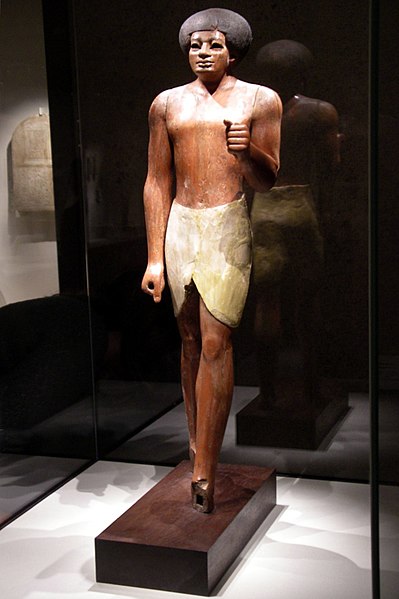
11th_Dynasty_Egyptian_funerary_statue_(Gulbenkian_Museum)
11th Dynasty Egyptian funerary statue (Gulbenkian Museum) – (Source: Commons Wikimedia)

Wood carving in Africa is a very old tradition, and wood carving was an integral part of Ancient Egypt (and these carvings and sculptures clearly show African features – some even wear the Afro) like the Ancient Egyptian priest Kaaper’s statue, and many more. Check out the link for Ancient Egyptian wood carving. In the Cairo museum in Egypt, there is a statue of a man from the period of the Great Pyramid of Giza, possibly 4000 B.C. The expression of the face and the realism of the carriage have never been surpassed by any Egyptian sculptor of this or any other period.

Not just any wood from any tree can be carved into x, y, or z; it requires knowledge of the type of wood. The African teak wood is frequently used, but other woods such as Ebony and others are also used for carving. The hard woods are used for sculptures, masks, doors, utensils, while the soft woods are used for drums. The video below follows modern wood carvers in Nigeria. Enjoy!

Justice at last from Shell … for Nigerians!

Eric Barizah, chief of Nigeria’s Goi community in Rivers State, shows oil pollution from leaks in the Niger delta. Photograph: EPA (Source: The Guardian)

A court has finally ruled that Shell Nigeria must pay for oil damage. How long has it been? Wasn’t Ken Saro-Wiwa already working on such issues in the 1990s? This ruling deals with oil pollution in the Niger delta region of Nigeria. Well, a Dutch court has finally asked the oil giant Shell to compensate Nigerian farmers for oil damages. This is a first… and we just hope that Shell will not play the French card, and will actually compensate for all the environmental damages, the loss of livelihood, and probably the loss of lives they caused while they made humongous benefits. This is a major win for Nigerians, for Africans, and for all the communities around the world whose environments have been polluted by these giant corporations. Excerpts below are from the Guardian.

====

A Dutch court has ordered Shell Nigeria to compensate farmers for major oil spills they say caused widespread pollution.

Shell Oil Company logo

On Friday an appeals court in The Hague rejected Shell’s argument that the spills were the result of sabotage, saying not enough evidence had been provided.

The court ordered Shell’s Nigerian subsidiary to compensate the farmers for the losses caused by the oil spills in the two villages of Goi and Oruma in 2004 and 2005. The amount of compensation had not yet been decided.

It also ruled the parent company, Royal Dutch Shell, and its subsidiary must install warning equipment on its Oruma pipelines to limit the environmental damage in case of another spill.

The farmers claiming compensation argued the damage was caused by oil leaking from the pipeline, which could have been prevented if Shell had installed the correct detection systems.

Finally, there is some justice for the Nigerian people suffering the consequences of Shell’s oil,” said Eric Dooh, one of the Nigerian plaintiffs, in a statement released by Friends of the Earth Netherlands, which supported the case. “This verdict brings hope for the future of the people in the Niger delta.” Dooh’s father was one of two complainants who died during the case, which has gone on for 13 years.

Flag and map of Nigeria

The Hague appeals court ruled in 2015 that Dutch courts had jurisdiction in the case, seven years after the four farmers first sued, and after debate over whether Shell’s parent company should be held liable for the Nigerian subsidiary’s actions.

This is fantastic news for the environment and people living in developing countries,” said Friends of the Earth’s Netherlands head, Donald Pols.

It means people in developing countries can take on the multinationals who do them harm.”