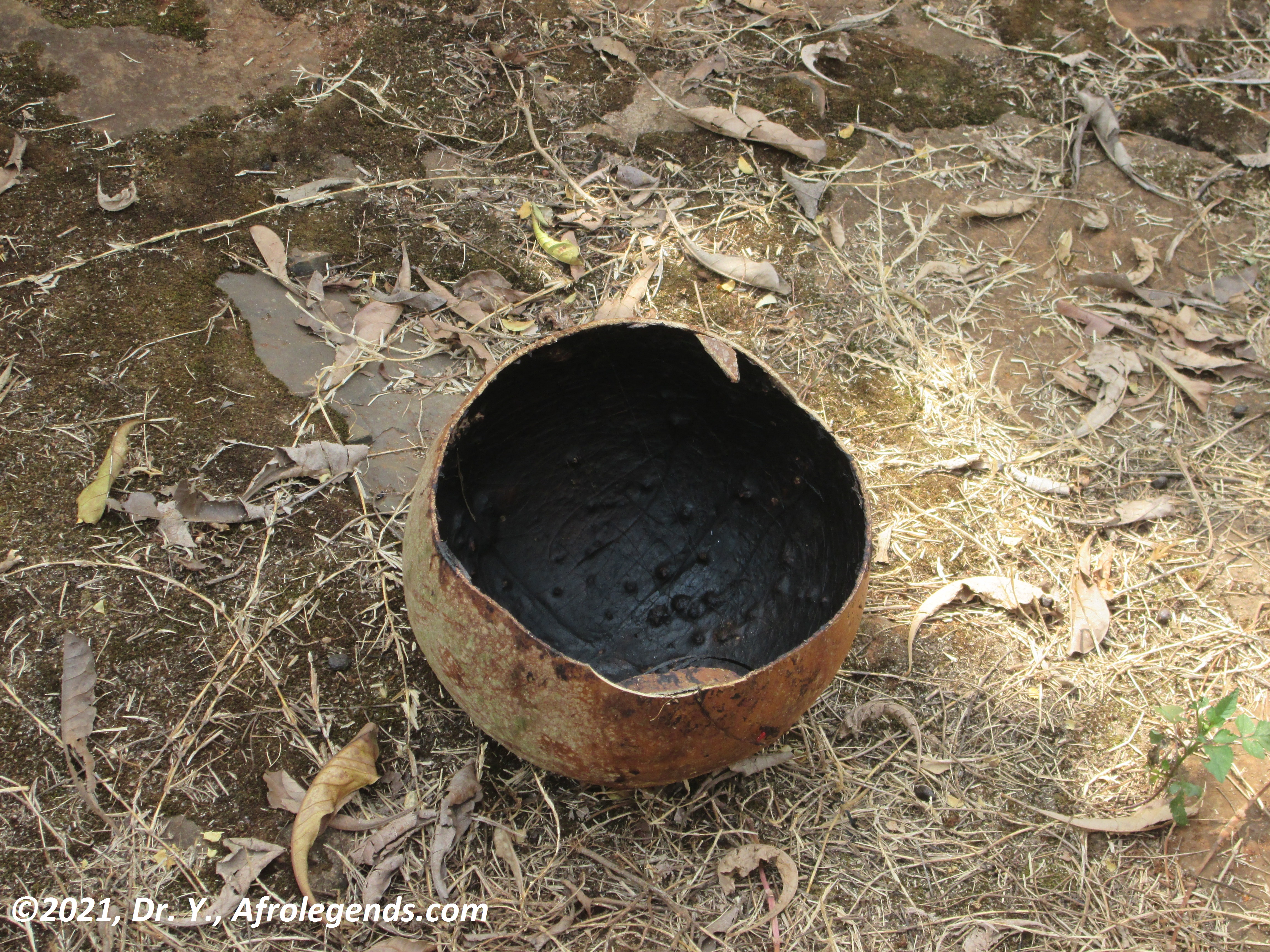
Këll bu ne am na mberoom
Toute calebasse a son couvercle (proverbe Wolof – Sénégal / Gambie).
Every calabash bowl has its lid (Wolof proverb – Senegal / Gambia).

Këll bu ne am na mberoom
Toute calebasse a son couvercle (proverbe Wolof – Sénégal / Gambie).
Every calabash bowl has its lid (Wolof proverb – Senegal / Gambia).
We take a minute today to salute the African fraternity displayed by our brothers of the Alliance des Etats du Sahel (AES – Alliance of Sahel States). It is no secret that islamic terrorists funded by ‘we know who’, have blockaded the distribution of fuel in the capital of Mali, Bamako, for the past 2 months. The jihadists have imposed blockades, multiplied attacks on fuel convoys, and disrupted transported routes, which has almost paralyzed the city.
The sister country of Niger sent a convoy of trucks to Mali carrying fuel across 1,400 km amid the ongoing regional insecurity. It took 21 days for the convoy of 82 petrol tankers to arrive in Bamako from Niamey. The convoy arrived on 25 November. This example of fraternity among African nations is a warm balm to the heart.
Since the creation of the AES, a confederation formed by Mali, Burkina Faso, and Niger, the governments have presented an alliance to deepen their security, defence, and economy, amidst the barricade of open sanctions and hidden attacks that have come from the West and its puppet organization that is the Economic Community of West African States (ECOWAS).
Excerpts below are from APA News.
=====

A large convoy of 82 hydrocarbon tankers from Niamey successfully arrived in Bamako on November 22, completing a major delivery that signals Niger’s official support for Mali.
This operation takes place amid persistent supply tensions in Mali and underscores the evolving regional solidarity within the Alliance of Sahel States (AES).
The fuel shipment, a donation initiated by Nigerien President Abdourahamane Tiani, reached the Malian capital after navigating the sensitive Niamey-Bamako axis—a crucial corridor challenged by insecurity in certain border areas. The Malian government officially received the 82 tankers, handing them over to the Minister of Industry and Trade.
The delivery is critically important given Mali’s heavy reliance on imports to meet its energy needs. The country’s daily fuel requirements are estimated at approximately 40,000 barrels of hydrocarbons (equating to about 6.3 to 6.5 million liters per day). This massive consumption, driven by road transport and growing electricity demands coupled with a lack of national refining infrastructure, makes the nation highly vulnerable to external disruptions and embargoes. Malian authorities confirm that this shipment will help to temporarily stabilize the domestic market.
…
 Les défauts ne partent pas en voyage, on les laisse chez soi (Proverbe Rwandais – Rwanda).
Flaws don’t go on a trip, you leave them at home (Rwandan proverb – Rwanda).

I came across another gem in the book of Professor Bwemba Bong, “Quand l’Africain était l’or noir de l’Europe. L’Afrique: Actrice ou Victime de la Traite des Noirs? – Démontage des mensonges et de la falsification de l’histoire de l’hydre des razzias négrières transatlantiques” (When the African was the black gold of Europe. Africa: Actress or Victim of the Slave Trade ? – Dismantling the lies and falsification of the hydra history of the transatlantic Slave Raids).” After the textile industry, and the Agriculture in the Kongo Kingdom, this time, it is about the rich fauna of the Kongo in the 16th century.
In his book, Pr. Bong shows that the wealth of the African fauna, and in this case at hand, of the Kongo basin. Note the use of ostrich and peacock feathers for umbrella, and the special place of the peacock whose feathers serve as symbol of royalty; or the skin of the pelican which is so warm that it was used to warm people when feeling cold; or even these birds who sang arias so much that they were esteemed by royalty since ancient times.
Filippo Pigafetta et Duarte Lopes, Le royaume de Congo et les contrees environnantes (1591), Chandeigne/Unesco, 2002, p. 112-113 (trad. Willy Bal, présentation et notes Willy Bal); Bwemba Bong, Quand l’Africain était l’or noir de l’Europe. L’Afrique: Actrice ou Victime de la Traite des Noirs?, MedouNeter 2022, p. 179-180 (translated to English by Dr. Y, Afrolegends.com). Enjoy!
=====
 Let us now talk about birds, and first of all of ostriches, which hold first place due to their height. They are found in the regions of Sundi and Batta, towards Murombos. Their young hatch in the heat of the sun. The feathers are used to make badges and war standards. Mixed with peacock feathers, they are arranged in the shape of an umbrella. Since we have come to speak of peacocks, let us say that they are raised in Angola, in a wood surrounded by walls; the king does not allow anyone else to possess them, because their feathers serve as insignia of royalty. Ancient stories tell us that Alexander the Great had made this bird, when it was seen for the first time in Europe, an object of important privileges.
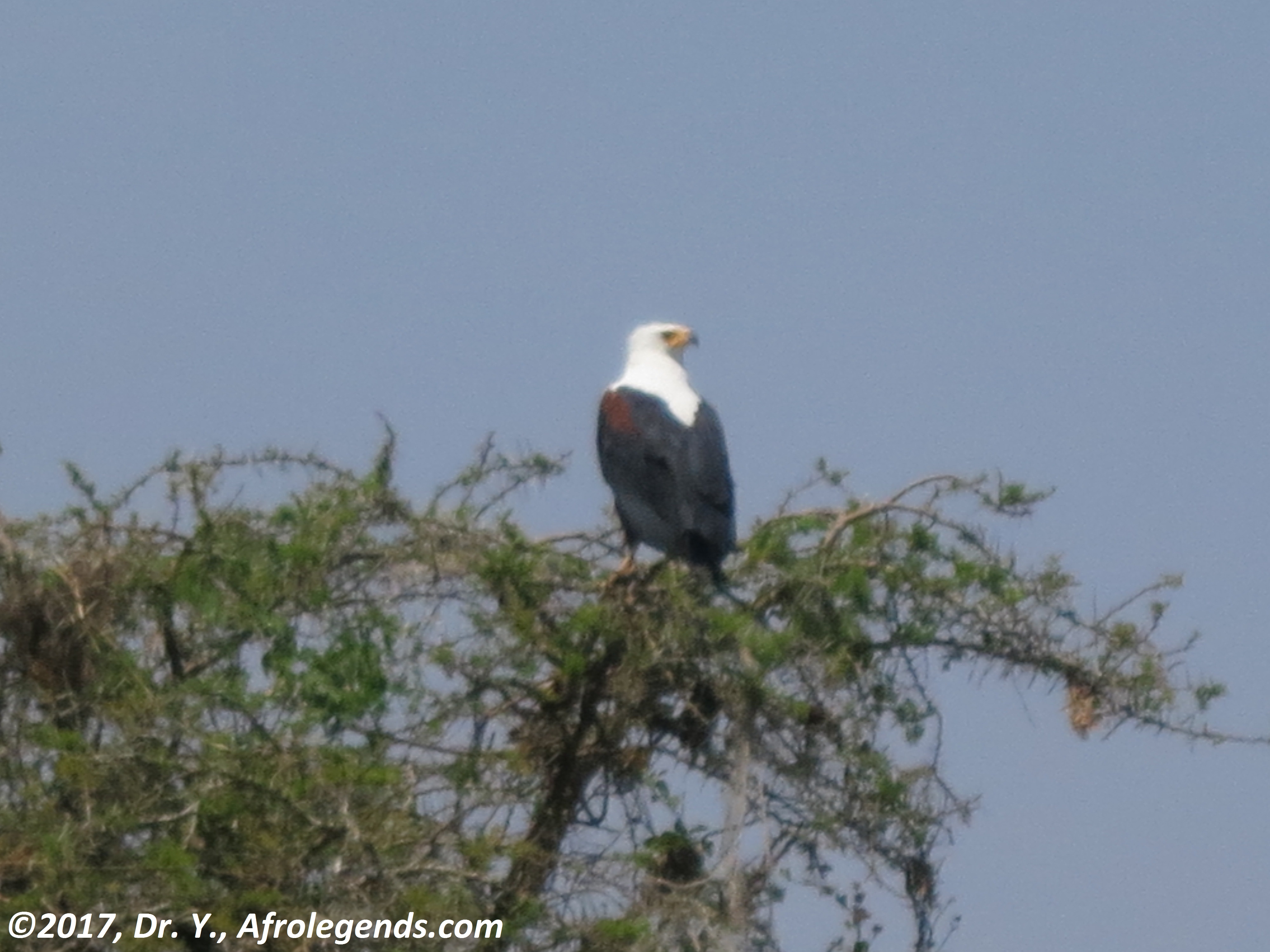 There are also roosters, called guinea fowl, and hens, geese, ducks of all kinds, both wild and domestic, partridges in such quantity that children catch them with a snare. We also see other birds like pheasants called “gallignoles”, pigeons, turtledoves, passerines called becfigues [ortolan] and which are innumerable, birds of prey like golden eagles, falcons, vultures, sparrowhawks and many others, which the inhabitants do not use for hunting.
Also seabirds, like those that the Portuguese call pelicans: they are white, large, swim underwater and have such a wide throat that they can swallow a whole fish; moreover, these birds have such a strong stomach and have such natural heat that they can digest whole fish; their skin is so warm that the inhabitants of the country use it as a means of warming up in case of a cold stomach; therefore it is esteemed.
There are also many white egrets and gray herons living in these marshes, called royal. There are other birds, which resemble cranes: about the size of storks, they are very beautiful to see with red beaks and feet, most of the feathers red and white, some dark gray. The locals call them flamingos by analogy. The flesh of these birds is eaten.
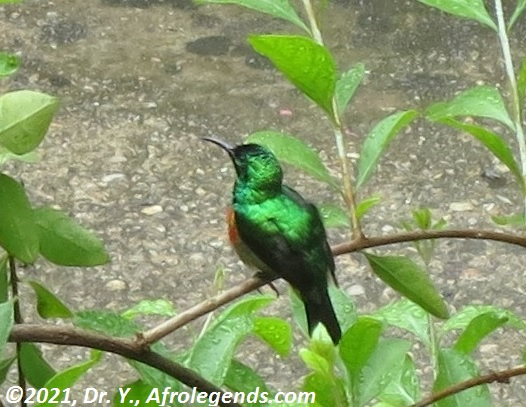
Various species of parrots are also found: some are large with gray plumage, very talkative, others are small, green and hardly speak. Let us also note small birds that are called singers, larger than canaries, with red beaks and plumage; others, green with black legs and beaks: the song of these is the sweetest of all, one would almost say that they speak while singing; still others, multicolored. All these birds sing diversely, so well that the lords of this country, since ancient times, have always kept them in cages and greatly appreciated their song.
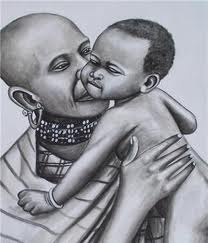
Lorsque vous bénéficiez des bénédictions de votre mère et de Dieu, peu importe qui s’oppose à vous (proverbe Yoruba – Nigéria).
When you stand with the blessings of your mother and God, it matters not who stands against you (Yoruba proverb – Nigeria).
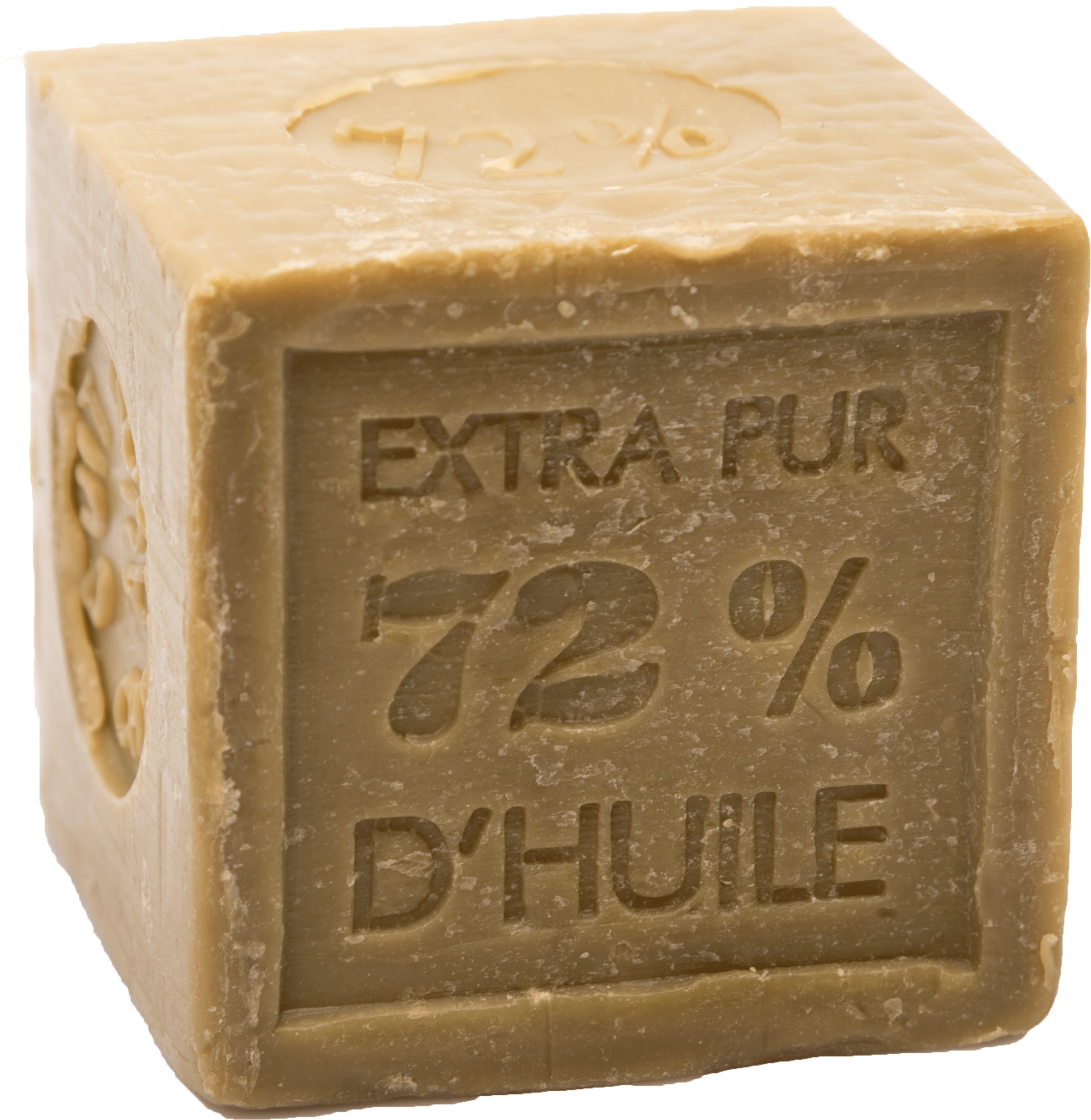
Yàgg du sabbu waaye dina fóot.
Le temps n’est pas le savon, mais il nettoie les vêtements (Proverbe Ouolof – Sénégal, Gambie). – Le temps guérit toutes les blessures.
Time isn’t soap, but it will clean clothes. (Wolof proverb – Senegal, Gambia). – Time heals all wounds.
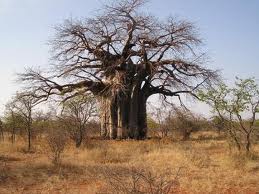
La sagesse est comme un baobab; aucune personne ne peut l’encercler. (Proverbe Ewe – Ghana, Togo).
Wisdom is like a baobab tree; no one individual can embrace it. (Ewe proverb – Ghana, Togo).
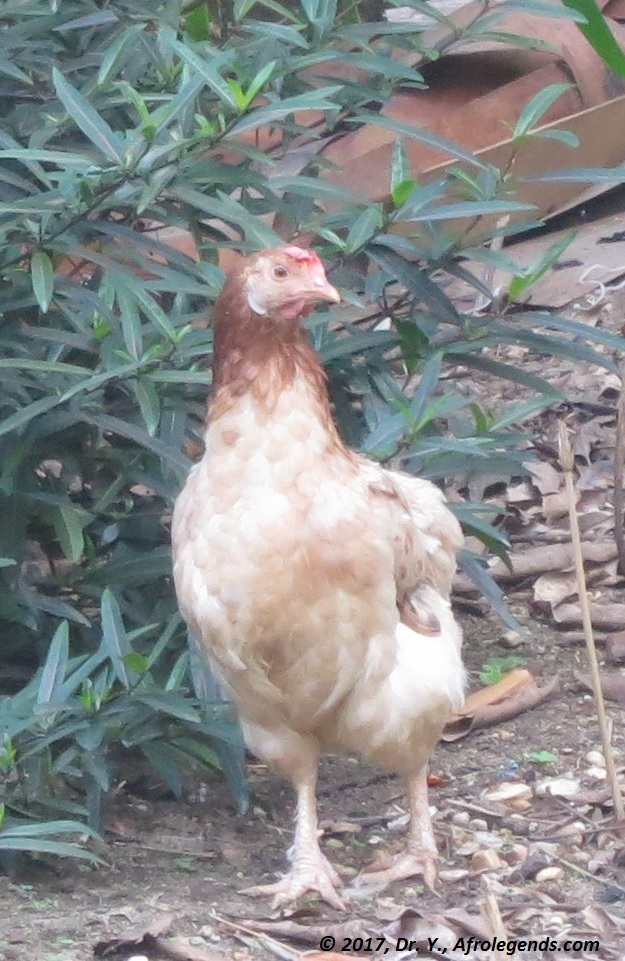
Poule et homme entrent par la même porte (Proverbe Douala – Cameroun).
Hen and man enter through the same door (Duala proverb – Cameroon).
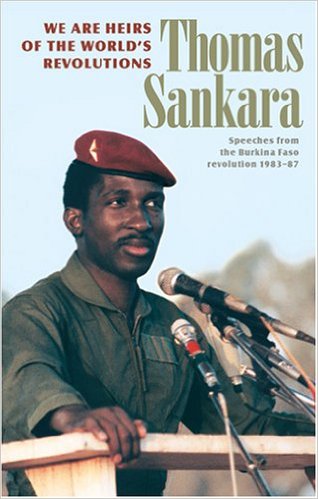
Today, we will end with the third point cited by President Thomas Sankara, last point for revolutionizing all sectors of Burkinabe society. Excerpts below are from “We are Heirs of the World’s Revolutions, Speeches from the Burkina Faso Revolution 1983-87” by Thomas Sankara, Pathfinder Press (2007) p. 50 – 53. Again, as you read, you can see that this is exactly what our leaders of the AES, and Ibrahim Traore of Burkina Faso in particular are applying. The main difference today is that the AES also faces terrorism and the repeated attacks of hordes fabricated by Western powers; so security is one of the major priorities.
=====
… The National Council of the Revolution is therefore aware that the construction of an independent, self-sufficient, and planned national economy requires the radical transformation of present society, a transformation that itself requires the following major reforms:
Reform of the structures of production and distribution in the modern sector
The agrarian reform will aim to:

All this is possible by giving real meaning to the slogan of food self-sufficiency, a slogan that now seems dated for having been proclaimed so often without conviction. First, this will be a bitter struggle against nature, which, by the way, is no more thankless for us than for other peoples who have conquered it magnificently on the agricultural level. … To the contrary, numerous small accomplishments in the agricultural system will allow us to transform our territory into one vast field, an endless series of farms.
Second, this will be a struggle against those who starve the people, the agricultural speculators and capitalists of all types. Finally, it will mean protecting our agriculture against domination by imperialism — with regard to its orientation, the plunder of our resources, and unfair competition from imports against our local products, imports whose only advantage is their packaging aimed at bourgeois afflicted with snobbishness. As for the peasants, sufficiently high prices and industrial food-processing facilities will guarantee them markets for their produce in any season.

… The reform should result in a less costly, more effective, and more flexible administration.
The educational reform aims to promote a new orientation for education and culture. It should result in transforming the schools into instruments at the service of the revolution. Graduates of the system should not serve their own interests and the exploiting classes, but rather the popular masses. The revolutionary education that will be taught in the new schools must imbue everyone with a [Burkinabe] ideology, a [Burkinabe] personality that rids the individual of blind mimicry. …
Culture in a democratic and popular society, should have a three-fold character: national, revolutionary, and popular. Everything that is antinational, antirevolutionary, and antipopular must be banished. To the contrary, our culture extols dignity, courage, nationalism, and the great human virtues.
… Our artists … should seize the opportunity before them to raise our culture to a world level. … Let musicians sing not only of our people’s glorious past, but also of their radiant and promising future.
The revolution expects our artists to be able to describe reality, portray it in living images, and express them in melodious tunes while showing our people the true way forward to a better future. It expects them to place their creative genius at the service of a national, revolutionary, and popular [Burkinabe] culture.
…
I love what Thomas Sankara, former president of Burkina Faso, said about women. I had previously published it here, Thomas Sankara in His Words. Did you know that Sankara had placed women at the center of his politics? He appointed females to high governmental positions, encouraged them to work, recruited them into the military, and granted pregnancy leave during education. During his time, he outlawed female genital mutilation, forced marriages and polygamy in support of Women’s rights. Excerpts below are from “We are Heirs of the World’s Revolutions, Speeches from the Burkina Faso Revolution 1983-87” by Thomas Sankara, Pathfinder Press (2007) p. 49 – 50.
=====
The weight of age-old traditions in our society has relegated women to the rank of beasts of burden. Women suffer doubly from all the scourges of neocolonial society. First, they experience the same suffering as men. Second, they are subjected to additional suffering by men.

Our revolution is in the interests of all the oppressed and all those who are exploited in today’s society. It is therefore in the interests of women, since the basis of their domination by men lies in the system through which society’s political and economic life is organized. By changing the social order that oppresses women, the revolution creates the conditions for their genuine emancipation.
The women and men of our society are all victims of imperialist oppression and domination. … they wage the same battle. The revolution and women’s liberation go together. We do not talk of women’s emancipation as an act of charity or out of a surge of human compassion. It is a basic necessity for the revolution to triumph. Women hold up the other half of the sky.
… Until now, women have been excluded from the realm of decision making. The revolution, by entrusting women with responsibilities, is creating the conditions for unleashing women’s fighting initiative. … They will be involved in all the battles we will have to wage against the various shackles of neocolonial society in order to build a new society. … The final goal of this great undertaking is to build a free and prosperous society in which women will be equal to men in all spheres.
However, we must have a correct understanding of the question of women’s emancipation. It is not a mechanical equality between men and women, acquiring habits recognized as male – drinking, smoking, and wearing pants. That’s not the emancipation of women. Nor will acquiring diplomas make women equal to men or more emancipated. A diploma is not a free pass to emancipation.
The genuine emancipation of women is one that entrusts responsibilities to women, that involves them in productive activity and in the different fights the people face. The genuine emancipation of women is one that compels men to give their respect and consideration. Emancipation, like freedom, is not granted, it is conquered. It is for women themselves to put forward their demands and mobilize to win them.
…


 African Heritage