Mali uses AI to Teach School Children in Bambara

Artificial Intelligence (Source: IBTimes.co.uk)

As AI tools become ubiquitous, many African countries are taking advantage to improve their education, economy, and much more. One such country is Mali where AI tools have been used to teach school children in the local languages. In parenthesis, this is happening while some African countries like Nigeria are moving away from teaching local languages in the curriculum; this is quite sad. Here, we are raising our hats to educators in Mali who are using AI to teach kids how to learn and write in local languages that they already speak at home with friends and family. The Education ministry is using the services of RobotsMali which has produced more than a hundred stories in Bambara, the most widely spoken local language.

Excerpts below are from Africanews. Enjoy!

=====
Flag of Mali
Flag of Mali

Since Mali adopted a new constitution in 2023, the country has 13 official languages. Although French is no longer part of that list, the language of the former coloniser is still present everywhere, including in classrooms.

Malian authorities hope artificial intelligence can change that by helping students learn to read and write in local languages they already speak with friends and family.

To achieve this goal, the Education ministry has called on RobotsMali. This AI company has produced more than a hundred stories in Bambara, the most widely spoken language in the country, for students to read in schools.

It helps me speak better with my friends. All of this is good,” said 13-year-old pupil Clarisse Yasségué Togo. At school, we only speak French.”

AI programmes like ChatGPT and Leonardo are used to write, translate and illustrate the stories.

Since the stories are also illustrated, it teaches [students] to make the connections between words and their meaning very quickly,” said RobotsMali Mamadou Dembele.

The organisation hopes to provide a solution to the lack of books in Malian languages.

Bambara is our language. We should prioritise it,” said 17-year-old student Fatoumata Sacko.

The Importance of the Timbuktu’s Manuscripts and their Return

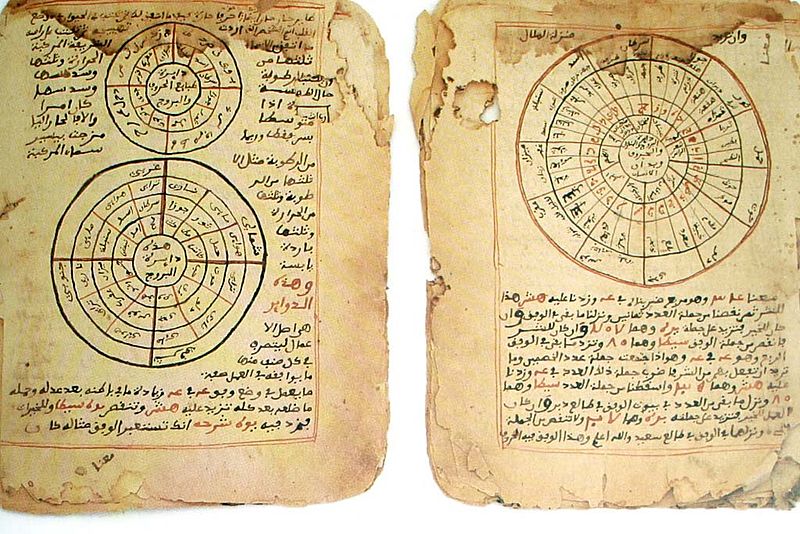
Manuscripts a Tombouctou (Mali) montrant de l'astronomie et mathematique
Manuscripts a Tombouctou (Mali) montrant de l’astronomie et mathematique

The Timbuktu’s Manuscripts are Returning Home to their rightful owners, after over 10 years away. It is so beautiful that the families who own these multi-centennial parts of African history get to have them back as it is not only part of their heritage, but ours also, and we are thankful for them to have protected throughout the centuries.

At the Ahmed Baba Institute in Bamako, people have been actively working on digitalizing all the manuscripts for humanity’s sake. These challenge the eurocentric views that “Africans have not entered enough in history” as the former French president Sarkozy said, even though many scholars from around the world used to travel to Timbuktu to find the best teachers. Through these manuscripts, we discover brilliant scholars, doctors, lawmakers, astronomers, mathematicians, geologists, and much more. After all, Timbuktu, was one of the world’s first and oldest university.

Excerpts below are from Africanews, and check out the Google Arts & Culture (Timbuktu Manuscripts now Available OnlineThe Lost Libraries of Timbuktu).

=====

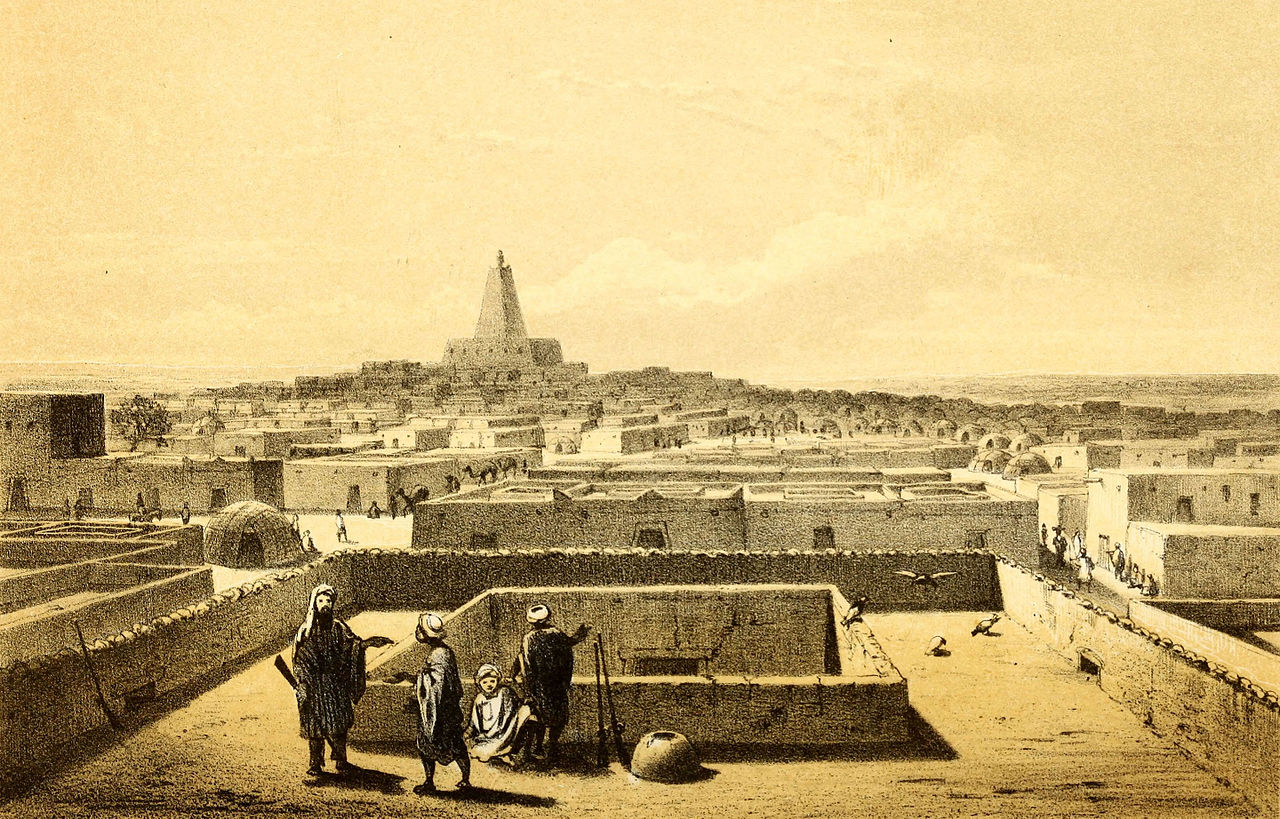
Timbuktu from a terrace by Heinrich Barth 1858

Among the manuscripts are medical texts, legal rulings, letters, astronomical notes and chronicles of West African empires.

In some pages, scholars debate whether smoking tobacco was moral or forbidden.

In others, officials urge reducing dowries so poorer men could marry.

Marginal notes record earthquakes and local events long forgotten elsewhere.

Sane Chirfi Alpha is the founding member of SAVAMA DCI, which is a local nonprofit organisation dedicated to the safeguarding, preservation, and promotion of the ancient Timbuktu manuscripts. He says the collection reveals a depth of scholarship that challenges assumptions about the region’s past.

According to old documents, there were doctors here in Timbuktu who performed surgery to treat cataracts. The same manuscript also says that a doctor from Timbuktu saved the French throne. The crown prince was sick, and French doctors could not cure him. It was the doctor from Timbuktu who cured him.”

…  One important tradition still documented in many manuscripts is the chain of teaching, where scholars recorded who taught whom through generations.

Dr Mohamed Diagayaté, general director of the Ahmed Baba Institute says: “When a student finishes studying with a scholar, that scholar gives him a certificate saying he has taught him a subject, which the student has mastered. The certificate also says that the student learned it from a certain scholar, and that this scholar learned it from another scholar, going right back to the person who wrote the original document.

VivaTech 2025, AI and Africa

Artificial Intelligence (Source: IBTimes.co.uk)

Over the past few months, we have witnessed AI growth all around, whether with the arrival of DeepSeek or the unveiling of Grok 4. The progress is huge, and has taken the world by storm. It is only befitting that we talk about a few things happening or being highlighted when it comes to AI in Africa.

The VivaTech 2025 which took place in Paris last month gave a stage to some 45 African startups. Excerpts below are from Africanews. Enjoy!

=====

The 9th edition of VivaTech, Europe’s premier tech and innovation event, spotlighted Africa’s growing influence in the global tech ecosystem. Held in Paris, this year’s event highlighted artificial intelligence (AI) as the dominant trend, offering a unique opportunity for African nations to leapfrog into the digital future.

François Bitouzet, VivaTech’s Managing Director, emphasized the potential for a level playing field in this new technological era. “If you didn’t have the cloud like France, blockchain like Africa, or massive data storage, it doesn’t matter. Everyone can start from scratch. And he said that with Africa’s digital talent and ability to surprise the world with innovation, AI is a powerful new frontier for them,” he said.

Among the most prominent African delegations at VivaTech was Côte d’Ivoire, whose tech scene is rapidly becoming a continental powerhouse. Startups from the West African nation are leading the charge, especially in the fields of culture and digital innovation.

Philippe Yacé, founder and CEO of Sellarts, showcased his platform that bridges African artists with global buyers. “We’re creating a marketplace where artists can gain visibility and connect with international collectors. Digital tools are allowing African creativity to shine worldwide,” he said.

Senegal also made a strong showing, with 15 startups participating in the search for strategic investment. Aïssatou Mbodji, Minister Delegate for Rapid Entrepreneurship of Women and Youth in Senegal, noted the mutual interest: “We’re looking for investors for our startups—but at the same time, investors are actively seeking out high-potential ventures in Africa’s emerging sectors.”

With 45 African startups participating in the competition, the message was clear: Africa is not just catching up but helping shape the future of global tech.

Who / What did We Celebrate in Africa in 2024 ?

There was a lot to celebrate in Africa this year. Below are just a few:

  1. Alliance des Etats du Sahel (AES) (Source: Alliance-sahel.org)
    In January, Mali, Burkina Faso, and Niger left the ECOWAS creating a major seismic shift in the organization. Mali, Burkina Faso, and Niger all leave the ECOWAS. This came as no surprise given that the coup to topple puppet governments in their respective countries, the ECOWAS had suffocated these countries by suspending all three countries and imposing heavy sanctions on Mali and Niger that exacerbated the populations’ sentiments that it is a puppet organization serving foreign interests. Niger even tried to amend the situations by inviting ECOWAS representatives to the country, but only the member from Togo showed up. Why should anybody remain in an organization that punishes its member populations? 
  2. In January, Ghanaian artifacts were returned home for the first time in 150 years, on a “loan”. Ghana Artefacts “Return” Home 150 years later … on Loan. It is a disappointment that African governments can only get “loans” for what is dutifully theirs from those institutions which have amassed millions over the year from the exhibition of stolen African artefacts.
  3. The Elephants are winners of the Africa Cup of Nations 2023 (Source: CAFonline.com)
    In February, the Elephants of Cote d’Ivoire gave us a thrill from being redeemed in the knockout stage with 2 defeats (among which a 4-0 loss against Equatorial Guinea) that left them open to elimination, and a redemption that came from being one of the four best 3rd-placed team, a coach sacking, and a coach change, to lift the trophy of the Africa Cup of Nations. It was a real “Coup du Marteau” (Tam Sir, we are talking about your special song!) The Ivorians added to their previous Nations Cup wins of 1992 and 2015 (Côte d’Ivoire wins the 2015 Africa Cup of Nations) and became the first tournament hosts to triumph since Egypt lifted the trophy in 2006. CAN 2023: the Elephants of Côte d’Ivoire are the New Champions
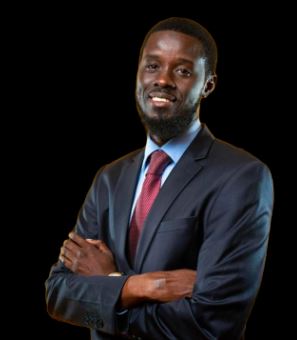
  4. Bassirou Diomaye Faye (Source: Seneweb.net)
    In March, Bassirou Diomaye Faye was elected president of Senegal, making him the youngest African president at 44. This was a joyous moment for the Senegalese people who stood to have their democratic system and constitution upheld. Faye is very unconventional, as the youngest with no political background (he was previously a tax officer), he is also the first Senegalese president to openly have two wives. With his friend and Prime Minister Ousmane Sonko, we hope for better governance for Senegal. Senegal Presidential Elections: Bassirou Diomaye Faye is set to be the next president. Either way, the Senegalese have demonstrated once again, that although their democracy is young, it is not to be messed with!
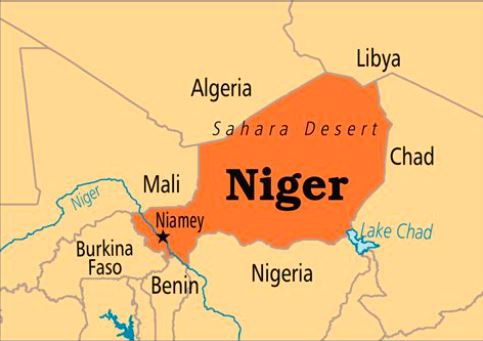
  5. Map of Niger
    In mid-March, Niger suspended military “cooperation” with the USA, with immediate effect. Operating from years of condescending treatments of those deemed inferior, particularly of Africans, the Americans had decided to dictate their will, like the French before, to Niger people and deny their sovereign rights to choose their own partnerships in their fight against terrorism. The spokesman of Niger’s government, Colonel Amadou Abdramane, exposed the fact that the military “cooperation” with the US was not even a real one, i.e. the US had installed their largest drone base in Africa, and possibly in the world, in Niger via a verbal agreement only, and the Niger people had to pay for the American base in their country, while the Americans never raised a hand to help Niger fight against terrorist attacks that were maiming their citizens [Bye Bye to French Troops in NigerFrance set to Withdraw Troops and Ambassador from Niger]. Niger suspends military “cooperation” with the US, effective immediately.
  6. Alliance des Etats du Sahel (source: linfodusahel.com)
    Mali, Niger, and Burkina Faso’s leaders met on July 6, 2024 in Niamey, Niger, as part of the first summit of the Alliance des Etats du Sahel (AES – Alliance of the Sahel States). During the summit, the three leaders signed a confederation treaty aimed at strengthening the links between the three nations in terms of defence, and other aspects such as the economy, infrastructures, and more. They reinforced their mutual defence pact.
  7. Right before the Paris Olympics, brother Biniam Girmay of Eritrea made history by becoming the first African to win a stage at the Tour de France, and two more stage victories which helped him capture the green jersey for the highest points scorer – a first for anyone from the continent.
  8. Faith Kipyegon winning historic 3rd gold medal at the Paris 2024 Olympics (source: Kelly Ayodi for Olympics Kenya – EastleighVoice.co.ke)
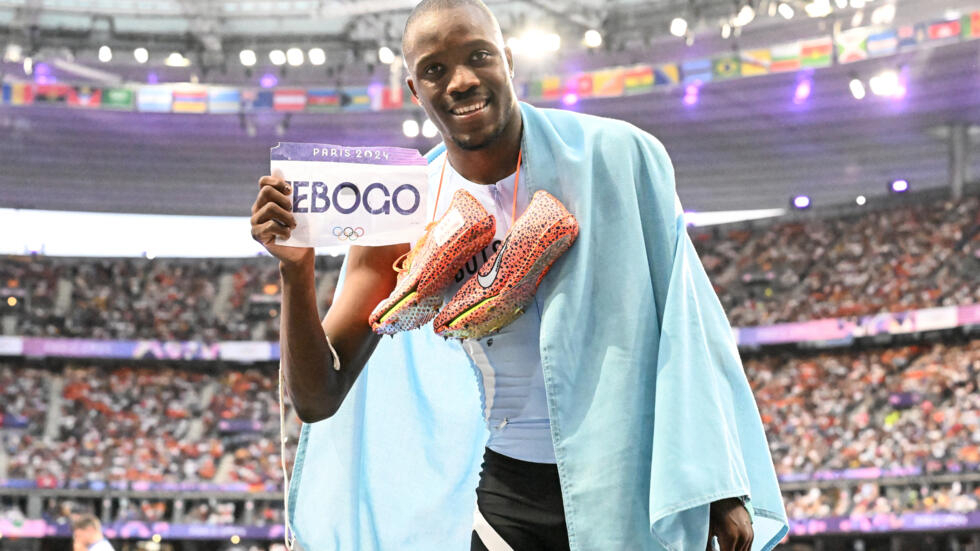
    The Paris 2024 Olympics ended with a strong show from African athletes who shined in various  disciplines, and represented many countries including outside of Africa. They made us proud and served us joy, endurance, and passion. We will list just a few. We had a lot of firsts, like our Kenyan sister Faith Kipyegon who won her 3rd successive Olympic gold in the women’s 1500 m, making her the first African athlete to ever win gold in the same event 3 times in a row. Our brother Letsile Tebogo of Botswana earned the top most place in the Men’s 200 m thus giving Botswana and Africa as a whole its first ever olympic gold medal in the 200 m; Tebogo also led the Botswana’s team to a silver medal in the
    Letsile Tebogo after winning gold in 200m (Source: Onuaonline)
    Men’s 4x400m relay, again a first for any African country ever. Ugandan brother Joshua Cheptegei delivered on his promise for his last Olympics to be memorable by winning gold in the Men’s 10,000 m, and landing Uganda its first gold at the games. Tatjana Smith of South Africa made her country proud by winning gold and silver medals in the Women’s 200m and 100m breaststroke events. Akani Simbine and South African track team delivered us silver in the Men’s 4 x 100 m relay, again a first for South Africa, and for Africa as a whole.  Kaylia Nemour gave Algeria and Africa its very first victory ever in gymnastics with a gold in the Women’s Uneven bars in artistic gymnastics. Tamirat Tola, who was just added to the Ethiopian Olympics’s team 2 weeks prior, took home the gold medal in the Men’s Marathon. Ahmed Elgendy won the first gold medal for Egypt at any Olympics, becoming the first African and person to win in the new discipline of Men’s Modern Pentathlon. Cabo Verde got its very first medal at the Olympic games through David de Pina who won bronze in the Men’s 51 kg Boxing. Zambian Muzala Samukonga won the bronze medal in the Men’s 400m, giving his country its very first Olympic medal.
  9. Aliko Dangote, Africa’s richest man, has built one of the world’s largest oil refineries in Nigeria, Africa. The refinery opened its doors last year, and in May shipped out its first boat of refined jet fuel to the Netherlands. Since then, the refinery has gotten into agreements with the Nigerian governments and neighboring ones as well.
  10. Paris Paralympics 2024 (Source: https://www.paralympic.org/paris-2024)
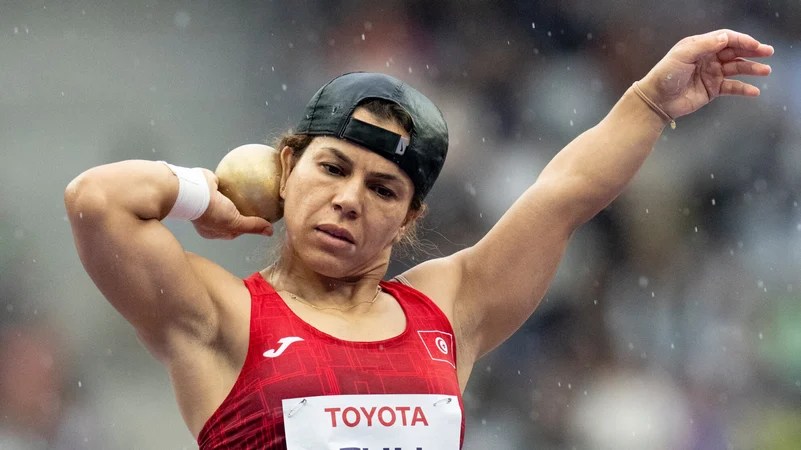
    Africa shone at the Paralympics, winning 64 medals, with Morocco getting the most medals with 15 medals, but Algeria topped the continent’s medal table thanks to its 6 gold medals vs. 3 gold for Morocco. Most medals were won in para-athletics and para-powerlifting disciplines. Veteran Raoua Tlili of Tunisia cemented her place as a legend in the F41 discus throw and shot put, winning 2 gold medals this year, giving her a total of 8 gold medals for her country, having competed in each Olympics since
    Raoua Tlili (Source: Outlook India)
    Beijing 2008. Nigeria’s Mariam Eniola Bolaji became the first African to win an Olympic or Paralympic medal in Badminton. Yovanni Philippe gave Mauritius its first medal ever by securing a bronze medal in the men’s T20 400m; while Annaba native, Brahim Guendouz won gold in para-canoeing’s KL3 class over 200m, giving Algeria its first ever medal in a discipline outside of para-athletics, para-judo, and para-powerlifting. 
  11. Gael Faye and his book Jacaranda
    African authors made great wins and firsts: they won the most important literary awards in French literature: the Goncourt prize, which was awarded to Kamel Daoud for his third novel titled «Houris», and the Renaudot prize awarded to Gaël Faye for «Jacaranda». Daoud’s novel is currently in a controversy. Africans win the Goncourt and Renaudot 2024 Literary Prizes.
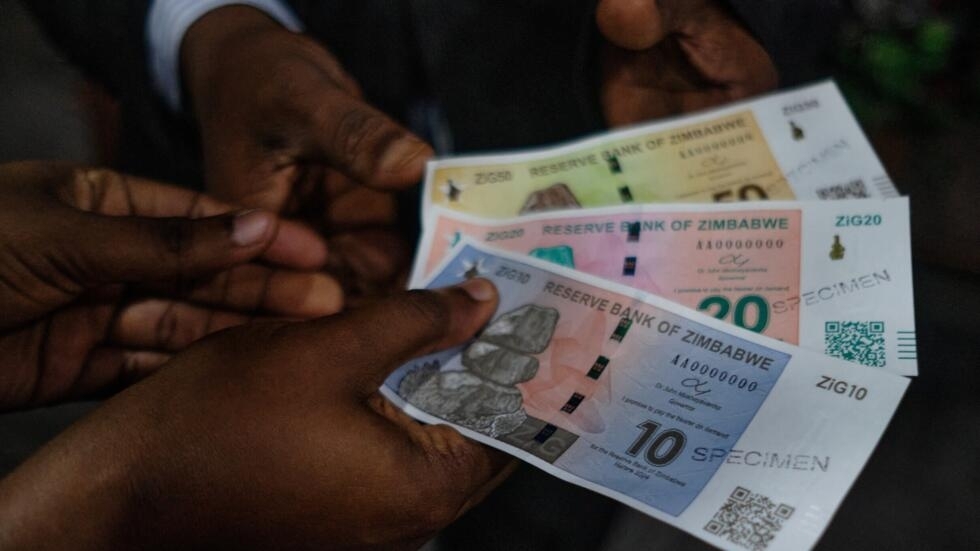
  12. Zimbabwe’s new currency, the ZiG (Source: France24)
    Niger took control of its uranium when Orano has been suspended by the Niger government, while Mali inaugurated the construction of a lithium extraction plant (recall that Zimbabwe also inaugurated a lithium processing plant last year), and is working towards nationalizing its gold. Resolute Mining, has agreed to pay Mali’s government $160 millions to settle a tax dispute (Mali wins $160m in Gold Mining Dispute).  Zimbabwe Gold-Backed Currency was introduced in April; the ZiG, which stands for Zimbabwe Gold, was created as an effort to try to alleviate inflation, and stabilize the economy; thus far, it has not been successful, but it is only the beginning.
  13. Andakia
    A Senegalese startup, Andakia, has just introduced the very first African AI: AWA.  AWA is a Wolof-speaking artificial intelligence system; it is the brainchild of Alioune Badara Mbengue.  In an interview to TRT Afrika, Mbengue said, “AWA is the first AI that understands and speaks perfect Wolof. Our vision is to extend AWA to other African languages, enabling Africa to become a leader in digital innovation and ensure technological sovereignty tailored to its needs.” Users need to simply engage in a spoken exchange with the AI interface in Wolof, seeking general information or asking it to perform tasks such as ordering a taxi, ordering a meal, or carrying out financial and other transactions. This is revolutionary as it addresses the needs of the population. We applaud the amazing work of our brother and his team, and truly the sky is the limit. 

Senegal Launches its First Satellite Marking a Major Technological Milestone

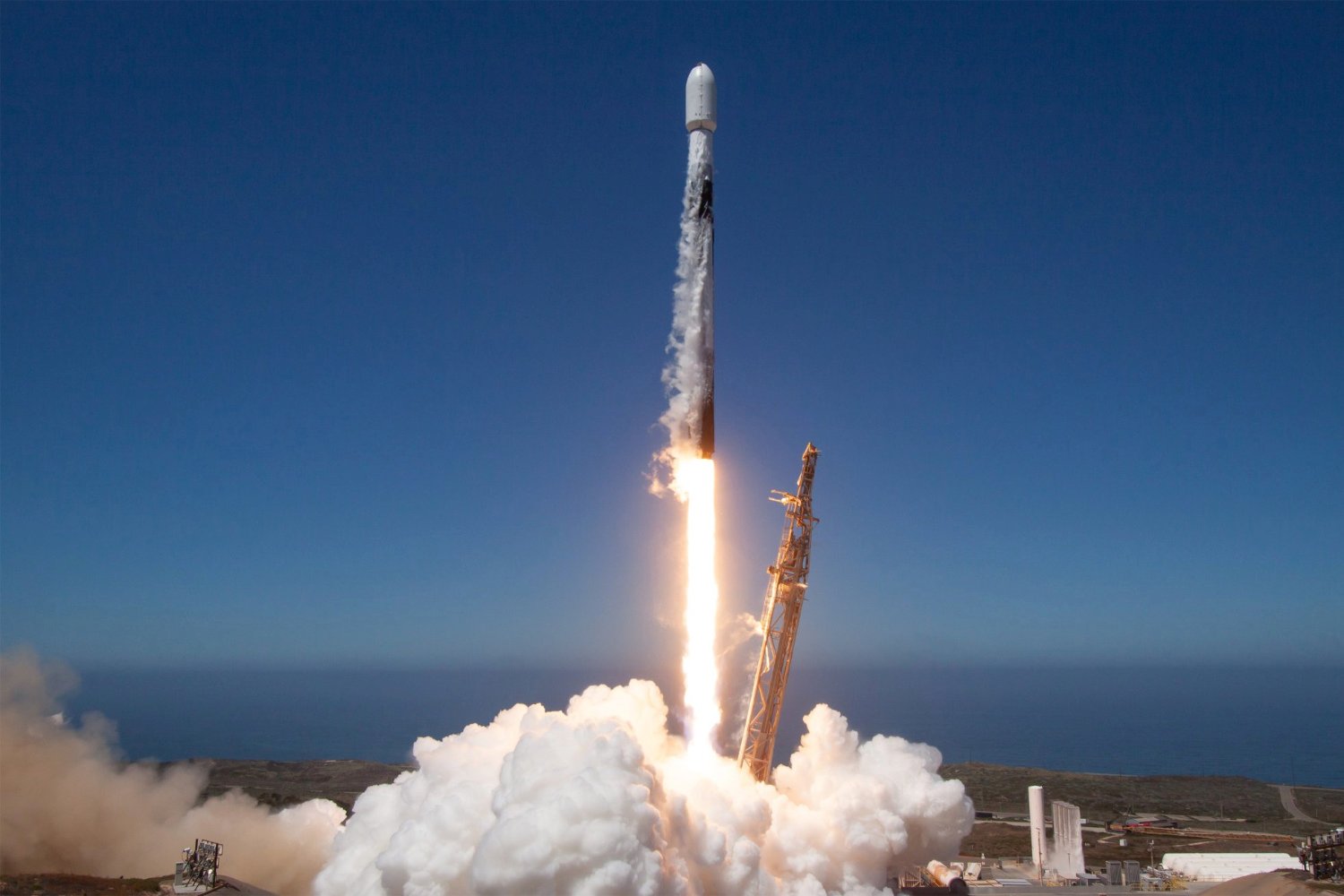
The Take-off of Transporter-11, on Friday August 16, on which was the first Senegalese satellite (Source: © SpaceX)

This past weekend, Senegal marked a milestone in its history by launching its very first satellite from the SpaceX launchpad in California in the USA. By this action, it has become one of 12 African nations to launch satellites to space.

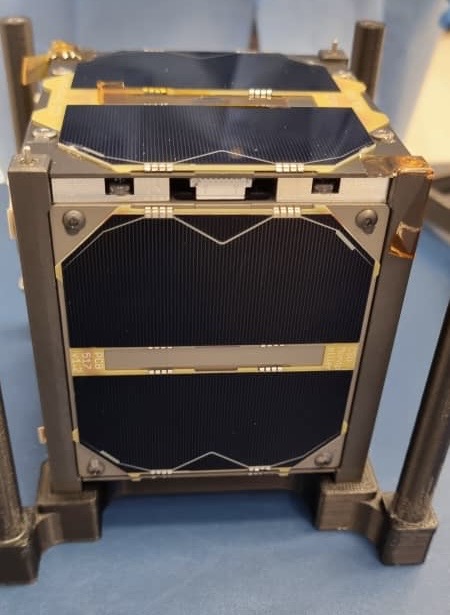
The satellite, GAINDESAT-1A was built by Senegalese engineers in collaboration with the French Space Centre of Montpellier University (Centre Spatiale Universitaire de Montpellier (CSUM)). It is a nanosatellite, launched into orbit with 115 others from different countries. This satellite will focus on collecting data for multiple state agencies including the Directorate for Water Resources Management and Planning (DGPRE) and the National Civil Aviation and Meteorology Agency.

GAINDESAT-1A (Source: Space in Africa)

The country’s president Bassirou Diomaye Faye said the move marks a major step towards Senegal’s “technological sovereignty,” … he said on X, “I would like to express my pride and gratitude to all those who made this project possible.” Maram Kaïré, director of Senegal’s space agency, described the launch as “an important step and a historic day in our country’s progress and determination to become a space-faring nation”.

For more, please check out phys.org and Space in Africa.

Two Cameroonian Women win the L’Oreal-UNESCO Award for Women in Science

Winners of the L’Oréal-UNESCO Young Talent Prize for Women in Science Hadidjatou Daïrou (L) and Sabine Adeline Fanta Yadang (R), pose for a photograph at the Institute of Medical Research and Medicinal Plant Studies in Yaounde on November 23, 2023 (Source: AFP / VOA)

Two Cameroonian women, Sabine Adeline Fanta Yadang, a doctor of neuroscience, and Hadidjatou Daïrou, a doctor of cellular physiology, have won the prestigious L’Oréal-Unesco Young Talent Award for Women in Science for their work on the power of medicinal plants. They were chosen among 30 scientists in sub-Saharan Africa to win the award on November 8 at a ceremony held in Botswana.

Their work focuses on the use of traditional medicinal plants in Cameroon for treating cardiovascular disease and alzheimer. Daïrou’s work centers around the use of kola nut (Garcinia Kola) to improve cardiovascular health, while Yadang’s focuses on tigernut milk which is extracted from a plant with centuries-old medicinal virtues to slow alzheimer. Both scientists work together in the laboratory of the Institute for Medical Research and the Study of Medicinal Plants (IMPM) in Yaoundé, the capital. They also hail from the rural north of Cameroon where education for women, and particularly a career in science is rare.

Excerpts below are from VOA.

=====

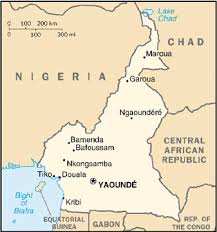
Map of Cameroon, with the capital Yaoundé

In Cameroon’s rural north, very few girls go on to enjoy careers in science. But Sabine Adeline Fanta Yadang, a neuroscience doctor, and Hadidjatou Dairou, PhD student of cellular physiology, have smashed through the glass ceiling.

They have been recognized for the quality of their research, along with 28 others from sub-Saharan Africa, by the L’Oreal-UNESCO for Women in Science Young Talents program.

UNESCO says the program supports “young women researchers around the world to pursue scientific careers at home or abroad.”

Both women were distinguished for their research into the potential of Cameroon’s traditional herbal medicines in the treatment of heart disease and Alzheimer’s.

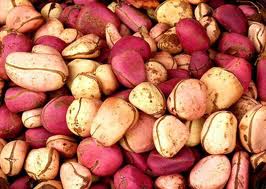
Kola nut
Kola nut

They work in a laboratory at Yaounde’s Institute for Medical Research and Medicinal Plant Studies, IMPM.

… Dairou’s interest in herbal medicine goes back to her years as a pharmacology student at the public University of Ngaoundere, in the country’s north. “I’ve seen what a plant extract does to the human body and how that can help people I know,” she says. The UNESCO program picked out her research into the “potential of the indigenous Garcinia Kola plant for treatment of cardiovascular disease.”
Fanta Yadang … likes to be known as a Moundang, a community from Cameroon’s Far North region, where her grand-parents took herbal cures. I wanted to become a doctor, but I didn’t get good enough marks. I wanted to help my fellow people so I became interested in medicinal plants,” she says.

For Dairou, the bark of the bitter Garcinia Kola — a grain that looks like a nut eaten across Africa to ease all kinds of problems — may improve cardiovascular health.

In particular atherosclerosis, one of the major causes of heart attacks,” she explained.

.

Ethiopian Scientist Gebisa Ejeta receives US National Medal of Science

Flag of Ethiopia

Over the past few years, especially since the war in Ukraine, we have seen a lot of countries go back to ancestral grains native to their lands and alternatives to wheat. In Africa, it has been sorghum, millet, fonio, sweet potatoes, cassava, and so much more: How Africa Copes with the War in Ukraine : Alternatives to Wheat and How Africa Copes with The War in Ukraine: Alternatives to Wheat – Ancient Grains? Sorghum is one of those plants, and this week Ethiopian-born scientist Gebisa Ejeta has been honored with the National Medal of Science, the highest state honor attainable by scientists in the United States. His work focuses on sorghum, and he has developed a sorghum hybrid that is resistant to drought and parasites. We applaud Gebisa Ejeta for his contributions. Excerpts below are from the BBC. Please also read from the announcement from Purdue University where he is a faculty.

=====

Ethiopian-born scientist Gebisa Ejeta has received the National Medal of Science, the highest state honour attainable by scientists in the United States.

US President Joe Biden said he awarded Mr Ejeta the medal for his “outstanding contributions to the science of plant genetics“.

Mr Ejeta is acclaimed as one of the world’s leading plant geneticists. He specialises in the study of sorghum, a popular source of food in Africa.

In 2009, Mr Ejeta won the prestigious World Food Prize for developing a sorghum hybrid that is resistant to both drought and the parasitic weed Striga, which commonly invades farms in Africa.

Sorghum is the fifth-most important cereal crop globally – after maize, wheat, rice and barley. It is also the second-most important cereal in Africa and has been embraced as a staple by several countries on the continent, particularly those prone to drought.

Mr Ejeta, who holds American nationality, was one of nine leading US scientists awarded at the White House by President Biden on Tuesday.

By developing sorghum strains that withstand droughts and parasites, he has improved food security for millions,” President Biden said at the award ceremony.

His advocacy for science, policy, and institutions as key to economic development has lifted the fortunes of farmers and strengthened the souls of nations,” he added.

Ugandan Engineer takes Africa’s Top Innovation Award for His Safety Invention

Flag of Uganda

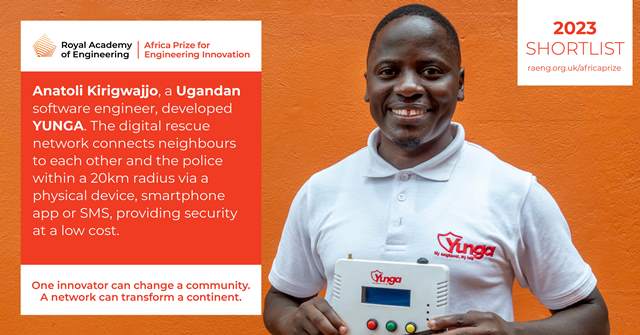
In a modern world where drums are no longer used to alert communities (this will be a story for another day), it is imperative to find a solution that will be used to alert all neighbors within a community of some impending issue. Anatoli Kirigwajjo from Uganda has thought of just such an innovation which is based on the ancestral drum tradition.  Kirigwajjo is the founder and CEO of Yunga, a local digital security network that enhances neighbor-to-neighbor safety. He was recently awarded “The Africa Prize for Engineering Innovation” dedicated to developing African innovators, an award, founded by the Royal Academy of Engineering in the UK.

Anatoli Kirigwajjo (Source: 256businessnews.com)

His innovation is based on the “10,000 household model” – a traditional practice where people use drums to alert their community to an emergency. Yunga works by connecting neighbors to one another and to police within a 20 km-radius – through a physical device, smartphone app or SMS service, providing security at a low cost. Picture this, thieves have broken into a house in a neighborhood, the app will alert neighbors of the issue, and they could thus come to their neighbors’ help; or imagine there are some “coupeurs de route” or armed bandits who have blocked the highway and are ransacking travelers at a particular checkpoint, Yunga will alert passengers and the local police of such events, thus enabling drivers to divert to other roadways (not that many exists in rural areas, though). We know how police work is slow in our countries, so enabling neighbors to respond as in the olden days is a true asset to the communities who sometimes feel defenseless in view of ineffective and often late police interventions.

Kirigwajjo said, “I developed Yunga after losing $1,300 worth of assets in a break-in, with little chance of the thieves being caught. We hope that with our household networks, communities will become harder targets for criminals. This will ensure safety, which in turn will create the space for economic activities to thrive.”

So far, Yunga has prevented over 180 cases of community crime and they have plans to expand to additional African markets like Ghana, Kenya and Nigeria. Yunga is a testimony of innovation made to solve local problems. Congratulations to Anatoli Kirigwajjo!

It is good to note that Anatoli Kirigwajjo jointly won the award with South African biomedical engineer Edmund Wessels for his battery-powered portable handheld device which allows gynecologists to diagnose and treat a woman’s uterus without anesthetics or expensive equipment in remote areas. To learn more, check out The Uganda Monitor.

Africa’s Space Industry is Booming

Flag of Kenya

Several African nations are launching satellites. Just last month, Kenya launched its first operational satellite to space onboard a Space X rocket, developed by nine Kenyan engineers, with the goal of collecting agricultural and environmental data, including on floods, drought and wildfires, that authorities plan to use for disaster management and to combat food insecurity.

Flag of Djibouti

At the beginning of the year, Djibouti announced the construction of the first African spaceport. Djibouti’s President Ismail Omar Guelleh signed a technological cooperation agreement with the Chinese company Hong Kong Aerospace Technology to build a $1bn satellite and rocket launch site. Given Djibouti’s location near the equator, it is an attractive destination for the satellite launching while taking advantage of the Earth’s rotational speed. As Temidayo Oniosun, managing director at the consultancy Space In Africa, says, “none of the 54 satellites launched by African countries were launched from Africa,” …“Hopefully, this move will enable the launch of the first Africa-made satellite from African soil. This project, if successful, will also positively affect the industry across several countries and segments, lead to the establishment of new enterprises and new spinoffs, and would ultimately play a vital role in implementing a continentally driven space program.”

Flag of Angola
Flag of Angola

In January, Angolan President João Lourenço inaugurated the country’s first satellite control center. Its main task is to monitor the activity of the satellite “ANGOSAT 2“, launched in October with the help of Russia. The inauguration took place at Funda area within Luanda, the capital city of Angola and fully equipped with technical and technological means.

The same month, the African Union inaugurated the African Space Agency based in Cairo to highlight the importance of the space industry among all the goals for development of the continent.

Flag of Uganda

Uganda and Zimbabwe launched their satellites last November. The satellites named PearlAfricaSat-1 for Uganda, and ZimSat-1 for Zimbabwe, were launched aboard a Northrop Grumman Cygnus resupply spacecraft, which lifted off from NASA’s Wallops Flight Facility in Virginia.

Africa has long been considered a latecomer in the space area. There are enormous needs across the continent, particularly in communication, education, agriculture, and science, thus reinforcing the need for Africa to quickly develop its space industry. The African space industry is expected to top $22 billion by 2026. In 2022, countries allocated a total of $539 million to their respective space programs.

Flag of Zimbabwe
Flag of Zimbabwe

The report says satellites could address agricultural challenges by measuring crop health, improve water management by monitoring drought, and track tree cover for more sustainable forest management. In a continent where less than a third of the population has access to broadband, more communication satellites could help people connect to the internet.

We applaud the amazing work, however how will the little countries in Africa benefit from these bursts from the neighboring countries? Is this a joint effort or just individual countries? We, as Africans, should unite! The enemies are too numerous for one to do it by itself. Will this not bankrupt some, and lead the projects to fail? All this brings to mind all the efforts Kadhafi had put in place to have a continental spaceport, space program and satellites to benefit the entire continent. Africa is ready: united we stand, divided we fall, and we need to unite for our efforts to have real impact the way Kwame Nkrumah and Muammar Gaddafi (Kadhafi) envisioned. 

.

Use of Old Laptop Batteries to Power Bikes?

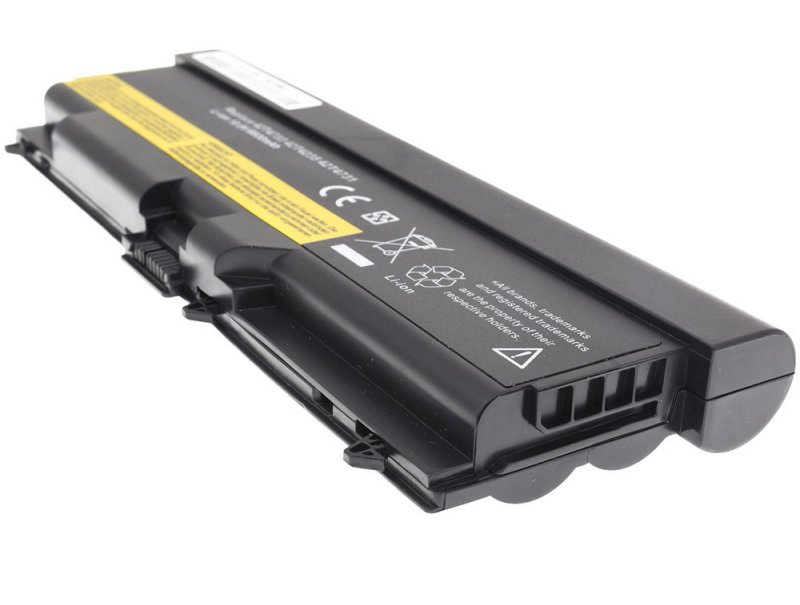
Laptop battery (Source: Greencell.global)

Have you noticed how nothing lasts anymore? The quality of things has gone down, and the entire society seems to be on programmed obsolescence: even the quality of the roads, furniture, clothing, electronics, etc… everything is focused on profit, profit, profit, and very little on durability, or rather durability for just a few months, enough to buy the next product. We will talk about this programmed obsolescence another day. However, a Kenyan man has found use for old laptop batteries to power bikes. As we are pushed towards electric vehicles, his invention could enable a new way of thinking, focused on recycling and re-using what is readily available, as opposed to creating new waste. This article is not an endorsement of electric bikes, but rather a celebration of ingenuity and new ways of (re)using old things to make new ones. Excerpts below are from AfricaNews.

====

Paul Waweru is going shopping. He’s on the hunt for old laptop batteries. They cost him just KSH 50 ($0.50) per piece, but this Kenyan high school physics teacher has found an innovative use for the waste product.

They will power bikes. After he collects the items from dealers in Nairobi, he takes the haul back to his workshop. Here, he sorts them, dividing the working cells from those which are not working.

Waweru then assembles them into a battery that can be used to power electric motorbikes. He was inspired to come up with this innovation after running into trouble with a bike he’d bought.

… He’s founded a company called Ecomobilus to supply his laptop-battery powered bikes. He collects frames from old motorbikes, removes the engines and replaces them with a battery and a motor to propel the bike. They run on a 60 V direct current. The batteries take hours to charge but can take 45 minutes if on a fast charger. A fully charged battery can travel a distance of up to 100 kilometres. He says his invention compares very well to traditional motorbikes.

Ecomobilus bikes are more advantageous compared to other gasoline powered bikes. Number one, because of the cost of maintenance. Ecomobilus bikes require zero maintenance because there are no mechanical parts that need to be repaired every often, we give it at least two years for services because the engines are no longer there, we are dealing with motors,” he says.

….