France Returns the Skull of Beheaded King of the Sakalava People of Madagascar

Flag of Madagascar

It would seem that no matter what we do, there are certain things that always prove us right. Isn’t it amazing that just over 2 weeks after admitting to the murder of Cameroonians for almost 30 years in one of the most repressive wars of independence on the continent, France, whose presidents dash out acknowledgments without apologies, that same France just returned the skull of King Toera of Madagascar 127 years after it was taken? King Toera was a Sakalava King on the Great Island of Madagascar, who opposed the French occupation and colonization; he paid for that with his life, getting executed by French troops in 1897. Our article would not be complete without asking fundamental questions: why did they take King Toera’s skull? It is no secret that the Malagasy people, like the Bamileke people of Cameroon, and many other groups in Africa, venerate their ancestors – was this a pervert, occult, way of maintaining dominance over them? Why return it now, after 127 years? Is it even the real skull of King Toera? In the era of 3-D printing, and given that these same European museums which have amassed so much money over the years from admissions to see these stolen treasures have repeated under some weird laws or arguments that they cannot return the loot to the victims, what makes us now think that they will part from the skull of the King of the Sakalava people of Madagascar? How would we, Africans, tell if it is even the real deal?  And now they say that it is the French government, from the goodness of its heart (under a 2023 restitution law) which has decided to repatriate the skull, forgetting to tell everyone that the government of Madagascar has been asking for years for repatriation! Oh perverted humanity that displays the remains of human beings for viewership! This reminds us of the story of Sarah Baartman: The Black Venus, where it took South African presidents Nelson Mandela and Thabo Mbeki begging for her remains to finally be returned from that same France! 

Excerpts below are from CNN.

=====

Gravure of France implanting a protectorate in Madagascar 1897

France has returned three skulls to Madagascar more than a century after they were taken, including one believed to be that of a 19th-century Malagasy king who was beheaded by French troops.

The repatriation of the skulls to the island nation off the southeastern coast of Africa marks the first time France has implemented a 2023 law enabling the return of human remains to a country for funeral purposes.

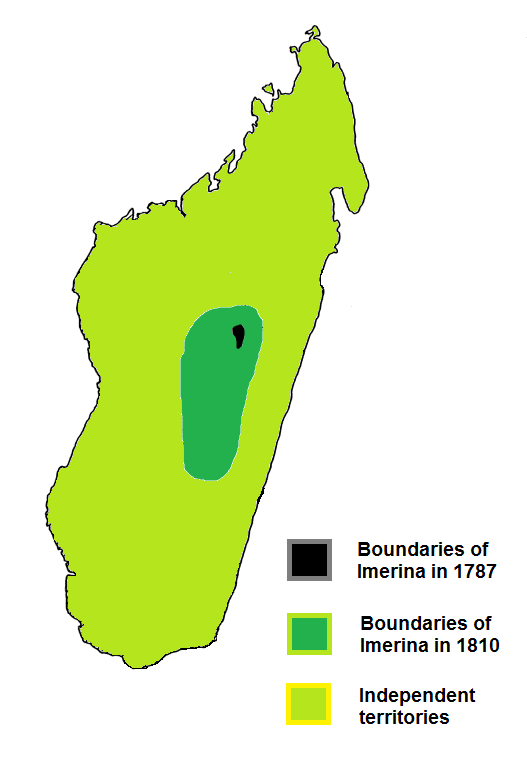
France conquered the kingdoms of the Sakalava people in western Madagascar in the 1890s and integrated the Sakalava into a newly formed French colony. One of the three Sakalava skulls returned to Madagascar, which gained independence from France in 1960, is presumed to be that of King Toera. … He was executed by French troops in 1897. The other two skulls belonged to two generals who fought with the king …

… “I welcome the return of these three skulls, including that of King Toera of the Sakalava people, an origin shared by nearly a third of the Malagasy population,” Fetra Rakotondrasoava, permanent secretary of Madagascar’s Ministry of Culture, who co-chaired the Malagasy-French Committee of Researchers working on the identification of the skulls, told CNN on Wednesday.

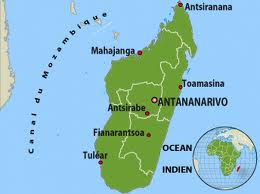
Madagascar
Madagascar

This is not only the repatriation of human remains, but the return of a part of our history and memory,” he said, adding: “We will now be able to honor these remains as they should be. This moment carries significance for the Malagasy people and for all nations engaged in the restitution of their heritage.”

Madagascar’s Communication and Culture Minister, Volamiranty Donna Mara, said at the ceremony that the human remains, including that of “our great, indeed very great, King Toera,” are “not mere objects in a collection” but the link, “invisible and indelible, which binds our present to our past.”

Their absence, for more than a century, 128 years, has been an open wound at the heart of the Great Island (Madagascar), and especially for the Sakalava community of Menabe,” she continued.

French President Macron Admits French Repression in Cameroon’s Independence Struggle

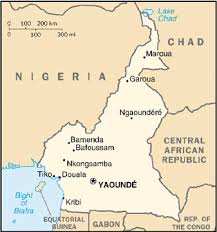
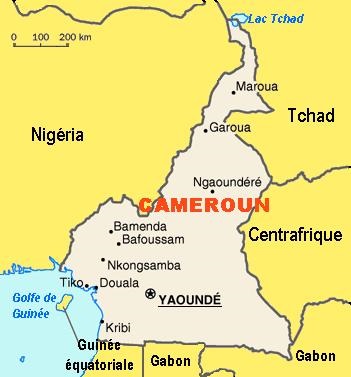
Map of Cameroon, with the capital Yaoundé

This past Tuesday, the French President, Emmanuel Macron, acknowledged the violence committed by France in Cameroon during and after the country’s “independence” in 1960. The French repression of Cameroonian independence movements went from 1945 to 1971 and thousands of lives were taken, and the country set back several years back! Just imagine, hundreds of villages bombed with napalm! Unlike Vietnam, where people knew about this, in Cameroon, a country in central Africa, it was a total media blackout; and the silence went on for decades! This acknowledgment comes after the publication of a joint report by Cameroonian and French historians (France Delivers Classified Colonization Documents to Cameroon).

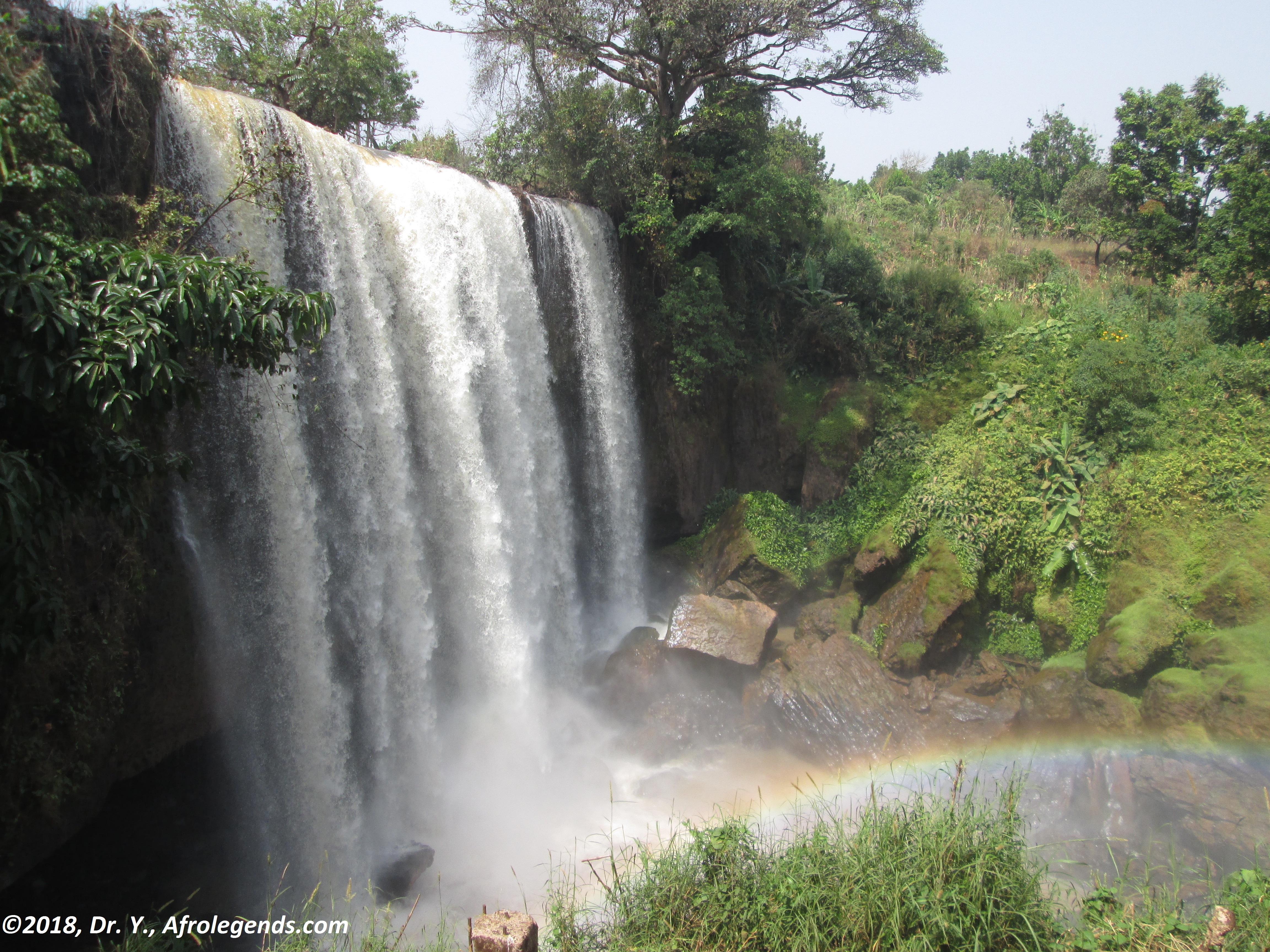
Metche Waterfalls in Cameroon was the site of French genocide there

In a letter to Cameroon’s President Paul Biya made public on Tuesday August 12, 2025, Macron said the report made clear “a war had taken place in Cameroon [like we did not already know that], during which the colonial authorities and the French army exercised repressive violence of several kinds in certain regions of the countryIt is up to me today to assume the role and responsibility of France in these events” .

Why do we get this sentiment of déjà vu? Well, because in 2015, Francois Hollande, then French President Acknowledged French Genocide in Cameroon. Not too long ago, Emmanuel Macron acknowledged the massacre of Thiaroye (Thiaroye: A French Massacre in SenegalA French Commission to investigate the Thiaroye Massacre ?), and the Algerian murders (France Admits Murder of Algerians … A Step Forward?), … but again fell short of apologizing. What next for Macron? An acknowledgment of the massacres in Madagascar? These French presidents are in the business of acknowledging, admitting, and then stopping short of apologies. Why bother?

Flag of Cameroon

Lastly, why is this acknowledgment coming now, in the middle of the electoral turmoil in Cameroon? when France could have simply said something, in good faith, to its puppets of Yaounde last week after the main opposition candidate’s name was removed from the election list? Or is this a way to distract people again? Why now, 10 years after Hollande… are they waiting for most of the survivors to die like for Thiaroye? At this point, it is safe to tell these French presidents to shove their “acknowledgments,” for they are meaningless!… Words, words… no action! It’s more a mockery of our pain!

To learn more check the articles in BBC and RFI. Excerpts below are from the BBC.

=====

French President Emmanuel Macron has acknowledged the violence committed by his country’s forces in Cameroon during and after the Central African nation’s struggle for independence.

However, Macron fell short of offering a clear apology for the atrocities committed by French troops in its former colony, which gained independence in 1960.

UPC Leaders (L. to R.) front row: Castor Osende Afana, Abel Kingué, Ruben Um Nyobé, Felix Moumié, and Ernest Ouandié

The French leader cited four independence icons who were killed during military operations led by French forces, including Ruben Um Nyobe, the firebrand leader of the anti-colonialist UPC party [somehow they refused to acknowledge their hands in the murder of Félix Moumié in Geneva by one of their agents – talk of a case of selective amnesia!]. France pushed hundreds of thousands of Cameroonians into internment camps and supported brutal militias to quash the independence struggle, the AFP news agency quotes the report as saying. Tens of thousands of people were killed between 1956 and 1961, the historians’ report said.

… Commenting on Macron’s lack of apology, one of the historians who contributed to the report said it was their job to “establish the facts and figures after having gone through the archival documents” and not to “recommend apologies“.

… While Macron did not address calls for reparations, it is likely to be a key talking-point in Cameroon going forward [like after Hollande’s 2015 visit? – Bro… it has been 10 years already!]….

Poster commemorating the 80th anniversary of the Thiaroye Massacre (Source: Seneplus.com)

… Last year, [France] acknowledged for the first time that its soldiers had carried out a “massacre” in Senegal in which West African troops were killed in 1944

… France has also made several attempts over the years to reconcile with its former colony Algeria, but has stopped short of issuing a formal apology. In 2017, Macron, then a presidential candidate, described the colonisation of Algeria as a “crime against humanity“, but two years later, he said there would be no “repentance nor apologies” for it [See… in the business of acknowledging, but not apologizing].


Cameroon – History Repeats Itself ?

Flag of Cameroon

Africans, it is so important to know our history, so as to be better equipped so it does not repeat itself again and again and again. I would like to publish here the words of the Cameroonian filmmaker Jean-Pierre Bekolo, who highlights the fact that history is repeating itself in Cameroon. Although many may not totally agree with him, the similarities between the events of 1955 and 2025 are numerous. In 1955 in Cameroon, the Union of the People of Cameroon (UPC) of Um Nyobe (Ruben Um Nyobé: Fighting for the independence of Cameroon), was shut down as it was fighting for the total independence of Kamerun. In reality, Cameroon never got its independence as the then colonial regime and later the puppet government killed the independence movement, and Cameroon’s freedom was confiscated. Today, the same thing is happening again: the main candidate who represents a change, whatever it is, a new chapter in the life of the country (the current leader has been in power for 43 years now, and was in the high levels of power – minister and prime minister – 20 years before that) has been blocked from participating in the upcoming elections by some “magic” trick. The 12 October 2025 elections will go on without him even though he has a major support of the population, and this is starting to look like a carbon copy of the events of 1955. Truth be told, Cameroon, like many Francophone African countries never got its independence. Thus, maybe the real battle is to break the chains of bondage, and resume the fight our forefathers started? Let’s have Millions of African Leaders: Be the Leader You Want to Have!

The excerpts below is from Actu Cameroun based on Jean-Pierre Bekolo Facebook’s post. Enjoy!

=====

Map of Cameroon, with the capital Yaoundé

“Is it possible to compare what happened in 1955 in Cameroon with what we are experiencing today? Yes, we can say—with all the caution required for such a historical comparison—that the Cameroon of 2025 resembles, in many ways, that of 1955. If we need our history, it is not to complain, but to move forward. However, in Cameroon, history has not freed us: it has chained us. The events we are experiencing today, and which we will experience until October 12, could well be an almost exact repetition of a drama already played out during the colonial era—and never closed.

… It’s 1955. Two camps are facing off. On one side, those who want Cameroon to belong to its children. On the other, a colonial power that gives nothing away without repression. And between the two: collaborators, opportunists, wheeler-dealers, those who know where the truth lies but hope for crumbs. These don’t really believe in the system, but they find it to their advantage. They don’t support the regime out of conviction, but out of comfort, cowardice, or calculation. They know exactly what needs to be done for this country to change—but they prefer to wait for their appointment, their per diem, their prestigious position. They are the same people Fanon described: local elites who serve domination without bearing its name, intellectuals who rent from the established order, journalists of silence. In 1955, the colonial power identified two targets to be destroyed: the radicals, who must be killed, and the moderates, who must be bought or neutralized. Any voice in favor of an independent Cameroon is then a threat. We must divide, oppose, buy, crush…

… In May 1955, while Cameroon is still officially under French rule, the Union of the People of Cameroon (UPC) embodies a strong desire for independence. Its vision is clear: to build a free, sovereign nation, free from colonial rule and compromise. But this ambition is perceived as subversive. On May 20, 1955, the colonial government banned the UPC. In the following days, many cities go up in flames: Douala, Yaoundé, Ebolowa… The repression is brutal. It marks the beginning of what is now called the war of liberation, with its trail of violence, clandestinity, and sacrifices. Um Nyobè and his comrades are forced to flee, then to engage in armed struggle. In July 1955, the official ban on the UPC is confirmed. The nationalist movement is criminalized, the 1956 elections take place without it, and the independence project carried by the Cameroonian people is confiscated.”

Cameroon – Where Self-Hate is used to Keep a Country in Bondage

Flag of Cameroon

It is no secret that the political climate in Cameroon is like an open wound for sore eyes. The Cameroonian regime which has been in place for the past 43 years, and since independence given that the current leader Paul Biya had been in positions of power 20 years prior, is known for being addicted to magic tricks and forgery! The regime’s latest magic trick has been to eliminate the best candidate, Maurice Kamto, by a wave of a wand, or rather a pen, a virtual pen. Over the past two weeks, we have seen a high minister of the nation erase the strongest candidate’s name on the election website, and produce a candidate out of nowhere, and then cement the whole with the stamp of the regime’s judicial arm that is the Constitutional Court this past Monday; all of this crowned by the silence of that double-sided international community (IC) which is always partisan in the face of Cameroonian pain (Cameroon and the Double Standard of the ‘International Community’). What is shocking in Cameroon is not really that a system is trying to maintain itself, but that the population has turned on its highest fighter and defender in bouts of apathy, and hate, hate of itself! I hear people spew insults and hate against those who ask the populations to fight for their freedom, and for their strongest defender of the hour, Maurice Kamto. Yes, Cameroon is a repressive dictatorship, which the IC still calls a democracy, but it is not a crime to dream and wish for a better country! It is actually a divine right!

I have been trying to find words… but Jean-Pierre Bekolo described this weird Cameroonian behavior better in Actu Cameroun. Excerpts below are from Actu Cameroun. Enjoy!

======

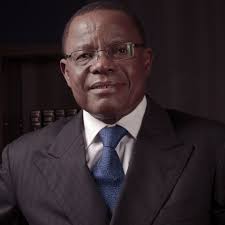
Maurice Kamto

For Jean-Pierre Bekolo, “Kamto is disturbing because at a time when everyone was accepting the established order, he spoke where we were silent, dreamed where we survived, proposed where we suffered. He is the slap of reality for those who had become accustomed to looking the other way. So we hate him. Not for what he did, but for what he awakens. Because in a dictatorship, the worst enemy is not the one who destroys, but the one who reminds us that everything could be different.”

… Kamto didn’t steal. Kamto didn’t kill. Kamto didn’t insult. Kamto didn’t call for war. He just wanted to be president. And for that, Maurice Kamto was imprisoned, insulted, demonized, humiliated, and censored. Why would many of his own fellow citizens rejoice in his suffering?

… This is a more serious, more deeply rooted phenomenon: a toxic, collective hatred against anyone who dares to stand up in a country where you are taught from childhood to walk bent over.

In a normal society, one can debate, oppose, and propose. In a normal society, wanting to lead one’s country is a civic act. But in some dictatorships, like the one that still haunts Cameroon under the spectral shadow of Paul Biya, wanting to be president is seen as a crime of lèse-majesté, madness, an insult to the order of things.

… Kamto is certainly not perfect; he even has many flaws, but no more than Paul Biya’s regime.

The most worrying thing is that this hatred against Kamto is a symptom of the regime’s success. It no longer rules solely through the police, the army, or fear. It rules from within people. It has colonized their minds. It has succeeded in making the people themselves insult the one who speaks in their name. It has turned society against its own sentinels. The system has entered our bodies.

It’s no longer just the government that represses—it’s society that self-censors, that self-punishes, that self-expels its own hopes. And this mechanism is much more sustainable than brute repression.

Tonight, Kamto may or may not be rejected by the Constitutional Council [he has been rejected], but the hatred against him, which is in fact hatred against ourselves, will remain, and that’s what must be stopped. Dreaming is not provocation.

Kamto is not hated for having acted badly if we compare his actions to those of the current system; we want him neutralized for having dared to imagine another outcome, another policy, another ethic, another way of being Cameroonian. He dared to disagree without fleeing, to protest without violence, to oppose without hatred. And this is what makes him unbearable in the eyes of a system that only knows how to operate in the shadows, contempt, and fear.

In all this, it is not Kamto who is to be pitied. It is Cameroon. A Cameroon that celebrates the punishment of those who want to love it differently. A Cameroon that rejoices when those who dare to hope are repressed. A Cameroon that laughs at the suffering of those who refuse to remain silent

….

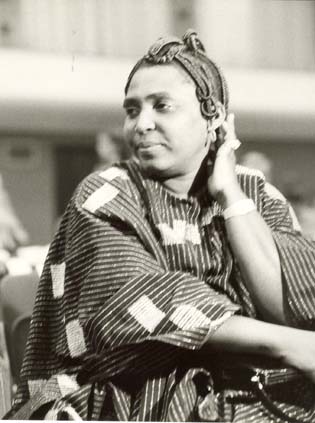
‘So Long a Letter’ by Mariama Bâ is now on the Big Screen!

Mariama Bâ
Mariama Bâ

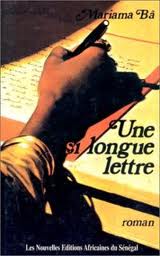
A few years back, we talked about the Senegalese author Mariama Bâ, the African female pioneer who is considered to have written the first African feminist novel.  Her literary career, although short as she passed away few months after the publication of her first book, advocates for women’s rights. Une Si Longue Lettre [So Long a Letter] has been one of my favorite books in my library. It was written by a woman in 1979; it talks about the condition of the woman in the Senegalese society, conditions that are very similar in many African countries. It sheds a light on the place of the woman in the society, the effect of polygamy on women and society, and the clash between modernism and traditions. Her book became an African classic, and has been read in schools across the continent and translated in many languages. Her story still resonates today.

Une Si Longue lettre
Une Si Longue lettre / So Long a Letter

It is important to note that Bâ’s feminism is deeply rooted on an African identity, humanity, and experience, which is different from the Western feminist frameworks.

The Senegalese screenwriter and producer Angele Diabang has decided to adapt this masterpiece for the big screen, and debuted the feature film at the Brooklyn Arts Music (BAM) FilmAfrica Festival (BAM | FilmAfrica 2025) in May 2025. Enjoy, and I hope all of you will get a chance to watch it.


Bamako! By Agostinho Neto

Map of Mali with its capital Bamako

In 1954, Agostinho Neto, Angola’s first president (before he became president) wrote a chez d’oeuvre titled Bamako, after the capital of the country of Mali. The poem appeared in his collection Sagrada Esperança (Sacred Hope), in 1974. The poem is an ode to African unity, resilience, and rebirth, all based on the rich history of the great Empire of Mali, and the continent as a whole. Neto refers to Africa’s tallest mountain, Mt Kilimanjaro. In his poem, he weaves in the great rivers of the continent, Niger and Congo, particularly focusing on the soil’s fertility from the abundant flow of the river Niger, and the tantalizing immensity of the river Congo. Above all, he highlights the warmth of its people, their friendship, their resilience (‘strong roots’), and their kindness. He builds on the pain of slavery and centuries of hurt to offer hope, the living fruit of Africa’s future; in Bamako, he says, we will conquer death! Why Bamako, one may ask? Bamako is special as it was part of the great Empire of Mali, where the oldest constitution in the world saw the light (Kouroukan Fouga, la Constitution de l’Empire du Mali – la plus vieille constitution republicaine au monde?), and is also known as the crossroad of West Africa, where germinated centuries’ old history of great West African kingdoms in Mali, and its rich traditions.

Below is Bamako! by Agostinho Neto, published in Sagrada Esperança, in 1974. You can find it on AgostinhoNeto.org

======

Bamako by Agostinho Neto

Bamako!

ali onde a verdade gotejante sobre o brilho da folha

se une à frescura dos homens

como as raízes fortes sob a tépida superfície do solo

e onde crescem amor e futuro

fertilizados na generosidade do Níger

sombreados na imensidão do Congo

ao sabor da aragem africana dos corações


Bamako!

ali nasce a vida e cresce

e desenvolve em nós fogueiras impacientes de bondade


Bamako!

ali estão os nossos braços

ali soam as nossas vozes

ali o brilho esperança dos nossos olhos

se transforma imenso numa força irrepreensível da amizade


secas as lágrimas choradas nos séculos

na África escrava de outros dias

vivificado o sumo nutritivo do fruto

o aroma da terra

em que o sol desencanta kilimanjaros gigantes

sob o céu azul da paz.


Bamako!

fruto vivo da África de futuro

germinado nas artérias vivas de África


Ali a esperança se tornou árvore

e rio

e fera

e terra


ali a esperança se vitoria amizade

na elegância da palmeira

e na pele negra dos homens


Bamako!

ali vencemos a morte

e o fruto cresce – cresce em nós

na força irresistível do natural e da vida

connosco viva em Bamako.


Bamako!

There, where the dripping truth on the leaf’s shine

unites with the freshness of men

like strong roots beneath the warm surface of the soil

and where love and future grow

fertilized in the generosity of the Niger

shaded in the immensity of the Congo

to the taste of the African breeze of hearts


Bamako!

there life is born and grows

and develops within us impatient fires of kindness


Bamako!

There are our arms

There our voices sound

There the hopeful glow of our eyes

Immensely transforms into an irrepressible force of friendship


dry the tears cried for centuries

in the enslaved Africa of other days

vivified the nutritious juice of the fruit

the aroma of the earth

where the sun disenchants giant Kilimanjaros

under the blue sky of peace.


Bamako!

living fruit of Africa’s future

germinated in the living arteries of Africa


There hope became tree

and river

and beast

and earth


There hope triumphs over friendship

in the elegance of the palm tree

and in the black skin of men


Bamako!

There we conquer death

and the fruit grows – it grows within us

in the irresistible force of nature and life

living with us in Bamako.


Angelique Kidjo : First African Singer to get a Star on the Hollywood Walk of Fame

Angelique Kidjo

Last week, the world-renowned singer Angelique Kidjo became the first Black African to get a star on the Hollywood Walk of Fame, thus joining another African, South African actress Charlize Theron. The legendary singer, five-time Grammy award winner of Beninese origins known for Wombo Lombo, We We, Agolo, has been inducted into the Hollywood Walk of Fame, an honor granted to only a few in the world. She has cemented her place in history. Have you ever been to a Kidjo’s concert? I have been quite fortunate to attend one of them: the energy is electrifying, carried over by her strong voice which is rooted in ancestral sounds. Her career spans four decades, fusing elements of different African genres, Jazz, R&B, and Latin music, collaborating with some of the greats of this world, and crossing over continents. She has reinvented herself, releasing a total of 16 albums, earning 15 Grammy nominations and securing 5 wins.  She is also one of the few who started under the tutelage of another legend of the continent, the Cameroonian Ekambi Brillant.

Excerpts below are from AfricaNews, for the full article check it out. For other articles, please check out The Citizen and DW.

=====

Benin with its map and flag

Music icon Angélique Kidjo has cemented her place in history, becoming the first black African artist to be awarded a star on the Hollywood Walk of Fame. …

The Beninese singer, known for her electrifying voice and genre-blending sound, is no stranger to acclaim. With five Grammy Awards and a global fanbase, Kidjo has long been recognized as one of Africa’s most influential musical exports.

Over the course of her four-decade career, she has released 16 albums, fusing Afrobeat with elements of jazz, R&B, funk, and Latin music. Her collaborations read like a who’s who of the music industry, including the likes of Burna Boy, Alicia Keys, Carlos Santana, and Philip Glass.

… Her star on the Hollywood Walk of Fame is more than a personal achievement — it’s a historic recognition of African artistry on one of the world’s most iconic stages.

Celebrating the Centennial of Frantz Fanon’s Birth

Frantz Fanon
Frantz Fanon

This year, we are celebrating the centennial of the birth of Frantz Fanon, the great revolutionary psychiatrist, philosopher, and anti-colonial French author from Martinique. His work explored the psychological effects of colonization and the struggles of decolonization, and inspired liberation movements across Africa, Latin America, the Caribbean, and even the United States. To date, his works,  Black Skin, White Masks (1952) and The Wretched of the Earth (1961) remain essential reading in postcolonial studies and political philosophy. He died quite young at the age of 36, but he left his imprints everywhere, particularly on the African continent, and in particularly Algeria where he lived and fought for the liberation of the Algerian people.

Lumumba detained
Lumumba detained

Fanon saw Congo, then Belgian Congo, clearly, as the center for pan-african solidarity, and believed that the assassination of its prime minister, Patrice Emery Lumumba, was a blow not just to Congo, but to the entire African liberation movement. When Lumumba was alive, he had invited Fanon to attend the inter-African Conference in 1960, thus showing his active engagement in Congo’s political future.   He wrote on Congo, Lumumba’s death: Could we (Africans) have acted differently? Like Amilcar Cabral, he warned of the presence of “traitors from within” seeing that the greatest threat to African independence was not just Western imperialism, but also African elites who had internalized colonial values and acted against their own people; like Moise Tshombe who played a great role in Lumumba’s demise.

Please join the Frantz Fanon Foundation in celebrating Fanon’s life and impacts on African liberation. There will be events throughout the year. Below are some excerpts from Fanon’s article, Lumumba’s death: Could we (Africans) have acted differently? For more, check it out. His words still ring true!

Patrice Lumumba

The great success of the enemies of Africa is to have corrupted the Africans themselves.  It is true that these Africans had vested interest in the murder of Lumumba.  Heads of puppet governments, in a fake independence, faced everyday by massive opposition from their peoples, it did not take long to convince themselves that the real independence of the Congo would put them personally at risk.

And first by Lumumba when he sought the intervention of the UN.  He should have never called on the United Nations.  The UN has never been able to properly solve problems brought to man’s consciousness by colonialism, and whenever it has intervened, it was to actually come to the aid of the colonial power to the oppressed country [see … think about MONUSCO].

In reality the UN is the legal card used by imperialist interests when brute force has failed.  The sharing, the mixed controlled joint committees, under guardianship are international means of torture to break the will of the people, cultivating anarchy, banditry and misery.

Lumumba’s fault was then initially to believe in the impartiality of the UN. He forgot that the UN, particularly in the current state, is only a reserve assembly established by the Greats to continue, between two armed conflicts, the “peaceful struggle” for the balkanization of the world.

Africans should remember this lesson.  If outside help is necessary to us, let us call on our friends.  Only they can truly and fully help us achieve our goals precisely because the friendship between us is a friendship of struggles. [The AES should remember this].

Niger to Nationalize Uranium Mining

Map of Niger

Last week, on June 19th, Niger announced plans to nationalize its uranium venture which until now had been operated by the French company Orano. By this, the Niger government has decided to gain control over its resources from France. For many years, the French state owned company Orano, which was previously Areva, has been extracting uranium in Niger, enjoying a full monopoly, paying barely anything to the country including no taxes (Mali and Niger end Long-Standing Tax Treaties with France). This quest for freedom or rather fairness by Niger is not something new which started with the government of President Abdourahamane Tchiani, but rather the culmination of years of an unfair treatment based on an unbalanced relationship with the French company and government. In the 2000s, then President Mamadou Tandja had sought to re-negotiate the partnership with then Areva (now Orano) which until then had enjoyed a de facto 4 decade monopoly in the country paying almost nothing to the locals; he tried to curb the French influence by striking a deal with the China Nuclear International Uranium Corporation in 2007 to develop a uranium mine. As expected, Tandja was deposed in a coup in 2010, coup financed by the metropolis. Niger Takes Control of its Uranium, and Niger and Orano: Disagreement.

Below are excerpts from People’s Dispatch

=====

Uranium

In yet another assertion of sovereignty, the government of Niger announced on Thursday, June 19, that it would nationalize the Somaïr uranium venture, wresting control from the multinational nuclear fuel cycle corporation Orano.

Orano is owned by the French state, which, the government noted, has been “openly hostile toward Niger since July 26, 2023”, when the then president Mohamed Bazoum, domestically perceived as a French puppet, was ousted in a popularly supported coup.

Without yielding to French threats of war, the military government replacing Bazoum’s regime consolidated widespread support by expelling French troops, fulfilling the demand for which mass protests had been underway in the lead-up to his removal.

Flag of Niger

France has long exerted a monopoly over Niger’s uranium, which is among the highest grade in Africa. It has been fueling French nuclear power plants, lighting up a third of its light bulbs, while over 85% of Nigeriens lacked connection to the electricity grid.

… The nationalization changing this neo-colonial arrangement “will allow for healthier and more sustainable management of the company and, consequently, optimal enjoyment of the wealth from mining resources by Nigeriens,” its statement added.

Threatening Niger with “legal actions, including criminal proceedings if necessary”, Orano said it “intends to seek full compensation for the damages suffered and will assert its rights to the stock corresponding to Somaïr’s production to date.”

Zimbabwe Bans Exports of Lithium

Flag of Zimbabwe
Flag of Zimbabwe

As of June 2025, the Zimbabwean government has announced that exports of raw lithium concentrate will be banned starting in January 2027. This move is meant to push mining companies to build local processing plants and keep more of the value chain within the country, thus helping towards the country’s development, and stopping the cycle of exports of raw materials and barely anything (The Lithium of Zimbabwe). This should also create employment for the locals.

Lithium

Several Chinese firms—like Sinomine and Zhejiang Huayou Cobalt—are already building lithium sulfate plants at the Bikita and Arcadia mines. These facilities will refine lithium concentrate into lithium sulfate, a key ingredient for battery-grade chemicals like lithium carbonate and hydroxide.

There is not yet a full refinery built, but this ban indicates Zimbabwe’s clear shift from being just a raw exporter of lithium. Given the importance of lithium in the electric car revolution as a material for batteries, this is really a game changer. We applaud Zimbabwe, and call other countries to learn from Zimbabwe, Mali, Burkina Faso, and Niger.

Kwame Nkrumah
Kwame Nkrumah

This is where the dream of Kwame Nkrumah, of a real African Union, comes back; we are not talking about the current union which is just a puppet organization serving the interest of the Western powers. Kwame Nkrumah: African Visionary and Ghana’s First President. Currently, each country is negotiating individually, which may yield good or not so good results, if they do not have good negotiators or good mining lawyers in the case of lithium for instance. However, some would end up being taken advantage of just because they are not exposed to the new changes, don’t know, and could accept really low prices which may affect even their neighbors. Being United would insure good negotiations across the board learning from others, and also ensure that the multinationals respect the local governments and populations; and if they are kicked out of one country because of law or contract infringements, that they do not just run to another to perpetuate the cycle. This is what the AES is doing (The AES Creates a Joint Military Force), and all African countries should.