As we saw on Monday, Francis Bebey’s poem ‘Je suis venu chercher du travail’ / ‘I Came to Look for Work’ is the story of many immigrants, living their homes, families, friends and countries, to journey to far-away lands in search of a better living.
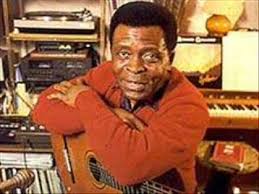
More than a writer, Francis Bebey was also a musician. Below is a video where Francis Bebey introduces the viewer to the one-note flute, and the communication system invented by the pygmy peoples of Central Africa to converse with each other using that instrument. As I told you earlier, Francis Bebey headed the music department at the UNESCO‘s office in Paris, where he focused on researching and documenting African traditional music. Enjoy a lesson from the maestro!
Today, as states and countries are slowly reopening after the shelter-in-place due to the coronavirus pandemic, many have been left jobless, and are looking for a job now or in the near future. I think the poem ‘Je suis venu chercher du travail / I came to look for work‘ by the great Cameroonian writer and musician Francis Bebey is very appropriate. The poem below is the story of many immigrants traveling to a foreign land in search of a job, a better life, leaving all behind: families, friends, and country. This poem is very simple, yet so deep as it details the losses taken today, in hope for a better tomorrow. As you think about the immigrants dying in the Mediterranean sea, or those crossing the Mexico-US border, or all the countless faces in the world, take a moment to imagine families torn apart, lives in peril, and possibly no light at the end of the tunnel.
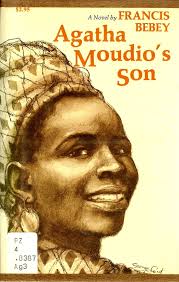
‘Agatha Moudio’s Son’ by Francis Bebey (Amazon)
Francis Bebey was sort of a genius: in his early years, he studied mathematics, before going into broadcasting. He was called to Ghana by President Kwame Nkrumah, where he served as a journalist. He began his literary career as a journalist in the 1950s and worked in Ghana and other African countries for the French radio network, Société de radiodiffusion de la France d’outre-mer (SORAFOM) and Radio France International. Later, he wrote novels, poetry, plays, tales, short stories, nonfiction works, and established himself as a musician, sculptor, and writer. His first novel, Le Fils d’Agatha Moudio (Agatha Moudio’s Son), was published in 1967 and awarded the Grand prix littéraire d’Afrique noire in 1968; it remains his best-known work to this day. He also headed the music department at the UNESCO‘s office in Paris, where he focused on researching and documenting African traditional music.
Enjoy ‘Je suis venu chercher du travail‘ by Francis Bebey, published in Anthologie africaine: poésie, Jacques Chevrier, Collection Monde Noir Poche, Hatier 1988. Translated to English by Dr. Y. Afrolegends.com.
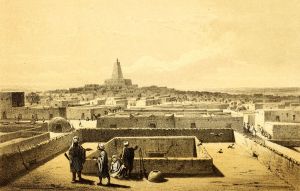
View of Timbuktu in 1858 by explorer Heinrich Barth
As you all know Timbuktu was a great center of knowledge in search for for many centuries starting at least in the 12th century. It was visited by people from around the world, in search of knowledge.
Timbuktu was one of the world’s first and oldest thriving universities! Students came from all over the world to study at Timbuktu. Imagine that, students from the middle east, and Europe coming to study in Africa! There are over 700,000 manuscripts at the great Sankore University in Timbuktu, and many more at other libraries including the Ahmed Baba Institute, Al-Wangari Library, and others.
Enjoy this documentary about the lost libraries of Timbuktucommented by the Scottish/Sierra Leonean writer Aminatta Forna. Enjoy, and discover with me the treasures of Africa.
Meet John Amanam, the Nigerian artist/engineer building super-realistic prostheses for Africans in Africa. I really liked his work: this is a self-thought man who used to work in the Nollywood industry, with no real training in prostheses, but a love of sculpture and most importantly of his fellow human being. After noticing family members who had lost limbs, he set out to make realistic-looking and affordable limbs with ebony, or mahogany shades, the shades of his fellow brothers and sisters. In essence, he is giving back confidence to those who have lost limbs. Enjoy!
In order to prevent the return of misunderstandings which have brought between France and the Dahomey a state of hostility prejudicial to the two countries’ interests, –
Us, undersigned
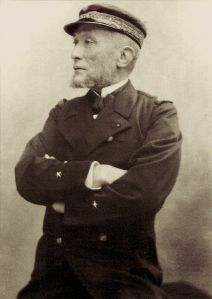
Bertrand de Montesquiou-Fézensac
The king’s messengers
Aladaka
Do-De-Djé
Assisted by:
Cussugan – acting as Yeroghan*
Zizidoque – cabécère†
Zououhoucon – cabecere†
Aïnadou – Treasurer of Gore
Designated by his Majesty the King Béhanzin Ahy Djéré
And
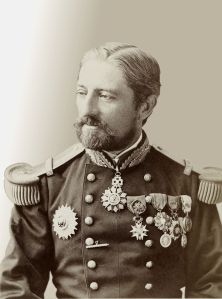
Ship Captain de Montesquiou Fezensac [Bertrand de Montesquiou-Fézensac] commanding the cruiser Le Roland – artillery Captain Decoeur, designated by Rear Admiral Cavelier de Cuverville [>Jules de Cuverville] Commander-in-chief of the land and sea forces acting as governor of the gulf of Benin, acting on behalf of the French government.
Have jointly agreed on the following arrangement which leaves intact all past treaties or conventions agreed upon between France and the Dahomey.
I
The King of Dahomey agrees to respect the French Protectorate of the Kingdom of Porto Novo, and to abstain from all incursions on the territories forming part of that Protectorate.
Jules de Cuverville
He recognizes the right of France to occupy Kotonou indefinitely.
II
France engages to take such action, on the King of Porto Novo, as to prevent any legitimate cause of complaint being made in future by the King of Dahomey.
By way of compensation for the occupation of Kotonou, France will pay an annual sum, which will in no case exceed 20,000 francs (in gold or silver).
The blockade will be lifted and the present arrangement will take effect from the day of the exchange of signatures. However this arrangement will become final only after it has been submitted for ratification to the French government.
Made in Whydah on the third of October eighteen hundred and ninety.
*someone who governs a city on behalf of the King – a governor
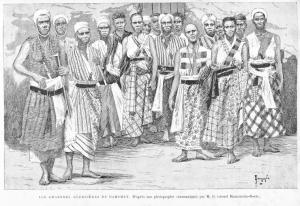
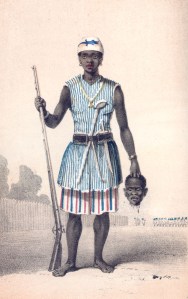
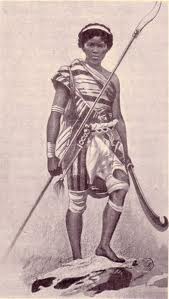
Below is a description of the army of King Béhanzin by a French prisoner made on 13 March 1890. This Frenchman is stunned by the number of warriors in Behanzin’s army, by their discipline, strength and muscular stature. More importantly, he also describes the Dahomey Amazons (locally known as Mino), the Fon all-female military regiment of the Kingdom of Dahomey (in present-dayRepublic of Benin) who formed the king’s special bodyguard unit, and his secret weapon! Remember that inBehanzin’s Farewell Speech in Dahomey, the king had sung praises of his beloved Mino. Here the narriator is amazed by their sight and confirms, “Old or young, ugly or beautiful, they are wonderful to contemplate. Just as muscular as the Black warriors, their attitude is just as disciplined and correct, …” Translated to English by Dr. Y.Afrolegends.com.
====
Dahomey Amazons ca 1890
We are right in the Dahomean camp!
At least 15000 men are in front of us, arranged in order of battle in front of their tents made up of palm leaves, immobile, in such a deep silence that at 100 meters from our prison, in the same courtyard, separated by a simple wall, we could not have imagined their existence.
It is really a painting of a sublime horror and which painfully squeezes our heart. Fifteen thousand men, armed with guns and machetes! There is nothing to say, they are beautiful robust and muscular warriors under their white loincloths, which brings out the ebony of their stature even more. Not a cry, not a single movement, not a noise.
Quiet ourselves and deeply moved, we cross the hay that they form, lined up like the long rows of ears on a wheat field. Black and human harvest of which the one who is there can freely pick or mow heads.
Seh-Dong Hong-Beh, leader of Dahomey Amazons (painted by Frederick Forbes in 1851)
The main officers of the army came to surround us. Our group starts to walk, it takes us more than a quarter of an hour to cross the first rows, given that their battle ranks are so deep. Then we cross an empty space, on the other side of which the Black army continues. Here it is no longer just warriors. The second line, in fact, consists of amazons in three tight ranks, surrounding in a huge circle the very throne of the king whom we cannot yet see.
They are there the four thousand female warriors, the four thousand Black virgins of Dahomey, bodyguards of the monarch, immobile under their war shirts, gun and knife in the fist, ready to pounce on a signal from the master.
Old or young, ugly or beautiful, they are wonderful to contemplate. Just as muscular as the Black warriors, their attitude is just as disciplined and correct, lined up like them in ranks.
An Amazon warrior ca 1890
The chiefs are in rows, at the head of the columns, recognizable by the richness of their shirts, by their proud and resolute air. Such are the amazons at rest with their arms. There is a long way from this discipline, this order, to the savage and barbaric hordes that we imagine. His Majesty Behanzin can be calm, these viragos will not let him be taken away easily. The triple circle that they form is immense, without a void, gap, or hole.
E. Chaudoin, extract from the Illustration of 26 July 1890, Les Africains Tome X, Editions J.A., 1978, P. 250
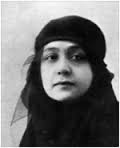
Today I am sharing a poem by the great Egyptian feminist Huda Sha’arawi. As we saw earlier, Sha’arawi’s work was immense in redefining the place of the woman in Egyptian society, and led to a new dawn for Egyptian women. This woman who influenced millions of Egyptian and Arabic women was also a poet with a great love for her country and its people. She dedicated her life for the betterment of women in the Egyptian society, and immensely loved the land of her forefathers.
The poem “A ma Patrie” was published in L’Égyptienne number 69, Mai 1931. Translated to English by Dr. Y. Afrolegends.com.
Ama Patrie
J’ai fait voeu de t’offrir tout ce qui m’appartient
O ma belle Patrie,
Mon bras, mon coeur, mon âme ainsi que tous mes biens
Sans excepter ma vie.
J’ai fait voeu de peiner, de lutter, de souffrir,
De braver l’infamie.
Sans froncer le sourcil, sans poser au martyre,
Sans même une aide amie.
J’ai juré de franchir les frontières des mers
Si ton honneur l’exige,
Afin de rehausser, aux yeux de l’univers,
Ton nom et ton prestige.
J’ai juré d’oublier les affronts des déments
Et la haine et l’insulte
Que l’envie incita, contre mon dévouement
A ta cause et ton culte.
Peu m’importe l’exil, leur courroux, la prison,
J’accepte la mort même.
Puisque leurs vils exploits n’auront jamais raison
De l’humble coeur qui t’aime.
To my Homeland
I made a wish to offer you all that I have
O my beautiful homeland,
My arm, my heart, my soul, as well as all my belongings
Not excepting my life.
I vowed to struggle, to fight, to suffer,
To brave infamy.
Without frowning, without asking for martyrdom,
Without even a friend’s help.
I have sworn to cross the borders of the seas
If your honor depends on it,
To enhance, in the eyes of the universe,
Your name and your prestige.
I have sworn to forget the offenses of the demented
And the hatred and insult
Which prompted envy, against my dedication
To your cause and your worship.
I do not care about exile, their anger, the prison,
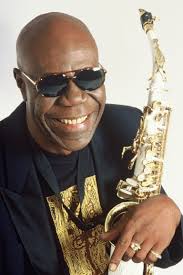
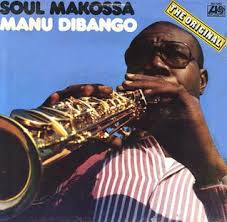
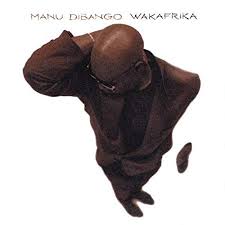
For me, Manu Dibango is like a person with whom I grew up… well because his song “Bienvenu, Welcome to Cameroon” was played on national television endlessly when growing up. It was a special song, and it made everybody know what a beautiful country he came from, and how welcoming the people of that land were. He also had a thunderous and contagious laughter.
Emmanuel N’Djoké Dibango was born in Douala, Cameroon, on 12 December 1933. He was an outstanding saxophone and vibraphone player. He was sent early to France for high school. I remember an interview he gave about his first time in Europe. As a kid, he had never seen snow, and he was in such awe of the snow that he wanted his mother back home to see it; so he mailed her some snow… but as you might have guessed, all his mother received was a wet, all dried up, empty envelope! While in France, his studies got derailed by music, as he got introduced to the saxophone and as a results he failed his high school exams (Baccalauréat) to his father’s disappointment. However, this launched him in what became an internationally acclaimed career.
His hit song, “Soul Makossa,” came out in 1972, and propelled him to international fame. His fusion of African rhythm and sounds on the saxophone created a sort of fusion that was new, modern, and hip. The song “Soul Makossa” on the record of the same name contains the lyrics “makossa“, which means “(I) dance” in his native tongue Duala language. The song has influenced popular music hits, including Kool and the Gang‘s “Jungle Boogie.” In 1982, Michael Jackson picked up a version of a line that Dibango sang on “Soul Makossa” — which Jackson sang as “mama-se, mama-sa, ma-makossa” — on his song “Wanna Be Startin’ Somethin’ ” from the album Thriller. Dibango sued the American megastar; Jackson settled out of court for an undisclosed amount of money. In 2007, Rihanna sampled Jackson‘s version of the “Soul Makossa” line on her song “Don’t Stop the Music,” as Jackson had given her permission, but not Dibango. Two years later, Dibango sued Jackson again, as well as Rihanna in France; that time, his case failed, due to the earlier settlement.
So long to the artist… like Fela Kuti, Manu Dibango has influenced countless singers around the world, and has brought in a new generation of African saxophone players. Your saxophone filled with soulful tunes from Cameroon and Africa, will continue to fill our souls. Enjoy these very good articles on The Guardian and NPR.
Meet Dan Abisi, a Kenyan music teacher who makes his own trombones from scratch. I was moved by his love and passion for music which has made him consider cheaper alternatives such as building his own trombone, and thus making it widely available in Kenya. Given that in Kenya, and probably in many African countries, there are very few shops selling these brass instruments (and they are not cheap!), manufacturing it locally is definitely a winner. I don’t know what it takes to manufacture a musical instrument, but I bet spending hours trying to make it sound right is important. Kudos to Dan Abisi who has been making his own trombones and sharing his love of music and the instrument with local Kenyan children!
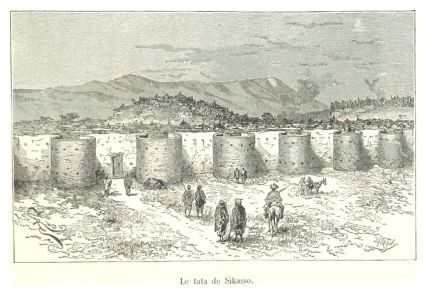
The tata of Sikasso, illustration by Édouard Riou published in Du Niger au golfe de Guinée, Hachette, 1892, by L.G Binger, p. 95
Have you ever heard about the Tata of Sikasso or Sikasso Tata, a fortifying wall built in Mali which sustained attacks by some of the greatest conquerors of its time, including none other than the great Samori Touré ? and which was destroyed by the French colonial army ? This structure was probably stronger than some forts found in Europe. This defensive wall is quite reminiscent of the Great Wall of China.
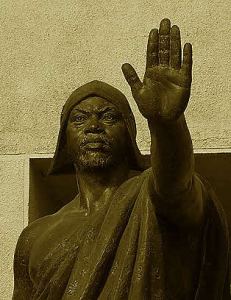
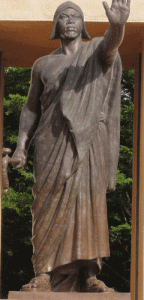
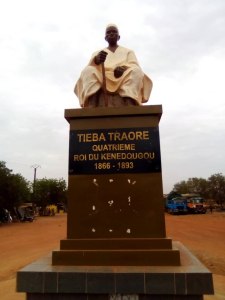
Monument of Tieba Traore in Sikasso (Source: Wikipedia)
The Tata of Sikasso, locally known as Tarakoko, is a fortress built during the reign of King Tieba Traoré between 1877 and 1897, in modern Mali. Tieba Traoré, whose mother came from Sikasso, became King of the Kénédougou Empire and moved its capital to the city of Sikasso. He established his palace on the sacred Mamelon hill and constructed a tataor fortifying wall to defend against the attacks of both the Malinke conqueror Samori Touré and the Frenchcolonial army. The city withstood a long siege from 1887 to 1888 but fell to the French in 1898. This fortified wall was reinforced by Babemba Traoré, Tieba Traoré’s brother, who had succeeded him as king.
The Tata of Sikasso was built for the protection of the city, in a military style. It used to extend through an area of 41 hectares, with its walls reinforced with the addition of earthen walls, bars, and alternate stone beds; the intervals of which were filled with ferrous gravel, earth, and stones. At the time of Samori Touré’s unsuccessful siege, which lasted 15 months from March 1887 to June 1888, the tatahad three concentric enclosures.
The exterior of the tatawas 9 km long, 6 m (∼20 ft) wide at the base and 2 m (∼7 ft) high at the summit. Its height varies between 4 to 6 m.
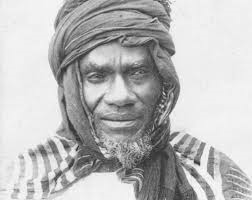
Samori Touré
The intermediary tatawalls were not as big, and also not as wide. Those were meant for merchants, soldiers and nobles.
The inner enclosure encircled the Dionfoutou, which was the part of the city inhabited by the king and his family.
The fortress is still visible today in the actual landscape of the city of Sikasso in neighborhoods such as Mancourani, Medina, Wayerma, Bougoula city and Fulasso. Seven monuments, in the shape of doors, have been built with modern materials on the site of the passages of yesteryear to preserve their memory.
The Tata of Sikasso has been inscribed in the UNESCO World Heritage Tentative list: « Le Tata de Sikasso ».













 African Heritage