Who/What did We Say Goodbye to in Africa in 2025 ?

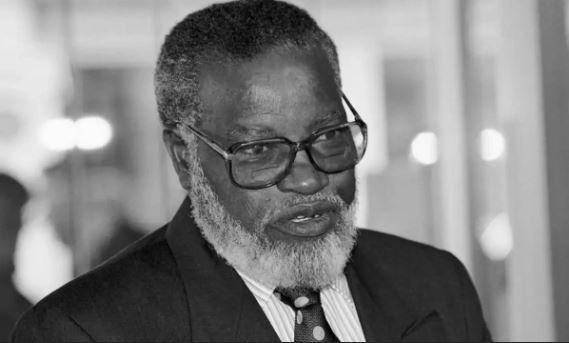
Sam Nujoma (Source: newscentral.africa)

2025 is coming to an end, and there are a few people we said goodbye too, and situations as well. Below are some of them:

  1. This February, on Saturday, February 8 2025Sam Nujoma, Namibia’s first president and founding father passed away at the age of 95. Nujoma led the long fight for independence from South Africa for many years, which culminated with independence on 21 March 1990 of South West Africa, as the country was formerly known. So Long to Sam Nujoma, Namibia’s First President.
  2. In April, Amadou, of the Malian duo Amadou and Mariam passed away at their home in Bamako, Mali. The Grammy-nominated duo Amadou & Mariam was a blind duo from Mali. They both met at the Institute for the young blind in Bamako in 1976 and their song “Je pense a toi” helped them get world fame. So Long to Malian Singer, Member of Duo Amadou & Mariam
  3. Flag of Gabon

    Brice Oligui Nguema of Gabon, the coup leader who kicked Ali Bongo out of power, the one the West lauds so much, traded his military fatigues for a suit and won the elections by a landslide with a score worthy of a Banana Republic, 90.35%! and Yes, he got all the accolades of the West! This was a total imposture! Recall that Oligui Nguema took the power when the populations protested the presidential elections when Ali Bongo was declared winner instead of the rightful winner who was Albert Ondo Ossa; thus Nguema should have stepped in to right the wrong by putting on the one the people had voted for; instead he took over under the applause of the “international community”. Gabon and the Double Standards of the International Community, and Gabon Oligui Nguema Wins by Landslide.

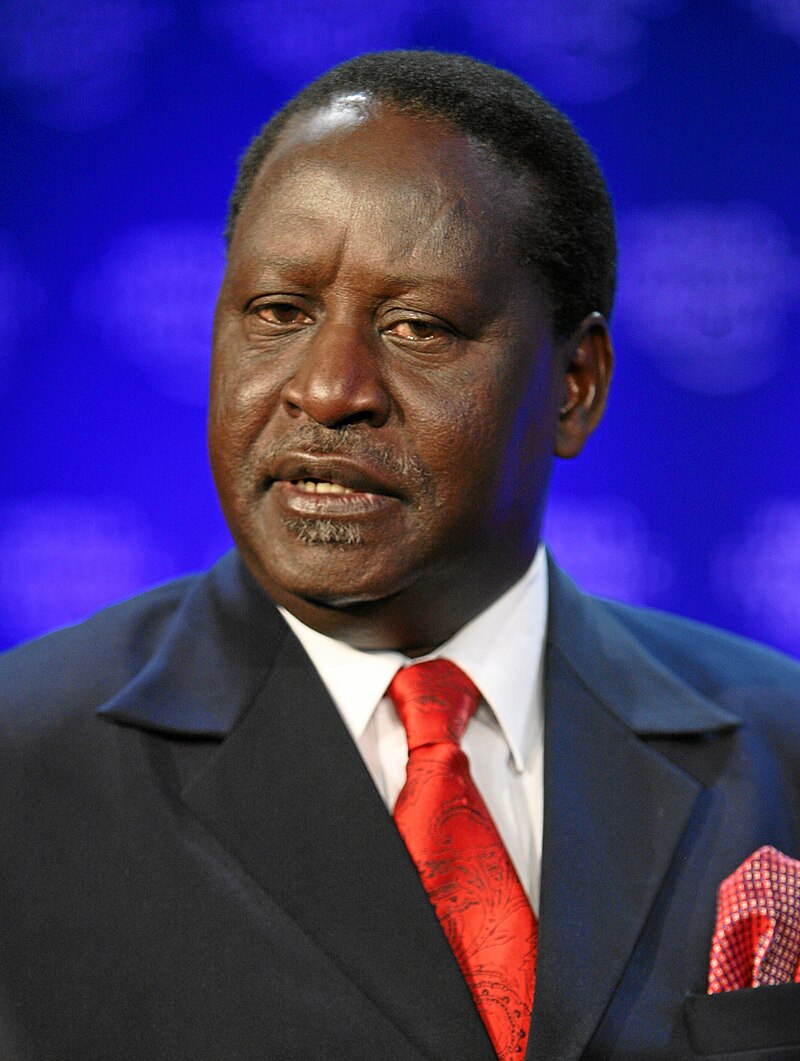
  4. Raila Odinga (Source: World Economic Forum)

    This year Kenya, and the whole of Africa said goodbye to Raila Odinga, the inevitable and greatest opposition leader and fighter to the end for Kenyan democracy. Raila Odinga had been a dominant unavoidable force in Kenyan politics for over 30 years. He was a baobab in Kenya’s political scene, who has always fought for the freedom and democracy in Kenya. Out of the past 5 elections, 1997, 2007, 2013, 2017, and 2022, he had always contested, came second, and even narrowly won to the point that there have always been disputes which have gone as far as civil unrest as in 2007… even the last elections which saw Ruto win were tight with the presence of Odinga. So Long to Raila Odinga, Fighter to the End for Kenyan Democracy, and Raila Odinga in His Own Words.

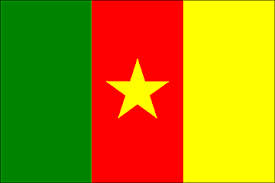
  5. Flag of Cameroon

    Cameroonians saw another weird presidential elections. Not sure if what happened there was a real election. Paul Biya was reelected for a 7th term after 43 years as president of the country, with 20 before as minister and prime minister. This would mark 43 years of walking backwards for Cameroon… no electricity, no water in most places, and major cities overflowing with refuse.  After a magic trick in the 11th hour, where by a switch of a virtual pen, the best and strongest opponent, Maurice Kamto, was removed from the presidential election contest; then the elections took place with another opponent who barely 2 months before was a minister to the regime Issa Tchiroma. To be honest, after 43 years, there is no doubt that anybody would win against the incumbent. Cameroon – Where Self-Hate is used to Keep a Country in Bondage, and Cameroon – History Repeats Itself ? Since then, there have been protests in the country.

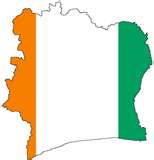
  6. La Cote d'Ivoire
    La Cote d’Ivoire

    Alassane Ouattara, president of Cote d’ivoire, was reelected for a 4th term he was not supposed to be able to run for (in view of the country’s constitution), after selectively eliminating some of the major contenders like Laurent Gbagbo and Tidjane Thiam, leaving only a few such as Simone Gbagbo, Jean-Louis Billon, Ahoua Don Mello, and Henriette Lagou Adjoua. He won the elections with another Banana Republic-type score of 91.2%. Wow! The hijacking of the constitution and Ivorian freedom continues! Given that he serves well Western interests, he was congratulated for his reelection.

  7. Flag of Tanzania

    President Samia Suhulu Hassan of Tanzania was elected under shady circumstances and protests. The protests were suppressed in blood; it has been said that since the October 29 elections, there have been more than 2,000 detained, vehicles and buildings burned, and hundreds of deaths. Even the lady was inaugurated under tight security. Recall that she was never elected, but rather came to power after President John Magufuli passed away in office (So Long to President John Magufuli of Tanzania: The Bulldozer). She won with another kafkaesque score of 97%, after the country’s two main opposition parties were barred and the main opposition leader, Tundu Lissu, was imprisoned. Only seen on our continent! This is a clear hijacking of the freedom of Tanzanians; which we will go as far as calling it a coup against the people’s will.

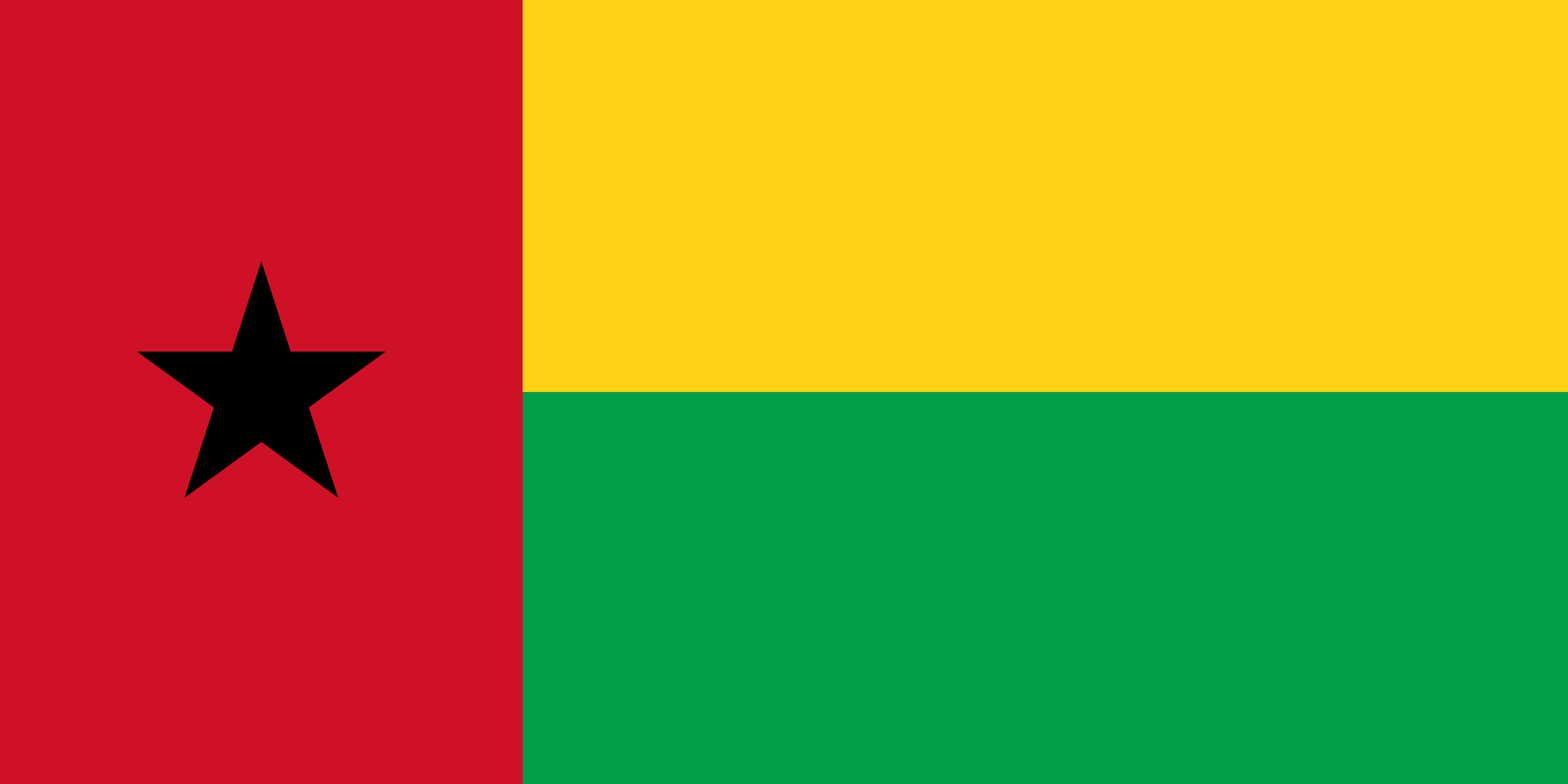
  8. Flag of Guinea Bissau

    There was a coup d’etat in Guinea-Bissau, which looks more like a fake coup. Unlike other places, the coup d’etat was not condemned by ECOWAS or other places; and nobody was called junta by the West. Thus, Guinea Bissau traded Umaro Sissoco Embalo for a general he chose. Recall that he was not even supposed to run for elections, and violated his country’s constitution. He first ran into exile in Senegal, but later moved to the Republic of Congo; he has been accused by opposition and international figures such as former Nigerian president and election monitor Goodluck Jonathan of staging the coup to avoid losing the election against Fernando Dias da Costa. Since it was staged, nobody has called the newcomers, led by Horta Inta-A Na Man, as junta like for the Sahel.

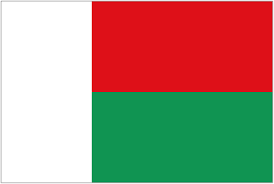
  9. Flag of Madagascar

    There was a coup in Madagascar (2025 Malagasy coup d’état) which saw the fall of President Andry Rajoelina, the DJ who had previously been installed by France, and had also come into power after a coup against Marc Ravalomanana who was not accepted by the West. Macron and France helped fly Rajoelina out to safety in Dubai where he now resides. The new man in charge is general Michael Randrianirina. This coup started by the protests of the populations against power cuts and water outages which have been very common nationwide especially in the capital Antananarivo… they were met with violence from the government police… then it went on, until the army stepped up, and took Rajoelina out. Goodbye to Rajoelina, and welcome to Randrianirina … we hope that he will work for the Malagasy people.

  10. Flag of the Democratic Republic of Congo

    The Democratic Republic of Congo (DRC) signed a “peace” agreement with Rwanda. It started The Declaration of Principles between the Democratic Republic of Congo (DRC) and Rwanda signed in June by DRC and Rwanda foreign affairs ministers including the American Secretary of State. This was later ratified in December by both presidents Felix Tshisekedi of DRC and Paul Kagame of Rwanda in presence of the American President Donald Trump. As we had pointed out, how could a peace agreement with DRC be signed which does not clearly state that Rwanda is the aggressor of the DRC? How can there be a peace agreement, if Rwanda does not admit to its crimes against the Congolese people? Why is there no mention of the close to 10 million dead Congolese from this 30-year-old conflict? What sort of a peace is that if there is no justice? Well, to prove us right, new conflicts started in the region immediately after the signature of the agreement, or rather they never stopped. Peace Agreement between the Democratic Republic of Congo (DRC) and Rwanda: Is this for Real? Thus, the DRC is still under attack. We should tell all these Congolese and African politicians to stop signing documents in fear… nothing good comes out of negotiating from a position of fear!

  11. Flag of Sudan

    As the year closes, the civil war is still ongoing in Sudan, all of that under the eyes of the “international” community. Sudan’s brutal civil war has dragged on for over years, displacing millions and killing in excess of 150,000 people. This is now among one of the deadliest conflict in the world today. Our hearts go out to our Sudanese brothers and sisters.

Te rappelleras-tu ? / Will You Remember ? by Richard Dogbeh

Flower – Smile

Today is a day of remembrance. I love this poem by Beninese author Richard Dogbeh, Te rappelleras-tu ? (Will You Remember?) published in Cap Liberté, Edition Clé, 1969. This poem is not only a love poem, but also a friendship poem, a hardship poem, and above all a future poem. Beyond the battles that a couple goes through in life, there are joys, wishes, and visions. Further, as one reads this poem, there is also a vision for the country, in this case Benin, for the development of the country which is struggling; this could be applied to the continent as a whole. 

For love, the sentence “Will you remember friend that formidable night when love took us by surprise?” says it all. The deep friendship is highlighted by the togetherness and vision, “We will build our lives with faithfulness and pride” or “Look friend of the deadly shores .” One can see hardship in the journey with unity, “we will fight jealousy and envy that destroys the future, the injustice that divides…“. The future is highlighted in “In your eyes, the prophecy shone“… or “the future will be beautiful in our difficult roads…

Enjoy! This is brought to you by Dr. Y., Afrolegends.com. Te rappelleras-tu ? (Will You Remember?) by Richard Dogbeh published in Cap Liberté, Edition Clé, 1969. Love, love, love…

=====

Te rappelleras-tu ? / Will You Remember by Richard Dogbeh

Te rappelleras-tu amie ce soir redoutable

Où l’amour nous a surpris tous les deux

Dans tes yeux la prophétie scintillait

Comme dans toutes les chansons

Le bonheur dépendait de nous deux

Tout simplement


Dans la tourmente de notre pays

Nous combattrons la jalousie et l’envie qui déciment l’avenir l’injustice qui divise

Nous combattrons la paresse et la routine

Nous bâtirons notre vie fidèle et fière.


Regarde

Amie des rives mortelles

Impatiente de charité

L’harmonie jaillit dans le pays

De Cotonou à Malanville


Dans nos jardins et nos maisons

Croissant des fleurs aux mille couleurs

J’ai lu dans le ciel de nos villes

Que l’avenir sera beau

Sur nos routes difficiles


Au bord de la mer en furie

Il pleuvait ce soir-là et le vent froid nous fouettait le visage

Comment se peut-il qu’un flot de bonheur naisse d’une cité d’angoisse

Ainsi va la vie

Il faut nous armer

Il faut nous cacher (…)


Will you remember my friend this formidable evening

Where love surprised us both

In your eyes the prophecy was shining

As in all songs

Happiness depended on both of us

Simply


In the turmoil of our country,

We will fight the jealousy and envy that are decimating the future and the injustice that divides us.

We will fight against laziness and routine.

We will build our lives with faithfulness and pride.


Look

Friend of the deadly shores

Impatient for charity

Harmony springs forth in the land

From Cotonou to Malanville


In our gardens and our homes

Flowers of a thousand colors are blooming

I read in the sky above our cities

That the future will be beautiful

On our difficult roads


On the edge of the raging sea

It was raining that evening and the cold wind was lashing our faces

How is it possible that a wave of happiness can arise from a city of anguish?

That’s how life is.

We must arm ourselves.

We must hide (…)


Mali uses AI to Teach School Children in Bambara

Artificial Intelligence (Source: IBTimes.co.uk)

As AI tools become ubiquitous, many African countries are taking advantage to improve their education, economy, and much more. One such country is Mali where AI tools have been used to teach school children in the local languages. In parenthesis, this is happening while some African countries like Nigeria are moving away from teaching local languages in the curriculum; this is quite sad. Here, we are raising our hats to educators in Mali who are using AI to teach kids how to learn and write in local languages that they already speak at home with friends and family. The Education ministry is using the services of RobotsMali which has produced more than a hundred stories in Bambara, the most widely spoken local language.

Excerpts below are from Africanews. Enjoy!

=====

Flag of Mali
Flag of Mali

Since Mali adopted a new constitution in 2023, the country has 13 official languages. Although French is no longer part of that list, the language of the former coloniser is still present everywhere, including in classrooms.

Malian authorities hope artificial intelligence can change that by helping students learn to read and write in local languages they already speak with friends and family.

To achieve this goal, the Education ministry has called on RobotsMali. This AI company has produced more than a hundred stories in Bambara, the most widely spoken language in the country, for students to read in schools.

It helps me speak better with my friends. All of this is good,” said 13-year-old pupil Clarisse Yasségué Togo. At school, we only speak French.”

AI programmes like ChatGPT and Leonardo are used to write, translate and illustrate the stories.

Since the stories are also illustrated, it teaches [students] to make the connections between words and their meaning very quickly,” said RobotsMali Mamadou Dembele.

The organisation hopes to provide a solution to the lack of books in Malian languages.

Bambara is our language. We should prioritise it,” said 17-year-old student Fatoumata Sacko.

Mali Recovers over a Billion $ for its Miners

Map of Mali 

Imagine being able to recover money from multinationals? Imagine putting the well-being of your people so much at the forefront that you are not afraid of uncovering or exposing corruption or injustice, and of taking on major world multinationals! This is what the Malian government has just done, and as a result has uncovered a billion dollar in arrears! Remember how Pascal Lissouba, the former president of the Republic of Congo, admitted that the Congolese government had no idea how much oil Elf (now Total Energies) was pumping out of its soil, and that they were at the mercy of whatever the company wanted to pay them, which was pennies; when he tried to renegotiate contracts or find better partners, he was deposed by Denis Sassou Nguesso, the Western puppet. Remember Jean Bedel Bokassa of the Central African Republic who admitted that he had no visibility on the amount of diamonds or uranium that French and Swiss companies were extracting from his country. Now, imagine being in your sovereign state, i.e. no Western puppet at your helm, the well-being of your people at the forefront?

AES Logo

Mali (and the other countries of the AES) has been working tirelessly on nationalizing their resources, and renegotiating correctly contracts with multinationals that are extracting their resources. Thus, such an exercise is fruitful in the sense that now, they can audit accounts, and compensate or fight for better compensation for their people better. Today, it was announced that Mali has recovered over a billion dollar in arrears from mining companies! Isn’t this a beautiful Christmas /end of year present? This also makes us pray further for the safety of such governments who place the restoration of their people’s dignity and well-being at the forefront of their efforts. Now, more than ever, they will be the target of the foreign corporations and bandits! Now, more than ever, they need each of us to stand in solidarity with them!

Excerpts below are from Africanews.

=====

Mali has recovered more than a billion dollars in arrears from mining companies after a sweeping audit, its finance minister, Alousséni Sanou, said on Tuesday.

It’s one of the country’s biggest ever clawbacks from its lucrative mining sector.

The military-led government launched an audit of the sector in early 2023 and uncovered massive shortfalls for the state. That paved the way for a new mining code that raises royalties, boosts the state’s ownership in mining companies and scraps stability clauses.

A recovery commission was set up after an audit flagged financial irregularities and shortfalls for the state estimated at between half a billion and a billion dollars.

So Long to Jimmy Cliff, the Author of Many Rivers to Cross

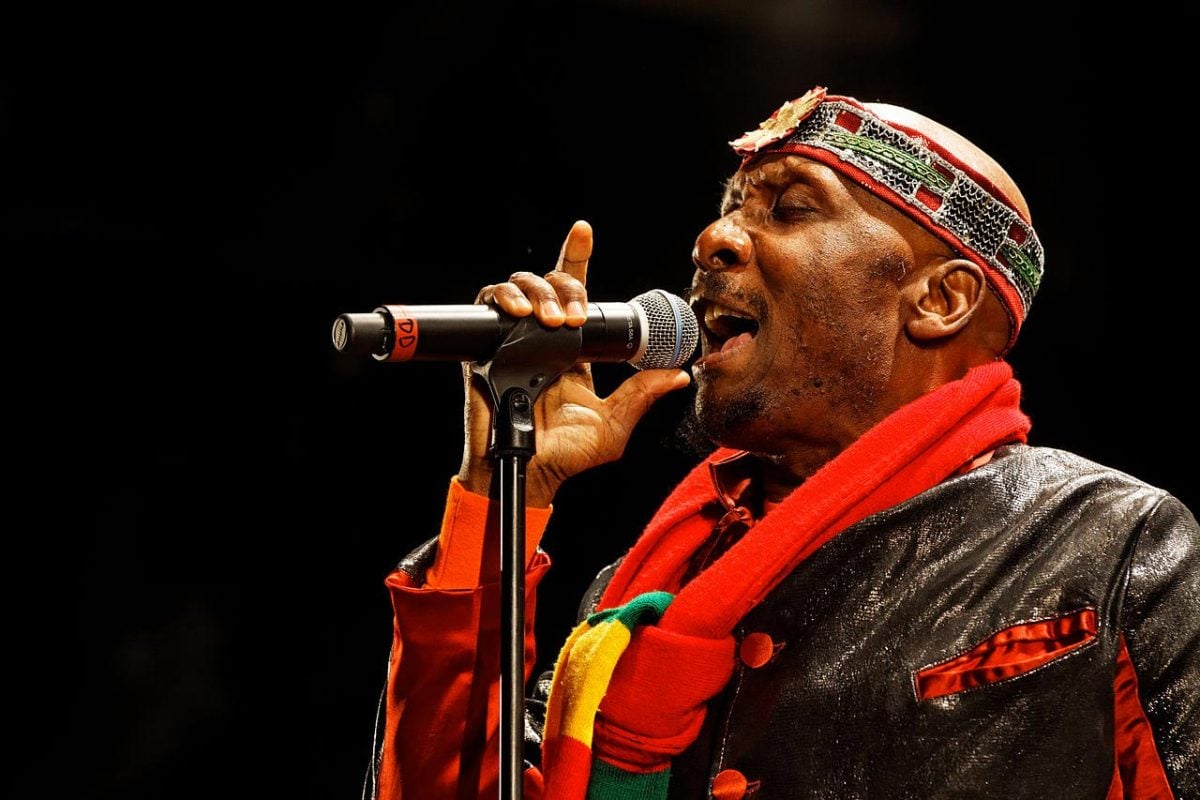
Jimmy Cliff (Source: Dancehallmag.com)

One of Reggae’s greatest known artists, Jimmy Cliff, passed away yesterday. The author of Many Rivers to Cross, I can see Clearly Now, or The Harder They Come, or Vietnam, and many more, has joined the ancestors… they must be all singing today. My favorite of Cliff’s songs has always been “I can See Clearly Now”, for it is a deep message of hope and renewal; it was the cover of the 1993 movie Cool Runnings soundrack.

Jimmy Cliff was born James Chambers in 1944 in St James parish in Jamaica in a family of nine children; he was the eighth child. In terms of music, he was self-taught, started singing at age 6 in the church choir, later started writing his own songs, and wrote his first song, I Need a Fiancée, on a guitar made with bamboo. By the age of 14, he moved to Kingston, the capital, and took the surname Cliff to express the heights he intended on reaching. In 1965, he moved to London, where it took a while for his music to take off, until his 1969 single Wonderful World, Beautiful People, and then the politically charged Vietnam, which Bob Dylan called “the best protest song ever written.” In 1986, he told Reggae archivist Roger Steffens, “The essence of my music is struggle. What gives it the icing is the hope of love.”

Flag of Jamaica

Over the years, Cliff has collaborated with some of the greatest artists of this earth, from Bob Marley, The Rolling Stones, Bruce Springsteen, Sting, Elton John, UB40, Kool & the GangElvis CostelloWyclef Jean, and countless others. He is the only other Jamaican, after Bob Marley, to have been inducted in the Rock and Roll Hall of Fame.

Throughout his career, Cliff expressed his deep love for Africa which he described as his ancestral home, and his music inspired generations of musicians in Africa and beyond. His themes of liberation, struggle, and hope mirrored African struggles against colonialism and apartheid. He also always valued African culture singing on stage and showcasing African clothing with style.

Below are the lyrics of my favorite, I can see clearly now

I can see clearly now the rain is gone

I can see all obstacles in my way

Gone are the dark clouds that had me blind

It’s gonna be a bright (bright) 

Bright (bright) sunshiny day

It’s gonna be a bright (bright)

Oh, yes, I can make it now the pain is gone

All of the bad feelings have disappeared

Here is the rainbow I’ve been praying for

It’s gonna be a bright (bright)

Bright (bright) sunshiny day

(Ooh) Look all around, there’s nothing but blue skies

Look straight ahead, there’s nothing but blue skies

The Importance of the Timbuktu’s Manuscripts and their Return

Manuscripts a Tombouctou (Mali) montrant de l'astronomie et mathematique
Manuscripts a Tombouctou (Mali) montrant de l’astronomie et mathematique

The Timbuktu’s Manuscripts are Returning Home to their rightful owners, after over 10 years away. It is so beautiful that the families who own these multi-centennial parts of African history get to have them back as it is not only part of their heritage, but ours also, and we are thankful for them to have protected throughout the centuries.

At the Ahmed Baba Institute in Bamako, people have been actively working on digitalizing all the manuscripts for humanity’s sake. These challenge the eurocentric views that “Africans have not entered enough in history” as the former French president Sarkozy said, even though many scholars from around the world used to travel to Timbuktu to find the best teachers. Through these manuscripts, we discover brilliant scholars, doctors, lawmakers, astronomers, mathematicians, geologists, and much more. After all, Timbuktu, was one of the world’s first and oldest university.

Excerpts below are from Africanews, and check out the Google Arts & Culture (Timbuktu Manuscripts now Available OnlineThe Lost Libraries of Timbuktu).

=====

Timbuktu from a terrace by Heinrich Barth 1858

Among the manuscripts are medical texts, legal rulings, letters, astronomical notes and chronicles of West African empires.

In some pages, scholars debate whether smoking tobacco was moral or forbidden.

In others, officials urge reducing dowries so poorer men could marry.

Marginal notes record earthquakes and local events long forgotten elsewhere.

Sane Chirfi Alpha is the founding member of SAVAMA DCI, which is a local nonprofit organisation dedicated to the safeguarding, preservation, and promotion of the ancient Timbuktu manuscripts. He says the collection reveals a depth of scholarship that challenges assumptions about the region’s past.

According to old documents, there were doctors here in Timbuktu who performed surgery to treat cataracts. The same manuscript also says that a doctor from Timbuktu saved the French throne. The crown prince was sick, and French doctors could not cure him. It was the doctor from Timbuktu who cured him.”

…  One important tradition still documented in many manuscripts is the chain of teaching, where scholars recorded who taught whom through generations.

Dr Mohamed Diagayaté, general director of the Ahmed Baba Institute says: “When a student finishes studying with a scholar, that scholar gives him a certificate saying he has taught him a subject, which the student has mastered. The certificate also says that the student learned it from a certain scholar, and that this scholar learned it from another scholar, going right back to the person who wrote the original document.

Great Britain and South Africa hand back Ghanaian Royal Artefacts

Asantehene Otumfuo Osei Tutu II (Source: Ghanaweb.com)
Over 130 Ghanaian royal artefacts were returned this week to the rightful owner, the Asantehene (king) Otumfuo Osei Tutu II of the Asante people from Ghana. These were returned by Great Britain and South Africa. The 130 objects include gold and bronze artefacts, drums, royal regalia and ceremonial gold weights, some of which were looted during colonial times by Great Britain, while others were bought on the open market. The items date from the 19th and early 20th centuries. The handover took place at the Manhyia Palace in Kumasi, the seat of power of the Asante kingdom. Unlike the last time, these appear to be a ‘real‘ return and not a loan (UK Museums “Long-term Loan” looted Asante Gold Artifacts to Ghana)!!! Let’s pray it is a real return with no hidden clause!

Excerpts below are from BBC.

=====
Map and Flag of Ghana
Ghana’s Asante king has welcomed the return of 130 gold and bronze artefacts from the UK and South Africa some of which were looted during colonial times and others bought on the open market. The items included royal regalia, drums and ceremonial gold weights, dating back to the 1870s – and reveal the cultural role gold played in Asante society. Twenty-five of the pieces were donated by British art historian Hermione Waterfield and the rest by South African mining company AngloGold Ashanti. Handing over the pieces at a ceremony at the Manhyia Palace, in the city of Kumasi, officials from AngloGold Ashanti said the gesture was made as an act of cultural respect and reconciliation. … gifts included a wooden drum looted during the 1900 siege of Kumasi by British colonial forces. … British soldiers were involved in a series of conflicts in the late 19th Century in what were called the Anglo-Asante wars. The palace of the king, or Asantehene, was plundered twice. The call by African countries for the return of looted items has been met with some success in recent years – though some items are only on loan. Last year, 32 looted artefacts went on display at the Manhyia Palace Museum as part of a three-year loan agreement between two British museums – the Victoria & Albert Museum (V&A) and British Museum – and the Asante king. …
Foreign Access to Property Prohibited in Lesotho in 1859

King Moshoeshoe I of Basutoland

As I see the sale of African lands to multinationals for pennies, or in some cases loans for 20-30-50 years and even 100 years, or like in Kenya (and certainly many other places) for 999 years (Did You Know about the 999-year Lease granted to Europeans in Kenya ?), I cannot help but think of King Moshoeshoe I of Lesotho who, in 1859, prohibited the sale of Sotho land to foreigners. This was a big NO. No ancestral lands could be sold to foreigners. Our current African leaders should learn from our forefathers; they, like Moshoeshoe I of Lesotho, or Gungunyane: the Lion of Gaza or the Last African King of Mozambique, or Mirambo: the Black Napoleon of Tanzania, understood the importance of our lands!  The law below also gives a glimpse on the justice system as implemented in the Sotho kingdom under its first king. This is a historical document set in its time to be read with the protection of the integrity and protection of Sotho land in mind.

Below is the access to property law signed by King Moshoeshoe I in 1859 on his homeland of Lesotho. The original can be found in Les Africains, Tome 8, p. 254, ed. Jaguar. Translated to English by Dr. Y., Afrolegends.com

======

Map of Lesotho

Access to property: prohibited for traders, “White or colored”, 1859 law

I, Moshoeshoe, for any trader, whoever he may be, already present in my country, and for anyone who might come to trade with the Basutos ; my word is this :

Trading with me and my tribe is a good thing, and I hope it will grow.

Any merchant who wants to open a shop must first obtain my permission. If he builds a house, I do not give him the right to sell it.

Moreover, I do not give him the freedom to plow fields, but only to cultivate a small vegetable garden.

The merchant who imagines that the place where he stays belongs to him, must abandon this idea, otherwise he will leave; for there is no place on my soil that belongs to the Whites, and I have never given a place to a White, whether verbally or in writing.

Furthermore, any merchant who comes here with a debt, or who contracts one while he is on my soil, whatever his debt may be, if he is brought to me, I will make an inquiry into him in our court of justice in order to be able to settle the matter ; and the debt will be repaid in the way the Basutos repay their debts. But the plaintiff must appear before me, and the debtor as well, so that justice may be done. […]

Raila Odinga in His Own Words

Raila Odinga (Source: World Economic Forum)

As we celebrate the life of this great fighter for Kenyan democracy, we will remember him by his own words. Below are a few… Let Odinga’s political legacy continue. Let’s never give up the fight for our freedom; it may take a long time, but never give up!

======

On how the treatment of those who fought for the freedom of Kenya and the Mau Mau uprising : The men and women who paid the ultimate price so that we may live in freedom only had the nasty reward of being called bandits and terrorists when the war was over.

On the Mau Mau revolution: I can feel the pain of the Mau Mau and other freedom fighters. They must have concluded that life is cruel and worthless and that Kenya has no place for heroes.

Under British guns, during the Mau Mau rebellion in Kenya
Under British guns, during the Mau Mau rebellion in Kenya in the 1950s

On education: Regardless of what you hear, the successes and failures you see, it still pays to work hard and play by the rules. Success is a lie when founded on shortcuts and deals negotiated in smoke-filled rooms.

On choosing the best people to govern the country : The security of the country must be in the hands of the best men and women for the job.

On his lifelong struggle against corruption and for the betterment of Kenya : I don’t fight individuals, I fight systems.

As a reminder of his time as a political detainee in the 1980s : Freedom is never given freely; it is won through struggle.

Flag of Kenya

During the 2002 transition that saw the end of the KANU-rule, There comes a time when the nation is more important than an individual.

On winning elections, after his third attempt in 2013 : Three times I have run for president, two times I have won, and I have been robbed two times.

On the state of Kenya and African leadership : At independence, Kenya’s economy matched South Korea’s. Forty five years later, Korea is forty times larger. The mediocrity of leadership is Africa’s greatest curse.

On elections : You cannot have free and fair elections when one party controls and monopolizes the instruments of power.

His dream for Kenya, stated during his 2022 presidential campaign : My dream is a Kenya where no child goes to bed hungry.

Ban on the Sale of Foreign Alcohol in Lesotho in 1854

King Moshoeshoe I of Basutoland

As we have seen before, many African kings prohibited the sale of foreign alcohol on their soil. They could sense the harmful effect of alcohol on their men and on the society as a whole. They could also foresee the destruction of the soul of their societies via this foreign alcohol like Native Americans saw their destruction on another continent. Gungunyane: the Lion of Gaza or the Last African King of Mozambique, or Mirambo: the Black Napoleon, king of the Nyamwezi people in Tanzania, are just a few. Moshoeshoe I, the first king of Lesotho also prohibited the sale of foreign liquor on his soil. History Repeats Itself: the destabilization of Africa during slavery times via the use of alcohol as a tool, is continuing today, particularly in countries rich in resources. Current African leaders would do well to follow the example of their forefathers, as alcohol is destroying our societies and most of the beer companies are owned by Western multinationals; the alcohol level in beers and liquors in many African countries are significantly higher than in European countries, and the people are slowly being turned into drunkards while their resources are siphoned out. 

Below is the ban on alcohol imposed by King Moshoeshoe I on his homeland of Lesotho. The original can be found in Les Africains, Tome 8, p. 254, ed. Jaguar. Translated to English by Dr. Y., Afrolegends.com

=====

Ban on the sale of Foreign Alcohol

8 Novembre 1854

Whereas the alcohols of the Whites were unknown to previous generations of our tribe, that Matie (Matsie, that is Nkopane, father of Mohlomi) et Motlomi (Mohlomi) to the Bomonageng (BaMonaheng), and our father Mokhachane, now advanced in age, never consumed any other drinks than water and milk ; and whereas we believe that a good leader and judge cannot claim to be capable of performing his duties if he uses any stimulant whatsoever ; and whereas that alcohol causes quarrels and troubles, and paves the way to the destruction of society (it is evident that the white people’s alcohol is nothing but fire).

It is therefore made known to all that the introduction and sale of said alcohols in Basutoland is henceforth prohibited, and it is stipulated that for any person, whether white or colored, anyone who contravenes this decision will have their alcohol seized and spilled to the ground, without excuse or compensation.

This decision will be printed in the Basuto [Sotho] and Dutch languages and posted in public places and in Basutos villages.

Given with the advice and agreement of the men of our Tribe, by us the King of the Basutos, in Thaba Bosigo, on November 8th 1854.

King Moshoeshoe