The African Cup of Nations

The Africa Cup of Nations/ La Coupe d'Afrique des Nations

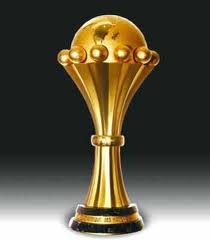
The quarter-finals to the African Cup of Nations (Coupe d’Afrique des Nations) tournament took place yesterday.  The African Cup of Nations is a highly followed soccer tournament to which all African nations participate.  In essence, all African nations play qualifiers which ensures that about 16 nations on the continent will get a chance to play at the African Cup of Nations.  Since 1968, the tournament has taken place every two years, and every even year during the month of January and ends around mid-February: one month of intense fun.  If you are an avid soccer fan, as I am, you would love watching some of the greatest African teams and stars at their best (sometimes, at their worst too).  Recently, the pressure of big money FIFA has forced a change into the schedule of the CAN, forcing the tournament to now take place every odd years, so as ‘not to clash with the soccer world cup‘ (this change was forced by European big clubs/leagues to whom many African players belong).
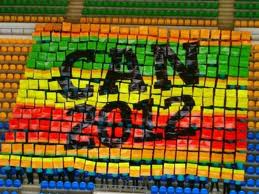
CAN 2012
CAN 2012

The African Cup of Nations (CAN) tournament was first held in 1957 in Sudan, and only three countries participated: Egypt, Sudan, and Ethiopia.  Egypt has won the cup seven times, making it the record holder.  In recent years, Egypt won the cup three consecutive times. Cameroon and Ghana follow behind Egypt and have both won the tournament four times.  Cameroon and Egypt are not participating at this year’s African Cup of Nations, but Ghana is… and there is a strong chance that they might win the cup this year.  This year’s tournament, the 2012 CAN, is held in two countries: Gabon and Equatorial Guinea.  I believe that the final this year will be between Ghana and Côte d’Ivoire: the Black Stars vs the Elephants.  Although my heart is with the Elephants of Didier Drogba, I have slight edge towards Ghana of Michael Essien.

My dream is to see an African cup of Nations where all the coaches of African teams would be African…  I might have to wait a long time to see this, but in the meantime enjoy!  Mali just knocked out Gabon in penalty kicks and will be facing Côte d’Ivoire in semi-finals (this promises to be a good game).  The face-off to the other semi-final will be Ghana-Zambia, as Ghana defeated Tunisia 2-1.  Let’s wait and see!

Letter of a Freed Slave to his Old Master

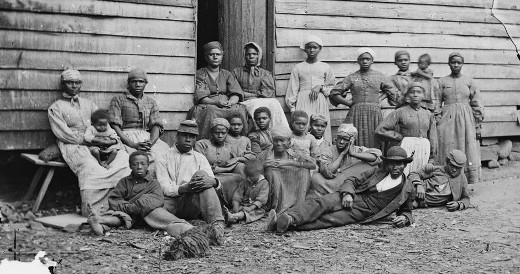
A group of escaped slaves in Virginia in 1862 (courtesy of the Library of Congress)

A newly discovered letter from a freed former slave to his onetime master is creating a buzz. Letters of Note explains that in August of 1865, a Colonel P.H. Anderson of Big Spring, Tennessee wrote to his former slave Jourdan Anderson, requesting that Jourdan return to work on his farm.  In the time since escaping from slavery, Anderson had become emancipated, moved to Ohio where he found paid work and was now supporting his family. The letter turned up in the August 22 edition of the New York Daily Tribune. ENJOY!

———-

Dayton, Ohio,

August 7, 1865

To My Old Master, Colonel P.H. Anderson, Big Spring, Tennessee

Sir: I got your letter, and was glad to find that you had not forgotten Jourdon, and that you wanted me to come back and live with you again, promising to do better for me than anybody else can. I have often felt uneasy about you. I thought the Yankees would have hung you long before this, for harboring Rebs they found at your house. I suppose they never heard about your going to Colonel Martin’s to kill the Union soldier that was left by his company in their stable. Although you shot at me twice before I left you, I did not want to hear of your being hurt, and am glad you are still living. It would do me good to go back to the dear old home again, and see Miss Mary and Miss Martha and Allen, Esther, Green, and Lee. Give my love to them all, and tell them I hope we will meet in the better world, if not in this. I would have gone back to see you all when I was working in the Nashville Hospital, but one of the neighbors told me that Henry intended to shoot me if he ever got a chance.

I want to know particularly what the good chance is you propose to give me. I am doing tolerably well here. I get twenty-five dollars a month, with victuals and clothing; have a comfortable home for Mandy,—the folks call her Mrs. Anderson,—and the children—Milly, Jane, and Grundy—go to school and are learning well. The teacher says Grundy has a head for a preacher. They go to Sunday school, and Mandy and me attend church regularly. We are kindly treated. Sometimes we overhear others saying, “Them colored people were slaves” down in Tennessee. The children feel hurt when they hear such remarks; but I tell them it was no disgrace in Tennessee to belong to Colonel Anderson. Many darkeys would have been proud, as I used to be, to call you master. Now if you will write and say what wages you will give me, I will be better able to decide whether it would be to my advantage to move back again.

Continue reading “Letter of a Freed Slave to his Old Master” →

Cheikh Anta Diop and the African Origin of Civilization

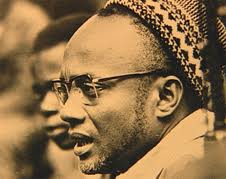
Cheikh Anta Diop
Cheikh Anta Diop

Cheikh Anta Diop was a great Senegalese historian, anthropologist, philosopher, physicist and politician.  He should be considered as one of the greatest scientists after Darwin, as he demonstrated that Africa was the cradle of humanity; that everything started in Africa, and that Egypt and modern day Africans descended from the same ancestors, in other words, were the same people.  Before Cheikh Anta Diop, the world, and Africans in particular, had been taught that Africa was nothing, and that Egypt and Egyptians were not Africans… that the great Egyptian civilization which gave so much to the world, could not have come from the dark brown Africans.  Europeans refused to admit that although in Africa, Egyptians could be Africans i.e. Black, or rather believed that Blacks were so backwards that their ancestors could not have possibly made the great pyramids of Giza or the great sphinx.  Well Cheikh Anta Diop proved them all wrong!

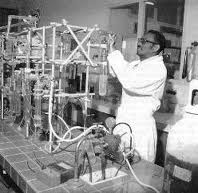
Cheikh Anta Diop in the laboratory

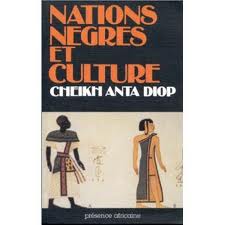
As a physicist, I was amazed to learn that Cheikh Anta Diop was a PhD student of Frédéric Joliot-Curie, the 1935 physics nobel laureate, and Marie Curie‘s son-in-law (first woman to receive a Nobel in Physics, and first to have two nobel prizes). So Diop’s pedigree, in physics terms, was quite impressive!  Moreover, he had earned two PhDs: one in history and the other in nuclear physics.  He was also the only African student of his generation to have received a training in egyptology. He was well-versed in prehistoric archaeology, and linguistics.  It took him almost a decade to have his doctorate degree granted: he submitted a thesis in 1951 which was based on the premise that the Egypt of the great pharaohs and pyramids was an African civilization– it was rejected.  He then published it in 1955, as Nations Nègres et Culture, and received world-wide acclaim.  Two additional attempts at submitting it were rejected, until 1960 when he finally managed to convince a room full of physicists, sociologists, anthropologists, egyptologists, and historians.  Having gone through the hurdle of submitting and defending a doctoral dissertation, I truly raise my hat to someone like Diop who had so much stamina and endurance, and could endure a decade of rejection like that; he was truly destined for greatness!

'Nations Negres et Culture' de Cheikh Anta Diop

In 1974, Diop managed to prove beyond a shadow of a doubt, that Egyptians were Black people.  He obtained pigment from Egyptian mummies and tested for their melanin content.  He was able to determine their melanin content accurately, and later published his technique and methodology for the melanin dosage test in scholarly journals.  This technique is used today by Forensic investigators around the world, to determine the “racial identity” of badly burnt accident victims.

He was affectionately known as the Pharaoh of knowledge, and the Université Cheikh Anta Diop (UCAD) of Dakar was re-named after him.  Check out CheikhAntaDiop.net a website dedicated to this great man, Wikipedia, Cheikh Anta Diop: The Pharaoh of Knowledge, and Africawithin.com.  Don’t forget to read his books: Nations Nègres et Cultures: de l’Antiquité Nègre Egyptienne aux Problèmes Culturels de l’Afrique Noire d’Aujourd’hui, The African Origin of Civilization: Myth or Reality, Precolonial Black Africa, Civilization or Barbarism: An Authentic Anthropology [Civilisation ou Barbarie: Anthropology sans Complaisance], and many others.

'The African Origin of Civilization' by Cheikh Anta Diop

Please watch one of the greatest African thinkers of the 20th century, and above all one of Africa’s greatest sons (… and renowned physicist). I salute this great soul who made us proud of being Africans, who re-define history or rather wrote History the way it should have been, with Africa in its right place, as the origin of civilization. If there was an African Pantheon for great minds, Cheikh Anta Diop’s remains should be in it!

Amilcar Cabral – Tell no lies, claim no easy victories

Amilcar Cabral
Amilcar Cabral

January 20th marks the anniversary of the death of Amilcar Cabral, the father of the independence of Guinea Bissau and Cape Verde. As such, I just thought about leaving you with some of his most famous quotes. Enjoy!

“A people who free themselves from foreign domination will be free culturally only if, without complexes and without underestimating the importance of positive accretions from the oppressor and other cultures, they return to the upward paths of their own culture, which is nourished by the living reality of its environment, and which negates both harmful influences and any kind of subjection to foreign culture. Thus, it may be seen that if imperialist domination has the vital need to practice cultural oppression, national liberation is necessarily an act of culture.”  Amilcar Cabral, “National Liberation and Culture” Lecture delivered on February 20 at Syracuse University as part of the Eduardo Mondlane Memorial Lecture Series. Eduardo Mondlane was the first President of the Mozambique Liberation Front (FRELIMO) who was assassinated by Portuguese agents on Feb. 3, 1960. historyisaweapon.com

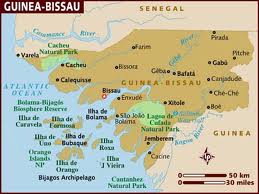
Map of Guinea Bissau

“We must practice revolutionary democracy in every aspect of our Party life. Every responsible member must have the courage of his responsibilities, exacting from others a proper respect for his work and properly respecting the work of others. Hide nothing from the masses of our people. Tell no lies. Expose lies whenever they are told. Mask no difficulties, mistakes, failures.  Claim no easy victories…” Amilcar Cabral: tell no lies, claim no easy victories

“Educate ourselves; educate other people, the population in general, to fight fear and ignorance, to eliminate little by little the subjection to nature and natural forces which our economy has not yet mastered. Convince little by little, in particular the militants of the Party, that we shall end by con­quering the fear of nature, and that man is the strongest force in nature.” Amilcar Cabral: Tell no lies, claim no easy victories

Continue reading “Amilcar Cabral – Tell no lies, claim no easy victories” →

Celebrating 100 years of struggle: the African National Congress

ANC flag
ANC flag

Last week, on January 8th 2012, the African National Congress (ANC) celebrated 100 years of existence. I think a trip down history lane is in order.

———————

After the defeat of Zulu, Xhosa, and other African kingdoms in the late 1800s-1900s in the hands of British colonizers, South Africans had to find a new way to fight off the oppressors. Thus, in 1911, Pixley ka Isaka Seme called on Africans to forget the differences of the past and unite together in one national organisation. He said: “We are one people. these divisions, these jealousies, are the cause of all our woes today.“ That national organization saw light on January 8th 1912, when chiefs, representatives of people’s and church organisations, and other prominent individuals gathered in Bloemfontein and formed the African National Congress. The ANC declared its aim to bring all Africans together as one people to defend their rights and freedoms. Its first elected president was John Dube.

South African miners

The 1920s-1930s were marked by actions such as the 1919 campaign against passes by the Transvaal ANC; the militant strike by African mineworkers in 1920; and the social organization of Black workers…  The ANC went through several stages, first, as a church-based lobbying force, a non-violent nationalist movement, and then, as part of an alliance with Indians, Coloureds, and progressive Whites, including Afrikaners and Communists.

The Sharpeville massacre on 21 March 1960 where a group of 5000-7000 marched to protest against passes and were shot on by police forces showed the international community how ruthless the apartheid system was.  Karen Allen of BBC news recalled the massacre with this chilling description: “Thousands of protesters had gathered in Sharpeville, just south of Johannesburg, to protest at the use of the infamous passbooks, or “dompas”, that every black South African was expected to carry and produce on demand. It governed a person’s movement, was a tool of harassment and was one of the most hated symbols of the apartheid state. Sixty-nine men, women and children were gunned down on that day, killed when police officers opened fire on the crowd. The police station – where they had gathered – is now a memorial to the dead.”

Nelson Mandela ca 1955

In 1961, the ANC took up arms against the South African White government. It morphed into a violent struggle of resistance and armed combat with Umkhonto we Sizwe (MK) or Spear of the Nation, when the doors to non-violent change were brutally shut by white nationalists who built on British colonial racism to impose apartheid, a practice of physically relocating communities, regulating labour with passes and violent repression. During those years, not only did MK tried to make the country ungovernable to no avail (as they were no match to the repressive white supremacist government of South Africa), but many of its leaders were arrested like Nelson Mandela, Govan Mbeki, and Walter Sisulu, while others like Oliver Tambo and Joe Slovo went into exile.

Continue reading “Celebrating 100 years of struggle: the African National Congress” →

Happy 2012!

Fireworks
Fireworks

My fellow friends, may 2012 be the year of all achievements, and of all greatness! I would like to thank all those who visited my blog and future visitors.  I wish you all wonders without borders… I wish you all peace and serenity for the year 2012! To all those who witnessed the events in Côte d’Ivoire and Libya, to all those who were speechless and bewildered, to all those who felt powerless in 2011, keep your heads up… and keep on fighting. Like Agostinho Neto used to say: a luta continua… a vitória é certa!

The Biafran Civil War and the French Connection

Flag of the Biafra republic

With the death of C. Odumegwu Ojukwu, the leader of the breakaway Biafra Republic, I decided to talk about another chapter of the ‘françafrique’ book, i.e. the Biafran war.  At first everybody thought that it was just a Nigerian war, but it is more than that.  It is also a war about France’s position in Nigeria, and their support of the Biafra military, as well as their manipulation of the media.  How the word ‘genocide’ was used to influence public opinion… Jacques Foccart himself happily admitted choosing that word so as to get the attention of President de Gaulle and the French media.  Sadly this war, which lasted from 1967 to 1970, cost many Nigerian lives, for the French and European oil greed. Interesting how history repeats itself as in Sudan vs. South Sudan today!

Biafra before & after (source: MySpace.com/rememberbiafra)

The other day, I was talking to a Nigerian friend of mine, who did not even know that the French had played a major role in that war… see how we (Africans) barely know our history?  He was telling me about the Igbo, Haussa, and Yoruba, and forgot that the French were the ones supplying guns to the Biafrans for the war…  He did not even know that most of the Biafran leaders who ran away sought refuge in Côte d’Ivoire… why? why not Ghana, Benin, or Cameroon? why a French-speaking country further away? Again the French influence.  Somebody told me that Cameroon refused to help because then president Ahmadou Ahidjo in support of his Northern brothers refused to help supply guns… maybe, but why didn’t Ghana do it? or neighboring Benin? Why was the help coming from Gabon, who apparently had no interest in the story? well, because one of the biggest French military base in Africa was in Gabon (and Ivory Coast), and probably because a president in his right-mind would not accept that his territory be used to create war in someone else’s country, and also because someone like Kwame Nkrumah could already see the French connection in the deal.

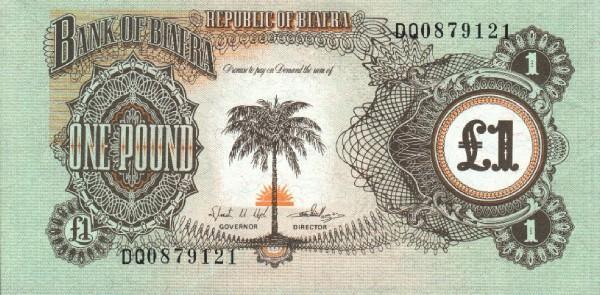
Biafran note for 1 pound

The Biafran war is similar to the Angolan or Mozambique wars or so many other wars in Africa, where many of the strings were pulled by external forces while the African puppets danced on the scene and got killed from the ignorance, and greed of their own leaders.  Please watch this great documentary which sheds some light on the Biafran war, another chapter of the great françafrique.  It is so interesting how Corsica has been wanting their independence from France for ages, but is still not independent to this day.  Look at the United States of America, 50 states, as big as a continent,… but an entire country! Why not in Africa? in Africa, division rather than union is encouraged!

The New York Times wrote an article on Colonel Ojukwu, the one who proclaimed the Biafran republic. A beautiful article by Dr. S. Okechukwu Mezu talks of this Nigerian/Biafran leader. As for the Biafran war, check out: AfricaMasterWeb, ICE Case studies, there are many books written on the Biafra republic and the entire history (you can check out some books on Amazon) I read Half of a Yellow Sun, but I believe that there are better ones on the Biafran war out there (feel free to share if you know of really good ones)… there is a nice article titled Biafra war memories no victor no vanquished, and My memories of the Nigerian-Biafran Civil War

Franc CFA: Une Monnaie de Singe / CFA Franc: a Slave Currency

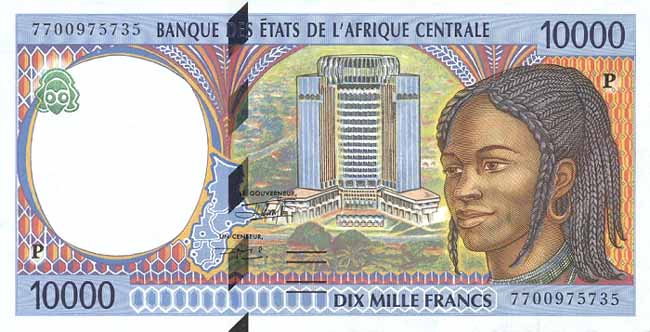
10,000FCFA (BEAC-1992)

Suite à l’article sur la dévaluation imminente (ou pas) du Franc CFA, j’aimerais juste parler de l’histoire de cette monnaie de singe, car c’est vraiment incroyable que 15 pays africains aient soit-disant la même monnaie, le Franc CFA, et qu’ils ne puissent pas l’utiliser d’une zone à l’autre. Un Sénégalais ne peut pas aller à Yaoundé faire des achats avec ses CFA, car le CFA de l’Afrique de l’Ouest ne vaut rien en Afrique centrale, et vice versa.  Résultat: seulement 7-10 % de rapports commerciaux (import-export) existent entre les zones BEAC (Banque des Etats de l’Afrique Centrale) et BCEAO (Banque Centrale des Etats de l’Afrique de l’Ouest). Tous les échanges des anciennes colonies sont tournés vers la France! Donc, aucun échange réel entre pays parlant la même langue, ayant la même monnaie, et separés par moins de 2 h de vol! C’est comme si l’Euro de France ne valait rien en Allemagne ou en Espagne, et la monnaie devait être convertie!

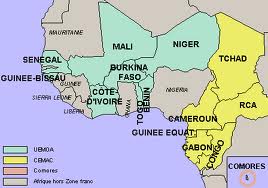
Carte des pays de la zone CFA

Le Franc CFA ou franc des colonies françaises d’Afrique (plutard, les Français ont essayé de changer l’appellation pour endormir les consciences) fut instaurer pour la première fois en 1945 à la fin de la deuxième guerre mondiale.  C’est une monnaie de singe, car les anciennes colonies françaises versent au trésor de Paris 65 % de leurs revenus, et ensuite paient 20% pour assurer les fluctuations des marchés et couvrir les frais de la Banque de France.  De nos jours, ces anciennes colonies versent 50 % plus les 20%!  Imaginez-vous un seul instant: j’ai 100,000FCFA, et je dois remettre a quelqu’un 65,000 FCFA, et ajouter en plus 20,000 FCFA de frais…. Il ne me restera plus que 15,000 FCFA…  si mes poches hurlent de douleur…  imaginez un peu ce que 70 % ou 85% en plus ou en moins ferait au budget d’un pays tout entier?  Soit la pauvreté extrême, ou un certain équilibre budgétaire.

J’ai collectionné certains articles sur l’histoire du Franc CFA: Franc CFA- Wikipedia, Mamadou Koulibaly: Pourquoi le Franc CFA doit disparaitre, Le Franc CFA un outil de controle politique et economique, Le Franc CFA toujours contrôlé par Paris, Le Franc CFA en Sursis … Lisez et regardez! Vous risquez d’être pris de dégoût! Le professeur Nicolas Agbohou que vous verrez dans cette vidéo a écrit un très bon livre a ce sujet: ‘Le Franc CFA et l’Euro contre l’Afrique.’

=========================== (In English →) Continue reading “Franc CFA: Une Monnaie de Singe / CFA Franc: a Slave Currency” →

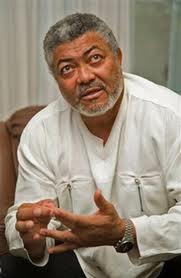
President J.J. Rawlings denounces the Transfer of President Gbagbo to the Hague tribunal

President J. J. Rawlings of Ghana

I have learnt with dismay reports that deposed President Gbagbo of Cote d’Ivoire has been transferred to The International Criminal Court (ICC) on Tuesday, November 29th, following a speedy indictment, in total violation of relevant internationalcode of procedures and in total disregard for the demands of peace in Cote d’Ivoire.

This transfer followed a procedure so hasty that it could be rightfully described as abduction.

My suspicion grows even more, when the prosecuting attorney claiming to be targeting six officials in Cote d’Ivoire, unduly focuses on Gbagbo, the one who is least likely to escape due to his being already in custody.

This eagerness to indict and transfer Gbagbo, who did not run in the face of the bombing of his palace like a common criminal, defies logic and the quest for true reconciliation and sustainable peace in Cote d’Ivoire.

After fifty years of independence, Africa should have all the know-how to bring justice to its own citizens and do away with imported justice.

President Laurent Gbagbo

What kind of prosecution would rather be in haste to bring to justice the victim of an attack, and be lenient on the perpetrator of the attack?

No one is trying to evade justice. But when such justice is drenched in a sea of humiliation and abuses, so as to be governed by self-righteous hatred with its untenable logic, it only befits human conscience to stand up against it for the good of all.

We will not be silent about this because we must not be silent about it as participating members in this human drama.

John Rawlings

Pour la version francaise cliquer sur RevuedePresse-ci.com Continue reading “President J.J. Rawlings denounces the Transfer of President Gbagbo to the Hague tribunal” →

Dévaluation imminente du Franc CFA

Billet de 10000 FCFA (1992)

Un article du journal Notre Voie vient d’annoncer la dévaluation imminente du Franc CFA, prévue pour le 1 er Janvier 2012.  Bien que cela m’étonne, c’était à envisager, vu que l’Europe va mal, que la France est en faillite, quoi de mieux que de dévaluer le FCFA et multiplier son argent par 2, et les dettes des pays francophones envers la France qui vont aussi être multipliées.  Les seules personnes à déplorer là-dedans sont bel et bien ces africains, intello ou ignorants, qui ont applaudis lorsque les bombes françaises tombaient sur les civils ivoiriens et le président Gbagbo, tous ceux-là qui ont gloussé de joie quand le peuple libyen se faisait bombarder par 42 nations (l’OTAN) pendant plus de 8 mois.  Ils ont applaudis, disaient-ils, parce que le ‘dictateur’ Gbagbo devait partir… dommage car c’est bien Gbagbo qui avait commencé à imprimer une monnaie ivoirienne (le MIR).  Ils applaudissaient parce que, disaient-ils, le ‘dictateur’ Kadhafi devait partir… dommage car c’est bien Kadhafi qui avait crée et financé le fonds monetaire africain et la Banque centrale africaine qui devaient ouvrir leurs portes ce Décembre… dommage car c’est bien Kadhafi qui préconisait l’indépendance réelle de l’Afrique et une monnaie telle l’or pour les échanges.  Au lieu de cela, les africains sont restés silencieux ou ont gloussé de joie quand deux pays souverains africains étaient bombardés par des forces externes sans aucune déclaration de guerre.  N’avions-nous pas vu le peuple ivoirien se réunir à l’appel de Charles Blé Goudé le 26 Mars pour une veillée en support à leur président? N’avions-nous pas vu le peuple libyen se reunir a Bab-Al-Aziziyah le 1er Juillet, liant leurs mains et leurs drapeaux verts sur plusieurs kilomètres, en support a leur Guide? Que dire de quelqu’un qui applaudit quand la maison de son voisin vole en flammes? Que dire de quelqu’un qui ne bouge pas d’un pouce lorsque la maison de son voisin brûle? Ou lorsqu’elle est pillée de toutes parts? Est-ce un lâche? Est-ce un idiot? Non… plutôt un fou!

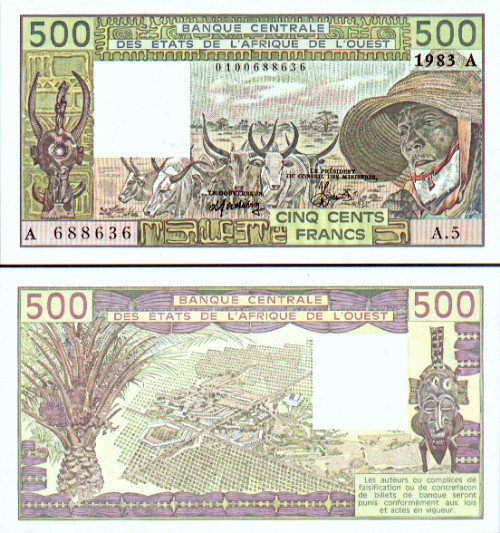
1000cfa (BEAO - 1983)
1000cfa (BEAO – 1983)

Aujourd’hui la dévaluation du Franc CFA est imminente… que faire de ce continent plein de lâches et fous? Qu’est-ce-que le peuple qui a supporté Gbagbo ou Kadhafi doit faire… car là-dedans il y a bien eu des gens censés, il y en a qui ont denoncé et continue de denoncer… Que faire quand il y en a parmi nous qui sont hypnotisés par le mot ‘démocratie’ sans vraiment comprendre ce que c’est que la democratie? … le 26 Mars nous avons vu le peuple ivoirien à Abidjan clamer son amour du beau et de l’indépendance; le 1er Juillet nous avons vu le peuple libyen clamer sa joie et son amour du Guide… c’est ça la vraie démocratie… et non la fusicratie (‘Je ne t’aime pas, je te tue’… ou plutot ‘je désire ton or, alors je te bombarde’).

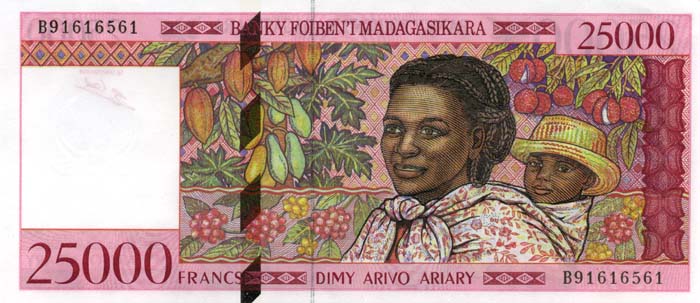
25000 FCFA (Banque Malgache-1994)

J’ai appris il y a de cela quelques jours que la compagnie aérienne Swiss ne s’arrêterait plus au Cameroun, que Air Ivoire avait été vendue à Air France… et j’ai crié le ciel pour cette grosse malédiction, car comme je le disais en Avril lorsqu’on bombardait la Cote d’Ivoire, ‘si on ne fait rien la recolonisation de l’Afrique aura bel et bien commencé!‘  Que penser de ce continent ou on doit prendre Air France pour se déplacer d’une capitale africaine à une autre? Comment comprendre que l’on prenne Air France pour aller de Yaoundé à Brazzaville? de Dakar à Abidjan? ou de Lomé à Ouagadougou? ou de Niamey à Nouakchott? Quelle incongruité? et avec la dévaluation, mes freres africains seront servis! … bonjour l’asservissement total! Comment traiter avec la Chine avec une monnaie de singe? Comment prétendre vouloir de nouveaux rapports et se tourner vers la Chine pour les profits commerciaux quand on doit encore verser 70% de ses revenus à la métropole à cause de cette monnaie? Quelle incongruité! Oh je pleure pour toi, pauvre Afrique… tu es trop pleine de lâches et de fous! Je vous invite a voir cette vidéo sur l’histoire du Franc CFA (N’oubliez pas de regarder Parties 2, and 3).