Who / What did We Celebrate in Africa in 2025 ?

We celebrated quite a few achievements in 2025 in Africa. Please find below a few that brought joy across the continent.

  1. AES Logo

    In January, our brothers of the Alliance des Etats du Sahel (AES) signed a joined military agreement. Last week in December, they held the second AES summit where they announced the creation of a radio, television, bank, and completion and progress on many more initiatives. The AES created a Joint Military Force. President Ibrahim Traoré of Burkina Faso succeeds to President Assimi Goïta of Mali for one year at the head of the confederation. We also salute the love shown by the brothers of Niger under President Tchiani who traveled over 1,400 km to bring fuel from Niamey to Bamako which has been under blockade by the terrorists. African Fraternity on Display in the AES.

  2. In March, the Burkinabe film “Katanga, the danse of the scorpions” won the Golden Stallion of Yennenga (Etalon d’or de Yennenga) at 2025 edition of FESPACO, one of Africa’s biggest film festivals. “Katanga, La Danse des Scorpions” by Dani Kouyaté, and FESPACO 2025: Burkina Faso Wins its First Golden Stallion in 28 years!
  3. In March also, archaeologists published in the journal Nature their discovery of the earliest known bone tools, showing evidence of their use 5 million years ago. These bone tools were found in the Olduvai Gorge, in Tanzania. The tools were carved on elephant and hippopotamus bones. Bone Tools found in Tanzania dated 1.5 million years ago.
  4. Angelique Kidjo

    In June, Franco-Beninese artist Angelique Kidjo became the First African Singer to get a Star on the Hollywood Walk of Fame. Over the years, she has won 5 Grammy awards and nominated 15 times. With a career spanning over 4 decades, she has been trained by some of Africa’s greats, and has sung and collaborated with some of the greats of the world.

  5. In June, Mali Launched a State Gold Refinery, Zimbabwe banned exports of lithium, while Cote d’Ivoire announced the discovery of large gold deposits on its territory, in the north, near the border with Burkina Faso. This month, Niger took control of its uranium, thus giving the country a true say in its development.
  6. Super Falcons defeat the Atlas Lionesses to win 10th title and become WAFCON 2024 winner (Source: BusinessDay.ng)

    At the end of July, the Nigerian Super Falcons, the Female national soccer team of Nigeria, won the Women’s African Cup of Nation (WAFCON). The Super Falcons of Nigeria defeated The Atlas Lionesses of Morocco to win the 2024 Women’s Africa Cup of Nations (WAFCON) in Morocco. Similarly, the D’Tigress, Nigerian Women’s Basketball team won their 7th African Cup, by defeating Mali at  FIBA Women’s AfroBasket Championship in Cote d’Ivoire. Now, we hope that these ladies will make it very far at their respective World Cups and make the continent proud.

  7. Mali recovered over a billion dollar from gold companies to reinvest and give back to their populations. These are the kind of gestures that unnerve the West. Mali Recovers over a Billion $ for its Miners. What a beautiful end-of-year present to the populations!
  8. Botswana’s 4×400 relay team celebrating their gold medal (Source: Reuters/Eloisa Lopez)

    Africans shone at the 2025 Tokyo World Athletics Championships, including Botswana which cemented its place in the athletic world by winning the country and continent’s first ever gold in 4 x 400 m relay in the men’s discipline. On Sunday, Botswana’s team of Lee Bhekempilo Eppie, Letsile Tebogo, Bayapo Ndori and Busang Collen Kebinatshipi edged out the United States, the winners of the last 10 world titles, in a rain-drenched race, while South Africa took third position. Africans are starting to be present in the sprint discipline and we are proud of their hard work.

  9. Map of the Nile River flow and the location of Grand Ethiopian Renaissance Dam (GERD) in Africa

    This year saw the inauguration of the Great Ethiopian Renaissance Dam (GERD) in September. The dam has been almost entirely domestically funded through bonds and donations of the hard working populationsThe GERD has also united Ethiopian citizens across ethnic and political divides. Inauguration of the Great Ethiopian Renaissance Dam (GERD).

  10. The Timbuktu’s manuscripts have returned home after being hosted for almost a decade in Bamako. These are treasures that have been protected for centuries by local families, and they had had to move them because of the insurgency of western-funded terrorists’ attacks which had divided the country. Continuing on the artifacts subject, Great Britain and South Africa handed back Ghanaian royal artifacts. While France returned the skull of Beheaded King Toera of the Sakalava People of Madagascar 127 years after it was taken; one caveat, no genetic testing has conclusively established the identity of any of these skulls to be that of King Toera!
  11. Flag of Namibia

    Namibia made history as the only country in the world where Women hold Key Positions: women make up 57% of the government! Namibia has done what no other country in the world has ever done: the country has a female president Netumbo Nandi-Ndaitwah, vice-president Lucia Witbooi, speaker of the national assembly Saara Kuugongelwa-Amadhila, and secretary general of the ruling party. To the naysayers out there, remember that most of Africa has matriarchal traditions; thus it makes sense that it would be first.

  12. Map of Africa

    This past November, African countries, assembled in Algiers, united to pass a resolution to have colonial era crimes recognized – it’s about time, and let’s hope it works, and that their union keeps up. This comes up as tensions between Algeria and France intensify, culminating with Algeria passing a bill last week requesting that France atone for its 130 years of occupation; France called it a blow to dialogue. African Countries are uniting to pass a Resolution to have Colonial Era Crimes Recognized.

  13. Meta bowed to Nigeria and paid up for privacy infraction. This is a first, and usually multinationals tend to do whatever in our countries… we applaud the judgment, and hope that this signals to those companies to start treating Africans like humans, with some measure of respect. Meta Bows to Nigeria and Pays for Privacy Infraction.

Who/What did We Say Goodbye to in Africa in 2025 ?

Sam Nujoma (Source: newscentral.africa)

2025 is coming to an end, and there are a few people we said goodbye too, and situations as well. Below are some of them:

  1. This February, on Saturday, February 8 2025Sam Nujoma, Namibia’s first president and founding father passed away at the age of 95. Nujoma led the long fight for independence from South Africa for many years, which culminated with independence on 21 March 1990 of South West Africa, as the country was formerly known. So Long to Sam Nujoma, Namibia’s First President.
  2. In April, Amadou, of the Malian duo Amadou and Mariam passed away at their home in Bamako, Mali. The Grammy-nominated duo Amadou & Mariam was a blind duo from Mali. They both met at the Institute for the young blind in Bamako in 1976 and their song “Je pense a toi” helped them get world fame. So Long to Malian Singer, Member of Duo Amadou & Mariam
  3. Flag of Gabon

    Brice Oligui Nguema of Gabon, the coup leader who kicked Ali Bongo out of power, the one the West lauds so much, traded his military fatigues for a suit and won the elections by a landslide with a score worthy of a Banana Republic, 90.35%! and Yes, he got all the accolades of the West! This was a total imposture! Recall that Oligui Nguema took the power when the populations protested the presidential elections when Ali Bongo was declared winner instead of the rightful winner who was Albert Ondo Ossa; thus Nguema should have stepped in to right the wrong by putting on the one the people had voted for; instead he took over under the applause of the “international community”. Gabon and the Double Standards of the International Community, and Gabon Oligui Nguema Wins by Landslide.

  4. Raila Odinga (Source: World Economic Forum)

    This year Kenya, and the whole of Africa said goodbye to Raila Odinga, the inevitable and greatest opposition leader and fighter to the end for Kenyan democracy. Raila Odinga had been a dominant unavoidable force in Kenyan politics for over 30 years. He was a baobab in Kenya’s political scene, who has always fought for the freedom and democracy in Kenya. Out of the past 5 elections, 1997, 2007, 2013, 2017, and 2022, he had always contested, came second, and even narrowly won to the point that there have always been disputes which have gone as far as civil unrest as in 2007… even the last elections which saw Ruto win were tight with the presence of Odinga. So Long to Raila Odinga, Fighter to the End for Kenyan Democracy, and Raila Odinga in His Own Words.

  5. Flag of Cameroon

    Cameroonians saw another weird presidential elections. Not sure if what happened there was a real election. Paul Biya was reelected for a 7th term after 43 years as president of the country, with 20 before as minister and prime minister. This would mark 43 years of walking backwards for Cameroon… no electricity, no water in most places, and major cities overflowing with refuse.  After a magic trick in the 11th hour, where by a switch of a virtual pen, the best and strongest opponent, Maurice Kamto, was removed from the presidential election contest; then the elections took place with another opponent who barely 2 months before was a minister to the regime Issa Tchiroma. To be honest, after 43 years, there is no doubt that anybody would win against the incumbent. Cameroon – Where Self-Hate is used to Keep a Country in Bondage, and Cameroon – History Repeats Itself ? Since then, there have been protests in the country.

  6. La Cote d'Ivoire
    La Cote d’Ivoire

    Alassane Ouattara, president of Cote d’ivoire, was reelected for a 4th term he was not supposed to be able to run for (in view of the country’s constitution), after selectively eliminating some of the major contenders like Laurent Gbagbo and Tidjane Thiam, leaving only a few such as Simone Gbagbo, Jean-Louis Billon, Ahoua Don Mello, and Henriette Lagou Adjoua. He won the elections with another Banana Republic-type score of 91.2%. Wow! The hijacking of the constitution and Ivorian freedom continues! Given that he serves well Western interests, he was congratulated for his reelection.

  7. Flag of Tanzania

    President Samia Suhulu Hassan of Tanzania was elected under shady circumstances and protests. The protests were suppressed in blood; it has been said that since the October 29 elections, there have been more than 2,000 detained, vehicles and buildings burned, and hundreds of deaths. Even the lady was inaugurated under tight security. Recall that she was never elected, but rather came to power after President John Magufuli passed away in office (So Long to President John Magufuli of Tanzania: The Bulldozer). She won with another kafkaesque score of 97%, after the country’s two main opposition parties were barred and the main opposition leader, Tundu Lissu, was imprisoned. Only seen on our continent! This is a clear hijacking of the freedom of Tanzanians; which we will go as far as calling it a coup against the people’s will.

  8. Flag of Guinea Bissau

    There was a coup d’etat in Guinea-Bissau, which looks more like a fake coup. Unlike other places, the coup d’etat was not condemned by ECOWAS or other places; and nobody was called junta by the West. Thus, Guinea Bissau traded Umaro Sissoco Embalo for a general he chose. Recall that he was not even supposed to run for elections, and violated his country’s constitution. He first ran into exile in Senegal, but later moved to the Republic of Congo; he has been accused by opposition and international figures such as former Nigerian president and election monitor Goodluck Jonathan of staging the coup to avoid losing the election against Fernando Dias da Costa. Since it was staged, nobody has called the newcomers, led by Horta Inta-A Na Man, as junta like for the Sahel.

  9. Flag of Madagascar

    There was a coup in Madagascar (2025 Malagasy coup d’état) which saw the fall of President Andry Rajoelina, the DJ who had previously been installed by France, and had also come into power after a coup against Marc Ravalomanana who was not accepted by the West. Macron and France helped fly Rajoelina out to safety in Dubai where he now resides. The new man in charge is general Michael Randrianirina. This coup started by the protests of the populations against power cuts and water outages which have been very common nationwide especially in the capital Antananarivo… they were met with violence from the government police… then it went on, until the army stepped up, and took Rajoelina out. Goodbye to Rajoelina, and welcome to Randrianirina … we hope that he will work for the Malagasy people.

  10. Flag of the Democratic Republic of Congo

    The Democratic Republic of Congo (DRC) signed a “peace” agreement with Rwanda. It started The Declaration of Principles between the Democratic Republic of Congo (DRC) and Rwanda signed in June by DRC and Rwanda foreign affairs ministers including the American Secretary of State. This was later ratified in December by both presidents Felix Tshisekedi of DRC and Paul Kagame of Rwanda in presence of the American President Donald Trump. As we had pointed out, how could a peace agreement with DRC be signed which does not clearly state that Rwanda is the aggressor of the DRC? How can there be a peace agreement, if Rwanda does not admit to its crimes against the Congolese people? Why is there no mention of the close to 10 million dead Congolese from this 30-year-old conflict? What sort of a peace is that if there is no justice? Well, to prove us right, new conflicts started in the region immediately after the signature of the agreement, or rather they never stopped. Peace Agreement between the Democratic Republic of Congo (DRC) and Rwanda: Is this for Real? Thus, the DRC is still under attack. We should tell all these Congolese and African politicians to stop signing documents in fear… nothing good comes out of negotiating from a position of fear!

  11. Flag of Sudan

    As the year closes, the civil war is still ongoing in Sudan, all of that under the eyes of the “international” community. Sudan’s brutal civil war has dragged on for over years, displacing millions and killing in excess of 150,000 people. This is now among one of the deadliest conflict in the world today. Our hearts go out to our Sudanese brothers and sisters.

US Conducts Strikes in Nigeria

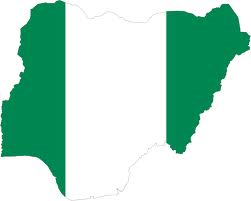
Flag and map of Nigeria

A few days ago we issued a word of warning to our African populist governments, and then yesterday the United States bombed Nigeria, or rather claimed to have bombed an area full of Islamic State’s terrorists in Sokoto, in northwest Nigeria “in conjunction” with the Nigerian government. A few weeks ago, we heard Americans talk about a Christian “genocide” in Nigeria, and we wondered what that was all about ?Remember the west always uses tricks like this: Muslims against Christians, dark-skinned vs. light-skinned, this tribe vs. that tribe, these ones vs. those ones … it is called the politic of divide-and-conquer.

Map of Nigeria (Source: WorldAtlas.com)

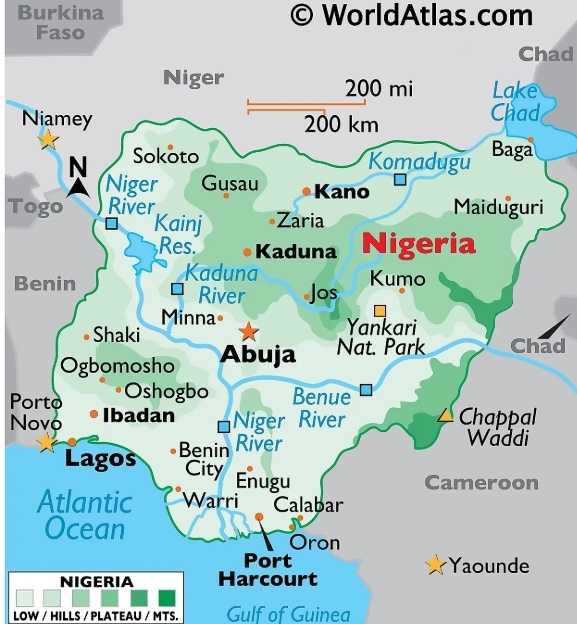
Let us start with a lesson in geography. For those who don’t know, Sokoto is in the Northwest part of Nigeria and is the largest city before the border with Niger, one of the countries in the AES. Over the years, the Islamist State through Boko Haram have destabilized the entire region, but we all know that the area that has been destabilized is on the East, on the border with Cameroon. As a matter of fact, the whole northern part of Cameroon and northeastern of Nigeria have been plagued by Boko Haram attacks for over a decade now. Even Michelle Obama joined the #BringBackOurGirls campaign awareness for the Chibok girls who had been abducted in Nigeria in 2014; Chibok is also on the East, near Cameroon. From the news, the American government claims that the missile strikes were in response to a suicide attack against a packed mosque in Nigeria’s northeastern city of Maiduguri on Wednesday night. So why Sokoto, a mostly Muslim city … so no clear Christian vs. Muslim issue there. Isn’t this baffling? Is it an error in missile strikes, after all, who could blame these people if they don’t know our lands like us? However, it is no secret that America has one of the best intelligence services in the world… and they apparently had help from the Nigerian government itself. That same Nigerian government which cannot stop the abduction of its girls in the Northeast, yet flew fighter jets to strike positions in neighboring Benin to stop the coup against President Talon at the beginning of the month, and then landed in Burkina Faso? Thus, could it be because Sokoto, in northwest Nigeria, is on the border with Niger? Niger which booted the largest US drone base in the world out of their country (Niger suspends military “cooperation” with the US, effective immediately)? The same Niger which is part of the AES (Mali, Burkina Faso, and Niger Sign a Mutual Defence Pact)? Niger which is nationalizing its uranium, and has booted France out of its land, and is developing its country, and as a part of the AES? We all saw when then US senator Gaetz asked for retaliation against Niger after the boot, … is this the beginning? or what is it? The explanation given by the American government seems quite bizarre.

The New Scramble for Africa (Source: Dr Jack & Curtis for City Press, National Institute African Studies (NIAS))

Africans need to remember that there is a New Scramble for Africa. Europe is falling apart, the West is falling apart … and the only way to stay strong is through that conglomerate of 54 countries that is Africa, with no real union or laws to protect the little ones, and even the big ones can fall prey having never dealt with some of these. They would try everything to keep us down, in-fighting and so on, so they could rise again when things are better. They are using all means, even immigration (the story for another day). This is the era of the awakening! Africa is the key to the world! There will be blood for Africa’s resources, and Africans have to be at the forefront of the battle for their own resources and take hold of what is theirsAfricans better wake up, the vultures are flying over!

Word of Caution to Our Governments

Ibises and a crocodile

As the end of the year slowly drifts in, we would like to share a word of caution to our legal governments of the AES and all those fighting for the freedom of their people around the globe. The temptation is high to party, it is the end of the year after all, and there were awesome results throughout the year; we have worked hard and rightfully deserve a break. However, these loved governments, those who fight for the dignity of their people are in the target of the well-known predators who tend to use periods like these to strike. We can all remember the Christmas coups that have happened over the years! Just ask the late Henri Konan Bédié, president of Cote d’Ivoire, who was destituted by Robert Guéï on Christmas Eve 24 December 1999, in a coup which has entered the annals of history as the Christmas Eve’s coup. Guéï said that “Nous sommes venus balayer la maison” (we have come to sweep the house); he was himself swept out later on. We remember the Saint-Sylvestre coup d’état in the Central African Republic when army leader Jean-Bédel Bokassa and his military officers staged a coup against the government of President David Dacko. There are also coups that have happened in the early days of the new year. Even in Burkina Faso, there was the 1966 Upper Voltan coup d’état in Upper Volta (now Burkina Faso) which took place on 3 January when Sangoulé Lamizana overthrew Maurice Yaméogo. Or like the ones by Gnassingbé Eyadéma in Togo that took out Sylvanus Olympio on January 13, 1963, and then Nicolas Grunitzky on the same day 4 years later in 1967. The examples are countless.

After the stunt the Nigerian army pulled, flying into Burkina Faso after the so-called coup attempt against Patrice Talon at the beginning of the month, the countries of the AES should be on high alert. Our South American brothers should also be on high alert. We are not saying that coups d’état only take place at the end of the year, as there are no dates for coups, just clear opportunities and weaknesses that the enemy (who is always standing ready) exploits. We are just saying to remain on high alert! When you are doing good for your people, wherever you are, you stand for something that the enemy hates… Remain alert at all times! Don’t stop the good you are doing, but remain alert!

Mali Recovers over a Billion $ for its Miners

Map of Mali 

Imagine being able to recover money from multinationals? Imagine putting the well-being of your people so much at the forefront that you are not afraid of uncovering or exposing corruption or injustice, and of taking on major world multinationals! This is what the Malian government has just done, and as a result has uncovered a billion dollar in arrears! Remember how Pascal Lissouba, the former president of the Republic of Congo, admitted that the Congolese government had no idea how much oil Elf (now Total Energies) was pumping out of its soil, and that they were at the mercy of whatever the company wanted to pay them, which was pennies; when he tried to renegotiate contracts or find better partners, he was deposed by Denis Sassou Nguesso, the Western puppet. Remember Jean Bedel Bokassa of the Central African Republic who admitted that he had no visibility on the amount of diamonds or uranium that French and Swiss companies were extracting from his country. Now, imagine being in your sovereign state, i.e. no Western puppet at your helm, the well-being of your people at the forefront?

AES Logo

Mali (and the other countries of the AES) has been working tirelessly on nationalizing their resources, and renegotiating correctly contracts with multinationals that are extracting their resources. Thus, such an exercise is fruitful in the sense that now, they can audit accounts, and compensate or fight for better compensation for their people better. Today, it was announced that Mali has recovered over a billion dollar in arrears from mining companies! Isn’t this a beautiful Christmas /end of year present? This also makes us pray further for the safety of such governments who place the restoration of their people’s dignity and well-being at the forefront of their efforts. Now, more than ever, they will be the target of the foreign corporations and bandits! Now, more than ever, they need each of us to stand in solidarity with them!

Excerpts below are from Africanews.

=====

Mali has recovered more than a billion dollars in arrears from mining companies after a sweeping audit, its finance minister, Alousséni Sanou, said on Tuesday.

It’s one of the country’s biggest ever clawbacks from its lucrative mining sector.

The military-led government launched an audit of the sector in early 2023 and uncovered massive shortfalls for the state. That paved the way for a new mining code that raises royalties, boosts the state’s ownership in mining companies and scraps stability clauses.

A recovery commission was set up after an audit flagged financial irregularities and shortfalls for the state estimated at between half a billion and a billion dollars.

African Countries are Uniting to Pass a Resolution to have Colonial Era Crimes Recognized

Algerian War Collage (Source: Wikipedia)

This is a recurring issue, but this time, African countries, are uniting to challenge the status quo, and ask for justice and reparation for victims of colonialism. They met in Algiers, the capital of Algeria this past week to pass a resolution to recognize the colonial era hurts. The choice of Algeria as a summit holder is no coincidence, as French forces committed some of the worst atrocities in the country during the colonial era, including nuclear tests which decimated entire villages; Algerians fought a bloody war which lasted 8 years between 1954 to 1962 to win independence. The death toll is estimated at over 1.5 million Algerians who lost their lives due to the barbary of France.

As stated before, African countries need to become stronger for their voices to be heard, and one way for this to happen is to present a strong united front. 

Excerpts below are from The Guardian.

=====

Under British guns, during the Mau Mau rebellion in Kenya
Under British guns, during the Mau Mau rebellion in Kenya in the 1950s

African leaders are pushing to have colonial-era crimes recognised, criminalised and addressed through reparations.

At a conference in the Algerian capital, Algiers, diplomats and leaders convened to advance an African Union resolution passed at a meeting earlier this year calling for justice and reparations for victims of colonialism.

Algerian foreign minister Ahmed Attaf said Algeria’s experience under French rule highlighted the need to seek compensation and reclaim stolen property.

A legal framework, he added, would ensure restitution is seen as “neither a gift nor a favour”.

Africa is entitled to demand the official and explicit recognition of the crimes committed against its peoples during the colonial period, an indispensable first step toward addressing the consequences of that era, for which African countries and peoples continue to pay a heavy price in terms of exclusion, marginalisation and backwardness,” Attaf said.

Hanging of Chagga men by the German Colonial Government ca 1890s – 1900 (Source: Wikipedia)

… [At] the African Union’s February summit, … leaders discussed a proposal to develop a unified position on reparations and formally define colonisation as a crime against humanity [about time!].

The economic cost of colonialism in Africa is believed to be staggering, with some estimates in the trillions. European powers extracted natural resources often through brutal methods, amassing vast profits from gold, rubber, diamonds and other minerals, while leaving local populations impoverished.

… Earlier in November, … Caribbean governments have also been calling for recognition of the lasting legacy of colonialism and enslavement, and for reparative justice from former colonisers, including a full formal apology and forms of financial reparations.

The Importance of the Timbuktu’s Manuscripts and their Return

Manuscripts a Tombouctou (Mali) montrant de l'astronomie et mathematique
Manuscripts a Tombouctou (Mali) montrant de l’astronomie et mathematique

The Timbuktu’s Manuscripts are Returning Home to their rightful owners, after over 10 years away. It is so beautiful that the families who own these multi-centennial parts of African history get to have them back as it is not only part of their heritage, but ours also, and we are thankful for them to have protected throughout the centuries.

At the Ahmed Baba Institute in Bamako, people have been actively working on digitalizing all the manuscripts for humanity’s sake. These challenge the eurocentric views that “Africans have not entered enough in history” as the former French president Sarkozy said, even though many scholars from around the world used to travel to Timbuktu to find the best teachers. Through these manuscripts, we discover brilliant scholars, doctors, lawmakers, astronomers, mathematicians, geologists, and much more. After all, Timbuktu, was one of the world’s first and oldest university.

Excerpts below are from Africanews, and check out the Google Arts & Culture (Timbuktu Manuscripts now Available OnlineThe Lost Libraries of Timbuktu).

=====

Timbuktu from a terrace by Heinrich Barth 1858

Among the manuscripts are medical texts, legal rulings, letters, astronomical notes and chronicles of West African empires.

In some pages, scholars debate whether smoking tobacco was moral or forbidden.

In others, officials urge reducing dowries so poorer men could marry.

Marginal notes record earthquakes and local events long forgotten elsewhere.

Sane Chirfi Alpha is the founding member of SAVAMA DCI, which is a local nonprofit organisation dedicated to the safeguarding, preservation, and promotion of the ancient Timbuktu manuscripts. He says the collection reveals a depth of scholarship that challenges assumptions about the region’s past.

According to old documents, there were doctors here in Timbuktu who performed surgery to treat cataracts. The same manuscript also says that a doctor from Timbuktu saved the French throne. The crown prince was sick, and French doctors could not cure him. It was the doctor from Timbuktu who cured him.”

…  One important tradition still documented in many manuscripts is the chain of teaching, where scholars recorded who taught whom through generations.

Dr Mohamed Diagayaté, general director of the Ahmed Baba Institute says: “When a student finishes studying with a scholar, that scholar gives him a certificate saying he has taught him a subject, which the student has mastered. The certificate also says that the student learned it from a certain scholar, and that this scholar learned it from another scholar, going right back to the person who wrote the original document.

Great Britain and South Africa hand back Ghanaian Royal Artefacts

Asantehene Otumfuo Osei Tutu II (Source: Ghanaweb.com)
Over 130 Ghanaian royal artefacts were returned this week to the rightful owner, the Asantehene (king) Otumfuo Osei Tutu II of the Asante people from Ghana. These were returned by Great Britain and South Africa. The 130 objects include gold and bronze artefacts, drums, royal regalia and ceremonial gold weights, some of which were looted during colonial times by Great Britain, while others were bought on the open market. The items date from the 19th and early 20th centuries. The handover took place at the Manhyia Palace in Kumasi, the seat of power of the Asante kingdom. Unlike the last time, these appear to be a ‘real‘ return and not a loan (UK Museums “Long-term Loan” looted Asante Gold Artifacts to Ghana)!!! Let’s pray it is a real return with no hidden clause!

Excerpts below are from BBC.

=====
Map and Flag of Ghana
Ghana’s Asante king has welcomed the return of 130 gold and bronze artefacts from the UK and South Africa some of which were looted during colonial times and others bought on the open market. The items included royal regalia, drums and ceremonial gold weights, dating back to the 1870s – and reveal the cultural role gold played in Asante society. Twenty-five of the pieces were donated by British art historian Hermione Waterfield and the rest by South African mining company AngloGold Ashanti. Handing over the pieces at a ceremony at the Manhyia Palace, in the city of Kumasi, officials from AngloGold Ashanti said the gesture was made as an act of cultural respect and reconciliation. … gifts included a wooden drum looted during the 1900 siege of Kumasi by British colonial forces. … British soldiers were involved in a series of conflicts in the late 19th Century in what were called the Anglo-Asante wars. The palace of the king, or Asantehene, was plundered twice. The call by African countries for the return of looted items has been met with some success in recent years – though some items are only on loan. Last year, 32 looted artefacts went on display at the Manhyia Palace Museum as part of a three-year loan agreement between two British museums – the Victoria & Albert Museum (V&A) and British Museum – and the Asante king. …

African Countries are Among the Most Vulnerable to Land Grabbing

Map of Africa

The German platform Statista published a study titled, “Countries Most Vulnerable to Land Grabbing.” Land grabbing refers to a large-scale acquisition of land, often by powerful entities, multinationals, corporations, governments, usually foreigners and frequently involving unethical or exploitative practices. They involve the purchase or lease of massive lands mostly in developing countries. These land-grabs often raise high human issues, such as lack of compensation of the locals, removal of local populations from their lands, and environmental degradation.

Map of the DRC
Map of the DRC

From Statista’s study, the countries most at risk of land grabs are, no surprise, in Africa and Asia. Out of the 13 countries on the top list, 8 out of the 13 are African. The Democratic Republic of Congo (DRC) tops the list, followed by Cameroon, the Republic of Congo, Mozambique and South Sudan. Liberia and Cameroon have sold the most: 14.6 % of the country of Liberia is in the hands of foreigners, while 8.5% of Cameroon is, so about 1.6 million hectares and 4 million hectares respectively. For countries like DRC or South Sudan, one could understand as there were wars in the country. But what about Cameroon? To be 3rd on the list, and have 4 million hectares (40,000 km²) of the country in the land of foreigners is crazy… To put it in perspective, 4 million hectares is roughly the size of Netherlands, Switzerland, or Denmark (excluding Greenland). Thus, the government of Cameroon has ceded land the size of the Netherlands to foreign interests between the years 2000 and 2024. This is without counting the ones ceded since independence… This is all done without the populations’ consent, and the countries almost get nothing, if not pennies? In Cameroon, majority of the companies are French, but there are also Chinese, American and more. As we saw in the case of Niger, or Cameroon with Safacam for instance, which has been there 130 years, but the road there is impracticable – they can grab everything, without even giving simple things like roads to the locals!

Map of Cameroon, with the capital Yaoundé

The Statisca survey goes on to indicate that the land acquired by foreign investors in Cameroon is primarily used for logging, mining, and industrial agriculture, such as palm oil production.

This is why African governments should be transparent, and expose every contract that they sign in our names and our children’s names so we know what is going on. African Governments should make Contracts Public to their Populations! They should take example on King Moshoeshoe I who banned the sale of the land of his ancestors to foreign investors. We should have a thing similar to the DOGE website to see all contracts!!! Moreover, if there is a call for contracts, how about our governments also open the call to locals? There are many Africans with great ideas!

Most Vulnerable Countries to Land Grabbing (Source: Statista – Banque Mondiale, Land Matrix)
 

Foreign Access to Property Prohibited in Lesotho in 1859

King Moshoeshoe I of Basutoland

As I see the sale of African lands to multinationals for pennies, or in some cases loans for 20-30-50 years and even 100 years, or like in Kenya (and certainly many other places) for 999 years (Did You Know about the 999-year Lease granted to Europeans in Kenya ?), I cannot help but think of King Moshoeshoe I of Lesotho who, in 1859, prohibited the sale of Sotho land to foreigners. This was a big NO. No ancestral lands could be sold to foreigners. Our current African leaders should learn from our forefathers; they, like Moshoeshoe I of Lesotho, or Gungunyane: the Lion of Gaza or the Last African King of Mozambique, or Mirambo: the Black Napoleon of Tanzania, understood the importance of our lands!  The law below also gives a glimpse on the justice system as implemented in the Sotho kingdom under its first king. This is a historical document set in its time to be read with the protection of the integrity and protection of Sotho land in mind.

Below is the access to property law signed by King Moshoeshoe I in 1859 on his homeland of Lesotho. The original can be found in Les Africains, Tome 8, p. 254, ed. Jaguar. Translated to English by Dr. Y., Afrolegends.com

======

Map of Lesotho

Access to property: prohibited for traders, “White or colored”, 1859 law

I, Moshoeshoe, for any trader, whoever he may be, already present in my country, and for anyone who might come to trade with the Basutos ; my word is this :

Trading with me and my tribe is a good thing, and I hope it will grow.

Any merchant who wants to open a shop must first obtain my permission. If he builds a house, I do not give him the right to sell it.

Moreover, I do not give him the freedom to plow fields, but only to cultivate a small vegetable garden.

The merchant who imagines that the place where he stays belongs to him, must abandon this idea, otherwise he will leave; for there is no place on my soil that belongs to the Whites, and I have never given a place to a White, whether verbally or in writing.

Furthermore, any merchant who comes here with a debt, or who contracts one while he is on my soil, whatever his debt may be, if he is brought to me, I will make an inquiry into him in our court of justice in order to be able to settle the matter ; and the debt will be repaid in the way the Basutos repay their debts. But the plaintiff must appear before me, and the debtor as well, so that justice may be done. […]