Jackal and Monkey

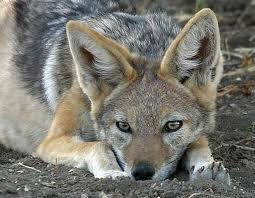
Jackal
Jackal

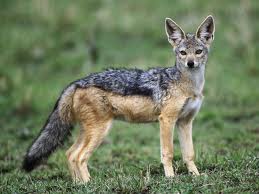
EVERY evening Jackal went to the Man’s* kraal.  He crept through the sliding door and stole a fat young lamb.  This, clever Jackal did several times in succession.  Man set a wip for him at the door.  Jackal went again and zip-there he was caught around the body by the noose.  He swung and swayed high in the air and couldn’t touch ground.  The day began to dawn and Jackal became uneasy.

On a stone kopje, Monkey sat.  When it became light he could see the whole affair, and descended hastily for the purpose of mocking Jackal.  He went and sat on the wall. “Ha, ha, good morning. So there you are hanging now, eventually caught.
What? I, caught? I am simply swinging for my pleasure; it is enjoyable.
You fibber. You are caught in the wip.
If you but realized how nice it was to swing and sway like this, you wouldn’t hesitate.  Come, try it a little.  You feel so healthy and strong for the day, and you never tire afterwards.
No, I won’t.  You are caught.

Monkey
Monkey

After a while Jackal convinced Monkey.  He sprang from the kraal wall, and freeing Jackal, adjusted the noose around his own body.
Jackal quickly let go and began to laugh, as Monkey was now swinging high in the air.
Ha, ha, ha,” he laughed.  “Now Monkey is in the wip.
Jackal, free me,” he screamed.
There, Man is coming,” shouted Jackal.
Jackal, free me of this, or I’ll break your playthings.
No, there Man is coming with his gun; you rest a while in the noose.
Jackal, quickly make me free.
No, here’s Man already, and he’s got his gun.  Good morning.” And with these parting words he ran away as fast as he could.  Man came and saw Monkey in the wip.
So, so, Monkey, now you are caught.  You are the fellow who has been stealing my lambs, hey?
No, Man, no,” screamed Monkey, ” not I, but Jackal.
No, I know you; you aren’t too good for that.
No, Boer, no, not I, but Jackal,” Monkey stammered.
Oh, I know you.  Just wait a little,” and Man, raising his gun, aimed and shot poor Monkey dead.

South African Folk Tales, by James A. Honey, 1910, Baker & Taylor Company. (* I replaced ‘Boer’ by ‘Man’, for generality).

The Hunt of Lion and Jackal

Lion
Lion

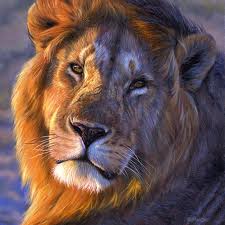
LION and Jackal, it is said, were one day lying in wait for Eland.  Lion shot (with a bow) and missed, but Jackal hit and sang out, “Hah! hah!

Lion said, “No, you did not shoot anything.  It was I who hit.

Jackal answered, “Yea, my father, thou hast hit.

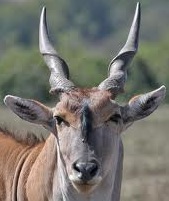
Eland
Eland

Then they went home in order to return when the eland was dead, and cut it up.  Jackal, however, turned back, unknown to Lion, hit his nose so that the blood ran on the spoor of the eland, and followed their track thus, in order to cheat Lion.  When he had gone some distance, he returned by another way to the dead eland, and creeping into its carcass, cut out all the fat.  Meanwhile Lion followed the blood-stained spoor of Jackal, thinking that it was eland blood, and only when he had gone some distance did he find out that he had been deceived.  He then returned on Jackal’s spoor, and reached the dead eland, where, finding Jackal in its carcass, he seized him by his tail and drew him out with a swing.

Lion upbraided Jackal with these words: “Why do you cheat me?

Jackal
Jackal

Jackal answered: “No, my father, I do not cheat you; you may know it, I think.  I prepared this fat for you, father.

Lion said: “Then take the fat and carry it to your mother ” (the Lioness) ; and he gave him the lungs to take to his own wife and children.

When Jackal arrived, he did not give the fat to Lion’s wife, but to his own wife and children; he gave, however, the lungs to Lion’s wife, and he pelted Lion’s little children with the lungs, saying: “You children of the big-pawed one!  You big-pawed ones!

He said to Lioness, “I go to help my father (the Lion);” but he went far away with his wife and children.

South African Folktales, J.A. Honey, 1910, Baker and Taylor Company.

Why has Jackal a long, black stripe on his back?

Jackal
Jackal
Sun
Sun

The Sun, it is said, was one day on earth, and the men who were travelling saw him sitting by the wayside, but passed him without notice.

Jackal, however, who came after them, and also sitting, went to him and said, “Such a fine little child is left behind by the men.”  He then took Sun up, and put it into this awa-skin (on his back).  When it burnt him, he said, “Get down,” and shook himself; but Sun stuck fast to his back, and burnt Jackal’s back black from that day.

South African Folktales, J.A. Honey, 1910, Baker and Taylor Company.

Pourquoi la hyène a t-elle le pelage rayé?

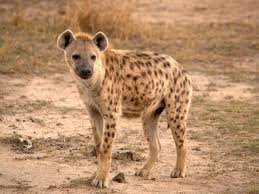
Hyena
Hyene

Il y a longtemps très longtemps hyène et lièvre étaient de très bons amis.  Mais la hyène, plus rusée trompait toujours le lièvre.
Chaque fois que ce dernier pêchait un superbe poisson bien dodu, c’était la hyène qui se régalait.  Elle inventait des jeux étranges et sournois qu’elle “gagnait” toujours, puis dévorait le gros poisson cuit par le pauvre lièvre.  Un jour le lièvre prit un si gros poisson que son amie hyène faillit s’étrangler de gourmandise quand elle le vit ! Mais ce jour-là, le lièvre dit:
– “Aujourd’hui est mon jour ! Je mangerai tout seul ce gros poisson !
– “Il est bien trop gros pour ton petit ventre ” rétorqua la hyène; ” il pourrira avant que tu ne finisses de le déguster.
– “C’est vrai, mais je le mettrai à fumer dès ce soir pour le manger par petits morceaux ensuite. Ce sera délicieux ! ”

Lievre
Lievre

La hyène faillit s’évanouir d’envie.  Elle voulait ce poisson.  Elle devait le manger. Et seule !  Elle convoita tant le poisson qu’elle réfléchit à une nouvelle façon de satisfaire son égoïsme et sa gourmandise aux dépends du lièvre.  Elle agirait discrètement.
La nuit venue, la hyène traversa doucement la rivière tout près de laquelle dormait le lièvre.  Le poisson cuisait tout doucement, embroché au dessus du feu et parfumant la nuit.  La hyène gloussa de joie devant le mauvais tour qu’elle jouerait à son amie et s’approcha.  Le lièvre faisait mine de dormir.  Lorsque la hyène s’empara du poisson, le lièvre bondit, attrapa la broche chauffée à blanc et rossa la hyène qui s’enfuit en hurlant de douleur, de honte, mais surtout de rage !
C’est depuis ce temps que la hyène porte des rayures sur son pelage. Et qu’elle hait le lièvre.

Tink-Tinkje

The king's crown
The king’s crown

THE birds wanted a king. Men have a king, so have animals, and why shouldn’t they? All had assembled.

The Ostrich, because he is the largest,” one called out.

No, he can’t fly.”

Eagle, on account of his strength.”

Not he, he is too ugly.”

Vulture, because he can fly the highest.”

No, Vulture is too dirty, his odor is terrible.”

Peacock, he is so beautiful.”

His feet are too ugly, and also his voice.”

Owl, because he can see well.”

Not Owl, he is ashamed of the light.”

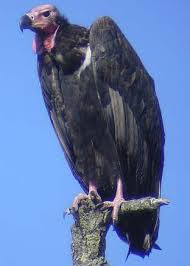
Vulture
Vulture

And so they got no further. Then one shouted aloud, “He who can fly the highest will be king.” “Yes, yes,” they all screamed, and at a given Signal they all ascended straight up into the sky.

Vulture flew for three whole days without stopping, straight toward the sun. Then he cried aloud, “I am the highest, I am king.”

T-sie, t-sie, t-sie,” he heard above him. There Tink-tinkje was flying. He had held fast to one of the great wing feathers of Vulture, and had never been felt, he was so light. “T-sie, t-sie, t-sie, I am the highest, I am king,” piped Tink-tinkje.

Vulture flew for another day still ascending. “I am highest, I am king.”

T-sie, t-sie, t-sie, I am the highest, I am king,” Tink-tinkje mocked. There he was again, having crept out from under the wing of Vulture.

Vulture flew on the fifth day straight up in the air. “I am the highest, I am king,” he called.

T-sie, t-sie, t-sie,” piped the little fellow above him. “I am the highest, I am king.”

Vulture was tired and now flew direct to earth. The other birds were mad through and through. Tink-tinkje must die because he had taken advantage of Vulture’s feathers and there hidden himself. All flew after him and he had to take refuge in a mouse hole. But how were they to get him out? Some one must stand guard to seize him the moment he put out his head.

Owl
Owl

Owl must keep guard; he has the largest eyes; he can see well,” they exclaimed.

Owl went and took up his position before the hole. The sun was warm and soon Owl became sleepy and presently he was fast asleep.

Tink-tinkje peeped, saw that Owl was asleep, and z-zip away he went. Shortly afterwards the other birds came to see if Tink-tinkje were still in the hole. “T-sie, t-sie,” they heard in a tree; and there the little vagabond was sitting.

White-crow, perfectly disgusted, turned around and exclaimed, “Now I won’t say a single word more.”

And from that day to this Whitecrow has never spoken. Even though you strike him, he makes no sound, he utters no cry.

South African Folk Tales, by James A. Honey, 1910, Baker & Taylor Company

The Tiger, the Ram, and the Jackal

Tiger (Leopard)
Tiger (Leopard)

TIGER (leopard) was returning home from hunting on one occasion, when he lighted on the kraal of Ram. Now, Tiger had never seen Ram before, and accordingly, approaching submissively, he said, “Good day, friend! What may your name be?”

The other in his gruff voice, and striking his breast with his forefoot, said, “I am Ram. Who are you?”

Tiger,” answered the other, more dead than alive, and then, taking leave of Ram, he ran home as fast as he could.

Jackal lived at the same place as Tiger did, and the latter going to him, said, “Friend Jackal, I am quite out of breath, and am half dead with fright, for I have just seen a terrible looking fellow, with a large and thick head, and on my asking him what his name was, he answered, “I am Ram.”

Ram
Ram

What a foolish fellow you are,” cried Jackal, “to let such a nice piece of flesh stand! Why did you do so? But we shall go to-morrow and eat it together.”

Next day the two set off for the kraal of Ram, and as they appeared over a hill, Ram, who had turned out to look about him, and was calculating where he should that day crop a tender salad, saw them, and he immediately went to his wife and said, “I fear this is our last day, for Jackal and Tiger are both coming against us. What shall we do?”

Don’t be afraid,” said the wife, “but take up the child in your arms, go out with it, and pinch it to make it cry as if it were hungry.” Ram did so as the confederates came on.

Jackal
Jackal

No sooner did Tiger cast his eyes on Ram than fear again took possession of him, and he wished to turn back. Jackal had provided against this, and made Tiger fast to himself with a leathern thong, and said, “Come on,” when Ram cried in a loud voice, and pinching his child at the same time, “You have done well, Friend Jackal, to have brought us Tiger to eat, for you hear how my child is crying for food.”

On these dreadful words Tiger, notwithstanding the entreaties of Jackal to let him go, to let him loose, set off in the greatest alarm, dragayed Jackal after him over hill and valley, through bushes and over rocks, and never stopped to look behind him till he brought back himself and half-dead Jackal to his place again. And so Ram escaped.

South African Folk Tales, by James A. Honey, 1910, Baker & Taylor Company.

When Lion could Fly

Lion
Lion

LION, it is said, used once to fly, and at that time nothing could live before him.  As he was unwilling that the bones of what he caught should be broken into pieces, he made a pair of White Crows watch the bones, leaving them behind at the kraal whilst he went a-hunting.

But one day Great Frog came there, broke the bones in pieces, and said, “Why can men and animals live no longer?”  And he added these words, “When he comes, tell him that I live at yonder pool; if he wishes to see me, he must come there.”

Lion, lying in wait (for game), wanted to fly up, but found he could not fly.  Then he got angry, thinking that at the kraal something was wrong, and returned home.  When he arrived, he asked, “What have you done that I cannot fly?”  Then they answered and said, “Someone came here, broke the bones into pieces, and said, ‘If he want me, he may look for me at yonder pool!”‘  Lion went, and arrived while Frog was sitting at the water’s edge, and he tried to creep stealthily upon him. When he was about to get hold of him, Frog said, “Ho!” and, diving, went to the other side of the pool, and sat there. Lion pursued him; but as he could not catch him he returned home.

From that day, it is said, Lion walked on his feet, and also began to creep upon (big game); and the White Crows became entirely dumb since the day that they said, “Nothing can be said of that matter.”

South African Folk Tales, by James A. Honey, 1910, Baker & Taylor Company.

The Jackal and the Wolf

Jackal
Jackal

ONCE upon a time Jackal, who lived on the borders of the colony, saw a wagon returning from the seaside laden with fish; he tried to get into the wagon from behind, but he could not; he then ran on before and lay in the road as if dead.  The wagon came up to him, and the leader cried to the driver, “Here is a fine kaross for your wife!
Throw it into the wagon,” said the driver, and Jackal was thrown in.

The wagon traveled on, through a moonlight night, and all the while Jackal was throwing out the flsh into the road; he then jumped out himself and secured a great prize.  But stupid old Wolf (hyena), coming by, ate more than his share, for which Jackal owed him a grudge, and he said to him, ” You can get plenty of fish, too, if you lie in the way of a wagon as I did, and keep quite still whatever happens.

Hyena
Hyena (Wolf)

So!” mumbled Wolf.
Accordingly, when the next wagon came from the sea, Wolf stretched himself out in the road.

What ugly thing is this?” cried the leader, and kicked Wolf.  He then took a stick and thrashed him within an inch of his life.  Wolf, according to the directions of Jackal, lay quiet as long as he could; he then got up and bobbled off to tell his misfortune to Jackal, who pretended to comfort him.
What a pity,” said Wolf, “I have not got such a handsome skin as you have!

South African Folk Tales, by James A. Honey, 1910, Baker & Taylor Company.

The Lion, the Jackal, and the Man

Jackal
Jackal

It so happened one day that Lion and Jackal came together to converse on affairs of land and state.  Jackal, let me say, was the most important adviser to the king of the forest, and after they had spoken about these matters for quite a while, the conversation took a more personal turn.

Lion began to boast and talk big about his strength.  Jackal had, perhaps, given him cause for it, because by nature he was a flatterer.  But now that Lion began to assume so many airs, said he, “See here, Lion, I will show you an animal that is still more powerful than you are.”

They walked along, Jackal leading the way, and met first a little boy.

Is this the strong man?” asked Lion.

No,” answered Jackal, “he must still become a man, O king.”

After a while they found an old man walking with bowed head and supporting his bent figure with a stick.

Is this the wonderful strong man?” asked Lion.

Not yet, O king,” was Jackal’s answer, “he has been a man.”

Lion
Lion

Continuing their walk a short distance farther, they came across a young hunter, in the prime of youth, and accompanied by some of his dogs.

There you have him now, O king,” said Jackal.  “Pit your strength against his, and if you win, then truly you are the strength of the earth.”

Then Jackal made tracks to one side toward a little rocky kopje from which he would be able to see the meeting.  Growling, growling, Lion strode forward to meet the man, but when he came close the dogs beset him.  He, however, paid but little attention to the dogs, pushed and separated them on all sides with a few sweeps of his front paws.  They bowled aloud, beating a hasty retreat toward the man.  Thereupon the man fired a charge of shot, biting him behind the shoulder, but even to this Lion paid but little attention.  Thereupon the hunter pulled out his steel knife, and gave him a few good jabs.  Lion retreated, followed by the flying bullets of the hunter.

Well, are you strongest now?” was Jackal’s first question when Lion arrived at his side.

No, Jackal,” answered Lion, “let that fellow there keep the name and welcome.  Such as he I have never before seen.  In the first place he had about ten of his bodyguard storm me.  I really did not bother myself much about them, but when I attempted to turn him to chaff, he spat and blew fire at me, mostly into my face, that burned just a little but not very badly.  And when I again endeavored to pull him to the ground he jerked out from his body one of his ribs with which he gave me some very ugly wounds, so bad that I had to make chips fly, and as a parting he sent some warm bullets after me.  No, Jackal, give him the name.”

South African Folk Tales, by James A. Honey, 1910, Baker & Taylor Company.

The Monkey’s Fiddle

Monkey
Monkey

Hunger and want forced Monkey one day to forsake his land and to seek elsewhere among strangers for much-needed work.  Bulbs, earth beans, scorpions, insects, and such things were completely exhausted in his own land.  But fortunately he received, for the time being, shelter with a great uncle of his, Orangutan, who lived in another part of the country.

When he had worked for quite a while he wanted to return home, and as recompense his great uncle gave him a fiddle and a bow and arrow and told him that with the bow and arrow he could hit and kill anything he desired, and with the fiddle he could force anything to dance.

The first he met upon his return to his own land was Brer Wolf.  This old fellow told him all the news and also that he had since early morning been attempting to stalk a deer, but all in vain.  Then Monkey laid before him all the wonders of the bow and arrow that he carried on his back and assured him if he could but see the deer he would bring it down for him.  When Wolf showed him the deer, Monkey was ready and down fell the deer.  They made a good meal together, but instead of Wolf being thankful, jealousy overmastered him and he begged for the bow and arrow.

Brer Wolf
Brer Wolf

When Monkey refused to give it to him, he thereupon began to threaten him with his greater strength, and so when Jackal passed by, Wolf told him that Monkey had stolen his bow and arrow.  After Jackal had heard both of them, he declared himself unqualified to settle the case alone, and he proposed that they bring the matter to the court of Lion, Tiger, and the other animals.  In the meantime he declared he would take possession of what had been the cause of their quarrel, so that it would be safe, as he said.  But he immediately brought to earth all that was eatable, so there was a long time of slaughter before Monkey and Wolf agreed to have the affair in court.

Monkey’s evidence was weak, and to make it worse, Jackal’s testimony was against him.  Jackal thought that in this way it would be easier to obtain the bow and arrow from Wolf for himself.  And so fell the sentence against Monkey.  Theft was looked upon as a great wrong; he must hang.  The fiddle was still at his side, and he received as a last favor from the court the right to play a tune on it.

He was a master player of his time, and in addition to this came the wonderful power of his charmed fiddle.  Thus, when he struck the first note of “Cockcrow” upon it, the court began at once to show an unusual and spontaneous liveliness, and before he came to the first waltzing turn of the old tune the whole court was dancing like a whirlwind.  Over and over, quicker and quicker, sounded the tune of “Cockcrow” on the charmed fiddle, until some of the dancers, exhausted, fell down, although still keeping their feet in motion.  But Monkey, musician as he was, heard and saw nothing of what had happened around him.  With his head placed lovingly against the instrument, and his eyes half closed, he played on, keeping time ever with his foot.

African fiddle
African fiddle

Wolf was the first to cry out in pleading tones breathlessly, “Please stop, Cousin Monkey! For love’s sake, please stop!”

But Monkey did not even hear him. Over and over sounded the resistless waltz of “Cockcrow.”

After a while Lion showed signs of fatigue, and when he had gone the round once more with his young lion wife, he growled as he passed Monkey, “My whole kingdom is yours, ape, if you just stop playing.”

I do not want it,” answered Monkey, “but withdraw the sentence and give me my bow and arrow, and you, Wolf, acknowledge that you stole it from me.”

I acknowledge, I acknowledge!” cried Wolf, while Lion cried, at the same instant, that he withdrew the sentence.

Monkey gave them just a few more turns of the “Cockcrow,” gathered up his bow and arrow, and seated himself high up in the nearest camel thorn tree.

The court and other animals were so afraid that he might begin again that they hastily disbanded to new parts of the world.

South African Folk Tales, by James A. Honey, 1910, Baker & Taylor Company.