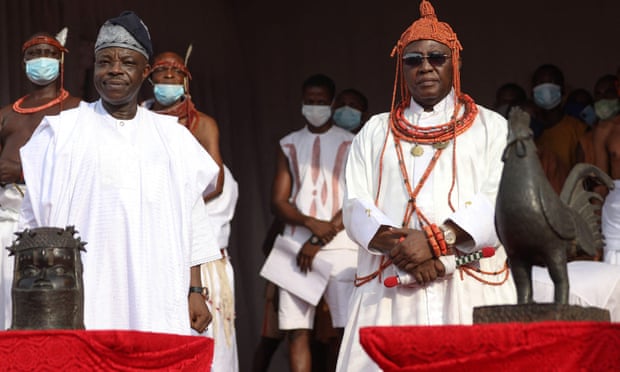
Return of cockerel sculpture and head of an Oba raises hopes that thousands more artefacts could be returned to their ancestral home. Photograph: Kola Sulaimon/AFP/Getty Images – The Guardian
It has been104 yearssinceBenin City: the Majestic City the British burnt to the groundwas looted and destroyed. Now, a century later, two of the numerous Bronze statues that were taken at the time, are being returned. Some may ask, who cares about 2 Bronze statues? These statues are not just a symbol of the craftsmanship of the Benin people, but they also symbolize the essence of the people. Back in those days, the statues were not used like they are by Europeans, to be placarded in museums, they had a symbolic, and some even had a spiritual or energetic importance. Below are excerpts from the article on the Guardian’s website.
=====
Two Benin bronzes were returned on Saturday [19 February 2022] to a traditional palace in Nigeria, more than a century after they were pillaged by British troops, raising hopes that thousands more artefacts could finally be returned to their ancestral home.
The artefacts, mostly in Europe, were stolen by explorers and colonisers from the once-mighty Benin Kingdom, now [part of] south-western Nigeria, and are among Africa’s most significant heritage objects. They were created as early as the 16th century onwards, according to the British Museum.
At a colourful ceremony to mark the return of a cockerel sculpture and head of an Oba or king, spokesperson Charles Edosonmwan for the Oba palace in Benin City noted that some of the bronzes were kept as far away as New Zealand, the United States and Japan.
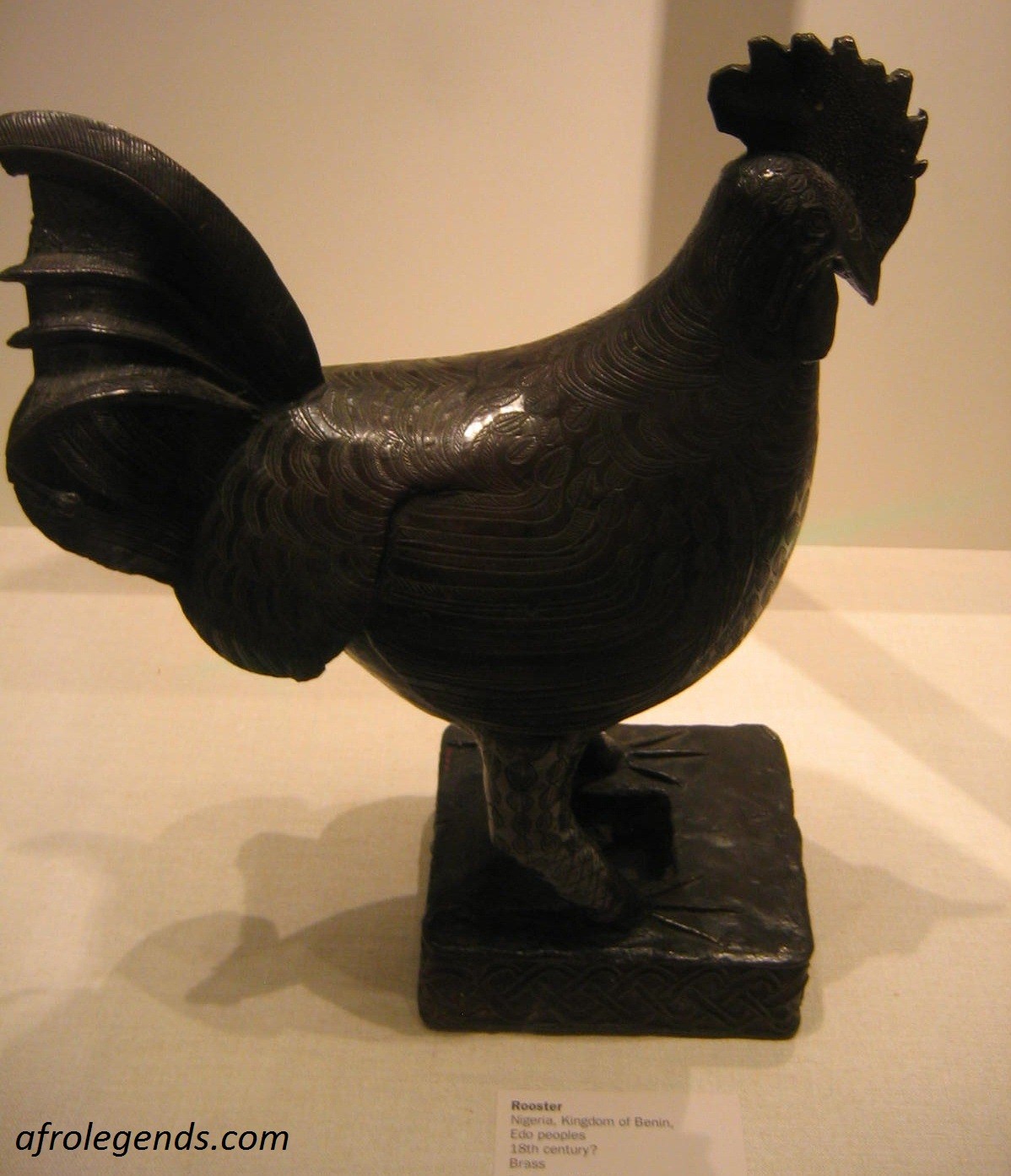
Rooster from Benin Kingdom (18th century), exposed at the MET
The two artefacts were handed over to the Nigerian High Commission in October by the University of Aberdeen and Cambridge University’s Jesus College but had yet to return to their ancestral home.
“They are not just art but they are things that underline the significance of our spirituality,” Edosonmwan said in an interview on the sidelines of a ceremony attended by traditional leaders.
… About 90% of Africa’s cultural heritage is believed to be in Europe, French art historians estimate. Musée du quai Branly – Jacques Chirac in Paris alone holds about 70,000 African objects and London’s British Museumtens of thousands more.
Queen Nefertari and Pharaoh Ramses II at the Queen’s temple at Abu Simbel
Love songs and poems are a part of every culture in the world… Love is a universal language. It does not have any barrier, race, class, and even time! It is Love… simple, overflowing, and boundless… Some of the world’s oldest love poems were found in Egypt written several millenia ago. Amazing how timeless they are! I chose the picture of Pharaoh Ramses II and Queen Nefertari as it is well-known that Ramses II deeply loved her and had a temple built in her honor at Abu Simbel .
For this Valentine Day, enjoy this Love poem from Ancient Egypt, found in Deir el-Medina, dated about 1300 BC. It is part of the Chester Beatty Papyri I. As you read it, savor it slowly, and stop for a moment to ponder as the lover sings of his sweetheart as the fairest of all, her skin as bright as a star, her hair as precious as the lapis lazuli stone, stone highly valued in antiquity, her arms surpassing gold, her legs parading her beauty, and when she steps outside she is as the sun so beautiful she catches everyone’s attention. I have placed two of the most popular translations next to each other. Enjoy!
Sister Without Peer My one, my soul without peer,
Most beautiful of all!
Rising like the morning star
At the start of happy year.
Shining bright, fair of skin,
Lovely the look of her eyes,
Sweet the speech of her lips,
She has not a word too much.
Upright neck, shining breast,
Hair true lapis lazuli;
Arms surpassing gold,
Fingers like lotus buds.
Heavy thighs, narrow waist,
Her legs parade her beauty;
With graceful steps
she treads the ground,
Captures my heart by her movements.
She causes all men’s necks
To turn about to see her;
Joy has he whom she embraces,
He is like the first of men!
When she steps outside
She seems like the Sun!
“She has no rival, there is no one like her.
She is the fairest of all.
She is like a star goddess arising
… at the beginning of a new year;
brilliantly white, shining skin;
Such beautiful eyes when she stares,
and sweet lips when she speaks;
she has not one phrase too many.
With a long neck and shining body
her hair of genuine lapis lazuli;
her arm more brilliant than gold;
Her fingers like lotus flowers,
ample behind, tight waist,
her thighs extend her beauty,
Shapely in stride
when she steps on the earth.
She has stolen my heart with her embrace,
She has made the neck of every man
turn round at the sight of her.
Whoever embraces her is happy,
he is like the head of lovers,
And she is seen going outside
like That Goddess, the One Goddess.”
As we saw from the description of a Bornu Maï (King) in the 17th century, the Bornu Empire was a prosperous empire with great kings.
Below is another description, this time of the Bornu Empire in 1582. Immediately, we notice the impressive size of the capital city most likely Ngazargamu, the respect given to the kings, who were treated just like the kings of Timbuktu. It is also good to note the level of education of these kings, as well as their relations with Libya and beyond, Turkey. Lastly, slaves were not traded here, but rather leather. Was this the source of the great Libyan leather?
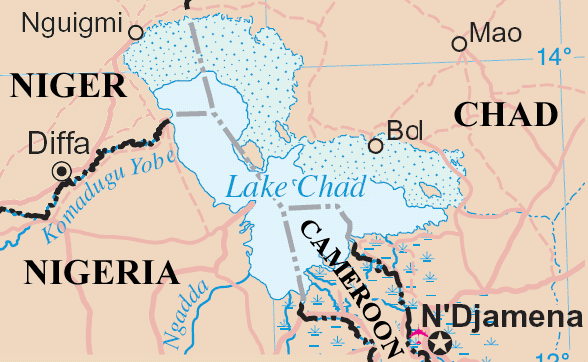
Then there is Borno on the edge of the Negro river (where there is a large lake formed by the said river [this is most likely the Yobe River also known as Komadugu Yobé River which flows into Lake Chad]). It is an immense city with a lot of traffic, having its own king who is treated with the same ceremonies, both by foreigners and by his own vassals, as those in use among the king of Tungubuto (Timbuktu). We kneel down on our knees, throwing sand on anyone’s head. He is served with great zeal by eunuchs and young girls whom they render sterile with certain potions.
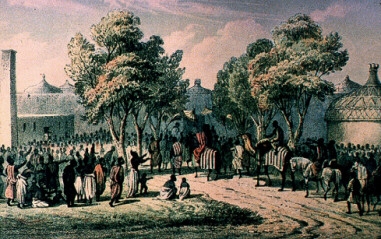
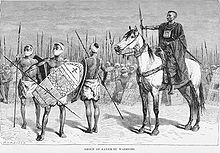
Group of Kanem-Bu warriors in the 1800s
In his correspondence, writing to foreign princes, he uses the Arabic language, as Giovanni di Vesti tells me, a very honorable person, and who was a slave to the son of a great count among the Turks. He himself saw a letter that the king of Borno wrote to the Pasha of Tripoli with great eloquence and art. This prince is so powerful that several times he has raised an army of hundred thousand men against the king of Cabi (Kebbi [in modern day Nigeria]). The blacks, it is said, regard him as an emperor, so great is his power. He owns a multitude of horses which Arabs bring from their country, and they make a great profit by selling them for at least a thousand or seven hundred crowns each. These horses do not stay alive for long, because when the sun enters the sign of Leo, many of them die every year from the extreme heat. Today many Turks arrive, seeking adventure, and many Moors from Barbary, who are their scholars. They are very well paid, because they are few in number, as it happens with all those blacks who are Muslims. And many merchants depart from there every year, carrying so much excellent quality leather that it seems extraordinary in Fizzan (Fezzan [in Libya]). Then they return with big quantities of horses, accompanying the caravans of black merchants.
Edition critique par Dierk Lange
Les Africains, vol. 3, Editions J.A., 1977, p. 57. Translated to English by Dr. Y., Afrolegends.com
We can retain without great risk of anachronism the detailed description that a Frenchman – probably a surgeon by the name of Girard held in slavery for a few years in Tripoli – gives in 1685 of the sovereign according to the testimonies he collected in this city.
It is in this case the grandson and fourth successor of Idris Alooma, designated under the name of “Mahi-Hagi-Hali”, that is Mai (Hajj) Ali b. Umar b. Idris, who had reigned, according to D. Lange, from 1639 to 1677.
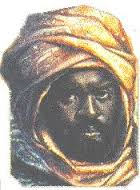
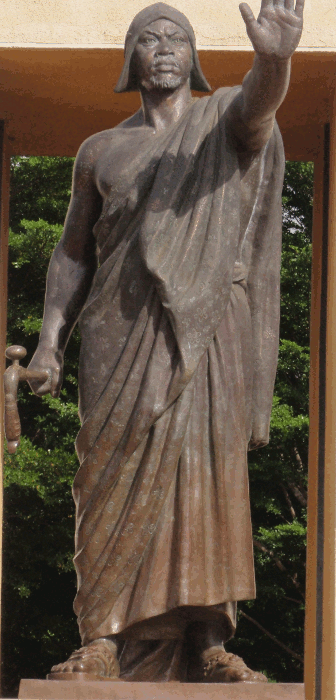
Idris Alooma
“Those who have seen this prince agree that he is nice looking well-built, and of rich stature, but he is black : his ordinary clothes are a robe of white or blue linen, with long sleeves, very fine and untied : he wears the white turban like the Turks, and his face is always more than half covered, because the Bornu people are ashamed (take shame) to show their mouths, and which covers their face from the tip of the nose to the bottom of the chin.”
Chronology of the Bornu Kings from 1512 to 1671. – Extract from manuscript number 12220 (Nouvelles acquisitions. Bibliothèque Nationale, Paris) – Reproduced by le Bulletin de la Société de Géographie de Paris, 1849
It is good to note that, two centuries later, the European travelers who visited Bornu described the robe of the king in identical terms. Such permanence clearly indicates that this is not an occasional outfit, but one of the ritual and traditional insignia of power.
Les Africains, vol. 3, Editions J.A., 1977, p. 53. Translated to English by Dr. Y.,Afrolegends.com
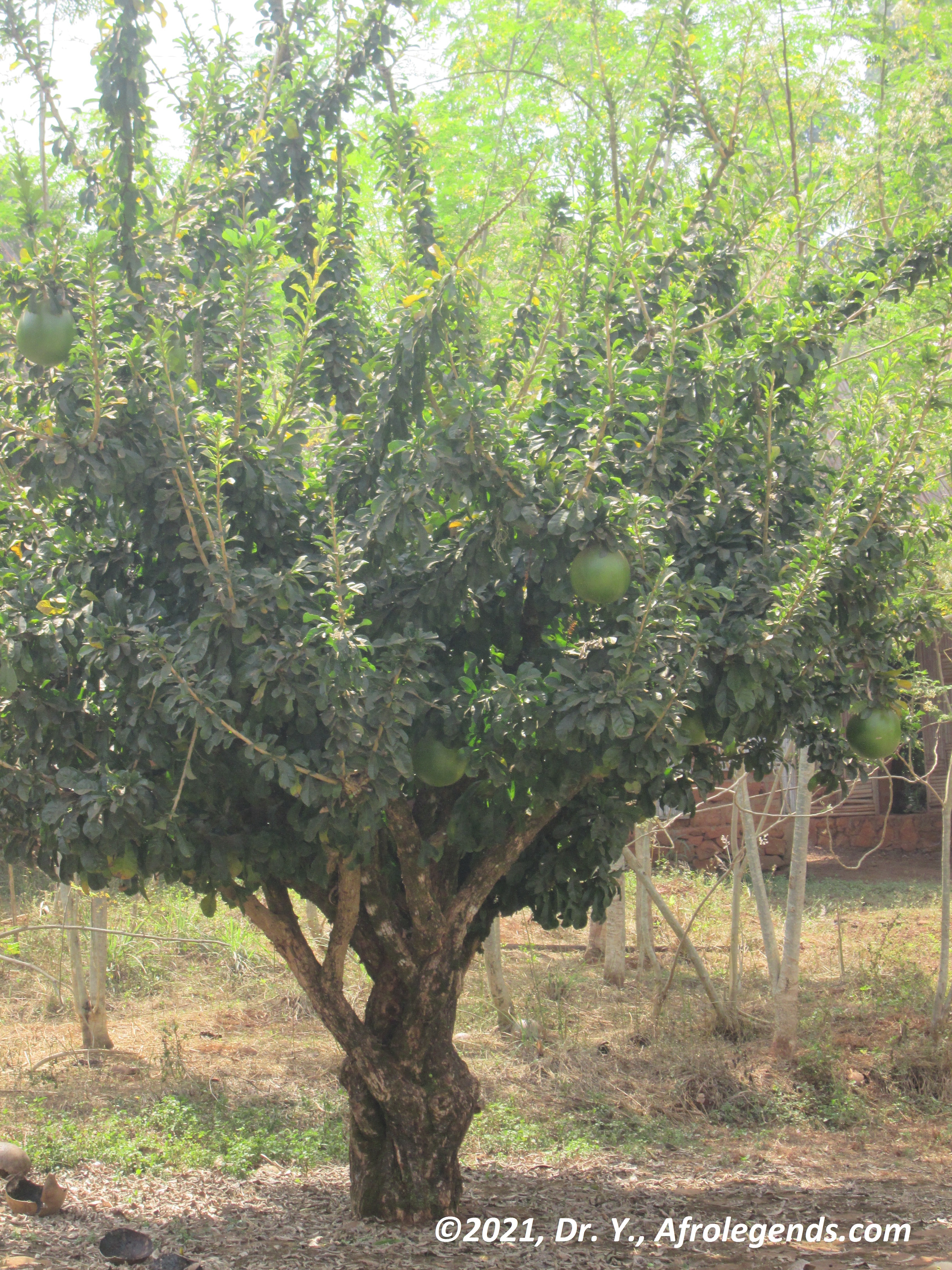
The calabash tree (Le calebassier) under the African sun
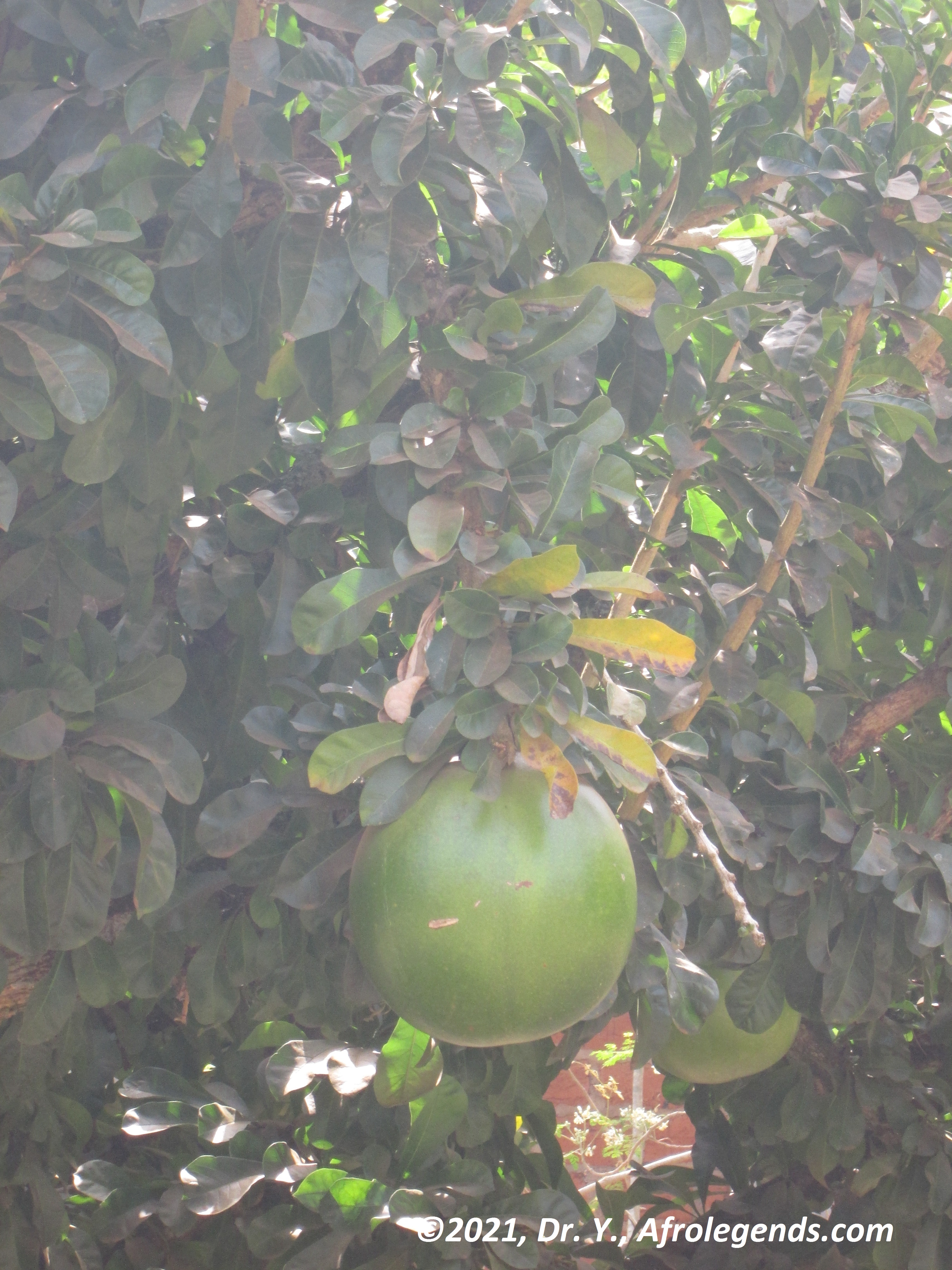
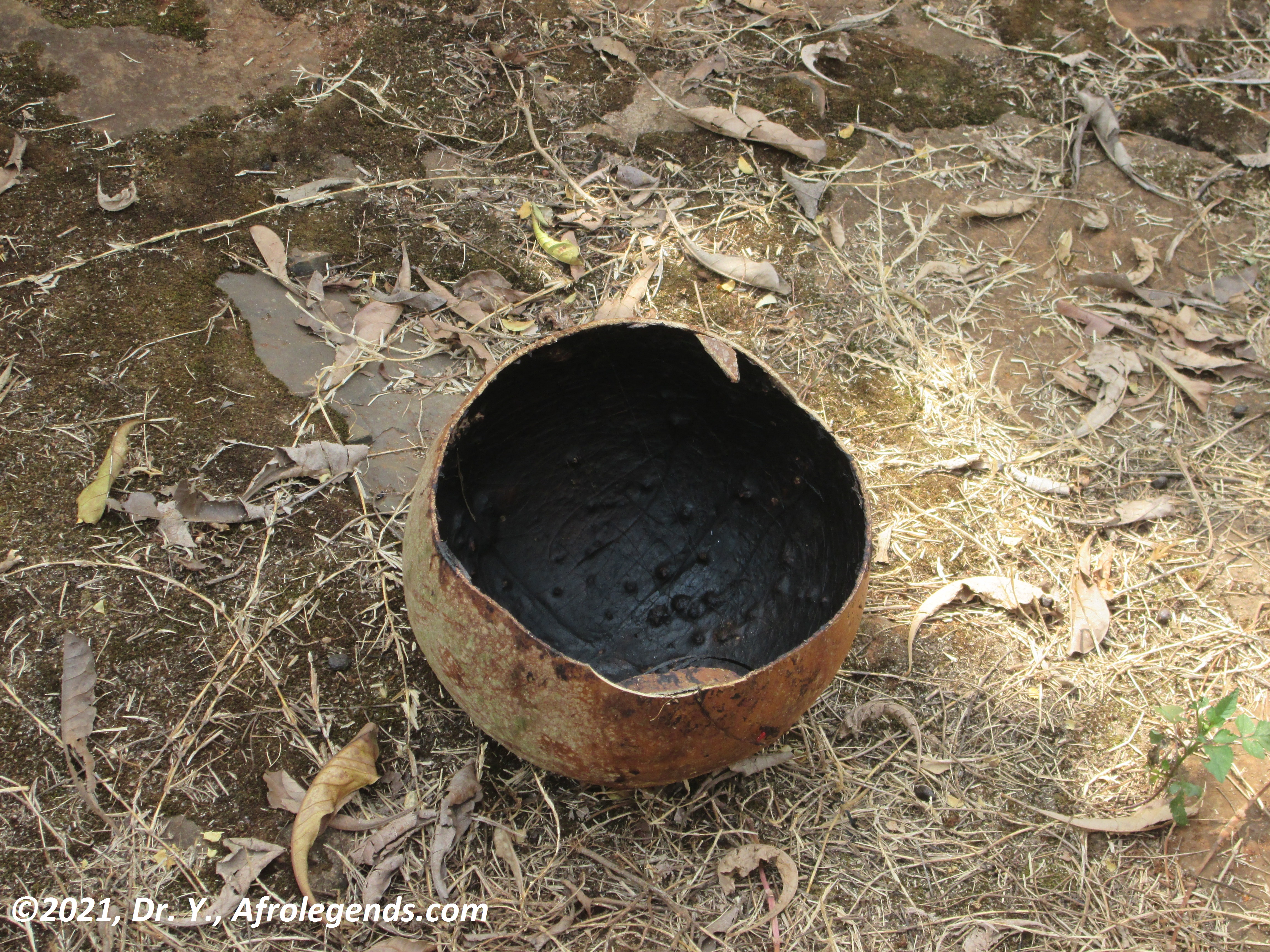
Have you ever eaten out of a calabash? It seems the food has a particular taste, and that eating out of the calabash adds an extra ‘mmph‘ to the food. In the old days, and even to this day we used homemade utensils such as calabash, especially when eating fufu (yummy)… Well, I recently stumbled upon the tree from which the calabash bowl is made out of, and found the fruits hanging down from the tree. The tree is cultivated not only for its fruits but also for the utensils, and for making amazing musical instruments. I love the idea that everything is used and nothing is thrown out: from the fruit, the meat inside the fruit, and its shell. The calabashes are hollowed-out and dried, and used to cook, carry water, and food. The smaller sized ones are used as bowls to drink palm wine: the white wine made in Africa (Le Vin de Palme: Vin Blanc Made in Africa).
The calabash fruit
Calabashes are used in making the West African kora (a harp-lute), xalam/ngoni (a lute) and the goje (a traditional fiddle). They also serve as resonators underneath the balafon (West African marimba). The calabash is also used in making the shekere / shegureh (a Sierra Leonean women’s rattle) and balangi (a Sierra Leonean type of balafon) musical instruments. Sometimes, large calabashes are simply hollowed out, dried, and used as percussion instruments, especially by Fulani, Songhai, Gur-speaking and Hausa peoples. In Nigeria, the calabash has been used to meet a law requiring the wearing of a helmet on a motorcycle. In South Africa, it is commonly used as a drinking vessel and a vessel for carrying food by all people across the continent. In Ethiopia, children from the Erbore tribe wear hats made from calabashes to protect themselves from the sun.
The calabash all dried up… almost ready to be made into a bowl
Is there a child on this planet who has gone to high school and not been taught the Pythagorean Theorem in some shape or form? I am not sure that many African children know that the so-called Pythagorean Theorem was written by their ancestors over 1000 years before Pythagoras was born, and on African soil. You heard me right: Pythagorean Theorem was written on the Berlin Papyrus or Berlin Papyrus 6619, a papyrus from ancient Egypt from the Middle Kingdom. This papyrus dates back from the second half of the 12th (c. 1990–1800 BC) or 13th Dynasty (c. 1800 BC – 1649 BC).
The papyrus is one of the primary sources of ancient Egyptian mathematical and medical knowledge, including the first known documentation concerning pregnancy test procedures. See our ancestors were already trying to test pregnancy! Amazing!
The first problem found on the Berlin Papyrus states, “You are told the area of a square of 100 square cubits is equal to that of two smaller squares. The side of one is ½ + ¼ the side of the other. What are the sides of the two unknown squares.” In modern terms, we would express this as x2 + y2 = 100 and x = (3/4)y, yielding to y = 8, and x = 6. Although the papyrus shows a solution using Egyptian multiplication and a somewhat different way of solving it today, it is understood that they most likely had a good knowledge of the Pythagorean Theorem. It is written in Hieratic script.
Next time you visit the Egyptian Museum Berlin, don’t just look at the bust of Queen Nefertiti which is next to the Berlin Papyrus and dwarfs it, but check it out also.
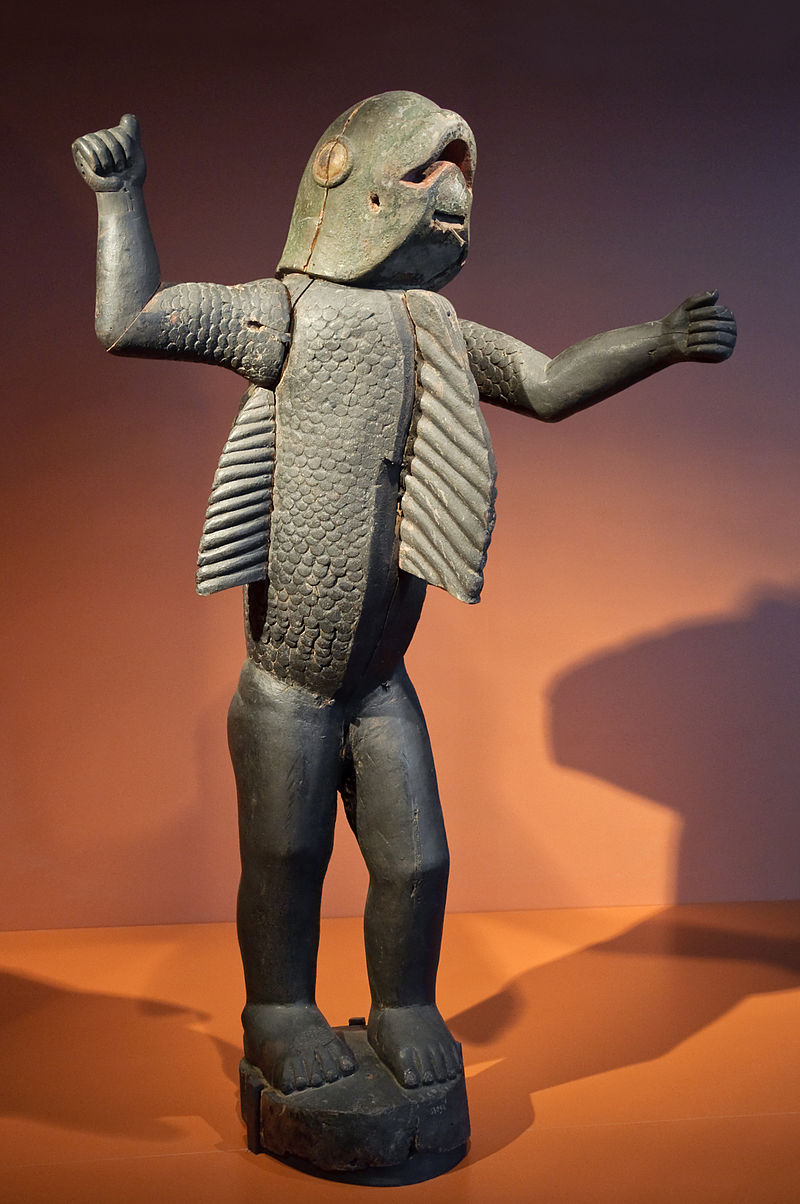
Last Wednesday, on November 11, 2021, artefacts that had been looted by France 130 years ago were finally returned to Benin. As you recall, on November 17, 1892, the colonel Alfred-Amédée Dodds led a French expedition into the Kingdom of Dahomey. The colonizing troops broke into the palace of King Behanzin at Abomey, and looted a huge number of royal objects, ancient statues, royal thrones, sacred altars, and much more. Upon the troops’ return home, Colonel Dodds donated the stolen objects to the Musée d’Ethnographie du Trocadero in Paris; they have been housed at the Musée du quai Branly – Jacques Chirac since the 2000s. It took 130 years for them to be returned to the homeland. So you can imagine the joy of the people and celebrations that followed. The collection – known as the Abomey Treasures – will remain in a room at the Benin presidency while the museum is in construction. As a slight note, only 26 colonial-era artefacts have been returned at this point, as you can imagine these represent only a fraction of the 90,000 artefacts from Sub-Saharan Africa still held in French museums.
Benin Fon statue symbolizing Behanzin man shark (Musee du quai Branly – Jacques Chirac)
This is nonetheless a step forward, albeit small, and Benin President, Patrice Talon, said, “The stars have been aligning for Benin for some time now. The symbolism of the return to Benin is about our soul, our identity – to use a word that is easier to put on it to understand. This return is testimony of what we’ve been. The testimony of how we existed before.”
For more information, check out the articles on Euronews, and ABC. Enjoy!
Normal
0
false
false
false
EN-US
X-NONE
X-NONE
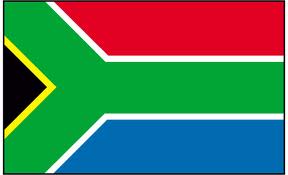
Flag of South Africa
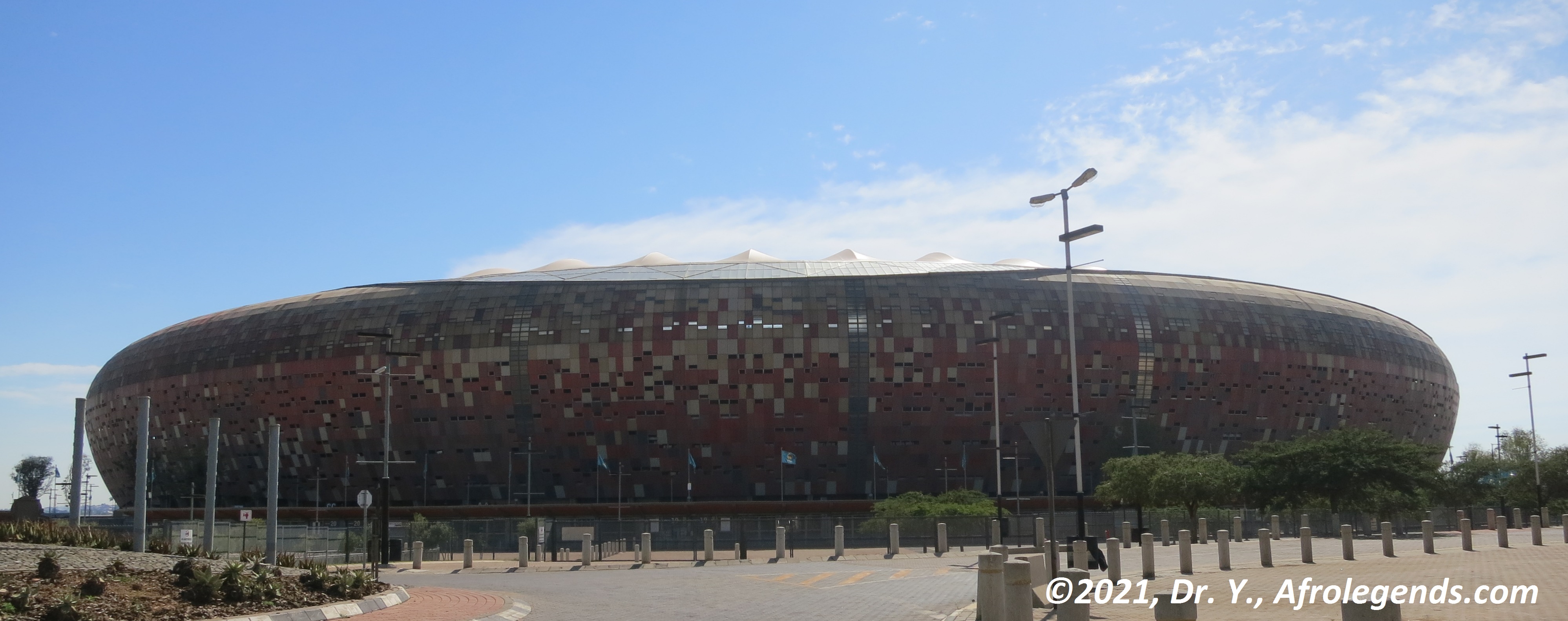
The recent struggle faced by the Khoi and San people of South Africa over their land being used to build Amazon’s African headquarters brings back to light never ending issues: the appropriation of indigenous land by mega corporation, with the cooperation of local governments. While sometimes these local governments are powerless in the face of seemingly great deals that will “foster the local economy”, very often the governments are led by corrupt or ignorant individuals who seek immediate personal gains at the expense of the well-being of their communities (recent events in Sierra Leone). Lastly, why is it that it is always on “significant” indigenous lands that this occurs? Why not elsewhere? Of all places to build headquarters, couldn’t Amazon with its money find another piece of land in Cape Town? I am not against “development” or providing jobs to communities, but I wonder why these disputes are always recurrent. The excerpt below is from the BBC.
=====
Campaigners in the South African city of Cape Town are trying to halt the building of the African headquarters for Amazon. It’s a battle that pits cultural concerns against economic interests, as the BBC’s Vumani Mkhize writes.
San (Basarwa/Bushmen) hunters
It is an overcast day in Cape Town and the scenic Table Mountain is shrouded in a ghostly cloud that silently cascades down the rocky green slopes. At the foot of this historic landscape, a small group of activists from the Khoi and San communities have gathered near the entrance of a huge building site known as the River Club. The communities are seen as some of the earliest inhabitants of southern Africa.
… Across the road from where the activists have gathered, construction is already under way. …
The first phase of the nearly $300m (£215m) development, which will include the Amazon offices, is set to be completed in two years. However the Khoi and the San are determined to stop it.
Tauriq Jenkins, of the Goringhaicona Khoena Council, a Khoi traditional group, says the land has profound historical and cultural value to his people. “This place for us is sacred because it’s on a confluence of Liesbeek and Black Rivers. These embankments are known as the birthplace of the Khoena [Khoi] people,” he tells the BBC.
It is also where the European colonisers had their first battle with South Africa’s indigenous people, which is marked with a blue plaque.
The 150,000 sqm development will include residential properties and shops as well as offices.
The Amazon site, which is seen as key to pulling in other companies, is set to take up nearly half the space, from where it will run its bourgeoning operations across Africa.
… Jody Aufrichtig, who heads the project, says the development will provide a massive boost to Cape Town’s tourism-reliant economy, hit hard by the coronavirus pandemic. He said it would create 6,000 jobs during construction and about 13,000 indirect jobs. “It’s so desperately needed, especially post-Covid and some of the riots and troubles we’ve had in South Africa.It will give the people of Cape Town and South Africa hope and economic development.” [yeah right… so unless it is built on this specific site, there will be no jobs for South Africans? Of all the places to build, it had to be that one? Will elsewhere in Cape Town still not provide jobs to South Africans?]The tussle between the developer and the indigenous people of Cape Town comes amid the biggest unemployment crisis South Africa has ever faced.
… The site of the development is where the first conflict between the indigenous people and the Dutch colonisers took place in 1659.
“This very place is where land was stolen for the first time in South Africa,” Mr Jenkins says. The dispossession of Khoi and San land set in motion centuries of land seizures across the rest of the country. The issue of land ownership, or the lack of it, remains a thorny issue.
… Mr Jenkins and members of the Khoi and San communities remain unmoved by the argument that the new development will bring much-needed jobs. “The reason why this development is so expensive is because it’s on a floodplain. If Amazon and the developer could take its money and build the same scale development off this flood plain, you’d find the size of the development three to four times bigger, which means you’d be able to employ exponentially more people.” [So Amazon is building on floodplains, and it costs more to build there?… so why is the government allowing it? Are there not better sites in Cape Town that will be cost-efficient to the parties involved? Or is there something missing in this information? … doesn’t this scream of corruption?]
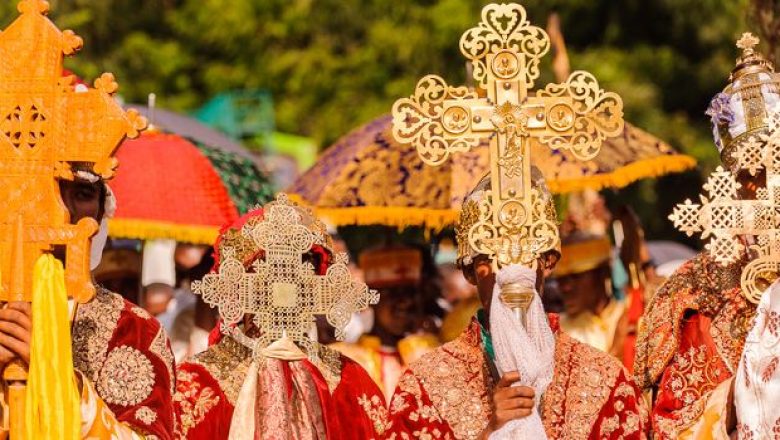
Ethiopian religious leaders carrying crosses during the Meskel celebration (Ethiopiaonlinevisa.com)
September 27th this year marks another big Ethiopian celebration. An even bigger festival than Enkutatash the Ethiopian New Year, is the Meskel “True Cross” Celebration which takes place on September 27th or 28th in leap year. Meskel 2021 is on September 27th . The festival commemorates the discovery of the “True Cross” on which Jesus was crucified, and is held annually in Meskel Square in Addis Ababa.
The word “meskel” is from the Ge’ez language which translates to “cross.” The festival is basically a celebration of the finding of the cross. The festival is held at the iconic Meskel square in Addis Ababa and draws out a large number of religious and civil leaders as well as public figures and Christian faithful. Meskel has been celebrated in Ethiopia for more than 1,600 years as an outdoor religious festival and has been registered at UNESCO since December 2013 as an Intangible World Heritage.
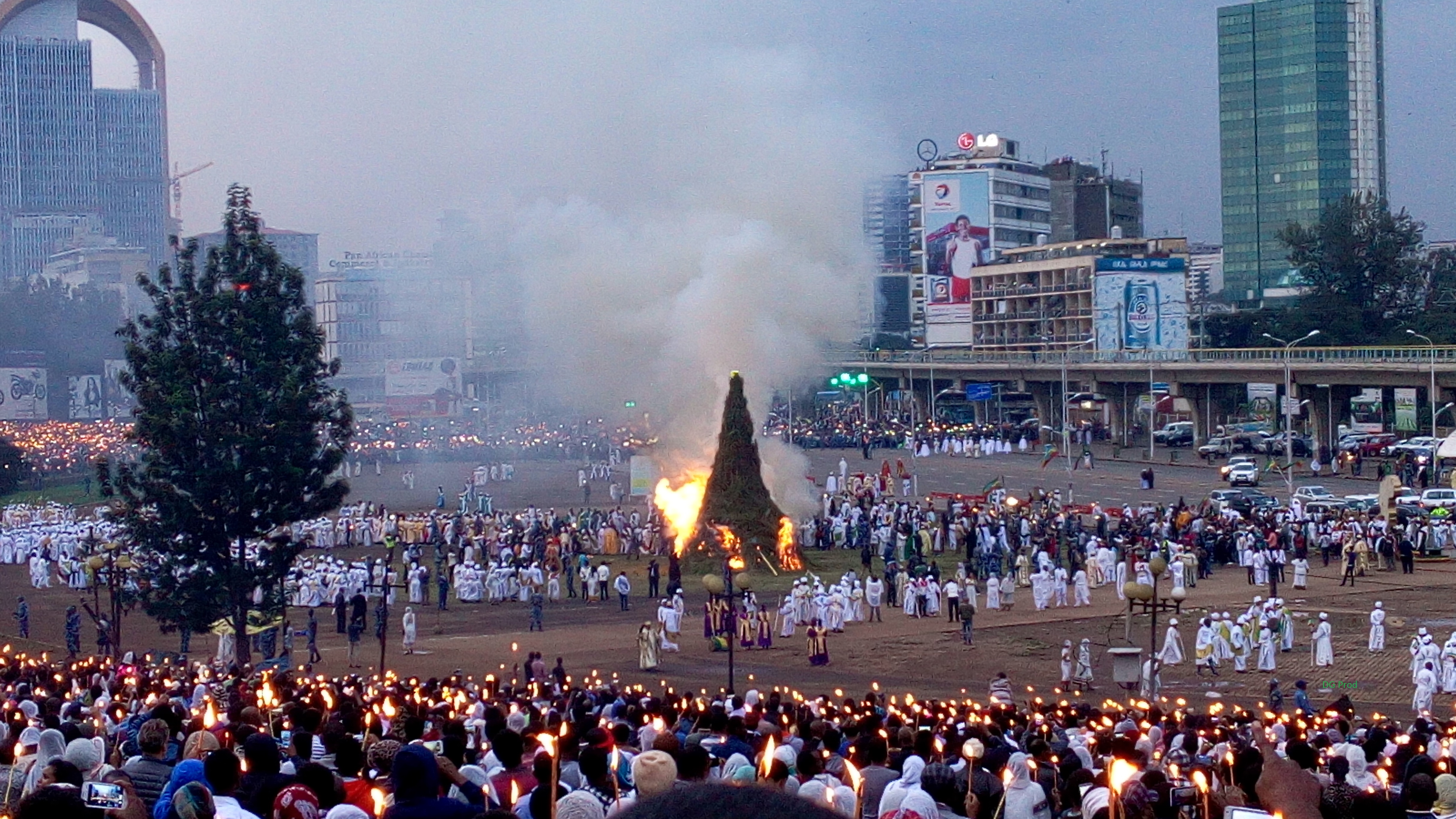
Meskel celebration in Addis Ababa (Source: Wikipedia)
The legend goes that in 4BC, the Roman Empress Helena (Queen Eleni) was able to locate the important artifact in Jerusalem by using the smoke from a huge fire. The celebration is especially important to Ethiopians as it is alleged that a piece of the cross Helena discovered was brought to Ethiopia, and hidden away somewhere in the mountains of Amba Geshen, which itself has a cross-shaped plan.
Ethiopians commemorate the find by building their own massive bonfire, the Meskel, which they decorate with yellow flowers known as Adey Abeba before burning. Ethiopia’s religious leaders lead colorful processions and prayer around the fire, and attendees intently watch to see which way the bonfire will collapse, as it is believed to predict the future.
As you can see, the month of September is a month of cultural and religious celebrations in Ethiopia.
As we talked about the Enkutatash or the Ethiopian New year, I thought that it will be awesome to talk more about the Ethiopian calendar. After all, we are in 2014 in the Ethiopian calendar while we are in 2021 in the Gregorian calendar. Where does this come from? Do months have 30 and 31 days in the Ethiopian calendar like in the current calendar used by most people?
Well, the Ethiopian calendar is derived from the Egyptian solar calendar but adds a leap day every 4 years without exception. Like the Egyptian Coptic calendar, the Amharic calendar comprises 12 months of 30 days each, with anadditional month of just 5 or 6 days, depending on the year, i.e. in the Ethiopian calendar, there are 13 months, with 12 months which all have 30 days, and one month with only 5 or 6 days; no need for a song to keep track of which month has 30 or 31 days or even 28 days (February, I am looking at you). Ethiopian calendar months begin on the same days as Coptic calendar months but are instead named in Ge’ez, the ancient language of northern Ethiopia and southern Eritrea. Also a 6th day is added every four years to the 13th month, without exception, to indicate the leap year; this is placed 6 months before the corresponding Gregorian day.
The Ge’ez calendar is the principal calendar used in both Ethiopia and Eritrea.
Map of Ethiopia and Eritrea
The beginning of the calendar is based on the birth of Jesus. Ethiopians use the Incarnation Era to indicate the year, which places the Annunciation of the birth of Jesus on March 25, AD 9 in the Julian calendar. On the other hand, Europeans adopted a different calculation for the Annunciation which placed it eight years earlier, meaning that there exists a gap of 8 years between the start of the Ethiopian calendar and the Gregorian. Most of the major celebrated holidays such as Christmas occur on completely different days, so instead of December 25th, it is celebrated on January 7thwhich is considered by the Ethiopian orthodox church as Jesus birth day.
Lastly, the time of the day is such that the day starts at sunrise, and sunset is the end of the day: the sun and the moon that are used to count time each have 12 hours before setting… so 6:00AM in the morning in other places of the world will be 12:00AM, midday is 6:00AM, and when the sun goes down it is 12:00PM in Ethiopia. I just wonder how you would tell time if you lived in a different country, and were trying to call a friend in Ethiopia, how would you know when to call?
Wouldn’t it be difficult for a foreigner to tell the time and the year in Ethiopia? I must admit that the Ethiopian calendar does seem a lot simpler than what we have though!