Technique of Disinformation about Slavery

Slave capture

We have been told by many that “Africans sold their brothers” into slavery. However, we have seen before, When the Kongo King, King Mvemba a Nzinga, most commonly known as Afonso I of Kongo, or Nzinga Mbemba,  wrote to the King of Portugal against Slavery, that many kings fought against such. King Afonso I was concerned about the depopulation of his kingdom through the exportation of his own citizens into slavery, and complained to the Portuguese king against it. Below, we will see that the above statement is mostly a false statement invented by the guilty to turn the victim into an accomplice.

Here is Guillaume Bosman in La Traite des Noirs au Siècle des Lumières (Témoignages de négriers), p.38  who also confirms the disorganization of Black Africa by slave-trading Europe. He writes:

there are many people among us who imagine that fathers sell their children here, husbands their wives, and brothers their brothers, but they are wrong. This never happens except out of necessity and for some crime; most of the slaves taken to us are people who have been taken prisoner in war, and whom the victor, considering as his booty, has sold to make a profit.”

Bimbia: One of Cameroon’s Slave Forts, a National Heritage Site, up for Sale?

Ruins of the slave fort in Bimbia

On January 13, 2025, the people of Limbe stood together against the alleged ceding of the historic slave trade site to a private company GilGal Tours for 50 year lease!!! Can you imagine that? It’s like the government is once again trying to erase the history of this place. One day, Cameroonians will wake up and find out that their government has sold the entire country away! How can one even fathom selling a national historic site? This site waseven been added to the UNESCO tentative list of World Heritage lists in 2020. How can one even wrap their minds around the ceding of Bimbia to a private company, after so many descendants of slaves taken from its shores have just started to reconcile with their history? After the whole country has reconnected with their history? A few years back, a friend visiting the site was told by her guide that a business man had come to level the place down, and had been stopped just in time; now this? Sure, Limbe, and the country as a whole needs development. Cameroon is full of beautiful places and tourist sites that are not being valued. It is no doubt that the site would benefit from the development in Limbe or simply the road to Bimbia which will open access to the area, and increase touristic benefits. The entire area should be honored !

Ruins of the slave prison in Bimbia, Cameroon

Below are excerpts of an interview of Pr. Lisa Aubrey by Dunia Magazine. For the full article, check out the website. Please, also find this interview of Pr. Lisa Aubrey and Bwemba Bong. Furthermore, please check out the story of William D. Holland, the descendant of a prosperous prince of the Kingdom of Oku in the Grassfields area of Cameroon, who was sold into slavery because the king feared to be overthrown by him. Lastly, check out the Bimbia Heritage Project.

=====

Names like Gorée (Senegal), Bunce Island (Sierra Leone), Elmina (Ghana) and Ouidah (Benin) are all synonymous to the Transatlantic Slave Trade, and have gained an iconic place in history as locations from whence millions of Africans (up to 15 million it is believed) were transported to Europe and the Americas to be sold as slaves. How about the island of Bimbia? Have you ever heard of her?

Dr. Lisa Aubrey is an associate professor of African American Studies and Political Science at Arizona State University. She is also a Fulbright scholar (2014-15) based at the University of Yaounde I.

Ruins at the Bimbia slave fort, in Cameroon

Since 2010, Dr Aubrey has been conducting research on Bimbia, a supposedly forgotten or not so often talked about slave trade port she refers to as “The Apertura”, located in the South West region of the central African nation of Cameroon. It is the site at which African ethnicities in Cameroon were forcibly and cruelly whisked away from their homeland, or killed,” says Dr Aubrey in a recent special edition of Villages D’Afrique magazine. She goes on to note that the Transatlantic Slave Trade on the coast of Cameroon took place between the mid-17th to late 19th century. Dr Aubrey’s research team (between September 2010 and July 2014) were able to locate and validate some 166 slave ship voyages that left Cameroon bound mostly for plantations in the Americas, sometimes via neighboring Equatorial Guinea. Bimbia is opening the door for broader research,” says the Louisiana, USA native.

Reclaiming African History : Bimbia, a Hidden Slave Fort on the Coasts of Cameroon

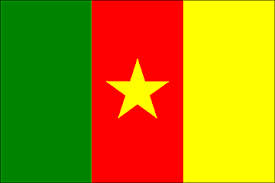
Flag of Cameroon

A few years ago, a colleague of mine visited Antigua, and when he came back, he told me that during his tour of the island, his guide told him that most of the island was peopled by descendants of slaves who all came from Cameroon. I was stunned, as at the time, I did not know of a slave fort in Cameroon, and how could an entire island in the Caribbean be filled with descendants from Cameroon? This was when I started digging, and a few years later, Pr. Lisa Marie Aubrey’s research came out which validated the whole story.

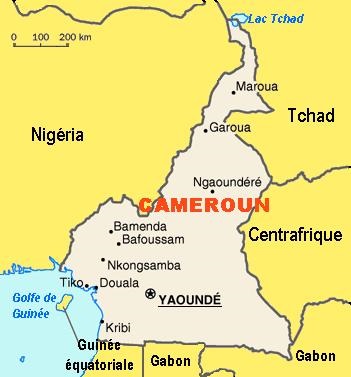
Map of Cameroon, with the capital Yaoundé

Today, we will talk about a slave fort whose existence was not even known until the 2000s, yet, it is said that at least 10% of all African slaves taken to the new world must have passed through its “gates”. This slave fort is Bimbia, in Cameroon. It is listed nowhere in Cameroonian history books, and even in African books. Even today, children learning about the slave trade in Cameroon, do not know about Bimbia. There is indeed a great silence about the existence of slave forts in the crook of the Gulf of Guinea whether in Nigeria, Cameroon, or Gabon.

Welcome Sign to the Bimbia Site, in Bimbia, Cameroon

Located in the South West region of Cameroon, Bimbia is a small village about 5 km from the seaside city of Limbe, on the hills surrounding the city center. It is strategically located on the Gulf of Guinea, in the nook of its elbow, east of the Bight of Biafra, between Rio del Rey and Cameroons River (as the Wouri river was known back then). The site was only re-discovered in 1987 during the earthworks on the church dedicated to the memory of Alfred Saker church, and is now classified as a national heritage of Cameroon.

Vestiges of the slave fort at Bimbia

What brought Bimbia back from its oblivion? Most likely the fact that since Ancestry DNA has gained in popularity over the years, many African American actors, producers, politicians, such Spike Lee, Quincy Jones, Eddie Murphy, Blair Underwood, Chris Tucker, Condoleeza Rice, Oprah Winfrey, or Brazilian Regina Ribeiro, and more have found their origins in Cameroon. This was surprising, and led to more research to find out where their ancestors could have come from, given the absence of information on slave forts in the region.

Ruins of the slave prison in Bimbia

According to Pr. Lisa Marie Aubrey of Arizona State University who published her study in 2014, thousands of Africans were taken from the slave fort of Bimbia, similar to Gorée in Senegal, or more. From her research, she found out that at least 166 slave ships left the coasts of Cameroon. Bimbia is not the only slave fort found in the country, Rio del Rey near the Bakassi peninsula and Cameroons Town (Douala) are the others. From the ships inventoried, 9 left the territory in 1600, 98 in 1700, and 59 in 1800. 15 left from Bimbia, 9 from Rio del Rey, and 32 from the Wouri River.

The slaves who arrived in Bimbia from hinterland came from everywhere, but the majority came from the Grassfields, the Bamileke region, Northwest, Noun, Mbam, Tikar region, and even as far north as the Hausa region.

Ruins of where the slaves were fed, the manger, at Bimbia

For anyone visiting today, the road to Bimbia from Limbe is a tough road, sometimes impracticable during the rainy season; the site is hidden in a deep and lush green forest, with huge bamboos around. As a matter of fact, the slaves who ran away used this hostile environment with treacherous ravines, hills, and volcanic rocks to hide, to their advantage.

Bimbia was considered such a good location for the ships traveling the coast because of Nicholls Island whose south coast constitutes a deep sea port with at least 6 m depth, thus allowing ships to accost easily with no fear of crashing. Nicholls Island is located 300 m away from Bimbia which is on the continent; thus providing slavers with a perfect path to the continent for slaves. Once the slavers had gotten slaves from Bimbia, they could also make transit on the nearby island of Fernando Po (Bioko – where Malabo, the capital of Equatorial Guinea is located). Thus, slaves were brought from the hinterland, and kept in Bimbia, while awaiting the arrival of the slave ships; once the slave ship arrived, the slaves were taken from Bimbia to nearby Nicholls Island 300 m away, from where they were then moved into the ships to far away destinations never to see their continent again.

Nicholls Island, viewed from Bimbia

For today’s visitor, there are still vestiges that testify of Bimbia’s dark history: brick columns, rusty chains hooked on the falling walls, iron chunks here and there, bells, and the manger where the slaves were fed..

Although Bimbia has now entered the national heritage of Cameroon, it has not yet become as popular a destination as it should, like Goree, Elmina Castle, Cape Coast and others. This may be more due to the lack of organization in the overall tourism of the country, bad governance, and also the accessibility to the place. This is a call to more historians, particularly Cameroonian and African historians to restore the story of Bimbia and many of the other hidden slave forts of West and Central Africa.

The Attiéké, Ivory Coast National Dish, enters the UNESCO Intangible List

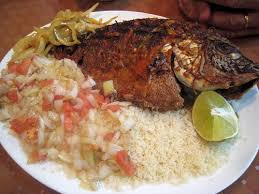
Un plat d’attieke poisson

This past weekend, I visited an Ivorian friend who served me Attiéké, Ivory Coast’s iconic dish made from fermented cassava roots, which is part of almost all Ivorian tables. Few days ago, the attiéké, has been inscribed on the UNESCO’s Representative List of the Intangible Cultural Heritage of Humanity. What is the UNESCO list of Intangible Cultural Heritage, you may ask? The Intangible heritage focuses on the non-physical aspects of a culture, contrary to the tangible heritage which focuses on monuments and natural landscapes, working on the preservation of traditions, practices, expressions, and knowledge of entire communities. Thus, African treasures which are part of the UNESCO tangible heritage list would be Great Zimbabwe, the Rock-hewn churches of Lalibela (Ethiopia), Timbuktu (Mali), or Pyramids of Giza (Egypt), while intangible heritages would be the Congolese Rumba and now Attiéké.

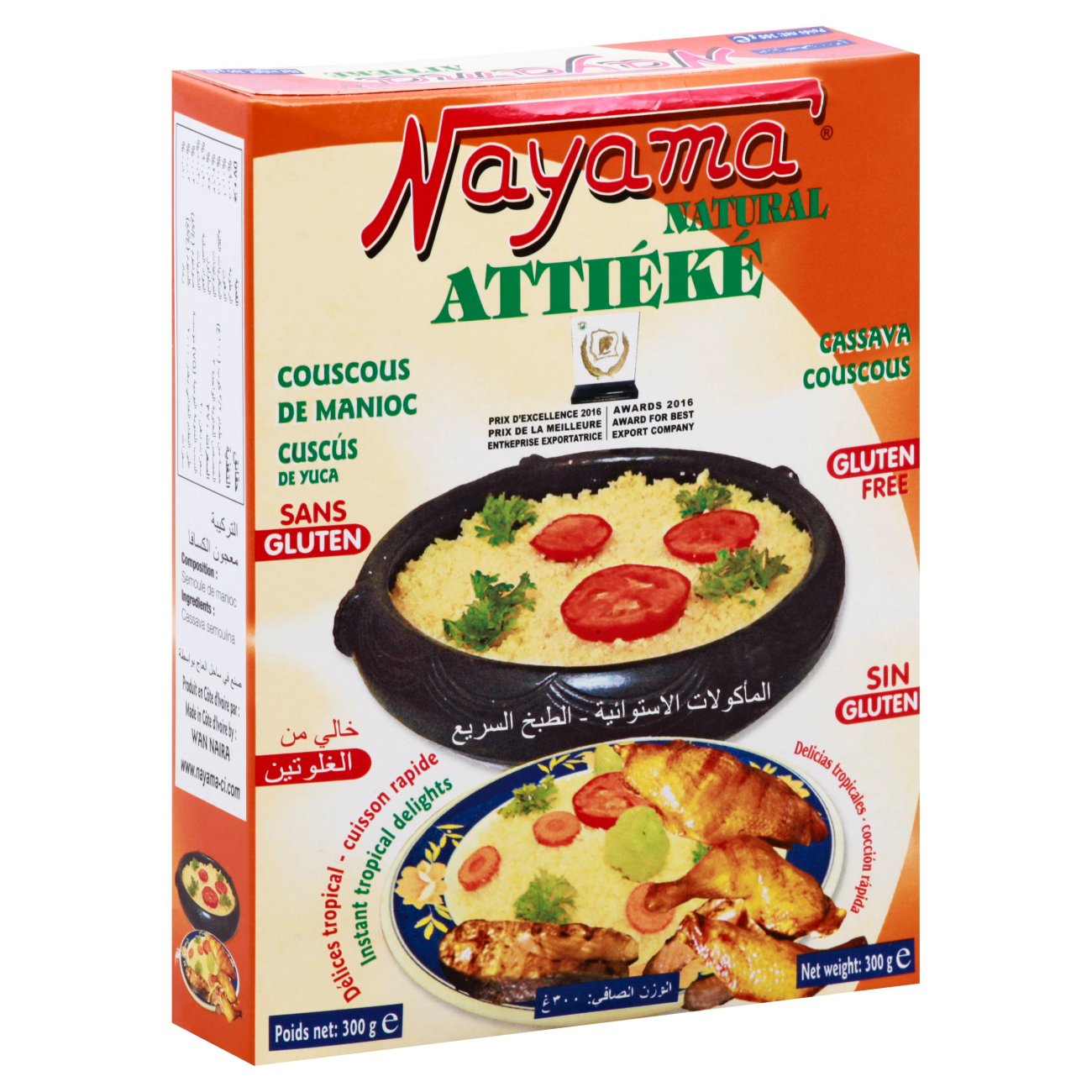
A pack of Attieke

Attiéké is often nicknamed “Ivorian couscous,” because it is a staple made from grated, fermented cassava roots, which has a texture similar to the semolina couscous consumed in the countries of the Maghreb, in northern Africa. The Attiéké originated in the coastal regions of Ivory Coast centuries ago; today, it has become a culinary cornerstone across the country and even beyond its frontiers. The dish is versatile, often paired with grilled fish and served during meals and special ceremonies such as weddings, baptisms, and funerals. It also represents a livelihood for many women in Ivory Coast, as its production is an intricate, multi-day process which has been traditionally led by women and passed down from generation to generation. This tradition includes peeling, grating, fermenting, pressing, drying, and steaming the cassava pulp. These skills, which are central to its preparation, have also been recognized as intangible cultural heritage. Today, Cote d’Ivoire produces over 40,000 tons of Attieke per year, and its commercialization and consumption has expanded beyond the country’s border to other African countries, and other continents.

Attieke

The UNESCO’s recognition of this Ivorian treasure highlights the importance of preserving not just the dish itself but also the traditional knowledge and skills associated with its preparation. The generational transfer of these skills ensures attiéké’s role as a cultural bridge in Ivorian society.

To learn more, please read Afrikana’s post on Attieke, and this BBC article.

Description of the Kasaï in Congo in the 1900s

Royal Kuba Masqueraders in Nsheng, Kasai, Congo, ca 1909 (Source: RandAfricanArt.com)

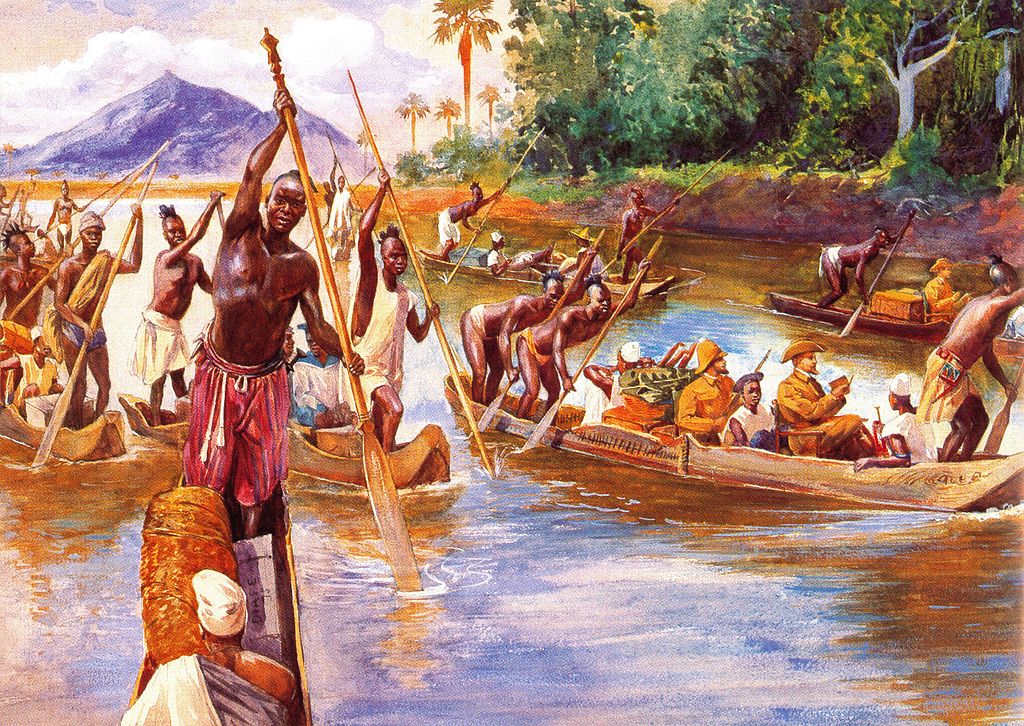
Below is a description of an African city by a well-known European explorer. In 1904, German ethnologist and archaeologist Leo Frobenius, entered the Kasai district in Congo, formulating the African Atlantis theory during his travels. Frobenius entered the heart of Africa, and described the cities as beautiful, and the local art work as comparable to European style. He described the intricate craftsmanship in the work of iron, copper, and the quality of the art found on cutlery, cups, pipes, and more. He was astounded by the graceful manners and moral cannon of the locals of all ages and classes, and depicted it as far superior to those of Europeans. Frobenius stated that he knewof no people who could compare in terms of unity of civilization.” This was at the turn of the past century, and the place was still unpolluted by European influence. Later, as he described, the full arrival of Europeans corrupted the place.

As the east of the Democratic Republic of Congo(DRC) has been going through so pain, war and genocide over the past decades, let us unite the way Frobenius saw it. Enjoy! This is from Leo Frobenius, La Civilisation africaine, Le Rocher, Paris, “Civilisation et Traditions”, Jean-Paul Bertrand Editeur (1984), p. 17-18 (translated to English by Dr. Y, Afrolegends.com).

=====

Leo Frobenius in Africa in 1910 (watercolor painting by Carl Arriens)

In 1906, when I entered the territory of Kassaï-Sankuru, I still found villages whose main streets were lined on each side, over several distances, with four rows of palm trees, and whose [houses], each charmingly decorated, were works of art. There was no man who did not carry sumptuous weapons of iron or copper, with inlaid blades and handles covered with snake skin. Velvet and silk fabrics everywhere. Every cup, every pipe, every spoon was an object of art perfectly worthy of comparison with the creations of the European Romanesque style. But all this was only the particularly tender and shimmering down which adorns a wonderful and ripe fruit; the gestures and manners, the moral canon of the entire people, from the small child to the old man, although they remained within absolutely natural limits, were marked by dignity and grace, in the families of princes and the rich as in those of vassals and slaves. I know of no people in the North who can compare with these primitives in terms of unity of civilization.

Alas, the last “Islands of the Blessed” were also submerged by the tidal wave of European civilization. And the peaceful beauty was swept away by the waves.

Pharaoh Thutmose III’s 3,500-Year-Old Egyptian Royal Retreat Unearthed in the Sinai Desert

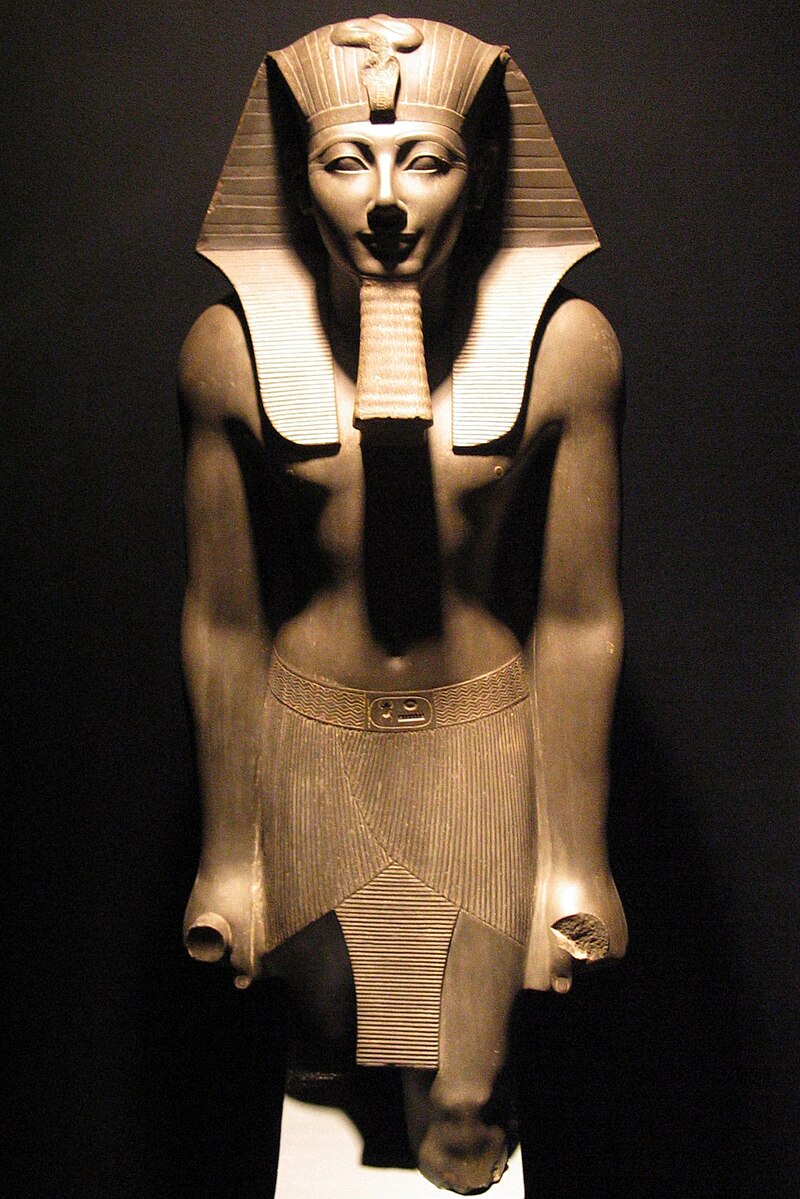
Pharaoh Thutmosis III statue at the Luxor Museum

Last May, an Egyptian mission unearthed the remains of a 3,500-year-old fortified royal retreat at Tel Habwa archaelogical site in the Northern Sinai Archaelogical Area. This ancient fortified area is believed to have belonged to Pharaoh Thutmose III (Thutmosis III) and to be one of his vacation homes or rest palaces. The structure dates back to the reign of Pharaoh Thutmose III, the sixth pharaoh of ancient Egypt’s 18th dynasty in the New Kingdom period. Thutmose III is thought to have ruled Egypt from 1479 to 1425 B.C.. He is regarded as one of the greatest military commanders in history, leading successive victorious campaigns that expanded Egypt’s empire to its greatest extent. This is the pharaoh’s whose Lateran obelisk still stands today in Rome. Everyday more treasures of Ancient Egypt are getting unearthed.

The Egyptian Ministry of Tourism and Antiquities (MTA) announced that the building is made of mud-brick and the site includes the presence of a royal palace to house the king. The building consists of two consecutive rectangular halls, accompanied by a number of rooms. It appears to have been fortified with a perimeter wall. The royal rest home features a grand main hall with three limestone columns, a secondary hall, and several adjoining rooms, all adorned with prominent pillars.

Researchers found the building’s remains at Tel Habwa, an archaeological site northeast of Cairo (Source: The Egyptian Ministry of Tourism and Antiquities)

It is likely that this building had been used as a royal respite due to the architectural planning of the building and the scarcity of pottery fractures [broken pottery] inside,” the Egyptian Ministry of Tourism and Antiquities said in a translated statement shared on their Facebook page. The Egyptian Archaeological Mission, operating at the Tel Habwa (Tharo) Archaeological Site, made this discovery during excavations as part of the Sinai Development Project.

This discovery is pivotal as it illuminates crucial aspects of Egypt’s military history, particularly in the Sinai region, during the New Kingdom era,” said Mohamed Ismail Khaled, Secretary-General of the Supreme Council of Antiquities, as reported by Ahram Online.

To learn more, check out the ancienthistory, smithsonianmag, and popularmechanics.

Agriculture in the Kongo Kingdom in the 16th Century

“Quand l’Africain était l’or noir de l’Europe” de Bwemba Bong

I came across another gem in the book of Professor Bwemba Bong, “Quand l’Africain était l’or noir de l’Europe. L’Afrique: Actrice ou Victime de la Traite des Noirs? – Démontage des mensonges et de la falsification de l’histoire de l’hydre des razzias négrières transatlantiques” (When the African was the black gold of Europe. Africa: Actress or Victim of the Slave Trade ? – Dismantling the lies and falsification of the hydra history of the transatlantic Slave Raids).” After the textile industry, this time, it is about the fertility of the Kongo soil, its agriculture, and the different cultures in the 16th century. In the text, it is good to note the ancient grains used in Central Africa at the time: a grain called luco (could it be the finger millet?) from which a white flour similar to wheat, corn (introduced by Portuguese in Kongo, and which had no real value except to feed pigs, just like rice), nuts like palm nuts (from the description of its usage, one can see the beginning of the multi-million dollar palm oil industry), kola nuts, date nuts, and banana tree. As we read, we note the use of some of those grains to feed but also to heal. I wonder if some these native grains are still used today?

Champs Africains
African fields

In his book, Pr. Bong shows that traditional African agriculture was good, and fed correctly its populations from rich and fertile plateaus, until the arrival of the Europeans who collapsed their agriculture so as to turn the economy entirely toward the trade of humans which was the only commodity of interest to them. This led to cycles of famine on a continent full of arable lands and strong agricultural knowledge. The cycle has not changed today on the African continent, with the cash crops cultures destined for consumption in the West and now East, once again leaving streaks of famine on its wake; thus the constant news about famine in Africa in countries rich with arable lands, but which are cultivating say, coffee or cocoa or others for western consumption.

Filippo Pigafetta et Duarte Lopes, Le royaume de Congo et les contrees environnantes (1591), Chandeigne/Unesco, 2002, p. 133-136 (trad. Willy Bal, présentation et notes Willy Bal); Bwemba Bong, Quand l’Africain était l’or noir de l’Europe. L’Afrique: Actrice ou Victime de la Traite des Noirs?, MedouNeter 2022, p. 175-177 (translated to English by Dr. Y, Afrolegends.com). Enjoy!

=====

The entire plateau is fertile and cultivated. It has grassy meadows and the trees are always green. It produces grains of various kinds; the main and best one is called luco. It resembles mustard see, although a little larger. It is crushed with hand mills; a while flour comes out from which we make a white bread, healthy, pleasant to the taste and which is in no way inferior to wheat bread, except that with it we celebrate mass. Such grains are found in abundance throughout the kingdom of Congo where they have been growing for a short time; the seed comes from the banks of the Nile, in the region where this river fills the second lake.

There is also white millet called mazza di Congo, that is to say “Congo grain,” and corn, which is the least esteemed and which is fed to pigs; rice doesn’t have much value either. Corn is called mazza Manputo, that is to say “grain of Portugal,” Portugal in fact bearing the name Manputo. [could this be another origin of the name Maputo in Mozambique?].

Régime de banane plantain
A plantain bunch

There are also various species of trees which produce an enormous amount of fruits, to the point that most inhabitants feed on the fruits of the country, such as citrons, limes, and particularly oranges, which are very tasty, neither sweet nor bitter and which do not in any way inconvenience those who eat them. Mister Duarte recounted (to show the fertility of the country) that he had seen a citron seed, preserved in the pulp and in the citron itself, germinate in four days.

Other fruits are those called banana. We think that they are musa from Egypt and Syria, with the difference that in Congo the banana tree reaches the size of a tree; it is pruned every year so as to produce better. The banana is a very fragrant and very nourishing fruit.

Different species of palm trees also grow on these plateaus : one of them is the date palm, the other is the one which bears Indian nuts called coccos, because inside there is a head that resembles a monkey. Hence the custom in Spain of shouting “coccola” to frighten children.

Tapper harvesting palm wine

There is another species of palm tree, similar to the previous ones and from which oil, wine, vinegar, fruits and bread are obtained. The oil is made from fruit pulp; its color and consistency are those of butter, although it is more greenish; it has the same uses as olive oil and butter; it bursts into flames; it can be used to anoint the body; it is excellent for cooking; we get it from the fruit, as we get oil from olives; we cook it to preserve it. Bread is made with the stone of the fruit, which resembles an almond, although harder; inside, we find a marrow that is good to eat, healthy, nourishing. All this fruit is green, including the pulp and is eaten raw and roasted. Wine is obtained by perforating the top of the tree : a liquor oozes out, similar to milk ; sweet the first days, it becomes sour and over time turns into vinegar, which is used in salad. But the wine is drunk chilled, it is diuretic, to the point that in this country no one offers from grit or stones in the bladder; it intoxicates the one who drinks it in excess; it is very nourishing.

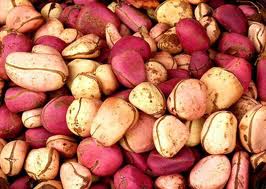
Kola nut
Kola nut

Other trees produce fruits called kola, the size of a pine cone and inside of which are other chestnut-shaped fruits, themselves containing four separate pulps, red and crimson in color. These fruits are kept in the mouth, chewed and eaten to quench thirst and add flavor to the water; they preserve and restore the stomach and are especially effective in liver ailments. Lopes said that a liver of a chicken or other bird, already in putrefaction, sprinkled with the juice of these fruits, became fresh again and almost resumed its previous state. Everyone uses this food commonly, in very large quantities; also it is a good commodity.

We find other wild species of palm trees which bear various edible fruits and whose leaves are used to make mats, to cover houses, to weave baskets, baskets and other objects of the same kind, which we need each day.

Other trees are called ogheghe, the fruits they bear resemble yellow plums, they are excellent to eat and fragrant. We cut branches from these trees, they are planted so closely that they touch each other; they take root and, growing and growing, form palisades and walls around the houses. By then laying mats, we create a fence, a courtyard and these kinds of trellises also serve to provide shade and protect from the heat of the sun.

UK Museums “Long-term Loan” looted Asante Gold Artifacts to Ghana

The V&A is lending 17 items including an Asante gold ring (top left), a gold badge worn by the king’s “soul washer” and a ceremonial pipe (Source: V&A / BBC)

Last week, the Victoria & Albert Museum (V&A) and the British Museum “returned” some artifacts looted from the Ashanti Kingdom in modern-day Ghana, after over 150 years. When one reads the headlines in the news, one can only clap, until learning that this is a “long-term loan“! Wait! What? About 32 gold and silver items which had been stolen from the court of the Asantehene (Asante king) in the 19th century, have been sent on a long-term loan back to the Asante court. First, how long is a “long-term loan”? Second, why is it a loan, when these objects were looted from the Asantehene’s court back in the 19th century? They were not gifted, they were not sold, they were STOLEN! And to top it off, there has been a chief negotiator on the Ghanaian side to ensure that the objects will be in safe hands in Ghana! What? So, these objects do not belong to Ghanaians, and if something were to happen to these Ghanaian objects that were stolen by the British but are now hosted in British museums while on Ghanaian soil on long-term loan, then one can only bet that the British would make the Ghanaians pay for something that is theirs! Which world are we living in? Knowing the treacherous nature of these people, who is to say that they will not orchestrate a new theft of these objects so as to further deepen the debts under which Ghanaians are already crumbling? Actually, long-term in this case means 3 years, with the option of renewing for 3 years! This loan is probably not even free! Why, oh why, do we, Africans, agree to such deals?

Read for yourself… excerpts from the BBC

=====

Burning of Kumasi by British troops in 1874

The UK has returned [how can it be called return when it is a loan?] dozens of artefacts looted from what is today Ghana – more than 150 years after they were taken [i.e. stolen].

Some 32 gold and silver items have been sent on long-term loan to the country by the Victoria & Albert Museum (V&A) and the British Museum.

They were stolen from the court of the Asante king, known as the Asantehene, during 19th century conflicts between the British and powerful Asante people.

The objects are expected to be returned [loaned – see how the writer of this piece wants to create confusion in our minds?] to the current king on Friday.

His chief negotiator, Ivor Agyeman-Duah, told the BBC that the objects are currently in “safe hands” in Ghana ahead of them being formally received. They are due to go on display next month at the Manhyia Palace Museum in Kumasi, the capital of the Ashanti region, as part of celebrations to mark the silver jubilee of the current Asante King Otumfuo Osei Tutu II.

British troops ransacking Fomena Palace en route to Kumasi in 1874

Among the returned artefacts are a gold peace pipe, a sword of state and gold badges worn by officials charged with cleansing the soul of the king. The gold artefacts are the ultimate symbol of the Asante royal government and are believed to be invested with the spirits of former Asante kings.

The loan, which was negotiated with the king and not with the Ghanaian government [always the divide-and-conquer scheme – negotiate with smaller entities, so as to exert more bending power over them], will last for three years with the option to extend for a further three years. [and they have the audacity to call it “long-term”! and for what belongs to you!]… The return of the Asante items comes a month ahead of celebrations marking the silver jubilee of the Asantehene.

The Asante people built what was once one of the most powerful and formidable states in west Africa – trading in, among others, gold, textiles and enslaved people. The kingdom was famed for its military might and wealth. 

Happy Taombaovao Malagasy: Celebrating the Malagasy New Year

Madagascar
Madagascar

Last week, March 10-11 marked the celebration of Malagasy New Year… the Malagasy new year is not in January, because the Malagasy calendar is a lunar calendar with thirteen lunar months of 28 days. Each lunar month starts with the first moon. Up until 1810, every region of Madagascar had its own calendar; then under the Kingdom of Madagascar whose kings reigned from 1810 to 1896, the calendar was standardized. From 1810 to 1881, the Kingdom of Madagascar’s new year always started with the first day of the month of Alahamady, i.e. the first moon of the month. This month corresponds to the end of the rainy season, and the rice harvest, rice being the staple food of the Malagasy people. Compared to the Gregorian calendar, the fararano and the Alahamady occur between March and April around the first moon closest to the 21 March equinox. With the fararano, in the olden days, Malagasy people would congratulate themselves on having emerged victorious from the violent winds, the torrential rains, landslides, devastating fires, but also from the period of Maintso ahitra or famine. The month of Alahamady is a month of celebration, and symbolizes power, wealth, and even royal power. The great king  Andrianampoinimerina, at the origin of the unification of Madagascar, is quoted with this famous formula, “I have no enemy, except famine.” He was also born on the first day of the month of Alahamady, thus his formula symbolized victory in general, but victory over famine in particular.

Depiction of the 1895 French war in Madagascar.

Starting in 1897, the celebration was officially abolished by the French colonial period which viewed it as pagan, and as a tradition that would undermine the Malagasy conversion/obedience as it linked them to their pasts, their ancestors, and culture; it was thus celebrated in secret by some. Since the 1990s, the celebration is now seeing a resurgence. Today, it is a national celebration known as the Taombaovao Malagasy, literally Malagasy New Year. It lasts 2 days and is observed throughout the entire territory. It helps to convey and spread the 7 foundations of the Malagasy philosophy: faith in zanahary (The Creator, God), the value of Aina (life), the fahamasinana (the sense of the sacred), the fihavanana (solidarity and mutual aid), the fahamarinana (the sense of fairness and justice), the fahasoavana (happiness) and the link to ancestral heritages.

Queen Ranavalona III of Madagascar

This year, it was celebrated on 10 and 11 March. In the opening, Princess Ratsimamanga, a descendent of Queen Ranavalona III, the Last Monarch of the Kingdom of Madagascar, performed the rite of Tsodrano, the blessing, and said during the official ceremony to all officials and public present, “I bless you in the name of the seven royal tombs so that you and your families be in good health, so that you could have the strength to contribute the the well-being of the nation.” She added, this Taombaovao ceremony symbolizes “a spiritual renewal in the hearts of Malagasy people… Us, Malagasy, our ancestors have not gone far, and are always with us. It is our ancestors who pray for us to be together, for us to produce good things in the future, for the harvest to be good.”

After the blessing, comes the ceremony of Tatao, where the people share a plate of rice cooked in milk and sprinkled with honey. Princess Ratsimamanga explained, “rice represents abundance so that there will be no famine. Milk is for offspring. And the honey is to make things sweet. These three things that we put in the pot and share with everyone symbolize the fact that we are productive, that we have the strength to fight evil in the country.”

History Repeats Itself: Destabilization of Africa during Slavery times – Alcohol as a tool

Gungunyane, the Lion of Gaza

We have seen that there were quite a few African kings who forbade the sale of liquor by Europeans on their territories: Gungunyane of the kingdom of Gaza in MozambiqueMirambo: the Black Napoleon, king of the Nyamwezi people in Tanzania, and now the Almanny (which means leader) cited during Wadstrom report to the British Committee in 1790s (Royal Resistance to Slavery: the Case of an Almany of West Africa in 1780s). Just like Gungunyane, Mirambo thought that alcohol weakened societies. There are quite a few other African leaders throughout history. Why would they prohibit the sale of alcohol on their territories? In history, we have seen this tactic used by the Europeans in the Americas where they gave cheap liquor to the Native Americans turning them drunkards, violent, in order to dispossess them of their lands.  Below is an account by the abbey Gregoire who clearly saw alcohol as a tool used to destabilize African societies during slavery times. It is good to note that history repeats itself: today in many African countries, the main breweries are owned by European companies, and particularly in countries with a lot of resources, the people have been slowly turned into drunkards (this will be a story for another day) while their resources get siphoned out.

Mirambo, towards the end of his life

Abbe Gregoire, for his part, emphasizes that Barrow attributes: “…the current barbarity of some parts of Africa to the slave trade. To obtain it, the Europeans created it, and they perpetuate the usual state of war; they poisoned these regions with their strong liquors, by the accumulation of all kinds of debauchery, seduction, rapacity, cruelty. Is there a single vice whose example they do not daily reproduce before the eyes of the Negroes brought to Europe, or transported to our colonies? I am not surprised to read in Beaver, certainly a friend of the Negroes, and who in his African memoranda is full of praise for their native virtues and their talents: “I would rather carry thither a rattlesnake than a Negro who would have lived in London “.

Bwemba Bong, Quand l’Africain etait l’or noir de l’Europe. L’Afrique: actrice ou victime de la traite des noirs? MedouNeter (2022), p. 165; Barrow, African memoranda, relative to an attempt to establish a British settlement in the Island of Boulam, by Phylips Beaver, in 4, London 1805. I would rather carry thither a rattle snake, etc., p. 397, cited by abbey Gregoire, p. 43-44.