The Rhind Papyrus or Advanced Ancient Egyptian Mathematics

papyrus-rhind_mathematical
Rhind Papyrus

1300 years before Thalès was born, Ancient Egyptians solved the famous theorem which now bears his name, Theorème de Thales in French, or Intercept theorem in English. Back then, it was called problem Number 53, and was part of the Rhind Papyrus. The value for π was already approximated as 3.16 (a 0.6% margin error, extremely good even by modern standards), 4000 years before that value was fixed at 3.14. So why are these theorems called after Pythagoras or Thales, when they had already existed thousands of years prior to their living?

papyrus-rhind-scribe
A scribe in Ancient Egypt

The Rhind Papyrus is a famous papyrus written by the scribe Ahmes (Ahmose) around 1650 BC. It was copied from a now lost text from the reign of king Amenemhat III (12th dynasty) 1500 years prior to Ahmose’s birth. His papyrus is one of the best known examples of advanced Egyptian mathematics; mathematician-priests of the Nile valley knew no peers. It was found during illegal excavations in or near the Ramesseum. It has been housed in the British Museum since 1865 along with the Egyptian Mathematical Leather Roll. Originally, this papyrus was 5 m long and 33 cm high. This is the most famous mathematical papyrus to have survived from Ancient Egypt.
pyramid-of-giza
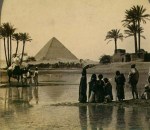
Pyramid of Giza in the 19th century

This papyrus shows that Ancient Egyptians were very advanced mathematicians and were familiar with both roots and square roots. They could plot an arch by using offsets that were measured at regular intervals from a base line, and they could also find out areas. To find the area of a circle, the Egyptians used an area of a square on an 8/9 of the diameter, or (7/8) squared. They could also figure out the area of a triangle. They knew that the volume of a frustum of a square pyramid equaled (1/3) h (a2 + ab + b2)modern mathematicians, 4000 years later, have still not found a better approximation. They also knew that to make right angled triangles, they had to use the ratio of 3:4:5. The Great Pyramid of Khufu, Great Pyramid of Giza, from the 4th Dynasty is a mathematical wonder: It is laid out with geometric precision – a near-perfect square base, with sides of 230 m that differ from each other by less than 20 cm, and faces that sloped upwards at an angle of 51 to reach an apex nearly 150 m above the desert floor. Khufu’s pyramid was built long before the Ahmose papyrus was written, indicating the beginning of this mathematical theory was about 1,000 years old by the year 1650 B.C.E.

The Rhind Papyrus is divided in 3 books. Book 1 includes problems 1 – 40, and is about algebra and arithmetics. Book 2 focuses on Geometry and spans problems 41 – 59, while Book 3 focuses on miscellaneous problems from number 60 – 87.

The first part of the Rhind papyrus, book 1, consists of reference tables and a collection of 21 arithmetic and 20 algebraic problems. The first part of the papyrus is taken up by the 2/n table. The fractions 2/n for odd n ranging from 3 to 101 are expressed as sums of unit fractions.

papyrus-rhind1_areaProblems 41 – 46 show how to find the volume of both cylindrical and rectangular granaries. In problem 41, Ahmose computes the volume of a cylindrical granary. In modern mathematical notation (and using d = 2r) this gives V = (8/9)2 d2h = (256/81)r2h. The fractional term 256/81 approximates the value of π as being 3.1605.

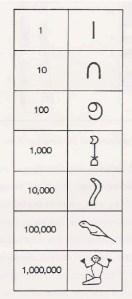
Problem 47 is a table with fractional equalities which represent the ten situations where the physical volume quantity of “100 quadruple heqats” is divided by each of the multiples of ten, from ten through one hundred. The quotients are expressed in terms of Horus eye fractions, sometimes also using a much smaller unit of volume known as a “quadruple ro”. Egyptian numerals were based on 10, a precursor to our decimal system.
papyrus-rhind_numerals
Egyptian numerals

Problems 48–55 show how to compute an assortment of areas. Problem 48 is notable in that it succinctly computes the area of a circle by approximating π. Specifically, problem 48 explicitly reinforces the convention (used throughout the geometry section) that “a circle’s area stands to that of its circumscribing square in the ratio 64/81.” Problem number 53 is the famous Thales’s theorem, 1300 years before he was born!

Other problems show how to find the area of rectangles, triangles and trapezoids. The final six problems are related to the slopes of pyramids.

The third part of the Rhind papyrus consists of the remainder of the 91 problems, being 61, 61B, 62-82, 82B, 83-84, and “numbers” 85-87, which are items that are not mathematical in nature. This final section contains more complicated tables of data, several pefsu problems which are algebraic problems concerning food preparation, and even an amusing problem (number 79) which is suggestive of geometric progressions, geometric series, and certain later problems and riddles in history.

papyrus-rhind3
Thales theorem or problem number 53

So, it is truly no surprise that over several thousand years later, modern-day architects still cannot reproduce the great pyramids of Egypt… well, simply because these were quite advanced mathematicians and scientists. In all ancient Egyptian mathematics, there is not a single mathematical error, not in trigonometry, algebra, geometry, arithmetic, or mechanics. No wonder we still are in awe at the Egyptian Pharaonic era. It is a pity that some of their work was “stolen” by the likes of Thales and Pythagoras and renamed after them. It is a pity that so many of us have lived in ignorance of such great science on our continent. It is sad that most African kids have been taught in their classrooms the Thales theorem or Pythagorean one or Archimede (problem 10 of the Moscow Papyrus solves Archimede’s at least 1700 years earlier) without ever being told about their famous intelligent ancestors who had the answers to all these over 3000 years earlier. So today, after looking at the Rhind Papyrus and at problem number 53, I no longer call this the Theorem of Thales or Intercept Theorem, but rather the Egyptian theorem, and Pythagoras triangle, the Egyptian triangle.

For more information, check out the works of Cheikh Anta Diop (Apport de l’Afrique à la Civilisation Universelle, 1985 – published in Presence Africaine 1987), Beatrice Lumpkin (African and African-American contributions to mathematics, PPS Geocultural Essaysbseries, 1987), Ivan van Sertima, and Elikia M’Bokolo.

St Mary of Zion: Africa’s Oldest Church

africa-oldest-churst-st-mary-of-zion
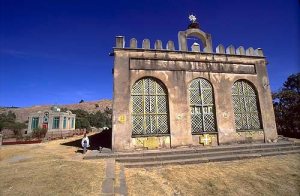
St Mary of Zion church (sacred-destinations.com)

The Church of St Mary of Zion with the Treasury containing the Ark of the Covenant in the background (left) is the oldest church (Christian church) on the African continent. First built in the 4th century AD in Aksum, Ethiopia. It is the most important church in Ethiopia.

In the 4th century AD, the Axumite prince Ezana, the first Christian ruler of the Kingdom of Axum (Present-day Eritrea and Ethiopia), was instructed in Christianity by two Syrian monks shipwrecked on the Red Sea coast. The prince promoted Christianity when he became King Ezana, and he is regarded as a saint in both the Ethiopian Orthodox and Catholic churches. The original church is believed to have been built during the reign of Ezana, and has been rebuilt several times since then, including during the reign of Fasilides in the 17th century. St. Mary of Zion was the traditional place where Ethiopian Emperors came to be crowned. And indeed, if an Emperor was not crowned at Axum, or did not at least have his coronation ratified by a special service at St. Mary of Zion, he could not be referred to by the title of “Atse” or Emperor of Ethiopia.

African Hair Styling: The Mathematics of Cornrows

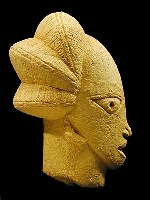
Nok9a
Nok sculpture of a woman

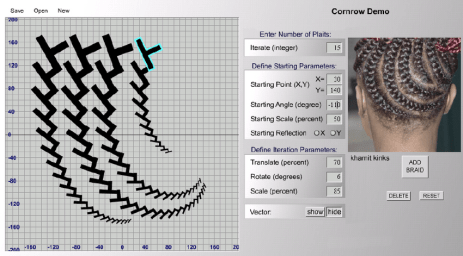
Today, we will be talking about hair, African hair, and hairstyles. One of the very common hairstyles used for Afro hair is cornrows. These were worn by women and men of centuries past as seen on Nok sculptures dating back 3rd century AD, Mende masks, Benin Kingdom masks, and are still worn today with great pride. Kings and queens adorned those like crowns. The great Emperor Tewodros II of Ethiopia wore them proudly! Imagine my surprise when I found a website where they had computed the way cornrows are made. Cornrows use about 4 geometrical concepts: translation, rotation, reflection and dilation. The styles are numerous ranging from simple linear compositions to complex curves and spirals. Check out this website and learn about the mathematics behind cornrows! Enjoy!

screenshot-of-cornrow-curves-simulation-software
Screenshot from CSDT.rpi.edu

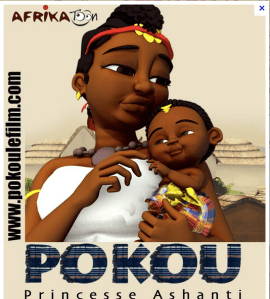
Queen Abla Pokou

Pokou1Just to add a bit more to the story of Queen Abla Pokou, the outstanding queen who led a group of the Ashanti people who later became the Baoule people of Cote d’Ivoire, I leave you here with a snipet of the 3D movie: POKOU Princesse Ashanti.
The Diisa : Malian Men’s Life Scarf

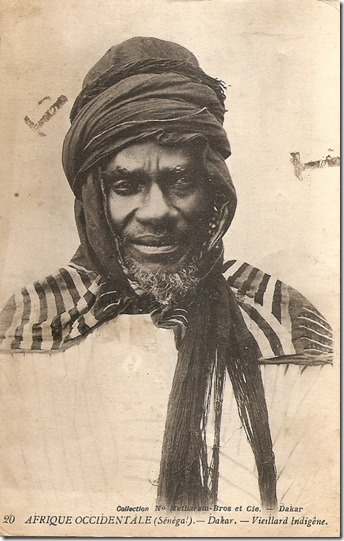
I recently learned about the Diisa, a long fringed indigo shawl worn by men in Mali, and men across the Sahara Desert. I knew of the  shawl, but never knew its name. I also knew of the shawl and always wondered why it was always blue, and not any other color. The Diisa has been worn by African men for centuries. Its ‘blue-ness’ comes from the ‘diisatogène‘ which is one of the strongest artificial component of Indigo dye.The shawl itself takes a long time to weave, and is later on indigo dyed. Our ancestors probably knew all this chemistry that I just learned today, and probably honed down the recipe. Samori Toure, the great African leader, can be seen wearing his diisa shawl on several occasions.

The excerpt below is from the Adire African Textiles blog. Enjoy!

============

Malian artist and master dyer Aboubakar Fofana commented:

mali003
Samori Toure wearing his diisa

… The dissa shawl was such an important piece for a man from this region. It was given to a young man by his mother when he got married. She would have saved for this shawl since her son was very young they were a lot of work and were worth the same as 10 head of cattle. They were indigo dyed, and when the man died, this shawl would be his shroud. The celestial blue of indigo would help him pass from this world to heaven. I’m very proud to be making a modern interpretation of the dissa, with its long fringes, and I hope I am carrying on the tradition of something important in my culture.

And Belgian art historian Patricia Gerimont, who is working on a book on indigo dyeing in Mali, supplied this information on indigo in Burkina Faso (my translation): “the indigo shawls and wrappers in Burkina are dyed by a specific group called the Yarsé, and also by other groups of Marka dyers. The Yarsé speak Mossi but are of Marka origin, you also find them in Dogon country under the name Yélin.


Papa Wemba in his Own Words

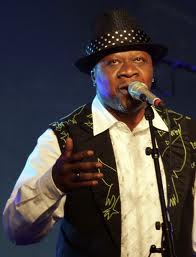
Papa Wemba
Papa Wemba

Papa Wemba was not only a star, a musician, and artist, but he was also a father, a husband, and a son. He had been married to his wife, Marie-Rose ‘Amazone’ Luzolo, for almost 50 years; they had met when he was 20, and she was 14. They had 6 children. In this world, very few celebrities have been married to only one person for almost 50 years.

Here are a few words of Papa Wemba, le rossignol (the nightingale), the King of Rumba and SAPE.

About his mother who was a professional ‘wailing woman’: “My mother was my first teacher and my first public. … I grew up with my mother’s melancholic singing. … When I will sing, she will saymy son, block here, and now project your voice“… when I did well, she will clap for me“(source: Tv5 – Africanité). For his mother, he composed Mama and Maria Valencia.

Papa Wemba11
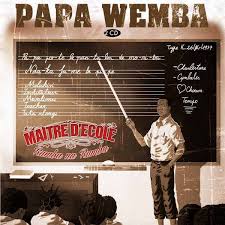
Papa Wemba’s last album ‘Maitre d’Ecole’

His daughter, Victoire, said that after Papa Wemba was convicted by the Belgian justice, “Dad prayed a lot. Dad was a champion, and he was victorious“(source: TV5 – Africanité).

About his wife, he said: “For my first trip to Japan, I said I will never go alone… my first long trip,… 13h long…, I brought my tender spouse and one of my children to experience it with me” (source: RFI- Dernière interview avec Claudy Siar). For his wife, he sang 4 min 29 secondes d’adoration, Phrase, and Ma Rosa.

He was a compassionate being: during one of his concert, he asked the audience for one minute of silence for one of his band members, Patrick Bebey, who had lost his father the week before (source: TV5- Edition spéciale – Hommage Papa Wemba).

Papa Wemba3
Papa Wemba’s album ‘Emotion’

He was a generous soul: a neighbor in Matonge said: « Je me souviens qu’une fois, je l’ai juste salué en passant. Il m’a rétorqué. Albert pourquoi tu fais le pied. Je lui ai expliqué que mon véhicule était tombé en panne. Il m’a donné à l’instant même l’argent que j’avais besoin pour réparer ma voiture. » “I remember that one time, I just greeted him [Papa Wemba] in passing. He asked me. Albert, why are you walking. I told him that my car was broken. Instantly, he gave me to money to fix my car.” (source: Radio Okapi).

Papa Wemba was known for his legendary humility: «  A l’annonce d’un cas de décès à Matonge et surtout dans notre avenue ici Kandakanda, il s’arrangeait toujours pour envoyer sa contribution lorsqu’il n’était pas au pays. Dans les cas où le décès intervenait et qu’il se trouvait sur place à Kinshasa, il venait personnellement conduire la quête pour soutenir la famille éprouvée. Bien sûr, sa contribution était toujours largement au-dessus par rapport à ce que nous autres pouvions bien volontiers donner » témoigne Francine, une voisine de Papa Wemba à Matonge. “At the announce of a death in Matonge, and particularly on our avenue here in Kandakanda, he always made sure to send in his contribution when he was outside the country. When the announcement happened and he was in Kinshasa, he personally came to lead the quest for people’s contribution to support the bereaved family. Of course, his contribution was way bigger than anything we could gladly contribute” (source: Radio Okapi).

Papa Wemba9I was lucky to cross all the oceans with my voice.” … “I was lucky to belong to a country with a musical genre such as Rumba.”
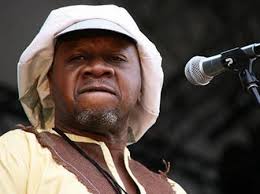
Papa Wemba defined Rumba as “the maternity of the African music” (source: TV5 – Africanité).

He said: “I am Rumba, it is thanks to Rumba that I have made a name for myself in the world” (source: TV5 – Africanité, RFI- Dernière interview avec Claudy Siar).

About la SAPE and his influence around the world: “Today even great politicians sapent (are dandy)… Before Mr. Obama steps out, he first takes a look in his mirror to make sure that he looks good… La SAPE is international“(source: TV5 – Africanité).

About SAPE: “La vie est trop courte pour s’habiller triste. [Life is too short to dress sadly]” (source: Oeil d’Afrique).

Papa Wemba6About leading: “Il ne faut pas tenir la queue, il faut être devant le peloton.” [Don’t be at the back of the queue, You must lead the pack.] (source: RFI- Dernière interview avec Claudy Siar).

About retirement: “Moi, Papa Wemba, N-O-N, jamais je ne parlerais de retraite. A moins que le Bon Dieu lui-même ne me dise ‘ta voix n’y est plus’… Tant que je serais un homme debout, tant j’aurais toujours ma belle voix, je serais toujours sur scène.” [I, Papa Wemba, N-O, I will never talk of retirement. Unless God says ‘your voice is no longer there’… as long as I will still stand, as long as I still have my beautiful voice, I will always be on stage.](source: RFI- Dernière interview avec Claudy Siar).

And lastly about his gift, his voice, and God: “My voice is my gift. … I have the grace of God, God loves me very much, and He always puts His hand on me” (source: RFI- Dernière interview avec Claudy Siar).

Papa Wemba: Africa’s Planetary Star

Papa Wemba1Very few in this world have had a chance to ‘depart’ while doing something they loved, while in the midst of doing something they’ve always been passionate about. Papa Wemba’s departure was sudden, but it was in the midst of doing what he loved. This man had been at the forefront of African music for over 40 years. He was truly an African global star. He loved Rumba and introduced the world to the Rumba Rock. Japanese fans created bands and sang in Lingala in Japan, thanks to Papa Wemba’s touring the country. Papa Wemba toured the United States with artists such as Peter Gabriel. People in Colombia and in other countries across the world danced to the rhythm of Papa Wemba. He was truly a global star, and Africa just lost a legend.
Papa Wemba: The King of Rumba and King of La SAPE

Papa Wemba1
Papa Wemba

In high school, while on our way to school, my father would play Papa Wemba‘s album in the car: Emotion. Rightfully titled ‘Emotion‘, Wemba’s album featured a whole range of emotions which added to his unique ‘Rooster-like‘ voice to  make me, as a teenager, feel those emotions, and go to school happy. Try it… listen to the up-beat Yolele, or Fafafa-fa, Sala Keba, or Awa Y’ Okeyi,  … and tell me how you feel, truly, because Papa Wemba rocked my childhood.

Papa Wemba3
The album ‘Emotion’ by Papa Wemba

So when I learnt that this great man, Papa Wemba, the one who had accompanied me with his voice to school every day, this man who had made me so proud of music, Congolese music, African music, this flamboyant stylish man who had introduced the world to SAPE, the King of Congolese Rumba, this man whose words I still quote “Y a pas match, Kaokokokorobo” had collapsed on stage and was no longer… I was devastated. Oh Papa Wemba, I thought you were going to ride with my kids to school, the way you did with me…. I thought I would always dance to the rhythm of O’Koningana,…Ye te oh, Wake Up, …

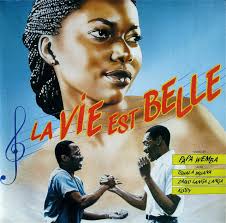
When life was hard, I would hum to the tune of your song in the movie ” La Vie est Belle” and instantly life became beautiful again. And ‘Mama‘ was just a loving song to a mother. When I felt lost, I would sing “Show me the way.”

Papa Wemba5
The movie ‘La Vie est Belle’ starring Papa Wemba

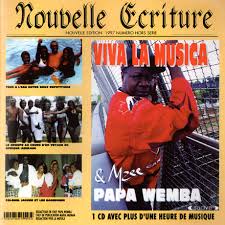
Yes… Papa Wemba was truly a genius. He was born Shungu Wembadio Pene Kikumba in June 1949 in Lubefu, in the Democratic Republic of Congo. His love of music can be attributed to his mother, who was a professional “wailing woman” at funerals. Mixing traditional African music with Western rock, he and his successive bands – Zaiko Langa LangaIsifi Lokole, Yoka Lokole, and Viva la Musica – enjoyed hit after hit, including L’Esclave, Maria Valencia, Analengo, and Le Voyageur. He shaped Congolese music in the 1970s -90s, he made Soukous the most popular sound across Africa, and attracted international music figures like Peter Gabriel. I am not sure if there is a great African star he had not sung or collaborated with: from Brenda Fassie, Tabu Ley Rochereau, Pepe Kalle, Lokua Kanza, Barbara Kanam, Manu Dibango, Koffi Olomidé, Bisso Na Bisso, JB Mpiana, Angélique Kidjo, Salif Keïta, Alpha Blondy, Singuila, to Youssou N’dour, and countless others. He also collaborated with the great diva Aretha Franklin. He was a talented man, and he also sought to reveal young talents. He loved to share his gift, his voice, with all.

Papa Wemba
Papa Wemba, the King of Sape

So I was sad… But then I realized that Papa Wemba had trained generations of musicians, had inspired numerous people, sang his lungs out for so many of us… then I realized that his flamboyant spirit lives on. His music keeps on… The dress style he created, la SAPE,  still goes on. And yes, I will keep playing Yolele. So is Papa Wemba really gone? Is this great African baobab really gone? No, he has just changed his postal address. However, his music stays with us, and will lead some of us to school or work… always.


Bogolan: The art of making mudcloth

I thought of re-posting this great article on the Bogolan, the Malian fabric used for centuries. This article was first posted on Afrolegends.com on 11 Sept 2009. Enjoy!

==================

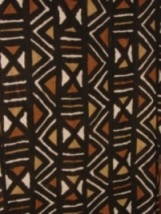
Bogolan
A piece of Bogolan cloth

I would like to introduce you to Bògòlanfini commonly known as bogolan which is a traditional Malian fabric dyed with fermented mud, particularly associated with the Bamana people of Mali. The name is a Bamana word meaning “earthcloth” or “mud cloth” (Bogo = earth, lan = by means of, fini = cloth; the cloth obtained from the earth). Bogolan became mainstream when the genius stylist Chris Seydou (who worked with stylists such as Yves Saint Laurent) modernized its use in society, incorporating it into western coats, and dresses. Today, as you walk down the streets of New York City, you would definitely encounter beautiful African American ladies wearing Bogolan coats in the midst of winter. The Bamana people have used Bogolanfini in all parts of their lives for centuries, and the art of making it is centuries old, and is passed from generations to generations.

Couvre-Lit en Bogolan

The Smithsonian made a beautiful page about the Bogolan and some of its artists, including the great Chris Seydou. One of the artists, Nakunte Diarra says that in the Bamana creation, “Since God created the world, … Bogolan was there.” What a beautiful way to emphasize the importance of Bogolan in the Bamana society, and in today’s Malian life.

Please check out the website by the Smithsonian, and get a chance to make your own bogolan: http://www.mnh.si.edu/africanvoices/mudcloth/index_flash.html

The video below was chosen particularly because the artist, Issiaka Dembele, gives a historical background to the art of making Bogolan. You will find shorter videos on how Bogolan is made, but this one was the most profound!

‘African Hair’ by Esmeralda Yitamben

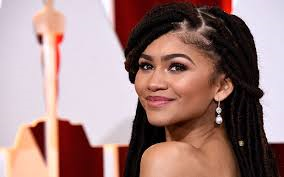
Zendaya (Source: Telegraph.co.uk)

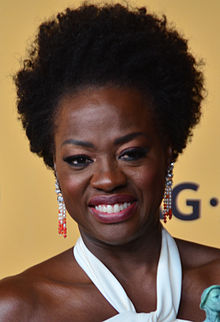
Last year, one journalist made fun of actress Zendaya’s hair because she wore dreadlocks to the red carpet; this reminded me of when Viola Davis had sported a short ‘afro’ to the Oscars … as if it was wrong for a Black woman to wear her hair in natural hairstyles. Why should an African woman be made to conform to something she is not? What is wrong with wearing our hair the way God made it? Without the relaxers, and perms made to straighten or rather beat the African-ness out? Every style should be celebrated. Our cultures are so unique… and the way we dress our hair is so unique, and should be loved and appreciated for what it is, a definition of who we are.

Viola Davis (Wikipedia)

It is high time, African women accept, appreciate, and embrace their heritage. It is impossible to beat the Afro out of oneself… just embrace it, and wear it as a peacock wears its feathers … with great pride! The poem below “African Hair” by Esmeralda Yitamben just says it all, and as I read it, I am proud to be African, born with this amazing hair. The author writes about the versatility of the African (Afro) hair, its beauty, its abundance, its richness, its kinkiness, and yes, its unruliness as well. True, I do not agree with the author’s mention of relaxers, but hey… every style should be valued. The original poem can be found on Kalaharireview.com. Enjoy! (The BBC also did a piece on Afro hair).


‘African Hair’

Kinky hair,

Picky hair,

Wavy hair,

Frizzy hair,

Hair the colour of ebony,

Sometimes sprinkled with hints of mahogany.

As splendid, lush, and full as the equatorial rainforest of Congo,

Woolen and soft like a sheep’s fur.

Shining with shea butter,

like a gem, under the moon’s smile.

O Sustaining Nature,

Blessed are our heads with beautiful hair:

Hair that can be braided, cornrowed, relaxed, and yes, even locked.

From Jamaican style dreadlocks, like Bob Marley’s hair,

To Jackson 5’s Afro,

To Maasai bald heads,

To Fulani princess corn rows,

To Bantu knots,

To Senegalese zillion braids,

To simple, hard-pressed, relaxed hair,

Precious Mother, Thou have blessed the Black race with a lion‘s mane.

What can I not do with this hair of mine?

Esmeralda Yitamben