A blog about African history, and heritage, through audio and video files.
Author: Dr. Y.
I am an African in love with the history of the world, and particularly that of Africa. I am a child of love, an artist, a scientist, a lover, a friend, a human.
I am in love with nature and beautiful things, art, history, geography, travel, dance, food, science, and technology, and much more.
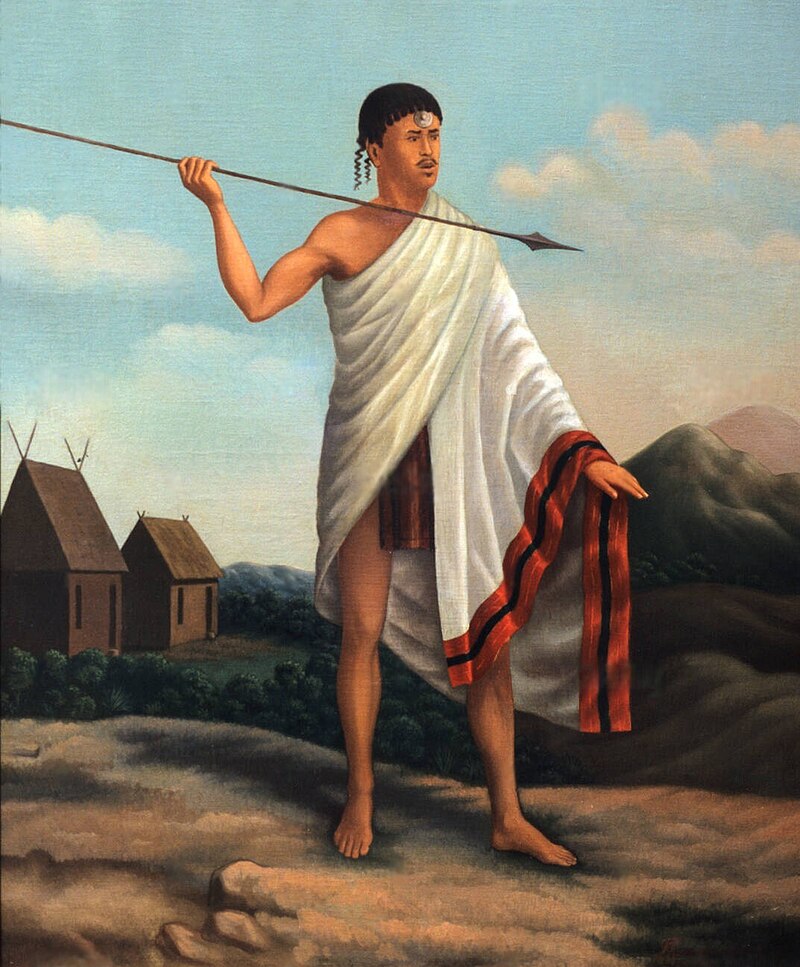
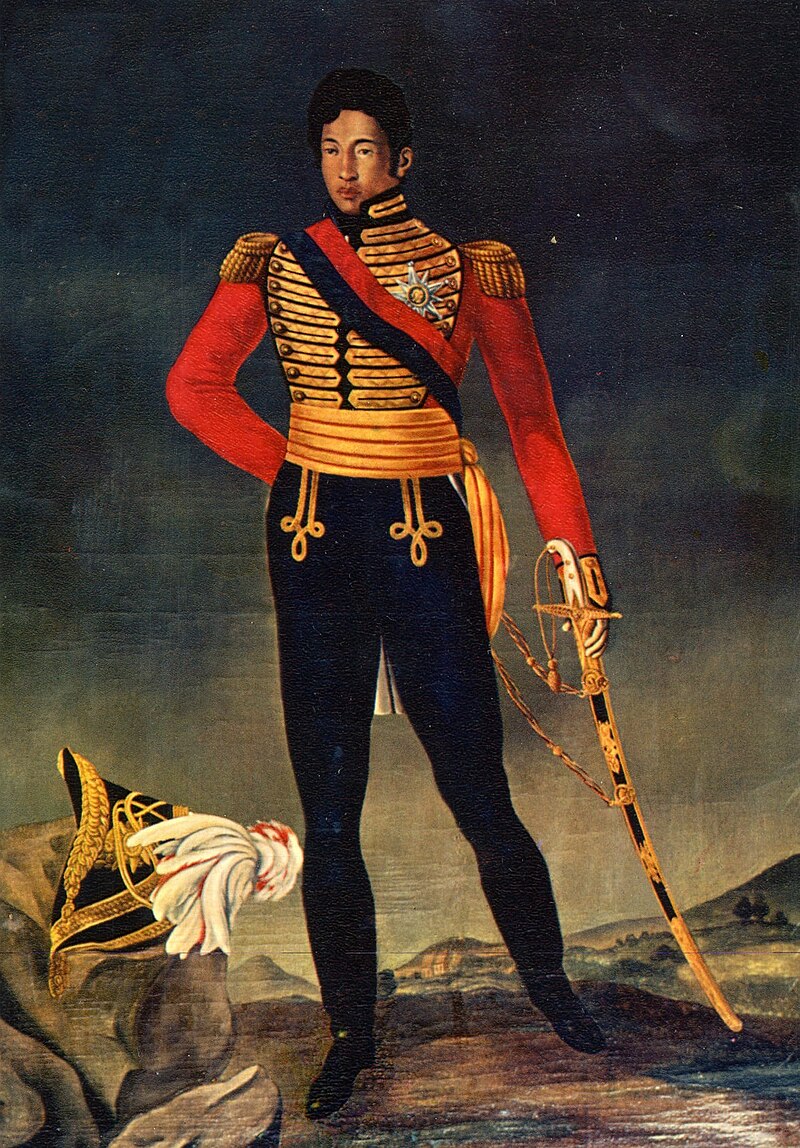
Andrianampoinimerina, portrait painted around 1905 by Ramanankirahina
As we learned, Andrianampoinimerina is known as the first Ruler of the Kingdom of Imerina in Madagascar, the one who unified the Merina people of Central Madagascar. His reign was marked by the reunification of the Imerina after 77 years of civil war, and he also led the subsequent expansion of his kingdom to nearby territories, thereby initiating the unification of Madagascar under Merina rule. His legacy was followed by his son Radama I who successfully continued it, unifying 2/3 of the great island under his rule.
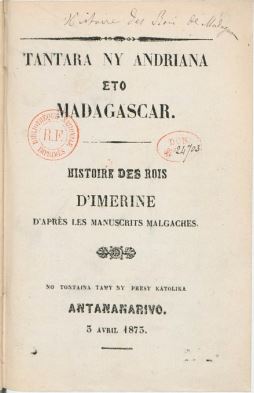
Tantara ny Andriana
Below is an excerpt of Andrianampoinimerina’s speech, taken from the Tantára ny Andriána, edition 1968. It is an immense collection of the oral traditions of Madagascar collected by R.P. Callet, a Jesuit priest from 1868 to 1881. The book is in Malagasy. A French translation was published in 4 volumes by the Malagasy Academy from 1935 to 1958. The numbers at the head of each excerpt indicate the page numbers of the original.
=====
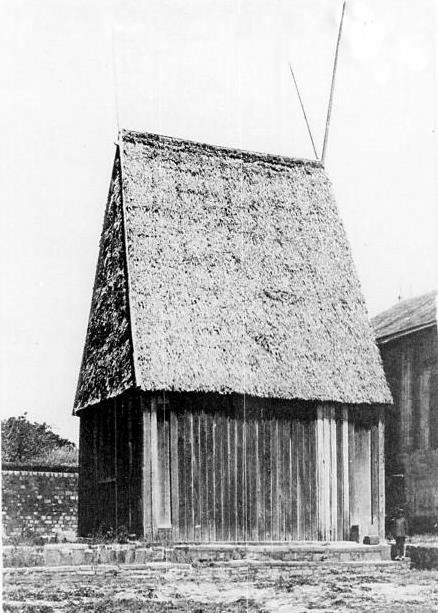
One of King Andrianampoinimerina’s residences within the Rova of Antananarivo, Madagascar
Excerpts from Andrianampoinimerina’s Speech
708.« I see the different castes: all belong to me and all have my affection, he said, and I will unite you; I will make of Imerina a guinea fowl of a single color.»
728.« This is what I will tell you, O Merina: the country and the kingdom are mine; I will share the land with you… to allow you to live… I will give a rice field to each man; I will see to it that all the Ambaniandros1 have the same belly. »
731.« Here is the forest: I make it the great undivided heritage, the means of subsistence for orphans, for single women, for all the unfortunate… whoever goes there, do not prevent them: all will be able to take and act as they please. »
757.« The men guilty of these crimes, even if they were great figures, even if they were caste leaders, even if they were my relatives…, I will put them to death; I will reduce their women and children to slavery and I will confiscate their property… The Merina, my subjects, are like a lámba without inside or back, like the circular and uniform edges of a pot. »
Radama I (c. 1810 – 1828)
802.« There is no other enemy to my kingdom than famine, because one cannot, when hungry, think of the State: the great, then, seek to devour the small, and the small to steal… If there are people who do not work, I invite you, oh my subjects, to cultivate their lands… you will take the harvests, but will give them back their land when they are determined to work it. »
1054.(Excerpt from his recommendations before his death) « O my friends, let Radama be for you a young gosling to whom you will bring what you have conquered… Do not present him with unfaithful reports, do not deceive him. For the King has no parents; he has no brothers; those who obey his instructions and who trust in his laws are his parents… »
1056.« … and I declare to you too, O Radama, that Imerina is now unified and that the sea will be the limit of your rice field. »
Africa has inherited arbitrary boundaries delineating countries from the colonial era, and even water supplies! This is the case for the Nile River, the world’s longest river, which flows through several countries in North and East Africa, including Egypt, Sudan, South Sudan, and Ethiopia. Nobody presents the Nile River anymore, as it is a River which has been part of this planet’s history since time immemorial with its critical place in one of the greatest civilizations of the world, that of Ancient Egypt and its pharaohs, and in the Bible, the most read book in the world.
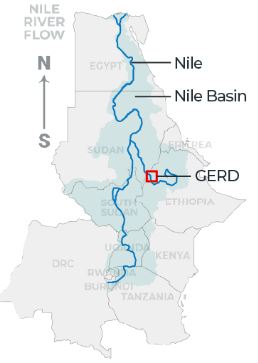
Map of the Nile River flow and the location of Grand Ethiopian Renaissance Dam (GERD) in Africa
Yesterday marked the inauguration and official opening of the Grand Ethiopian Renaissance Dam (GERD). This is Africa’s largest hydro-electric dam, measuring 1.8 km (1.1 miles) wide and 145 m (0.1 mile) tall, and is located on the Blue Nile in Western Ethiopia near the border with Sudan. It is expected to generate 5,100 MW of power, and more than double Ethiopia’s current capacity. It is designed to supply power to Ethiopia, but also to neighboring countries.
The dam’s location on a Nile tributary has sparked tensions between Ethiopia and Egypt, which relies heavily on Nile waters. The Nile River has long been governed by a series of historical treaties, many of which were shaped during colonial times and have sparked ongoing disputes—especially between Egypt, Sudan, and Ethiopia. The 1929 Anglo-Egyptian Treaty gave Egypt veto power over upstream projects, and allocated the majority of the Nile waters to Egypt and Sudan, excluding upstream countries like Ethiopia. Later, the 1959 Nile Waters agreement between Egypt and Sudan divided the Nile’s flow between Egypt and Sudan, not including Ethiopia and other upstream nations in the deal. This last deal remains the primary legal framework used by Egypt to assert its water rights! Picture this? A river flows through your country and others, and the others share the river’s flow among themselves and forget you in the equation, like you did not exist, or like the river never flowed through your country, and was also a source of existence for your people. What the …? Such injustice!
Flag of Egypt
No wonder there are issues! Egypt relies on the Nile for over 90% of its freshwater. Any disruption in the flow could threaten agriculture, drinking water, and industry. Egypt fears that the GERD would reduce water availability, especially during droughts. It has since then reduced the area cultivated for certain crops like rice which are water greedy.
Ethiopia feels that it has the right to use its own water resources, and rightfully so. Ethiopia today is a growing nation, and one of Africa’s strongest economies. The GERD is seen as a great symbol of national unity. It is a national development project, which will double Ethiopia’s electricity output, provide power to millions, and boost regional exports.
For Ethiopians, the GERD is seen as a victory: victory against all preconceived ideas that they could not seat at the table, or even design such amazing engineering feats. Because of the tensions, Egypt (which has always been the partners of all these foreign colonial powers in the region) had lobbied the world bank and other world funding organizations against financing the dam; thus the dam has been almost entirely domestically funded through bonds and donations. The GERD has also united citizens across ethnic and political divides.
After 14 years of continuous work, the GERD was officially launched by Prime Minister Abiy Ahmed who called it “the greatest achievement in the history of the Black race.” I would not go as far, but I agree that this is a great historical achievement indeed!
Andrianampoinimerina, portrait painted around 1905 by Ramanankirahina
Andrianampoinimerina is known as the first Ruler of the Kingdom of Imerina in Madagascar. He is known as the one who unified the Merina people of Central Madagascar. His reign was marked by the reunification of the Imerina after 77years of civil war, and he also led the subsequent expansion of his kingdom to nearby territories, thereby initiating the unification of Madagascar under Merina rule. He is a cultural hero who is revered by the Merina people in particular, and all in general. He is known as one of the greatest military and political leaders of the history of Madagascar.
Who was Andrianampoinimerina ? His name means “the king in the heart of Imerina.” He deposed his uncle, King Andrianjafy who had ruled over northern Imerina (Imerina Avaradrano).
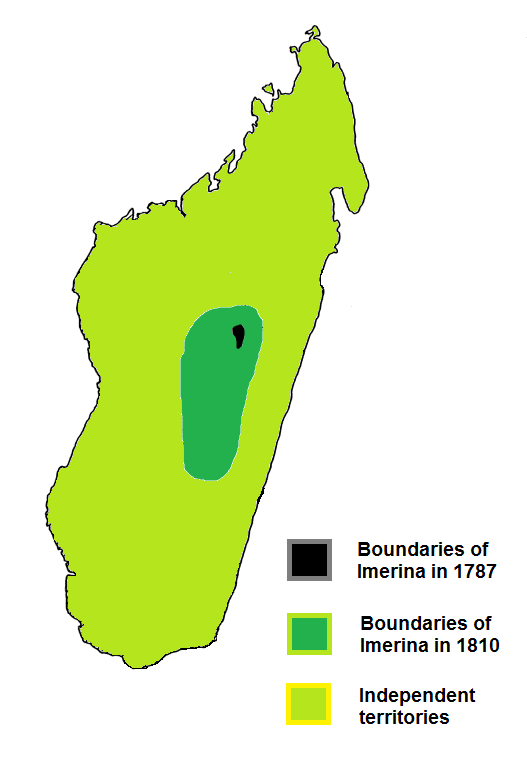
Expansion of Merina Kindgom during reign of Andrianampoinimerina 1787-1810 (Source: Wikipedia)
Andrianampoinimerina was born Ramboasalamarazaka (from the short form: Ramboasalama, Ramboa and Salama to mean “healthy dog” – name given as part of tradition to ward off evil spirits away from a newborn) around 1745 in Ikaloy, in central Madagascar, to Princess Ranavalonandriambelomasina, daughter of King Andriambelomasina of Imerina, and her husband Andriamiaramanjaka, an andriana (noble) of the Zafimamy royal family in the independent kingdom of Alahamadintany to the north of Imerina. His mother’s brother Andrianjafy was named Andriambelomasina‘s successor and was king of Imerina Avaradrano, the northern quadrant of the former Kingdom of Imerina, from 1770 to 1787. Prior to Andrianampoinimerina’s reign, Imerina Avaradrano had been locked in conflict with the three other neighboring provinces of the former kingdom of Imerina which had last been unified under King Andriamasinavalona a century before. Andriamasinavalona divided the kingdom among his four favorite sons; which led to 77years of civil war and famine. This explains why freedom from famine and unity were very important to Andrianampoinimerina.
Radama I (c. 1810 – 1828)
He deposed his uncle, King Andrianjafy, to take over power in 1787. He ruled under the name of Andrianampoinimerina which means “the venerated or desired Prince of Imerina,” and ruled the Imerina Kingdom for 23 years until 1810. Andrianampoinimerina established his capital at Ambohimanga, which is today a site of great spiritual, cultural and political significance that was designated a UNESCOWorld Heritage Site in 2001. The king’s original royal lodgings can still be visited at Ambohimanga. Later, he moved the political center to Antananarivo. He expanded his territory through diplomacy, marriage alliances, and military campaigns, absorbing neighboring ethnic groups and regions. Known for his administrative reforms, he developed civil and penal codes, organized public works, and regulated markets. He also strengthened Merina social structures, promoted a state religion centered around his kingship, and built a citizen army.
Today, he is revered as a cultural hero. Andrianampoinimerina laid the foundation for a unified Malagasy identity. His legacy was carried forward by his son, Radama I (Queen Ranavalona I‘s husband), who continued the mission of national unification.
Today, September 2, 2025, the three Sakalava skulls with one believed to be that of King Toera, were welcomed in the capital Antananarivo (France Returns the Skull of Beheaded King of the Sakalava People of Madagascar). They were draped in the Malagasy flag, welcomed by several members of the Sakalava royal family including Prince Georges Harea Kamamy great-grandson of King Toera, great delegations of Sakalava elders in traditional robes, as well as the Madagascar President. The remains were then transported to Antananarivo’s Mausoleum, Mausoleum of Avaratr’Ambohitsaina, then onward to Belo Tsiribihina near King Toera’s homeland. The Malagasy President said, “Dans ce lieu historique, nous célébrons les martyrs de la patrie qui ont combattu le colonialisme. Nous renforçons dans le coeur des descendants la mémoire de ceux qui ont lutté pour la patrie. Ils ne mourront jamais dans nos coeurs.” (In this historic place, we celebrate the martyrs of the homeland who fought against colonialism. We strengthen in the hearts of our descendants the memory of those who fought for the homeland. They will never die in our hearts.).
Gravure of France implanting a protectorate in Madagascar 1897
The remains will now begin a 4-day journey of tributes before being returned to their descendants, on their way to their final resting place in the royal village of Ambiky in the Menabe region. As Prince Kamamy said, once the skulls are returned to them, they will conduct their own rites.
One caveat, which we had previously eluded to, is, no genetic testing has conclusively established the identity of any of these skulls to be that of King Toera! The joint scientific committee, France-Madagascar, could only confirm that the three skulls came from the Sakalava people. Could they even confirm which Sakalava group, North or South? Does it matter? However, the customary rites conducted by a traditional Sakalava intermediary affirmed that one skull belonged to the monarch. Then the French Culture Minister Rachida Dati, said, “scientifically, it is permissible to assume that one of these skulls is his, without absolute certainty.”
Thus, the question remains, why now? Remember, that the first formal request for the return started by Toera’s descendants dates back to 2003, and there have been over 20 years of appeals!
It would seem that no matter what we do, there are certain things that always prove us right. Isn’t it amazing that just over 2 weeksafter admitting to the murder of Cameroonians for almost 30 years in one of the most repressive wars of independence on the continent, France, whose presidents dash out acknowledgments without apologies, that same France just returned the skull of King Toera of Madagascar 127 years after it was taken? King Toera was a Sakalava King on the Great Island of Madagascar, who opposed the French occupation and colonization; he paid for that with his life, getting executed by French troops in 1897. Our article would not be complete without asking fundamental questions: why did they take King Toera’s skull? It is no secret that the Malagasy people, like the Bamileke people of Cameroon, and many other groups in Africa, venerate their ancestors – was this a pervert, occult, way of maintaining dominance over them?Why return it now, after 127 years?Is it even the real skull of King Toera? In the era of 3-D printing, and given that these same European museums which have amassed so much money over the years from admissions to see these stolen treasures have repeated under some weird laws or arguments that they cannot return the loot to the victims, what makes us now think that they will part from the skull of the King of the Sakalava people of Madagascar? How would we, Africans, tell if it is even the real deal? And now they say that it is the French government, from the goodness of its heart (under a 2023 restitution law) which has decided to repatriate the skull, forgetting to tell everyone that the government of Madagascar has been asking for years for repatriation! Oh perverted humanity that displays the remains of human beings for viewership! This reminds us of the story of Sarah Baartman: The Black Venus, where it took South African presidents Nelson Mandela and Thabo Mbeki begging for her remains to finally be returned from that same France!
Gravure of France implanting a protectorate in Madagascar 1897
France has returned three skulls to Madagascar more than a century after they were taken, including one believed to be that of a 19th-century Malagasy king who was beheaded by French troops.
The repatriation of the skulls to the island nation off the southeastern coast of Africa marks the first time France has implemented a 2023 law enabling the return of human remains to a country for funeral purposes.
France conquered the kingdoms of the Sakalava people in western Madagascar in the 1890s and integrated the Sakalava into a newly formed French colony. One of the three Sakalava skulls returned to Madagascar, which gained independence from France in 1960, is presumed to be that of King Toera. … He was executed by French troops in 1897. The other two skulls belonged to two generals who fought with the king …
… “I welcome the return of these three skulls, including that of King Toera of the Sakalava people, an origin shared by nearly a third of the Malagasy population,” Fetra Rakotondrasoava, permanent secretary of Madagascar’s Ministry of Culture, who co-chaired the Malagasy-French Committee of Researchers working on the identification of the skulls, told CNN on Wednesday.
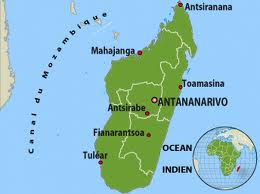
Madagascar
“This is not only the repatriation of human remains, but the return of a part of our history and memory,” he said, adding: “We will now be able to honor these remains as they should be. This moment carries significance for the Malagasy people and for all nations engaged in the restitution of their heritage.”
Madagascar’s Communication and Culture Minister, Volamiranty Donna Mara, said at the ceremony that the human remains, including that of “our great, indeed very great, King Toera,” are “not mere objects in a collection” but the link, “invisible and indelible, which binds our present to our past.”
“Their absence, for more than a century, 128 years, has been an open wound at the heart of the Great Island (Madagascar), and especially for the Sakalava community of Menabe,” she continued.
Last week, the Malian government started returning the famous Timbuktu’s manuscripts home to Timbuktu after over 10 years away. As you remember, we prayed for the manuscripts to be kept safe, as Timbuktu was under Attacks by ‘Muslim fundamentalists’, Timbuktu Manuscripts now Available Online. You know the AES is working hard, when it is safe for the Timbuktu manuscripts to return home after over 10 years away! This is a testimony to the hard work of the Malian troops, its people, and its government. The Malian people have shown that an African country can protect itself, recover its territory, and free its own people. Yes… there has been strong collaborations with Russia, and their neighboring brothers of Burkina Faso and Niger, and the formation of the Alliance of the Etats du Sahel (AES). Mali did what France and all its allies could not do with their multiple operations, operation Barkhane, Operation Serval, Task Force Takuba, etc, … wait they were not really there to free the country from terrorism, but rather to finance/protect terrorism, divide the country, so as to be free to do their business. We are proud of Mali, and pray that these manuscripts remain safe as they have been for centuries, in the hands of their very own people.
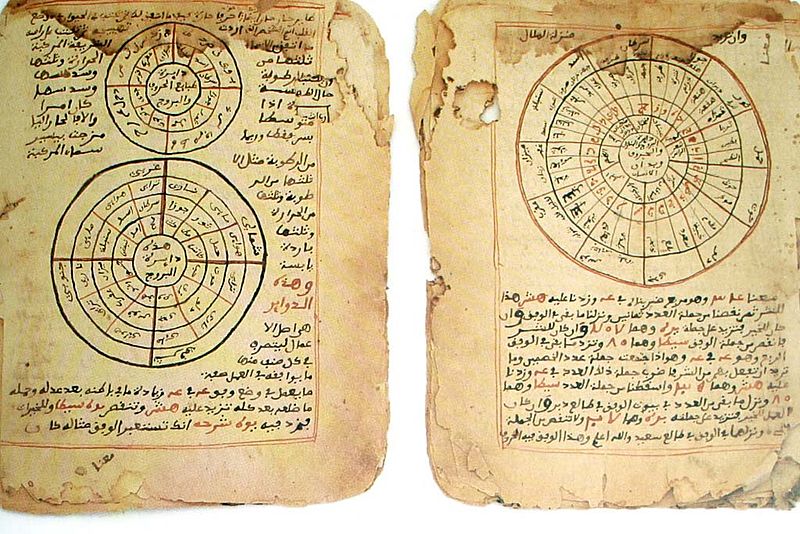
Manuscripts a Tombouctou (Mali) montrant de l’astronomie et mathematique
The Malian military government on Monday started returning home the historic manuscripts of Timbuktu, which were spirited out of their fabled northern city when it was occupied by al-Qaida-linked militants more than a decade ago.
Islamic radicals destroyed more than 4,000 manuscripts, some dating back to the 13th century, after they seized Timbuktu in 2012, according to the findings of a United Nations expert mission. They also destroyed nine mausoleums and a mosque’s door — all but one of the buildings on the UNESCO World Heritage list.
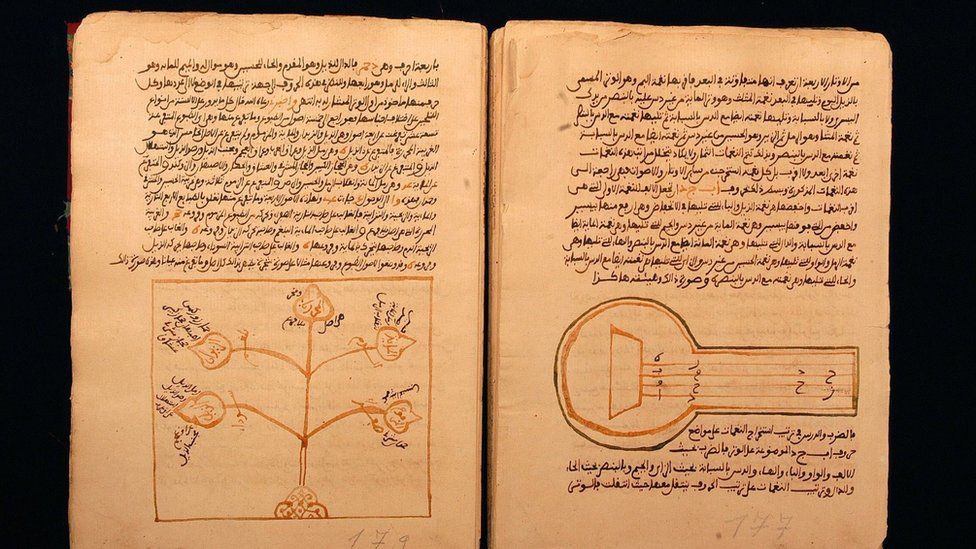
The majority of the documents dating back to the 13th century — more than 27,000 — were saved by the devotion of the Timbuktu library’s Malian custodians, who carried them out of the occupied city in rice sacks, on donkey carts, by motorcycle, by boat and four-wheel drive vehicles.
Manuscript of Timbuktu (Google Arts and Culture)
… About 706 kilometers (439 miles) from Bamako, Timbuktu sits on the edge of the Sahara desert and has a dry climate. For years, the local municipal and religious authorities have asked for the return of the manuscripts. Diahara Touré, Timbuktu’s deputy mayor, said the famous documents are important to the local people as they “reflect our civilization and spiritual and intellectual heritage.”
… In February, the military government made a commitment to return the manuscripts, according to Bouréma Kansaye, the Malian Minister of Higher Education. He described them as as a “legacy that bears witness to the intellectual greatness and crossroads of civilization” of the city of Timbuktu — “a bridge between the past and the future.”
“We now have a responsibility to protect, digitize, study, and promote these treasures so that they continue to enlighten Mali, Africa, and the world,” Kansaye said during Monday’s return ceremony.













 African Heritage