So Long to Desmond Tutu, the Archbishop who Fought Apartheid and Injustices

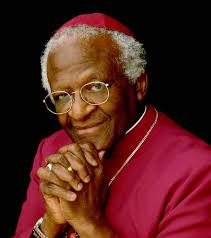
Archbishop Desmond Tutu (Source: The Namibian)

Yesterday, December 26, 2021, the 1984 Nobel peace prize winner, Archbishop Desmond Tutu passed away in his home in Cape Town, South Africa. As tributes pour in from around the world, all will remember him as an anti-apartheid hero. Contemporary to Nelson Mandela and to many other freedom fighters, he used his pulpit from his church to bring forward the injustices of the apartheid regime to the world. The BBC has an obituary about the life of this great man. Excerpts below are from the BBC.

====

… Desmond Mpilo Tutu was born in 1931 in a small gold-mining town [Klerksdorp], in what was then the Transvaal. He first followed in his father’s footsteps as a teacher, but abandoned that career after the passage of the Bantu Education Act in 1953 which introduced racial segregation in schools.
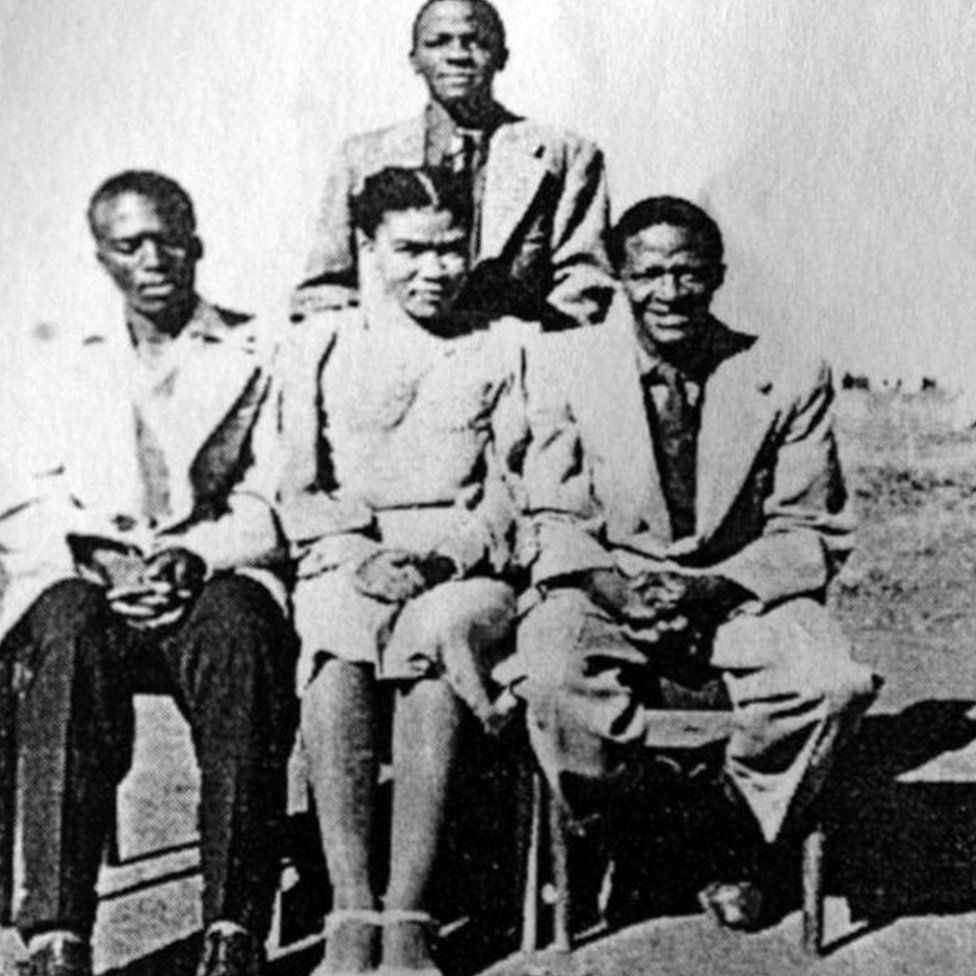
Tutu (r) with fellow staff members of the Pretoria Bantu Normal College in 1961 (Source: BBC)

… He served as bishop of Lesotho from 1976-78, assistant bishop of Johannesburg and rector of a parish in Soweto, before his appointment as bishop of Johannesburg. It was as a dean that he first began to raise his voice against injustice in South Africa and again from 1977 onwards as general secretary of the South African Council of Churches. Already a high-profile figure before the 1976 rebellion in black townships, it was in the months before the Soweto violence that he first became known to white South Africans as a campaigner for reform.

His efforts saw him awarded the Nobel Peace Prize in 1984As head of the Anglican Church in South Africa, he continued to campaign actively against apartheid. In March 1988, he declared: “We refuse to be treated as the doormat for the government to wipe its jackboots on.”

He was never afraid to voice his opinions. In April 1989, when he went to Birmingham in the UK, he criticised what he termed “two-nation” Britain, and said there were too many black people in the country’s prisons. 

Later he angered the Israelis when, during a Christmas pilgrimage to the Holy Land, he compared black South Africans with the Arabs in the occupied West Bank and Gaza. He said he could not understand how people who had suffered as the Jews had, could inflict such suffering on the Palestinians.

Desmond Tutu and Nelson Mandela just after Nelson Mandela’s release from prison (Source: the Nelson Mandela Foundation)

… In November 1995, Mandela, by then South Africa’s president, asked Tutu to head a Truth and Reconciliation Commission, with the task of gathering evidence of apartheid-era crimes and recommending whether people confessing their involvement should receive amnesty. At the end of the commission’s inquiry, Tutu attacked South Africa’s former white leaders, saying most of them had lied in their testimony. The commission also accused the ANC of committing human rights abuses during its fight against apartheid. Both sides rejected the report.

… A small man, “the Arch”, as he was known, was gregarious and ebullient, emanating a spirit of joy despite his intense sense of mission.

Congolese Rumba Wins UNESCO Protected Status

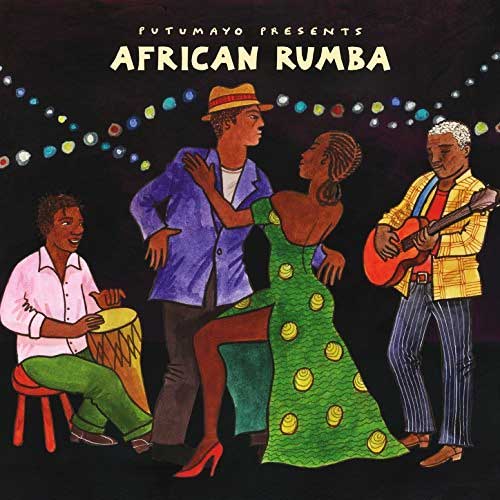
Rumba_putumayo-african-rumba
Putumayo cover of African Rumba disc (Source: Putumayo)

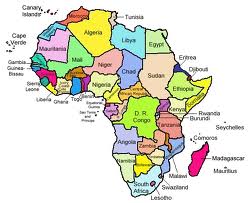
Two months ago, the 2 Congos, the Republic of Congo and the Democratic Republic of the Congo (DRC), filed jointly for the Congolese Rumba to be recognized as a UNESCO World Heritage (The 2 Congos Seek to have the Rumba Recognized as a World Treasure). I hope that this is a start for both Congos to transcend their differences to rise together more often, and join efforts. Isn’t it Unity nice? Enjoy this article from the BBC.

====

One of the most influential genres of African music and dance, Congolese rumba, now has Unesco-protected status.

Congo_Brazzaville_Flag
Flag of the Republic of Congo

It is the culmination of campaigning by two countries – the Democratic Republic of the Congo and neighbouring Congo-Brazzaville.

They both occupy what was once the ancient kingdom of Kongo – where the sinuous dance originated according to the two nations’ joint application.

The word “rumba” itself comes from the Kikongo word for navel, “nkumba“.

DRC_flag
Flag of the Democratic Republic of Congo

Congolese rumba joins other living traditions such as Jamaican reggae music and Singaporean hawker food on Unesco’s “intangible cultural heritage of humanity” list. The UN’s cultural body says bestowing this status helps to “maintain cultural diversity in the face of growing globalisation”.

… Rumba “has been part of our identity, descendants of Africa and all of us, throughout the ages,” said DR Congo’s Culture minister Catherine Kathungu Furaha earlier this year. “We want rumba to be recognised as ours. It is our identity.

When our ancestors who were taken abroad wanted to remember their history, their origin, their memory, they danced the navel dance.”

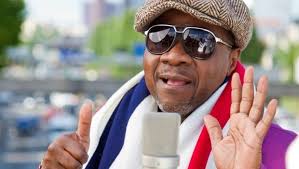
Papa Wemba1
Papa Wemba

Among the earliest heroes of Congolese rumba were Wendo Kolosoy, Paul Nkamba, Franco and TPOK Jazz, Tabu Ley Rochereau and Dr Nico. As African nations fought for independence from their colonial rulers, The Independence Cha Cha by Le Grand Kallé galvanised many and is seen as the first truly pan-African hit song. … Later that decade saw the arrival of Zaïko Langa Langa and its breakout star Papa Wemba. Among his many protégés was Koffi Olomidé, who remains popular today along with younger stars such as Fally Ipupa.

… There is no doubt that rumba’s influence is felt across the world, and its champions say it is only right that this be recognised by Unesco and benefit the next generation of musicians.


Spider and the Magic Calabash

spider-5-coloring-pageOnce upon a time there was a village where famine was raging; the king was very worried because the children were dying and the villagers no longer had enough strength to go and cultivate the land. This was where Kaku Ananze, the spider lived. Despite all his cunning, he too was suffering from hunger. Every day he went into the bush in search of roots or seeds that could feed his family. One day, Kaku Ananze was wandering among the bushes. Exhausted with fatigue, he stopped to rest. So he hears a little voice coming out of a thicket which tells him, “Papa Ananze! Papa Ananze!” A bit scared and very curious to know who is calling him, Kaku Ananze enters amidst the thorns and discovers a calabash placed on the ground.
Calebassier_3_2021
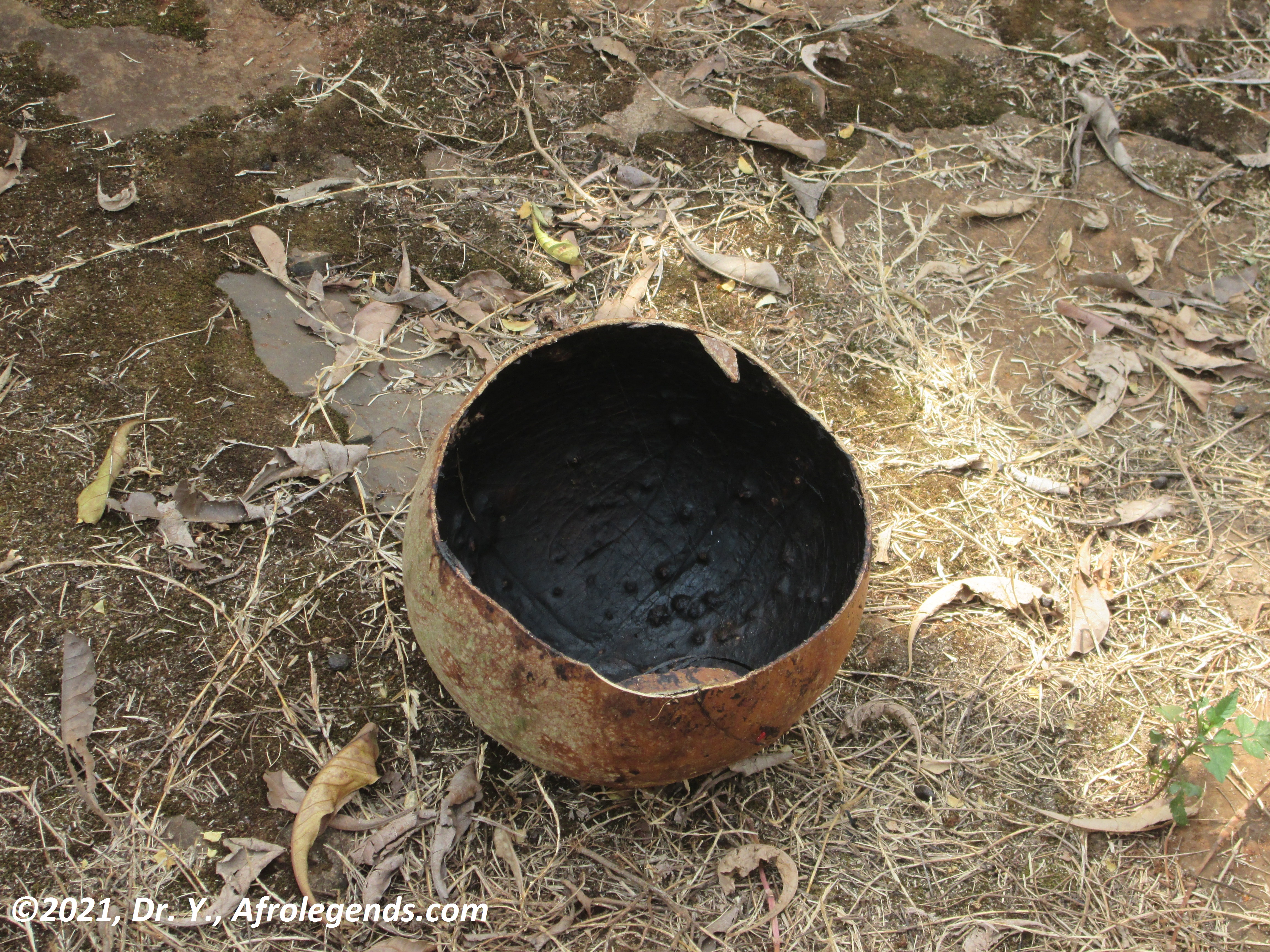
The calabash all dried up… almost ready to be made into a bowl

As he takes a closer look, the kitchen utensil speaks to him in these terms, “Take me out of this thorn bush and take me to your hut. As a reward, I will make your life happy.”

Spider picks up the calabash and takes it home. Once home, he calls his wife and children. He shows them the utensil and tells them his story. While everyone is amazed, Kaku Ananze leans over the calabash and says to it, “Dear friend, I did everything you wanted. It’s up to you to keep your promise. My people and I are starving and have no food; can you help us?” No sooner does he finish these words than the calabash is filled with all kinds of food: fried yams, beignets, plantains, bananas, chicken, sauce,… They all thank their new friend, eat until they are full. Then Kaku Ananze speaks in these terms, « children, listen to me, and you too, wife ! I am going to carefully hide this magic calabash. Do not tell anyone, under any circumstances, because people will be jealous of our luck and could come and steal the calabash from us. » All family members swear to remain silent. For a few days everything goes well. In the evening, Spider takes the calabash from its hiding place, and politely asks for food, and after the family has eaten, he returns the utensil back.

Beignets
Beignets

But, Kaku Ananze’s wife is very greedy. She hid a few bean fritters in her loincloth as provision for the day. In the afternoon, she goes out of the concession, sits under a mango tree and begins to eat. But her hungry neighbor sees her. The neighbor quietly approaches and starts screaming, “how can you have bean fritters, when everybody is dying of hunger, and that there is no food in the village? Besides, I did not see you pounding the dough or cooking. Who did you steal this from?”

Mrs. Spider is bothered. She immediately gives her remaining beignets to the neighbor, begging her to shut up. This one devours everything then starts making noise again. “Thief! Thief ! Who did you take this from?”  Scared, Mrs. Spider tells her the whole story of the magic calabash found by her husband, and swears to her, that from now on, she will bring her a little food every day if she keeps the secret.

During the night, the neighbor who cannot hold her tongue, tells her husband everything; the husband immediately goes to the king to denounce Kaku Ananze’s selfishness.

The king sends soldiers to search the entire concession of Kaku Ananze, but they do not find anything. The magic calabash has disappeared. And no one ever saw it again.

Adea, kue

The tongue is death.

Contes des Lagunes et des Savanes, Edicef (1975). Translated to English by Dr. Y., Afrolegends.com

Proverbe congolais sur la sagesse / Congolese Proverb on Wisdom

Calebassier_3_2021
La calebasse / The calabash

Une calebasse peut être solide : elle ne résistera pas contre un tronc d’arbre (proverbe Ekonda – République Démocratique du Congo (RDC)). – Devant un vieux, un jeune ferait mieux de se taire.

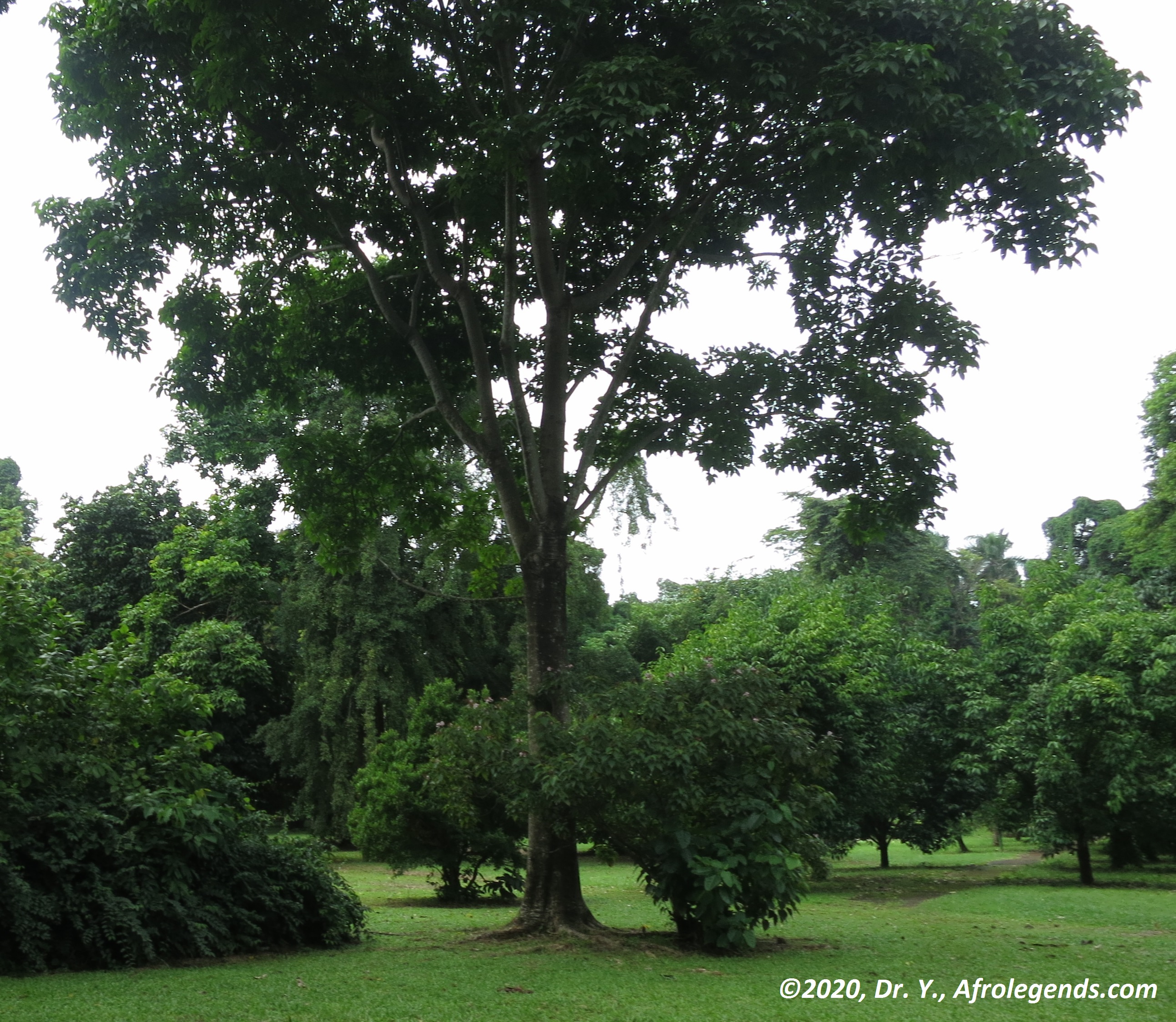
Tree_1A calabash can be strong : it will not survive against a tree trunk (Ekonda proverb – Democratic Republic of Congo (DRC)). – In front of an old man, a young man had better be silent.

The Calabash : An Indispensable Fruit/Tree in African Culture

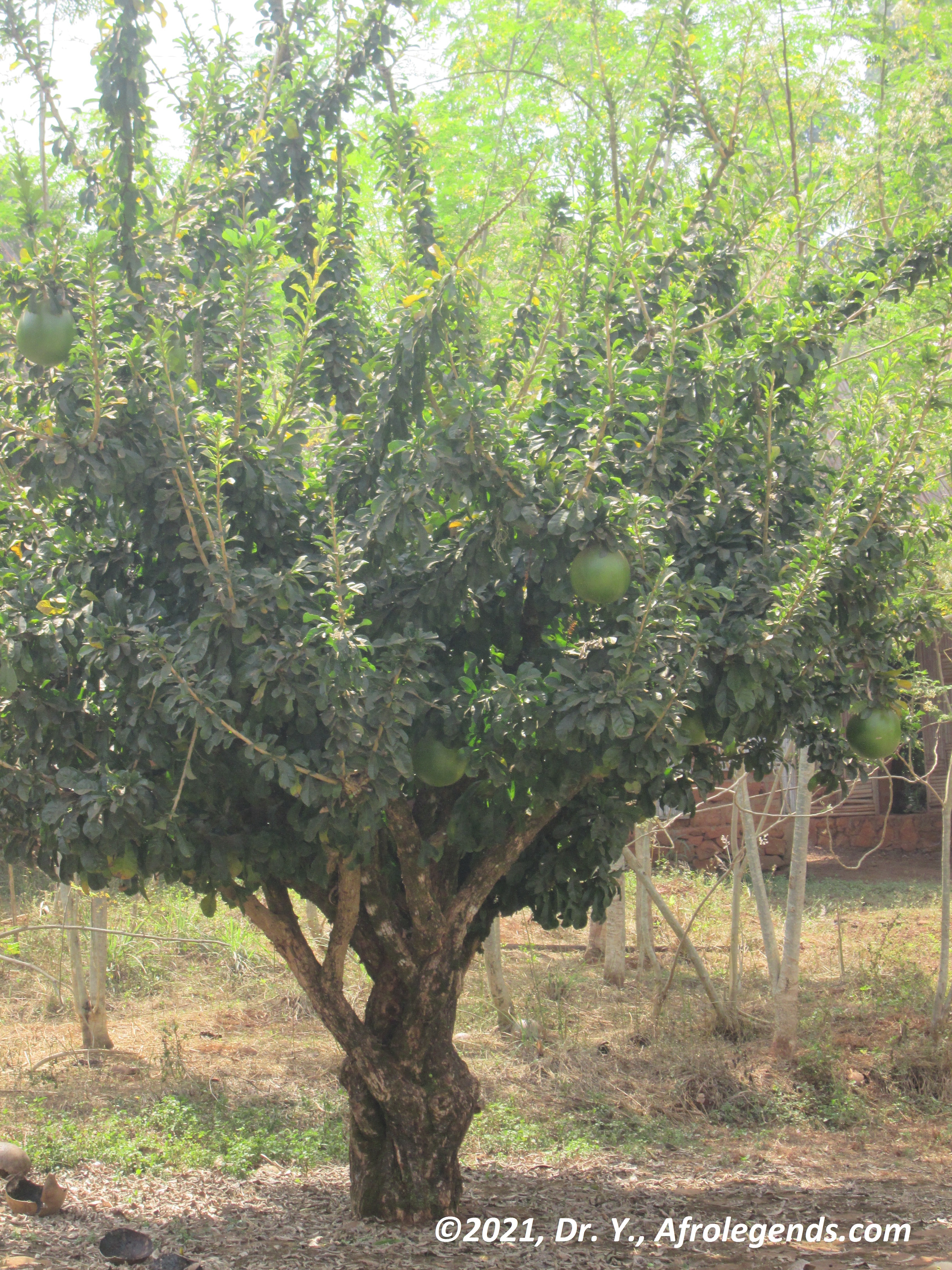
Calebassier_1_2021
The calabash tree (Le calebassier) under the African sun

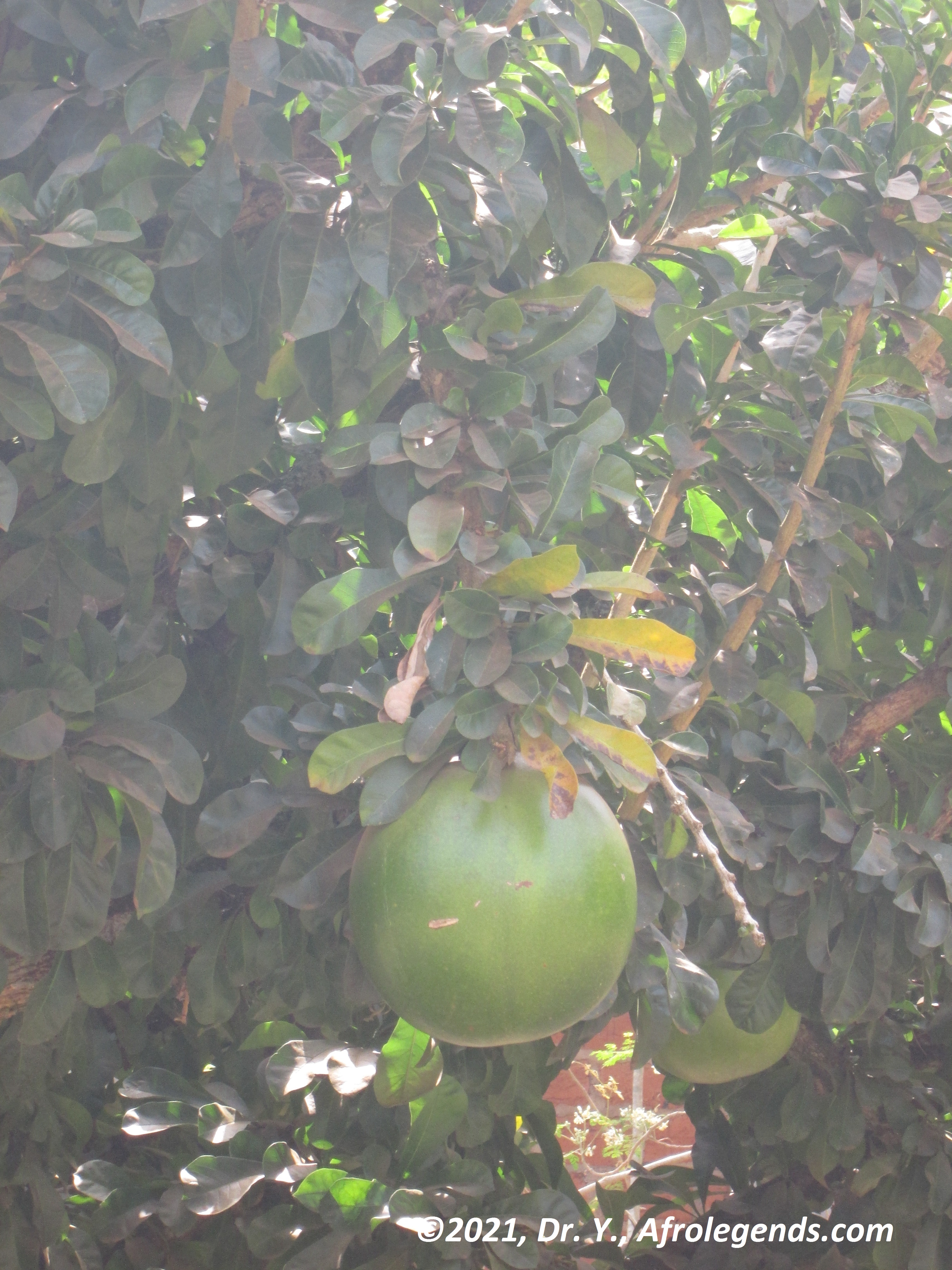
Have you ever eaten out of a calabash? It seems the food has a particular taste, and that eating out of the calabash adds an extra ‘mmph‘ to the food. In the old days, and even to this day we used homemade utensils such as calabash, especially when eating fufu (yummy)… Well, I recently stumbled upon the tree from which the calabash bowl is made out of, and found the fruits hanging down from the tree. The tree is cultivated not only for its fruits but also for the utensils, and for making amazing musical instruments. I love the idea that everything is used and nothing is thrown out: from the fruit, the meat inside the fruit, and its shell. The calabashes are hollowed-out and dried, and used to cook, carry water, and food. The smaller sized ones are used as bowls to drink palm wine: the white wine made in Africa (Le Vin de Palme: Vin Blanc Made in Africa).

Calebassier_2_2021
The calabash fruit

Calabashes are used in making the West African kora (a harp-lute), xalam/ngoni (a lute) and the goje (a traditional fiddle). They also serve as resonators underneath the balafon (West African marimba). The calabash is also used in making the shekere / shegureh (a Sierra Leonean women’s rattle) and balangi (a Sierra Leonean type of balafon) musical instruments. Sometimes, large calabashes are simply hollowed out, dried, and used as percussion instruments, especially by FulaniSonghaiGur-speaking and Hausa peoples. In Nigeria, the calabash has been used to meet a law requiring the wearing of a helmet on a motorcycle. In South Africa, it is commonly used as a drinking vessel and a vessel for carrying food by all people across the continent. In Ethiopia, children from the Erbore tribe wear hats made from calabashes to protect themselves from the sun.

Calebassier_3_2021
The calabash all dried up… almost ready to be made into a bowl

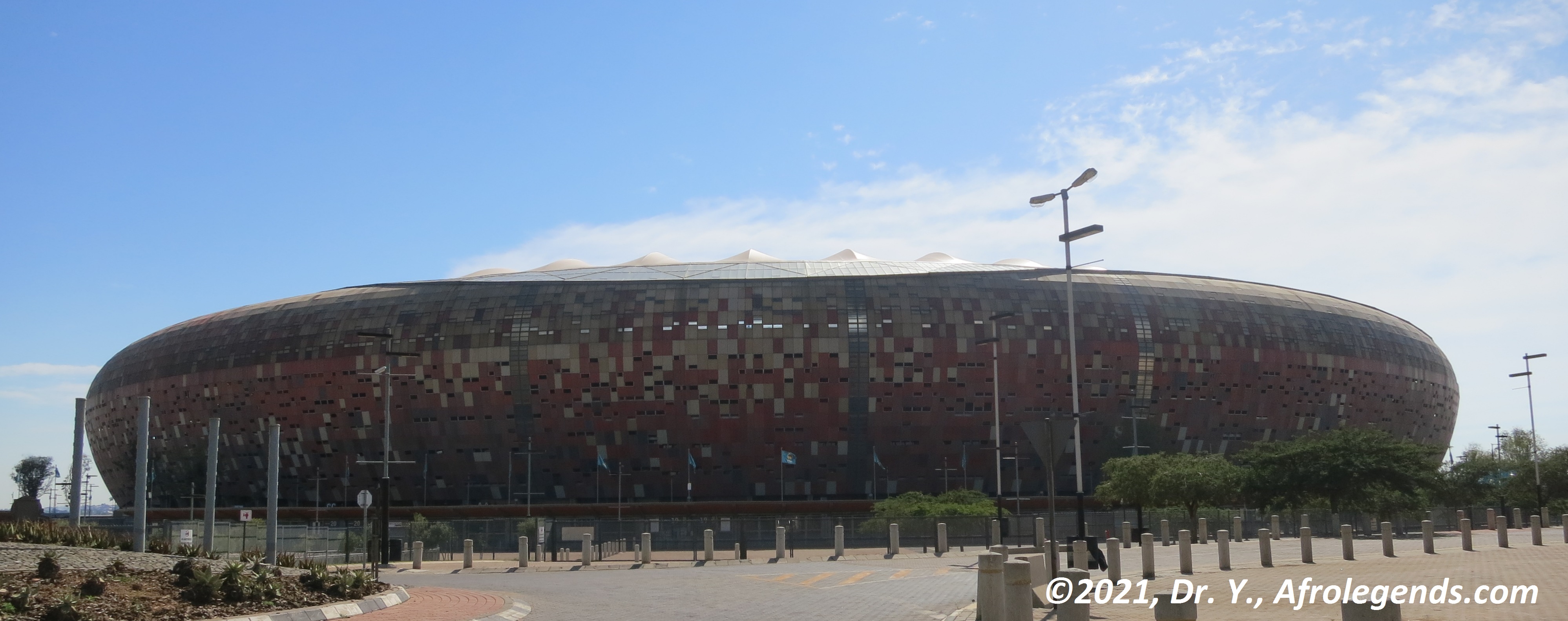
For the 2010 FIFA World Cup in South Africa, the Soccer City stadium which hosted the tournament in Johannesburg was made in the shape of a calabash on cooking fire.

South Africa_Soccer City Stadium_2021
FNB Stadium also known as Soccer City Stadium or The Calabash in Johannesburg, South Africa

Proverbe sur l’exploration de l’inconnu / Proverb on Exploring the Unknown

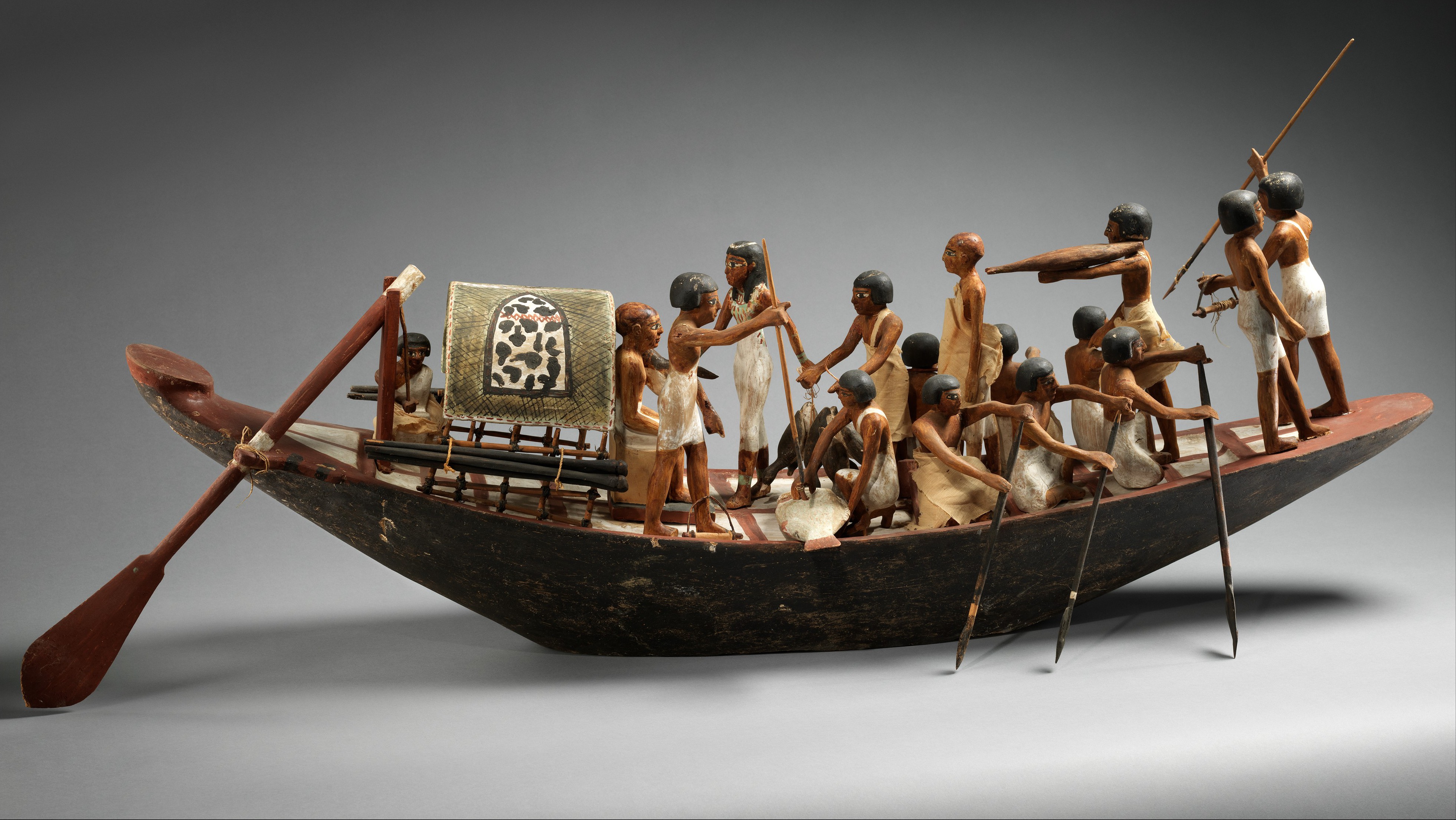
Ancient Egyptian boat (Met Museum)

Si l’on essaie de naviguer sur des eaux inconnues, on court le risque de faire un naufrage (Ancien proverbe Egyptien).

If one tries to navigate unknown waters one runs the risk of shipwreck (ancient Egyptian proverb).

The Berlin Papyrus: or when the Pythagorean Theorem was written 1000 years before the Birth of Pythagoras

Papyrus_Berlin_6619
Berlin Papyrus 6619

Is there a child on this planet who has gone to high school and not been taught the Pythagorean Theorem in some shape or form? I am not sure that many African children know that the so-called Pythagorean Theorem was written by their ancestors over 1000 years before Pythagoras was born, and on African soil. You heard me right: Pythagorean Theorem was written on the Berlin Papyrus or Berlin Papyrus 6619, a papyrus from ancient Egypt from the Middle Kingdom. This papyrus dates back from the second half of the 12th (c. 1990–1800 BC) or 13th Dynasty (c. 1800 BC – 1649 BC).

The papyrus is one of the primary sources of ancient Egyptian mathematical and medical knowledge, including the first known documentation concerning pregnancy test procedures. See our ancestors were already trying to test pregnancy! Amazing!

The first problem found on the Berlin Papyrus states, “You are told the area of a square of 100 square cubits is equal to that of two smaller squares. The side of one is ½ + ¼ the side of the other. What are the sides of the two unknown squares.” In modern terms, we would express this as x2 + y2 = 100 and x = (3/4)y, yielding to y = 8, and x = 6. Although the papyrus shows a solution using Egyptian multiplication and a somewhat different way of solving it today, it is understood that they most likely had a good knowledge of the Pythagorean Theorem. It is written in Hieratic script.

Next time you visit the Egyptian Museum Berlin, don’t just look at the bust of Queen Nefertiti which is next to the Berlin Papyrus and dwarfs it, but check it out also.

Gratitude Today : Smile

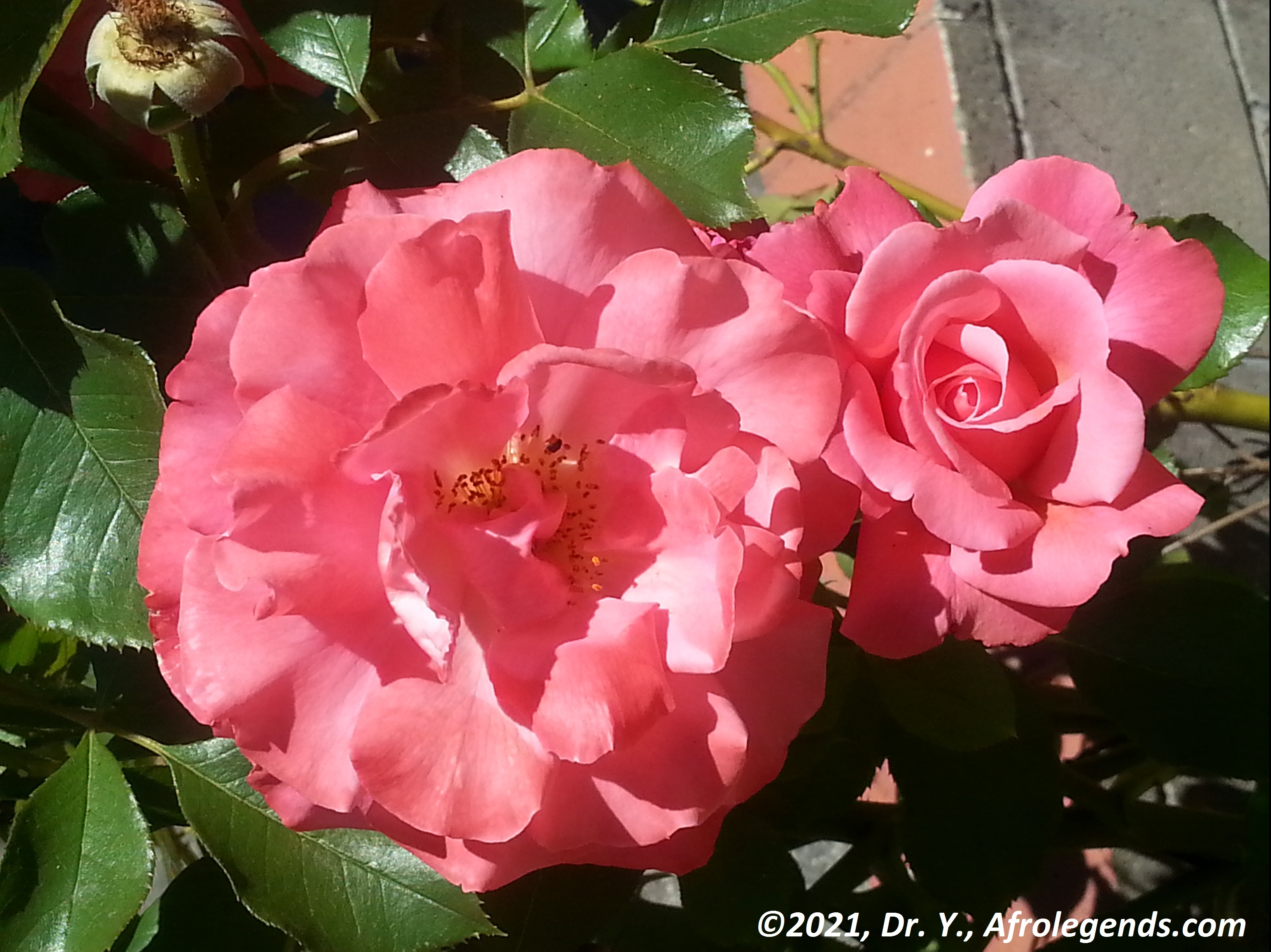
Fleur_20170617
Flower – Smile

The world we live in today is so different, there seems to be mountains upon mountains of presumably insurmountable issues! The planet seems to be in turmoil, fear and anger appear to be leading the way in people’s lives. After almost 2 years of a pandemic, economic stress, and so much more, I thought that given that this week is appropriately Thanksgiving week in the United states, why not make it about gratitude for anyone anywhere in the world? What are we grateful for? The sun which never stops coming out, the birds which never stop singing even in the quiet, the plants which are growing, some in tough environments, the sky which is always there, the people around us, and even if there is no one around, there is life! Smile for the day is bright, smile for today will bring on new challenges which no matter how big, we can take on, take a moment to smile and enjoy whatever brings joy in your life, … and smile! I live you here with Michael Jackson‘s song ‘Smile‘.

Sencirk : Senegalese Circus helping to Reinstate Children Beggars

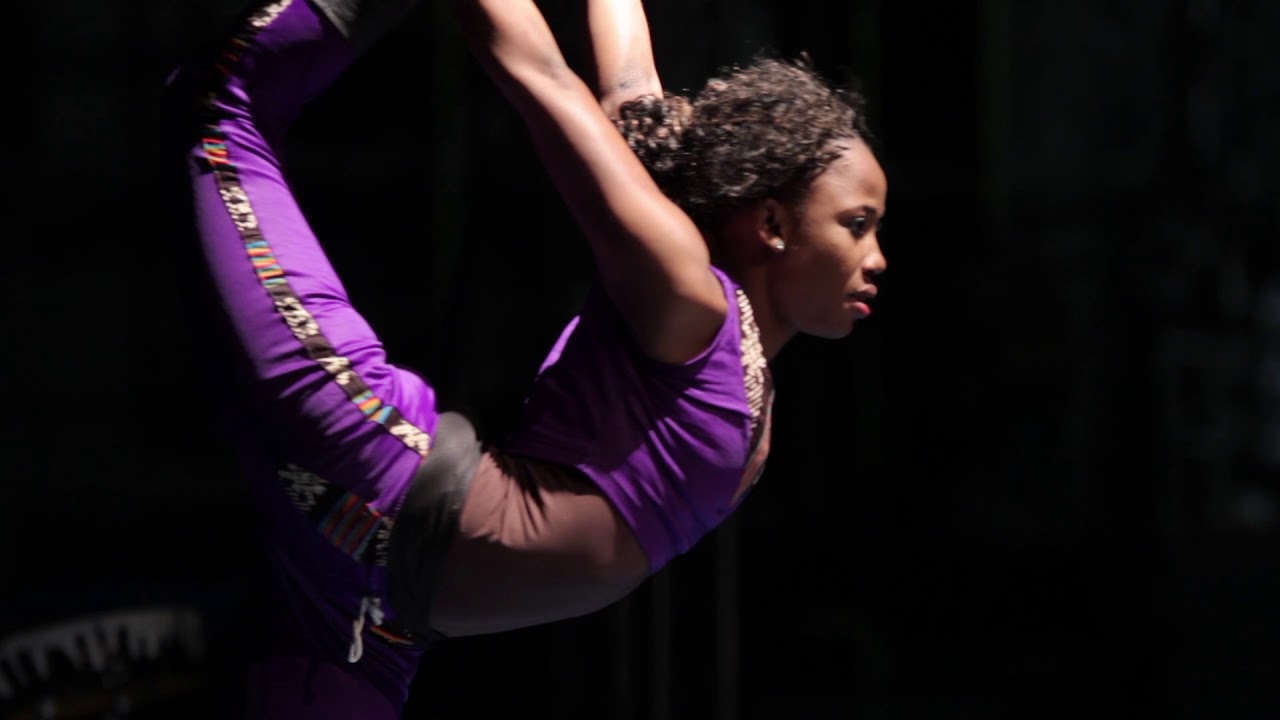
Senegal_Sencirk performer
Sencirk performer during a show

When I was a child, there was a circus which used to perform in our town, but which later closed down. The first time I visited the circus, I was amazed at the performances of the acrobats, trapezists, magicians, cyclists, puppeteers, jugglers, dancers, and of course clowns. I loved it… For the longest time, our national public television used to show circus performances on the weekends, and I must admit that I was glued to the TV, amazed by the flexibility of these acrobats, and wondering if I could reproduce some of their acts. One can only imagine the amazing training they had to go to, to give us such outstanding performances day in and day out. I just wish that we could have kept the circus going in our city, or country for that matter. Thus, it is a no-brainer that I have been happily surprised to learn about Sencirk: a Senegalese circus based in Dakar, which focuses on giving a second chance to street kids, or kids who have been stuck begging in the streets. Not only is Sencirk the first circus company of Senegal, but it also uses its platform to help with the reinsertion of these youths back to society by teaching them, training them, and helping them discover new passions, and unleash new capacities. Sencirk is a diverse troop made up of professional artists, coaches, and volunteers from around the globe, and much more. It has been in existence since 2006, but only obtained the status of association in 2010. It has trained countless acrobats aged 14 to 28, and artists across Senegal, and definitely brought smiles to many lovers of circus.

To learn more about Sencirk, please check out this photojournal on the BBC, and the Sencirk‘s website.