A blog about African history, and heritage, through audio and video files.
Author: Dr. Y.
I am an African in love with the history of the world, and particularly that of Africa. I am a child of love, an artist, a scientist, a lover, a friend, a human.
I am in love with nature and beautiful things, art, history, geography, travel, dance, food, science, and technology, and much more.
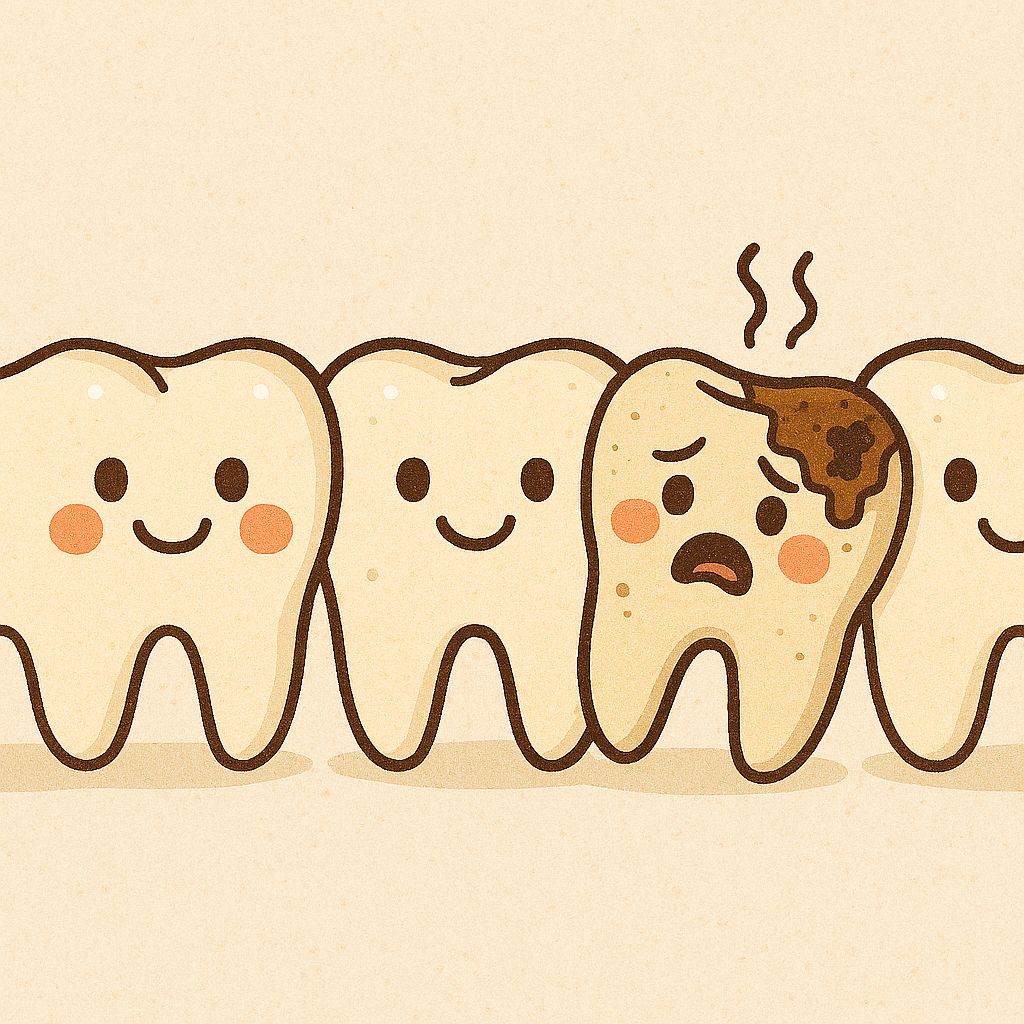
Dent cariee parmi de bonnes dents / Decayed tooth amidst good ones
Une dent cariée gâte toutes les autres (Proverbe Douala, Bassa (Cameroun) – Mpongoue (Gabon)). – Un mauvais compagnon est comme une pomme pourrie dans un panier.
One decayed tooth ruins all the others (Duala, Bassa proverb (Cameroon) – Mpongwe (Gabon)). – A bad companion is like a rotten apple in the basket.
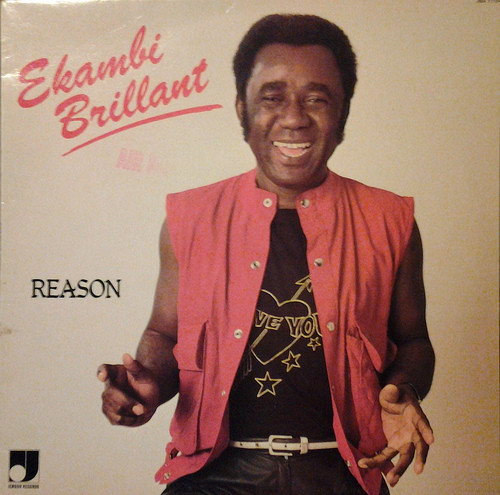
Ekambi Brillant on the cover of his 1987 album Reason (Source: RhythmConnection.Blogspot.com)
Ekambi Brillant was without doubt one of Cameroon’s greatest artists and one of the great African musicians. Originally from Dibombari, a village close to Douala, Brillant spent his youth with his maternal grandparents in Jebale, a suburban island of Douala. Per the words of Cameroonian author Elolongue Epanya Yondo, Jebale is known as the “emerald island, flamboyant jewel” on the Wouri estuary; no wonder, it served as the inspiration to a young Ekambi! His passion for music was born from ancestral roots and from watching and listening to fishermen singing on their way back home from the sea.
Wouri river and the Djebale island seen on the other side
In 1962, Brillant was admitted to the 6th grade in the prestigious Lycée Général Leclerc (General-Leclerc High School) of Yaoundé. It was there, under the careful attention of Mr. Daniel Zane, his French music teacher, that he learned to play music, particularly the guitar. In 1971, at the age of 23, he stopped his studies and moved to Douala, where he joined the band The Crack’s as a guitarist. He applied for and won the music contest launched by the Office of French Broadcasting Television (ORTF), judged by some of the continent’s great musical personalities such as Manu Dibango and Francis Bebey. Thanks to this prize, he was able to release his first 45 rpm record, Jonguèlè la Ndolo, which sold 20,000 copies.
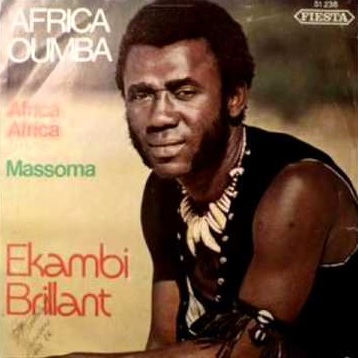
In 1975, he ended his deal with Phonogram and began a collaboration with Slim Pezin, with whom he released the album Africa Oumba, which included the major hit song “Elongui.” The song became an incredible source of inspiration for several other artists, both African and European, including the Greek singer Demis Roussos, who sang it as “L.O.V.E. Got a Hold of Me.” Roussos’ version used the exact melody of Ekambi Brillant’s original makossa hit, but he never acknowledged Ekambi Brillant—not even with a tribute. It was only later that African fans (including yours truly) loudly affirmed that this was Brillant’s original work. In the past, African compositions have often been adapted/plagiarized without formal credit, especially when entering European or American markets. Roussos earned millions from Ekambi’s song, without giving him a penny. This is reminiscent of Andre Marie Tala, Cameroon’s Blind Musical Virtuoso, and his song Hot Koki which was plagiarized by James Brown, or more recently Shakira with “Waka Waka (This Time for Africa)” “adapting” the “Zamina mina (Zangaléwa)” song and claiming in an interview to have gotten inspiration while walking on a beach. The album Africa Oumba reached a record of about 4 million sales (diamond disk). Further collaborations with Slim Pezin as producer yielded titles such as Soul Castel and Musunguédi. In 1976, Ekambi Brillant formed his band known as The Ebis (Ekambi Brillant Show).
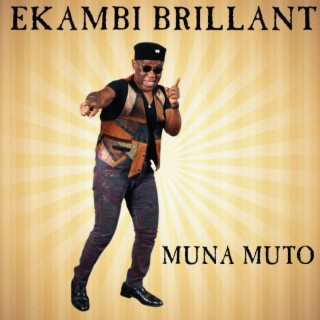
Ekambi Brillant ‘Muna Muto’
Over the course of his career, Brillant released nearly 20 albums. Brillant passed away on 12 December 2022 in Douala at the age of 74, after a battle with a long-term illness. Unfortunately, like many in Cameroon, he was a brilliant soul who barely received the recognition his genius deserved. He was from a generation of outstanding Cameroonian artists.
Ekambi Brillant remained an inspiration to generations of artists, propelling several careers and guiding many musicians—both Cameroonian, such as Marthe Zambo, Valery Lobe, and Alhaji Touré, and African, such as Cella Stella and Angelique Kidjo. He was so advanced, brilliant, and inspired … going through his music portfolio is filled with great sounds and a great source of inspiration. Cameroonians should get inspired from his work and celebrate his genius.
Ekambi Brillant on the cover of his 1987 album Reason (Source: RhythmConnection.Blogspot.com)
Today we will celebrate a song, Muna Muto, and particularly a singer who has touched generations of musicians on the African continent, Ekambi Brillant. Brillant is a Cameroonian singer who has contributed to the emergence of outstanding African singers, such as the Beninese-French singer Angelique Kidjo, first African singer to get a Star on the Hollywood walk of fame , Cella Stella, Marthe Zambo, and countless others. To me, just like his name, he is one of the most brilliant Cameroonian singers ever, with a great voice, bass mastery, and a great teacher.
Muna Muto is a love song which focuses on deep affection, longing, and devotion. It is a love so deep that you wonder what life could have been before meeting that special one.
Just with the first note, you can tell that Ekambi is deeply patriotic, and loving of his country. He tells you that he comes from a place of abundant love “O nin mboa su nya bwam wuma ndolo mo nye no.” He further tells you that it is a place where people greet each other with warmth, a place filled with beautiful music, sounds, and dances, where joy and happiness are omnipresent (Wuma mongele mam mese ma nanga no na pi. Na ma senga so bobe mulema mu monya weya. Nyola mabola mongo na londi na isom). That sounds like a description of Africa!
Coeur / Heart
He tells his lover that she is his everything, the love they share grows stronger every day. She is his everything and he cannot bear to be without her. “Muna Muto, Na petane nde ndolo po, o bola oa mo … Bo bunya mo bo poï tenge, a makusane mba mo.”
The most touching part is that he has searched far and wide, and found no one like her: he has found his center, his person, his backbone. “Na si bi ka bo bunya bo mende te nde o po, Na ma nanga nde ndoti, bulu na bulu te … Bwanga to bo bo titi, ye nde welisane” (I have searched far and wide but found no one like you. You are the only one who understands me, heart and soul. … And our love will last forever, as we journey through life together.) So deep! All this on such a deep, dancing tune, and the chorus makes you want to sing “Muna Muto” for the rest of your life!
As you go on to celebrate Valentine’s day, please sing Muna Muto to your special one, that one you have searched far and wide for, the only one, the one who understands your heart and soul, a love that will be immortal. Enjoy Mot’a Muenya love song!
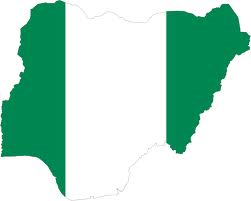
Last week, the Nigerian government announced the presence of US troops on its soil. American troops were deployed for, they say, “intelligence supportand training, not combat operations.” Nigerian Defense Minister Christopher Musa addressed the “partnership.” This deployment is said to strengthen counter-terrorism cooperation. The AFRICOM commander, General Dagvin Anderson, claimed that the deployment was made at Nigeria’s request to focus strictly on intelligence assistance! In the background, it is said that this is to protect Christians.
How can they talk about anti-terrorism fight, when they are the ones funding these terrorist organizations? It is no secret that almost all facade terrorists organizations were created by Western secret services. It is no secret, that Bin Ladden was once a CIA operative, and we all know who funded ISIS (the US)! They have thus created chaos in Africa to destabilize the continent, and pillage freely resources.
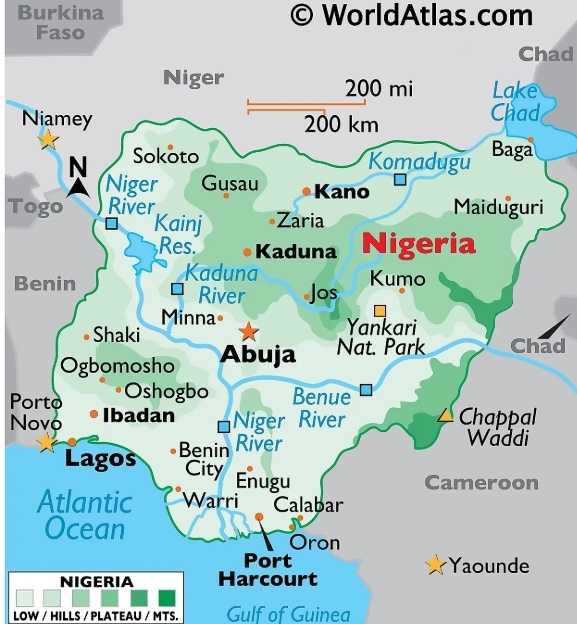
Map of Nigeria (Source: WorldAtlas.com)
How can they talk about the protection of Christians? After watching the video of the Nigerian pastor who called for the Trump administration to intervene in Nigeria, a few things stand out: he says (paraphrasing) “the UN, I know you see me; US senate, I know you are watching me; special council to Trump, Please tell him to save our lives.” Before that event, how many knew this pastor? He has never had popularity like TB Joshua… so how can he have the special ears of the US government? We saw that the December 25 US strikes in Nigeria were not in the area filled with Christians but rather one filled with Muslims in the northwest part, near the border with Niger!
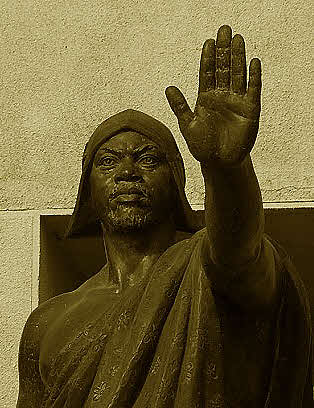
Is it a coincidence that this happens a few days after the Chinese mining giant Zijin bought several gold mines in Mali and other places? It is no secret that the US are trying to stop or level the Chinese, and to a certain extent Russian, expansion in Africa. We have always said that the meteoric global rise in gold prices is coming, in part, from the AES claiming back the control of their mines! We all know, since ancestral times with Emperor Kankan Musa, that Mali is one of the global key players in the gold industry… that’s how France could get their ranking as 4th in the global gold production.
Thus, it is clear why American troops were sent to Nigeria: for control! Like I have said for years, there is a new scramble for Africa, and we are watching it happen right now!Remember how the cold war happened between the United States and the Soviet Union in other countries by proxy? Angola is a clear example, where the West and the East (USSR) were fighting or rather supporting both sides. Back then, it was a fight to stop Soviet expansion in the world… Today, it is a fight to stop Chinese expansion and keep Western domination in the world … Nothing has changed!
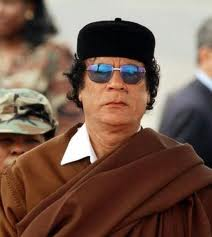
I would like to share some points about life in Libya under the Guide of the Libyan Revolution Muammar Gaddafi, from an African perspective, not the trash published by the Western media. Western Media Lies in Libya, NATO’s debacle in Libya, Truth Dispatch: Update on Libya. He was not a saint, but he loved his country deeply and Africa as a whole, and was fighting for our freedom and dignity as human beings!
Libya had significant reserves of crude oil and the discovery of oil changed its socio-economic landscape. Before Gaddafi, Libya had less control on the oil industry as most of the companies involved in oil exploration activities were foreign, but a few years after Gaddafi took control of the government of Libya, his administration nationalized the oil Industry which had a marked impact on the economy and development. Under Gaddafi’s leadership, Libyans enjoyed an exceptional standard of living, financed by oil revenues that were equitably redistributed.
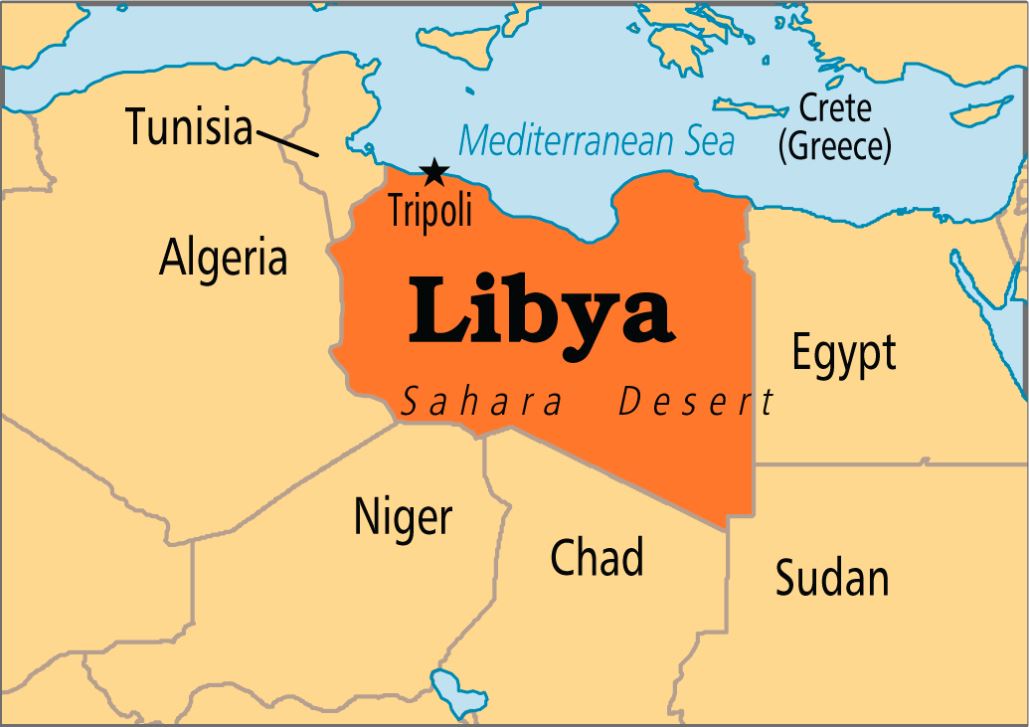
Map of Libya
Thanks to a bold management of oil wealth, Gaddafi transformed his desert country into a model of social and economic development, offering its citizens unparalleled benefits on the continent, and in the world (Norway is now applying his doctrines – just under a different name). While the West often portrays him as a dictator, we want to tell you about the life of Libyans under Gaddafi, and the benefits to the whole of Africa.
Below are the main benefits enjoyed by citizens (source Eurafrica, translated by Dr.Y, Afrolegends.com):
Free education for all: Access to education, from primary school to university, was entirely free. Before Gaddafi, only 20% of Libyans were literate; under his rule, this rate rose to 83%. A quarter of the population held a university degree, a record in Africa.
Free medical care: Hospitals provided free care, and the number of doctors quadrupled in a decade. Diseases like malaria were eradicated, and tuberculosis declined sharply.
Affordable electricity: Although sometimes described as free, electricity was so heavily subsidized that its cost was negligible for households.
Housing, a fundamental right: Gaddafi considered housing an inalienable human right. Massive programs were implemented to build affordable housing, and citizens could obtain interest-free loans to buy their homes. No homelessness like in the streets of some of American and European capitals!
Support for young couples: Newlyweds received financial assistance of approximately $50,000 to acquire a home and start their family life.
Support for mothers: Every woman giving birth received a bonus of $5,000 to support her family.
Car subsidies: The state covered 50% of the price of cars, making mobility accessible to all. Gasoline at a ridiculously low price: With a liter of gasoline costing only $0.14, Libyans enjoyed some of the cheapest fuel in the world.
Affordable basic necessities: Essential goods were subsidized to ensure access for all.
Support for agriculture: Aspiring farmers received land, equipment, seeds, and livestock free of charge to start their farms.
Assistance for unemployed graduates: Unemployed young graduates received an allowance equivalent to the average salary for their profession until they found a job.
Education and healthcare abroad: If local infrastructure was insufficient, the state financed studies or medical treatment abroad, providing a monthly allowance of $2,300 for housing and transportation.
Oil revenue redistribution: A portion of oil revenues was reinvested in social programs, ensuring rare economic stability.
Libya was a debt-free economy and Gaddafi had a pan-African vision. With reserves of $150 billion and no external debt, Gaddafi’s Libya was an anomaly: an African country free from the clutches of international financial institutions like the IMF. This economic independence allowed Gaddafi to dream big. His ambitious project, the Great Man-Made River, transported millions of cubic meters of water across the desert, transforming arid lands into fertile fields. Nicknamed the “eighth wonder of the world,” this irrigation network symbolized his ambition to make Libya self-sufficient.
Gaddafi went even further: he wanted to unite Africa. By proposing a gold dinar to replace the dollar in African trade, he sought to free the continent from Western powers. This project, combined with his support for the African Union, made him a threat to the global order.
This is a sad day! Saif al-Islam Gaddafi, son of the Libyan Guide Muammar Gaddafi (Kadhafi) has been brutally murdered in his house in Libya! I don’t know if this year we are going to get bad news every third day of the month, but so far, it has rained! At the height of the NATO attacks on Libya in 2011, we were there in prayers, and words, writing to tell all about the injustices that were being perpetrated against the Libyan people. The mainstream media lied, and of course Barack Obama, Hillary Clinton, Nicolas Sarkozy and the rest of NATO launched a vicious attack on the Libyan people under the false pretense that Gaddafi was killing his own people, a people he loved so dearly. The lies were blatant, the attacks horrendous, and they destroyed Libya, thus destabilizing the whole of Africa. We can still hear HRC cackle as she described the killing of the Libyan Guide. Western Media Lies in Libya, NATO’s debacle in Libya, Truth Dispatch: Update on Libya.
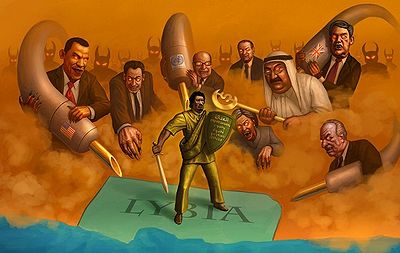
Libya, the Prey of the West
Saif al-Islam was one of Gaddafi’s sons. He was brilliant, and a part of his father’s inner circle, at some point performing public relations and diplomatic roles on his behalf; he publicly turned down his father’s offer of the country’s second highest post and held no official government position. He studied at the London School of Economics, and wanted to bring modernism to his country. In 2005, he was awarded a “Young Global Leader” title by the World Economic Forum, and in January 2011, WEF founder Klaus Schwab personally invited Gaddafi to attend the annual WEF Forum in Davos. Young Gaddafi was tricked by the western glitter, and worked to lift the embargo on his country. He was instrumental in negotiations that led to Libya‘s abandoning its weapons of mass destruction program in 2002–2003, the country’s protection against western arms. He arranged several important business deals on behalf of the Libyan regime in the period of rapprochement that followed. He was viewed as a reformer, and openly criticized the regime, probably listening to western advisors. Muammar Gaddafi did great things for Libya: it was one of the few countries in the world without debt, and with gold reserves. Living in a desert and constantly faced with lack of water, The Guide had even made water sprout in the desert digging deep, enabling amazing engineering feats such as the Great Man Made River Project, the world’s largest irrigation project once known as the 8th wonder of the world. Moreover, Muammar was helping other African countries free themselves, and was about to have the gold dinar to free African countries from the treacherous FCFA. Who in their right mind wouldn’t want the world to see that? Young Saif probably wanted to world to see the beauty his country was.
Map of Libya
Saif had schooled in Europe, in one of the best schools of the world, and likely wanted Libya to be accepted, and probably fell for the oldest Western trick in the book, that of “Democracy” Africans and the Trap of Democracy. He forgot that Westerners never forget! He forgot that once an enemy, always an enemy. He convinced his dad to open up to the west, to their measures, agree to their demands, etc. The Guide even financed Sarkozy’s campaign and election as president of France; he was in turn received like a king in Paris, just to be destroyed by that same Sarkozy (Former French President, Nicolas Sarkozy, gets 5-year Sentence for Corruption Linked to Libya). Once Saif saw the vicious Western attacks on his country in 2011, he understood that the enemy was trying to destroy Libya, and fought against NATO forces, but by then it was too late, as the enemy had weakened their defenses with all the negotiations.
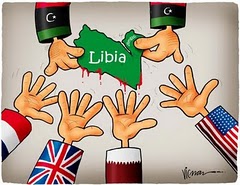
The destruction of Libya: the cake
After the murder of The Guide, Saif was taken into custody, tortured for years, and later on freed. However, how can a child who has seen his country at its height, and then seen it broken to pieces, his family and people killed and scattered to the winds by the West, sit still? If you are that child, how can you live with yourself, knowing that your country’s downfall might have come from you trusting the enemy, or falling for their treacherous claims? He was still a menace for the West and they had to eliminate him!
The lesson is clear! If you have been enslaved by someone and hated, do not for a second forget and think that they would love you one day. It is important to know that the West never forgets… they keep track… (even after 100 years, they do not forget) and it is imperative for us to keep track and never forget! We live in a global world, so one needs business partners, but do not for an instant believe that someone who has pillaged your country, raped your sisters, destroyed your lives, would one day when you have freed yourself from their choke-hold, forget that they had crushed you once, or become your friends. Evil never becomes good!
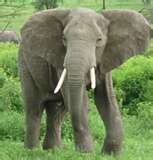
L’éléphant portera sur sa tête le bois que les singes ont ramassé (Proverbe Bahumbu – République Démocratique du Congo (RDC)). – Le chef doit régler les palabres du clan.
Singe / Monkey
The elephant will carry on its head the wood that the monkeys have gathered (Bahumbu proverb – Democratic Republic of Congo (DRC)). – The chief should settle the clan’s disputes.
We have talked so many times about the numerous puppet regimes installed throughout Africa, but we have not talked about how these regimes came to be. It is no secret that these puppet governments, particularly in francophone Africa, are inherited from colonial era, and before that from slavery times. They just morphed over time. The authorities of kings of different African kingdoms and empires were slowly reduced to those of couriers or delivery boys, totally disconnected from their original power rooted in their ancestral traditions. Those who rebelled were simply killed or deposed, or forced to bow down like Behanzin, Prempeh I, Samori Toure, and more. Once we understand this, it is now clear why today we often see African presidents run abroad to France or wherever to take their orders: when they win elections, when new rules need to be established, or their currency devalued, etc.
Pr. Bwemba Bong explains it so well in his book “Quand l’Africain était l’or noir de l’Europe. L’Afrique: Actrice ou Victime de la Traite des Noirs? – Démontage des mensonges et de la falsification de l’histoire de l’hydre des razzias négrières transatlantiques” (When the African was the black gold of Europe. Africa: Actress or Victim of the Slave Trade ? – Dismantling the lies and falsification of the hydra history of the transatlantic Slave Raids),” MedouNeter 2022, p. 170 (translated to English by Dr. Y, Afrolegends.com). In his section titled “The transformation of the administrators of the so-called French-speaking colonial Black Africa into anti-African, ethnic ogres and terrorists”, he explains :
In the political sphere, traditional African institutions were completely destroyed to make way for the establishment of the slave system, for which the disappearance of African kingdoms and empires was a sine qua non prerequisite. When European and African criminals had not simply seized their thrones, African kings and emperors were now placed under the subordination of European slave traders. This violent intrusion, through the dismantling of legitimate powers replaced by subservient structures whose survival is today represented by African “chieftaincies,” but above all by the so-called African state, has created new, artificial, and illegal territorial structures. From now on, the authority of African “rulers” had and has its source only in the wicked European law and no longer in the institutions of their ancestors.
The act of recognition by the slave-owning power now constituting the sole legal basis for the exercise of power, any structure not expressly approved because it was established by the European invading authority—which alone granted and still grants today the title of “king,” “chief,” or “president” (depending on the appropriate tactic)—was and is automatically guilty of the crime of usurpation of title, and was and is irremediably subject to deposition, or even execution, through the system of coups d’état so prevalent today in Sub-Saharan Africa.
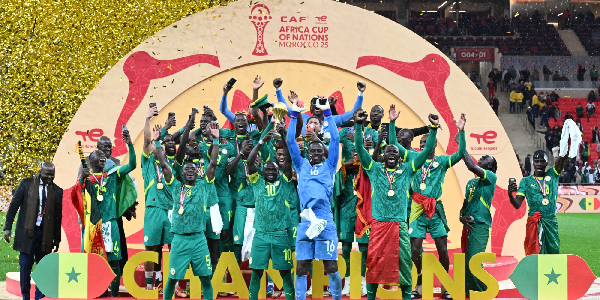
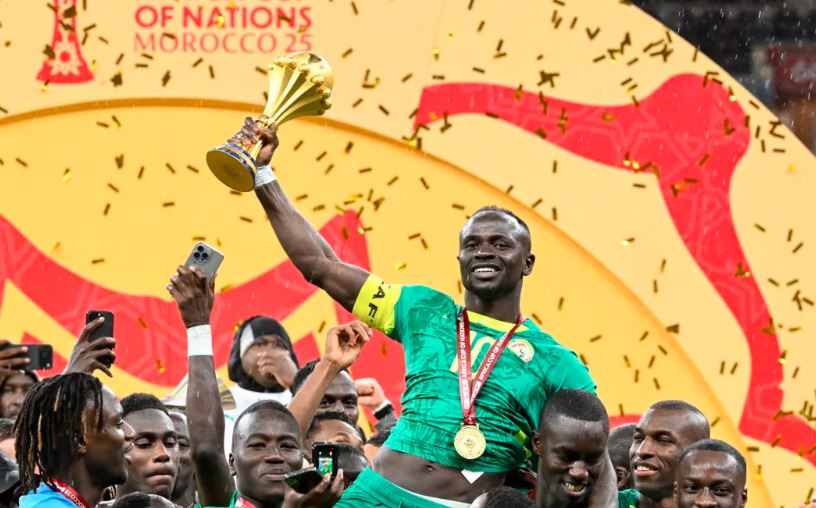
Senegal wins AFCON 2025 in Morocco (Source: Ghanaweb.com
Congratulations to Senegal for winning its second star and becoming this year’s African Cup of Nations (AFCON) Champion in what was a surreal final against Morocco on Sunday January 18, in Rabat, Morocco. The best team won. The AFCON started on December 21, 2025, and ended on January 18, 2026 in Morocco. Some of the best continental teams played in the tournament and showed us beautiful football. There were some games that were okay, while others were awesome. Until Sunday, the host country had been praised for the organization of the tournament, getting praises from big names like Mohamed Salah, for their impressive infrastructure, stadiums, the quality of the pitches, and travel links.
The Africa Cup of Nations (AFCON) logo
After a month of intense games, the final opposed The Teranga Lions of Senegal to the Atlas Lions of Morocco. At first, the game was a bit tepid but slowly built in action towards the end. At the 96th minute, Senegal’s Ismaïla Sarr scored a goal which was denied by the referee; never taking the time to check the Video Assistant Referee (VAR). Then 2 minutes later, at the 98th minute, the referee awarded a penalty to Morocco, under the pressure of the Moroccan player Brahim Diaz who insisted that he checked the VAR. The referee went on to check the VAR and allowed the penalty. Then chaos ensued. The Senegalese players were indignant, and rightfully so: why the double standard? Why check the VAR for one and not the other? If the penalty is valid, then why was the previous goal denied?
Senegal’s forward Sadio Mane holds up the trophy as he celebrates with his teammates after winning the Africa Cup of Nations final against Morocco (Source: AFP)
The Senegalese coach Pape Thiaw, frustrated from the referee disallowing their previous goal, and then allowing a Moroccan penalty, asked his boys to leave the pitch. While this was going on, a scuffle started in the stadium between the Senegalese fans, and the security on the field, degenerating with some exchanging blows. Some of the Senegalese players went back to the lockers while others were still standing on the pitch. Then Sadio Mané, the team’s captain went to exchange brief words with Claude LeRoy on the pitch and El Hadji Diouf, then he ran back to the lockers to call his teammates telling them “Venez, on va jouer comme des hommes!” “Come, we will play like men!” In other words, although there is injustice, let’s play, if we lose, we lose like men.
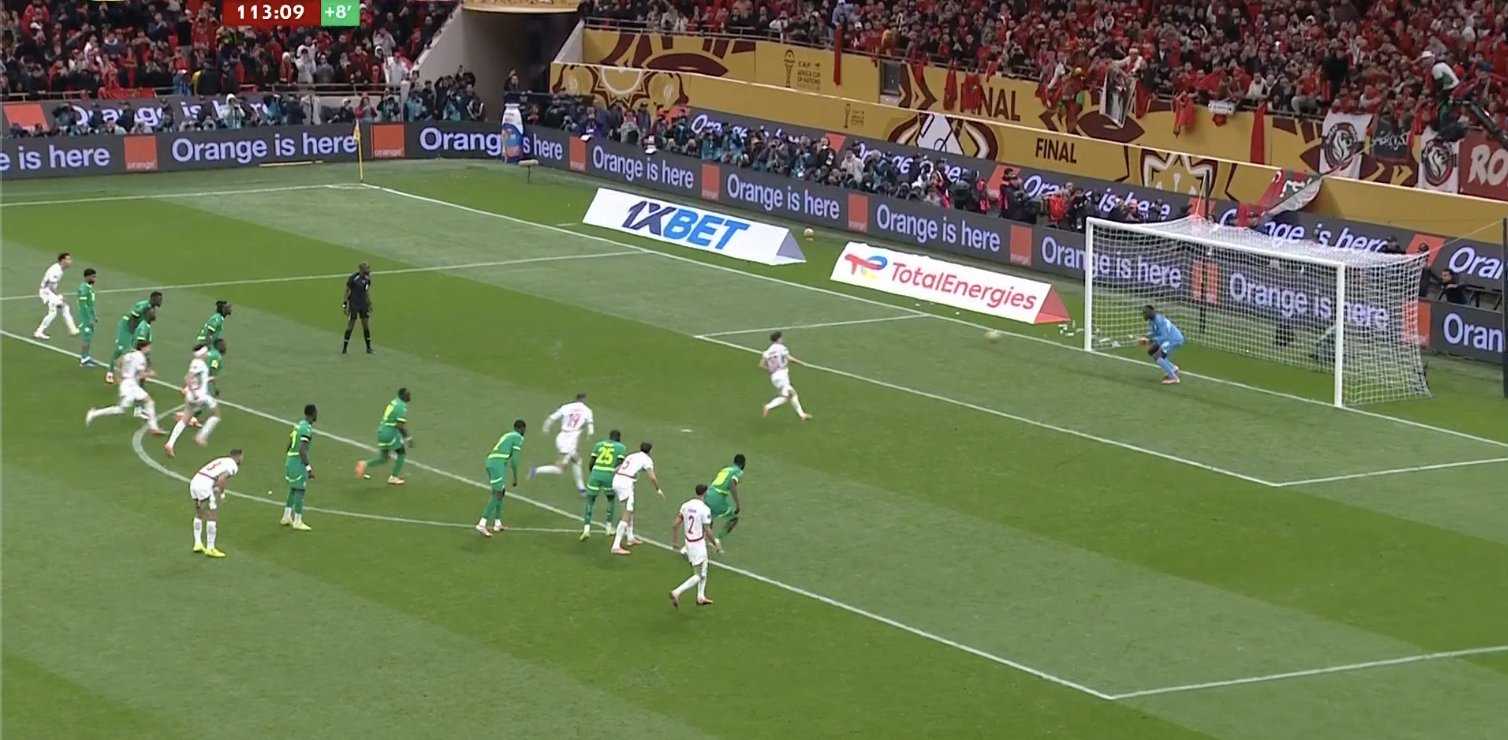
Brahim Diaz misses his penalty during the AFCON 2025 final (Source: footballblog.co.uk)
After the players returned to the field, Moroccan forward Brahim Diaz, the tournament’s top scorer with five goals, shot the penalty in a lame ‘Panenka’ effort which was caught by Senegal keeper Edouard Mendy, and the referee blew the whistle for full-time. During extra time, Senegalese player Pape Gueye then scored the winning goal at the fourth minute of extra time to seal a second triumph in five years for the Teranga Lions. Senegal won 1-0 against Morocco. There is no doubt that Senegal has had one of the strongest and most consistent teams of the past 5 years on the continent, winning 2 AFCON titles and making it to the semi-finals another time.
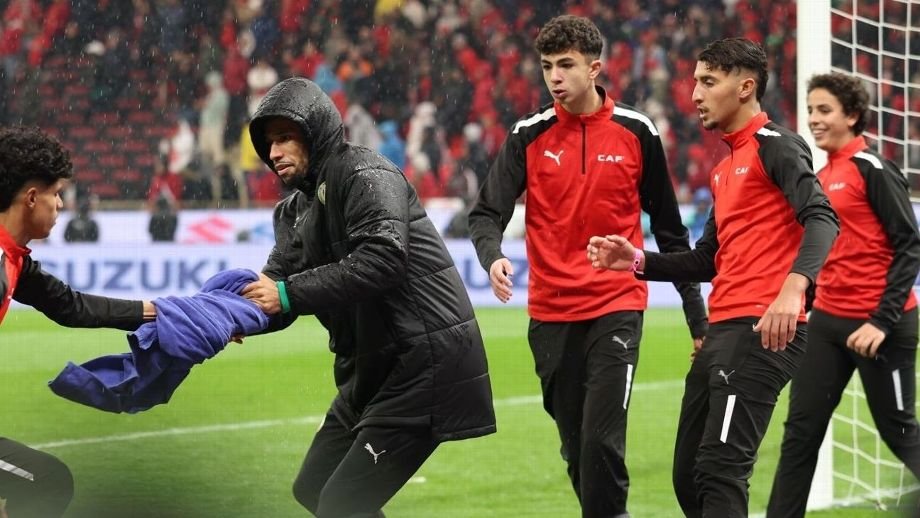
Yehvann Diouf fighting off ball boys for his goalie’s towel (Source: Cameroon-concord.com)
Most western media talk of the Senegalese “outrageous” behavior for walking off the pitch, yet, they do not talk of the reason why: their goal 2 minutes earlier had been denied in a way that seemed quite unjust. The MSM even go as far as blaming social media, because while their cameras only showed the Senegalese walking off the pitch, they forgot to show the Moroccan ball boys, players, staff, and security harassing the Senegalese reserve goalkeeper (who was standing to the side of his goalkeeper’s cage), to the point of assaulting him and dragging him by his feet for protecting a TOWEL!!! People also forget, conveniently, that there were several incidents that happened before the game that culminated with the Senegalese team’s feeling of injustice: the security before the game, the training camp, their hotel, the number of tickets, or the sudden illnesses that struck some star players, and so on. No wonder people are seeing Senegal’s win as divine justice!
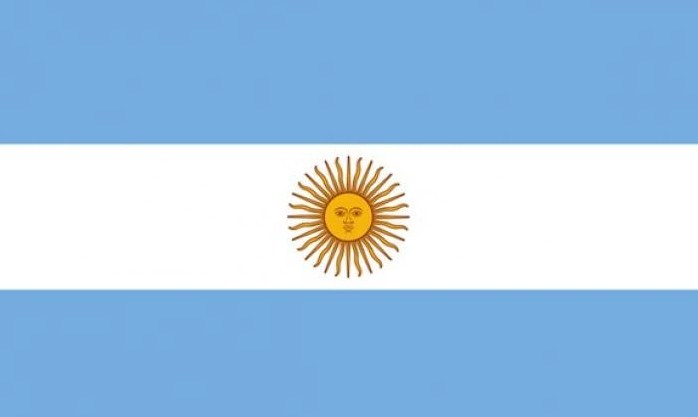
Flag of Argentina
FIFA’s president Gianni Infantino condemned the behavior of Senegal players and members of the coaching staff after a chaotic end to the Africa Cup of Nations final, saying violence and walk-offs had no place in football. He talks of sanctioning Senegal. Why didn’t FIFA sanction Argentina when Lionel Messi ordered his teammates off the pitch during a World Cup Qualifier game against Brazil? Lionel Messi and the Argentinian team walked off the pitch during a World Cup qualifier against Brazil in November 2023 at the Maracanã Stadium in Rio de Janeiro, protesting violent clashes between police and Argentine fans in the stands, an act of solidarity and protest that delayed the match for about 30 minutes before they eventually returned to play. If FIFA sanctions Senegal, then they should also sanction Argentina! If FIFA sanctions Pape Thiaw, then Lionel Messi should also be sanctioned. Lastly, are they also going to look at the unbelievable behavior of the Moroccans players, ball boys, staff, and security toward the Senegalese keeper for his towel during the game? If Senegal gets sanctioned, then Morocco also should get sanctioned! There cannot be double standards for Africans!!!
Senegal wins AFCON 2025 in Morocco (Source: Ghanaweb.com
We congratulate the Senegalese team on winning the AFCON 2025; they were real Gaïndés! We also congratulate Sadio Mané who won the Fair play man of the tournament for his outstanding sportsmanship. Above all, we thank all the teams for a great tournament and Morocco for hosting. We, in no way condone breaking rules, but Senegal showed us that we have a say in our destiny, and in the face of injustice, Mané reminded us that we should be men, and stand erect!













 African Heritage