
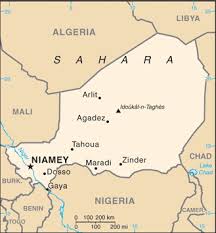
Today, we are going to talk about the city of Agadez, which is one of Niger’s most historic and culturally important cities. Agadez is a UNESCO World Heritage Site, a Tuareg stronghold, and the traditional “gateway to the Sahara.” It is famous for its mud‑brick architecture, its ancient role in the trans‑Saharan trade, and its striking desert landscapes. It is the fifth largest city of the country.
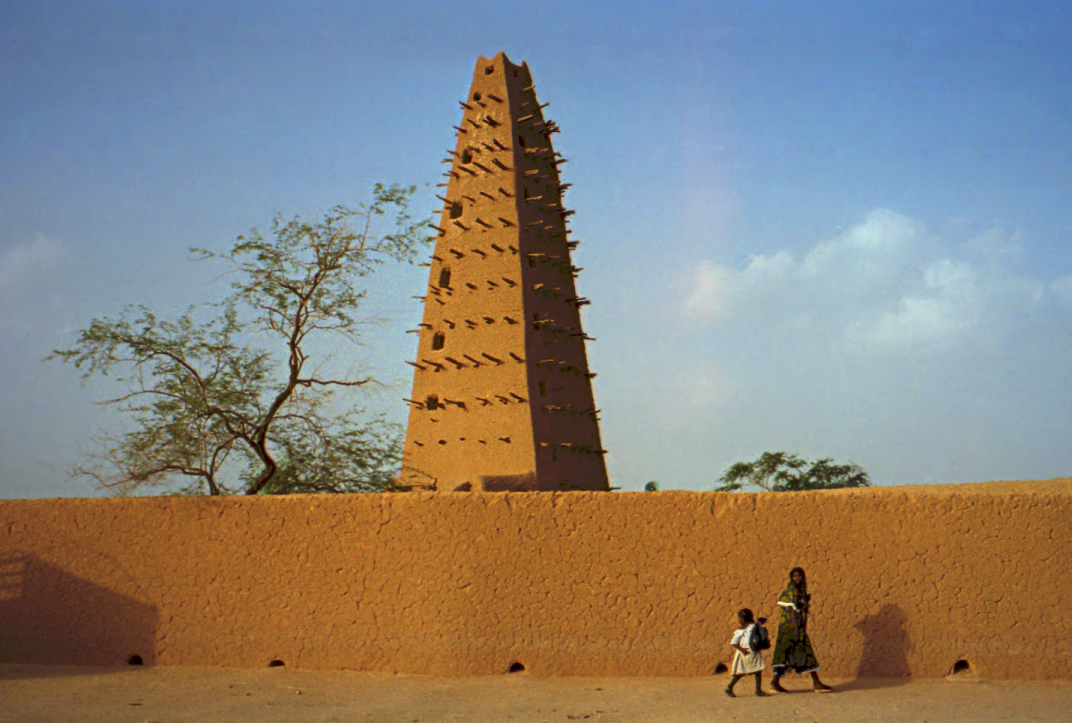
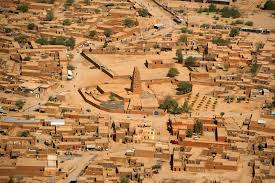
Located deep in the Sahara Desert, it serves as the capital of the Agadez Region and the historic Aïr Tuareg federation. Its historic city center, the Old City, is a UNESCO World Heritage Site, since 2013 because of its narrow alleys, traditional Tuareg houses, and centuries-old urban design showcasing the great architectural continuity and cultural significance. Another landmark of the city is the Grand Mosque of Agadez. Built in 1515, the Grand Mosque of Agadez, is a masterpiece of Sudano-Sahelian architecture entirely made of earth and wood, and is one of the most iconic structures in the Sahel with its tall mud-brick minaret. It was a landmark for caravans crossing the Sahara.
The name Agadez is said to come from egadaz which means “to visit someone” in Tamashek, a Berber language from the Tuareg people of the region. It used to be the crossroad of caravans that linked North Africa to Subsaharan Africa and huge commercial center. It was founded by Tuareg tribes (Ifadalan, Massoufa, …) in the 11th century before becoming an important crossroad for major trans-Saharan roads in the 16th century. With its strategic position, it is a key stop for caravans moving salt from Bilma in Niger, gold from West Africa, textiles and goods from North Africa. The Sultanate of Agadez became a Tuareg sultanate in 1449, and was conquered by the Songhai Empire in 1515 before later regaining its autonomy. It became the most important city of the Tuareg people, to the point of becoming the capital of the Tuareg rebellions in the 1990s and 2007.
Modern Agadez is home to the University of Agadez and an international airport. It continues to be a Tuareg cultural center known for its skilled craftsmanship, silver jewelry, leatherwork, music and festivals. While in the past, it was a trade hub, today it is still a hub, but for modern migration routes. It is also located on the road to the uranium mines of Arlit, and the gold mines Akokan and Tabelot.
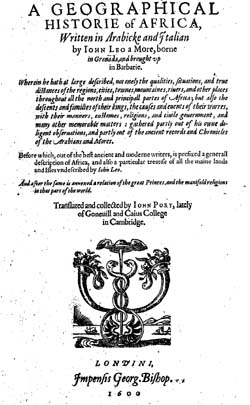
In his book Description of Africa (published in Italian as Della descrittione dell’Africa et delle cose notabili che ivi sono, per Giovan Lioni Africano in 1550), Leo Africanus described Agadez as a “city surrounded by murrals“, with “houses well built“, and “sumptuous palace.” Agadez kept the vestiges of its murrals up until the 1960s.
To learn more, check out Around the world in 80 clicks or this Al Jazeera article or NigerHeritage. Enjoy! If you ever get the chance to visit Agadez, remember that it sits on an ancient crossroad trade hub in the middle of one of the world’s largest desert, and imagine yourself as part of those commercial caravans of old.

 African Heritage