Meta Bows to Nigeria and Pays for Privacy Infraction

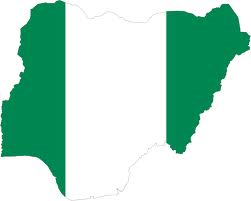
Flag and map of Nigeria

Another news which has almost gone unnoticed is the fact that the Nigerian government has fined Meta, the American tech giant, for breaching privacy laws; and Meta has decided to settle out of court to the fine!!! This is a major development for an African country, and then in general in an era where these giants own our data and dispose as they see fit. Last year, the Nigerian government had handed Meta a fine of $220 million, saying its investigations found “multiple and repeated” violations of the country’s data protection and consumer rights laws on Facebook and WhatsApp. Meta was accused of using Nigerians’ data for ads without their clear permission, collecting data from people who don’t even use its platforms, failing to file required reports, and sending user data abroad without proper approval.

This October, after months of legal battles, Meta Platforms Inc., the company that owns Facebook, Instagram, and WhatsApp, has agreed to settle the case out of court and to pay $32.8 million to Nigeria’s Data Protection Commission for breaking the country’s data privacy rules. In all honesty, the sum is meagre … but it is a step forward (?). The Data Protection Commission has now ordered Meta to update its privacy policy, carry out local reviews of how it uses data, and always get user consent before using personal data for targeted advertising.
It’s like the Tech-giant thought that it was the usual far west in Africa, and business as usual for them and the way they treat Africans with the usual condescending; they thought they could do as they pleased with Nigerians’ information. Many experts think that this case sets a precedent and could influence how big tech companies handle user data across Africa as more countries introduce stronger privacy laws.

Enjoy excerpts below from Africanews.

=====

Meta Platforms Inc., the parent company of Facebook and Instagram, is set to settle a $32.8 million data privacy fine with the Nigerian government, marking a significant moment for digital rights enforcement in Africa.

The fine was imposed by Nigeria’s Data Protection Commission (NDPC) in February 2025 for alleged violations of the Nigeria Data Protection Act. Meta was accused of using Nigerian users’ data for behavioural advertising without explicit consent, processing personal data of non-users, failing to file mandatory compliance audits, and transferring user data abroad without authorisation.

The settlement, expected to be finalised by the end of October 2025, comes after months of legal disputes. Meta initially challenged the fine and the process but moved toward an out-of-court agreement, signalling willingness to comply with Nigeria’s growing regulatory demands.

This case highlights Nigeria’s assertiveness in regulating global tech companies and could set an influential precedent for data privacy enforcement across African markets.

….

The UN Peacekeeping Force Reduced by 25%

UN flag

There is a news which has gone undetected or rather not talked about much. Did you know that because of lack of funding, the United Nations (UN) is going to lose about a quarter of its peacekeepers! It is said that this is happening due to budget cuts from the American government; the UN will have to reduce its blue helmets (casques bleus) force on the ground, including some civilians. It was announced on October 8th.

Nous allons devoir rapatrier, réduire d’environ 25% le nombre de nos effectifs de maintien de la paix militaires et policiers, ainsi que leur équipement, et un nombre important d’employés civils des missions vont également être touchés,” (“We will have to repatriate, reduce by about 25% the number of our military and police peacekeeping personnel, as well as their equipment, and a significant number of civilian employees of the missions will also be affected“) said an anonymous UN person to RFI.

This is equivalent to about 13,000 to 14,000 soldiers and policemen. Their repatriation could start in 6 weeks (now 4 weeks) and could go on over 12 to 18 weeks.

For those of us who watched MINUSMA (Mali), ONUCI (Cote d’Ivoire), MONUSCO (Democratic Republic of Congo (DRC)), MINUSCA (Central African Republic (CAR)), MINUSTAH (Haiti), etc… it is no secret that those have troops have been used to impose the wishes of the West and serve the interest of their masters in our countries. It is also well-documented that the UN peacekeeping has a sexual abuse problem. In the DRC, there are countless reports of UN peacekeepers being accused of rape, sexual abuse and exploitation; moreover, they have been accused of helping the rebel forces for all the minerals, and have rarely worked for the safety of the people. In Haiti, they caused the largest cholera outbreak in the nation’ history and deadliest in modern history. Furthermore, an Associated Press (AP) investigation revealed in 2017 that at least 134 Sri Lankan peacekeepers from the UN were involved in a child sex ring in Haiti (both of girls and boys) over a 10-year period and that although 114 of them were sent home, none were charged for the crimes. In Mali, they have been accused of looting, and failing to uphold security and even fueling tensions – which they were brought in to do. In Cote d’Ivoire, the representative of ONUCI actually took sides in the country’s elections above the country’s supreme institutions; while the forces in the north of the country never helped stop the advancement of the rebel forces over the years, despite the government asking for help. In CAR, they have been accused of sexual exploitation, abuse, and other misconduct. The sex abuse is rife in CAR; at least 98 girls said they had been sexually abused by UN peacekeepers from Burundi and Gabon in 2014 and 2015. The UN successfully identified 41 troops accused of involvement in the incidents, and the personnel identified were returned to their homelands but have not faced charges. A public UN database has been recording sexual abuse and exploitation.

Thus, in view of all these, we will be happy when these so-called peacekeeping forces are removed from our territories or when they undergo a serious cleaning to serve the fair interests of ALL.

Servir deux maîtres / Serving Two Masters

Sel / Salt

Quand deux femmes préparent le repas, il y aura certainement trop de sel (Proverbe Luo – Kenya).î

When two women prepare the meal, there will surely be too much salt (Luo proverb – Kenya).

Raila Odinga in His Own Words

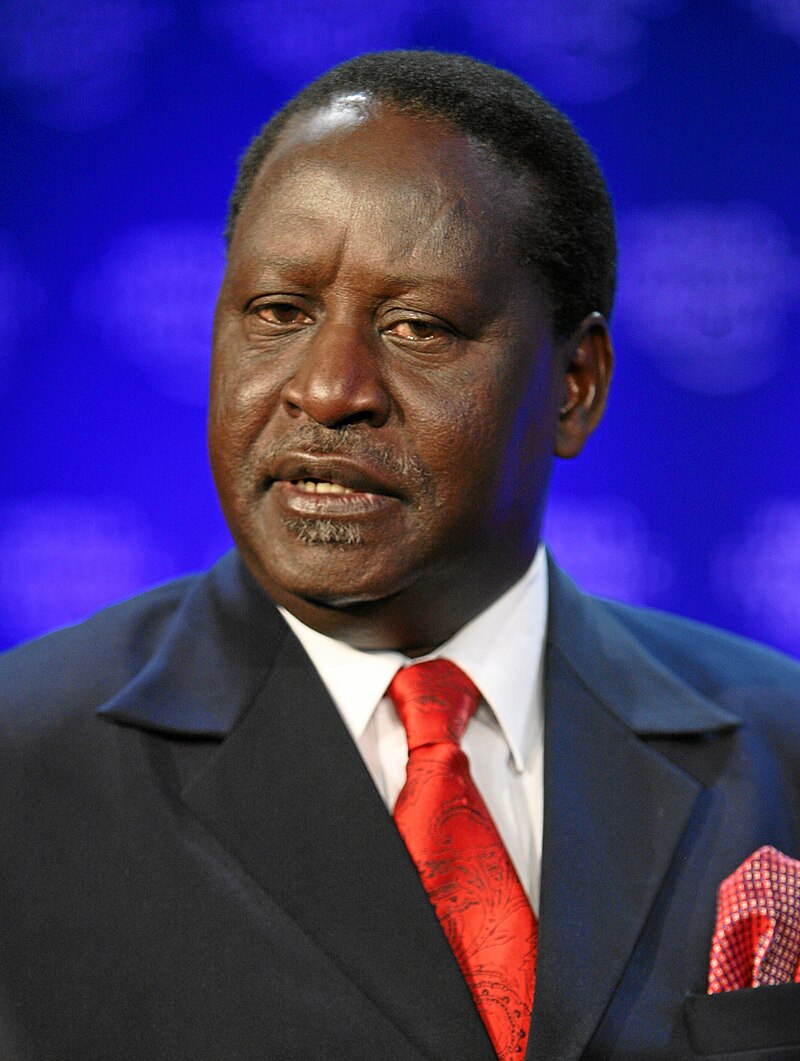
Raila Odinga (Source: World Economic Forum)

As we celebrate the life of this great fighter for Kenyan democracy, we will remember him by his own words. Below are a few… Let Odinga’s political legacy continue. Let’s never give up the fight for our freedom; it may take a long time, but never give up!

======

On how the treatment of those who fought for the freedom of Kenya and the Mau Mau uprising : The men and women who paid the ultimate price so that we may live in freedom only had the nasty reward of being called bandits and terrorists when the war was over.

On the Mau Mau revolution: I can feel the pain of the Mau Mau and other freedom fighters. They must have concluded that life is cruel and worthless and that Kenya has no place for heroes.

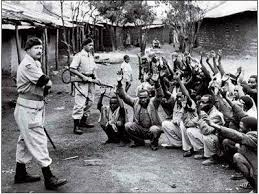
Under British guns, during the Mau Mau rebellion in Kenya
Under British guns, during the Mau Mau rebellion in Kenya in the 1950s

On education: Regardless of what you hear, the successes and failures you see, it still pays to work hard and play by the rules. Success is a lie when founded on shortcuts and deals negotiated in smoke-filled rooms.

On choosing the best people to govern the country : The security of the country must be in the hands of the best men and women for the job.

On his lifelong struggle against corruption and for the betterment of Kenya : I don’t fight individuals, I fight systems.

As a reminder of his time as a political detainee in the 1980s : Freedom is never given freely; it is won through struggle.

Flag of Kenya

During the 2002 transition that saw the end of the KANU-rule, There comes a time when the nation is more important than an individual.

On winning elections, after his third attempt in 2013 : Three times I have run for president, two times I have won, and I have been robbed two times.

On the state of Kenya and African leadership : At independence, Kenya’s economy matched South Korea’s. Forty five years later, Korea is forty times larger. The mediocrity of leadership is Africa’s greatest curse.

On elections : You cannot have free and fair elections when one party controls and monopolizes the instruments of power.

His dream for Kenya, stated during his 2022 presidential campaign : My dream is a Kenya where no child goes to bed hungry.

Ban on the Sale of Foreign Alcohol in Lesotho in 1854

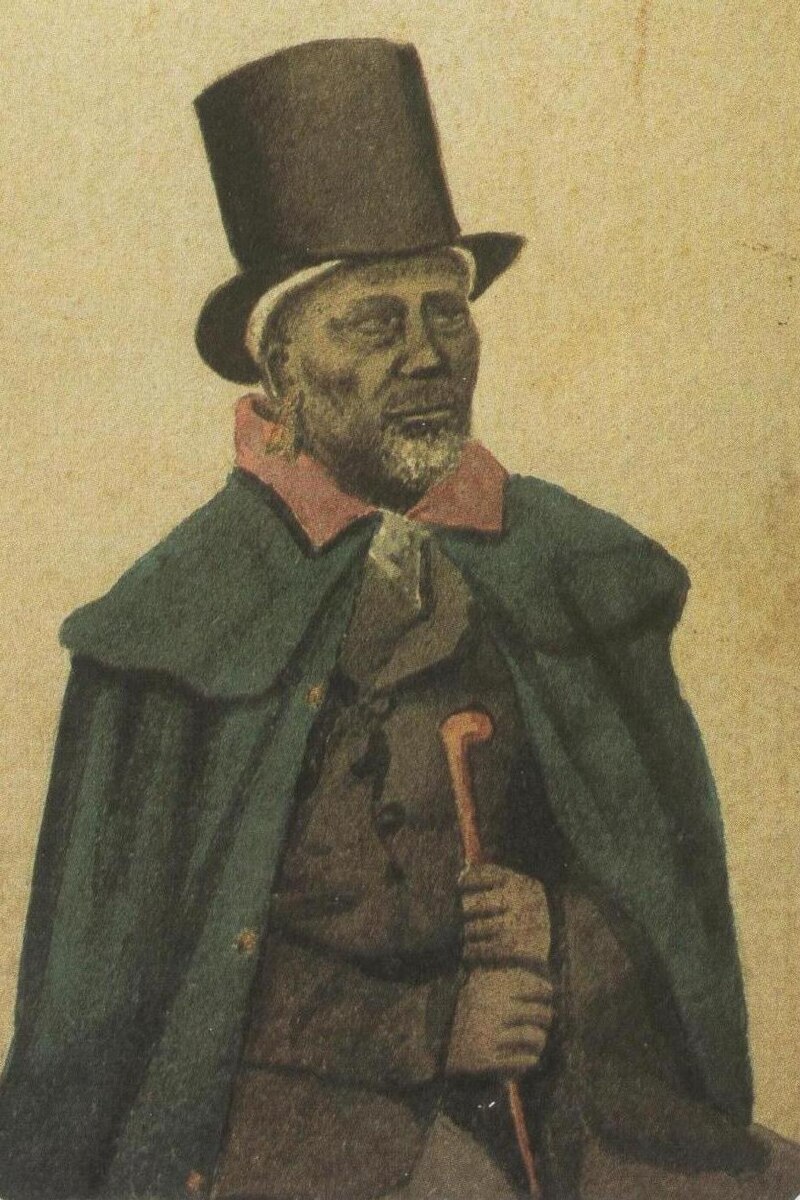
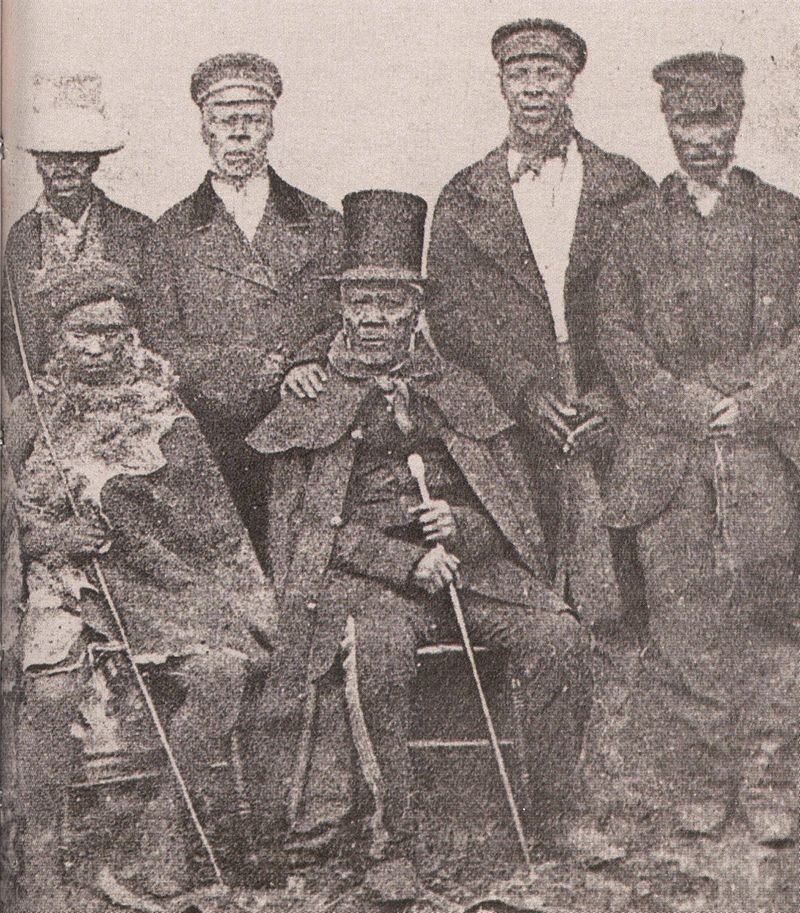
King Moshoeshoe I of Basutoland

As we have seen before, many African kings prohibited the sale of foreign alcohol on their soil. They could sense the harmful effect of alcohol on their men and on the society as a whole. They could also foresee the destruction of the soul of their societies via this foreign alcohol like Native Americans saw their destruction on another continent. Gungunyane: the Lion of Gaza or the Last African King of Mozambique, or Mirambo: the Black Napoleon, king of the Nyamwezi people in Tanzania, are just a few. Moshoeshoe I, the first king of Lesotho also prohibited the sale of foreign liquor on his soil. History Repeats Itself: the destabilization of Africa during slavery times via the use of alcohol as a tool, is continuing today, particularly in countries rich in resources. Current African leaders would do well to follow the example of their forefathers, as alcohol is destroying our societies and most of the beer companies are owned by Western multinationals; the alcohol level in beers and liquors in many African countries are significantly higher than in European countries, and the people are slowly being turned into drunkards while their resources are siphoned out. 

Below is the ban on alcohol imposed by King Moshoeshoe I on his homeland of Lesotho. The original can be found in Les Africains, Tome 8, p. 254, ed. Jaguar. Translated to English by Dr. Y., Afrolegends.com

=====

Ban on the sale of Foreign Alcohol

8 Novembre 1854

Whereas the alcohols of the Whites were unknown to previous generations of our tribe, that Matie (Matsie, that is Nkopane, father of Mohlomi) et Motlomi (Mohlomi) to the Bomonageng (BaMonaheng), and our father Mokhachane, now advanced in age, never consumed any other drinks than water and milk ; and whereas we believe that a good leader and judge cannot claim to be capable of performing his duties if he uses any stimulant whatsoever ; and whereas that alcohol causes quarrels and troubles, and paves the way to the destruction of society (it is evident that the white people’s alcohol is nothing but fire).

It is therefore made known to all that the introduction and sale of said alcohols in Basutoland is henceforth prohibited, and it is stipulated that for any person, whether white or colored, anyone who contravenes this decision will have their alcohol seized and spilled to the ground, without excuse or compensation.

This decision will be printed in the Basuto [Sotho] and Dutch languages and posted in public places and in Basutos villages.

Given with the advice and agreement of the men of our Tribe, by us the King of the Basutos, in Thaba Bosigo, on November 8th 1854.

King Moshoeshoe

So Long to Raila Odinga, Fighter to the End for Kenyan Democracy

Raila Odinga (Source: World Economic Forum)

It is with sadness that we heard about the news of Raila Odinga‘s passing yesterday, on October 15th. It makes one wonder if, when one fights for the true freedom of Africa, one dies without ever getting in power? or killed in power for their principles? Is one just supposed to accompany democracy?

Raila Odinga has been a dominant unavoidable force in Kenyan politics for the past 30 years, and even longer, given that his father, Jaramogi Oginga Odinga, was the first vice-president of Kenya alongside Jomo Kenyatta, Kenya’s first president. Thus, Raila Odinga has been a baobab in Kenya’s political scene, who has always fought for the freedom and democracy in Kenya. Out of the past 5 elections, 1997, 2007, 2013, 2017, and 2022, he has always contested, has come second, and even narrowly won to the point that there have always been disputes which have gone as far as civil unrest as in 2007, when Odinga contested elections against Mwai Kibaki, which led to the biggest crisis in Kenya’s history resulting in 1200 deaths and about 600,000 people forced to flee their homes. The crisis was resolved in a peace brokering by UN Kofi Annan which saw Kibaki emerge as president and Odinga as the nation’s prime minister. After the 2017 elections, he was vindicated by Kenya’s highest court after the 2017 elections when the court annulled Uhuru Kenyatta‘s victory and ordered fresh polls; however, Odinga boycotted the run citing frauds. 

Flag of Kenya

Odinga always found a way to put peace ahead of his own person, and reconciled with the incumbent; his love for Kenyans made it hard for him to stay angry or be selfish; he always placed Kenya first. He was affectionately called “Baba” (Father), “Agwambo” (Act of God), and “Tinga” (Tractor) – drawn from his party’s symbol during the 1997 elections. He was a former political prisoner, and holds the record for being Kenya’s longest serving detainee. He was detained twice from 1982 to 1988, and 1989 to 1991 when he fought against the one-party rule of Daniel Arap Moi

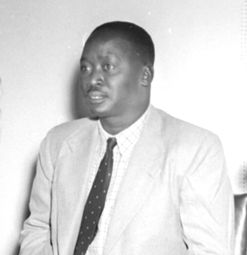
Mr. Oginga Odinga, a distinguished African leader of the Kenya Colony was one on a short visit to India in March, 1953, giving a broadcast talk at the New Delhi Station of All India Radio, during his visit to the Station.

Initially, Odinga, a native of Kisumu, a city on the shores of Lake Victoria, studied engineering in East Germany before returning home in the 1970s where he taught at the University of Nairobi and started a range of successful businesses. He found his way into politics when he was linked to a failed coup against Arap Moi in 1982; accused of treason, and though the charges were later dropped, he spent most of the decade in and out of jail.

To many, he is known as the founding father of Kenya’s multiparty democracy, a master strategist, and a great mobilizer, bringing in together huge crowds and people of all walks of life. To many, Odinga had been under political persecution for his strength, and his wish for a better Kenya. After fighting for so many years, being so close all the time, with one’s victories getting stolen, how does one reconcile it in the end? Are the Western puppets always the winners, while the strong-willed true lovers of their people always second? 

So long Baba Odinga! Thank you for your love, for your great political acumen, and for your strength, never giving up over the years. You have been and remain an example for our struggle for the freedom and betterment of Africa; we will never give up and like you, never back down!!!

King Moshoeshoe I: The First King of the Kingdom of Lesotho

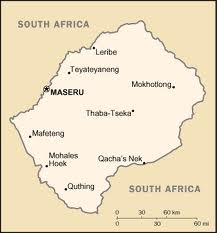
Map of Lesotho

Back in March 2025, the country of Lesotho was suddenly thrown in the spotlight when American President Donald Trump made a dismissive remark during a speech to Congress, saying « nobody has ever heard of » Lesotho while criticizing U.S. foreign aid spending. The comments sparked backlash from Lesotho’s government and prompted many to visit the country, or talk about the country. President Trump was not totally wrong… let’s be honest, before his remark, how many had heard about the country ?… maybe those who visit Afrolegends and who had read about its capital city of Maseru. Unknowingly, President Trump has most likely prompted added tourism to this beautiful landlocked country the size of Belgium entrenched within the country of South Africa.

King Moshoeshoe I of Basutoland during a visit to Prince Alfred of England in 1860

Today, we will talk about King Moshoeshoe I, the first king of Lesotho. 

King Moshoeshoe I was the founder and first monarch of Lesotho, known for his diplomatic genius, military leadership, and ability to unite diverse clans into a single nation. He ruled from 1822 until his death in 1870.

King Moshoeshoe I was the first king of Lesotho. At birth, he was named Lepoqo, which means Dispute, because of accusations of witchcraft which were levied on a man in Menkhoaneng around the time of his birth, between 1780 to 1794, where 1786. He was the first son of King Mokhachane, a minor chief of the Bamokoteli sub-clan of the Basotho people and his first wife Kholu, who was the daughter of the Bafokeng clan chief Ntsukunyane. Unlike Shaka Zulu, he had a happy childhood which he always referred to in adult life.

After his initiation ceremony in 1804, he took the name of Letlama, the Binder, and later chose the name Moshoeshoe, a name inspired by the sound of shaving – symbolizing his skill in cattle raids and leadership. It is said that it was chosen after a successful raid in which he had sheared the beards of his victims – the word ‘Moshoeshoe’ representing the sound of the shearing.

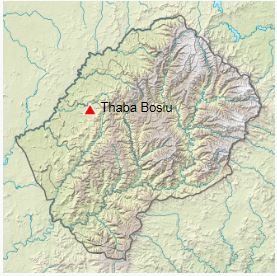
Thaba Bosiu on the map of Lesotho

In 1820, Moshoeshoe succeeded his father and formed his own clan and settled at Butha-Buthe Montain, and later moved to the mountain he named Thaba Bosiu  or “Mountain at Night” because his people arrived at night, a natural fortress that became the heart of the Basotho Kingdom. Thaba Bosiu served as the capital of the new Basotho nation. One can still find ruins from the 19th century of King Moshoeshoe I’s reign at the top of the mountain; it overlooks iconic Mount Qiloane, an enduring symbol of the nation’s Basotho people.

In 1810, Moshoeshoe married Mamabela, daughter of the Bafokeng chief, Seephephe, who was chosen for him by his father. She became his senior wife assuming the name ’MaMohato (Mother of Mohato – name that she took after the birth of her first son Letsie) with whom he had four sons including Letsie, MolapoMasopha and Majara as well as a daughter named Mathe. Their relationship was described by visiting British missionaries as deeply affectionate.  MaMohato died in 1838. Moshoeshoe practiced polygamy and is known to have had 30 wives in 1833 and close to 140 wives by 1865. After MaMohato, Moshoeshoe considered himself to be a widower. Only the children from his marriage to MaMohato constituted the royal line of descent. 

King Moshoeshoe I and his ministers

He was known for his generosity toward enemies, often integrating defeated groups into his kingdom. He united various displaced groups during the Mfecane (a period of widespread chaos and warfare in southern Africa), offering protection and forging a strong, centralized state. He also skillfully navigated threats from the Boers, British, and neighboring African groups, often using diplomacy to preserve his people’s autonomy. Due to constant hostilities and encroachments from Boers and wars, he signed an agreement with Queen Victoria of Great Britain to make Basutoland a British protectorate in 1868; the kingdom then became a crown colony in 1884, achieving independence in 1966 at which point the name was changed to Lesotho. Moshoeshoe died on 11 March 1870 and was succeeded by his oldest son Letsie I.

March 11, the day of his death , is celebrated throughout the kingdom as Moshoeshoe Day, a national holiday in Lesotho. The South African-made shweshwe fabric is named for King Moshoeshoe I who once received a gift of it and then popularized it throughout his realm.

Quand Pardonner ? / When to Forgive ?

Quem pisa o pé pede desculpa, mas quem pisa o coração não larga (Provérbio Ovimbundu – Angola)

Celui qui marche sur le pied, s’excuse, mais celui qui marche sur le coeur, ne le lâche pas (Proverbe Ovimbundu – Angola).

The one who walks on the foot, apologizes, but the one who walks on the heart, don’t let him go (Ovimbundu proverb – Angola).

Namibia Makes History as the Only Country in the World where Women hold Key Positions

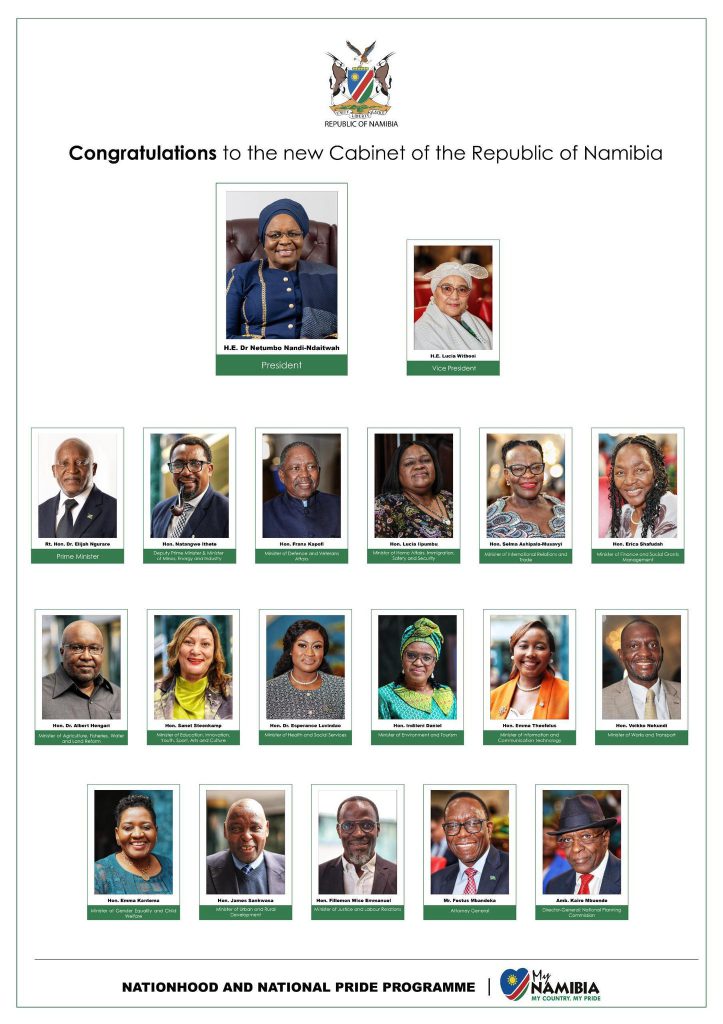
2025 Namibian Cabinet (Source: Malawi24.com)

At the United Nations (UN) general assembly last month, Namibian President Netumbo Nandi-Ndaitwah unveiled the long strides and historic milestones that the country has been making: women make up 57% of the government! Namibia has done what no other country in the world has ever done: the country has a female president Netumbo Nandi-Ndaitwah, vice-president Lucia Witbooi, speaker of the national assembly Saara Kuugongelwa-Amadhila, and secretary general of the ruling party, with 57% of the cabinet held by women, including top ministries such as finance, health, education, and international relations and trade. Namibia is the only country in the world where women hold the top positions. Namibia has closed 81% of his gender gap, ranking 8th globally, and ranking number one in Africa. This is an amazing milestone, and blueprint. Women literally rule in Namibia! Like we already said, as has been proven in history, Africa has a long tradition of having female rulers when no other part of the world does. Congratulations to Namibia, and we hope these women great work.

Excerpts below are from Malawi24. Enjoy President Nandi-Ndaitwah’s speech at the UN general assembly below. 

=====

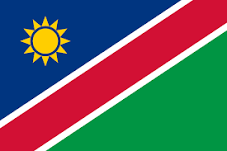
Flag of Namibia

Namibia has entered a new chapter in its political history with the appointment of a groundbreaking all-women leadership at the highest levels of government. On Saturday, newly elected President Netumbo Nandi-Ndaitwah – Namibia’s first female Head of State – announced her inaugural Cabinet, naming Lucia Witbooi as Vice President and Ericah Shafudah as Minister of Finance. Just a day earlier, Saara Kuugongelwa-Amadhila was elected Speaker of the National Assembly, becoming the first woman to lead the country’s parliament. For the first time in Namibia – and in Africa – a nation is led by women across the top three offices of government: President, Vice President, and Speaker of Parliament.

Who/What killed Mandume, the Last Resistant to Portuguese Colonization in Angola

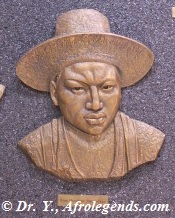
Early resistant, bronze plaque for King Mandume ya Ndemufayo at the Independence Museum in Windhoek, Namibia

Mandume Ya Ndemufayo, the king of the Cuanhama (Oukwanyama) principal subgroup of the Ovambo in Southern Angola, was one of the last and most important resistance leader against Portuguese conquest in Angola [Mandume and the Ovambo Resistance to Portuguese Colonialism in Angola]. By the size of his army, he could be compared to Samori Touré, but he did not have the same historic aura or military genius, and died early. No European colonizer seriously challenged the well-organized and well-armed Ovambo kingdoms until 1915 and the beginning of World War I which coincided with a massive local drought. Thus, there are several versions to his death. Below are a few.

=====

… the death of such a person could not fail to give rise to several versions. The South African version is military:  four machine gun bullets, and death in the bushes. A Cuanhama version claims that he committed suicide surrounded by his last followers, another that he ordered a young squire to finish him off. A third, still believed today, claims that the South Africans cut off his head and buried it in Windhoek. This last variant would explain itself by the fact that the small monument commemorating the campaign which cost the lives of nine south Africans would include in effigy the head of an African, clearly visible in Windhoek. The Cuanhama workers residing in the capital would therefore have associated this face with that of their formidable hero. Currently, the tomb of Mandume is a simple tumulus surrounded by stakes. Relatively well maintained (by the family ? nationalists ?), it is located a few kilometers from the border, to the east of Namacunde, in Angolan territory.

Les Africains, Tome 8, p. 226, ed. Jaguar. Translated to English by Dr. Y., Afrolegends.com