Former French President, Nicolas Sarkozy, gets 5-year Sentence for Corruption Linked to Libya

Nicolas Sarkozy battu

This Thursday, September 25, 2025, the former French President Nicolas Sarkozy was given a 5-year jail sentence after being found guilty of criminal conspiracy in a case related to millions of euros of illicit funds from the late Libyan leader Colonel Muammar Gaddafi. The Paris criminal court acquitted him of all other charges, including passive corruption, and illegal campaign financing. It is the first time a former French president has received a prison sentence; he has also been given a €100,000 fine.

Nicolas Sarkozy, by Zapiro (source Grigrinews.com)

It is no secret that Sarkozy was at the helm of the destruction of Gaddafi, and Libya as a whole. This man, whose campaign and election was funded by Gaddafi!!! I repeat, Nicolas Sarkozy became president thanks to Gaddafi and Libya! This man deserves a lifetime in jail; not even sure if that will be enough to dry the tears of the Libyan people. Why? By his acts of extreme jealousy, destruction, and hate of goodness, he, and his NATO cronies destroyed Libya for generations to come, and not only Libya, but destabilized the whole of Africa with it. It is not a joke… and he gets only 5 years? 5 years for destroying, killing, destabilizing an entire population, and de facto a whole continent? He deserves life if not the other option that we all know!

Excerpts below are from Al-Jazeera

=====

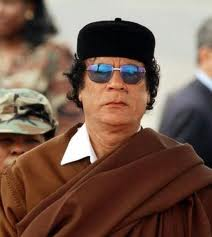
Muammar Gaddafi

Former French President Nicolas Sarkozy was found guilty on Thursday of criminal conspiracy following a trial in which he was accused of accepting millions of euros in illegal payments from the late Libyan ruler, Muammar Gaddafi, between 2005 and 2007. The Paris Criminal Court sentenced him to five years in prison: it is the first time a former French president has received a prison sentence.

Sarkozy, 70, was found not guilty of other charges, including illegal campaign financing and passive corruption. Sarkozy has always denied all the charges [of course]. He claims the charges against him were politically motivated by Gaddafi’s inner circle in revenge for his backing of the antigovernment uprising in Libya in 2011.
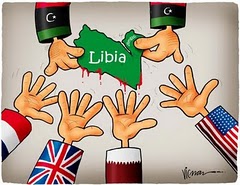
The destruction of Libya: the cake

… In his latest trial, which began in January this year, French prosecutors claimed that when he was interior minister, Sarkozy made a corrupt agreement to support Gaddafi’s government on the international stage in return for financing worth millions of euros to help pay for his presidential campaign. The agreement was alleged to have been carried out via a network of Libyan spies, a convicted terrorist, arms dealers and millions of euros shipped to Paris in suitcases.

… Besides Sarkozy, there were 11 other defendants, including the late French-Lebanese businessman Ziad Takieddine; Claude Gueant, a former close aide of Sarkozy; Eric Woerth, Sarkozy’s former head of campaign financing; and Brice Hortefeux, a former minister.
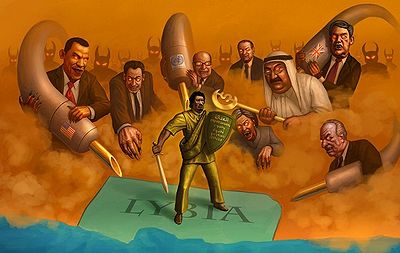
Libya, the Prey of the West

… The judge stated there was no evidence that Sarkozy struck a deal with Gaddafi or that funds sent from Libya ended up in Sarkozy’s campaign [so there were funds], even though the timing aligned and the money’s routes were “very opaque. However, she found Sarkozy guilty of criminal conspiracy for allowing close aides to contact Libyan individuals in an attempt to secure campaign financing.

The allegations first came to light in 2011 when a Libyan news agency reported that the Gaddafi government had provided financing to Sarkozy’s 2007 election campaign. In 2014, news channel France 24 reported that Gaddafi had said, “Sarkozy is mentally deficient … It’s thanks to me that he became president … We gave him the funds that allowed him to win,” during a recorded interview with another French broadcaster, France 3 TV.
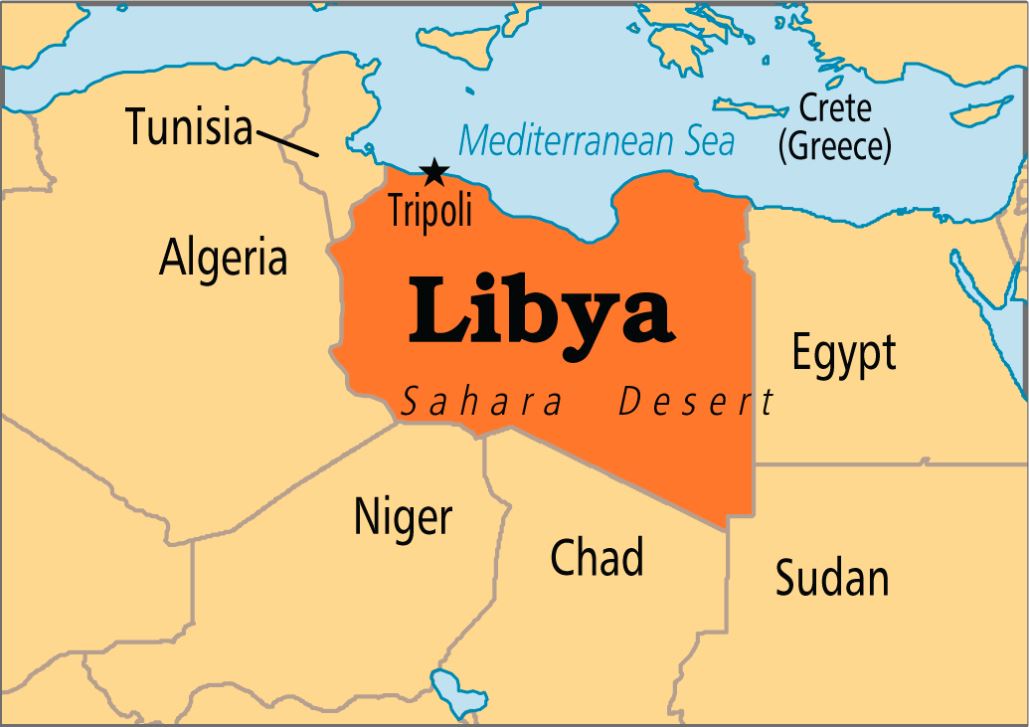
Map of Libya

… The same year, Gaddafi’s son, Saif al-Islam Gaddafi, told Euronews that Gaddafi’s government had provided campaign funding to Sarkozy. He said: “The first thing we ask of this clown is that he return the money to the Libyan people, but he let us down.”

In 2012, Mediapart, a French online news outlet, published a note reportedly from the Libyan secret services from December 2006. The note allegedly mentioned Gaddafi’s agreement to provide Sarkozy with 50 million euros ($52m at current exchange rates) for campaign financing. Sarkozy claimed the document was fake [of course].

… In 2007, Sarkozy welcomed Gaddafi to the Elysee Palace in Paris. But when pro-democracy protests erupted during the Arab Spring in 2011, Sarkozy was among the first Western leaders to advocate for military intervention in Libya. Gaddafi was killed by opposition forces supported by NATO in 2011, ending his four-decade rule.

Africans Shine at the 2025 Tokyo World Athletics Championships

Botswana’s 4×400 relay team celebrating their gold medal (Source: Reuters/Eloisa Lopez)

Africa had an awesome show at the World Athletics Championships last week, which took place in Tokyo, Japan, from Sept 13 to 21.

First of all, congratulations to Botswana which cemented its place by winning the country and continent’s first ever gold in 4 x 400 m relay in the men’s discipline. On Sunday, Botswana’s team of Lee Bhekempilo Eppie, Letsile Tebogo, Bayapo Ndori and Busang Collen Kebinatshipi edged out the US, the winners of the last 10 world titles, in a rain-drenched race, while South Africa took third position; the team had previously earned the silver medal in the Men’s 4x400m relay at the Paris Olympics last year. This gold victory has caused the country’s president to declare Monday September 29 a public holiday to celebrate the country’s victory in the Men’s 4×400 metres in Tokyo. President Duma Boko hailed the gold medal as a “historic African win“, in an online address praising the team for their performance. From New York where he is attending the UN General Assembly, President Boko added, “I’ll be sure to tell everyone, Botswana’s natural diamonds are not just in the ground, they are our World Champion athletes.” The country finished 5th in the medal tally behind the US, Kenya, Netherlands and Canada, with 2 gold, 1 silver, and 1 bronze medals. Busang Collen Kebinatshipi won gold in the men’s 400 m, while Bayapo Ndori took silver in the same discipline.

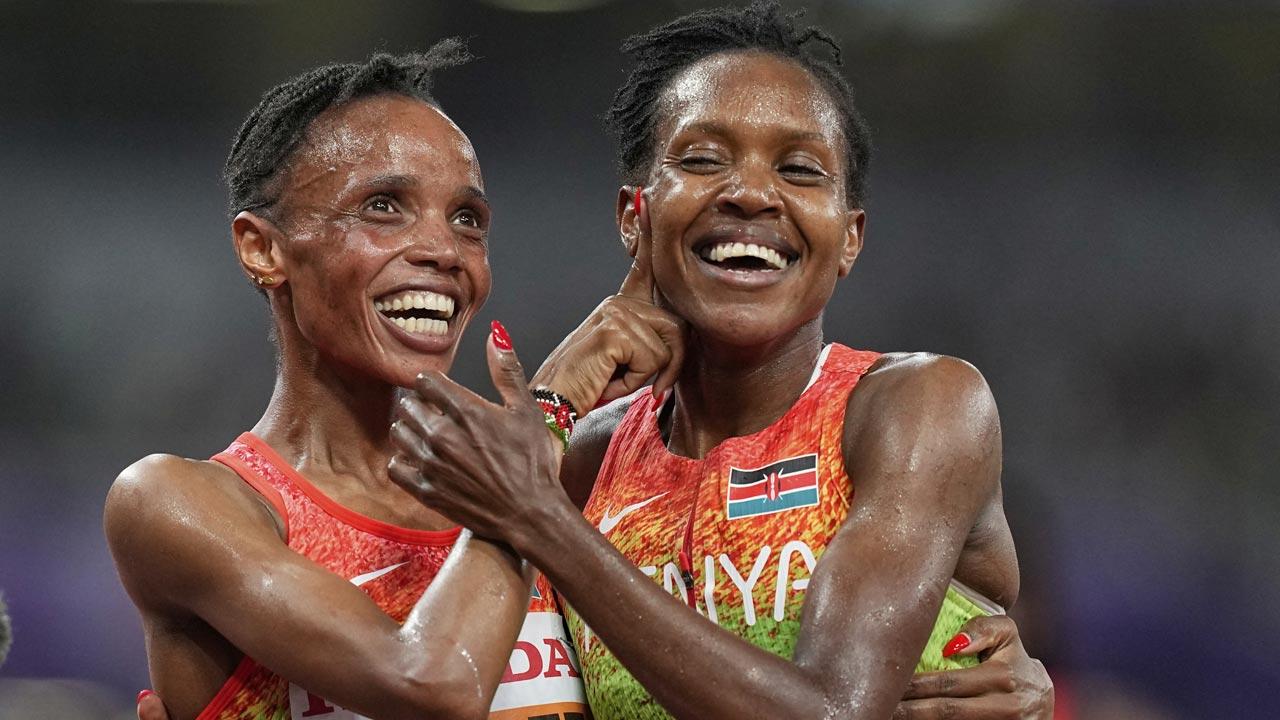
Kenya’s Beatrice Chebet, gold, and Kenya’s Faith Kipyegon, silver, react after the women’s 5,000 meters final at the World Athletics Championships in Tokyo. (Source: Pic/AP, PTI)

Our Kenyan sisters Beatrice Chebet and Faith Kipyegon did not disappoint. They were on fire! Beatrice Chebet triumphed in the Women’s 10,000 m and 5,000 m winning gold in both; she became the third woman to ever complete the 5,000m-10,000m double at a World Championships. Faith Kipyegon came through with a gold in the Women’s 1500 m, and silver in the 5000 m; she has now matched retired men’s world record holder Hicham El Guerrouj as the only other athlete in history to amass four 1500 m titles at the championships. Lilian Odira and Faith Cherotich took gold in the Women’s 800m and 3000m steeplechase, while Peres Jepchirchir took gold in the Women’s marathon. Dorcus Ewoi took silver in the Women’s 1500 m. The men did not disappoint either with Emmanuel Wanyonyi taking gold in 800 m, while Reynold Cheruiyot and Edmund Serem both claimed bronze medals in the Men’s 1500 m and 3000 m steeplechase respectfully.

Tanzania’s Alphonce Simbu won the gold medal in the Men’s marathon – making it the first gold medal for the country at the World Athletics Championships.

Flag of Ethiopia

Ethiopia took silver in the Men’s 10,000 m with Yomif Kejelcha, while Gudaf Tsegay took bronze in the women’s version of the discipline. Tigst Assefa took home silver in Women’s marathon and Sembo Almayew bronze in women’s 3000 m steeplechase.

Djamel Sedjati of Algeria won the silver medal in the Men’s 800 m.

Soufiane El Bakkali won silver medal in the Men’s 3000 m steeplechase.

Our Nigerian sister Tobi Amusan did not disappoint, taking home the silver medal in the Women’s 100 m hurdles, her country’s sole medal at these world championships.

As stated earlier, the South African men’s team, made up of Lythe Pillay, Udeme Okon, Wayde van Niekerk, and Zakithi Nene, won the bronze medal in the 4 x 400 m behind Botswana and the US.

Kudos to our African athletes, and we hope to see more and more victories in the future.


Flag of Kenya

While at the Berlin marathon, Kenya made a clean sweep with Sabastian Sawe winning the men’s race and Rosemary Wanjiru triumphing in the women’s. Sawe finished in 2h2min16s to make it 3 wins in his first three marathons. Ethiopia’s Chimdessa Debele followed in third. In the women’s marathon, Ethiopia’s Dera Dida followed three seconds behind Wanjiru, with Azmera Gebru – also of Ethiopia – coming third.

Confrontation for Conflict Resolution ?

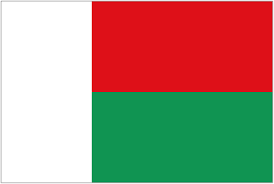
Flag of Madagascar

Arivo teny, zato kabary ; faran’ ny teny ifanatrehana

Mille paroles, cent discours ; la confrontation mettra fin aux disputes (Proverbe Malgache – Madagascar).

A thousand words, a hundred speeches; confrontation will end disputes (Malagasy proverb – Madagascar).

Speech from Andrianampoinimerina, the First King of the Unified Merina Kingdom

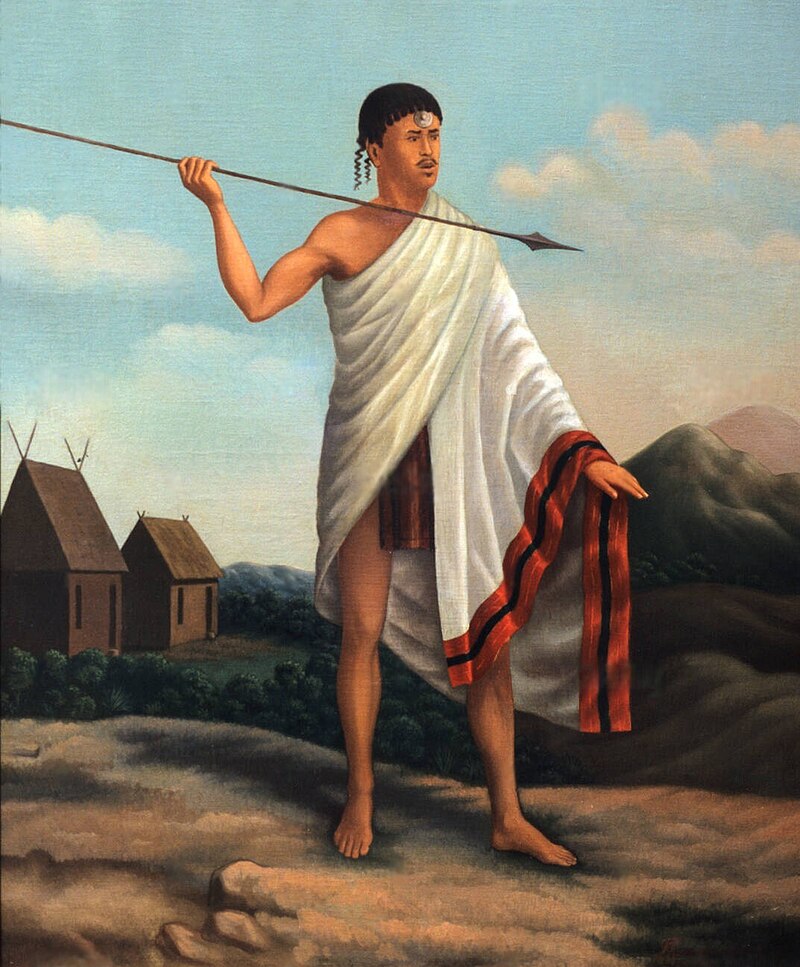
Andrianampoinimerina, portrait painted around 1905 by Ramanankirahina

As we learned, Andrianampoinimerina is known as the first Ruler of the Kingdom of Imerina in Madagascar, the one who unified the Merina people of Central Madagascar. His reign was marked by the reunification of the Imerina after 77 years of civil war, and he also led the subsequent expansion of his kingdom to nearby territories, thereby initiating the unification of Madagascar under Merina rule. His legacy was followed by his son Radama I who successfully continued it, unifying 2/3 of the great island under his rule.

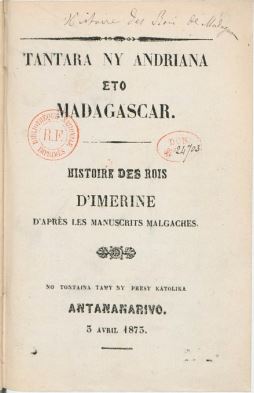
Tantara ny Andriana

Below is an excerpt of Andrianampoinimerina’s speech, taken from the Tantára ny Andriána, edition 1968. It is an immense collection of the oral traditions of Madagascar collected by R.P. Callet, a Jesuit priest from 1868 to 1881. The book is in Malagasy. A French translation was published in 4 volumes by the Malagasy Academy from 1935 to 1958. The numbers at the head of each excerpt indicate the page numbers of the original. 

=====

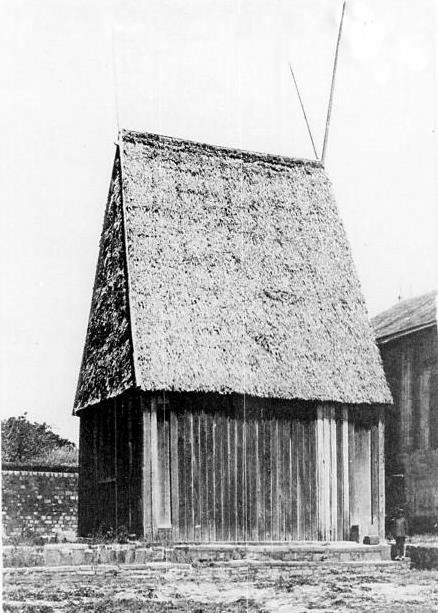
One of King Andrianampoinimerina’s residences within the Rova of Antananarivo, Madagascar

Excerpts from Andrianampoinimerina’s Speech

708.« I see the different castes: all belong to me and all have my affection, he said, and I will unite you; I will make of Imerina a guinea fowl of a single color.»

728.« This is what I will tell you, O Merina: the country and the kingdom are mine; I will share the land with you… to allow you to live… I will give a rice field to each man; I will see to it that all the Ambaniandros1 have the same belly. »

731.« Here is the forest: I make it the great undivided heritage, the means of subsistence for orphans, for single women, for all the unfortunate… whoever goes there, do not prevent them: all will be able to take and act as they please. »

757.« The men guilty of these crimes, even if they were great figures, even if they were caste leaders, even if they were my relatives…, I will put them to death; I will reduce their women and children to slavery and I will confiscate their property… The Merina, my subjects, are like a lámba without inside or back, like the circular and uniform edges of a pot. »

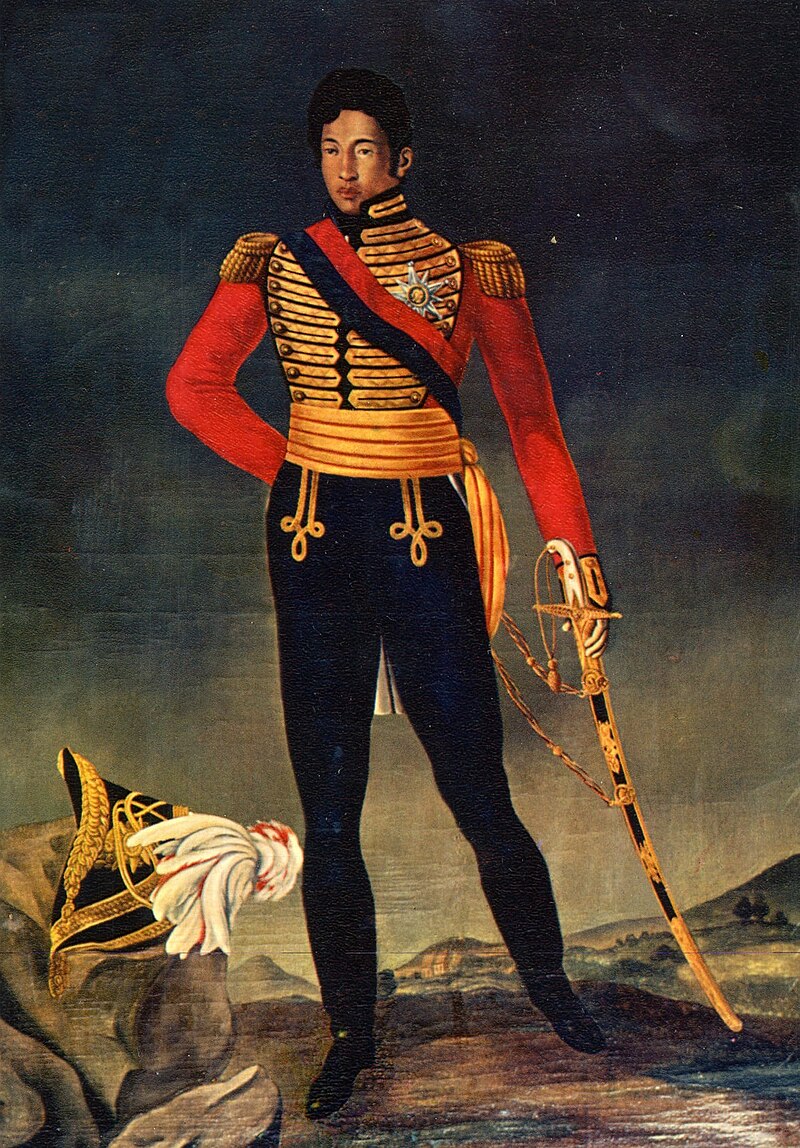
Radama I (c. 1810 – 1828)

802.« There is no other enemy to my kingdom than famine, because one cannot, when hungry, think of the State: the great, then, seek to devour the small, and the small to steal… If there are people who do not work, I invite you, oh my subjects, to cultivate their lands… you will take the harvests, but will give them back their land when they are determined to work it. »

1054.(Excerpt from his recommendations before his death) « O my friends, let Radama be for you a young gosling to whom you will bring what you have conquered… Do not present him with unfaithful reports, do not deceive him. For the King has no parents; he has no brothers; those who obey his instructions and who trust in his laws are his parents… »

1056.«  … and I declare to you too, O Radama, that Imerina is now unified and that the sea will be the limit of your rice field. »

1 « People in the daylight », synonym of Merina

Force – jamais plus que toi / Strength – Never Beyond You

Du bois / Logs of wood

Dieu ne donne pas à porter plus qu’on peut porter (Proverbe Amhara – Ethiopie). – On n’est jamais tenté au dessus de ses forces!

God does not give more than we can carry (Amhara proverb – Ethiopie). – We are never tempted beyond our strength! 

Inauguration of the Great Ethiopian Renaissance Dam (GERD)

Flag of Ethiopia

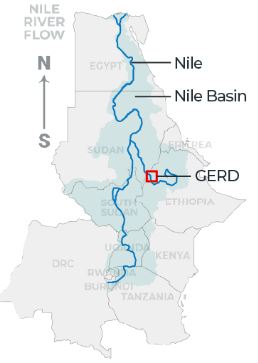
Africa has inherited arbitrary boundaries delineating countries from the colonial era, and even water supplies! This is the case for the Nile River, the world’s longest river, which flows through several countries in North and East Africa, including Egypt, Sudan, South Sudan, and Ethiopia. Nobody presents the Nile River anymore, as it is a River which has been part of this planet’s history since time immemorial with its critical place in one of the greatest civilizations of the world, that of Ancient Egypt and its pharaohs, and in the Bible, the most read book in the world.

Map of the Nile River flow and the location of Grand Ethiopian Renaissance Dam (GERD) in Africa

Yesterday marked the inauguration and official opening of the Grand Ethiopian Renaissance Dam (GERD). This is Africa’s largest hydro-electric dam, measuring 1.8 km (1.1 miles) wide and 145 m (0.1 mile) tall, and is located on the Blue Nile in Western Ethiopia near the border with Sudan. It is expected to generate 5,100 MW of power, and more than double Ethiopia’s current capacity. It is designed to supply power to Ethiopia, but also to neighboring countries. 

The dam’s location on a Nile tributary has sparked tensions between Ethiopia and Egypt, which relies heavily on Nile waters. The Nile River has long been governed by a series of historical treaties, many of which were shaped during colonial times and have sparked ongoing disputes—especially between Egypt, Sudan, and Ethiopia. The 1929 Anglo-Egyptian Treaty gave Egypt veto power over upstream projects, and allocated the majority of the Nile waters to Egypt and Sudan, excluding upstream countries like Ethiopia. Later, the 1959 Nile Waters agreement between Egypt and Sudan divided the Nile’s flow between Egypt and Sudan, not including Ethiopia and other upstream nations in the deal. This last deal remains the primary legal framework used by Egypt to assert its water rights! Picture this? A river flows through your country and others, and the others share the river’s flow among themselves and forget you in the equation, like you did not exist, or like the river never flowed through your country, and was also a source of existence for your people. What the …? Such injustice!

Flag of Egypt
Flag of Egypt

No wonder there are issues! Egypt relies on the Nile for over 90% of its freshwater. Any disruption in the flow could threaten agriculture, drinking water, and industry. Egypt fears that the GERD would reduce water availability, especially during droughts. It has since then reduced the area cultivated for certain crops like rice which are water greedy.

Ethiopia feels that it has the right to use its own water resources, and rightfully so. Ethiopia today is a growing nation, and one of Africa’s strongest economies. The GERD is seen as a great symbol of national unity. It is a national development project, which will double Ethiopia’s electricity output, provide power to millions, and boost regional exports.

For Ethiopians, the GERD is seen as a victory: victory against all preconceived ideas that they could not seat at the table, or even design such amazing engineering feats. Because of the tensions, Egypt (which has always been the partners of all these foreign colonial powers in the region) had lobbied the world bank and other world funding organizations against financing the dam; thus the dam has been almost entirely domestically funded through bonds and donations. The GERD has also united citizens across ethnic and political divides.

After 14 years of continuous work, the GERD was officially launched by Prime Minister Abiy Ahmed who called it “the greatest achievement in the history of the Black race.” I would not go as far, but I agree that this is a great historical achievement indeed!

To learn more, check out articles in BBC, Al-Jazeera, The Conversation, and many others.


Andrianampoinimera or the Unity of the Imerina Kingdom

Andrianampoinimerina, portrait painted around 1905 by Ramanankirahina

Andrianampoinimerina is known as the first Ruler of the Kingdom of Imerina in Madagascar. He is known as the one who unified the Merina people of Central Madagascar. His reign was marked by the reunification of the Imerina after 77 years of civil war, and he also led the subsequent expansion of his kingdom to nearby territories, thereby initiating the unification of Madagascar under Merina rule. He is a cultural hero who is revered by the Merina people in particular, and all in general. He is known as one of the greatest military and political leaders of the history of Madagascar.

Who was Andrianampoinimerina ? His name means “the king in the heart of Imerina.” He deposed his uncle, King Andrianjafy who had ruled over northern Imerina (Imerina Avaradrano).

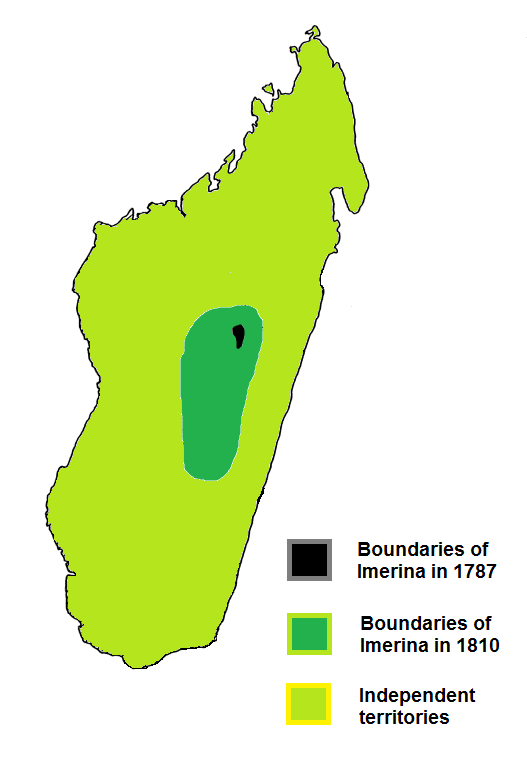
Expansion of Merina Kindgom during reign of Andrianampoinimerina 1787-1810 (Source: Wikipedia)

Andrianampoinimerina was born Ramboasalamarazaka (from the short form: Ramboasalama, Ramboa and Salama to mean “healthy dog” – name given as part of tradition to ward off evil spirits away from a newborn) around 1745 in Ikaloy, in central Madagascar, to Princess Ranavalonandriambelomasina, daughter of King Andriambelomasina of Imerina, and her husband Andriamiaramanjaka, an andriana (noble) of the Zafimamy royal family in the independent kingdom of Alahamadintany to the north of Imerina. His mother’s brother Andrianjafy was named Andriambelomasina‘s successor and was king of Imerina Avaradrano, the northern quadrant of the former Kingdom of Imerina, from 1770 to 1787. Prior to Andrianampoinimerina’s reign, Imerina Avaradrano had been locked in conflict with the three other neighboring provinces of the former kingdom of Imerina which had last been unified under King Andriamasinavalona a century before. Andriamasinavalona divided the kingdom among his four favorite sons; which led to 77 years of civil war and famine. This explains why freedom from famine and unity were very important to Andrianampoinimerina.

Radama I (c. 1810 – 1828)

He deposed his uncle, King Andrianjafy, to take over power in 1787. He ruled under the name of Andrianampoinimerina which means “the venerated or desired Prince of Imerina,” and ruled the Imerina Kingdom for 23 years until 1810. Andrianampoinimerina established his capital at Ambohimanga, which is today a site of great spiritual, cultural and political significance that was designated a UNESCO World Heritage Site in 2001. The king’s original royal lodgings can still be visited at Ambohimanga. Later, he moved the political center to Antananarivo. He expanded his territory through diplomacy, marriage alliances, and military campaigns, absorbing neighboring ethnic groups and regions. Known for his administrative reforms, he developed civil and penal codes, organized public works, and regulated markets. He also strengthened Merina social structures, promoted a state religion centered around his kingship, and built a citizen army.

Today, he is revered as a cultural hero. Andrianampoinimerina laid the foundation for a unified Malagasy identity. His legacy was carried forward by his son, Radama I (Queen Ranavalona I‘s husband), who continued the mission of national unification.

Courage

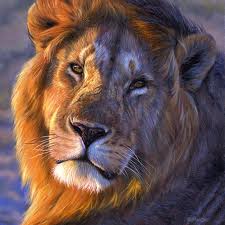
Lion
Lion

Tsy misy mafy tsy laitra ny zoto

Avec du courage, on vient à bout de tout (Proverbe Malgache – Madagascar).

With courage, we can overcome anything (Malagasy proverb – Madagascar).

Ceremony for the Return of King Toera’s Skull

Flag of Madagascar

Today, September 2, 2025, the three Sakalava skulls with one believed to be that of King Toera, were welcomed in the capital Antananarivo (France Returns the Skull of Beheaded King of the Sakalava People of Madagascar). They were draped in the Malagasy flag, welcomed by several members of the Sakalava royal family including Prince Georges Harea Kamamy great-grandson of King Toera, great delegations of Sakalava elders in traditional robes, as well as the Madagascar President. The remains were then transported to Antananarivo’s Mausoleum, Mausoleum of Avaratr’Ambohitsaina, then onward to Belo Tsiribihina near King Toera’s homeland. The Malagasy President said, “Dans ce lieu historique, nous célébrons les martyrs de la patrie qui ont combattu le colonialisme. Nous renforçons dans le coeur des descendants la mémoire de ceux qui ont lutté pour la patrie. Ils ne mourront jamais dans nos coeurs.” (In this historic place, we celebrate the martyrs of the homeland who fought against colonialism. We strengthen in the hearts of our descendants the memory of those who fought for the homeland. They will never die in our hearts.).

Gravure of France implanting a protectorate in Madagascar 1897

The remains will now begin a 4-day journey of tributes before being returned to their descendants, on their way to their final resting place in the royal village of Ambiky in the Menabe region. As Prince Kamamy said, once the skulls are returned to them, they will conduct their own rites.

One caveat, which we had previously eluded to, is, no genetic testing has conclusively established the identity of any of these skulls to be that of King Toera! The joint scientific committee, France-Madagascar, could only confirm that the three skulls came from the Sakalava people. Could they even confirm which Sakalava group, North or South? Does it matter? However, the customary rites conducted by a traditional Sakalava intermediary affirmed that one skull belonged to the monarch. Then the French Culture Minister Rachida Dati, said, “scientifically, it is permissible to assume that one of these skulls is his, without absolute certainty.”

Thus, the question remains, why now? Remember, that the first formal request for the return started by Toera’s descendants dates back to 2003, and there have been over 20 years of appeals!