
It is no secret that the political climate in Cameroon is like an open wound for sore eyes. The Cameroonian regime which has been in place for the past 43 years, and since independence given that the current leader Paul Biya had been in positions of power 20 years prior, is known for being addicted to magic tricks and forgery! The regime’s latest magic trick has been to eliminate the best candidate, Maurice Kamto, by a wave of a wand, or rather a pen, a virtual pen. Over the past two weeks, we have seen a high minister of the nation erase the strongest candidate’s name on the election website, and produce a candidate out of nowhere, and then cement the whole with the stamp of the regime’s judicial arm that is the Constitutional Court this past Monday; all of this crowned by the silence of that double-sided international community (IC) which is always partisan in the face of Cameroonian pain (Cameroon and the Double Standard of the ‘International Community’). What is shocking in Cameroon is not really that a system is trying to maintain itself, but that the population has turned on its highest fighter and defender in bouts of apathy, and hate, hate of itself! I hear people spew insults and hate against those who ask the populations to fight for their freedom, and for their strongest defender of the hour, Maurice Kamto. Yes, Cameroon is a repressive dictatorship, which the IC still calls a democracy, but it is not a crime to dream and wish for a better country! It is actually a divine right!
I have been trying to find words… but Jean-Pierre Bekolo described this weird Cameroonian behavior better in Actu Cameroun. Excerpts below are from Actu Cameroun. Enjoy!
======
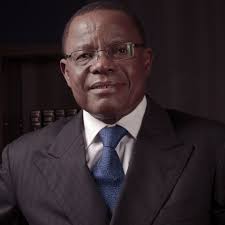
For Jean-Pierre Bekolo, “Kamto is disturbing because at a time when everyone was accepting the established order, he spoke where we were silent, dreamed where we survived, proposed where we suffered. He is the slap of reality for those who had become accustomed to looking the other way. So we hate him. Not for what he did, but for what he awakens. Because in a dictatorship, the worst enemy is not the one who destroys, but the one who reminds us that everything could be different.”
… Kamto didn’t steal. Kamto didn’t kill. Kamto didn’t insult. Kamto didn’t call for war. He just wanted to be president. And for that, Maurice Kamto was imprisoned, insulted, demonized, humiliated, and censored. Why would many of his own fellow citizens rejoice in his suffering?
… This is a more serious, more deeply rooted phenomenon: a toxic, collective hatred against anyone who dares to stand up in a country where you are taught from childhood to walk bent over.
In a normal society, one can debate, oppose, and propose. In a normal society, wanting to lead one’s country is a civic act. But in some dictatorships, like the one that still haunts Cameroon under the spectral shadow of Paul Biya, wanting to be president is seen as a crime of lèse-majesté, madness, an insult to the order of things.
… Kamto is certainly not perfect; he even has many flaws, but no more than Paul Biya’s regime.
The most worrying thing is that this hatred against Kamto is a symptom of the regime’s success. It no longer rules solely through the police, the army, or fear. It rules from within people. It has colonized their minds. It has succeeded in making the people themselves insult the one who speaks in their name. It has turned society against its own sentinels. The system has entered our bodies.
… It’s no longer just the government that represses—it’s society that self-censors, that self-punishes, that self-expels its own hopes. And this mechanism is much more sustainable than brute repression.
Tonight, Kamto may or may not be rejected by the Constitutional Council [he has been rejected], but the hatred against him, which is in fact hatred against ourselves, will remain, and that’s what must be stopped. Dreaming is not provocation.
Kamto is not hated for having acted badly if we compare his actions to those of the current system; we want him neutralized for having dared to imagine another outcome, another policy, another ethic, another way of being Cameroonian. He dared to disagree without fleeing, to protest without violence, to oppose without hatred. And this is what makes him unbearable in the eyes of a system that only knows how to operate in the shadows, contempt, and fear.
… In all this, it is not Kamto who is to be pitied. It is Cameroon. A Cameroon that celebrates the punishment of those who want to love it differently. A Cameroon that rejoices when those who dare to hope are repressed. A Cameroon that laughs at the suffering of those who refuse to remain silent
….

 African Heritage