France Returns the Skull of Beheaded King of the Sakalava People of Madagascar

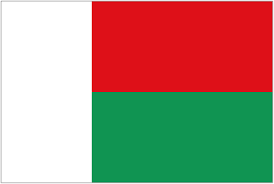
Flag of Madagascar

It would seem that no matter what we do, there are certain things that always prove us right. Isn’t it amazing that just over 2 weeks after admitting to the murder of Cameroonians for almost 30 years in one of the most repressive wars of independence on the continent, France, whose presidents dash out acknowledgments without apologies, that same France just returned the skull of King Toera of Madagascar 127 years after it was taken? King Toera was a Sakalava King on the Great Island of Madagascar, who opposed the French occupation and colonization; he paid for that with his life, getting executed by French troops in 1897. Our article would not be complete without asking fundamental questions: why did they take King Toera’s skull? It is no secret that the Malagasy people, like the Bamileke people of Cameroon, and many other groups in Africa, venerate their ancestors – was this a pervert, occult, way of maintaining dominance over them? Why return it now, after 127 years? Is it even the real skull of King Toera? In the era of 3-D printing, and given that these same European museums which have amassed so much money over the years from admissions to see these stolen treasures have repeated under some weird laws or arguments that they cannot return the loot to the victims, what makes us now think that they will part from the skull of the King of the Sakalava people of Madagascar? How would we, Africans, tell if it is even the real deal?  And now they say that it is the French government, from the goodness of its heart (under a 2023 restitution law) which has decided to repatriate the skull, forgetting to tell everyone that the government of Madagascar has been asking for years for repatriation! Oh perverted humanity that displays the remains of human beings for viewership! This reminds us of the story of Sarah Baartman: The Black Venus, where it took South African presidents Nelson Mandela and Thabo Mbeki begging for her remains to finally be returned from that same France! 

Excerpts below are from CNN.

=====

Gravure of France implanting a protectorate in Madagascar 1897

France has returned three skulls to Madagascar more than a century after they were taken, including one believed to be that of a 19th-century Malagasy king who was beheaded by French troops.

The repatriation of the skulls to the island nation off the southeastern coast of Africa marks the first time France has implemented a 2023 law enabling the return of human remains to a country for funeral purposes.

France conquered the kingdoms of the Sakalava people in western Madagascar in the 1890s and integrated the Sakalava into a newly formed French colony. One of the three Sakalava skulls returned to Madagascar, which gained independence from France in 1960, is presumed to be that of King Toera. … He was executed by French troops in 1897. The other two skulls belonged to two generals who fought with the king …

… “I welcome the return of these three skulls, including that of King Toera of the Sakalava people, an origin shared by nearly a third of the Malagasy population,” Fetra Rakotondrasoava, permanent secretary of Madagascar’s Ministry of Culture, who co-chaired the Malagasy-French Committee of Researchers working on the identification of the skulls, told CNN on Wednesday.
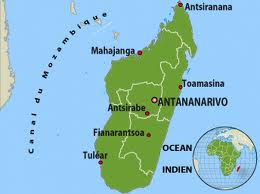
Madagascar
Madagascar

This is not only the repatriation of human remains, but the return of a part of our history and memory,” he said, adding: “We will now be able to honor these remains as they should be. This moment carries significance for the Malagasy people and for all nations engaged in the restitution of their heritage.”

Madagascar’s Communication and Culture Minister, Volamiranty Donna Mara, said at the ceremony that the human remains, including that of “our great, indeed very great, King Toera,” are “not mere objects in a collection” but the link, “invisible and indelible, which binds our present to our past.”

Their absence, for more than a century, 128 years, has been an open wound at the heart of the Great Island (Madagascar), and especially for the Sakalava community of Menabe,” she continued.

Suivre quelqu’un de fort / Follow Someone Strong

Elephants

Qui suit l’éléphant n’aura pas de difficultés (Proverbe Fanti – Ghana).

Who follows the elephant will not encounter difficulties (Fante proverb – Ghana).

Timbuktu’s Manuscripts are Returning Home

Map of Mali with its capital Bamako

Last week, the Malian government started returning the famous Timbuktu’s manuscripts home to Timbuktu after over 10 years away. As you remember, we prayed for the manuscripts to be kept safe, as Timbuktu was under Attacks by ‘Muslim fundamentalists’Timbuktu Manuscripts now Available Online. You know the AES is working hard, when it is safe for the Timbuktu manuscripts to return home after over 10 years away! This is a testimony to the hard work of the Malian troops, its people, and its government. The Malian people have shown that an African country can protect itself, recover its territory, and free its own people. Yes… there has been strong collaborations with Russia, and their neighboring brothers of Burkina Faso and Niger, and the formation of the Alliance of the Etats du Sahel (AES). Mali did what France and all its allies could not do with their multiple operations, operation Barkhane, Operation Serval, Task Force Takuba, etc, … wait they were not really there to free the country from terrorism, but rather to finance/protect terrorism, divide the country, so as to be free to do their business. We are proud of Mali, and pray that these manuscripts remain safe as they have been for centuries, in the hands of their very own people.

Excerpts below are from Africanews.

=====

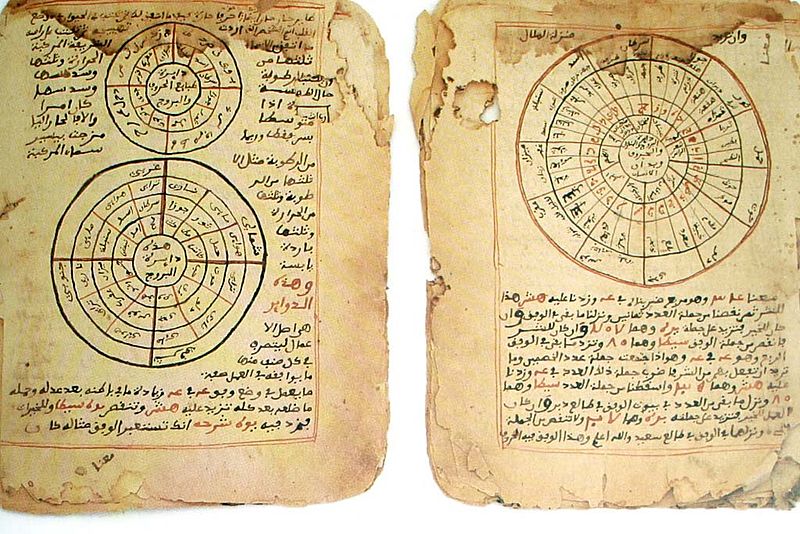
Manuscripts a Tombouctou (Mali) montrant de l'astronomie et mathematique
Manuscripts a Tombouctou (Mali) montrant de l’astronomie et mathematique

The Malian military government on Monday started returning home the historic manuscripts of Timbuktu, which were spirited out of their fabled northern city when it was occupied by al-Qaida-linked militants more than a decade ago.

Islamic radicals destroyed more than 4,000 manuscripts, some dating back to the 13th century, after they seized Timbuktu in 2012, according to the findings of a United Nations expert mission. They also destroyed nine mausoleums and a mosque’s door — all but one of the buildings on the UNESCO World Heritage list.

The majority of the documents dating back to the 13th century — more than 27,000 — were saved by the devotion of the Timbuktu library’s Malian custodians, who carried them out of the occupied city in rice sacks, on donkey carts, by motorcycle, by boat and four-wheel drive vehicles.

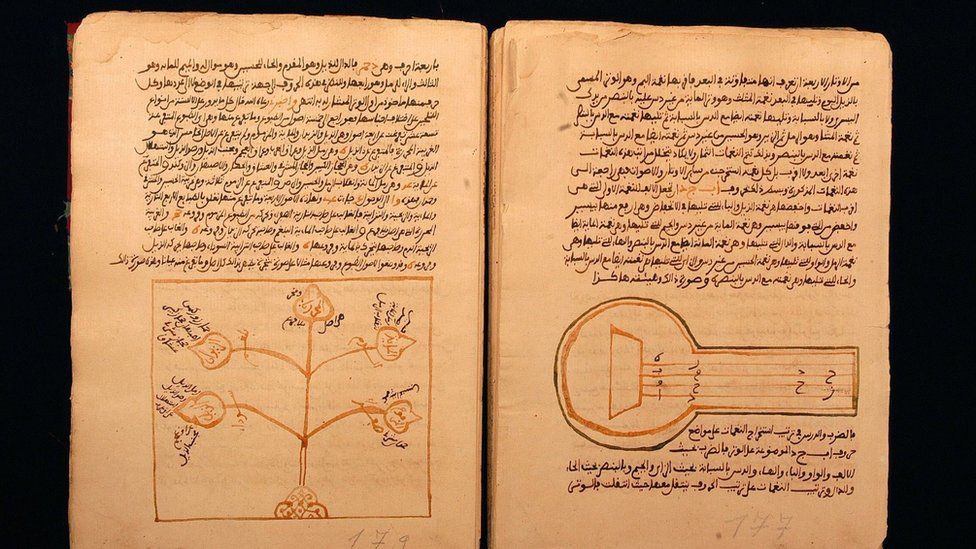
Manuscript of Timbuktu (Google Arts and Culture)

… About 706 kilometers (439 miles) from Bamako, Timbuktu sits on the edge of the Sahara desert and has a dry climate. For years, the local municipal and religious authorities have asked for the return of the manuscripts. Diahara Touré, Timbuktu’s deputy mayor, said the famous documents are important to the local people as they “reflect our civilization and spiritual and intellectual heritage.”

… In February, the military government made a commitment to return the manuscripts, according to Bouréma Kansaye, the Malian Minister of Higher Education. He described them as as a “legacy that bears witness to the intellectual greatness and crossroads of civilization” of the city of Timbuktu — “a bridge between the past and the future.”

We now have a responsibility to protect, digitize, study, and promote these treasures so that they continue to enlighten Mali, Africa, and the world,” Kansaye said during Monday’s return ceremony.

French President Macron Admits French Repression in Cameroon’s Independence Struggle

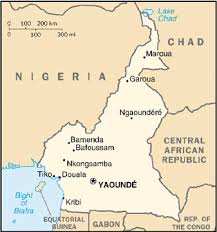
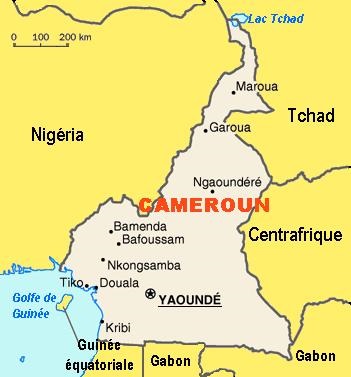
Map of Cameroon, with the capital Yaoundé

This past Tuesday, the French President, Emmanuel Macron, acknowledged the violence committed by France in Cameroon during and after the country’s “independence” in 1960. The French repression of Cameroonian independence movements went from 1945 to 1971 and thousands of lives were taken, and the country set back several years back! Just imagine, hundreds of villages bombed with napalm! Unlike Vietnam, where people knew about this, in Cameroon, a country in central Africa, it was a total media blackout; and the silence went on for decades! This acknowledgment comes after the publication of a joint report by Cameroonian and French historians (France Delivers Classified Colonization Documents to Cameroon).

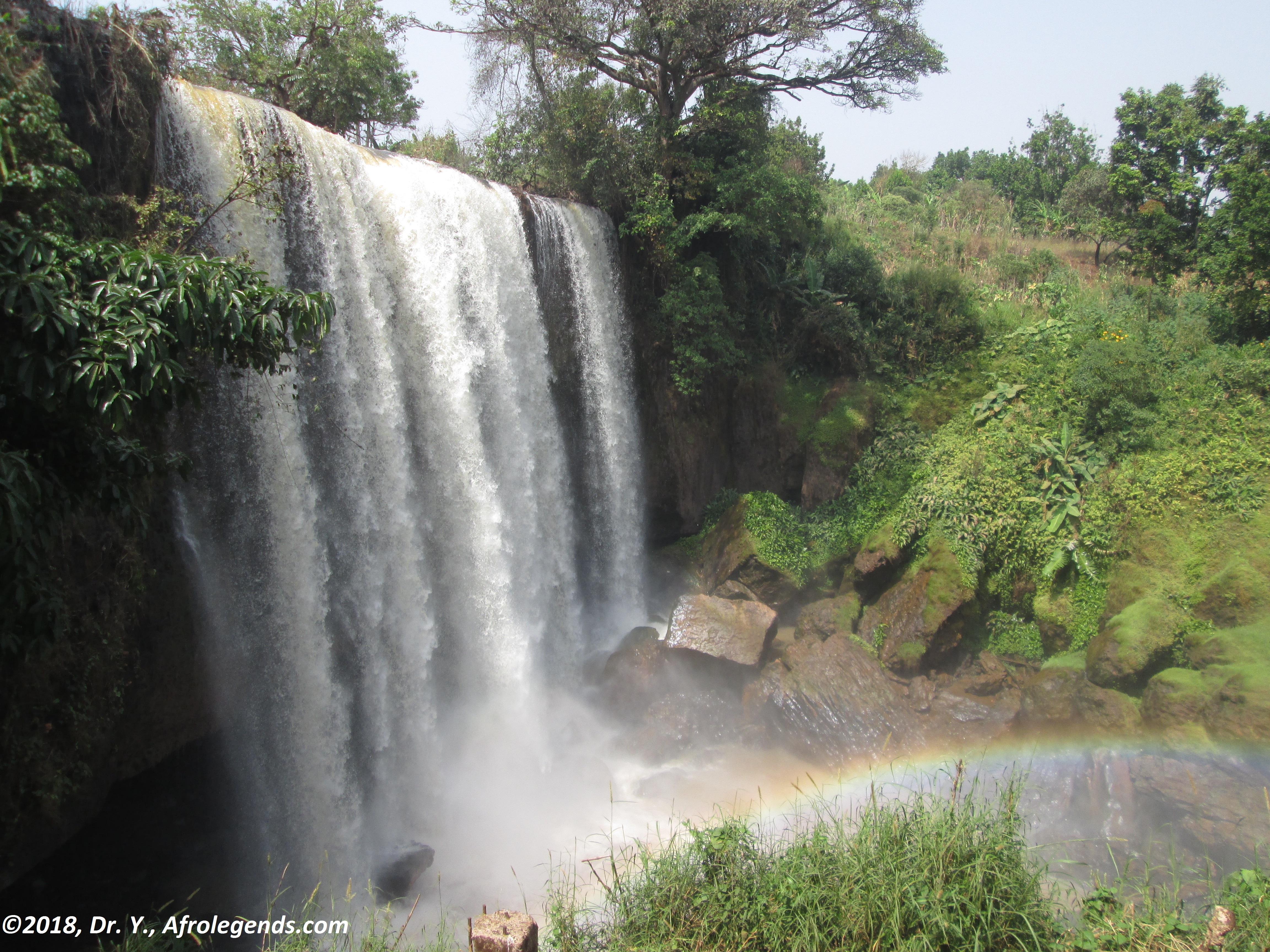
Metche Waterfalls in Cameroon was the site of French genocide there

In a letter to Cameroon’s President Paul Biya made public on Tuesday August 12, 2025, Macron said the report made clear “a war had taken place in Cameroon [like we did not already know that], during which the colonial authorities and the French army exercised repressive violence of several kinds in certain regions of the countryIt is up to me today to assume the role and responsibility of France in these events” .

Why do we get this sentiment of déjà vu? Well, because in 2015, Francois Hollande, then French President Acknowledged French Genocide in Cameroon. Not too long ago, Emmanuel Macron acknowledged the massacre of Thiaroye (Thiaroye: A French Massacre in SenegalA French Commission to investigate the Thiaroye Massacre ?), and the Algerian murders (France Admits Murder of Algerians … A Step Forward?), … but again fell short of apologizing. What next for Macron? An acknowledgment of the massacres in Madagascar? These French presidents are in the business of acknowledging, admitting, and then stopping short of apologies. Why bother?

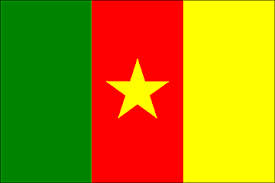
Flag of Cameroon

Lastly, why is this acknowledgment coming now, in the middle of the electoral turmoil in Cameroon? when France could have simply said something, in good faith, to its puppets of Yaounde last week after the main opposition candidate’s name was removed from the election list? Or is this a way to distract people again? Why now, 10 years after Hollande… are they waiting for most of the survivors to die like for Thiaroye? At this point, it is safe to tell these French presidents to shove their “acknowledgments,” for they are meaningless!… Words, words… no action! It’s more a mockery of our pain!

To learn more check the articles in BBC and RFI. Excerpts below are from the BBC.

=====

French President Emmanuel Macron has acknowledged the violence committed by his country’s forces in Cameroon during and after the Central African nation’s struggle for independence.

However, Macron fell short of offering a clear apology for the atrocities committed by French troops in its former colony, which gained independence in 1960.

UPC Leaders (L. to R.) front row: Castor Osende Afana, Abel Kingué, Ruben Um Nyobé, Felix Moumié, and Ernest Ouandié

The French leader cited four independence icons who were killed during military operations led by French forces, including Ruben Um Nyobe, the firebrand leader of the anti-colonialist UPC party [somehow they refused to acknowledge their hands in the murder of Félix Moumié in Geneva by one of their agents – talk of a case of selective amnesia!]. France pushed hundreds of thousands of Cameroonians into internment camps and supported brutal militias to quash the independence struggle, the AFP news agency quotes the report as saying. Tens of thousands of people were killed between 1956 and 1961, the historians’ report said.

… Commenting on Macron’s lack of apology, one of the historians who contributed to the report said it was their job to “establish the facts and figures after having gone through the archival documents” and not to “recommend apologies“.

… While Macron did not address calls for reparations, it is likely to be a key talking-point in Cameroon going forward [like after Hollande’s 2015 visit? – Bro… it has been 10 years already!]….

Poster commemorating the 80th anniversary of the Thiaroye Massacre (Source: Seneplus.com)

… Last year, [France] acknowledged for the first time that its soldiers had carried out a “massacre” in Senegal in which West African troops were killed in 1944

… France has also made several attempts over the years to reconcile with its former colony Algeria, but has stopped short of issuing a formal apology. In 2017, Macron, then a presidential candidate, described the colonisation of Algeria as a “crime against humanity“, but two years later, he said there would be no “repentance nor apologies” for it [See… in the business of acknowledging, but not apologizing].


Cameroon – History Repeats Itself ?

Flag of Cameroon

Africans, it is so important to know our history, so as to be better equipped so it does not repeat itself again and again and again. I would like to publish here the words of the Cameroonian filmmaker Jean-Pierre Bekolo, who highlights the fact that history is repeating itself in Cameroon. Although many may not totally agree with him, the similarities between the events of 1955 and 2025 are numerous. In 1955 in Cameroon, the Union of the People of Cameroon (UPC) of Um Nyobe (Ruben Um Nyobé: Fighting for the independence of Cameroon), was shut down as it was fighting for the total independence of Kamerun. In reality, Cameroon never got its independence as the then colonial regime and later the puppet government killed the independence movement, and Cameroon’s freedom was confiscated. Today, the same thing is happening again: the main candidate who represents a change, whatever it is, a new chapter in the life of the country (the current leader has been in power for 43 years now, and was in the high levels of power – minister and prime minister – 20 years before that) has been blocked from participating in the upcoming elections by some “magic” trick. The 12 October 2025 elections will go on without him even though he has a major support of the population, and this is starting to look like a carbon copy of the events of 1955. Truth be told, Cameroon, like many Francophone African countries never got its independence. Thus, maybe the real battle is to break the chains of bondage, and resume the fight our forefathers started? Let’s have Millions of African Leaders: Be the Leader You Want to Have!

The excerpts below is from Actu Cameroun based on Jean-Pierre Bekolo Facebook’s post. Enjoy!

=====

Map of Cameroon, with the capital Yaoundé

“Is it possible to compare what happened in 1955 in Cameroon with what we are experiencing today? Yes, we can say—with all the caution required for such a historical comparison—that the Cameroon of 2025 resembles, in many ways, that of 1955. If we need our history, it is not to complain, but to move forward. However, in Cameroon, history has not freed us: it has chained us. The events we are experiencing today, and which we will experience until October 12, could well be an almost exact repetition of a drama already played out during the colonial era—and never closed.

… It’s 1955. Two camps are facing off. On one side, those who want Cameroon to belong to its children. On the other, a colonial power that gives nothing away without repression. And between the two: collaborators, opportunists, wheeler-dealers, those who know where the truth lies but hope for crumbs. These don’t really believe in the system, but they find it to their advantage. They don’t support the regime out of conviction, but out of comfort, cowardice, or calculation. They know exactly what needs to be done for this country to change—but they prefer to wait for their appointment, their per diem, their prestigious position. They are the same people Fanon described: local elites who serve domination without bearing its name, intellectuals who rent from the established order, journalists of silence. In 1955, the colonial power identified two targets to be destroyed: the radicals, who must be killed, and the moderates, who must be bought or neutralized. Any voice in favor of an independent Cameroon is then a threat. We must divide, oppose, buy, crush…

… In May 1955, while Cameroon is still officially under French rule, the Union of the People of Cameroon (UPC) embodies a strong desire for independence. Its vision is clear: to build a free, sovereign nation, free from colonial rule and compromise. But this ambition is perceived as subversive. On May 20, 1955, the colonial government banned the UPC. In the following days, many cities go up in flames: Douala, Yaoundé, Ebolowa… The repression is brutal. It marks the beginning of what is now called the war of liberation, with its trail of violence, clandestinity, and sacrifices. Um Nyobè and his comrades are forced to flee, then to engage in armed struggle. In July 1955, the official ban on the UPC is confirmed. The nationalist movement is criminalized, the 1956 elections take place without it, and the independence project carried by the Cameroonian people is confiscated.”

Cameroon – Where Self-Hate is used to Keep a Country in Bondage

Flag of Cameroon

It is no secret that the political climate in Cameroon is like an open wound for sore eyes. The Cameroonian regime which has been in place for the past 43 years, and since independence given that the current leader Paul Biya had been in positions of power 20 years prior, is known for being addicted to magic tricks and forgery! The regime’s latest magic trick has been to eliminate the best candidate, Maurice Kamto, by a wave of a wand, or rather a pen, a virtual pen. Over the past two weeks, we have seen a high minister of the nation erase the strongest candidate’s name on the election website, and produce a candidate out of nowhere, and then cement the whole with the stamp of the regime’s judicial arm that is the Constitutional Court this past Monday; all of this crowned by the silence of that double-sided international community (IC) which is always partisan in the face of Cameroonian pain (Cameroon and the Double Standard of the ‘International Community’). What is shocking in Cameroon is not really that a system is trying to maintain itself, but that the population has turned on its highest fighter and defender in bouts of apathy, and hate, hate of itself! I hear people spew insults and hate against those who ask the populations to fight for their freedom, and for their strongest defender of the hour, Maurice Kamto. Yes, Cameroon is a repressive dictatorship, which the IC still calls a democracy, but it is not a crime to dream and wish for a better country! It is actually a divine right!

I have been trying to find words… but Jean-Pierre Bekolo described this weird Cameroonian behavior better in Actu Cameroun. Excerpts below are from Actu Cameroun. Enjoy!

======

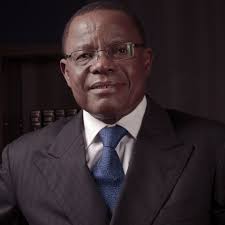
Maurice Kamto

For Jean-Pierre Bekolo, “Kamto is disturbing because at a time when everyone was accepting the established order, he spoke where we were silent, dreamed where we survived, proposed where we suffered. He is the slap of reality for those who had become accustomed to looking the other way. So we hate him. Not for what he did, but for what he awakens. Because in a dictatorship, the worst enemy is not the one who destroys, but the one who reminds us that everything could be different.”

… Kamto didn’t steal. Kamto didn’t kill. Kamto didn’t insult. Kamto didn’t call for war. He just wanted to be president. And for that, Maurice Kamto was imprisoned, insulted, demonized, humiliated, and censored. Why would many of his own fellow citizens rejoice in his suffering?

… This is a more serious, more deeply rooted phenomenon: a toxic, collective hatred against anyone who dares to stand up in a country where you are taught from childhood to walk bent over.

In a normal society, one can debate, oppose, and propose. In a normal society, wanting to lead one’s country is a civic act. But in some dictatorships, like the one that still haunts Cameroon under the spectral shadow of Paul Biya, wanting to be president is seen as a crime of lèse-majesté, madness, an insult to the order of things.

… Kamto is certainly not perfect; he even has many flaws, but no more than Paul Biya’s regime.

The most worrying thing is that this hatred against Kamto is a symptom of the regime’s success. It no longer rules solely through the police, the army, or fear. It rules from within people. It has colonized their minds. It has succeeded in making the people themselves insult the one who speaks in their name. It has turned society against its own sentinels. The system has entered our bodies.

It’s no longer just the government that represses—it’s society that self-censors, that self-punishes, that self-expels its own hopes. And this mechanism is much more sustainable than brute repression.

Tonight, Kamto may or may not be rejected by the Constitutional Council [he has been rejected], but the hatred against him, which is in fact hatred against ourselves, will remain, and that’s what must be stopped. Dreaming is not provocation.

Kamto is not hated for having acted badly if we compare his actions to those of the current system; we want him neutralized for having dared to imagine another outcome, another policy, another ethic, another way of being Cameroonian. He dared to disagree without fleeing, to protest without violence, to oppose without hatred. And this is what makes him unbearable in the eyes of a system that only knows how to operate in the shadows, contempt, and fear.

In all this, it is not Kamto who is to be pitied. It is Cameroon. A Cameroon that celebrates the punishment of those who want to love it differently. A Cameroon that rejoices when those who dare to hope are repressed. A Cameroon that laughs at the suffering of those who refuse to remain silent

….

Nigerian Women’s Basketball Team Wins 7th African Cup

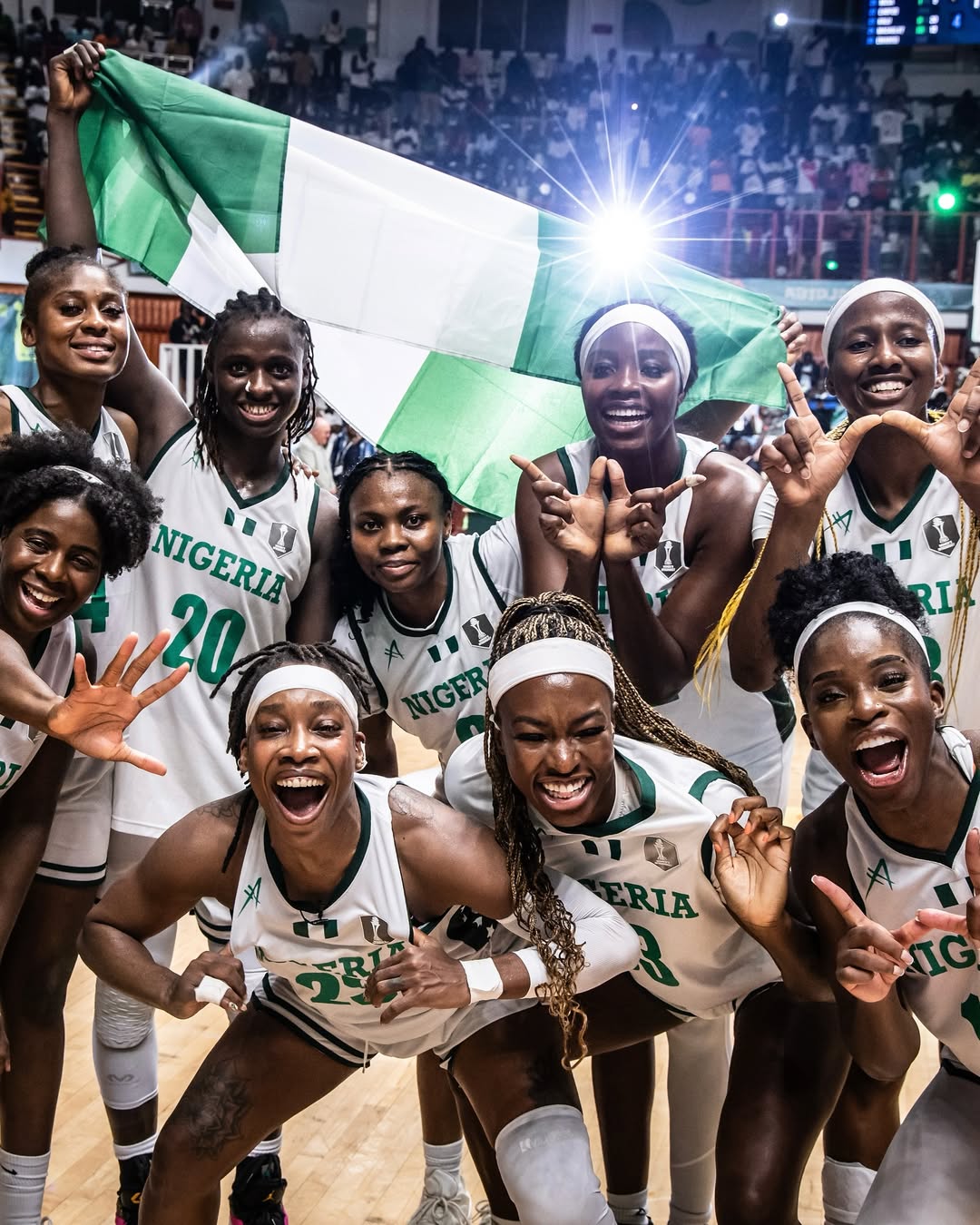
The Nigerian D’Tigress after winning their 7th cup (Source: BellaNaija / FIBA Women’s AfroBasket/Instagram)

Nigeria is at it again, this time in Basketball. The Nigerian Women’s Basketball team, D’Tigress, won the FIBA Women’s AfroBasket Championship in Cote d’Ivoire this past weekend. They defeated the Malian team 78-64 to win their 7th AfroBasket title; this secures their spot in next year’s FIBA Women’s World Cup. Just like for the Super Falcons who won their 10th WAFCON title, the Nigerian government has promised $100,000 to each player; will it actually happen? With all this, it is about time for the D’Tigress, like the Super Falcons to become dominant at the international stage, not just the African stage: they have what it takes, now it’s time to win!

Find below excerpts from BellaNaija.

=====

Flag and map of Nigeria

They achieve! Yesterday, our phenomenal D’Tigress did it again, beating Mali 78-64 in Abidjan to clinch their fifth straight Women’s AfroBasket title. A record no other country on the continent has ever achieved.

It was a rematch of the 2021 final, and while Mali came in hungry, even leading at the end of the first quarter, Nigeria showed up with that signature grit and class we’ve come to love. By the third quarter, D’Tigress had taken the lead and never looked back.

… This historic win also sealed Nigeria’s spot at the 2026 FIBA Women’s Basketball World Cup in Berlin. Before then, the team will compete in the World Cup Qualifying Tournament next March, so get ready to keep cheering them on.

… South Sudan also made history with a bronze win on their debut appearance, an extraordinary feat.

Nigeria Super Falcons win WAFCON for the 10th time

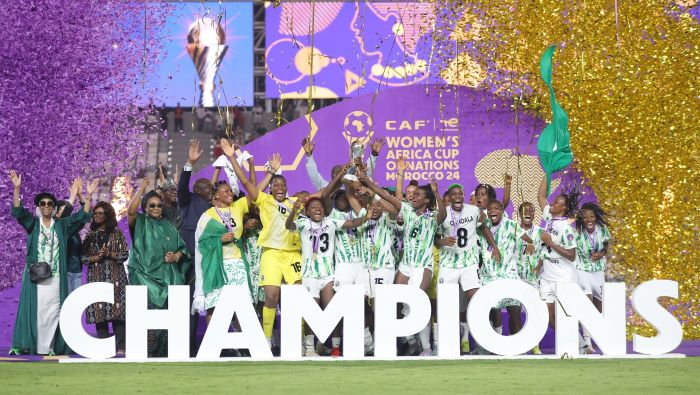
Super Falcons defeat the Atlas Lionesses to win 10th title and become WAFCON 2024 winner (Source: BusinessDay.ng)

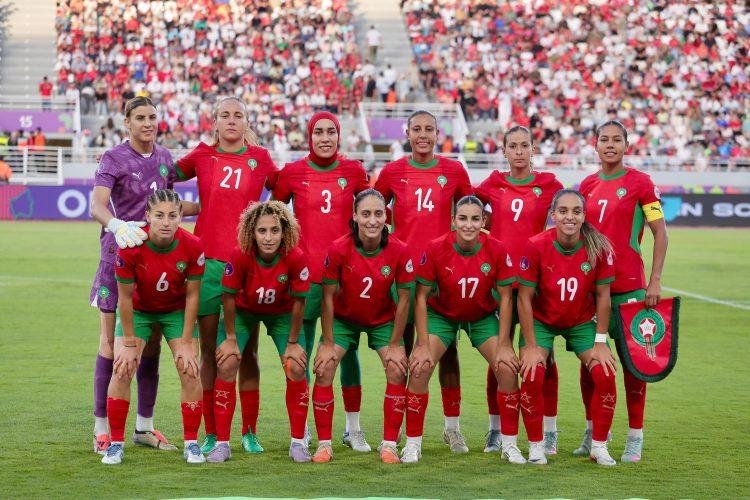
The Super Falcons of Nigeria defeated The Atlas Lionesses of Morocco to win the 2024 Women’s Africa Cup of Nations (WAFCON) last Saturday, thus getting their 10th trophy. The game was beautiful and worthy of a final. The Super Falcons delivered a performance worthy of football annals. At the end of the first half, they were trailing 2 – 0 with goals from Atlas Lionesses Ghizlane Chebbak and Sanaa Mssoudy; the game seemed sealed off. Then they fought back to secure a stunning 3 – 2 comeback victory against Morocco in the capital Rabat, with goals from Esther Okoronkwo, Folashade Ijamilusi, and Jennifer Echegini. Everyone was stunned, except the Nigerians who believed in themselves until the last minute. This was also a sweet revenge for the Super Falcons since Morocco had eliminated Nigeria on penalties in the semi-finals of the 2022 edition, also hosted in Morocco. Captain Rasheedat Ajibade was named Player of the Tournament, while Chiamaka Nnadozie, Africa’s best goalkeeper for the past two years, was named Goalkeeper of the Tournament.

The Atlas Lionesses of Morocco (Source: soccernet.ng)

By this victory, they have sealed their place as the dominant and best team in Africa in Women’s soccer, the queens of African football… They have clinched the $1 million prize money. We now need our Super Falcons to represent us proudly on the international stage at the FIFA Women’s Cup by winning it… they are capable of it!

Women’s Africa Cup of Nations (WAFCON) logo

The Nigerian president Bola Tinubu said, “The Super Falcons’ spectacular performance tonight in Rabat, coming from behind to beat a spirited Moroccan side playing in front of a passionate home crowd, exemplifies the determination that defines the Nigerian spirit. … With hard work, dedication, and tenacity, you have achieved the mission the nation dreamed of and prayed for. The nation looks forward to welcoming our champions. Congratulations! Nigeria celebrates you,” he added. The president has promised to pay each player $100,000 plus a three-bedroom apartment. We all hope this will be real!