 Les défauts ne partent pas en voyage, on les laisse chez soi (Proverbe Rwandais – Rwanda).
Flaws don’t go on a trip, you leave them at home (Rwandan proverb – Rwanda).

Les défauts ne partent pas en voyage, on les laisse chez soi (Proverbe Rwandais – Rwanda).
Flaws don’t go on a trip, you leave them at home (Rwandan proverb – Rwanda).

Over the past few months, we have witnessed AI growth all around, whether with the arrival of DeepSeek or the unveiling of Grok 4. The progress is huge, and has taken the world by storm. It is only befitting that we talk about a few things happening or being highlighted when it comes to AI in Africa.
The VivaTech 2025 which took place in Paris last month gave a stage to some 45 African startups. Excerpts below are from Africanews. Enjoy!
=====
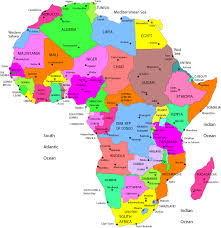 The 9th edition of VivaTech, Europe’s premier tech and innovation event, spotlighted Africa’s growing influence in the global tech ecosystem. Held in Paris, this year’s event highlighted artificial intelligence (AI) as the dominant trend, offering a unique opportunity for African nations to leapfrog into the digital future.
François Bitouzet, VivaTech’s Managing Director, emphasized the potential for a level playing field in this new technological era. “If you didn’t have the cloud like France, blockchain like Africa, or massive data storage, it doesn’t matter. Everyone can start from scratch. And he said that with Africa’s digital talent and ability to surprise the world with innovation, AI is a powerful new frontier for them,” he said.
Among the most prominent African delegations at VivaTech was Côte d’Ivoire, whose tech scene is rapidly becoming a continental powerhouse. Startups from the West African nation are leading the charge, especially in the fields of culture and digital innovation.
Philippe Yacé, founder and CEO of Sellarts, showcased his platform that bridges African artists with global buyers. “We’re creating a marketplace where artists can gain visibility and connect with international collectors. Digital tools are allowing African creativity to shine worldwide,” he said.
Senegal also made a strong showing, with 15 startups participating in the search for strategic investment. Aïssatou Mbodji, Minister Delegate for Rapid Entrepreneurship of Women and Youth in Senegal, noted the mutual interest: “We’re looking for investors for our startups—but at the same time, investors are actively seeking out high-potential ventures in Africa’s emerging sectors.”
…
With 45 African startups participating in the competition, the message was clear: Africa is not just catching up but helping shape the future of global tech.
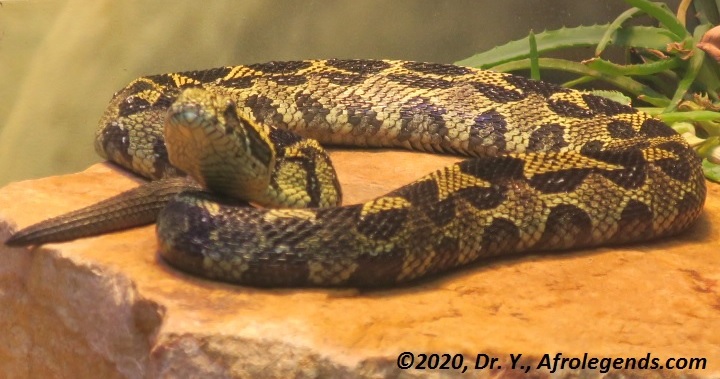
Quand la vipère est morte, le python ne peut prendre ses dents (Proverbe Douala – Cameroun). – D’un étranger on ne peut rien attendre.
When the viper is dead, the python cannot take its teeth (Duala proverb – Cameroon). – You can’t expect anything from a stranger.

The semi-finals for the 2024 Women’s Africa Cup of Nations (WAFCON) is taking place today, Tuesday July 22 in Morocco. By the way, as a parenthesis, why are we still calling stuff a year behind because of the 2020 pandemic? At what point are we going to go back to the normal schedule? Tokyo 2020 took place in 2021, AFCON 2023 in 2024, etc; just change the naming already! As I was saying, the semi-finals will see the hosts, the Atlas Lionesses of Morocco take on the Black Queens of Ghana, while the Super Falcons of Nigeria, record nine-time champions, will meet the Banyana Banyana of South Africa. The Confederation of African Football has doubled the prize money for the cup winners who will get $1 million for their performance.
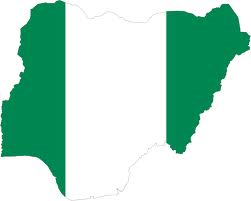
The tournament has highlighted the competitiveness of the women football on the continent. This is the 13th edition of the biggest women’s footballing event in Africa. So far, we have seen beautiful football, and been impressed by quite a few amazing players. The highly anticipated Zambian duo, Barbra Banda, 2024 BBC Women’s footballer of the year and 2nd most expensive women signing, and Racheal Kundananji, the 2023 Goal50 Women’s Footballer of the year and 2023 Best Goal Trophy from Mundo Deportivo, did not shine, and the Copper queens were obliterated by the Super Falcons 5-0. At this point, the Nigerians look like the favorite to win the title, as they have not conceded a goal so far. Will this be the year of a 10th trophy?

Ghizlane Chebbak of Morocco has shone throughout, saving her team with a hat-trick to defeat Mali 3-1. Thus far, she is tying the place for the tournament’s top scorer with Senegal Nguenar Ndiaye with 4 goals. The competition is still ongoing, and she might very well win the top scorer title. Last time, when Morocco hosted the cup 3 years ago, they reached the finals. They are led by Jorge Vilda, Spain’s Women’s coach who guided Spain to the world cup win in 2023. With the home court advantage, will they be this year’s winners?

Goalkeeper Cynthia Konlan of the Black Queens of Ghana has also shone throughout the tournament. This is the first time Ghana returns to the WAFCON semi-finals since 2016. At this point, they defeated Algeria by penalty shoot out to make it to the semi-finals. Can they defeat Morocco to make it to the finals?

South Africa is the current cup holder, but had to squeeze past Senegal in 4-1 penalty shoot out, after a 0-0 draw (South Africa is this year’s Women African Cup of Nations Champion). Goalkeeper Andile Dlamini has produced good saves which has kept her team in the competition. Will the defending champions, the Banyana Banyana, repeat the exploit?
The finals will take place on Saturday, July 26. May the best team win, and may it be a celebration of the best football!
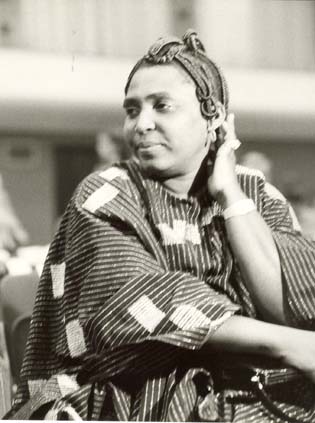
A few years back, we talked about the Senegalese author Mariama Bâ, the African female pioneer who is considered to have written the first African feminist novel. Her literary career, although short as she passed away few months after the publication of her first book, advocates for women’s rights. Une Si Longue Lettre [So Long a Letter] has been one of my favorite books in my library. It was written by a woman in 1979; it talks about the condition of the woman in the Senegalese society, conditions that are very similar in many African countries. It sheds a light on the place of the woman in the society, the effect of polygamy on women and society, and the clash between modernism and traditions. Her book became an African classic, and has been read in schools across the continent and translated in many languages. Her story still resonates today.
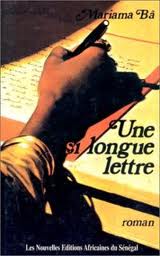
It is important to note that Bâ’s feminism is deeply rooted on an African identity, humanity, and experience, which is different from the Western feminist frameworks.
The Senegalese screenwriter and producer Angele Diabang has decided to adapt this masterpiece for the big screen, and debuted the feature film at the Brooklyn Arts Music (BAM) FilmAfrica Festival (BAM | FilmAfrica 2025) in May 2025. Enjoy, and I hope all of you will get a chance to watch it.

Le fer seul peut scier le fer (Proverbe Mandingue – Mali, Gambie, Sénégal, Guinée, Guinée-Bissau, Sierra Leone, Côte d’Ivoire, Liberia). – Les parents seuls peuvent extirper les défauts des enfants.
Only iron can saw iron (Mandinka proverb -Mali, Gambia, Senegal, Guinea, Guinea-Bissau, Sierra Leone, Ivory Coast, Liberia). Only parents can eradicate the defects of children.

In 1954, Agostinho Neto, Angola’s first president (before he became president) wrote a chez d’oeuvre titled Bamako, after the capital of the country of Mali. The poem appeared in his collection Sagrada Esperança (Sacred Hope), in 1974. The poem is an ode to African unity, resilience, and rebirth, all based on the rich history of the great Empire of Mali, and the continent as a whole. Neto refers to Africa’s tallest mountain, Mt Kilimanjaro. In his poem, he weaves in the great rivers of the continent, Niger and Congo, particularly focusing on the soil’s fertility from the abundant flow of the river Niger, and the tantalizing immensity of the river Congo. Above all, he highlights the warmth of its people, their friendship, their resilience (‘strong roots’), and their kindness. He builds on the pain of slavery and centuries of hurt to offer hope, the living fruit of Africa’s future; in Bamako, he says, we will conquer death! Why Bamako, one may ask? Bamako is special as it was part of the great Empire of Mali, where the oldest constitution in the world saw the light (Kouroukan Fouga, la Constitution de l’Empire du Mali – la plus vieille constitution republicaine au monde?), and is also known as the crossroad of West Africa, where germinated centuries’ old history of great West African kingdoms in Mali, and its rich traditions.
Below is Bamako! by Agostinho Neto, published in Sagrada Esperança, in 1974. You can find it on AgostinhoNeto.org
======
Bamako by Agostinho Neto
|
Bamako! ali onde a verdade gotejante sobre o brilho da folha se une à frescura dos homens como as raízes fortes sob a tépida superfície do solo e onde crescem amor e futuro fertilizados na generosidade do Níger sombreados na imensidão do Congo ao sabor da aragem africana dos corações
Bamako! ali nasce a vida e cresce e desenvolve em nós fogueiras impacientes de bondade
Bamako! ali estão os nossos braços ali soam as nossas vozes ali o brilho esperança dos nossos olhos se transforma imenso numa força irrepreensível da amizade
secas as lágrimas choradas nos séculos na África escrava de outros dias vivificado o sumo nutritivo do fruto o aroma da terra em que o sol desencanta kilimanjaros gigantes sob o céu azul da paz.
Bamako! fruto vivo da África de futuro germinado nas artérias vivas de África
Ali a esperança se tornou árvore e rio e fera e terra
ali a esperança se vitoria amizade na elegância da palmeira e na pele negra dos homens
Bamako! ali vencemos a morte e o fruto cresce – cresce em nós na força irresistível do natural e da vida connosco viva em Bamako.
|
Bamako! There, where the dripping truth on the leaf’s shine unites with the freshness of men like strong roots beneath the warm surface of the soil and where love and future grow fertilized in the generosity of the Niger shaded in the immensity of the Congo to the taste of the African breeze of hearts
Bamako! there life is born and grows and develops within us impatient fires of kindness
Bamako! There are our arms There our voices sound There the hopeful glow of our eyes Immensely transforms into an irrepressible force of friendship
dry the tears cried for centuries in the enslaved Africa of other days vivified the nutritious juice of the fruit the aroma of the earth where the sun disenchants giant Kilimanjaros under the blue sky of peace.
Bamako! living fruit of Africa’s future germinated in the living arteries of Africa
There hope became tree and river and beast and earth
There hope triumphs over friendship in the elegance of the palm tree and in the black skin of men
Bamako! There we conquer death and the fruit grows – it grows within us in the irresistible force of nature and life living with us in Bamako.
|

Last week, the world-renowned singer Angelique Kidjo became the first Black African to get a star on the Hollywood Walk of Fame, thus joining another African, South African actress Charlize Theron. The legendary singer, five-time Grammy award winner of Beninese origins known for Wombo Lombo, We We, Agolo, has been inducted into the Hollywood Walk of Fame, an honor granted to only a few in the world. She has cemented her place in history. Have you ever been to a Kidjo’s concert? I have been quite fortunate to attend one of them: the energy is electrifying, carried over by her strong voice which is rooted in ancestral sounds. Her career spans four decades, fusing elements of different African genres, Jazz, R&B, and Latin music, collaborating with some of the greats of this world, and crossing over continents. She has reinvented herself, releasing a total of 16 albums, earning 15 Grammy nominations and securing 5 wins. She is also one of the few who started under the tutelage of another legend of the continent, the Cameroonian Ekambi Brillant.
Excerpts below are from AfricaNews, for the full article check it out. For other articles, please check out The Citizen and DW.
=====

Music icon Angélique Kidjo has cemented her place in history, becoming the first black African artist to be awarded a star on the Hollywood Walk of Fame. …
The Beninese singer, known for her electrifying voice and genre-blending sound, is no stranger to acclaim. With five Grammy Awards and a global fanbase, Kidjo has long been recognized as one of Africa’s most influential musical exports.
Over the course of her four-decade career, she has released 16 albums, fusing Afrobeat with elements of jazz, R&B, funk, and Latin music. Her collaborations read like a who’s who of the music industry, including the likes of Burna Boy, Alicia Keys, Carlos Santana, and Philip Glass.
…
… Her star on the Hollywood Walk of Fame is more than a personal achievement — it’s a historic recognition of African artistry on one of the world’s most iconic stages.
Le baobab est un grand arbre, mais le lubota est plus fort (Proverbe Bayombe – République Démocratique du Congo (RDC)). – Les plus grands ne sont pas toujours les plus forts.
The baobab is a big tree, but the lubota is stronger (Bayombe proverb – Democratic Republic of Congo (DRC)). – The biggest are not always the strongest.

This year, we are celebrating the centennial of the birth of Frantz Fanon, the great revolutionary psychiatrist, philosopher, and anti-colonial French author from Martinique. His work explored the psychological effects of colonization and the struggles of decolonization, and inspired liberation movements across Africa, Latin America, the Caribbean, and even the United States. To date, his works, Black Skin, White Masks (1952) and The Wretched of the Earth (1961) remain essential reading in postcolonial studies and political philosophy. He died quite young at the age of 36, but he left his imprints everywhere, particularly on the African continent, and in particularly Algeria where he lived and fought for the liberation of the Algerian people.
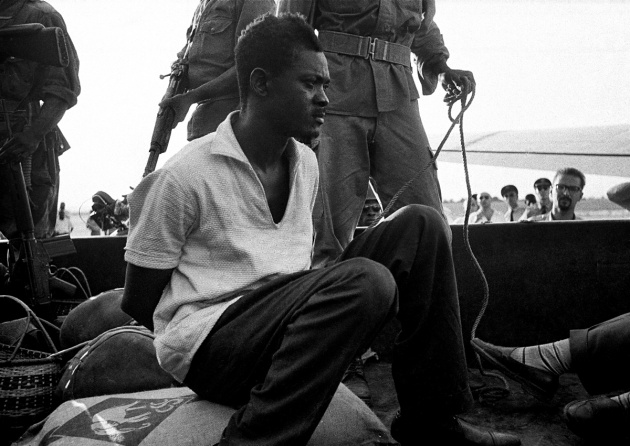
Fanon saw Congo, then Belgian Congo, clearly, as the center for pan-african solidarity, and believed that the assassination of its prime minister, Patrice Emery Lumumba, was a blow not just to Congo, but to the entire African liberation movement. When Lumumba was alive, he had invited Fanon to attend the inter-African Conference in 1960, thus showing his active engagement in Congo’s political future. He wrote on Congo, Lumumba’s death: Could we (Africans) have acted differently? Like Amilcar Cabral, he warned of the presence of “traitors from within” seeing that the greatest threat to African independence was not just Western imperialism, but also African elites who had internalized colonial values and acted against their own people; like Moise Tshombe who played a great role in Lumumba’s demise.
Please join the Frantz Fanon Foundation in celebrating Fanon’s life and impacts on African liberation. There will be events throughout the year. Below are some excerpts from Fanon’s article, Lumumba’s death: Could we (Africans) have acted differently? For more, check it out. His words still ring true!

The great success of the enemies of Africa is to have corrupted the Africans themselves. It is true that these Africans had vested interest in the murder of Lumumba. Heads of puppet governments, in a fake independence, faced everyday by massive opposition from their peoples, it did not take long to convince themselves that the real independence of the Congo would put them personally at risk.
… And first by Lumumba when he sought the intervention of the UN. He should have never called on the United Nations. The UN has never been able to properly solve problems brought to man’s consciousness by colonialism, and whenever it has intervened, it was to actually come to the aid of the colonial power to the oppressed country [see … think about MONUSCO].
In reality the UN is the legal card used by imperialist interests when brute force has failed. The sharing, the mixed controlled joint committees, under guardianship are international means of torture to break the will of the people, cultivating anarchy, banditry and misery.
… Lumumba’s fault was then initially to believe in the impartiality of the UN. He forgot that the UN, particularly in the current state, is only a reserve assembly established by the Greats to continue, between two armed conflicts, the “peaceful struggle” for the balkanization of the world.
… Africans should remember this lesson. If outside help is necessary to us, let us call on our friends. Only they can truly and fully help us achieve our goals precisely because the friendship between us is a friendship of struggles. [The AES should remember this].


 African Heritage