A few months ago, president Macron of France accused Africans of being ingrates… it was quite a surprise given that France has been living off of 500 billion Euros from Africa every year just from that slave currency which is the FCFA (Africa is funding Europe!, FCFA: France’s Colonial Tax on Africa) and without giving much in return. This, however, is nothing new. In another century, there was another Frenchman who accused enslaved Africans in the colony of being ingrates! Ingrate for what: being enslaved? getting ripped off from their home and continent, beaten day in and day out with their humanity trampled to the ground? There is really nothing new under the sun!
=====
Slaves on board a ship
Joseph-Elzear Morenas wrote in the 1800s: “ Negroes have been accused of ingratitude towards whites who, it is said, feed them : singular humanity which consists of giving just enough to live to a wretch who is forced, with whip lashes, to work all day for a master who alone reaps all the fruits. Mr. Count de Vaublanc responds to this : “that the Negroes only work from sunrise, that Sunday is for them.” He should have added, if the master wants it: because finally if it does not suit him, the slave is obliged to work on Sunday just like on other days. The same speaker states that “the Negroes are happier than the peasants of our provinces, and he claims that the begging that exists in our European cities is a much more cruel plague than the slavery of which people wrongly complain.” If anyone could believe that this language is the result of a conviction produced by ignorance of what is happening in the colonies, it would be enough to tell him that Mr. Count de Vaublanc, who is said to be co-owner of a sugar refinery in the parish of Basse-Terre, in Guadeloupe, is one of the four deputies that the colonists maintain in Paris to defend their interests.
[On a accusé les Noirs d’ingratitude envers les Blancs qui, dit-on, les nourrissent : singulière humanité que celle qui consiste à donner juste de quoi vivre à un malheureux qu’on force, à coups de fouet, de travailler toute la journée pour un maître qui en recueille seul tout le fruit. M. le comte de Vaublanc répond à cela :”que les Noirs ne travaillent que depuis le lever du soleil, qu’ils ont pour eux le Dimanche”. Il aurait dû ajouter, si le maître le veut : car enfin si cela ne lui convient point, l’esclave est obligé de travailler le Dimanche tout comme les autres jours. Le même orateur affirme “que les Noirs sont plus heureux que les paysans de nos provinces, et il prétend que la mendicité qui existe dans nos villes d’Europe, est une plaie bien plus cruelle que l’esclavage dont on se plaint à tort”. Si quelqu’un pouvait croire que ce langage est le résultat d’une conviction produite par l’ignorance de ce qui se passe dans les colonies, il suffirait de lui apprendre que M. le comte de Vaublanc, que l’on dit être copropriétaire d’une sucrerie dans la paroisse de la Basse-Terre, à la Guadeloupe, est un des quatre députés que les colons entretiennent à Paris pour defendre leurs intérêts.]
J.-E. Morenas, Précis historique de la traite des Noirs et de l’esclavage colonial, Slatkine Reprints, Genève, 1979, P.73-74
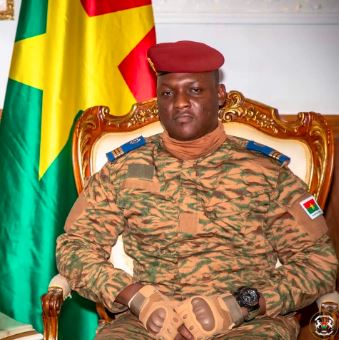
I love this message of our general and president Assimi Goïta: “if I die before reaching our ideal, continue the project without me and lay the groundwork for change with my blood and my flesh. No sacrifice is huge for this country“[Assimi Goïta Speaks to the Malian People: No Sacrifice is too Big for this Country]. This is indeed the motto that all the leaders of the AES, Assimi Goïta of Mali, Abdourahamane Tchiani of Niger, and Ibrahim Traoré of Burkina Faso lead with and live by. They all created the Alliance of the Sahel (AES) so as to be strong together, uniting their forces, people, and resources to fight together against the forces of imperialism. Now the west is trying hard to break apart the union by singling out Traoré (Coup against Ibrahim Traoré and Worldwide Support for Him). Traoré is brilliant, no doubt. He has been doing an awesome job, no doubt. And he has been the true communicator in the AES plan. He is young, and appeals to the youths of the entire continent. He speaks with great charisma, and confidence, which scares many. He is a true son of Burkina Faso inspired by the great Thomas Sankara.
Capitaine President Ibrahim Traore (Source: sig.gov.bf)
A mother does not love one child over the other. She loves each one, albeit differently and uniquely, given the uniqueness of each child. Mama Africa loves all her leaders of the AES equally and together we will free the whole. Thus, it is important to know that we, Africans, cannot afford to have just oneTraoré, for we are all Traoré, and we should all endeavor to have thousands of Traoré, Tchiani, and Goïta throughout the continent, for history not to repeat itself. We have to be careful… and take care of our leaders, and make sure we keep working towards total freedom. Just a few years back (not even 5 years), John Magufuli of Tanzania was here, Pierre Nkurunziza of Burundi was here and we, Africans, applauded them. Both went down… and we all cried… we need to make sure history does not repeat itself! Let’s have Millions of African Leaders: Be the Leader You Want to Have!
Below are excerpts from an article from the BBC explaining why Ibrahim Traoré is loved… yet claiming that it is a “skillfully built persona af a pan-africanist”… pure nonsense… they really have not known him when he was younger. Had they known him, they would have known that there is nothing ‘built’ about him, and it is not a persona… when an African stands up proudly and with confidence without the complex of inferiority, they call it a persona. Our duty is to all be Ibrahim Traoré!
=====
Ibrahim Traore lays the foundation for the Thomas Sankara Mausoleum (Source: LeFaso.net)
A charismatic 37-year-old, Burkina Faso‘s military ruler Capt Ibrahim Traoré has skilfully built the persona of a pan-Africanist leader determined to free his nation from what he regards as the clutches of Western imperialism and neo-colonialism.
His message has resonated across Africa and beyond, with his admirers seeing him as following in the footsteps of African heroes like Burkina Faso’s very own Thomas Sankara – a Marxist revolutionary who is sometimes referred to as “Africa’s Che Guevara“.
“Traoré’s impact is huge. I have even heard politicians and authors in countries like Kenya [in East Africa] say: ‘This is it. He is the man’,” Beverly Ochieng, a senior researcher at global consultancy firm Control Risks, told the BBC.
“His messages reflect the age we are living in, when many Africans are questioning the relationship with the West, and why there is still so much poverty in such a resource-rich continent,” she said.
Flag of Burkina Faso
After seizing power in a coup in 2022, Traoré’s regime ditched former colonial power France in favour of a strong alliance with Russia, that has included the deployment of a Russian paramilitary brigade, and adopted left-wing economic policies.
This included setting up a state-owned mining company, requiring foreign firms to give it a 15% stake in their local operations and to transfer skills to Burkinabé people.
As part of what Traoré calls a “revolution” to ensure Burkina Faso benefits from its mineral wealth, the junta is also building a gold refinery and establishing national gold reserves for the first time in the nation’s history.
… The junta [they still call it a junta, even though, he has received a full vote of confidence for 5 years by the entire Faso nation – like said before: Gabon and the Double Standards of the International Community] has also nationalised two gold mines previously owned by a London-listed firm, and said last month that it planned to take control of more foreign-owned mines.
Enoch Randy Aikins, a researcher at South Africa’s Institute for Security Studies, told the BBC that Traoré’s radical reforms had increased his popularity in Africa. “He is now arguably Africa’s most popular, if not favourite, president,” [No, Traore does not want to be the most popular or the favorite, he just wants to do right by his people! – Thus African, let us follow his footsteps and make our countries and continent proud!] Mr Aikins said.
Burkina Faso
… Ms Ochieng said that Traoré first caught the attention of Africans when he spoke at the Russia-Africa summit in 2023 [that is not true… we already knew him before 2023], telling African leaders to “stop behaving like puppets who dance every time the imperialists pull the strings“.
… Traoré’s popularity comes despite the fact that he has to fulfil his pledge to quell a 10-year Islamist insurgency failed [has he failed? What did the French, and Operations Barkhane via the TakubaTask Force and Serval… – that compendium of all western nations- do in over 10 years in the region? And who was funding these terrorist groups?] that has fuelled ethnic divisions and has now spread to once-peaceful neighbours like Benin. [yeah right… we know who is in Benin – France!].
… “Traoré is stylish and confident, with a very open face and a small smile. He is also a powerful orator, and presents himself as a man of the people.”
“Quand l’Africain était l’or noir de l’Europe” de Bwemba Bong
I came across another gem in the book of Professor Bwemba Bong, “Quand l’Africain était l’or noir de l’Europe. L’Afrique: Actrice ou Victime de la Traite des Noirs? – Démontage des mensonges et de la falsification de l’histoire de l’hydre des razzias négrières transatlantiques” (When the African was the black gold of Europe. Africa: Actress or Victim of the Slave Trade ? – Dismantling the lies and falsification of the hydra history of the transatlantic Slave Raids).” After the textile industry, and the Agriculture in the Kongo Kingdom, this time, it is about the rich fauna of the Kongo in the 16th century.
In his book, Pr. Bong shows that the wealth of the African fauna, and in this case at hand, of the Kongo basin. Note the use of ostrich and peacock feathers for umbrella, and the special place of the peacock whose feathers serve as symbol of royalty; or the skin of the pelican which is so warm that it was used to warm people when feeling cold; or even these birds who sang arias so much that they were esteemed by royalty since ancient times.
Filippo Pigafetta et Duarte Lopes, Le royaume de Congo et les contrees environnantes (1591), Chandeigne/Unesco, 2002, p. 112-113 (trad. Willy Bal, présentation et notes Willy Bal); Bwemba Bong, Quand l’Africain était l’or noir de l’Europe. L’Afrique: Actrice ou Victime de la Traite des Noirs?, MedouNeter 2022, p. 179-180 (translated to English by Dr. Y, Afrolegends.com). Enjoy!
=====
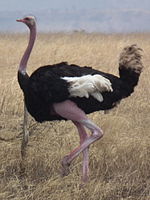
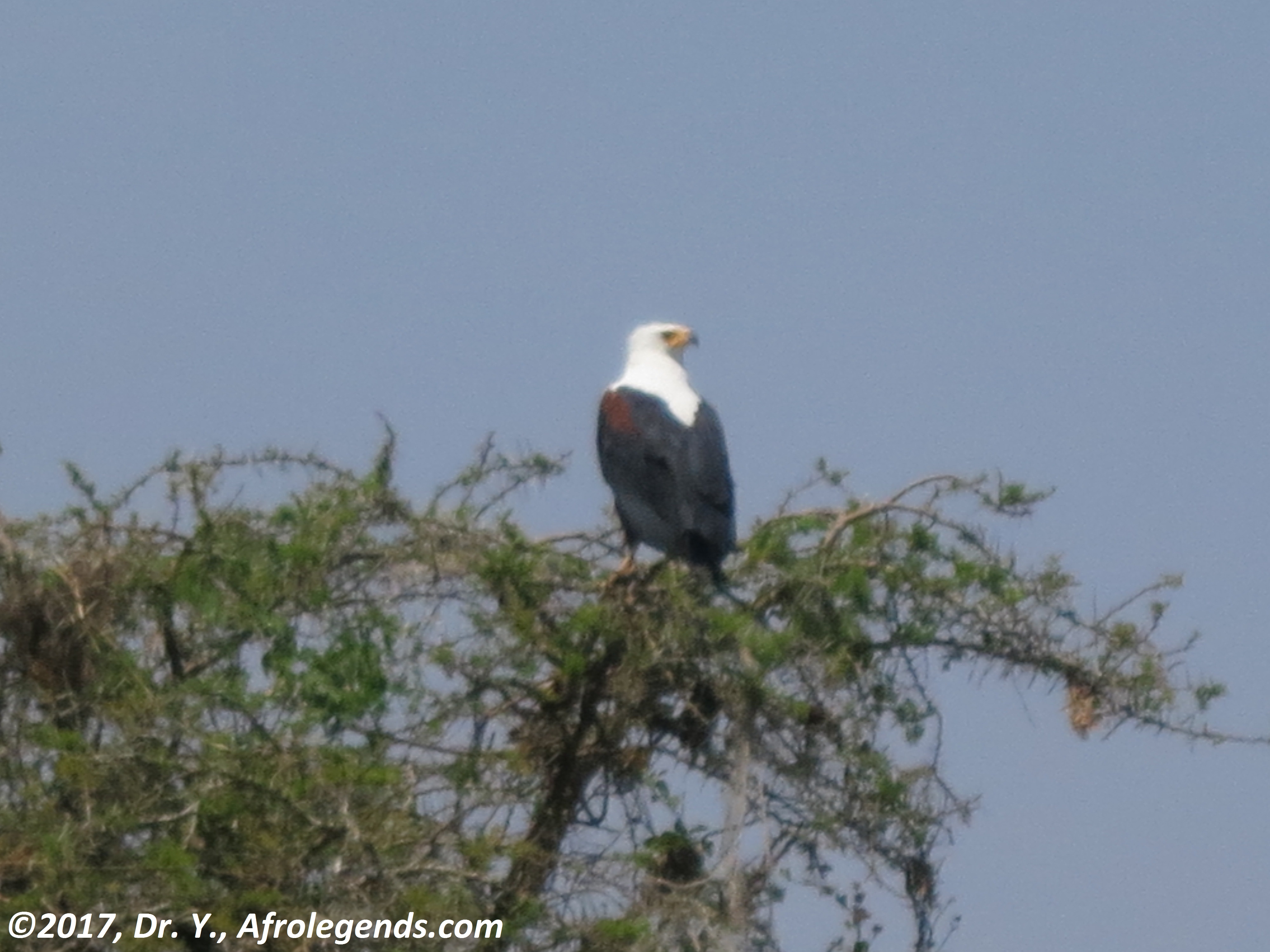
Let us now talk about birds, and first of all of ostriches, which hold first place due to their height. They are found in the regions of Sundi and Batta, towards Murombos. Their young hatch in the heat of the sun. The feathers are used to make badges and war standards. Mixed with peacock feathers, they are arranged in the shape of an umbrella. Since we have come to speak of peacocks, let us say that they are raised in Angola, in a wood surrounded by walls; the king does not allow anyone else to possess them, because their feathers serve as insignia of royalty. Ancient stories tell us that Alexander the Great had made this bird, when it was seen for the first time in Europe, an object of important privileges.
There are also roosters, called guinea fowl, and hens, geese, ducks of all kinds, both wild and domestic, partridges in such quantity that children catch them with a snare. We also see other birds like pheasants called “gallignoles”, pigeons, turtledoves, passerines called becfigues [ortolan] and which are innumerable, birds of prey like golden eagles, falcons, vultures, sparrowhawks and many others, which the inhabitants do not use for hunting.
Also seabirds, like those that the Portuguese call pelicans: they are white, large, swim underwater and have such a wide throat that they can swallow a whole fish; moreover, these birds have such a strong stomach and have such natural heat that they can digest whole fish; their skin is so warm that the inhabitants of the country use it as a means of warming up in case of a cold stomach; therefore it is esteemed.
There are also many white egrets and gray herons living in these marshes, called royal. There are other birds, which resemble cranes: about the size of storks, they are very beautiful to see with red beaks and feet, most of the feathers red and white, some dark gray. The locals call them flamingos by analogy. The flesh of these birds is eaten.
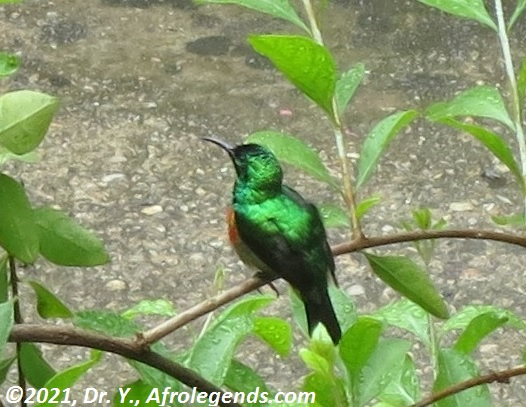
Souimanga bronze / Bronzy sunbird
Various species of parrots are also found: some are large with gray plumage, very talkative, others are small, green and hardly speak. Let us also note small birds that are called singers, larger than canaries, with red beaks and plumage; others, green with black legs and beaks: the song of these is the sweetest of all, one would almost say that they speak while singing; still others, multicolored. All these birds sing diversely, so well that the lords of this country, since ancient times, have always kept them in cages and greatly appreciated their song.
We have previously spoken about the Trap of Democracy in Africa, and the double standards of the ‘International Community’ when it comes to the application of this word: a person who serves the West to the detriment of his country is deemed a democrat; however, someone who serves the interests of his people and not the West is deemed a tyrant, a dictator, a junta leader, etc.
Thus, it is no surprise that the mainstream media (MSM) has not applauded the vote of confidence which was recently granted to General Assimi Goïta of Mali by his people last week [Assimi Goïta Speaks to the Malian People: No Sacrifice is too Big for this Country]. Why? Because he does not serve their interests. The MSM has been lauding someone like Oligui Nguema of Gabon who traded his military fatigues to win elections by over 90% (talk about democracy!), because he does not disturb their system; however Goïta is not serving them, and he has even dared to liberate Kidal in the north of the country, where the French army and MINUSMA could not or chose not to [Mali Forces Succeed in Kidal where France and Allies could not!].
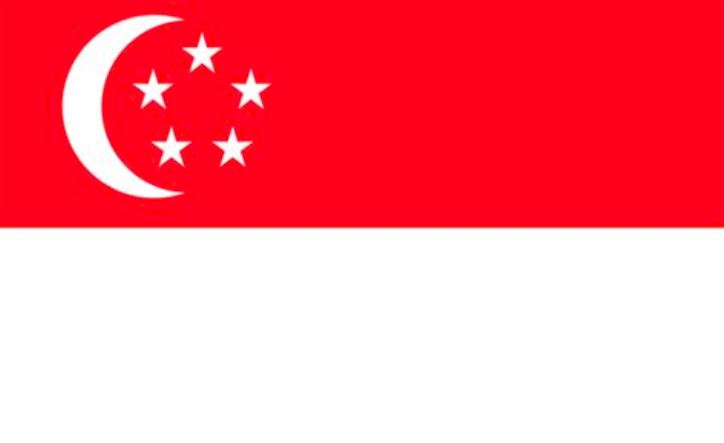
Flag of Singapore
Singapore is known as an example of progress and development in the world. Do you know that Lee Kuan Yew ruled as prime minister for over 30 years, and was in the government in some shape or form for over 50 years? Have you ever heard Singaporeans complain about him, or talk about democracy?
Last week, General Assimi Goita was given 5 years by the people of Mali. Excerpts below are from the very biased article by BBC.
=====
Map of Mali with its capital Bamako
Mali’s military leader Gen Assimi Goïta has won the backing of key political allies to be declared president for the next five years.
The 41-year-old, who has seized power twice, was named transitional president after his last coup in 2021. At the time he promised to hold elections the following year – but has since reneged, in a blow to efforts to restore multi-party rule in the West African state.
A national conference organised by the regime – but boycotted by leading opposition parties – has now recommended naming Gen Goïta president until 2030.
He has not yet commented on the recommendation, but the conference was seen as an attempt to legitimise his bid to remain in power.
Over the weekend, an opposition leader, Mohamed Salia Touré [backed by the West], told the AFP news agency that suppressing the multi-party system would be a “historic error”.
Flag of Mali
… The conference also recommended suspending anything to do with elections until there was peace in the country [rightfully so… how can there be elections when the country is at war or when the territory is divided? – Gbagbo of Cote d’Ivoire can tell you that, that is a sham], according to a document seen by AFP. The military government has been trying to quell jihadist violence unleashed by groups linked with the Islamic State (IS) and al-Qaeda.
Since taking power, the junta leader has formed an alliance with coup leaders in neighbouring Burkina Faso and Niger, pivoting the region towards Russia after drastically reducing ties with former colonial power France.
Gen Goïta has also withdrawn Mali from the regional grouping Ecowas over its demands to restore democratic rule. Burkina Faso and Niger have also left the grouping.
Capitaine President Ibrahim Traore (Source: sig.gov.bf)
For the past few weeks, the price of gold has hit a record high of $3400. Some of the places with some of the largest gold mines is in the Sahel, the AES. So it is no surprise that there was a recent coup against the president of Burkina Faso, one of the leaders of the AES a few weeks ago.
Ibrahim Traoré, president of Burkina Faso, escaped another coup attempt on his life. Coincidentally, this attempted coup happened the day after the American General Langley lied in front of the US congress saying that Traoré was embezzling the country’s funds for his personal security. It is quite preposterous to hear. Why doesn’t Langley mention Ouattara who has put Ivory Coast in debt and destroyed the country? Why doesn’t Langley mention Paul Biya of Cameroon who has been in power 43 years, and taken the country 60 years backwards? Why doesn’t Langley mention Sassou Nguesso of the Republic of Congo who has siphoned all the country’s money into his pockets and those of his family? Or Faure Eyadema who comes from the Eyadema dynasty? Moreover, how can someone like Ibrahim Traoré who has foregone his presidential salary embezzle money? Then how disgusting of this man to stand in front of congress and lie? It reminds me of another, a certain Colin Powell, who stood in front of the whole world and spoke of things which never existed in Irak?
Flag of Burkina Faso
Since coming to power, Ibrahim Traoré has bought over 400 tractors for farmers, 953 motorcycles, 710 motor pumps for water, 10,000 tons of fish food, 68,964 tons of fertilizer, 10,000 liters of products to name a few to try to empower the country’s agriculture. In the ministry of health, his accomplishments include buying 15 mobile clinics, 36 vehicles for hospitals, 3 oxygen units, 11 cold rooms, 835 tablets, 1,900 solar refrigerators. There was also the inauguration of a full tomato plant to enhance local productions, and now the plan for the largest Coca Cola plant in Africa.
A Escrava Isaura (Source: primetelenovelas.com)
This Langley dude reminds me of the slave/overseer Domato, in the Brazilian telenovela A Escrava Isaura who was always treating his slave brothers and sisters so much worse than the white master.
Burkina Faso’s military government has said it foiled a “major plot” to overthrow junta leader Capt Ibrahim Traoré, with the army alleging the plotters were based in neighbouring Ivory Coast [this is no secret, but BBC writes it as if the Burkinabe people were hallucinating].
Security Minister Mahamadou Sana said the coup attempt was led by current and former soldiers working with “terrorist leaders“. The intention was to attack the presidential palace last week, he added. The aim of the plan was to “sow total chaos, and place the country under the supervision of an international organisation“, Sana said on state television on Monday.
It is the latest of several claims of attempts to remove the junta leader who seized power in 2022 amid increasing militant attacks. …
=====
Burkina Faso
Thousands of people gathered at the Place de la Révolution in Ouagadougou on Wednesday 30 April to show their support to the President of the transition, Captain Ibrahim Traoré.
The demonstration happened after the US commander of AFRICOM, General Michael Langley, told the US Senate Armed Services Committee in early April that the military regime in power in Burkina Faso has taken advantage of the resources of the country, particularly the gold reserves [interesting, why does he mention only gold and no other resources?], for his own protection instead of the population. What General Langley told the US Senate provoked people to react in Burkina Faso and throughout the AES countries and even beyond the region. The government of Burkina Faso condemned the statement by the US military command, made with the ‘aim to spoil the country’s image.’
… The massive support for Burkina Faso’s military leader, Captain Ibrahim Traoré, comes at a time of growing tensions with Western powers. General Langley’s accusations of corruption leveled against the President of the transition, Captain Ibrahim Traoré, instead of weakening the regime in Burkina Faso, has reinforced the status and aura of the young military leader, whose popularity extends beyond national borders.
Alliance des Etats du Sahel (source: linfodusahel.com)
… Traoré quickly adopted an anti-imperialist stance, where he strongly criticized the interference of Western powers, particularly France. They see his decision to draw closer to new partners like Russia and Iran, and to leave certain regional cooperation frameworks (G5 Sahel, ECOWAS) as a stamping of his sovereignty. This geopolitical shift excites young people seeking political and economic independence happy.
… Captain Traoré has become a symbol of resistance to Western influence, particularly French influence, and this has gone positively with the predominantly young population. His revolutionary stance and commitment to African unity appeals to many Burkinabè, especially young people.
‘There is a third element for me: Ibrahim Traoré’s youth, his outspokenness and his imperialist stance which are inline with another Burkinabe president, Captain Thomas Sankara, whose popularity for almost 40 years after his death is in doubt‘ [says] Seidik Abba, President of the Centre international d’études et de réflexions sur le Sahel (CIRES).
The military regime in power in Burkina Faso is multiplying symbolic and even populist acts to boost its image. The decision to forego the presidential salary and opt for the modest income he receives as army leader also makes his popular with the public.
… Since taking power in 2022, Captain Ibrahim Traoré has undertaken a series of reforms that will strengthen the state’s control over mining resources, particularly gold, for the country’s main export.
Last Tuesday, April 22, 2025, there was a big concert in Paris – Solidarite Congo, in solidarity for the victims of war in the eastern part of the Democratic Republic of Congo (DRC). The concert featured some of Congo’s finest artists and from other African countries as well: Gims, Bisso na Bisso, Moise Mbiye, Dadju, Youssoupha, Singuila, Sidiki Diabate, Fally Ipupa and many others. It was a real success considering how much it had been torpedoed by the Rwandan government.
Flag of Rwanda
Last week also, on April 25, 2025, we saw the Foreign ministers of the DRC and Rwanda, Therese Kayikwamba Wagner and Olivier Nduhungirehe, respectively, under the mediation of the United States Secretary of State Marco Rubio sign a “Declaration of Principles.” This is an agreement which aims at restoring peace, stability, and economic cooperation in eastern DRC. Thus, the DRC and Rwanda agreed to draft a peace deal by May 2. As we have said countless times, these treaties should be made public so that the future of our nations is not signed away without our consent [African Governments should make Contracts Public to their Populations!]!
Democratic Republic of Congo (DRC) mineral map (Source: Atlas du continent africain, Jeune Afrique et editions Jaguar, 2000)
Some of the key points of this declaration of principles are : 1) mutual recognition – both nations pledge to respect the territorial integrity of the other and its sovereignty : not sure why both, since the Rwanda of Paul Kagame has always been the aggressor and the one not respecting and violating the DRC territory and people. 2) End the support to armed group, thus committing both governments to halt military support for non-state armed groups – again, not sure why both when we all know that Rwanda is the culprit. 3) Humanitarian efforts with the return of the displaced populations – how? when the culprits have not even been openly named? 4) Economic cooperation– the US will facilitate investments in infrastructure, mining, and regional trade – the US have always been in the great lakes region funding Rwanda against the DRC under Clinton and subsequent governments; what will change now? 5) Security coordination with the MONUSCO and joint forces – how can someone trust this organization of the United Nations which has produced zero results in over 30 years in eastern DRC?
As you can see, the treaty does not mention the culpability of Rwanda. How can the DRC sign a treaty which does not even state that the other party is guilty? What sort of a peace is that if the aggressor does not even acknowledge its crime? How can the rapist and its victim sit at the same table and they both talk of both pledging for peace? How? Over the past few months, the pressure was mounting from all sides on the Rwandan side which was running on its last cards; and then DRC signed this?
We are told that the treaty will come out tomorrow May 2. If this is what will be in there, then the people of the DRC, and all of Africa have marched for Congo for … nothing, and once again the people have been betrayed? Qui vivra verra!

 C’est par ses paroles qu’on entre dans les pensées d’un autre (proverbe Ga – Ghana). – Si vous voulez connaître quelqu’un, faites le parler.















 African Heritage