
This Saturday April 12, 2025, Gabon will go to the presidential elections to elect its next president. There are honestly just a few candidates, more like 2 real ones, and one of them is General Brice Oligui Nguema, a military leader who orchestrated a coup that removed Ali Bongo almost 2 years ago [Is the Wind of Change blowing in Gabon too?], while the other candidate is just there for show. Oligui Nguema is the only military leader who made a coup on the continent in the past few years, and has been applauded by the West and the mainstream media. While Colonel Assimi Goita, Captain Ibrahim Traore, or General Abdourahamane Tchiani have been insulted and called all sorts of names, like junta leaders, little captains, illiterates, etc, for wanting the freedom of their people and leading coups that have kicked out the West’s puppets, colonial powers and external forces that were leeching onto their lands and resources, Oligui Nguema on the other hand has been applauded, saluted, and lauded. Why? because he represents the status quo in the relationship between Gabon and the West, particularly France; after all Gabon is known as the cash cow of France. Now, he has traded his military uniform to take part in the presidential elections, and every single Western news outlets has been applauding him, calling him, like BBC, the “coup-mastermind-turned-transitional leader … highly articulate ….” The double standard of the west is appalling!
Excerpts below are from the BBC, but the same praises are sung by France24, RFI, Reuters, and others.
=====
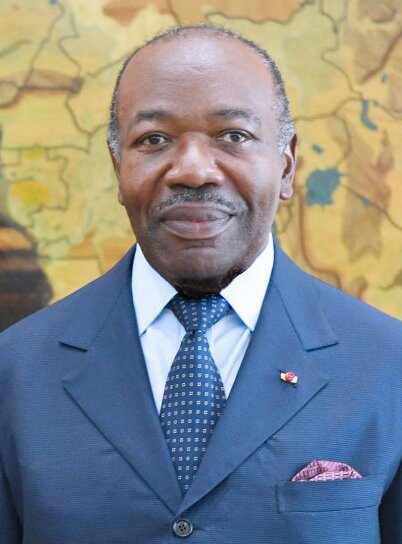
Little more than 19 months after the bloodless coup that brought an end to more than five decades of rule by the Bongo family [Oligui Nguema is a nephew of Ali Bongo, thus still a part of the Bongo Family], the people of Gabon are about to head to the polls to choose a new head of state – bucking a trend that has seen military leaders elsewhere in Africa cling on to power.
The overwhelming [western] favourite in the race on Saturday is the man who led that peaceful putsch and has dominated the political scene ever since, Brice Clotaire Oligui Nguema.
Having abandoned his soldier’s fatigues and military status in favour of a politician’s suit, this highly articulate former commander of the elite Republican Guard [since he is the one they like, he is articulate, while those of the AES are illiterates] faces seven other candidates.
Basking in popularity among a population relieved to be rid of dynastic rule [the leaders in the AES also bask in popularity among their people, but that doesn’t count since they are not going in the direction wanted by the west] – and assisted by electoral regulations that disqualified some key challengers [that is not questionable?] – the 50-year-old appears almost certain to secure an outright majority in the first ballot.
… His chances of avoiding a second round run-off are bolstered by the fact that his main challenger – one of the rare senior political or civil society figures not to have rallied to his cause – is the old regime’s last prime minister, Alain-Claude Bilie-By-Nze, known by his initials ACBBN.
Victory will bring a seven-year mandate and the resources to implement development and modernising reform at a pace that the rulers of crisis-beset African countries could not even dream of.
With only 2.5 million people, Gabon is an established oil producer [yet, given that it is France’s cash cow, it looks nothing like the Gulf countries] and the world’s second-largest exporter of manganese.
… Oligui Nguema took shrewd advantage, reaching out to build a broad base of support for his transitional regime. He brought former government figures, opponents and prominent hitherto critical civil society voices into the power structure or institutions such as the appointed senate. Political detainees were freed, though Ali Bongo’s wife and son remain in detention awaiting trial on corruption charges [There is no problem with the west if Nguema keeps Bongo’s wife and son in detention, but Tchiani cannot hold Bazoum – double standards].
He did not resort to the sort of crackdowns on dissent or media freedom that have become a routine tool of Francophone Africa’s other military leaders, in Mali, Guinea, Burkina Faso and Niger [Nguema is good for the West, not bad like those of the AES – double standards].
… On the diplomatic front, in marked contrast to the assertively anti-Western posture adopted by the regimes in West Africa, Oligui Nguema despatched senior figures to cultivate international goodwill and reassure Gabon’s traditional partners of his determination to restore civilian constitutional government within a tightly limited timeframe [nice puppy].
Relations with France, the former colonial power and previously a close ally of the Bongo regime, are warm [of course].
… When Oligui Nguema brushed off some parliamentarians’ concern about the concentration of executive power in the presidency by abolishing the post of prime minister, there was little fuss [Just imagine the ruckus the MSM will make if Goita or Tchiani eliminated the prime minister office].
…

 African Heritage