

Last week, the Kente cloth, Ghana’s national textile, has been recognized and added to the UNESCO list of Intangibla Cultural Heritage of Humanity. A few years ago, we published the article Kente Cloth: An Ashanti Tradition dating Centuries back. Here, we will go down memory lane.
=====
Have you ever seen those beautiful bright multicolored scarves worn on graduation day by thousands of African Americans and African students across the United States? Those scarves are usually hand-woven, bright, and multicolored, worn to represent the membership to a Black sorority, fraternity, or to just an African student organization at the different colleges and universities.
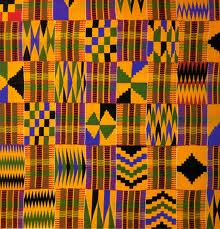
Well, those scarves are made from a material commonly known as Kente cloth, which originates from the Ashanti people of Ghana and Cote d’Ivoire. The Ashanti people used to (and still do) hand weave these bright multicolored clothes for their kings and noblemen. The tradition of kente cloth is said to have been developed in the 17th century, and stems from ancient Akan weaving techniques dating as far back as the 11th century AD (this is one of Africa’s textile tradition). Kente cloth is known as nwentoma (meaning woven cloth) in Akan language, and is a type of silk, cotton, or rayon fabric made of interwoven cloth strips which is native to the Akan/Ashanti ethnic group of Southern Ghana (and also Cote d’Ivoire). It is woven on a wooden loom, which produces a band about 10 cm wide; several bands will then be sewn together to make a larger cloth. The elaborate patterns arise from the mixture of different weaving techniques applied to the same band of cloth. The quality of the fabric, and weaving indicates the rank of the person, the best being reserved for the kings. It is worn by men as a toga, and by women as upper and lower wrappers. The art of weaving kente is passed down only to males, from generation to generation. The main center of weaving kente is around the Kumasi region of Ghana.
… To read more Kente Cloth: An Ashanti Tradition dating Centuries back.

 African Heritage
This is great news!
LikeLike
Indeed!
LikeLiked by 1 person