

With a population of over 100 million inhabitants, Ethiopia is the largest landlocked country in the world. Sea access is not just a common question, but is an existential issue for the country. On January 1, 2024, Ethiopia announced an agreement signed with Somaliland (way to announce the colors of the new year) to lease the port of Berbera in Somaliland, on the Red Sea, and a 20-km stretch of Red Sea coastline for 20 years, Ethiopia – Somaliland Agreement: Will Sea Access lead to Conflict in the Horn of Africa? The agreement made countries in the entire Horn of Africa sweat pools in fear of war, even though those same countries, Ethiopia’s coastal neighbors, Djibouti, Eritrea, and Somalia all rejected its pleas for direct access to a port on the Red Sea. African countries are always ready and eager to lease their lands, ports, airports, railways (Lobito), for a specific duration to European or Chinese or even South African companies, why is it so hard to do the same for fellow African neighbors? Somalia’s president was particularly vocal, calling the Ethiopia-Somaliland agreement an act of agression, saying that the agreement implied that Ethiopia was recognizing Somaliland (which has seceded from Somalia) as an independent state.
Last week, a historic agreement was signed between Ethiopia and Somalia, under the patronage of Turkey. It centered around, 1) resolving misunderstandings, with both countries committing to resolve issues in upcoming months; 2) cooperation and dialogue to ensure mutual prosperity (should this even be a question among neighbors?); 3) access to the sea for Ethiopia, which Somalia agreed to facilitate under its sovereign authority; 4) both countries will begin technical talks to iron details no later than the end of February 2025, aiming to complete them within 4 months with Turkey’s assistance if needed.
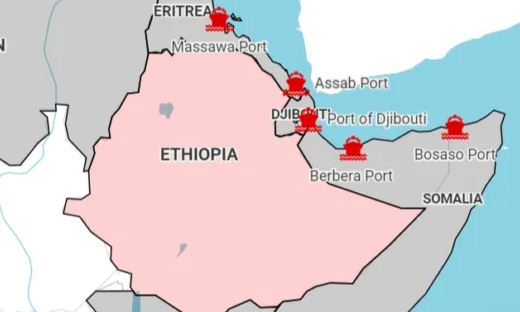
We applaud the historic agreement, and can only breathe a sigh of relief for a year which has been tough in the Horn of Africa with war intensifying in neighboring Sudan. However, the agreement still seems a bit vague as to the fundamental issue of whether Ethiopia will use the port of Berbera in Somaliland or whether another port (perhaps in Somalia) will be used instead.
Under the United Nations Convention on the Law of the Sea (UNCLOS), specifically Part X of the convention addresses the rights of landlocked states to access the sea and freedom of transit. Sea access should not be used as a carrot and a stick as it is an existential issue for these countries. Part X ensures that landlocked countries have the right to access the sea for the purpose of exercising their rights, including freedom of the high seas. Nobody has heard of European countries blocking Switzerland, Austria, Hungary, or Slovakia from sea access. However, we saw ECOWAS countries try that during the year, particularly Benin which even went as far as blocking the Niger pipeline which goes through its territory until China gave Benin a reminder (want to bet that it was not a gentle one?) that it was not right.
For more information on this agreement brokered by Turkey between Ethiopia and Somalia, check out the articles on DW and The Economist.

 African Heritage