BRICS 2024 – Key Takeaways for Africa

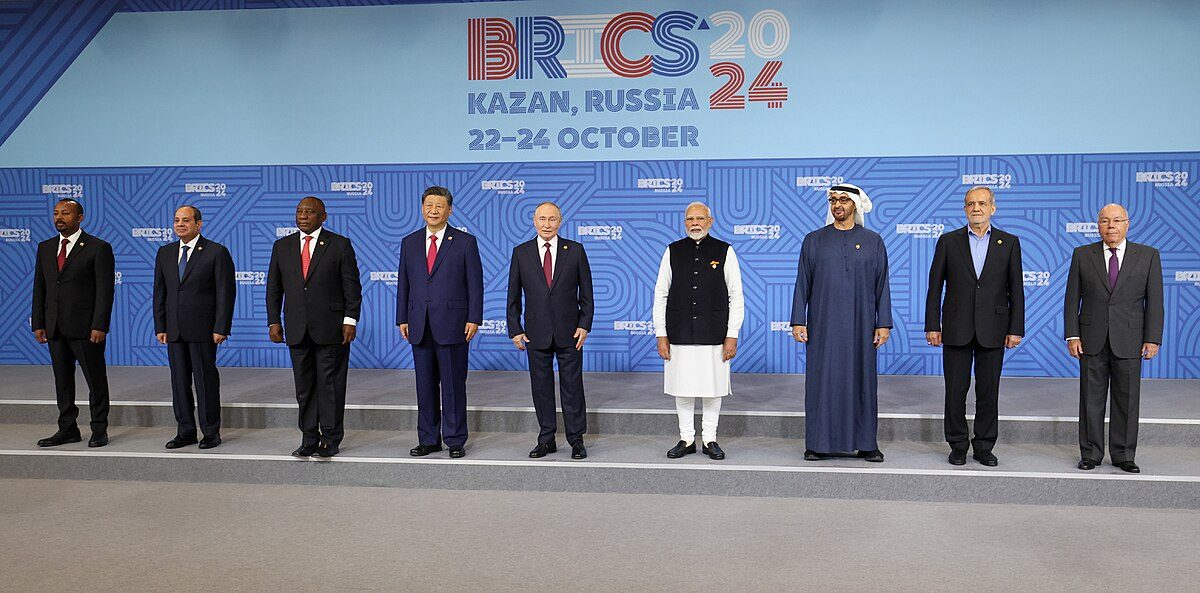
BRICS 2024 Summit (Source: LatestNewsandUpdates.com)

Last week, Vladimir Putin of Russia hosted the 16th edition of the annual BRICS summit which took place from October 22-24 in the city of Kazan in Russia. This was the largest gathering of world leaders in Russia in decades. The aim of the alliance is to foster a more equitable and inclusive global order, challenging the economic and political monopoly of the West.

BRICS stands for Brazil, Russia, India, China and South Africa. The group started in 2006, and Brazil, Russia, India and China convened for the first BRIC summit in 2009. South Africa joined a year later, in 2010.

BRICS (Source: RussiasPivotToAsia.com)

In 2023, BRICS extended invitations to include Egypt, Ethiopia, Iran, Saudi Arabia and the United Arab Emirates after these countries applied for membership. Saudi Arabia has yet to formally join, but the others have.

Presidents of many countries in the world were present at the meeting, and even the UN Secretary General Antonio Guterres was in attendance. BRICS’ evolution from an economic concept to a geopolitical force has been remarkable. The expanded members now collectively represent 44.3 % of the world’s population, 29.5 % of the land mass, and 30.8 % of the global gross domestic product (GDP) (49.7 % of global GDP in purchasing power parity, or PPP, terms).
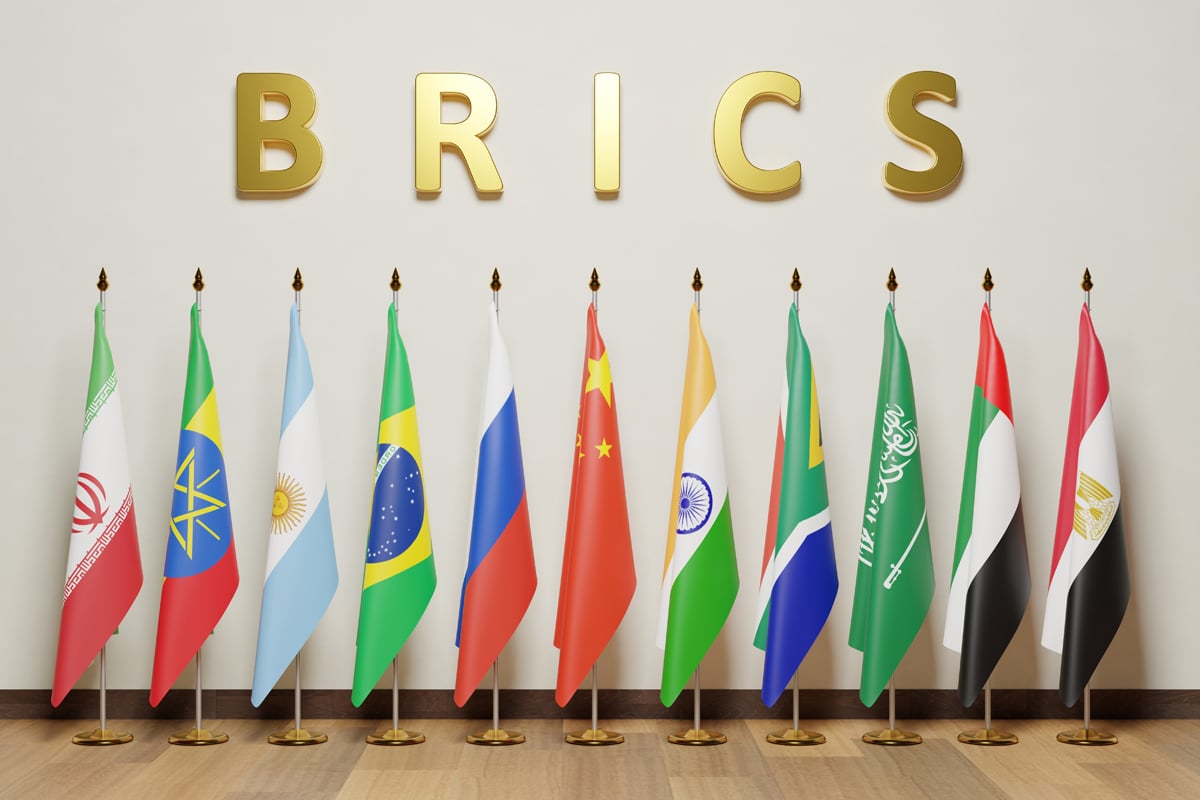
BRICS flags

We will highlight below the key takeaways of the BRICS summit for Africa. There were a lot of takeaways in general, but our focus will be on Africa. Our wish is that African representatives could, when attending these summits, join as ‘ONE’ and not several. At the recent China-Africa meeting which took place in September 4 – 6, 2024, some African countries asked for more debt, like Kenya, while others asked for balanced trade, technology transfer, investment in manufacturing to boost job creation, like South Africa. This will create imbalanced partnerships which will be a disadvantage for neighboring African countries and then affect Africa as a whole later (this will be a subject for another day).

Key Takeaways for Africa

  • As pointed out above, Egypt and Ethiopia joined as new BRICS members, while Nigeria and Algeria participated as partner countries.
  • De-dollarization: this is a global shift which has occurred mildly before, but more significantly since the start of the Ukraine conflict which saw Europe and the US impose sanctions on Russia in hope of asphyxiating Russia, but which instead forced Russia to deal in local currencies and other leaders such as China and India to do likewise. This shift is more important for African countries, particularly the ones which are still part of the FCFA (that slave currency) block.
  • Energy and Technology partnerships between Russia, China and African countries to enhance energy projects and digital infrastructure.
  • Economic collaboration with the New Development Bank (NDB) which aims to fund infrastructure projects across Africa, offering an alternative to the shark Western financial institutions.
  • Balanced diplomacy: for too long, Africans have had only one way of thinking with the Western world. Now with the BRICS, Africans hope for a more balanced relationships to benefit and ensure sustainable development for our nations.

Une planète pour tous les êtres vivants / One Planet for all Living Beings

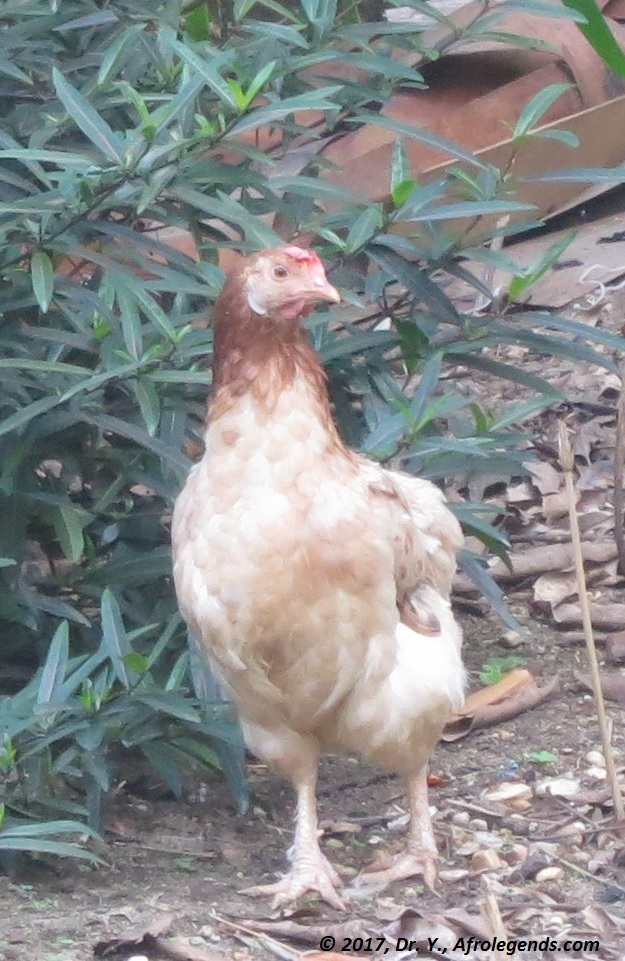
Poule / Hen

Poule et homme entrent par la même porte (Proverbe Douala – Cameroun).

Hen and man enter through the same door (Duala proverb – Cameroon).

“The National Economy: Independent, Self-Sufficient, and Planned at the Service of Democratic and Popular Society” — Thomas Sankara

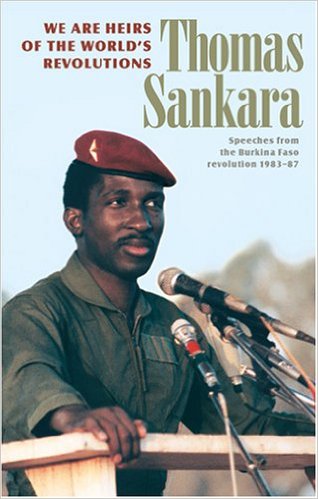
“We are heirs of the revolution” by Thomas Sankara

Today, we will end with the third point cited by President Thomas Sankara, last point for revolutionizing all sectors of Burkinabe society. Excerpts below are from “We are Heirs of the World’s Revolutions, Speeches from the Burkina Faso Revolution 1983-87” by Thomas Sankara, Pathfinder Press (2007) p. 50 – 53. Again, as you read, you can see that this is exactly what our leaders of the AES, and Ibrahim Traore of Burkina Faso in particular are applying. The main difference today is that the AES also faces terrorism and the repeated attacks of hordes fabricated by Western powers; so security is one of the major priorities.

=====

… The National Council of the Revolution is therefore aware that the construction of an independent, self-sufficient, and planned national economy requires the radical transformation of present society, a transformation that itself requires the following major reforms:

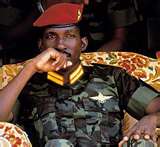
  • Thomas Sankara
    Thomas Sankara
    Agrarian reform
  • Administrative reform
  • Educational reform

Reform of the structures of production and distribution in the modern sector

The agrarian reform will aim to:

  • Increase labor productivity through better organization of the peasants and the introduction of modern agricultural techniques in the countryside.
  • Develop a diversified agriculture, together with regional specialization.
  • Abolish all the fetters that are part of the traditional socioeconomic structures that oppress the peasants.
  • Finally, make agriculture the basis for the development of industry.
Burkina Faso
Burkina Faso

All this is possible by giving real meaning to the slogan of food self-sufficiency, a slogan that now seems dated for having been proclaimed so often without conviction. First, this will be a bitter struggle against nature, which, by the way, is no more thankless for us than for other peoples who have conquered it magnificently on the agricultural level. … To the contrary, numerous small accomplishments in the agricultural system will allow us to transform our territory into one vast field, an endless series of farms.

Second, this will be a struggle against those who starve the people, the agricultural speculators and capitalists of all types. Finally, it will mean protecting our agriculture against domination by imperialism — with regard to its orientation, the plunder of our resources, and unfair competition from imports against our local products, imports whose only advantage is their packaging aimed at bourgeois afflicted with snobbishness. As for the peasants, sufficiently high prices and industrial food-processing facilities will guarantee them markets for their produce in any season.

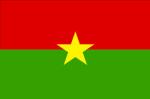
Flag of Burkina Faso

The reform should result in a less costly, more effective, and more flexible administration.

The educational reform aims to promote a new orientation for education and culture. It should result in transforming the schools into instruments at the service of the revolution. Graduates of the system should not serve their own interests and the exploiting classes, but rather the popular masses. The revolutionary education that will be taught in the new schools must imbue everyone with a [Burkinabe] ideology, a [Burkinabe] personality that rids the individual of blind mimicry. …

Burkina Faso

Culture in a democratic and popular society, should have a three-fold character: national, revolutionary, and popular. Everything that is antinational, antirevolutionary, and antipopular must be banished. To the contrary, our culture extols dignity, courage, nationalism, and the great human virtues

… Our artists … should seize the opportunity before them to raise our culture to a world level. … Let musicians sing not only of our people’s glorious past, but also of their radiant and promising future.

The revolution expects our artists to be able to describe reality, portray it in living images, and express them in melodious tunes while showing our people the true way forward to a better future. It expects them to place their creative genius at the service of a national, revolutionary, and popular [Burkinabe] culture.

“Women hold up the other Half of the Sky” — Thomas Sankara

“We are heirs of the revolution” by Thomas Sankara

I love what Thomas Sankara, former president of Burkina Faso, said about women. I had previously published it here, Thomas Sankara in His Words. Did you know that Sankara had placed women at the center of his politics? He appointed females to high governmental positions, encouraged them to work, recruited them into the military, and granted pregnancy leave during education. During his time, he outlawed female genital mutilation, forced marriages and polygamy in support of Women’s rights. Excerpts below are from “We are Heirs of the World’s Revolutions, Speeches from the Burkina Faso Revolution 1983-87” by Thomas Sankara, Pathfinder Press (2007) p. 49 – 50.

=====

The weight of age-old traditions in our society has relegated women to the rank of beasts of burden. Women suffer doubly from all the scourges of neocolonial society. First, they experience the same suffering as men. Second, they are subjected to additional suffering by men

African Woman

Our revolution is in the interests of all the oppressed and all those who are exploited in today’s society. It is therefore in the interests of women, since the basis of their domination by men lies in the system through which society’s political and economic life is organized. By changing the social order that oppresses women, the revolution creates the conditions for their genuine emancipation.

The women and men of our society are all victims of imperialist oppression and domination. … they wage the same battle. The revolution and women’s liberation go together. We do not talk of women’s emancipation as an act of charity or out of a surge of human compassion. It is a basic necessity for the revolution to triumph. Women hold up the other half of the sky. 

… Until now, women have been excluded from the realm of decision making. The revolution, by entrusting women with responsibilities, is creating the conditions for unleashing women’s fighting initiative. … They will be involved in all the battles we will have to wage against the various shackles of neocolonial society in order to build a new society. … The final goal of this great undertaking is to build a free and prosperous society in which women will be equal to men in all spheres. 

Burkina Faso

However, we must have a correct understanding of the question of women’s emancipation. It is not a mechanical equality between men and women, acquiring habits recognized as male – drinking, smoking, and wearing pants. That’s not the emancipation of women. Nor will acquiring diplomas make women equal to men or more emancipated. A diploma is not a free pass to emancipation.

The genuine emancipation of women is one that entrusts responsibilities to women, that involves them in productive activity and in the different fights the people face. The genuine emancipation of women is one that compels men to give their respect and consideration. Emancipation, like freedom, is not granted, it is conquered. It is for women themselves to put forward their demands and mobilize to win them

“A Conscious People Take Charge Themselves of their Homeland’s Defense” – Thomas Sankara

Every October 15, we talk about Thomas Sankara, the father of the Burkinabe revolution. Today, we will bring back some of his words, from “We are Heirs of the World’s Revolutions, Speeches from the Burkina Faso Revolution 1983-87” by Thomas Sankara, Pathfinder Press (2007) p. 46 – 48. You will see that President Ibrahim Traoré in particular, and the leaders of the AES as a whole (Mali, Burkina Faso, and Niger Sign a Mutual Defence Pact), are following in Thomas Sankara’s footsteps in the defense of their homeland against foreign forces which have used terrorism to balkanize the region and terrorize the people for over a decade now. “Each citizen should work to revolutionize his sector of activity. a conscious people cannot leave their homeland’s defense to one group of men, however competent they may be. Conscious people take charge themselves of their homeland’s defense.” Tomorrow, we will talk about points (2) and (3).

=====

Thomas Sankara
Thomas Sankara

The August revolution does not aim to establish one more regime in Upper Volta [Burkina Faso]. It represents a break with all previously known regimes. Its ultimate goal is to build a new Voltaic [now Burkinabe] society, within which the [Burkinabe], driven by revolutionary consciousness, will be architect of his own happiness, a happiness equal to the efforts he will have made.

To do this, the revolution – whether the conservative and backward forces like it or not – will be a deep and total upheaval that will spare no domain, no sector of economic, social, and cultural activity.

Revolutionizing all domains and all sectors of activity is the slogan of the day. Strengthened by the guiding principles laid out here, each citizen should work to revolutionize his sector of activity, whether he finds himself.

The philosophy of revolutionary transformations is already affecting the following sectors: (1) the national army; (2) policies concerning women; and (3) economic development.

(1) The national army: its place in the democratic and popular revolution

Flag of Burkina Faso

According to the defense doctrine of the revolutionary Upper Volta, a conscious people cannot leave their homeland’s defense to one group of men, however competent they may be. Conscious people take charge themselves of their homeland’s defense. To this end, our armed forces constitute simply a detachment that is more specialized than the rest of the population for Upper Volta’s internal and external security requirements. …

The revolution imposes three missions on the national armed forces:

  1. To be capable of combating all internal and external enemies and to participate in the military training of the rest of the people. This presupposes an increased operational capacity, making each soldier a competent fighter, unlike the old army, which was merely a mass of employees.
  2. To participate in national production. Indeed, the new soldier must live and suffer among the people to which he belongs. The days of the free-spending army are over. From now on, besides handling arms, the army will work in the fields and raise cattle, sheep, and poultry. It will build schools and health clinics and ensure their functioning. It will maintain roads …
  3. To train each soldier as a revolutionary militant. Gone are the days when the army was declared to be neutral and apolitical, while in fact serving as the bastion of reaction and the guardian of imperialist interests. Gone are the days when our national army conducted itself like a corps of foreign mercenaries in conquered territory. Those days are gone forever. Armed with political and ideological training, our soldiers, … will instead become conscious revolutionaries, at home among the people like a fish in water.

As an army at the service of the revolution, the National Popular Army will have no place for any soldier who looks down on, scorns, or brutalizes his people. An army of the people at the service of the people – such is the new army we are building in place of the neocolonial army, which was utilized to rule over the people as a veritable instrument of oppression and repression in the hands of the reactionary bourgeosie. …

Nigeria to sell its Fuel in Naira – More Countries are Moving away from the Dollar

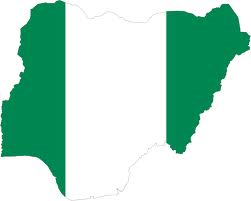
Flag and map of Nigeria

This is a new turn in the move away from the dollar. Yes! you heard it right… more countries are moving away from the dollar, and more transactions are being done in local currencies. The dollar’s dominance is slowly going away. When the war in Ukraine started in February 2022, and the West leveled a lot of sanctions against Russia, blocking its funds, I bet the end of dollar was not what they foresaw. Now Russia deals with China in Rubles or Yuan, India with China in Rupees, … not dollars! Now Nigeria, Africa’s largest country, is going to sell its oil in Naira!!! Are more countries going to deal in local currencies? Is this the end of the petrodollar?

Excerpts from the article below is from Business Insider Africa. Enjoy!

=====

The federal government of Nigeria has commenced the sale of its crude oil to Dangote Refinery and other refineries in its local currency, naira, effective October 1, 2024.

The naira-for-crude initiative, which has already commenced, would mean that crude would now be sold to the Dangote refinery and others in naira. In return, the Dangote refinery would supply PMS (petrol) and diesel of equivalent value to the domestic market, also in naira.

The Minister of Finance, Wale Edun, confirmed the commencement of this policy in a signed statement on Saturday, October 5, 2024, saying the initiative is a significant step by the government in stabilizing the economy and enhancing Nigeria’s economic growth and development.

… “The strategic initiative and bold step taken by the President Bola Ahmed Tinubu-led Administration is expected to have a lasting impact on Nigeria’s economy, fostering growth, stability, and self-sufficiency, especially as the country continues to navigate the complexities of global markets, this strategic move positions Nigeria for success in the years to come,” the statement read.

… Economic experts explained that the initiative if implemented successfully, will alleviate pressure on the naira, eliminate unnecessary transaction costs, and enhance the availability of petroleum products nationwide.

L’Impartialité / Impartiality

Pluie / Rain

La pluie ne se gêne pas, elle mouille même une belle-mère (Proverbe Ntomba – République Démocratique du Congo (RDC)) . – Le juge doit être impartial.

The rain does not hold back, it wets even the mother-in-law (Ntomba proverb – Democratic Republic of Congo (DRC)). – The judge should be impartial.

All Support to Charles Onana as Trial against Him begins

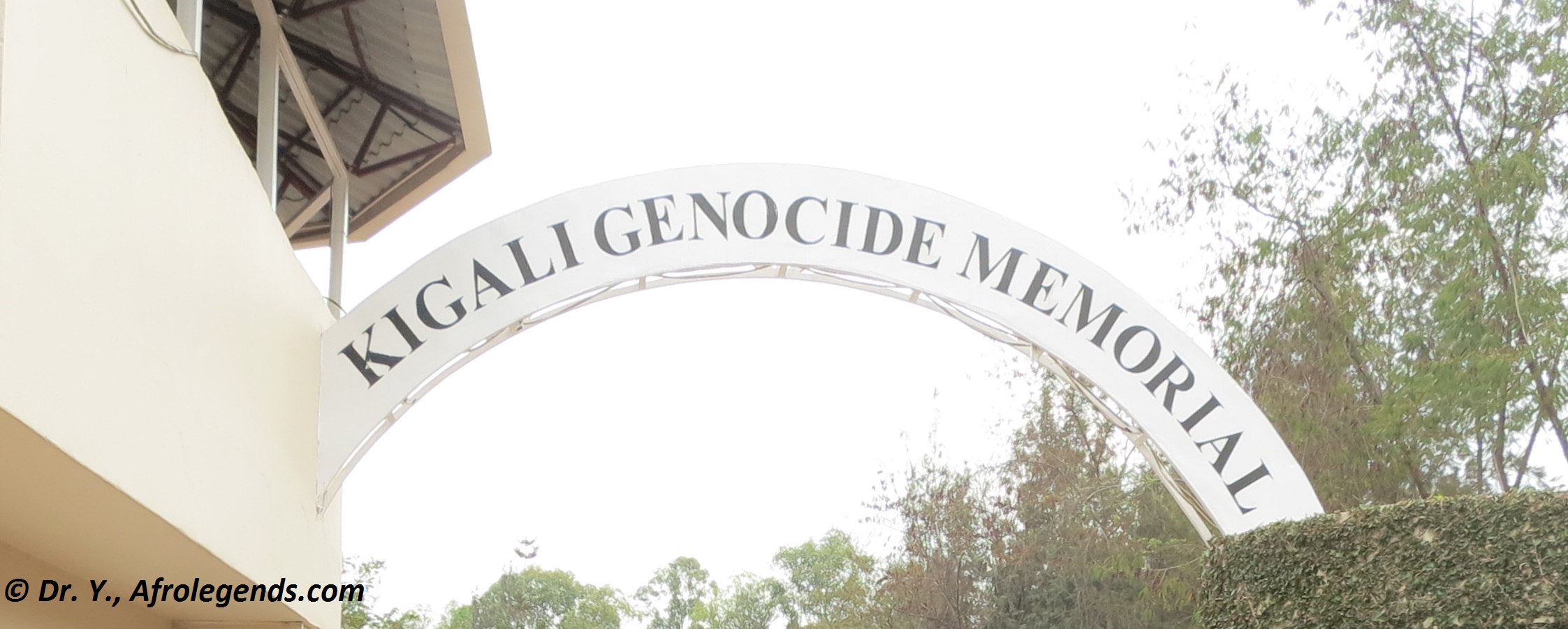
Kigali Genocide Memorial, Kigali, Rwanda

The trial against Charles Onana opened up yesterday, Oct. 7th, in Paris, France, and he is being accused of complicity in contesting the 1994 Rwandan genocide. Under French law, it is an offence to deny or “minimize” the fact of any genocide that is officially recognized by France. Mr Onana’s trial will be “historic, since there is not yet any case law strictly speaking related to Rwanda” on questions of Holocaust denial, as Camille Lesaffre, campaign manager for NGO Survie, one of the organizations which brought the case forward, told AFP.

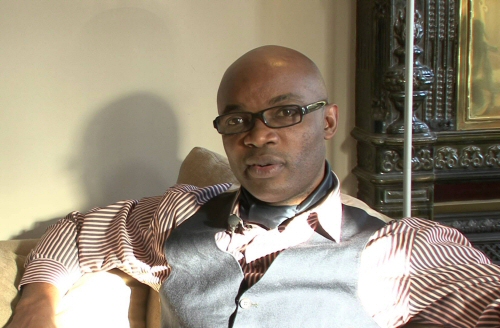
Charles Onana

Friends, please rise in support of the Franco-Cameroonian author and journalist Charles Onana. Onana has been among those who have questioned the narrative of the Rwandan genocide of 1994 (NOT whether it happened or not) and by extension the Congolese genocide which has been ongoing for almost 3 decades and been swept under the rug. Thanks to his constant hammering, and his books, many now know that there is an ongoing genocide in the East of the Democratic Republic of Congo (DRC), and more importantly that, these massacres have been going on for the past 30 years, and above all that Congo’s destabilization is coming from Rwanda, which serves as a pawn for foreign powers who want a part in the enormous resources of the DRC.

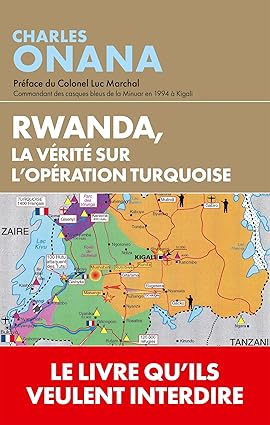
“Rwanda, la Verite sur l’Operation Turquoise” de Charles Onana

I have listened to Onana on several occasions and have read several of his books: nowhere does he question the Rwanda genocide or its happening; he is not a negationist. As his lawyer, Emmanuel Pire, told the AFP news agency, his book published 5 years ago, was the work of a political scientist based on 10 years of research to understand the mechanisms of the genocide before, during and after”. Over the past 25 years, Onana has meticulously documented and questioned first the narrative about the place of France in the Rwandan genocide via its Operation Turquoise (Rwanda, la vérité sur l’opération Turquoise : Quand les archives parlent enfin). On April 6, 1994, the airplane transporting 2 sitting presidents, presidents Juvénal Habyarimana of Rwanda and Cyprien Ntaryamira of Burundi was shot in mid-air; to date, it has not brought an uproar as to how or why the plane of 2 presidents had been shot down. This is what really triggered Onana’s interest in the region: if it were anywhere in the world, this would have produced an uproar and multitudes of investigations, but somehow, in the case of Africa, it has been total silence. In 2006a French investigation concluded that Paul Kagame, president of Rwanda, was responsible for the killing, to which Kagame responded that the French were only trying to cover up their part in the genocide. We know that since Sarkozy, France has been playing the kissing game with Rwanda.

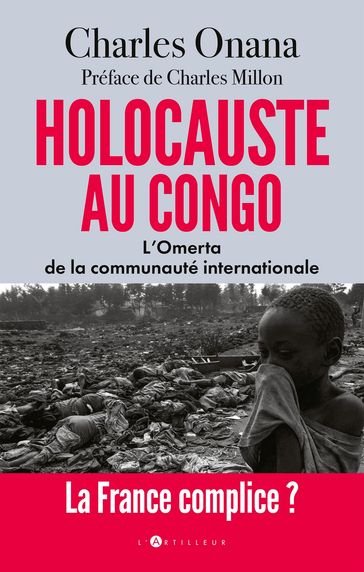
“Holocauste au Congo, L’Omerta de la Communaute Internationale” by Charles Onana

In his works, Charles Onana simply demonstrates that since 1994, the world has been witnessing the masked invasion of Congo by militias and troops of Paul Kagame, sponsored by the West. His latest book, “Holocaust in Congo, the International Community’s Omerta” is a true gem. Onana has even brought a case, on October 4, against the president of Rwanda, after receiving death threats.

Over the years, Onana has detailed and stood for the Congolese, and now, thanks to his work, and those of others, people now know that there is a silent genocide in the east of Congo which has been going on for almost 3 decades and whose victims approximate over 10 millions deaths, 500,000 raped women, and yet the world has been silent, even though some like Dr. Denis Mukwege, Nobel Peace Laureate, are being recognized for their work helping the victims of those attacks.

The questions should be: why is there a silence on the genocide of the Congolese people? Why is there a silence on the aggression of troops supported by Rwanda on Congo? How can there be a systematic killing of millions of people in a country, and total silence? Who benefits from this? Then people will talk of the international community as a group which represents the world… NO… the international community only serves the interests of the few who benefit from Congo, the geological scandal that it is, being brought to its knees. Let’s all come out in support of Charles Onana.

Comment les chefs résolvent les disputes / How Kings Solve Disputes

Behanzin wearing Kanvo, in 1895

Les chefs n’arrangent pas leurs palabres devant l’assemblée (proverbe Libinza – République Démocratique du Congo(RDC)). – Les parents ne s’injurient pas devant les enfants.

The leaders do not arrange conflicts in front of the assembly (Libinza proverb – Democratic Republic of Congo (DRC)). – Parents do not insult each other in front of the other.