
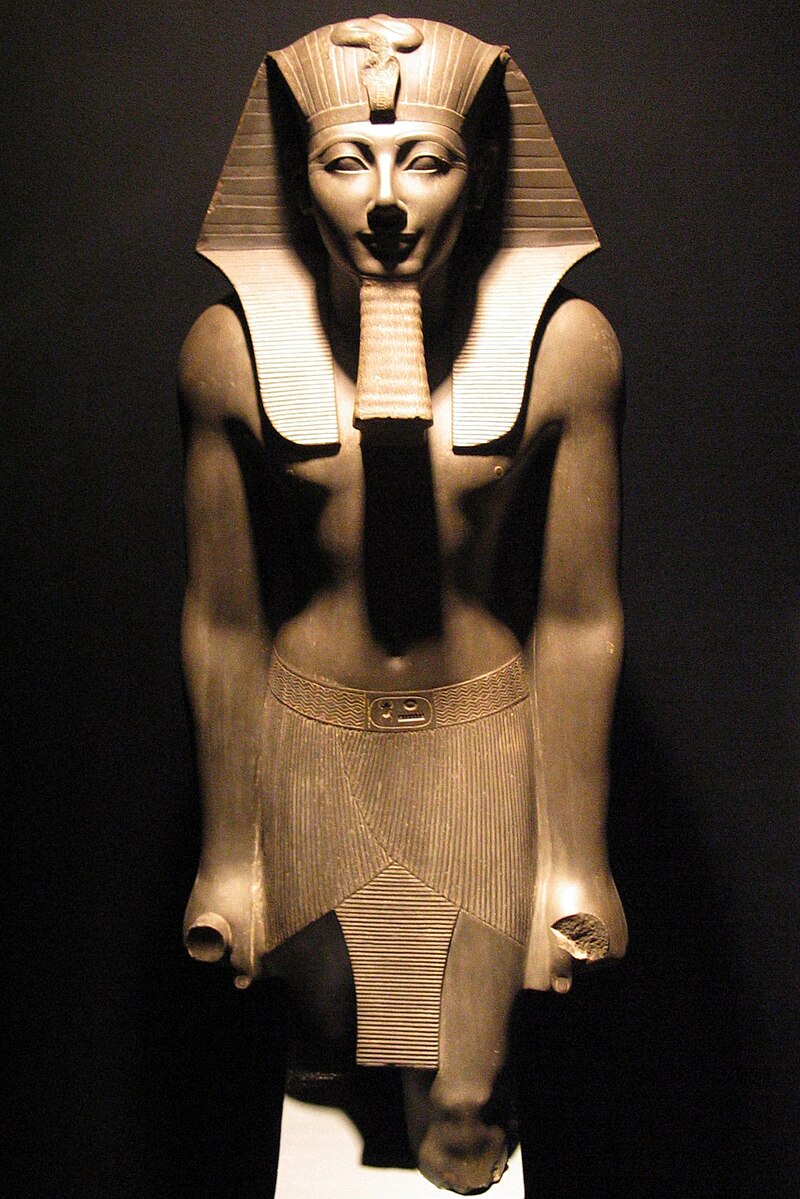
Last May, an Egyptian mission unearthed the remains of a 3,500-year-old fortified royal retreat at Tel Habwa archaelogical site in the Northern Sinai Archaelogical Area. This ancient fortified area is believed to have belonged to Pharaoh Thutmose III (Thutmosis III) and to be one of his vacation homes or rest palaces. The structure dates back to the reign of Pharaoh Thutmose III, the sixth pharaoh of ancient Egypt’s 18th dynasty in the New Kingdom period. Thutmose III is thought to have ruled Egypt from 1479 to 1425 B.C.. He is regarded as one of the greatest military commanders in history, leading successive victorious campaigns that expanded Egypt’s empire to its greatest extent. This is the pharaoh’s whose Lateran obelisk still stands today in Rome. Everyday more treasures of Ancient Egypt are getting unearthed.
The Egyptian Ministry of Tourism and Antiquities (MTA) announced that the building is made of mud-brick and the site includes the presence of a royal palace to house the king. The building consists of two consecutive rectangular halls, accompanied by a number of rooms. It appears to have been fortified with a perimeter wall. The royal rest home features a grand main hall with three limestone columns, a secondary hall, and several adjoining rooms, all adorned with prominent pillars.

“It is likely that this building had been used as a royal respite due to the architectural planning of the building and the scarcity of pottery fractures [broken pottery] inside,” the Egyptian Ministry of Tourism and Antiquities said in a translated statement shared on their Facebook page. The Egyptian Archaeological Mission, operating at the Tel Habwa (Tharo) Archaeological Site, made this discovery during excavations as part of the Sinai Development Project.
“This discovery is pivotal as it illuminates crucial aspects of Egypt’s military history, particularly in the Sinai region, during the New Kingdom era,” said Mohamed Ismail Khaled, Secretary-General of the Supreme Council of Antiquities, as reported by Ahram Online.
To learn more, check out the ancienthistory, smithsonianmag, and popularmechanics.

 African Heritage