

I came across a gem in the book of Professor Bwemba Bong, “Quand l’Africain était l’or noir de l’Europe. L’Afrique: Actrice ou Victime de la Traite des Noirs? – Démontage des mensonges et de la falsification de l’histoire de l’hydre des razzias négrières transatlantiques” (When the African was the black gold of Europe. Africa: Actress or Victim of the Slave Trade ? – Dismantling the lies and falsification of the hydra history of the transatlantic Slave Raids).” This text talks about the advanced textile industry in the Kingdom of Kongo in the 16th century. We had previously discussed the History of African Fabrics and Textiles and the falsification of history by Western media who are always trying to pretend that African textile industry started with the Dutch company Vlisco! We had also shared a description by Italian explorer Alvise Cadamosto, of clothing worn by Africans in the 15th century (Description of African Dressing in 1400s).

In the 16th century, the Portuguese Filippo Pigafetta et Duarte Lopez wrote about the Kingdom of Kongo describing the economic situation of precolonial Africa, and reported that Africa had nothing to envy to Europe. Some of the fabrics described then, resemble fabrics weaved today by the Kuba people of the Democratic Republic of Congo, who use raffia and make some of the most beautiful hand-woven blankets, clothing, and sculptures. In the text, Lopez described not only the quality of the fabric, but the entire industry needed to create this type of fabric: the kind of tree used, the way the tree was pruned, and the value of the fabric. Another important point is that everyone was dressed within his/her means… thus the idea that Africans were walking naked, as we have previously seen, is another falsification of history!
Filippo Pigafetta et Duarte Lopes, Le royaume de Congo et les contrees environnantes (1591), Chandeigne/Unesco, 2002, p.112-113 (trad. Willy Bal, présentation et notes Willy Bal); Bwemba Bong, Quand l’Africain était l’or noir de l’Europe. L’Afrique: Actrice ou Victime de la Traite des Noirs?, MedouNeter 2022, p.180 (translated to English by Dr. Y, Afrolegends.com). Enjoy!
=====
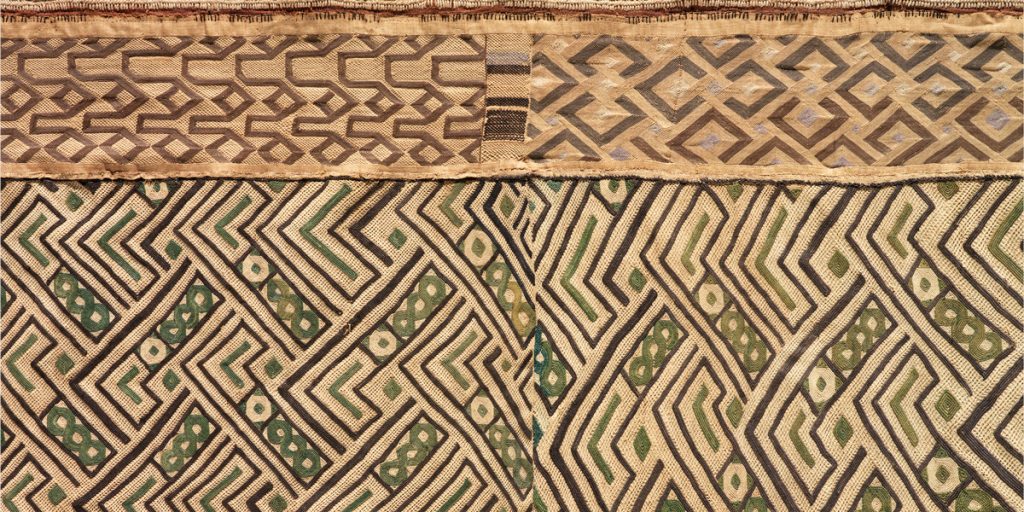
“And since we are here, I must decry the extraordinary art with which the inhabitants of this country and neighboring regions weave various kinds of fabrics, such as velvets with pile and without pile, brocades, satins, taffetas, damask, armoisins and other similar fabrics, which are certainly not made of silk, since we do not know the silkworm; if some people dress in silk, it is silk imported from our regions. But these fabrics that we have just listed are taken from the leaf of the palm tree; it is therefore necessary to keep the trees low, and to do this, prune and prune them each year, so that in the new season the leaves will grow more tender.

After having treated these leaves in their own way, they draw threads from them, all equally fine and delicate; the longer the thread, the more it is valued because it allows larger pieces to be weaved. In different ways, they make fabrics with pile, resembling velvets, on each side, and sheets called damask with decorative patterns and varied textures, as well as brocades that are called high and those that are called low, which are worth more than our brocade. Only the king and those whom he deems good to do this favor can wear this fabric. The largest pieces are of brocade: they reach four or five palms in length, and three or four in width. The brocade is called incorimbas (named after the region where it is made, which is located around the Vumba river [in northern Congo]). Velvets have the same width: they are called enzacas, damasks are called infutas, satins are called maricas, taffetas are tangas and Anziques are the largest pieces which reach six palms in length and five in width. It is out of these fabrics that we commonly dress, each according to their means. Furthermore, they are light and very robust in water. The Portuguese began to use them as tent canvases: they wonderfully resist to water and wind.”

 African Heritage