
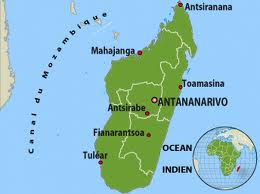
Last week, March 10-11 marked the celebration of Malagasy New Year… the Malagasy new year is not in January, because the Malagasy calendar is a lunar calendar with thirteen lunar months of 28 days. Each lunar month starts with the first moon. Up until 1810, every region of Madagascar had its own calendar; then under the Kingdom of Madagascar whose kings reigned from 1810 to 1896, the calendar was standardized. From 1810 to 1881, the Kingdom of Madagascar’s new year always started with the first day of the month of Alahamady, i.e. the first moon of the month. This month corresponds to the end of the rainy season, and the rice harvest, rice being the staple food of the Malagasy people. Compared to the Gregorian calendar, the fararano and the Alahamady occur between March and April around the first moon closest to the 21 March equinox. With the fararano, in the olden days, Malagasy people would congratulate themselves on having emerged victorious from the violent winds, the torrential rains, landslides, devastating fires, but also from the period of Maintso ahitra or famine. The month of Alahamady is a month of celebration, and symbolizes power, wealth, and even royal power. The great king Andrianampoinimerina, at the origin of the unification of Madagascar, is quoted with this famous formula, “I have no enemy, except famine.” He was also born on the first day of the month of Alahamady, thus his formula symbolized victory in general, but victory over famine in particular.

Starting in 1897, the celebration was officially abolished by the French colonial period which viewed it as pagan, and as a tradition that would undermine the Malagasy conversion/obedience as it linked them to their pasts, their ancestors, and culture; it was thus celebrated in secret by some. Since the 1990s, the celebration is now seeing a resurgence. Today, it is a national celebration known as the Taombaovao Malagasy, literally Malagasy New Year. It lasts 2 days and is observed throughout the entire territory. It helps to convey and spread the 7 foundations of the Malagasy philosophy: faith in zanahary (The Creator, God), the value of Aina (life), the fahamasinana (the sense of the sacred), the fihavanana (solidarity and mutual aid), the fahamarinana (the sense of fairness and justice), the fahasoavana (happiness) and the link to ancestral heritages.
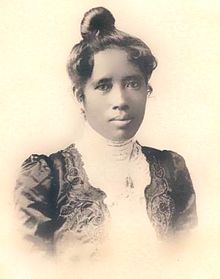
This year, it was celebrated on 10 and 11 March. In the opening, Princess Ratsimamanga, a descendent of Queen Ranavalona III, the Last Monarch of the Kingdom of Madagascar, performed the rite of Tsodrano, the blessing, and said during the official ceremony to all officials and public present, “I bless you in the name of the seven royal tombs so that you and your families be in good health, so that you could have the strength to contribute the the well-being of the nation.” She added, this Taombaovao ceremony symbolizes “a spiritual renewal in the hearts of Malagasy people… Us, Malagasy, our ancestors have not gone far, and are always with us. It is our ancestors who pray for us to be together, for us to produce good things in the future, for the harvest to be good.”
After the blessing, comes the ceremony of Tatao, where the people share a plate of rice cooked in milk and sprinkled with honey. Princess Ratsimamanga explained, “rice represents abundance so that there will be no famine. Milk is for offspring. And the honey is to make things sweet. These three things that we put in the pot and share with everyone symbolize the fact that we are productive, that we have the strength to fight evil in the country.”

 African Heritage